Understanding Tri-Field EMF meters is definitely worth it if you’re a beginner wanting to assess your environment’s electromagnetic safety. These devices are user-friendly and combine measuring electric, magnetic, and radio/microwave signals in one tool. They help you quickly identify high EMF levels from appliances or devices, guiding safer decisions. Proper use and interpretation are key, and ongoing practice makes you more confident. If you keep exploring, you’ll discover how to make the most of this helpful technology.
Key Takeaways
- They provide an accessible way for beginners to measure and understand environmental EMFs effectively.
- Understanding their functions helps users identify EMF sources and assess safety levels accurately.
- Learning about calibration ensures reliable readings, boosting confidence in environmental safety evaluations.
- Familiarity with measurement principles enables better interpretation of fluctuating EMF levels.
- Using Tri-Field meters promotes informed decision-making about electromagnetic exposure in daily environments.
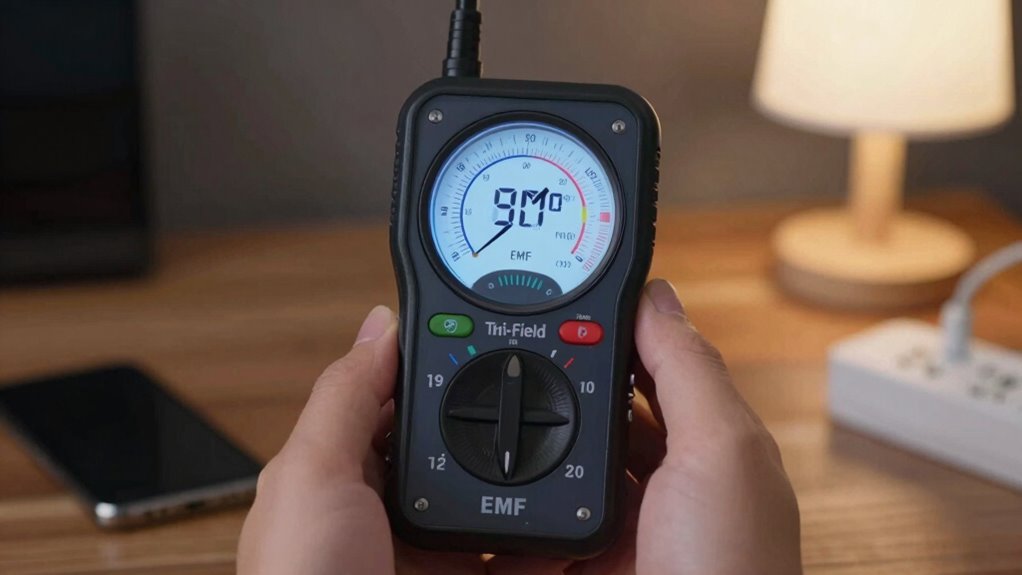
If you’re new to measuring electromagnetic fields, starting with a Tri-Field EMF meter can be an excellent choice. These devices are user-friendly and provide a thorough way to evaluate different types of electromagnetic radiation, including electric fields, magnetic fields, and radio/microwave signals. As a beginner, understanding electromagnetic safety is essential, especially if you’re concerned about long-term exposure to electromagnetic fields (EMFs). A Tri-Field meter helps you identify sources of EMFs in your environment, giving you the confidence to make safer choices around your home or workplace.
One of the key benefits of using a Tri-Field EMF meter is its versatility. Unlike specialized meters that only measure one type of EMF, the Tri-Field combines multiple functions in a single device. This makes it easier to get a full picture of your electromagnetic environment without having to invest in several different meters. Additionally, these meters often feature an analog needle display, which makes it simple to interpret readings even if you’re just starting out. You can quickly see if a certain device or appliance is emitting higher levels of EMFs, helping you take steps to reduce your exposure if necessary.
However, to get accurate and reliable readings, meter calibration is essential. As a beginner, you might not be familiar with the process of calibration, but it’s a critical step in ensuring your measurements are precise. Proper calibration involves adjusting the meter to match a known standard, which can be done periodically either by yourself if the device allows or through professional calibration services. Regularly calibrated meters help prevent false readings, giving you peace of mind that you’re accurately evaluating electromagnetic safety in your environment. Without calibration, you risk misinterpreting EMF levels, which could lead to unnecessary worry or complacency about potential risks. It is also helpful to understand the measurement principles behind EMF meters to better interpret your readings. Developing a basic understanding of measurement accuracy can further improve your confidence in the data you collect. Furthermore, familiarizing yourself with EMF exposure guidelines**** can help you determine what levels are considered safe in your specific environment.
While learning to use a Tri-Field EMF meter, keep in mind that understanding the readings is just as important as taking them. The device’s readings can fluctuate depending on the proximity to EMF sources, so moving the meter around helps identify specific sources or areas of concern. Over time, you’ll develop an intuitive sense of what levels are considered safe or problematic based on current guidelines. This knowledge can empower you to make informed decisions about your environment and reduce unnecessary exposure. Incorporating proper calibration practices ensures your measurements remain accurate over time, further supporting your safety assessments.

TriField EMF Meter Model TF2 – Made in USA – #1 Handheld EMF Detector for Magnetic/Electric/Radio Fields with Unlimited Free Support in The U.S. to Help Solve Your EMF Problems
Detects: Magnetic fields, electric fields, and RF (20 MHz–6 GHz; includes most 5G but not experimental millimeter waves)….
As an affiliate, we earn on qualifying purchases.
As an affiliate, we earn on qualifying purchases.
Frequently Asked Questions
How Accurate Are Tri-Field EMF Meters Compared to Professional Devices?
Tri-Field EMF meters are fairly accurate for beginners, but they don’t match professional devices. Sensor sensitivity varies, affecting precision, especially at low or high levels. Regular calibration frequency is essential to maintain accuracy, but amateurs might not do this often enough. While useful for detecting EMF sources, for detailed readings, professional devices with advanced calibration and higher sensor sensitivity are more reliable.
Can Tri-Field EMF Meters Detect Electromagnetic Fields Through Walls?
Tri-Field EMF meters are limited in detecting electromagnetic fields through walls because of wall penetration and signal attenuation. Walls absorb and weaken signals, making it challenging for the meter to accurately sense EMF behind barriers. You’ll find that the meter’s readings decrease or become unreliable as walls interfere, highlighting the importance of understanding these limitations. Recognizing these factors helps you interpret EMF readings more effectively and avoid false assumptions.
What Is the Typical Lifespan of a Tri-Field EMF Meter’s Batteries?
The typical lifespan of a Tri-Field EMF meter’s batteries varies, but you can expect battery replacement to be needed every few months with regular use. This affects your device’s longevity because frequent replacements guarantee accurate readings and reliable performance. To extend your meter’s lifespan, use high-quality batteries and turn off the device when not in use. Regularly checking and replacing batteries keeps your meter functioning at its best.
Are Tri-Field EMF Meters Suitable for Detecting Non-Electromagnetic Environmental Hazards?
Think of a tri-field EMF meter as a detective for electromagnetic clues, but it’s not a crystal ball for all hazards. It’s not suited for detecting indoor air quality or water contaminants. These meters excel at electromagnetic fields but can’t sense invisible dangers like indoor air pollutants or water quality issues. For those, you need specialized tools designed to identify chemical, biological, or particulate hazards.
How Often Should I Calibrate My Tri-Field EMF Meter for Reliable Readings?
You should calibrate your Tri-Field EMF meter at least once a year for reliable readings. Calibration frequency depends on how often you use it and the environment, so more frequent checks may be necessary if you notice inconsistent readings. Keep an eye on battery longevity, as low batteries can affect accuracy. Regular calibration guarantees your meter stays precise, giving you confidence in your measurements.

ERICKHILL EMF Meter, Detects Electric and Magnetic Fields, Handheld Digital EMF Detector with LCD Display, Sound-Light Alarm, Rechargeable Battery for Home, Office, and Appliances (Blue)
True EMF protection starts with detection. Our emf meter helps you: 1) Find dangerous radiation hotspots in your…
As an affiliate, we earn on qualifying purchases.
As an affiliate, we earn on qualifying purchases.
Conclusion
If you’re just starting out, understanding tri-field EMF meters can be incredibly valuable, especially since they can detect magnetic, electric, and radio frequencies all in one device. Did you know that EMF levels in typical homes can range from 0.1 to 10 milligauss? Having a meter helps you visualize these levels and make safer choices. So, investing time to learn how to use one can empower you to identify potential sources of EMF exposure effectively.
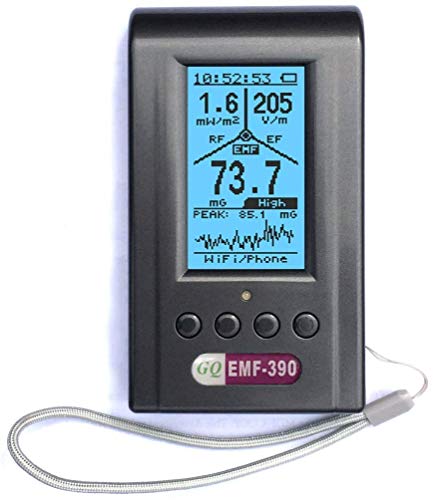
EMF Meter,Advanced GQ EMF-390 Multi-Field Electromagnetic Radiation 3-in-1 EMF ELF RF meter, 5G Cell Tower Smart meter Wifi Signal Detector RF up to 10GHz with Data Logger and 2.5Ghz Spectrum Analyzer
Multiple high sensitivity sensors installed for detecting Power line, Smart meter, Cell phone, Microwave etc.
As an affiliate, we earn on qualifying purchases.
As an affiliate, we earn on qualifying purchases.

Baomain 65C5 Analogue Panel Meter Volt Voltage Gauge Analog Voltmeter DC 0-15 V
Model: 65C5, Accuracy: Class 2.5
As an affiliate, we earn on qualifying purchases.
As an affiliate, we earn on qualifying purchases.