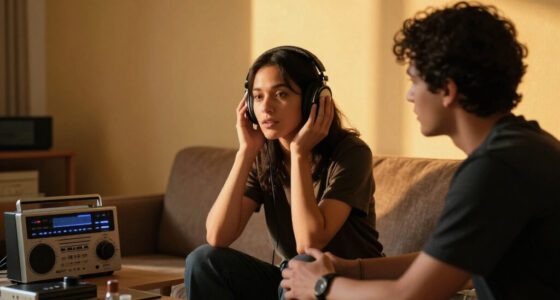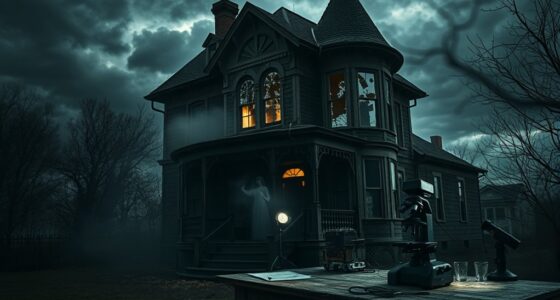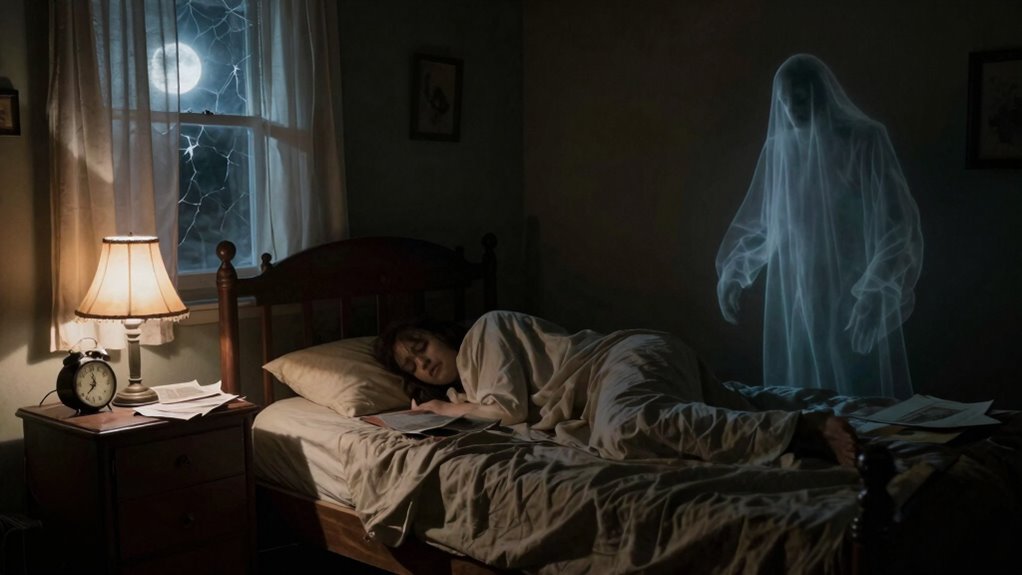

Your sleep quality, stress levels, and exposure to suggestions play a big role in ghost reports. Poor sleep or high stress make your brain more likely to interpret normal sounds or shadows as supernatural. Suggestion from media or stories primes your mind to see ghosts in ordinary events. These psychological factors distort perception, turning everyday stimuli into ghostly encounters. Keep exploring to discover how these influences shape what you believe you experienced.

Get movie nights delivered free with Prime
- Fast, free delivery on millions of items
- Prime Video, Amazon Music and more included
- Member-only deals all year
Key Takeaways
- Poor sleep causes hallucinations and heightened suggestibility, increasing the likelihood of perceiving ghostly phenomena.
- High stress and anxiety amplify perception of threats, leading to more vivid ghost reports.
- Media exposure and expectations prime the mind to interpret normal stimuli as supernatural events.
- Cognitive biases fill gaps with ghostly explanations, reinforcing perceptions influenced by psychological factors.
- These psychological factors collectively explain why many ghost reports stem from altered mental states rather than actual supernatural events.
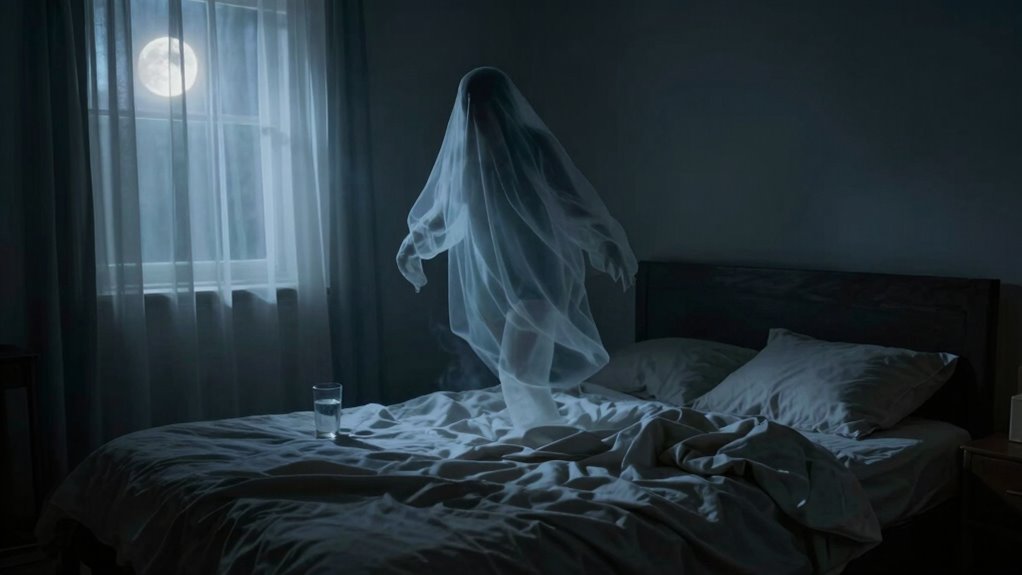
Many ghost reports are influenced by factors beyond actual supernatural encounters, with sleep patterns, stress levels, and suggestion playing essential roles. When you experience something that feels like a ghostly presence, your sleep habits often come into play. Poor sleep, irregular schedules, or sleep deprivation can cause vivid dreams, hallucinations, or feelings of a presence nearby. These altered sleep patterns can make your mind more prone to perceiving things that aren’t really there. For example, if you’ve been staying up late or experiencing frequent awakenings, your brain might interpret strange sounds or shadows as supernatural. Your mind, already in a heightened state of alertness because of tiredness, fills in the gaps with what it expects or fears. Additionally, sleep deprivation can impair your cognitive functions, making it even easier to misinterpret normal stimuli as paranormal activity. Recognizing how sleep influences perception is crucial because it can significantly distort your understanding of what you experience.
Stress levels are equally influential. High stress or anxiety can make you hyper-aware of your surroundings, amplifying feelings of unease or paranoia. When you’re overwhelmed, even minor noises or shadows can seem threatening, and your mind can distort ordinary stimuli into ghostly figures or voices. Stress also affects your sleep quality, creating a cycle where poor sleep increases stress, which then heightens the likelihood of misinterpreting normal events as supernatural. This cycle can make ghost reports more frequent and vivid, especially during or after stressful periods. Your subconscious mind is more receptive to suggestion when you’re anxious or exhausted, which means you’re more likely to interpret ambiguous stimuli as supernatural. The interplay between stress and perception underscores the importance of managing emotional health to prevent misinterpretations.
Suggestion plays a significant role in shaping ghost reports. If you’re exposed to stories, media, or conversations hinting at haunted locations or ghostly encounters, your mind can become primed to see or hear things that confirm those stories. This is especially true if you’re already experiencing disrupted sleep or elevated stress. Your expectations influence what you perceive, and your mind may unconsciously fill in details to match the narrative you’ve been exposed to. This self-suggestion can turn ordinary noises, like creaks or wind, into ghostly sounds, or shadows into spirits. When you’re convinced that a place is haunted, your brain becomes more sensitive to any unusual stimuli, making you more likely to report supernatural phenomena. Moreover, cognitive biases can reinforce these perceptions, making them seem more convincing.
In essence, your sleep patterns, stress levels, and susceptibility to suggestion all contribute to how you interpret strange experiences. These factors shape your perceptions and can turn ordinary events into ghost reports. Recognizing how much of what you experience is influenced by these elements can help you understand why so many ghost stories are rooted more in psychology than in actual supernatural activity. By understanding these influences, you can approach such experiences with a more critical perspective and reduce the likelihood of misinterpreting normal events.
As an affiliate, we earn on qualifying purchases.
Frequently Asked Questions
Can Sleep Deprivation Cause False Ghost Sightings?
Yes, sleep deprivation can cause false ghost sightings. When you’re sleep-deprived, you’re more prone to sleep paralysis and dream intrusion, which can create vivid hallucinations that feel real. These hallucinations often involve ghostly figures or apparitions, making it seem like you’ve seen a ghost. Lack of sleep affects your brain’s ability to distinguish between dreams and reality, increasing the likelihood of experiencing and believing in false ghostly encounters.
How Does Stress Influence Perception of Paranormal Activity?
Stress substantially influences your perception of paranormal activity by causing perception distortion and emotional influence. When you’re stressed, your mind becomes more prone to interpreting normal sounds or shadows as ghostly phenomena. This heightened emotional state makes you more suggestible, leading to false reports of paranormal encounters. Fundamentally, stress skews your perception, making you more likely to believe in or perceive supernatural events that aren’t really there.
Do Suggestion and Prior Beliefs Alter Ghost Report Accuracy?
Yes, suggestion and prior beliefs can notably alter ghost report accuracy. You’re influenced by psychological biases and cognitive distortions that shape how you interpret ambiguous stimuli, making you more likely to see or hear things that confirm your expectations. When you believe in spirits or hauntings, your mind fills in gaps, leading to less reliable reports. Recognizing these biases helps you understand how subjective perceptions impact paranormal accounts.
Are There Specific Sleep Stages Linked to Hallucinations?
You might be surprised to learn that hallucinations often occur during the hypnagogic stage, right as you’re falling asleep. During this phase, dream symbolism and hypnagogic imagery blend, making vivid visuals more common. These fleeting images can feel real, which explains why sleep-related hallucinations often get mistaken for ghost sightings. So, if you experience strange visions at bedtime, they’re likely linked to this specific sleep stage.
Can Relaxation Techniques Reduce Ghost-Related Fears?
Yes, relaxation techniques like meditation can help reduce ghost-related fears. By practicing meditation, you can achieve a calm mind, which may limit anxiety and fear triggers. Techniques such as lucid dreaming practices also empower you to control your dreams, reducing nightmares and ghostly hallucinations. Regularly applying these methods enhances your sense of safety, helping you face fears more confidently and diminish ghost-related anxieties over time.
As an affiliate, we earn on qualifying purchases.
Conclusion
Think of your mind as a lighthouse, guiding your perceptions through foggy nights. When sleep is scarce, stress thickens the haze, and suggestion acts like a flickering light, you might mistake shadows for ghosts. By nurturing restful nights, calming your mind, and staying grounded, you clear the fog and see the world as it truly is—free from illusions. Your perception becomes a steady beacon, revealing reality rather than shadows dancing in the dark.
As an affiliate, we earn on qualifying purchases.
As an affiliate, we earn on qualifying purchases.
Halloween Picks
halloween
As an affiliate, we earn on qualifying purchases.