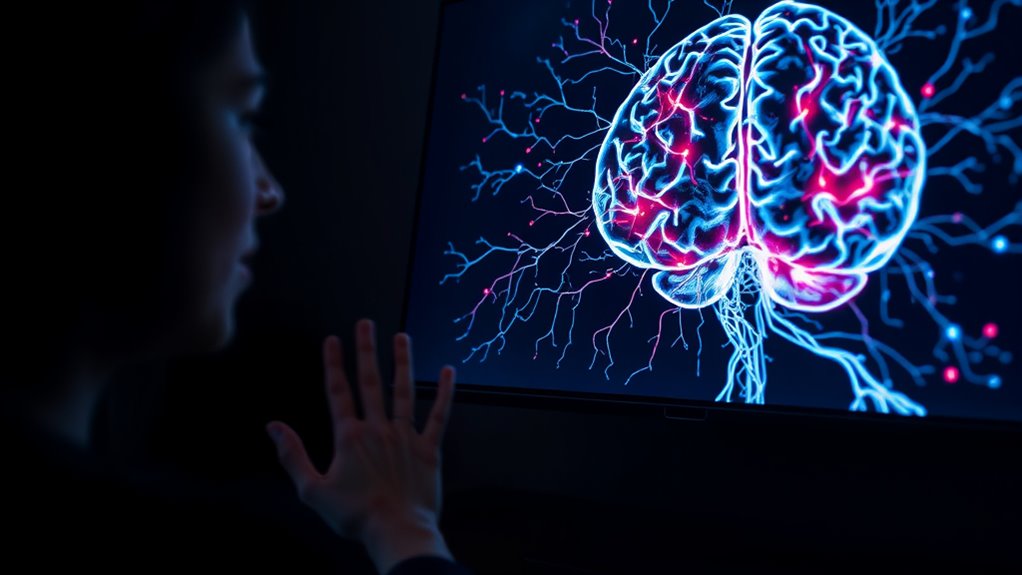

Biological factors like brain activity in the temporal and parietal lobes can make you feel a presence even without external stimuli. When these areas process sensory, emotional, and memory cues, disruptions or heightened activity can create vivid illusions of someone nearby. Stress and fatigue further impair your sensory filtering, increasing the chance of false perceptions. Understanding how your brain constructs these experiences can help illuminate why you might sense a presence—stay curious to explore more.
Key Takeaways
- Activation of specific brain regions, especially the parietal and temporal lobes, can create the sensation of a nearby presence.
- Disruptions in neural networks responsible for self-recognition and sensory integration can lead to false perceptions of others’ presence.
- Heightened activity in sensory and attentional systems, often due to stress or fatigue, can distort perception and induce the feeling of someone nearby.
- Emotional states like fear or anxiety influence neural processing, amplifying perceptions of external entities during uncanny experiences.
- Sensory mismatches, such as conflicting visual and auditory cues, can cause the brain to fill in gaps, resulting in illusions of a presence.
neurofeedback brain training for sensory perception
As an affiliate, we earn on qualifying purchases.
As an affiliate, we earn on qualifying purchases.
Neural Activity and the Sense of Presence

Neural activity plays a crucial role in creating the sensation of a presence. When certain brain regions activate unexpectedly, it can lead you to feel as if someone is nearby, even if no one is there. This often involves the brain’s sensory and attentional systems working in overdrive. For example, heightened activity in your parietal lobes can distort spatial awareness, making it seem like an external entity is present. Similarly, disruptions in neural networks responsible for self-recognition can cause you to perceive someone else’s presence where there is none. These quick, spontaneous neural responses can happen due to fatigue, stress, or neurological conditions. Fundamentally, your brain’s electrical signals can craft a convincing illusion of a presence, even without any external stimulus. Additionally, research into neural activity reveals how specific patterns of brain activation are associated with these perceptual anomalies.

Sensory Deprivation: Float Tank For Stress, Anxiety, Relaxation, Pain & Consciousness
As an affiliate, we earn on qualifying purchases.
As an affiliate, we earn on qualifying purchases.
The Role of the Temporal Lobes
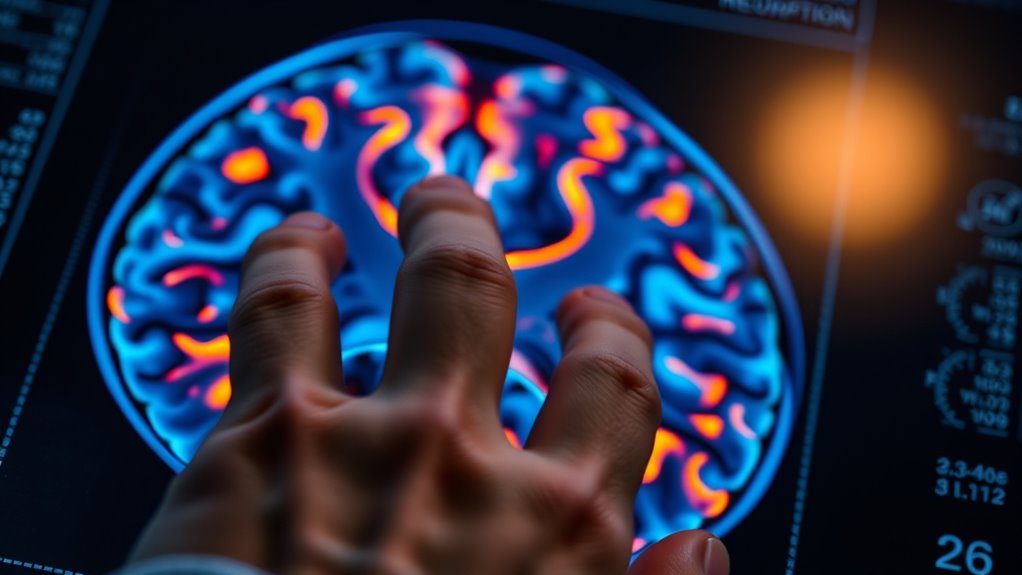
The temporal lobes play a essential role in our perception of presence because they process sensory information related to sound, memory, and emotion. When you feel someone’s presence, your temporal lobes analyze auditory cues, like subtle noises or whispers, that may trigger recognition of familiar voices or environments. They also store and retrieve memories, so if something reminds you of a past experience, your temporal lobes help bring that feeling to awareness. Additionally, these lobes are involved in identifying faces and objects, which can make a presence feel more real. Disruptions or unusual activity in the temporal lobes can lead to the sensation that someone is nearby, even when no one is there. This highlights their important role in creating the perception of a presence. Furthermore, the vibrational state of an individual can influence how these sensory and memory processes are experienced, potentially intensifying feelings of a presence during heightened emotional or spiritual moments.

MUSE 2: The Brain Sensing Headband USB-C- EEG MUSE Headband Meditation Tracker – Multi Sensor Biofeedback Devices for Home Use with Responsive Sound Feedback Guidance – Neurofeedback Devices
Works great on its own — access core EEG-powered feedback and session tracking right out of the box;…
As an affiliate, we earn on qualifying purchases.
As an affiliate, we earn on qualifying purchases.
Emotional Processing and Perception

When your temporal lobes process sensory information, they don’t just analyze sounds and sights—they also interpret the emotions tied to those stimuli. This emotional processing influences how you perceive your environment, often adding a layer of meaning beyond the raw data. If you experience fear or anxiety, your brain may amplify feelings of unease, making a benign stimulus seem threatening or uncanny. Conversely, positive emotions can create comfort or familiarity, even in unfamiliar settings. This emotional overlay can contribute to sensations like feeling a presence, as your brain interprets subtle cues through an emotional lens. The way your emotional state interacts with sensory input shapes your perception, making certain experiences more intense or meaningful based on your current mood and internal emotional context. Additionally, the brain’s power output during emotional processing can heighten the perception of certain stimuli, intensifying feelings of presence or other uncanny sensations.

Ipetboom Acupressure Headband – 1pc Acupressure Wrap Belt Headband for Muscle Stress Relaxation, Massage Head Band for Neck Head Facial Skin Lift, Black Massage Tool for Meditation, 67x6cm
Comfortable Fit: This acupressure head wrap is designed to comfortably fit various head sizes, ensuring that you can…
As an affiliate, we earn on qualifying purchases.
As an affiliate, we earn on qualifying purchases.
Sensory Integration and Misperception

Sensory integration involves your brain combining information from multiple senses to form a cohesive perception of your environment. When this process works smoothly, you experience a clear sense of presence. However, misperceptions happen when your senses send conflicting signals or one sense dominates inaccurately. For example, visual cues might suggest someone is nearby, but your touch or sound might not confirm it. This mismatch can lead your brain to fill in gaps, sometimes creating the sensation of a presence that isn’t there. The following table highlights how sensory discrepancies influence perception:
| Sense 1 | Sense 2 | Result |
|---|---|---|
| Visual | Auditory | Conflicting signals |
| Tactile | Visual | Misinterpretation of presence |
| Vestibular | Visual | Balance and spatial confusion |
Additionally, understanding how sensory processing functions can help explain why these misperceptions occur.
The Impact of Stress and Fatigue

Stress and fatigue can profoundly disrupt your sensory processing, amplifying the likelihood of experiencing a false sense of presence. When you’re exhausted or overwhelmed, your brain’s ability to accurately interpret sensory signals diminishes, making it easier to misattribute sensations. This heightened vulnerability can lead you to perceive footsteps, whispers, or shadows that aren’t really there. Chronic stress also releases hormones like cortisol, which impair neural functioning and heighten alertness to perceived threats, including phantom sensations. As fatigue accumulates, your brain struggles to filter out irrelevant stimuli, increasing the chance of feeling a presence. Essentially, stress and tiredness weaken your sensory boundaries, making it more probable that you’ll interpret ambiguous cues as an external entity or presence.
Frequently Asked Questions
Can Hallucinations of a Presence Occur Without Neurological Issues?
Yes, hallucinations of a presence can occur without neurological issues. You might experience them due to high stress, sleep deprivation, or intense emotions, which can temporarily alter your perception. Sometimes, cultural or personal beliefs also influence these experiences, making them feel very real. While neurological problems can cause such hallucinations, they aren’t always necessary. Your brain’s response to various psychological or environmental factors can create the sensation of a presence even when your nervous system is healthy.
How Do Cultural Beliefs Influence the Feeling of a Presence?
Cultural beliefs shape your perception of a presence like a lens coloring a clear glass. If your culture regards spirits or ancestors as real, you’re more likely to interpret unexplained sensations as these entities. These beliefs act as a blueprint, guiding your mind to see or feel what fits within your cultural narrative. So, your cultural background can turn an ordinary feeling into a meaningful encounter, like a story handed down through generations.
Are There Genetic Factors Linked to Sensing a “Presence”?
Yes, there are genetic factors that may influence your tendency to sense a “presence.” Research suggests that certain genes affect brain chemistry and neural pathways involved in perception and hallucinations. If you have specific genetic variants, you might be more prone to experiencing these sensations. While genetics play a role, environmental factors and individual experiences also shape how and when you feel a presence.
What Role Does Age Play in Experiencing a Presence?
As you age, your likelihood of experiencing a presence can change due to shifts in brain function and sensory perception. Younger individuals might be more sensitive to subtle environmental cues, while older adults could experience these sensations differently because of changes in neural processing or heightened awareness of mortality. Age-related variations in sleep patterns and cognitive health also influence how often and vividly you might sense a presence.
Can Medication Affect the Perception of a “Presence”?
Yes, medication can affect your perception of a “presence.” Some drugs alter brain chemistry, influencing sensory processing and hallucinations. For example, certain psychiatric medications might reduce or heighten sensations of a presence, depending on how they affect neurotransmitters like serotonin or dopamine. If you’re on medication and notice changes in perception, it’s important to discuss this with your healthcare provider to understand potential effects and guarantee your safety.
Conclusion
Understanding the neural and emotional factors behind feeling a “presence” shows how your brain’s activity, especially in the temporal lobes, shapes perception. Misinterpretations of sensory input, combined with stress or fatigue, can make you feel like someone’s there when no one is. Isn’t it fascinating how your mind’s wiring influences what you experience? Recognizing these biological explanations helps you see these sensations as natural, rather than mysterious, parts of your brain’s complex machinery.