
EMF interference from household electronics, wiring, and external sources can mimic paranormal signals, causing you to misinterpret normal electromagnetic fluctuations as supernatural activity. Devices like Wi-Fi routers, cordless phones, and faulty wiring generate electromagnetic fields that can produce false positives on sensitive equipment. External factors like power lines and transformers also contribute. Understanding how these signals overlap helps you distinguish real phenomena from interference—keep going to learn how to prevent this confusion.

Get movie nights delivered free with Prime
- Fast, free delivery on millions of items
- Prime Video, Amazon Music and more included
- Member-only deals all year
Key Takeaways
- EMF interference from electronic devices and wiring can produce fluctuating signals that mimic paranormal activity.
- Structural elements and building materials can reflect or dampen EMFs, causing misleading readings.
- External sources like power lines and transformers generate consistent EMF noise mistaken for ghostly signals.
- Environmental EMF fluctuations often correlate with device usage, leading investigators to false paranormal interpretations.
- Without proper control, EMF noise can be misread as supernatural phenomena, emphasizing the need for careful environmental assessment.
EMF detector for paranormal investigation
As an affiliate, we earn on qualifying purchases.
As an affiliate, we earn on qualifying purchases.
Understanding Electromagnetic Fields and Their Sources
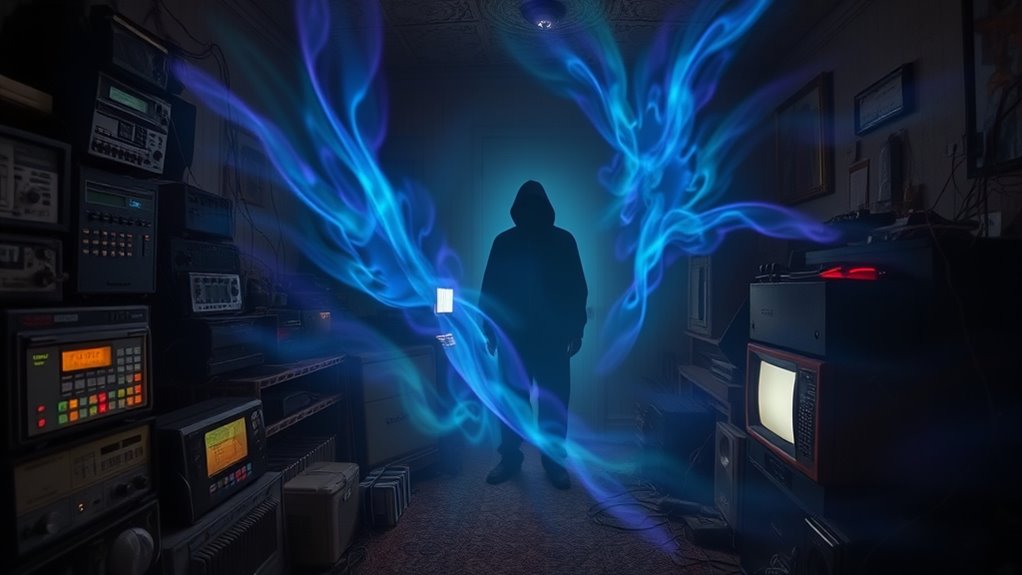
Electromagnetic fields (EMFs) are invisible forces generated by a variety of natural and man-made sources. You encounter EMFs daily, from the appliances in your home to natural phenomena like the Earth’s magnetic field. Man-made sources include power lines, cell phones, Wi-Fi routers, and electronic devices. These fields are generated when electric current flows through wires and equipment, creating fluctuating electromagnetic energy. EMFs can vary in strength depending on proximity and the power source. You might not see them, but they permeate your environment constantly. Understanding where these fields come from helps you recognize how they can influence electronic devices and, potentially, how they might be mistaken for paranormal signals. Being aware of these sources is essential in differentiating natural electromagnetic activity from other phenomena.
As an affiliate, we earn on qualifying purchases.
How Sensitive Paranormal Equipment Detects EMF Fluctuations

Because they are designed to pick up even the faintest signals, sensitive paranormal equipment uses highly tuned sensors to detect fluctuations in electromagnetic fields. These devices can identify subtle changes that might signal paranormal activity or simply environmental noise. Here are four ways they achieve this:
Sensitive paranormal tools detect subtle electromagnetic changes, distinguishing genuine activity from environmental noise with precision.
- Magnetometers: Measure tiny variations in magnetic fields, sensing even minor disturbances.
- Electromagnetic Field (EMF) Detectors: Alert you to fluctuating EMF levels, which could indicate unseen influences.
- Data Loggers: Record EMF readings over time, allowing analysis of fluctuations and patterns.
- Frequency Analyzers: Detect specific electromagnetic frequencies, helping differentiate between normal background noise and potential paranormal signals.
This precision helps investigators distinguish genuine anomalies from everyday electromagnetic interference.
Additionally, understanding environmental noise sources is crucial for accurate interpretation of data.
magnetometer for electromagnetic fields
As an affiliate, we earn on qualifying purchases.
As an affiliate, we earn on qualifying purchases.
Common Household Devices That Contribute to EMF Noise

Many common household devices generate electromagnetic noise that can interfere with paranormal investigations. Items like Wi-Fi routers, cordless phones, microwave ovens, and refrigerators emit fluctuating EMF signals that can be picked up by sensitive equipment. Even small appliances like electric fans and alarm clocks contribute to background noise, making it harder to isolate genuine paranormal signals. Fluorescent lights and smart home devices continuously produce low-level EMF emissions, adding to the clutter. These devices often operate on similar frequencies as investigative tools, causing false readings or masking real signals. To improve accuracy, you should turn off or unplug non-essential electronics during investigations. Minimizing household EMF sources helps ensure that your readings reflect the environment more accurately, reducing the risk of misinterpreting interference as paranormal activity. Additionally, understanding electromagnetic interference (EMI) can help investigators better recognize and differentiate between genuine signals and noise.
As an affiliate, we earn on qualifying purchases.
External Environmental Factors Influencing EMF Readings
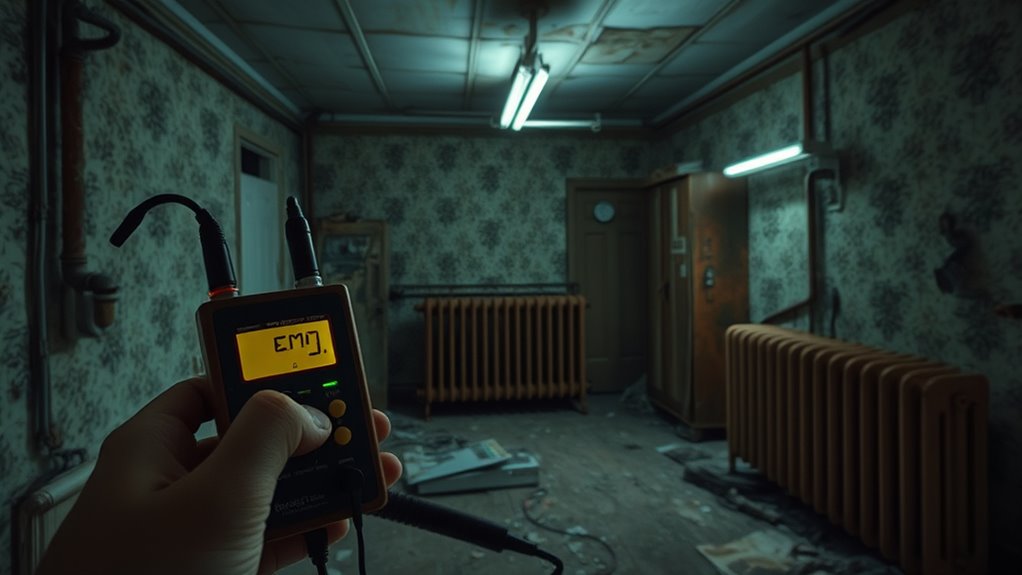
External environmental factors can profoundly impact your EMF readings. Nearby electronic devices, power lines, and building materials all contribute to interference that may mimic paranormal signals. Understanding these influences helps you distinguish genuine phenomena from environmental noise. For example, high-quality projectors for gaming enthusiasts often include features to reduce electromagnetic interference, which can be useful knowledge when considering the impact of electronic devices on EMF readings.
Nearby Electronic Devices
Nearby electronic devices can profoundly influence EMF readings, especially in environments where sensitive paranormal detection equipment is used. These devices emit electromagnetic signals that can mimic or distort genuine paranormal signals, leading to false readings. To understand their impact, consider these common sources:
- Smartphones and tablets, which continuously emit signals.
- Wireless routers and Wi-Fi hotspots, creating constant electromagnetic fields.
- Digital clocks and alarm systems, generating localized EMF noise.
- Bluetooth devices, transmitting signals even when not actively in use.
These electronic devices are often overlooked, yet they can substantially interfere with EMF measurements. Being aware of their presence helps ensure more accurate readings and reduces the risk of mistaking electronic noise for paranormal activity. Additionally, EMF shielding techniques can help minimize interference and improve measurement reliability.
Power Line Interference
Power line interference is a significant external factor that can distort EMF readings during paranormal investigations. High-voltage power lines and their associated transformers generate electromagnetic fields that extend into nearby areas. When you’re measuring EMF levels, these fields can create false signals that mimic paranormal activity. Fluctuations in power line load, such as during peak hours, can cause unpredictable EMF spikes. Additionally, electrical wiring within buildings connected to the grid can introduce interference, especially if wiring is old or improperly grounded. This type of interference is often persistent and difficult to distinguish from genuine paranormal signals. To ensure accurate readings, you need to be aware of nearby power lines and avoid investigating in areas where electrical infrastructure is present or active. Understanding the 16PF traits of investigators can also improve interpretation of ambiguous signals and enhance overall investigation accuracy.
Structural Material Effects
Structural materials such as metal, concrete, and drywall can substantially influence EMF readings during paranormal investigations. These materials can either block, amplify, or distort electromagnetic signals, leading you to false positives or missed phenomena. A thorough understanding of inspirational quotes about fatherhood and their themes can provide insight into the importance of careful interpretation in investigations. 1. Metal frameworks can create strong electromagnetic fields, mimicking paranormal activity. 2. Concrete walls may absorb or dampen EMF signals, hiding genuine anomalies. 3. Drywall and insulation can insulate or reflect EMF interference, skewing readings. 4. Furnishings and fixtures made of metal or conductive materials may generate localized EMF fluctuations. Understanding how these materials interact with EMFs helps you interpret readings more accurately and avoid misidentifying environmental influences as paranormal activity. Recognizing these effects allows for better control and more reliable investigations.
The Overlap Between Genuine Paranormal Signals and Electronic Interference

You might notice that some electromagnetic signals seem similar, whether they’re from electronic devices or potential paranormal sources. Recognizing the difference can be tricky because common electronic interference often mimics genuine signals. Understanding the typical sources of interference helps you better identify what’s truly unusual. Additionally, being aware of electronic interference patterns can aid in distinguishing between natural and anomalous electromagnetic signals.
Differentiating Signal Sources
Distinguishing genuine paranormal signals from electronic interference can be challenging because both often produce similar electromagnetic patterns. To tell them apart, you need to look for specific clues:
- Consistency: Paranormal signals tend to be more sporadic, while interference usually follows predictable patterns.
- Source Identification: Check nearby devices—electronic interference often correlates with known electronics or wiring.
- Frequency Range: Genuine signals often occur outside common interference frequencies, which are well-documented.
- Environmental Changes: Moving equipment or changing environment can eliminate interference but typically doesn’t affect paranormal signals.
- Understanding electromagnetic phenomena: Recognizing how EMF interference interacts with electronic devices can help differentiate it from authentic paranormal activity.
Common Electronic Interferences
Electronic interference often overlaps with genuine paranormal signals, making it difficult to tell them apart. Common sources include household devices like Wi-Fi routers, microwave ovens, and cordless phones, which emit electromagnetic fields that can mimic or distort paranormal energies. Fluorescent lights and faulty wiring also produce fluctuating EMF signals, creating false positives on detection equipment. Nearby power lines and transformers generate constant electromagnetic noise that can be mistaken for spiritual activity. Even electronic gadgets such as baby monitors or security systems can cause interference. As you attempt to identify paranormal phenomena, be aware that these everyday electronic sources can produce signals that appear similar to genuine paranormal activity, leading to potential misinterpretations and false alarms. Recognizing these common interferences is key to accurate readings. Additionally, understanding the types of headphone jacks and their interference potential can help you better interpret audio signals during investigations.
Techniques for Identifying and Filtering Out EMF Interference
To effectively identify and filter out EMF interference, it’s essential to understand the sources and patterns of the signals you’re dealing with. Recognizing these patterns helps you distinguish genuine paranormal signals from electronic noise. Here are key techniques:
- Use a reliable EMF meter to record readings over time, noting fluctuations and consistent patterns.
- Map out the environment to identify persistent sources like wiring, appliances, or electronics.
- Conduct tests by turning off or relocating suspected sources to see if readings change.
- Compare readings at different times and locations to identify anomalies that aren’t linked to typical interference.
- Be aware of how AI technology is used to analyze and interpret electromagnetic data, which can enhance your ability to differentiate between genuine and false signals.
Case Studies of Misinterpreted EMF Readings in Paranormal Investigations

Many paranormal investigations have been clouded by misinterpreted EMF readings, leading to false claims of supernatural activity. For example, in one case, a sudden spike in EMF levels was attributed to a ghostly presence, but it was actually caused by faulty wiring in the building’s electrical system. In another investigation, investigators misread electromagnetic interference from nearby appliances as paranormal energy, resulting in a haunted-house claim that quickly unraveled. A different example involved a high EMF reading near an old radio tower, mistaken for a ghostly apparition, when in reality, radio signals caused the anomaly. These cases highlight how easily EMF sources can be misunderstood, emphasizing the importance of verifying environmental factors before attributing readings to paranormal phenomena.
Best Practices to Minimize EMF Interference During Investigations
Effective investigation of paranormal activity requires proactively minimizing EMF interference, as uncontrolled sources can lead to false positives. To guarantee accurate readings, take these steps:
- Turn off or move away from electronics and appliances that emit strong electromagnetic fields.
- Use battery-powered devices instead of plugged-in equipment to reduce stray signals.
- Conduct investigations in areas with minimal electrical wiring and avoid power lines.
- Use shielding materials like Faraday cages or EMF-blocking fabrics to isolate sensitive equipment.
The Importance of Accurate Data Interpretation in Paranormal Research
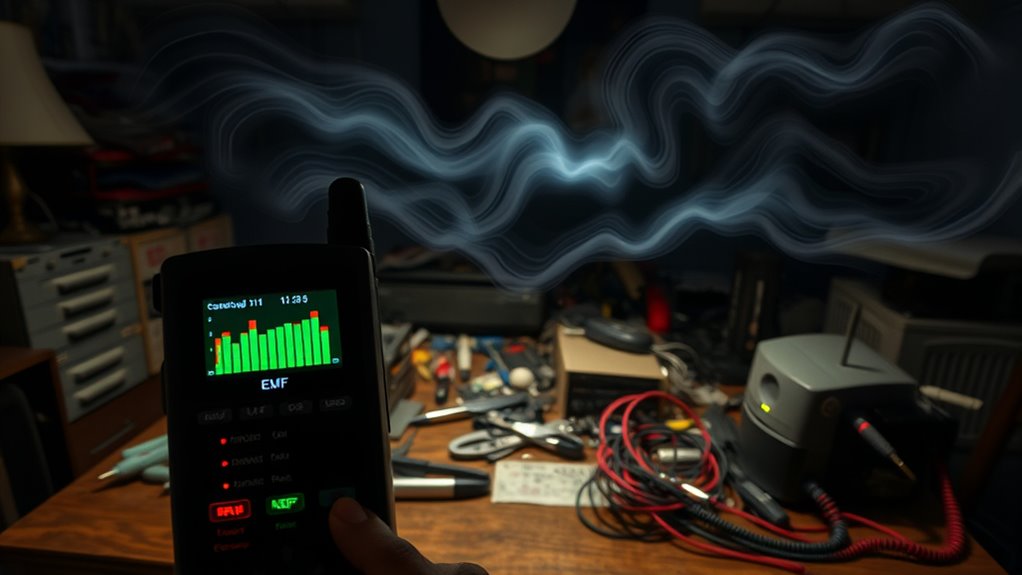
While minimizing EMF interference is essential for gathering reliable data, the way you interpret those signals determines the validity of your findings. Accurate interpretation requires understanding that EMF readings can be influenced by many factors, including electrical devices and environmental noise. You need to distinguish between genuine paranormal signals and natural or technical artifacts. Relying solely on EMF spikes without context can lead to false conclusions. Cross-reference data with other evidence, such as audio recordings or visual observations. Also, keep detailed logs of conditions during each reading. Training yourself to recognize patterns and anomalies enhances your ability to interpret data correctly. Ultimately, careful analysis and skepticism are your best tools for avoiding misreads and establishing credible evidence in paranormal research.
Frequently Asked Questions
How Can Investigators Differentiate Between Real Paranormal Signals and EMF Interference?
You can differentiate real paranormal signals from EMF interference by conducting controlled tests. First, check for consistent readings across multiple devices in different locations. Turn off nearby electronics to see if readings change. Use specialized equipment designed to filter out interference. Also, record environmental factors like electrical wiring or appliances. If signals persist despite these steps, they’re more likely to be genuine paranormal activity.
Are There Specific Times or Conditions When EMF Interference Is More Prevalent?
Yes, EMF interference is more common during thunderstorms, power surges, or when electrical devices are actively running nearby. You should be especially cautious during high electrical activity, such as when appliances turn on or off, or during weather changes that cause electrical disturbances. These conditions increase the likelihood of false readings, so it’s essential to monitor the environment carefully and eliminate unnecessary electronic devices during investigations.
Can EMF Interference Mimic Specific Paranormal Phenomena Like Voices or Apparitions?
Think of EMF interference as a mischievous echo in a haunted hall. It can mimic voices by creating fluctuating signals that sound like whispers or shouts, tricking your senses. Apparitions? They might appear when electromagnetic fields distort your perception, casting shadows that seem like ghostly figures. So, yes, EMF interference can cleverly mimic paranormal phenomena, making it essential to contemplate electronics’ influence during investigations.
What Advanced Technology Exists to Reduce or Eliminate EMF Noise in Investigations?
You can use advanced EMF shielding technology like Faraday cages or specialized conductive fabrics to reduce interference during investigations. Additionally, employ high-quality, low-noise EMF meters with built-in filtering capabilities, and utilize software that can analyze and filter out background noise. Portable magnetic shielding devices are also available. Combining these tools helps you get cleaner readings, making your paranormal investigations more accurate and reliable.
How Does Electromagnetic Interference Affect the Credibility of Paranormal Research Findings?
Electromagnetic interference can seriously undermine your paranormal research by creating false signals or masking genuine ones. When EMF noise fluctuates due to nearby electronic devices or faulty equipment, it becomes harder for you to distinguish between real paranormal activity and environmental interference. This diminishes the credibility of your findings, making it vital for you to control EMF sources and use proper shielding to guarantee your results are accurate and trustworthy.
Conclusion
So, next time your ghost hunt is interrupted by a weird EMF spike, remember—it’s probably just your toaster saying hello. Don’t blame the spirits; blame your electronics that love to play tricks. Keep your equipment grounded, your house unplugged, and your skepticism sharp. After all, if you’re gonna chase ghosts, at least make sure it’s not your Wi-Fi causing the ghostly giggles. Happy hunting—preferably with fewer false alarms!
Fall Picks
fall essentials
As an affiliate, we earn on qualifying purchases.