Believing in the supernatural often stems from your natural tendencies to find patterns and seek explanations for uncertain events. Cognitive biases, like pattern recognition and confirmation bias, make you interpret coincidences as meaningful or divine. Your brain also turns to supernatural stories for emotional comfort and to reduce fear of the unknown. Social influences and cultural traditions reinforce these beliefs, helping them persist. To understand how your mind shapes these perceptions, keep exploring the fascinating links between psychology and supernatural thinking.

Get movie-night favorites delivered free — and shop member deals
- Fast, free delivery on millions of items
- Access to Prime Big Deal Days deals on October 6–7
- Prime Video, Amazon Music and more included
Key Takeaways
- Cognitive biases like pattern recognition and confirmation bias lead people to interpret ambiguous events as supernatural.
- Evolutionary and cultural factors foster supernatural beliefs as mechanisms for social cohesion and survival.
- Emotional needs, such as seeking comfort and meaning, drive belief in supernatural phenomena during times of uncertainty.
- Suggestibility and vivid imagination increase susceptibility to paranormal experiences and reinforce beliefs.
- Social reinforcement through shared stories and rituals sustains and normalizes supernatural beliefs across communities.
As an affiliate, we earn on qualifying purchases.
The Evolutionary Roots of Supernatural Beliefs
The evolutionary roots of supernatural beliefs suggest that humans have developed these ideas as adaptive tools for survival. You might not realize it, but believing in spirits, gods, or unseen forces could have helped your ancestors navigate a dangerous world. These beliefs provided a framework for understanding random events, like natural disasters or illnesses, which otherwise seemed inexplicable. By attributing such events to supernatural agents, they fostered social cohesion and reinforced shared moral codes. This collective understanding encouraged cooperation and helped communities survive threats. Over time, these beliefs became ingrained in cultures, offering comfort and explanations for life’s uncertainties. Essentially, supernatural beliefs served as mental shortcuts, helping early humans make sense of the world and increase their chances of survival. Additionally, these beliefs often facilitated social cohesion, enabling communities to unite in the face of adversity.
As an affiliate, we earn on qualifying purchases.
Cognitive Biases and Their Role in Supernatural Thinking
You might notice how confirmation bias leads you to focus on evidence that supports supernatural beliefs while ignoring contradicting information. Pattern recognition makes you see connections or signs where none exist, fueling superstitions. Cognitive dissonance then helps you justify these beliefs, even when faced with opposing facts. Additionally, the Law of Attraction emphasizes the power of positive thinking to manifest desires, which can reinforce superstitions and supernatural beliefs through emotional and mental alignment.
Confirmation Bias Effects
Confirmation bias plays a significant role in how people interpret supernatural phenomena, often leading them to favor information that supports their existing beliefs. When you encounter stories, evidence, or experiences, you tend to focus on details that confirm what you already think is true. This bias causes you to ignore or dismiss evidence that contradicts your beliefs, reinforcing your worldview. For example, if you believe in ghosts, you might interpret strange noises as paranormal activity, while dismissing logical explanations. Confirmation bias makes it easier to maintain your beliefs by filtering information selectively. It prevents you from objectively evaluating evidence, making supernatural beliefs feel more credible and convincing. Recognizing this bias helps you understand how your perceptions are influenced and why supernatural beliefs persist. Additionally, understanding fraud detection techniques can shed light on how false or misleading information might be intentionally or unintentionally manipulated to support supernatural claims.
Pattern Recognition Tendencies
Humans are naturally wired to find patterns, a tendency that can lead to seeing connections where none exist. This cognitive bias helps us make sense of complex information quickly, but it also opens the door to superstitious beliefs. When you notice random events occurring together, your brain may interpret them as meaningful or supernatural. For example, you might see a sign or coincidence as evidence of a hidden force or divine intervention. This pattern recognition creates a sense of order and control, even when no real connection exists. Recognizing this bias helps you understand why you might be prone to assigning significance to coincidences. Additionally, understanding the influence of confirmation bias can shed light on how beliefs in the supernatural are reinforced through selective perception.
Cognitive Dissonance Role
When people encounter events that challenge their existing beliefs, cognitive dissonance often arises—a discomfort stemming from holding conflicting thoughts or beliefs. To reduce this tension, you might unconsciously justify or reinterpret the event, often favoring supernatural explanations. This process reinforces your original beliefs and makes it harder to accept conflicting evidence. Recognizing this, consider how beliefs in miracles or spirits persist despite scientific contradictions.
| Dissonance Reduction Strategies | Examples in Supernatural Thinking |
|---|---|
| Rationalization | Justifying a supernatural event as divine intervention |
| Confirmation Bias | Remembering only experiences that support beliefs |
| Denial | Ignoring evidence contradicting supernatural claims |
| Selective Attention | Focusing on coincidences that seem meaningful |
| Belief Perseverance | Clinging to beliefs despite disconfirming evidence |
supernatural phenomenon detection devices
As an affiliate, we earn on qualifying purchases.
As an affiliate, we earn on qualifying purchases.
The Impact of Uncertainty and Fear on Belief Formation
Uncertainty and fear often drive people to seek answers beyond what science can provide, shaping their belief in the supernatural. When faced with unknowns or threats, your mind looks for explanations that feel more immediate and reassuring. Supernatural beliefs offer a sense of control or understanding in chaotic situations, reducing anxiety. Fear of death, loss, or the unknown makes supernatural narratives appealing because they promise protection, guidance, or an afterlife. These beliefs fill gaps in your knowledge, offering comfort and reducing uncertainty. By attributing unexplained events to supernatural forces, you alleviate feelings of helplessness. This emotional response reinforces your belief systems, making supernatural explanations more compelling during stressful times. Additionally, cognitive biases such as pattern recognition and confirmation bias can lead individuals to interpret ambiguous events as supernatural, further strengthening their beliefs. Ultimately, fear and uncertainty act as powerful catalysts in shaping and strengthening supernatural beliefs.
psychology of supernatural beliefs book
As an affiliate, we earn on qualifying purchases.
As an affiliate, we earn on qualifying purchases.
The Need for Meaning and Purpose in Supernatural Narratives
Have you ever wondered why supernatural stories resonate so deeply during times of confusion or hardship? It’s because they provide a sense of meaning and purpose that everyday life often lacks. When faced with uncertainty, these narratives help you create a framework for understanding your experiences. They answer questions about why things happen and what your role is in a larger story. Additionally, they can activate the Law of Attraction by aligning your beliefs and emotions with positive outcomes. Consider these aspects: 1. They offer a sense of connection to something greater than yourself. 2. They give hope by implying that struggles have a purpose or end. 3. They help interpret moral and existential questions. 4. They foster a sense of belonging through shared beliefs.
Emotional Comfort and the Appeal of the Supernatural
The supernatural often provides a powerful source of emotional comfort because it offers reassurance beyond the limits of everyday experience. When you face uncertainty, fear, or loss, believing in supernatural forces or beings can make these feelings more manageable. It gives you a sense of control or connection to something greater, reducing feelings of loneliness or helplessness. Supernatural beliefs can also foster hope, especially in tough times, by suggesting that life continues beyond death or that justice exists on a cosmic level. This comfort isn’t just about explanations; it’s about soothing your emotional wounds. By embracing the supernatural, you find a refuge where fears are alleviated, and a sense of peace is restored amid life’s unpredictability. Incorporating protective styling benefits like those found in crochet styles for locs can also serve as a form of emotional reassurance through personal expression.
Cultural Influences Shaping Supernatural Beliefs
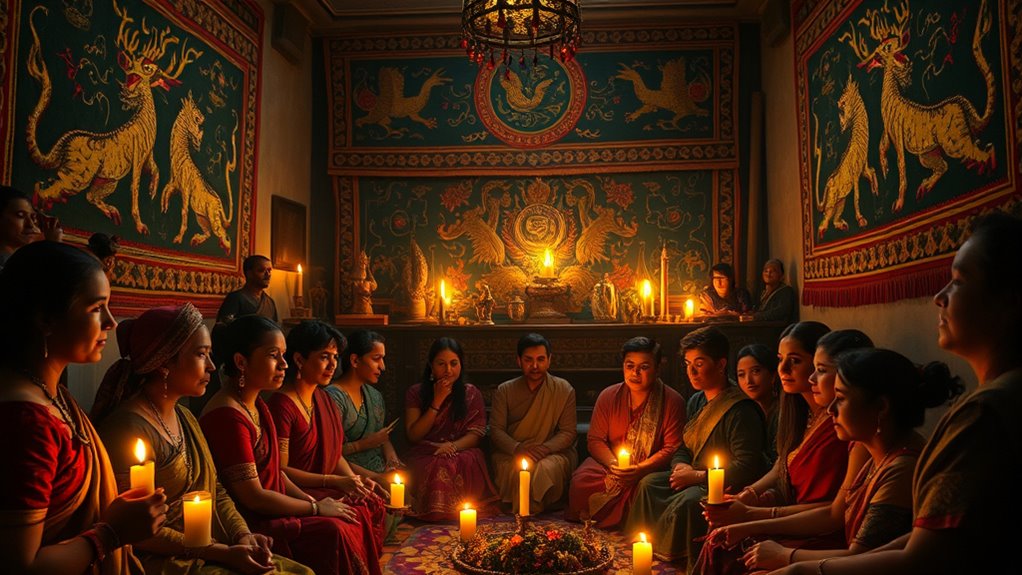
Cultural traditions and societal norms shape how you perceive and interpret supernatural phenomena. Your beliefs are influenced by stories, rituals, and taboos passed down through generations. These cultural elements create frameworks that validate or challenge supernatural claims.
- Folklore and mythologies provide narratives that reinforce supernatural explanations.
- Religious teachings often embed beliefs about spirits, gods, and the afterlife, shaping perceptions.
- Societal taboos and moral codes influence what is considered supernatural or taboo.
- Media and popular culture perpetuate and normalize supernatural concepts, reinforcing collective beliefs.
Together, these factors mold your understanding of supernatural events, aligning personal beliefs with cultural expectations and shared histories.
The Psychology Behind Ghost Sightings and Paranormal Experiences
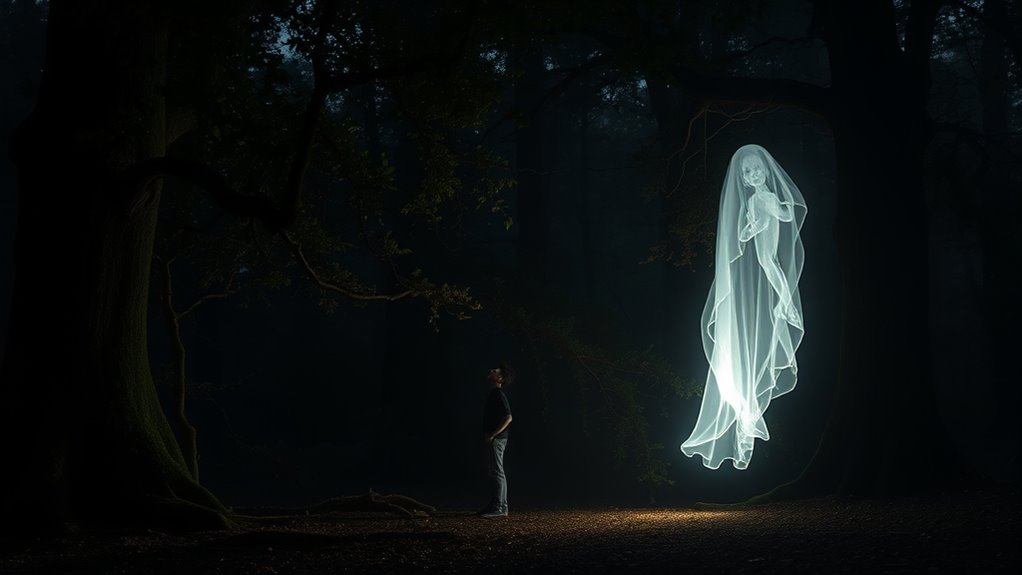
Many paranormal experiences can be explained by psychological factors that influence perception and cognition. When you encounter an unexplained event, your brain may interpret ambiguous stimuli as supernatural due to existing beliefs or expectations. Stress, fatigue, or heightened emotions can also distort perception, making ordinary sounds or shadows seem like ghostly activity. Additionally, your mind tends to fill in gaps in sensory information, creating vivid images or sensations that feel real. Cognitive biases, such as pattern recognition and confirmation bias, lead you to interpret random or mundane occurrences as evidence of paranormal phenomena. These psychological processes shape how you perceive and remember paranormal encounters, often reinforcing beliefs even when no actual supernatural event has occurred. Furthermore, Sleep Patterns play a role in how perceptions are processed and can influence the likelihood of experiencing vivid or unusual sensations.
The Role of Imagination and Suggestibility
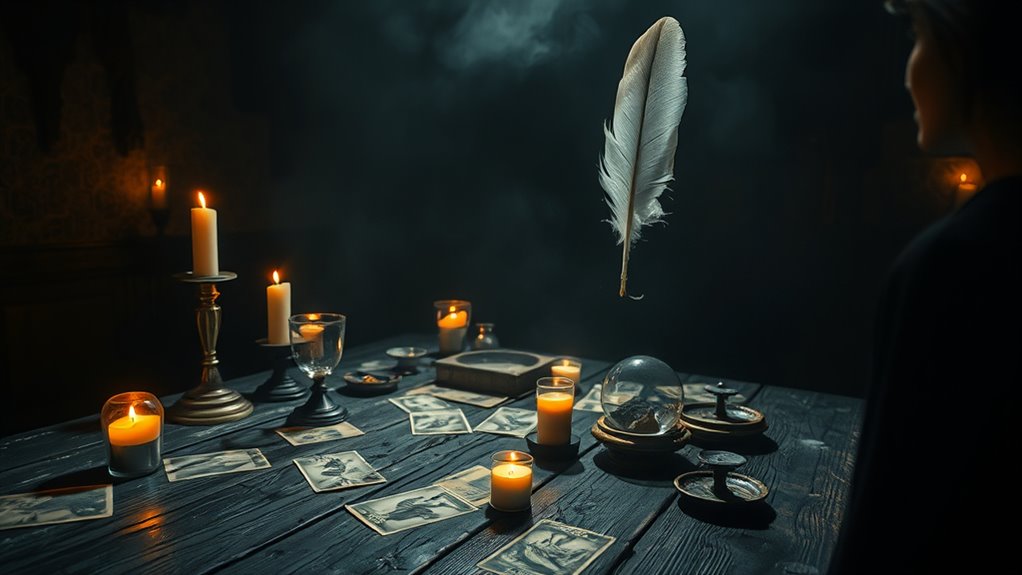
Imagination plays a powerful role in shaping how you perceive and interpret mysterious stimuli. When you’re in unfamiliar or ambiguous situations, your mind fills in gaps, creating vivid images or sensations that seem real. Suggestibility amplifies this effect, making you more prone to accept certain ideas or cues without question. Your expectations, beliefs, and prior experiences influence what you perceive and how you interpret it. To deepen your understanding:
- Your imagination can turn vague sounds into ghostly whispers.
- Suggestibility heightens your tendency to see patterns or faces in random objects.
- Expectations influence whether you interpret an unexplained event as supernatural.
- Mental imagery can make illusions feel convincingly real.
- Cognitive biases shape how you process ambiguous information, reinforcing supernatural beliefs.
Recognizing this interplay helps you see how your mind can craft experiences that support supernatural beliefs.
How Social Dynamics Reinforce Supernatural Beliefs
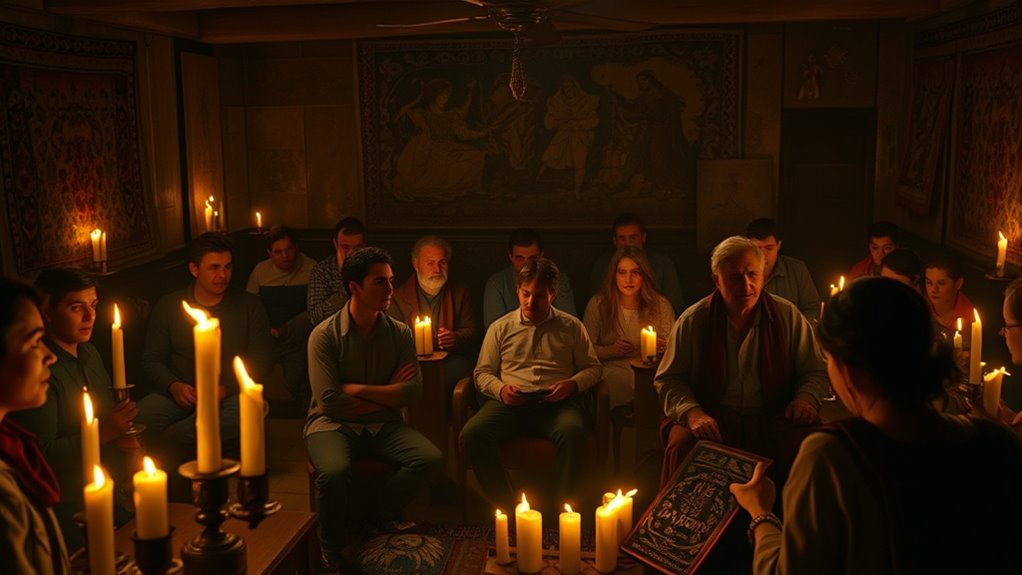
Social interactions profoundly reinforce supernatural beliefs by creating environments where stories and experiences are shared and validated. When you hear others recount supernatural events, it boosts your confidence that these experiences are real. Group settings like community gatherings or online forums foster collective belief, making doubts seem less credible. People tend to conform to group opinions, strengthening shared beliefs over time. To illustrate, consider this table:
| Social Setting | Effect on Belief |
|---|---|
| Group storytelling | Validates personal experiences |
| Peer reinforcement | Increases confidence in supernatural explanations |
| Cultural rituals | Reinforces collective worldview |
These dynamics create a feedback loop, making supernatural beliefs more ingrained and resistant to skepticism. You feel connected, validated, and more likely to accept these beliefs as true. Additionally, social reinforcement can lead to the normalization of supernatural explanations within communities.
The Persistence of Supernatural Beliefs in the Modern World
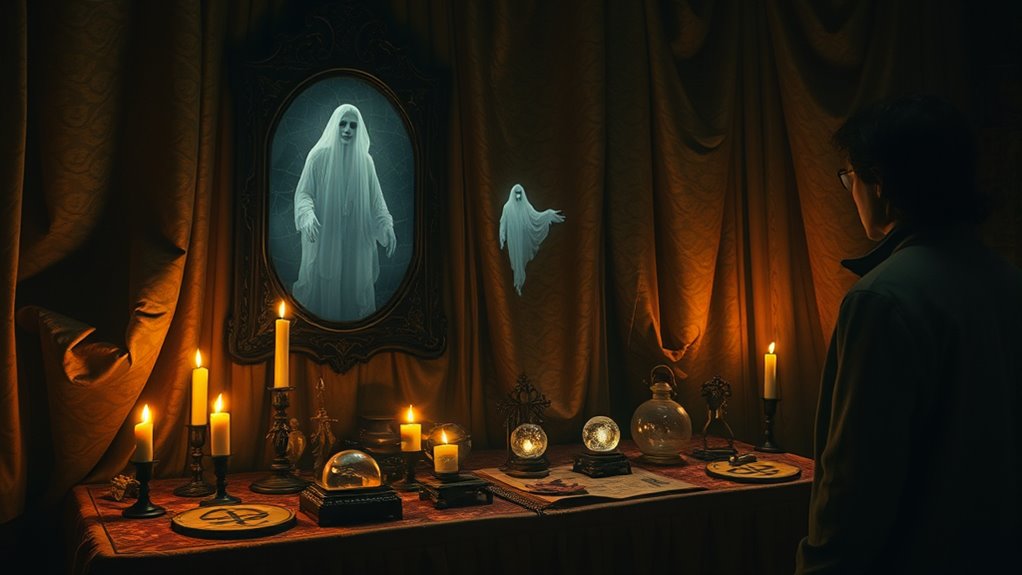
Despite advances in science and rational inquiry, belief in the supernatural remains deeply rooted in many modern communities. You might find it surprising how these beliefs persist despite evidence to the contrary. Several factors help sustain them:
- Cultural Tradition – Deeply ingrained customs keep supernatural beliefs alive across generations.
- Emotional Comfort – Beliefs in spirits or divine intervention offer solace during difficult times.
- Cognitive Biases – Pattern recognition and confirmation bias reinforce supernatural explanations.
- Social Identity – Belonging to a group with shared beliefs strengthens individual commitment and resistance to change.
These elements create a complex web that maintains supernatural beliefs, demonstrating their resilience despite scientific progress. You’re often influenced by these factors, even if subconsciously, keeping such beliefs relevant today.
Frequently Asked Questions
Can Supernatural Beliefs Influence Mental Health Outcomes?
Supernatural beliefs can influence your mental health positively or negatively. If you find comfort and purpose in these beliefs, they may provide emotional support and resilience during stressful times. However, if such beliefs lead to paranoia, isolation, or conflicts with reality, they might worsen mental health issues. It’s important to balance personal beliefs with medical advice and seek help if these beliefs cause significant distress or impair your daily functioning.
How Do Childhood Experiences Shape Supernatural Beliefs?
Your childhood experiences shape your supernatural beliefs by shaping your worldview. For example, if you grow up hearing stories of spirits from your family, you might develop a strong belief in ghosts. These early encounters create mental frameworks that influence how you interpret unexplained events later in life. Your childhood environment, whether nurturing or fearful, plays a vital role in forming your views on the supernatural.
Are There Neurological Differences in Believers Versus Skeptics?
You have different brain activity patterns depending on whether you believe in the supernatural or not. Believers often show heightened activity in areas linked to emotion and imagination, like the limbic system, while skeptics tend to engage regions involved in critical thinking and logic, such as the prefrontal cortex. These neurological differences influence how you interpret ambiguous stimuli and form beliefs about supernatural phenomena.
What Role Does Media Play in Reinforcing Supernatural Ideas?
Media plays a significant role in reinforcing supernatural ideas by constantly exposing you to stories, imagery, and themes that evoke curiosity and wonder. Shows, movies, and social media often sensationalize supernatural phenomena, making you more likely to accept them as real. This repeated exposure shapes your beliefs, blurs the line between fact and fiction, and encourages you to interpret ambiguous experiences through a supernatural lens, strengthening your belief system.
How Do Supernatural Beliefs Vary Across Different Age Groups?
You’ll find that supernatural beliefs often change with age. Younger people tend to be more open-minded and curious, embracing paranormal ideas more readily. As you grow older, you might become more skeptical or rational, questioning these beliefs. However, cultural background and personal experiences also influence your views, so beliefs can persist or evolve differently across age groups. Your environment and beliefs shape how you perceive the supernatural at any age.
Conclusion
As you consider these layers of belief, imagine a tapestry woven from your fears, hopes, and social bonds—each thread pulling you closer to the supernatural. Beliefs flourish where uncertainty reigns, offering comfort and meaning like stars guiding you through darkness. Recognize how your mind, shaped by evolution and emotion, paints vivid pictures of the unseen. In this intricate web, the supernatural remains a mirror reflecting your deepest needs and fears.
Halloween Picks
halloween
As an affiliate, we earn on qualifying purchases.