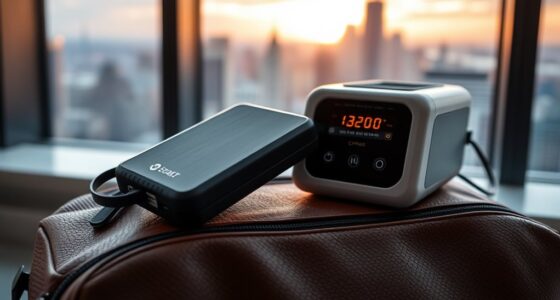
For a portable solar panel for camping and home, my best overall pick is the Jackery Solar Generator 300, which pairs a familiar power-station format with a 40W panel for modest charging needs. The Jackery Solar Generator 1000 v2 is the stronger choice for larger backup loads, while the standalone ZOUPW 100W panel suits buyers who already own a compatible power station. The main tradeoff is between a compact kit that is easy to carry and a higher-capacity setup that can run more devices but takes up more space. Panel wattage alone does not tell you how quickly a power station will recharge, so battery capacity, input limits, and sunlight all matter. Read on for how the 13 options differ and which setup fits your camping or home-backup plans.

Get movie nights delivered free with Prime
- Fast, free delivery on millions of items
- Prime Video, Amazon Music and more included
- Member-only deals all year
Complete the kit


Key Takeaways
- Complete kits and standalone panels serve different buyers: the Jackery and other generator bundles include a power station, while the ZOUPW, FlexSolar, and 200W panels need a compatible power station bought separately.
- The 1000 v2 is the capacity outlier: its 1070Wh battery and 1500W AC output offer a wider range of backup uses than the 88Wh MARBERO or the several 300W-class kits, at the cost of greater size and carry burden.
- Panel wattage changes the recharging picture: the 200W standalone panel and 100W-class panels can support faster solar input than 21W, 30W, or 40W kit panels, subject to the power station’s input limits and real sunlight.
- Repeated 300W kits are not interchangeable by label: the lineup includes different panel sizes and battery details, so buyers should compare listed capacity, AC output, ports, and solar input rather than relying on “300W” alone.
- Water resistance and portability address separate needs: IP67-rated standalone options are geared toward outdoor panel handling, while a bundled generator may be more convenient for a ready-to-use camp or outage kit.




| portable solar panel for camping and home | Weight | Battery capacity | Dimensions |
|---|---|---|---|
| Portable Solar Generator with | — | 280Wh | — |
| Jackery Solar Generator 300 wi | 12.9 pounds | 292Wh | 15.43 x 9.92 x 11.89 inches |
| 200W Portable Solar Panel for | 15.7 pounds | — | 23 x 1.9 x 22 inches |
| MARBERO Solar Powered Generato | 2.3 pounds | 88Wh | 6.5 x 3.2 x 4.6 inches |
| DaranEner 300W Portable Power | 5.84 pounds | 192Wh | 8.4 x 5.3 x 7.4 inches |
| Jackery Solar Generator 1000 v | 23.8 lb | 1070Wh | 12.87 x 8.82 x 9.72 in |
| ZOUPW 100W Portable Solar Pane | 9.5 lb | — | — |
| Solar Powered Generator 100W w | 3.3 lb | 146Wh | 7.5 x 3.7 x 6.1 in |
| Portable Power Station with 40 | 3.3 lb | Not specified | 7.6 x 3.7 x 6.1 in |
| 60W Foldable Solar Panel for P | 3.9 lb | — | — |
| Portable Solar Generator 300W | — | — | — |
| FlexSolar 100W Foldable Portab | 4.1 lb (1.85 kg) | — | — |
| Portable Solar Generator 300W | 6.5 lb | 296Wh | 9 × 5.5 × 7.5 in |
More Details on Our Top Picks
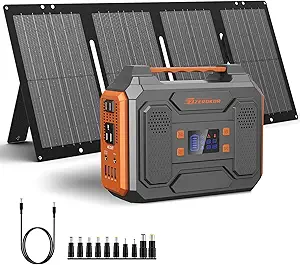
Portable Solar Generator with Panel, 300W Power Station and 40W Foldable Solar Panel for Camping, Home, RV, Outdoor Power Outage
This kit pairs a 300W power station with a 40W foldable panel, so it arrives ready for basic camping power or keeping small devices running during an outage. Its 280Wh capacity and four outlets give it more room for charging several devices than the much smaller MARBERO 88Wh kit. The tradeoff is the modest solar input: the included panel is suited to topping up over time, not quickly restoring the battery after heavy use. At full 300W output, the listed runtime is about seven hours, and appliances drawing more than the rated output are outside its intended role. I’d choose this bundle over the DaranEner if the larger battery and included panel matter more than a lighter carry.
Pros:- Includes a foldable 40W solar panel
- 280Wh capacity for small devices and light-duty use
- Four power outlets for connecting several devices
- 300W output suits common low-power electronics
Cons:- Cannot run appliances that exceed its 300W output
- The 40W panel may recharge the battery slowly
- Listed runtime is about seven hours at full load
Best for: Campers and households who want a ready-to-use kit for phones, lights, and other modest loads without sourcing a separate panel.
Not ideal for: Buyers who need to run high-wattage appliances or recharge quickly from solar; 300W output and a 40W panel limit those jobs.
- Battery capacity:280Wh
- Output wattage:300W
- Included solar panel:40W foldable
- Total power outlets:4
- Listed runtime:7 hours
- Frequency:60Hz
Our verdict“Choose this bundle for a straightforward camping or outage kit with a larger battery than the MARBERO, provided your loads stay modest.”
Jackery Solar Generator 300 with 40W Solar Panel, 292Wh, 300W AC
The Jackery’s defining advantage is its LiFePO4 battery, described as rated for over 4,000 charge cycles. That makes it a stronger fit for frequent camping trips or recurring home backup than the 280Wh all-in-one kit, whose battery chemistry and cycle life aren’t specified here. Its 292Wh capacity and 300W AC output serve a similar class of small electronics, while USB-C, USB-A, AC, and car charging give it useful connection choices. At 12.9 pounds, though, it is not the lightest option in this group; the DaranEner weighs 5.84 pounds. The supplied product information also conflicts on whether the 40W panel is included or sold separately, so buyers should confirm the bundle contents before choosing it for solar charging.
Pros:- LiFePO4 battery specified for over 4,000 charge cycles
- 292Wh capacity with 300W AC output
- AC, USB, and car-port connectivity
- Portable 12.9-pound design for car camping and home storage
Cons:- At 12.9 pounds, it is heavier than the DaranEner
- Product details are inconsistent about whether the solar panel is included
- 300W output does not suit high-power household appliances
Best for: Frequent campers and outage planners who value a long-cycle-life battery and need 300W-class power for small electronics.
Not ideal for: Ultralight backpackers or anyone who needs a confirmed ready-to-go solar bundle without checking whether the panel is included.
- Battery capacity:292Wh
- Battery chemistry:LiFePO4
- AC output:300W
- Starting wattage:600W
- Weight:12.9 pounds
- Dimensions:15.43 x 9.92 x 11.89 inches
Our verdict“Pick the Jackery for frequent use and stated battery longevity, but verify the panel bundle and skip it if low carry weight is your priority.”
200W Portable Solar Panel for Power Station, Foldable ETFE Charger with 24% Efficiency, IP65 Waterproof, Includes USB-C, QC3.0, MC4 Output for Camping and Emergency
Unlike the bundled generator kits here, this is a 200W solar panel only; it does not include a battery or power station. That makes it the strongest choice in this batch for buyers who already own a compatible station and want more solar input than the 21W MARBERO or 30W DaranEner panels can provide. The stated 24% cell efficiency and MC4 connector support power-station charging, while USB-C and QC3.0 ports can serve compatible devices directly. Its 15.7-pound weight is a real camping tradeoff: it folds, but it is better suited to a car campsite or RV than a long hike. The IP65 rating offers weather resistance, not permission to leave it exposed in every condition; careful positioning is still needed for useful output.
Pros:- 200W maximum panel output exceeds the bundled panels in this group
- 24% stated conversion efficiency
- MC4, USB-C, and QC3.0 output options
- Foldable design with IP65 weather resistance
Cons:- Panel only; a power station is not included
- 15.7-pound weight is burdensome for hiking
- Output depends on sunlight and careful panel positioning
Best for: RV travelers and car campers who already have a compatible power station and want substantially more solar capacity than the small panels bundled with other picks.
Not ideal for: Buyers seeking a complete power solution, hikers prioritizing low weight, or anyone without a compatible station for its MC4 output.
- Maximum power:200W
- Cell efficiency:24%
- Maximum voltage:19.8V
- Output voltage:23.4V
- Amperage capacity:10.8A
- Connector:MC4
- Weight:15.7 pounds
- Dimensions:23 x 1.9 x 22 inches
- Material:Monocrystalline silicon
Our verdict“Choose this panel to add substantial solar input to an existing compatible station, not as a standalone camping power kit.”
MARBERO Solar Powered Generator 88Wh, 120W Surge with 21W Solar Panel Kit
At just 2.3 pounds, the MARBERO is the easiest complete kit here to carry for a short trip, and its 21W panel gives beginners a simple way to try solar charging without pairing a separate panel and station. Its 88Wh capacity and 80W running output place it well below the 280Wh, 300W all-in-one kit for both stored energy and device range. That smaller scale suits phones, lights, and other low-draw essentials, but it narrows the margin for laptops or extended outage use. Eight listed outlets sound generous, yet the low output rating—not the outlet count—sets the real limit on what can run. Compared with the DaranEner, it is much lighter, but its battery is smaller and its stated running wattage is lower.
Pros:- Very light at 2.3 pounds
- Includes a 21W solar panel
- Eight listed outlets and connection points
- Automatic shutdown and multiple electrical protections are specified
Cons:- 88Wh capacity limits how long devices can run
- 80W running output excludes many appliances
- Small panel can make solar replenishment slow
Best for: First-time solar users and weight-conscious campers who mainly need to recharge small electronics and run basic low-power accessories.
Not ideal for: Households seeking meaningful backup duration or campers who need to run a laptop and several devices for extended periods.
- Battery capacity:88Wh
- Running output:80W
- Surge output:120W
- Included solar panel:21W
- Total power outlets:8
- Weight:2.3 pounds
- Dimensions:6.5 x 3.2 x 4.6 inches
- Voltage:110V
Our verdict“Choose the MARBERO for a light, simple starter kit for small devices, but move up to the DaranEner or 300W kits for longer or heavier use.”
DaranEner 300W Portable Power Station with 30W Solar Panel
The DaranEner combines 300W output with a notably portable 5.84-pound body, making it a practical middle ground between the featherweight MARBERO and the heavier Jackery. Its 192Wh LiFePO4 battery is smaller than the 280Wh all-in-one kit’s, so it gives up stored energy in exchange for an easier carry and a battery chemistry specified for durability. Multiple AC, USB-C, USB-A, car, and DC outputs let campers connect a mix of gear, while the built-in LED flashlight adds a useful campsite and outage function. The included 30W solar panel is a modest input, and the product data also says solar recharging requires additional accessories, so I would confirm what the package contains before relying on it as a complete solar kit.
Pros:- Lightweight 5.84-pound design
- 300W output with 600W surge power
- LiFePO4 battery chemistry
- Broad mix of AC, USB, car, and DC outputs
Cons:- 192Wh capacity is lower than the 280Wh all-in-one kit
- Solar input is limited to 30W
- Product details say additional accessories are required for solar charging
Best for: Car campers and emergency-kit buyers who want 300W-class output in a compact, easy-to-store station and can accept less capacity than larger bundles.
Not ideal for: People who need longer runtimes, a clearly verified ready-to-charge solar bundle, or power for appliances above 300W.
- Battery capacity:192Wh
- Battery type:LiFePO4
- AC output:300W
- Surge power:600W
- Weight:5.84 pounds
- Dimensions:8.4 x 5.3 x 7.4 inches
- Solar input:Up to 30W
- Output ports:2 AC, 1 USB-C PD, 1 USB-C, 1 USB-A, 1 car socket, 2 DC5521
Our verdict“Choose the DaranEner when compact carry and versatile ports matter more than the longer runtime offered by the 280Wh kit.”
Jackery Solar Generator 1000 v2 with 200W Solar Panel, 1070Wh, 1500W AC
The Jackery Solar Generator 1000 v2 is the capacity pick in this group: its 1070Wh battery and 1500W AC output can support more than phones and small camp gadgets, making it a stronger fit for selected home essentials or multi-day trips than the 146Wh Solar Powered Generator 100W. Its three AC outlets also give you room to power several compatible devices at once. The tradeoff is size and scope: at 23.8 pounds, it is far less grab-and-go than the 3.3-pound compact generators, and about two hours at full load is a reminder that high draw drains the battery quickly. Fast charging can reach one hour only with emergency mode enabled. I’d choose it for stored power, not for a lightweight solar panel setup; the included 200W panel helps recharge, but the panel and generator may ship separately.
Pros:- 1070Wh capacity supports substantially more energy storage than the small 146Wh generator in this group.
- 1500W AC output and three AC outlets suit multiple compatible devices.
- Fast charging can reduce recharge time to one hour when emergency mode is enabled.
- Foldable handle and 23.8-pound weight make it portable for a unit of this capacity.
Cons:- Approximately two hours of runtime at full load limits how long it can run power-hungry appliances.
- The one-hour fast-charge mode requires a specific setting rather than being the default.
- The solar panel and generator may ship separately, so the full setup may not arrive together.
Best for: Campers and households who want a higher-capacity battery for small appliances, electronics, and short-duration backup.
Not ideal for: Ultralight campers or buyers seeking a simple, low-cost panel to charge an existing power station; this is a much heavier generator-and-panel setup.
- Battery capacity:1070Wh
- AC output:1500W
- Starting wattage:3000W
- Solar panel:200W
- AC outlets:3
- Weight:23.8 lb
- Dimensions:12.87 x 8.82 x 9.72 in
- Listed runtime:Approximately 2 hours
Our verdict“Choose the Jackery if battery capacity and higher-wattage AC power matter more than keeping your camping kit light.”
ZOUPW 100W Portable Solar Panel – 23.5% Efficient Monocrystalline Foldable Charger for Jackery, EcoFlow, Anker, Bluetti – IP67 Waterproof for Camping, RV & Off‑Grid Emergency Power
The ZOUPW 100W panel makes the most sense for someone who already owns a compatible power station and wants one foldable charger that can connect across several brands. Its 5-in-1 connector cable reduces the need to hunt for separate adapters, while the panel’s USB-A and USB-C ports let you charge smaller devices directly. Compared with the 60W Foldable Solar Panel in this group, it offers more rated solar power and a broader set of listed station connectors, but it is also heavier at 9.5 pounds. The IP67 rating and ETFE surface suit outdoor use, though weather protection does not change the basic limitation: output depends on sunlight, and the connected station may cap how much power it accepts. This is a panel, not a battery, so it cannot store energy for use after sunset.
Pros:- 100W rated output provides more panel capacity than the 60W foldable option in this group.
- Five connector types broaden compatibility with listed power-station brands.
- Integrated USB-C and USB-A ports allow direct charging of smaller devices.
- IP67 rating and ETFE coating suit outdoor charging conditions.
Cons:- At 9.5 pounds, it is heavy compared with smaller portable panels.
- Actual charging speed is limited by sunlight and the connected power station’s input rating.
- It has no battery, so it cannot store solar energy for later use.
Best for: Campers and RV owners with a compatible power station who want a foldable 100W panel and multiple connector options.
Not ideal for: Buyers who need stored electricity, a very light backpacking panel, or a complete generator-and-panel kit.
- Maximum power:100W
- Cell efficiency:23.5%
- Maximum voltage:24.3V
- Output voltage:20.16V
- Current capacity:4.96A
- Connector types:XT60, Anderson, DC5521, DC7909, DC8020
- Weight:9.5 lb
- Folded dimensions:24.13 x 21.06 x 1.77 in
- Water resistance:IP67
Our verdict“Pick the ZOUPW when you own a compatible power station and value connector flexibility and a weather-rated 100W panel over minimal weight.”
Solar Powered Generator 100W with 40W Solar Panels – Portable Power Station
This compact kit pairs a 146Wh power station with a 40W solar panel, giving buyers a ready-to-go combination instead of requiring them to match a separate panel to an existing battery. At just 3.3 pounds, it is much easier to carry than the Jackery Solar Generator 1000 v2, although its 100W running output and modest capacity serve a very different job: phones, lights, and other small electronics rather than larger appliances or extended home backup. The seven listed outlets and AC, USB, and DC options add flexibility for camp use, but the absence of a real-time display makes it harder to check remaining power at a glance. I’d favor this over the similarly light 100W Portable Power Station with 40W Solar Panel only when the stated 146Wh capacity is the deciding factor.
Pros:- Included 40W panel and power station form a ready-to-use solar charging kit.
- 146Wh capacity is specified, unlike some similarly sized bundled alternatives.
- At 3.3 pounds, it is easy to carry for car camping and outdoor activities.
- AC, USB, and DC outputs cover several types of small-device charging.
Cons:- 100W running output rules out higher-demand appliances.
- 146Wh capacity may not last long without regular solar or other recharging.
- No built-in display for real-time power monitoring.
Best for: Car campers and day-trip users who want a lightweight bundled station and panel for phones, lights, and other low-power devices.
Not ideal for: Households seeking meaningful outage backup or campers who need to run appliances above 100W or stay off-grid for extended periods.
- Battery capacity:146Wh
- Running output:100W
- Peak output:200W
- Included solar panel:40W
- Number of outlets:7
- Weight:3.3 lb
- Dimensions:7.5 x 3.7 x 6.1 in
- Frequency:60 Hz
Our verdict“Choose this kit for lightweight trips and small electronics, not for appliance power or sustained home backup.”
Portable Power Station with 40W Solar Panel and 100W Solar Generator
The Portable Power Station with 40W Solar Panel is a simple entry point for charging small devices away from an outlet: the package combines a compact 100W station with a foldable panel and supports AC, USB, and DC outputs. Its 3.3-pound weight matches the compact Solar Powered Generator 100W with 40W Solar Panels, but this listing does not specify battery capacity, so I can’t judge how much stored energy it offers against that model’s stated 146Wh. That missing figure is a real limitation for planning an overnight trip or home outage. The built-in battery management protections add a useful safety layer, yet the panel’s junction box is not waterproof, which makes wet-weather handling less forgiving than the IP67-rated ZOUPW panel. Treat it as a small-device kit, not a backup source for demanding equipment.
Pros:- Includes both a compact power station and a foldable 40W solar panel.
- AC, USB, and DC outputs support a range of small electronics.
- Built-in battery management protections cover short circuits, over-current, and overheating.
- At 3.3 pounds, the station is easy to transport.
Cons:- Battery capacity is not specified, making runtime difficult to estimate.
- The 100W output limit excludes higher-demand appliances.
- The solar panel junction box is not waterproof.
Best for: New campers and travelers who want a lightweight, bundled solar kit for phones, tablets, and other devices below 100W.
Not ideal for: Buyers who need a known battery capacity for outage planning, want to power appliances over 100W, or expect to charge in wet conditions.
- Output wattage:100W
- Battery capacity:Not specified
- Solar panel power:40W
- Output types:AC, USB, and DC
- Voltage:120V
- Weight:3.3 lb
- Dimensions:7.6 x 3.7 x 6.1 in
- Recharge options:Wall outlet, solar panel, or car
Our verdict“This is a practical small-device starter kit if portability matters more than a clearly stated battery capacity or weatherproof panel hardware.”
60W Foldable Solar Panel for Portable Power Stations with Multiple Output Ports
For buyers who already own a portable power station, the 60W Foldable Solar Panel offers a lighter, lower-output alternative to the 9.5-pound ZOUPW 100W panel. At 3.9 pounds, it is easier to carry between a vehicle, campsite, and sunny charging spot, while its USB-C and QC3.0 ports can charge compatible devices directly without routing everything through a station. The 22% efficiency and monocrystalline cells support a compact panel design, but 60W remains modest: it is better suited to replenishing small electronics or providing a slower input to a compatible station than to powering high-demand gear. Its IPX4 water resistance is useful for splashes, though it is not the same rating as the ZOUPW’s IP67 protection. Check connector compatibility before buying, since the supplied data lists port types but not a full adapter set.
Pros:- 3.9-pound weight is substantially lighter than the ZOUPW 100W panel.
- USB-C and QC3.0 ports support direct charging of compatible devices.
- 22% efficiency provides a compact monocrystalline panel design.
- IPX4 water resistance offers protection against splashes during outdoor use.
Cons:- 60W output is limited for high-demand devices and faster station recharging.
- IPX4 protection is less suited to wet conditions than the IP67-rated ZOUPW panel.
- Folded dimensions may still take up space in a small pack.
Best for: Campers and travelers who want a lighter panel for direct USB charging or modest solar input to a compatible power station.
Not ideal for: Buyers seeking a high-output panel, stronger water protection, or a complete power-station-and-panel kit.
- Maximum power:60W
- Maximum voltage:18V
- Efficiency:22%
- Output ports:DC, USB-C, and USB QC3.0
- Weight:3.9 lb
- Folded dimensions:18.1 x 14.2 x 2.2 in
- Cell material:Monocrystalline silicon
- Water resistance:IPX4
Our verdict“Choose this panel when easy carrying and direct device charging matter more than maximum solar output or stronger weather protection.”
Portable Solar Generator 300W with 60W Solar Panel
This package pairs a 300W power station with a 60W foldable panel, making it a practical match for camping devices and modest backup needs at home. Its AC, solar, and car-charging options give you more ways to top up than a panel-only pick such as the FlexSolar 100W, which needs a compatible power station or device to store energy. Multiple USB ports and two AC outlets let you charge several smaller devices, while the built-in flashlight adds a useful campsite feature. The tradeoff is the 300W ceiling: it is not meant for high-draw appliances, and the junction box needs protection from moisture. I’d choose it for flexible charging options, but not as a substitute for a larger home backup system.
Pros:- Includes a 60W foldable panel and supports AC, solar, and car recharging
- Two AC outlets plus multiple USB and DC ports allow several small devices to connect
- Built-in battery management system and flashlight suit basic outdoor use
Cons:- 300W output limits use with high-draw appliances
- Junction box is not waterproof and needs shelter from moisture
- Charging performance may decline if the unit is not charged regularly
Best for: Campers and households seeking a compact package with several ways to recharge phones, laptops, and other modest-power devices.
Not ideal for: Buyers who need to run high-wattage appliances or leave the solar panel exposed to wet conditions without protecting its junction box.
- Power capacity:300W
- Included solar panel:60W foldable monocrystalline
- AC outlets:2
- Other ports:1 DC port, 3 USB ports, 1 quick-charge USB port
- Recharging methods:AC outlet, solar panel, car port
- Conversion efficiency:20.5%
- Battery management system:Yes
- Included accessories:AC power adapter, cigarette lighter adapter, 12V car charging cable, solar panel kit, user manual
Our verdict“Choose this package if you want a 300W station with multiple recharge methods for camping and modest home backup, and can protect its panel connections from moisture.”
FlexSolar 100W Foldable Portable Solar Panel Charger IP67 Waterproof
The 4.1-pound, 100W panel is the most direct fit here for campers who value a packable charger over an all-in-one power station. Its USB-C, USB-A, and DC outputs let it charge compatible devices directly or feed a suitable power station, while the IP67 rating offers more protection from dust and water than the moisture-sensitive junction box on the Portable Solar Generator 300W with 60W Solar Panel. Compared with that bundle, FlexSolar provides a higher stated panel output but does not include energy storage; sunlight alone will not keep devices powered after dark. The folded footprint is compact for carrying, though its broad unfolded surface needs room and careful handling. I’d pick it for lightweight trips and emergency panel use, not for buyers who want a ready-to-use battery backup in one package.
Pros:- Weighs 4.1 pounds and folds to a compact carryable size
- IP67-rated construction is suited to dusty or wet outdoor conditions
- USB-C, USB-A, and DC outputs support multiple charging setups
- 100W panel output exceeds the included 60W panels in the two generator bundles here
Cons:- Does not include a power station or battery for storing energy
- 100W output may fall short for high-demand power needs
- Large unfolded dimensions require setup space and careful handling
Best for: Hikers and campers who want a lightweight panel to charge compatible USB devices or replenish a separately owned power station.
Not ideal for: Buyers who need stored power after sunset, want a complete panel-and-battery kit, or need more than 100W of panel output.
- Power:100W
- Weight:4.1 lb (1.85 kg)
- Dimensions, unfolded:45.47 × 26.18 in
- Dimensions, folded:12.99 × 10.43 × 2.17 in
- USB-C output:PD 3.0, 45W
- USB-A output:18W
- DC output:100W
- Materials:Monocrystalline silicon, aluminum, ETFE
Our verdict“Choose FlexSolar for a lightweight, weather-protected panel when you already have compatible devices or a power station to use and charge.”
Portable Solar Generator 300W Power Station with 60W Foldable Solar Panel
At 296Wh and 6.5 pounds, this station makes a compact choice for camping kits and brief outages where keeping phones, laptops, and small devices running matters more than powering appliances. The included 60W foldable panel supports solar recharging, and the listed 12–25V input gives buyers a defined voltage range for charging sources. Compared with the similarly rated Portable Solar Generator 300W with 60W Solar Panel, this model supplies a stated battery capacity, dimensions, and weight, helping shoppers judge what they are packing and storing. Both are limited to 300W, so neither is suited to high-power household loads. One detail needs checking before purchase: the description says a panel is included, while the listed cons say it is not. I would confirm the package contents rather than assume the panel ships with the station.
Pros:- 296Wh capacity and 6.5-pound weight clarify its fit for portable, small-device backup
- Listed with two AC outlets, two DC outputs, USB, and USB-C
- 12–25V input specification helps identify compatible charging sources
Cons:- 300W output rules out high-power appliances
- Product information conflicts on whether the 60W panel is included
- Solar recharging depends on sunlight, so extended use needs another charging source
Best for: Car campers and households seeking a lightweight, capacity-specified station for small electronics and short-duration emergency charging.
Not ideal for: Buyers who need to run high-wattage appliances, need a clearly confirmed panel bundle, or expect extended backup without access to recharging.
- Battery capacity:296Wh
- Weight:6.5 lb
- Dimensions:9 × 5.5 × 7.5 in
- Solar panel power:60W
- Solar panel dimensions, unfolded:28.3 × 20.6 × 0.12 in
- Input charging voltage:12–25V
- Listed full-charge time:3 hours
- Outputs:2 AC outlets, 2 DC outputs, USB, USB-C
Our verdict“Consider this compact 296Wh station for small-device camping and short outages, but verify whether the solar panel is included before choosing it over the other 300W bundle.”

How We Picked
I ranked these options by how clearly their listed specifications support the two use cases in the title: portable charging while camping and practical power access during a home outage. I weighed battery capacity and AC output for devices that need stored energy, panel wattage and input compatibility for recharging, and portability features such as foldable construction and included cables or outputs. A bundled kit gets credit for reducing setup decisions, while a standalone panel can make more sense for owners who already have a compatible power station.
The order reflects differences buyers can act on, not a claim that every product was independently tested. The Jackery 300 earns the overall spot as a recognizable mid-capacity kit; the Jackery 1000 v2 ranks higher for substantial backup loads but is less portable. Compact and lower-output kits fit lighter needs, while higher-wattage standalone panels rank well for charging potential but require a separate battery unit. When listings provide limited or ambiguous detail, I treat that as a reason to verify capacity, connectors, and input limits before buying.
Factors to Consider When Choosing Portable Solar Panel For Camping And Home
Before choosing a kit, I would start with the devices you want to power and how long you need them running. Then match the battery, panel, and portability to that plan; a large panel cannot compensate for a small battery during an overnight outage, and a large battery may be slow to refill from a small panel.
Separate battery capacity from panel output
A power station’s watt-hours describe stored energy, while a panel’s watts describe its rated charging potential under suitable conditions. Buyers often compare those numbers as if they measure the same thing, then find that a small panel needs much longer to refill a larger battery. For a weekend camp, estimate daily device use and allow for cloudy weather and charging losses rather than planning around ideal sunlight. For home backup, decide whether you need energy for a few phones and lights or repeated use of higher-draw devices. A stronger panel can shorten recharge time only if the power station accepts its output. Check both the station’s solar input limit and the panel’s connector before treating a high-wattage panel as an upgrade.
Check AC output against the device, not the label
The wattage printed in a product name does not describe every device it can run. Compare a device’s running draw with the power station’s continuous AC output, and check surge capacity for equipment that briefly draws more when starting. Small electronics may work well from USB ports, avoiding the extra conversion loss of an AC outlet. Refrigerators, heating devices, and power tools can exceed the output of compact stations even when the battery seems large enough on paper. Add up the devices you expect to use at the same time, not just one at a time. If the product listing leaves surge or continuous ratings unclear, treat that as a compatibility question to resolve before purchase.
Choose a panel size you will actually set up
Foldable panels trade compact storage for a larger surface that needs room, good sun exposure, and occasional repositioning. A smaller panel can be easier to carry between a campsite and a car, but it may collect energy too slowly for frequent use. Larger panels need a clear spot at home and may be awkward around crowded campsites or in windy conditions. Think about whether you can leave a panel outside while you are away from it, or whether it must be packed up each time you move. A listed waterproof rating applies to the panel as specified, not automatically to the power station or every connection. Store the battery unit in a dry, shaded place and protect exposed plugs from moisture.
Confirm connectors and charging compatibility
Two products can both claim to work with portable power stations yet use different connectors, voltage ranges, or input limits. Before buying a standalone panel, check the exact power-station model’s solar input specifications and whether an adapter is required. Multiple USB outputs can charge small devices directly, but they do not guarantee that the panel can recharge a particular power station through its solar input. Avoid assuming that a connector will fit just because the brand is named in a listing. For a household kit that may sit unused until an outage, confirm that the cables are included and that the charging method suits your setup. Keeping a compatible spare cable can prevent a simple connection mismatch from blocking use.
Plan for weather, shade, and backup duration
Solar charging varies through the day, and shade from trees, tents, or buildings can cut output sharply. A panel’s rated wattage is not a promise of constant charging, so a home plan should include a way to conserve battery power when sunlight is poor. For camping, prioritize critical devices and recharge during the brightest available hours rather than waiting until the battery is nearly empty. For outages, calculate how many hours your essential loads need to run and whether you can recharge the station before the next use. A larger battery offers more reserve, but it also needs a suitable panel and sufficient sun to replenish it. If reliable power is the priority, do not base the plan on solar alone without considering how you will manage extended overcast conditions.
Pay for the capacity and convenience you will use
A bundled generator kit is easier for a first purchase because the battery and panel arrive as a matched starting point, but its included panel may be modest for the battery size. Buying a standalone panel can make more sense when you already own a compatible station or want to expand solar input later. Higher capacity is worth the added bulk when you have defined backup loads; otherwise, it can mean carrying weight you rarely need. Compact kits suit light camping electronics, but they are not substitutes for a larger home-backup station. Compare the full setup, including storage, cables, and charging time, rather than choosing by one headline number. The right spend follows your device list and usage pattern, not the assumption that the biggest unit is always the safest choice.
Frequently Asked Questions
Can a portable solar generator keep household appliances running during an outage?
It can run selected appliances only if its continuous AC output meets their running demand and its battery capacity covers the time you need. The Jackery 1000 v2, with a listed 1500W AC output and 1070Wh capacity, is better suited to larger loads than the compact 300W-class kits, though it still cannot power every household appliance. Check startup surge requirements for devices with motors, and do not assume a product’s name gives its full output rating. For an outage plan, list essential devices, their wattage, and expected hours of use. Solar can help recharge the battery, but sunlight and panel input limits affect how quickly that happens.
Is a 40W panel enough for camping?
A 40W panel can suit light camping needs, such as topping up a small power station or charging personal electronics when sunlight is available. It is a limited choice for replenishing a larger battery quickly or supporting several high-draw devices. The 40W panels in this roundup are bundled with different stations, so their usefulness depends on the battery capacity and the station’s solar input limit. If you camp for several days without another charging source, compare a higher-wattage panel with your station’s compatibility details. Cloud, shade, and panel angle can reduce output, so leave room in your plan for slower charging than the rated figure suggests.
Should I buy a solar generator kit or a standalone panel?
A kit is usually the simpler starting point because it combines a battery station with a panel, giving a new buyer fewer compatibility choices to make. A standalone panel, such as the ZOUPW, FlexSolar, or 200W option here, is more relevant if you already own a power station or want to add solar charging to an existing setup. Before choosing a separate panel, verify connector type, voltage range, and the station’s maximum solar input. A higher panel rating will not automatically translate into faster charging if the station cannot accept that much input. If you do not yet own a compatible battery, compare the cost and portability of the complete setup rather than the panel alone.
What should I check before using a panel at a campsite in wet weather?
Check the panel’s stated water-resistance rating, but do not assume that the power station, cable ends, or connected ports share the same protection. The ZOUPW and FlexSolar listings specify IP67 for their panels, while other products may have different ratings or less detail. Keep the battery unit under cover and avoid letting connectors sit in puddles or rain. Set the panel where it can receive sun without creating a trip hazard or exposing it to damage from wind and foot traffic. If the weather turns wet, disconnect and store equipment according to the manufacturer’s instructions rather than relying on a panel rating to protect the whole system.
How do I compare the several 300W generator kits in this roundup?
Do not choose by “300W” in the product name alone; that figure may refer to AC output rather than stored battery energy, and it says little about solar recharge speed. Compare each listing’s watt-hour capacity, continuous and surge output, panel wattage, solar input limit, port selection, and included cables. The roundup contains 300W-class kits with 30W, 40W, and 60W panels, so their recharge potential differs even when the power-station label looks similar. Also check whether the listing clearly states battery capacity and connector details. If a key specification is missing, contact the seller or choose a listing with clearer information before relying on it for home backup.
Conclusion
For most buyers who want one portable setup for campsites and lighter home backup, my best overall recommendation is the Jackery Solar Generator 300. Choose the best premium option, the Jackery Solar Generator 1000 v2, when you need substantially more stored energy and higher AC output and can accept a larger unit. For best value, compare the 300W-class bundles by battery capacity and included panel wattage; the DaranEner’s 30W panel, for example, is a different charging proposition from a 60W-panel kit. The Jackery 300 is also my best for beginners because it arrives as a recognizable panel-and-station kit rather than a panel requiring separate compatibility checks. If you already own a power station, consider a specific-need standalone panel such as the 200W option for greater panel output or the IP67-rated ZOUPW and FlexSolar for a foldable outdoor charging setup. Match the final choice to your devices, solar input limits, and how much weight you are willing to carry.
Halloween Picks
halloween
As an affiliate, we earn on qualifying purchases.