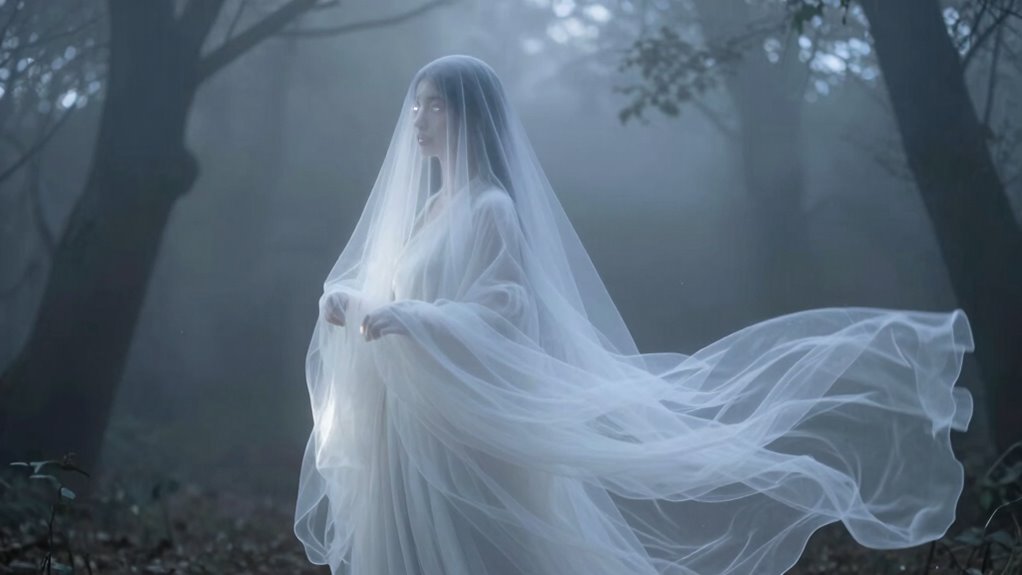

You often see ghosts in white because throughout history and across cultures, white symbolizes purity, the afterlife, and mourning. These spirits represent lost loved ones or spiritual connections, making them appear familiar and meaningful. Cultural beliefs shape how we interpret these appearances, reinforcing the idea that white is the default color for spirits. If you keep exploring, you’ll discover how this common image has deep roots in history, symbolism, and collective perception.

Get movie nights delivered free with Prime
- Fast, free delivery on millions of items
- Prime Video, Amazon Music and more included
- Member-only deals all year
Key Takeaways
- White apparitions are deeply rooted in cultural symbolism, representing purity, spirits, or the afterlife across various traditions.
- Many ghost sightings describe spirits in white due to historical and artistic influences emphasizing innocence and ethereal qualities.
- Cultural perceptions influence witnesses to interpret and describe spirits as appearing in white, reinforcing their universal association.
- The recurring depiction of white ghosts in media and folklore suggests a collective symbolic understanding rather than an exclusive physical phenomenon.
- The idea that ghosts appear only in white is influenced by cultural norms and symbolism, not necessarily an objective truth about spirits.
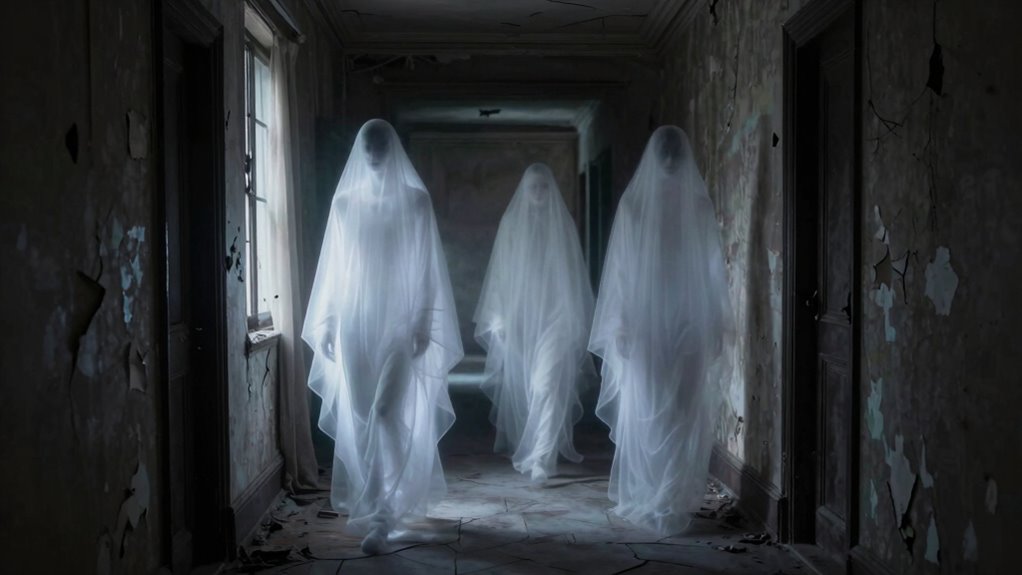
Have you ever wondered why many ghost sightings describe apparitions clad in white? It’s a question that has fascinated people for centuries. When you look into historical sightings, you find that sightings of ghosts in white date back hundreds of years. In old records and folklore, spirits often appear wearing simple white garments, symbolizing purity or a connection to the spiritual domain. These descriptions aren’t random; they’re rooted in long-standing cultural traditions that have shaped how people interpret the supernatural. For example, during the Victorian era, ghostly figures dressed in white became a common motif in literature and art, reinforcing the idea that white symbolizes innocence or the ethereal nature of spirits. Over time, these cultural interpretations have persisted, influencing how witnesses describe their experiences. That’s why, whether in stories from Europe, Asia, or the Americas, the white apparition remains a universal image of the dead returning or spirits lingering between worlds.
You might notice that these sightings often come with certain cultural nuances. In some traditions, white is seen as a symbol of the soul’s purity, and spirits in white are thought to be benevolent or lost loved ones trying to communicate. In others, white is linked to mourning, especially in Western cultures, where widows traditionally wear white to honor the deceased. These cultural meanings shape how people interpret the ghostly figures they see. When someone reports a white apparition, they’re often unconsciously influenced by these deep-seated beliefs about what white signifies. It becomes a visual shorthand for the supernatural, making the ghost’s presence both familiar and meaningful within its cultural context. Additionally, historical sightings reveal that white apparitions aren’t just limited to folklore—they have been documented in official reports, spiritualist accounts, and even in popular media. These descriptions tend to share similarities, reinforcing the idea that white is the default color for spirits in many traditions. This consistency suggests that the choice of white isn’t accidental but rooted in our collective understanding of death, purity, and the afterlife. Cultural symbolism of white plays a significant role in how these apparitions are perceived and described, shaping their universal image in the ghostly sphere. Whether you see these ghosts as actual spirits or as psychological manifestations, it’s clear that cultural interpretations heavily influence how they are perceived and described. The color white, with its rich symbolism across cultures, helps shape the way these apparitions are visualized, making them a universal symbol in the ghostly sphere. Moreover, scholarly studies have shown that these symbolic meanings of white influence not only individual perceptions but also the broader cultural narratives surrounding death and the supernatural.
As an affiliate, we earn on qualifying purchases.
Frequently Asked Questions
Are White Ghosts More Common Than Ghosts of Other Colors?
Yes, white ghosts are more common than ghosts of other colors. You’ll find that color symbolism and cultural interpretations often associate white with purity, innocence, or the supernatural. Many cultures see white as a spiritual color, which explains why ghost sightings are frequently depicted in white. This perception influences stories and beliefs, making white ghosts appear more prevalent in folklore and popular culture than ghosts of other colors.
Do White Ghosts Have Specific Spiritual or Symbolic Meanings?
You might think white ghosts are just a coincidence, but they often carry deep spiritual significance through color symbolism. White typically represents purity, innocence, or spiritual awakening. When you see a white ghost, it could symbolize a loved one’s peaceful passage or a call for spiritual clarity. Recognizing this can help you interpret these apparitions as meaningful signs, emphasizing purity and new beginnings in the spiritual domain.
Can White Ghosts Interact With the Living or Influence Events?
Yes, white ghosts can interact with the living and influence events. Historical sightings often describe these spirits as guiding or warning people, while cultural interpretations vary—some see them as benevolent protectors, others as lingering regrets. You might experience their influence through unexpected signs or feelings, suggesting they’re still connected to the world. These interactions reflect a belief that spirits, regardless of their color, can impact your life.
Are White Ghosts More Likely to Appear in Certain Locations?
White ghost sightings are more common in locations with strong historical or emotional significance, like old houses or battlefields. Spectral color symbolism suggests white represents purity or unresolved issues, making these places more likely for white ghosts to appear. You might notice these sightings in areas linked to spiritual or emotional resonance, where the environment seems to invite or amplify the spectral presence, especially in locations with a rich history.
How Do White Ghosts Differ From Other Spectral Appearances?
White ghosts often differ from other spectral appearances by their historical sightings and cultural interpretations. You might notice they’re perceived as more benign or spiritual messengers, symbolizing purity or the departed’s innocence. Cultural beliefs shape their appearances, with some viewing them as guides or protectors. Unlike darker spirits, white ghosts tend to evoke feelings of peace, making their presence stand out in various historical and cultural contexts.
As an affiliate, we earn on qualifying purchases.
Conclusion
So, next time you see a ghost dressed in white, remember it’s not just about the color—it’s about what that color symbolizes: purity, mystery, the unknown. It’s not just a ghost in white; it’s a reminder to look beyond appearances, to question what lurks in shadows, and to embrace the mystery. Because in the end, whether in white or not, it’s the story behind the ghost that truly matters—more than just the color.
As an affiliate, we earn on qualifying purchases.
As an affiliate, we earn on qualifying purchases.
Halloween Picks
halloween
As an affiliate, we earn on qualifying purchases.