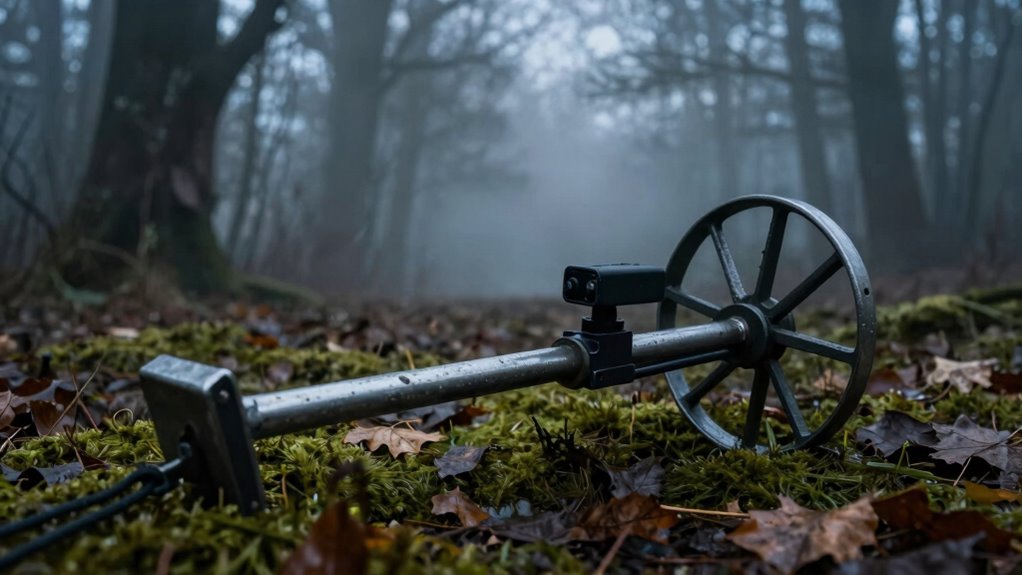

Metal detectors can be useful tools on haunted grounds, especially when you combine advanced technology with good research. Their signals help you locate potential artifacts, but without understanding the site’s history and legends, you might dig up junk or modern debris. Success depends on your skills, knowledge, and interpretation of signals. Relying solely on gadgets won’t guarantee results. Keep exploring, and you’ll discover how proper approach enhances your chances of uncovering meaningful relics.

Get movie nights delivered free with Prime
- Fast, free delivery on millions of items
- Prime Video, Amazon Music and more included
- Member-only deals all year
Key Takeaways
- Advanced metal detectors improve artifact identification but still rely on user skill and historical knowledge for effectiveness.
- Understanding haunted sites’ backgrounds enhances search focus and helps differentiate genuine relics from modern debris.
- Legends and myths can influence signal interpretation, requiring careful analysis to avoid false positives.
- Technology alone cannot guarantee success; site-specific research and contextual knowledge are essential.
- Properly used, detectors can uncover meaningful stories; over-reliance on gadgets may lead to gimmicks.
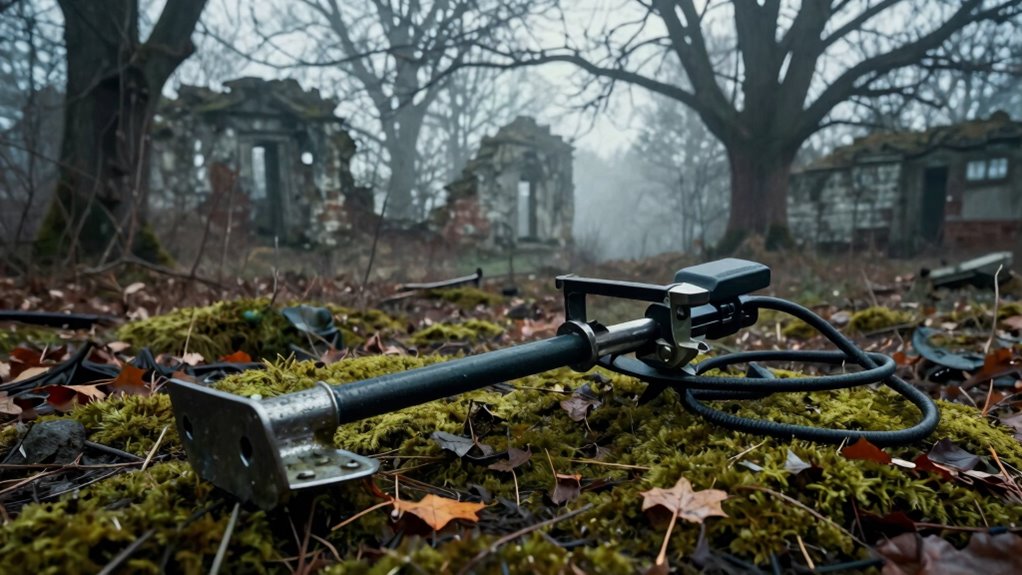
Many metal detector enthusiasts are drawn to haunted grounds, enthusiastic to uncover hidden relics or mysterious artifacts. The allure of these sites often lies in their rich histories and the stories they hold, fueling your curiosity and sense of adventure. When you venture onto such grounds, you might wonder whether your metal detector is truly a useful tool or just a gimmick. The truth lies somewhere in between, especially when considering the significance of historical accuracy and technological advancements.
You see, modern metal detectors have come a long way, thanks to technological innovations. Advanced signal processing, multi-frequency capabilities, and better discrimination features help you distinguish between trash and treasure more effectively. These technological advancements increase your chances of finding genuine artifacts, but they also require you to understand their limits. While newer models can improve your detection efficiency, they still depend on your skill and knowledge of the site’s history. Without understanding the historical context, you might overlook valuable relics or waste time digging up meaningless debris.
Historical accuracy plays an essential role in your success. Knowing the background of a haunted site can dramatically increase your chances of finding meaningful artifacts. For example, if you’re aware of a certain era or event linked to the location, you can adjust your search parameters accordingly. This knowledge guides your expectations, helping you differentiate between modern trash and genuine relics from the past. Without this context, even the most advanced detector might lead you to uninteresting objects, making the hunt feel more like a gimmick than a meaningful exploration. Additionally, understanding the technological capabilities of your detector can help you interpret signals more accurately and avoid unnecessary digging. Incorporating historical research into your hunts enhances your ability to identify promising targets and reduces frustration. Recognizing the importance of site-specific information can further direct your focus and improve your chances of success. Moreover, developing a keen eye for detail can help you quickly identify potential artifacts during your search.
Nevertheless, technology alone doesn’t guarantee success. A metallic signal doesn’t always mean a historic artifact; it could be just a bottle cap or modern debris. That’s why combining technological tools with thorough research and a keen eye for historical accuracy makes your hunt more effective. You need to interpret signals carefully and understand what might be buried beneath the surface. In haunted grounds, where legends and myths often cloud the truth, your knowledge of history and technology’s capabilities can help you separate fact from fiction.
In the end, whether your metal detector is a useful tool or just a gimmick depends on how you use it. When paired with historical knowledge and an understanding of technological advancements, your detector becomes a powerful device for uncovering history’s hidden treasures. Without those elements, it risks becoming just another gadget in a sea of fleeting excitement. So, approach haunted grounds with a mix of curiosity, research, and respect for the past, and your detector can truly serve as a bridge to uncovering stories long buried.
advanced metal detector for relic hunting
As an affiliate, we earn on qualifying purchases.
As an affiliate, we earn on qualifying purchases.
Frequently Asked Questions
Are Metal Detectors Legal to Use on Private Property?
Using a metal detector on private property is generally legal if you have the owner’s permission. However, you should be aware of restrictions related to historical artifacts, which may be protected by law. On public land, restrictions often apply, and permits might be required. Always research local regulations to guarantee you’re compliant, avoiding fines or confiscation, and respect property rights to enjoy your metal detecting hobby responsibly.
How Deep Can Metal Detectors Effectively Scan?
You can typically expect your metal detector to scan up to about 6 to 12 inches deep, depending on its quality and the size of the object. Depth limitations are influenced by soil conditions and object size, while signal accuracy decreases with depth. Larger objects tend to be detected more easily at greater depths, but smaller items require closer proximity for reliable detection. Proper calibration improves both depth reach and signal accuracy.
What Types of Metals Do Detectors Usually Identify?
You’ll find that metal detectors usually identify ferrous metals like iron and steel, along with non-ferrous metals such as aluminum, copper, and gold. They use mineral detection to filter out mineral-rich soils and signal discrimination to distinguish valuable metals from trash. This means you can focus on the metals you want, like gold or silver, while ignoring unwanted signals, making your treasure hunting more efficient and enjoyable.
Can Metal Detectors Detect Non-Metallic Haunted Artifacts?
You wonder if metal detectors can uncover non-metallic haunted artifacts. While they excel at detecting metals, non-metallic detection is tricky. Specialized tools or techniques, like ground-penetrating radar or visual searches, are often needed for haunted artifact identification. Imagine the suspense as you sift through layers of earth, hoping to spot a ghostly relic. Metal detectors alone usually can’t reveal non-metallic haunted artifacts, leaving some mysteries still buried beneath the surface.
Are There Specific Regulations for Treasure Hunting With Detectors?
Yes, there are specific regulations for treasure hunting with detectors, and understanding the myth versus reality is essential. You must follow local laws, obtain permits if needed, and respect protected areas. Ethical considerations are key—always seek permission, document discoveries responsibly, and avoid damaging sites. Regulations vary by region, so researching rules beforehand guarantees you’re compliant and preserves the integrity of treasure hunting as a respectful, lawful activity.
metal detector with multi-frequency capabilities
As an affiliate, we earn on qualifying purchases.
As an affiliate, we earn on qualifying purchases.
Conclusion
So, next time you wade into haunted grounds with your shiny metal detector, remember—you might just stumble upon buried treasure or a pile of old soda cans. Whether you’re hunting for ghosts or gold, it’s all about the thrill of the chase. After all, who needs ghostly whispers when you’ve got the sweet symphony of beeps guiding your way? Happy hunting—just don’t forget your sense of humor and a sturdy shovel!
metal detector accessories for haunted grounds
As an affiliate, we earn on qualifying purchases.
As an affiliate, we earn on qualifying purchases.
As an affiliate, we earn on qualifying purchases.
Halloween Picks
halloween
As an affiliate, we earn on qualifying purchases.