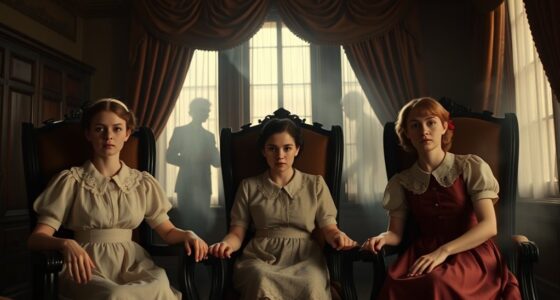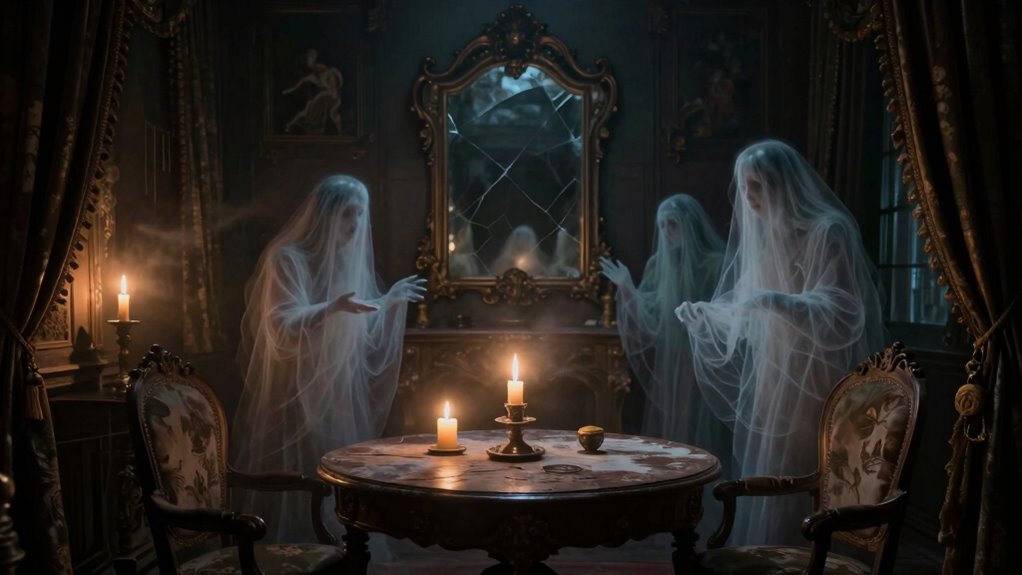

Spirit photography emerged in the late 19th century, blending innovative filming techniques with fascination about life after death. Artists used long exposures, multiple images, and props to create ghostly apparitions, convincing many of their authenticity. The images fueled spiritualist movements and offered comfort to those seeking proof of an afterlife. While modern science labels these as hoaxes or illusions, understanding their cultural impact reveals much about human hopes and fears. Keep exploring to uncover more about this intriguing chapter in visual history.

Get movie nights delivered free with Prime
- Fast, free delivery on millions of items
- Prime Video, Amazon Music and more included
- Member-only deals all year
Key Takeaways
- Spirit photography emerged in the late 19th century, claiming to capture spirits of the deceased using innovative photographic techniques.
- Techniques like long exposures, double exposures, and props created ghostly, spectral images that fascinated and skeptical viewers alike.
- Many images aimed to serve as proof of the afterlife, fueling spiritualist movements and emotional connections with the dead.
- Modern science has debunked most spirit photographs as hoaxes or optical illusions, but they remain culturally significant.
- The craze reflects human curiosity about the supernatural and the technological experimentation of the era.
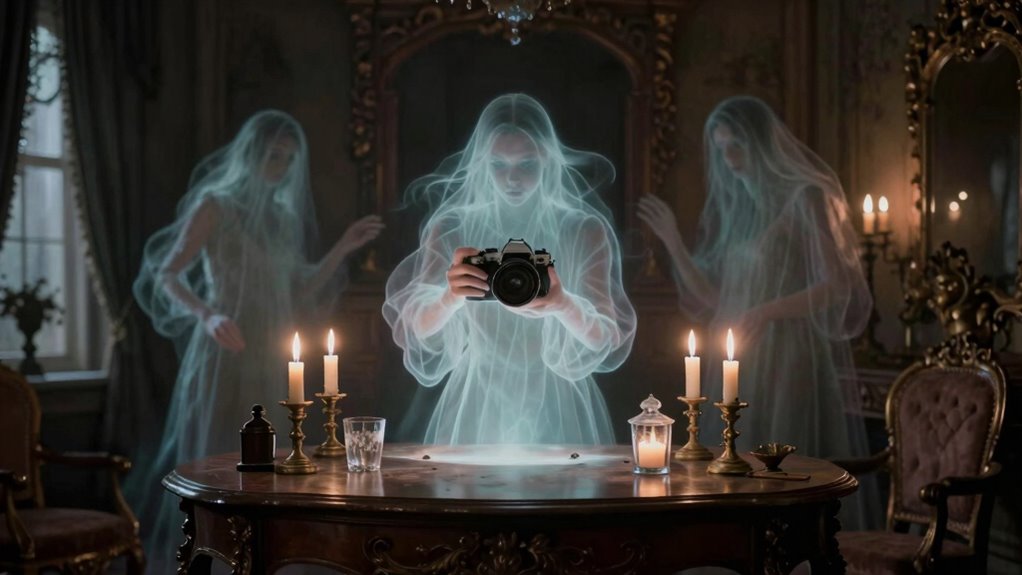
Spirit photography, a fascinating intersection of art and the supernatural, emerged in the late 19th century and quickly captured public imagination. As you explore its history, you’ll find that this unique genre centered around capturing ghostly apparitions—mysterious figures believed to be spirits of the deceased—within photographs. These images often seemed to show ethereal forms materializing behind or beside living subjects, fueling both curiosity and skepticism. The allure lay in the possibility that photographs could serve as evidence of an afterlife, bridging the physical and spiritual worlds.
To create these captivating images, practitioners employed a variety of photographic techniques, some genuine and others deceptive. Early spirit photographers used long exposure times, sometimes stretching for several minutes, which increased the chance of capturing moving figures or unintended reflections. They also manipulated the photographic process by combining multiple exposures or adding props and cutouts to create ghostly figures. In some cases, photographers used double exposure techniques—where two images are superimposed—to produce the illusion of spirits floating within the frame. These methods, when executed skillfully, created haunting images that appeared to reveal real ghostly apparitions.
However, not all spirit photographs were the result of trickery. Some artists genuinely believed they were capturing spirits, interpreting fleeting visual anomalies or optical effects as evidence of spectral presence. The advent of new photographic technologies in the late 19th and early 20th centuries made it easier to experiment with these techniques, leading to a surge in spirit photography popularity. As a result, many viewers were convinced that these images confirmed the existence of life after death, while skeptics argued that they were simply clever fakes or accidental optical illusions.
You should also know that spirit photography gained significant attention at fairs, exhibitions, and spiritualist meetings, where people eagerly sought proof of spirits beyond doubt. Prominent figures like William H. Mumler gained notoriety by producing images that claimed to show spirits of loved ones. These photographs often evoked strong emotional reactions, as they seemed to connect the living with those who had passed away, offering comfort or proof of continued existence beyond death.
Today, spirit photography remains a fascinating chapter in both the history of photography and spiritualism. While modern techniques and scientific explanations have debunked many of these images as hoaxes or optical tricks, they continue to intrigue those interested in the paranormal. Whether viewed as genuine evidence or clever illusions, spirit photographs remind you of the enduring human desire to see beyond the physical world and connect with the unknown.
As an affiliate, we earn on qualifying purchases.
Frequently Asked Questions
How Did Spirit Photography Influence Popular Culture?
Spirit photography greatly influenced popular culture by fueling supernatural beliefs and inspiring artistic interpretations. You might see its impact in ghost stories, movies, and haunted house attractions, where the idea of capturing spirits sparks curiosity and fear. As a viewer or creator, you’re drawn to the mystery and possibility of communicating with the beyond, blending supernatural beliefs with artistic visions that keep the fascination alive across generations.
Were Any Famous Figures Involved in Spirit Photography?
You’d be surprised to learn that famous figures like Sir Arthur Conan Doyle were involved in spirit photography. He believed ghostly apparitions captured in haunting images proved an afterlife, influencing public fascination. Doyle’s support helped legitimize spirit photography, sparking debates and curiosity. His involvement illustrates how prominent personalities shaped the perception of these ghostly images, blending science, spirituality, and popular culture into a mesmerizing, if controversial, phenomenon.
What Technological Advances Impacted Spirit Photography Techniques?
Technological advances like improved photographic technology and digital manipulation considerably impacted spirit photography techniques. You see, early cameras increased exposure times, making it easier to capture ghostly images. Later, digital tools allowed for precise editing, enabling photographers to add or enhance spirits’ appearances more convincingly. These innovations made spirit photography more accessible, realistic, and mysterious, fueling both skepticism and fascination among viewers.
How Did Skeptics Debunk Spirit Photographs Historically?
You might be surprised to learn that over 80% of spirit photographs were debunked as spectral illusions or photographic frauds. Skeptics historically used simple methods like double exposure, manual manipulation, or identifying staged props to expose these images. They carefully analyzed the photographs’ details, revealing hidden tricks or inconsistencies, proving that many so-called spirits were just clever illusions or deliberate deception, undermining the authenticity of spirit photography.
Are There Modern Equivalents of Spirit Photography Today?
Today, you find modern equivalents of spirit photography through digital illusions and paranormal marketing. Photographers and enthusiasts create ghostly images using photo editing tools, filters, and special effects to mimic spirit photographs. These digital illusions often promote paranormal phenomena or entertain audiences, much like historical spirit photography did. While skeptics remain cautious, the blend of technology and marketing keeps this spooky fascination alive, engaging those curious about the supernatural.
long exposure camera for ghost photos
As an affiliate, we earn on qualifying purchases.
As an affiliate, we earn on qualifying purchases.
Conclusion
As you explore spirit photography’s intriguing past, you’ll see how belief and skepticism intertwined to create a unique cultural phenomenon. Notably, during the late 19th century, over 8,000 spirit photographs were sold annually, highlighting the widespread fascination. This statistic shows just how deeply society was drawn to capturing the supernatural. Whether as genuine belief or clever trickery, spirit photography remains a fascinating chapter in the history of human curiosity and the desire to connect beyond the physical world.
double exposure photography equipment
As an affiliate, we earn on qualifying purchases.
As an affiliate, we earn on qualifying purchases.
As an affiliate, we earn on qualifying purchases.
Fall Picks
fall essentials
As an affiliate, we earn on qualifying purchases.