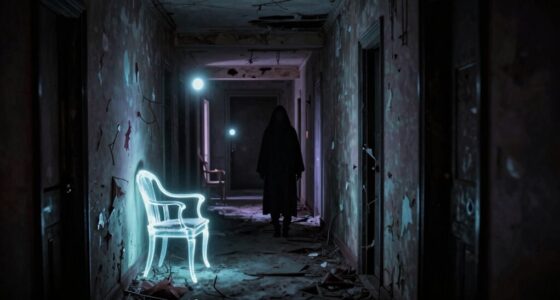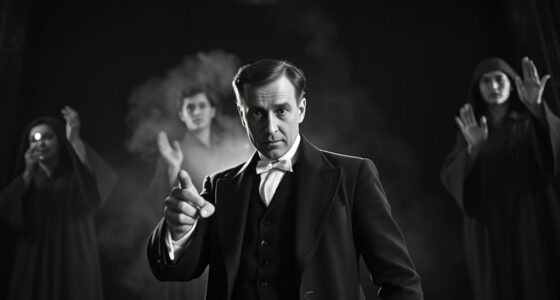
In 1634, in Loudun, France, a wave of mass hysteria swept through the town, fueled by religious fervor, social pressures, and psychological factors. People believed demons possessed inhabitants, leading to accusations of witchcraft and satanic influence. Cultural beliefs and authority figures amplified fears, creating a cycle of suspicion and panic. Understanding how collective emotions and social dynamics played a role helps explain these dramatic events, revealing more about the complex interplay of history, society, and psychology.

Get movie nights delivered free with Prime
- Fast, free delivery on millions of items
- Prime Video, Amazon Music and more included
- Member-only deals all year
Key Takeaways
- The Loudun possessions (1634) involved alleged demonic infestations affecting nuns and villagers amid widespread hysteria.
- Psychological factors like mass hysteria and social pressures played a significant role in the events.
- Cultural beliefs about demons and witchcraft shaped interpretations of symptoms and accusations.
- The events reflected political and religious tensions in 17th-century France, with church authorities intervening.
- Modern explanations view the possessions as collective psychosis fueled by social, religious, and psychological influences.
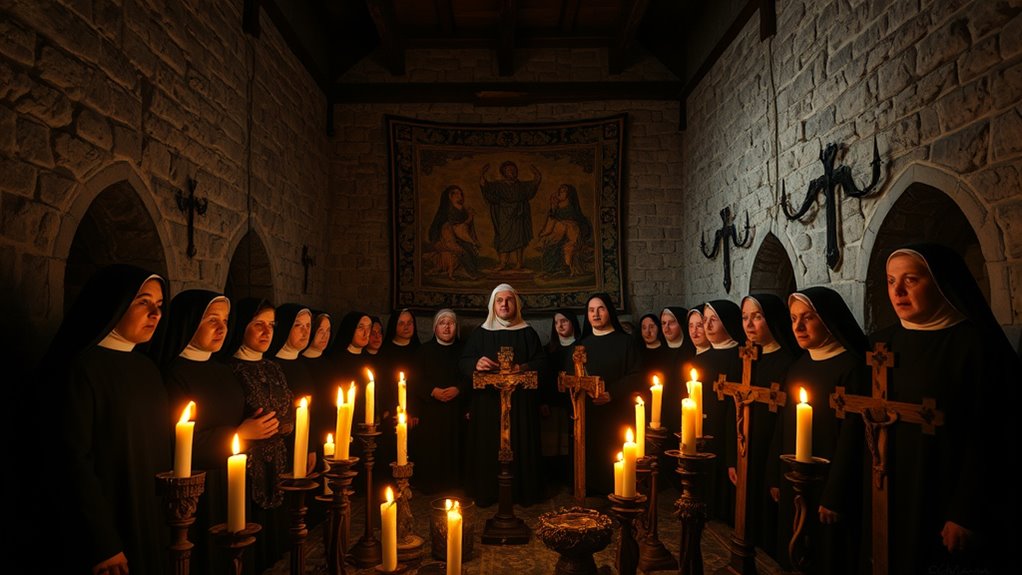
The Possessions at Loudun were a series of alleged demonic infestations and witchcraft accusations that swept through the French town in the 17th century. To understand what happened, you need to consider the historical context of France during this period. The early 1600s were marked by religious turmoil, political instability, and widespread fear of the devil’s influence. The Catholic Church held significant power, and accusations of witchcraft or demonic possession often served as tools to purge dissent or settle personal vendettas. In Loudun, this climate of suspicion created fertile ground for mass hysteria, where stories of demons and possessions quickly spread and gained credibility among the local population.
As you explore these events, it’s important to recognize that many experts believe psychological explanations play a key role in understanding the phenomena. The physical and mental stress faced by the townspeople, combined with religious fervor and social pressures, could have triggered mass hysteria or collective psychosis. In such environments, individuals may experience hallucinations, seizures, or other inexplicable behaviors that are often interpreted as demonic activity. The nuns and residents of Loudun, for instance, exhibited symptoms like screaming, contorting, and apparent levitations—behaviors that, in a different context, could be explained by psychological factors such as anxiety, trauma, or suggestibility. Furthermore, the use of psychological explanations can help demystify how social dynamics and authority figures influenced the perception and escalation of these phenomena. Additionally, the role of mass hysteria in shaping these events highlights how collective emotions can manifest in physical symptoms.
Moreover, the influence of social and cultural beliefs** played a significant role in shaping the interpretation and response to these symptoms, reinforcing the belief in demonic origins. Additionally, the use of religious fervor and social pressure created a fertile environment for the phenomenon to flourish. Recognizing the impact of psychological factors** allows for a more comprehensive understanding of how collective fear and suggestibility contributed to the hysteria.
In essence, the Loudun possessions weren’t just about supernatural forces at work; they reflected a complex interplay of historical circumstances, cultural beliefs, and psychological factors. By examining the broader context and considering psychological explanations, you gain a more nuanced understanding of how fear, suggestion, and societal pressures can produce phenomena that seem, on the surface, to be supernatural. This perspective doesn’t dismiss the reality of the experiences but offers a rational framework for understanding what might have driven them.
Demonic possession historical books
As an affiliate, we earn on qualifying purchases.
As an affiliate, we earn on qualifying purchases.
Frequently Asked Questions
How Did the Local Community React to the Possessions?
You see, the community reacts with intense hysteria, fueling fears and suspicions. Social dynamics shift as neighbors accuse each other, and panic spreads quickly. People believe demons are tormenting their town, leading to mass hysteria that overrides rational thought. The community’s response becomes a mix of fear, suspicion, and a desperate desire to find a scapegoat, intensifying the chaos and making the situation worse for everyone involved.
Were Any Specific Individuals Targeted During the Accusations?
You might wonder if specific individuals faced targeted demon accusations during Loudun’s events. Yes, certain people, especially nuns and priests, became focal points of suspicion, accused of being possessed or in league with demons. These targeted individuals often bore the brunt of the hysteria, fueling fear and chaos. The community’s reactions amplified the accusations, making it clear that in this case, demon accusations weren’t random but aimed at particular persons.
What Role Did Religious Authorities Play in the Events?
You see, religious authorities played a central role by exercising their clergy influence to interpret the events as genuine demonic possessions. They enforced strict doctrinal enforcement, which supported the accusations and hysteria. Their involvement gave the events legitimacy, encouraging the community to accept the accusations without question. This active role of the clergy helped escalate the situation, turning individual claims into a widespread moral and spiritual crisis.
Did Similar Incidents Occur in Other Regions of France?
You might notice that during this period, similar incidents happened in other parts of France, fueled by witch hunts and societal hysteria. Communities often believed in widespread demonic possessions or witchcraft, leading to accusations and trials. These events reflect a broader pattern of fear and suspicion, where societal hysteria drove authorities to act harshly against supposed witches or demons, creating a climate of paranoia across various regions.
How Have Modern Historians Interpreted These Possessions?
Modern historians interpret these possessions through psychological explanations, suggesting mass hysteria or mental health issues, and sociopolitical interpretations, viewing them as tools for social or political control. You might see these events as a way communities expressed fears or tensions, rather than literal demonic activity. These insights help you understand that what was once seen as supernatural may now be understood as complex human and societal responses.
As an affiliate, we earn on qualifying purchases.
Conclusion
So, in Loudun, these possessions weren’t just whispers of the past—they were the thunderclaps of a world turned upside down. You can’t help but see how a single accusation could release chaos so vast, it threatened to swallow an entire town! The demons weren’t just in the minds of the accused; they seemed to dance across every corner, proving that in 17th-century France, fear could ignite a storm so fierce, it forever changed history.
17th century France history books
As an affiliate, we earn on qualifying purchases.
As an affiliate, we earn on qualifying purchases.
As an affiliate, we earn on qualifying purchases.
Columbus Day / Indigenous Peoples' Day Picks
long weekend sales
As an affiliate, we earn on qualifying purchases.