Organizing physical and digital evidence during a paranormal investigation requires precision, especially when dealing with low-light environments and sensitive audio-video files. The Brother P-Touch PT-D210 stands out as the best overall choice due to its rugged build, clear monochrome printing, and reliable keyboard interface that minimizes errors in chaotic settings. For investigators who prefer digital workflow integration, the N12 Bluetooth Label Maker offers seamless app connectivity for rapid labeling of digital file folders and physical evidence bags. The primary tradeoff in this category lies between the tactile reliability of standalone devices with physical keyboards and the flexibility of Bluetooth-enabled printers that rely on smartphone apps. Continue reading to understand which tool fits your specific investigation style and evidence management needs.

Get movie nights delivered free with Prime
- Fast, free delivery on millions of items
- Prime Video, Amazon Music and more included
- Member-only deals all year
Key Takeaways
- Physical keyboards significantly reduce input errors during high-stress, low-light investigations compared to smartphone-only interfaces.
- Monochrome thermal printing offers superior longevity for evidence tags stored in damp basements or attics compared to some color inkjet alternatives.
- Bluetooth-enabled models allow for batch labeling of digital audio/video files, bridging the gap between physical evidence and digital logs.
- Tape width versatility (1/4 inch to 1/2 inch) is critical for fitting labels on small audio recorders and large evidence boxes alike.
- Battery life is a decisive factor for remote locations; devices with rechargeable batteries often fail mid-investigation without backup power.



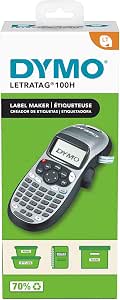
| top rated label makers for paranormal evidence organization | Weight | Printer type | Dimensions | Output |
|---|---|---|---|---|
| N12 Bluetooth Label Maker Mach | 4 ounces | Thermal | 1.25 x 3.03 x 4.29 inches | Monochrome |
| DYMO LetraTag 100H Plus Handhe | 12 ounces | Thermal | 3.31 x 12.3 x 2.6 inches | Monochrome |
| Phomemo D30 Label Maker Machin | 160 g | Thermal | 1.14 x 2.95 x 5.17 inches | Monochrome |
| Brother P-Touch PT-D210 Label | 1.1 pounds | Thermal | 5.9 x 6.2 x 2.7 inches | Monochrome |
| DYMO LabelManager 160 Label Ma | 1.3 pounds | Thermal | — | Monochrome |
| Brother P-Touch PT-D220 Home/O | 1.1 pounds | Thermal | 5.9 x 6.2 x 2.7 inches | Monochrome |
| DYMO LabelManager 160 Portable | 21.82 g | Thermal | 4.65 x 10 x 1.93 inches | Black and white |
| NIIMBOT D110 Mini Label Maker | 149 g | Thermal | 3.86 x 2.99 x 1.18 inches | — |
| SUPVAN E11 Bluetooth & Keyboar | 8 ounces | Thermal | 5.8 x 3.1 x 1.5 inches | Monochrome |
| Brother PT-M95 P-Touch Monochr | 9.12 ounces | Dot matrix | 3.9 x 10.2 x 9.4 inches | Monochrome |
| DYMO LetraTag 100H Handheld La | 16 ounces | — | — | — |
| Nelko P21 Label Maker Machine | 230 g | — | 6.65"D x 4.5"W x 1.9"H | — |
| Brother P-Touch PTH110BP Porta | 14.4 ounces | Dot Matrix | 4.3"D x 8"W x 2.2"H | — |
| Brother P-Touch PT-N10 Persona | 16 ounces | Thermal | 7.6"D x 4.7"W x 2.8"H | — |
| DYMO LetraTag 100H Silver Hand | 14.08 ounces | Thermal | 4.75"D x 10.25"W x 3"H | — |
More Details on Our Top Picks
N12 Bluetooth Label Maker Machine with 1 Tape, Green
For investigators who already record case notes on a phone or tablet, the N12’s Bluetooth printing keeps label creation in the same mobile workflow. Its Nada Print app supports templates and customization, which can help distinguish evidence bags, storage bins, and session records without handwriting every identifier. At 4 ounces, it is easier to carry between rooms than the Brother PT-D210, though the Brother’s laminated tapes are a better fit when labels may face moisture or temperature swings. The N12 prints in monochrome using inkless thermal technology, so there is no ink cartridge to manage, but labels remain limited by its fixed-length options. Full use depends on a smartphone app, making this less convenient than a keyboard-based DYMO LabelManager 160 when a phone is unavailable.
Pros:- Bluetooth printing from compatible smartphones and tablets
- Lightweight 4-ounce body is easy to carry between evidence storage areas
- Thermal printing needs no ink or ribbon
- App templates support customized labels for different evidence categories
Cons:- Smartphone app is required for full functionality
- Fixed label lengths limit flexibility for longer evidence descriptions
- Monochrome output cannot use color to distinguish evidence categories
Best for: Investigators who use an iPhone, iPad, or Android device to organize evidence records and want a lightweight printer for quick, customized labels.
Not ideal for: Teams that need durable laminated labels for damp or changing conditions, or users who want to create labels without a smartphone app.
- Printer type:Thermal
- Output:Monochrome
- Print resolution:203 x 203 dpi
- Weight:4 ounces
- Dimensions:1.25 x 3.03 x 4.29 inches
- Connectivity:Bluetooth; compatible with smartphones and tablets
- Power:Rechargeable battery
- Label media:Labels; fixed-length options
Our verdict“Choose the N12 if mobile app-based customization and low carry weight matter more than flexible label lengths or laminated durability.”
DYMO LetraTag 100H Plus Handheld Label Maker for Office or Home Organization
The LetraTag 100H Plus suits investigators who want to check wording and formatting on the device before a label is printed. Its LCD preview and font effects make it easier to spot a mistyped case number than on app-driven models such as the Phomemo D30, where label creation happens on a phone. That direct, handheld workflow can be useful when cataloging a small batch of containers or folders. The included cassettes and magnetic holder also make it practical to keep near a metal storage cabinet. The tradeoff is pace: its listed print speed is 1 page per minute, which is a poor match for large evidence inventories. It is monochrome and works best with DYMO labels, so it offers less media flexibility than the Brother PT-D210’s laminated-tape approach.
Pros:- LCD lets users preview text and formatting before printing
- Multiple font styles, sizes, and effects support readable category labels
- Includes two label cassettes and a magnetic holder
- Standalone handheld operation avoids dependence on a phone app
Cons:- Listed print speed of 1 page per minute is slow for high-volume labeling
- Monochrome output provides no color-coded evidence categories
- Uses specific DYMO labels for best performance
Best for: Investigators who label a modest number of evidence files or containers and prefer a built-in screen and physical handheld controls over phone-based setup.
Not ideal for: Teams labeling large inventories quickly or those who need broad third-party tape flexibility and rugged laminated labels.
- Printer type:Thermal
- Output:Monochrome
- Display:LCD
- Print resolution:Up to 300 dpi
- Print speed:1 page per minute
- Weight:12 ounces
- Dimensions:3.31 x 12.3 x 2.6 inches
- Included accessories:Two label cassettes and magnetic holder
Our verdict“Pick the LetraTag 100H Plus for careful, low-volume labeling with on-device preview, but choose a faster workflow for a large evidence backlog.”
Phomemo D30 Label Maker Machine with Tape, Bluetooth Mini Label Printer
The Phomemo D30 earns its place for investigators who need to switch between short identifiers and longer notes: it supports both fixed-length and continuous labels, unlike the N12’s fixed-length limitation. The Print Master app offers DIY customization, giving users more control over evidence categories and formatting from an Android or iOS device. Its compact build and Bluetooth 4.0 make it convenient to carry between a field kit and storage area, while USB-C adds a wired charging connection. The tradeoff is narrow media: the maximum width is only 0.55 inch, so long descriptions can become cramped. It also prints monochrome; colored tape can add visual separation, but the printer itself does not create color output. Compared with the standalone DYMO LetraTag 100H Plus, this model offers more mobile customization but requires app-based control.
Pros:- Supports continuous and fixed-length label formats
- Print Master app provides DIY customization on Android and iOS
- Compact, lightweight design is suited to portable evidence kits
- Bluetooth 4.0 and USB-C connectivity
Cons:- Maximum media width of 0.55 inch restricts label space
- Monochrome printing cannot generate color-coded text
- App-based control is less convenient for users who want standalone operation
Best for: Phone-using investigators who need continuous or fixed-length narrow labels for evidence bags, cables, folders, and small storage containers.
Not ideal for: Teams that need wide labels for detailed descriptions, or users who prefer a built-in keyboard and screen instead of app control.
- Printer type:Thermal
- Output:Monochrome
- Print resolution:203 dpi
- Maximum media width:0.55 inch
- Connectivity:Bluetooth 4.0 and USB Type-C
- Compatible controllers:Android and iOS
- Weight:160 g
- Dimensions:1.14 x 2.95 x 5.17 inches
Our verdict“Choose the D30 if adjustable label length and mobile customization matter more than a wider print area or standalone controls.”
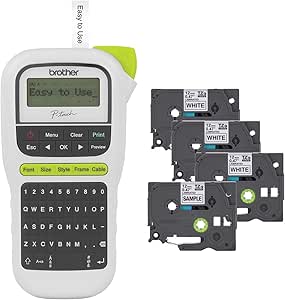
Brother P-Touch PT-D210 Label Maker Bundle (4 Tapes Included)
For evidence that will stay in storage through handling, moisture, or temperature changes, the PT-D210’s laminated tape is its clearest advantage. That makes it a stronger choice than the Phomemo D30 when label durability matters more than app-based customization. Physical push-button controls, a preview display, and templates also let investigators create consistent identifiers without reaching for a phone. The bundle includes four tapes, giving a team supplies to start organizing several evidence categories. Its limits are practical rather than cosmetic: it has no wireless connectivity, and operation requires six AAA batteries sold separately. The listed maximum media size is 12 x 9 mm, which may constrain longer identifiers. Compared with the DYMO LabelManager 160, it favors tape durability and templates over a QWERTY-focused typing experience.
Pros:- Laminated tapes resist water, fading, and temperature changes
- Four included tapes provide supplies for multiple labeling tasks
- Push-button controls, templates, fonts, and symbols support consistent labels
- Preview display helps catch wording errors before printing
Cons:- Requires six AAA batteries sold separately
- No wireless connectivity
- Listed maximum media size of 12 x 9 mm can limit longer evidence details
Best for: Investigators labeling evidence containers, cabinets, or records that may encounter moisture, temperature variation, or repeated handling.
Not ideal for: Mobile teams that want Bluetooth printing, or users who need wider labels and do not want to supply six AAA batteries.
- Printer type:Thermal
- Output:Monochrome
- Controls:Push button
- Connectivity:Wired USB
- Maximum media size:12 x 9 mm
- Weight:1.1 pounds
- Dimensions:5.9 x 6.2 x 2.7 inches
- Bundle contents:Four tapes included
Our verdict“Choose the PT-D210 when durable laminated labels are the priority and wired, battery-powered operation fits your workflow.”
DYMO LabelManager 160 Label Maker Bundle with 3 D1 Label Cassettes, Portable Handheld, QWERTY Keyboard, One-Touch Smart Keys, Large Display
The LabelManager 160 is a sensible pick when investigators want to type case codes directly on the device rather than build labels in an app. Its QWERTY keyboard and one-touch formatting keys make repeated alphanumeric entry more straightforward than the template-led Brother PT-D210, while the large display helps review text before printing. More than 20 text formats and 200-plus symbols offer ways to separate evidence categories without color printing. The bundle’s three D1 cassettes also make it ready for several labeling tasks. However, this is not the most compact option in the lineup: at 1.3 pounds, it is heavier than the N12 and Phomemo D30. Its monochrome output and maximum 2.625-inch media size also limit color coding and oversized labels. Battery life varies with use, and auto power-off may interrupt longer sessions.
Pros:- QWERTY keyboard supports direct entry of case numbers and alphanumeric codes
- One-touch formatting keys and large display simplify label setup and review
- More than 20 text formats and 200-plus symbols support varied evidence categories
- Includes three D1 label cassettes
Cons:- At 1.3 pounds, it is heavier than compact Bluetooth options such as the N12
- Monochrome output does not support printed color coding
- Maximum media width of 2.625 inches may not fit larger evidence descriptions
Best for: Investigators entering case numbers and evidence codes by hand who want a physical keyboard, a readable display, and multiple formatting options.
Not ideal for: Field users prioritizing a very light kit, teams needing color-coded labels, or anyone requiring a wider print area than 2.625 inches.
- Printer type:Thermal
- Output:Monochrome
- Input and controls:Built-in QWERTY keyboard and touch controls
- Display:Yes
- Maximum media size:2.625 inches
- Weight:1.3 pounds
- Connectivity:USB
- Warranty:Limited, 1 year
Our verdict“Choose the LabelManager 160 for direct keyboard entry and formatting control, but favor a mini Bluetooth model if low weight matters more.”
Brother P-Touch PT-D220 Home/Office Label Maker
For teams labeling recurring evidence categories, the Brother P-Touch PT-D220 has an advantage over phone-only models such as the NIIMBOT D110: its built-in QWERTY keyboard works without pairing a smartphone, and it can store up to 30 labels for quick reprints. That helps keep repeated identifiers consistent across case folders, equipment bins, and evidence containers. Its support for compatible laminated and waterproof TZe tapes also suits labels that may be handled or stored in less controlled conditions. The tradeoff is label width: it prints only up to 1/2 inch, so long descriptions or dense evidence notes may need a separate record sheet. It prints in monochrome, and batteries or an AC adapter are sold separately, adding a power-planning step.
Pros:- Stores up to 30 labels for consistent reprinting of recurring identifiers
- Physical QWERTY keyboard avoids dependence on a phone or app
- Compatible with laminated and waterproof TZe tape options
- Compact body is practical for moving between work areas
Cons:- Maximum tape width of 1/2 inch limits long or information-dense labels
- Batteries or AC adapter are sold separately
- Monochrome output cannot distinguish evidence categories by printed color
Best for: Investigators and archive organizers who repeatedly label evidence categories and want a physical keyboard plus stored label templates.
Not ideal for: Teams needing wide labels for lengthy descriptions, color-coded printouts, or a ready-to-use setup without separately sourcing power.
- Printer type:Thermal
- Output:Monochrome
- Maximum tape width:1/2 inch
- Print resolution:180 dpi
- Label storage:Up to 30 labels
- Compatible media:Brother TZe label tapes
- Weight:1.1 pounds
- Dimensions:5.9 x 6.2 x 2.7 inches
Our verdict“Choose the PT-D220 if you want repeatable, keyboard-entered evidence labels and can work within its narrow tape format.”
DYMO LabelManager 160 Portable Label Maker
The DYMO LabelManager 160 is a sensible pick for investigators who want to type labels directly on the device rather than rely on a companion app. Its QWERTY keyboard and large LCD display make it easier to check an evidence ID or storage location before printing, while its portable design suits quick labeling at a desk or in a field kit. Compared with the SUPVAN E11, it keeps the workflow centered on the handheld unit instead of splitting tasks between keyboard and phone app. That simplicity comes with less flexibility: it prints black-and-white labels and uses specific DYMO label supplies, limiting tape choice across a mixed equipment setup. The supplied data also does not specify rechargeable power, so buyers should plan for battery replacement rather than assuming a rechargeable workflow.
Pros:- QWERTY keyboard and large display support direct, readable label entry
- Portable format suits labeling away from a fixed workstation
- Multiple formatting options and symbols allow basic category distinctions
- Automatic power-off helps conserve battery power
Cons:- Black-and-white printing does not provide color-coded evidence categories
- Uses specific DYMO labels, which may constrain supply choices
- No rechargeable option is listed in the supplied product details
Best for: Solo investigators or small teams who want a portable physical keyboard and display for quick evidence IDs without using an app.
Not ideal for: Buyers who need rechargeable operation, broad tape-format flexibility, or app-based design options for detailed category systems.
- Printer type:Thermal
- Output:Black and white
- Keyboard:QWERTY
- Display:LCD
- Display resolution:300 x 300
- Print media:Labels
- Weight:21.82 g
- Dimensions:4.65 x 10 x 1.93 inches
Our verdict“Pick the LabelManager 160 for simple handheld evidence labeling, but skip it if rechargeable power or wider media flexibility matters.”
NIIMBOT D110 Mini Label Maker with Tape
When storage space in a field kit is tight, the NIIMBOT D110 is the most compact choice in this group, and its Bluetooth app workflow offers more layout flexibility than the keyboard-first Brother P-Touch PT-D220. A phone can be useful for entering longer labels or adjusting a design before printing, while 203 dpi thermal output avoids ink or toner. For paranormal evidence organization, that can help create tidy labels for sample bags, case folders, or equipment without carrying a larger desktop-style unit. The compromise is dependence on a compatible iOS or Android device and the app; it has no listed built-in keyboard for standalone entry. Its battery is described as rechargeable, but the stated battery life may limit continuous labeling sessions to around four hours.
Pros:- Small, lightweight body is easy to carry in a field kit
- Bluetooth app supports customizable label creation from iOS or Android
- 203 dpi thermal printing needs no ink or toner
- Automatic label rewind supports a compact printing workflow
Cons:- Requires a compatible smartphone and app to create labels
- Monochrome output limits printed color coding
- Battery life may restrict continuous use to around four hours
Best for: Mobile investigators who already use a compatible smartphone and want a very small printer for short evidence labels and kit organization.
Not ideal for: Teams that need standalone operation, long uninterrupted print sessions, or broad labels for detailed chain-of-custody information.
- Printer type:Thermal
- Resolution:203 x 203 dpi
- Connectivity:Bluetooth
- Control method:App
- Compatible systems:Android and iOS
- Maximum media size:3/5 inch
- Weight:149 g
- Dimensions:3.86 x 2.99 x 1.18 inches
Our verdict“Choose the D110 for phone-based, space-saving evidence labels, not for standalone or all-day batch printing.”
SUPVAN E11 Bluetooth & Keyboard Label Maker with 4 Tapes
The SUPVAN E11 bridges two workflows: its onboard keyboard can handle quick evidence IDs, while Bluetooth app control gives more room to customize labels than the display-led DYMO LabelManager 160. For paranormal investigators who switch between routine bin labels and more tailored case identifiers, that flexibility can reduce the need to keep two labeling methods on hand. The rechargeable battery and USB-C connectivity also suit a portable kit, and minimal-margin printing helps avoid wasting tape during repeated runs. Its limits are practical rather than cosmetic: output is monochrome, app features still require a smartphone, and the listed print speed is only one black-and-white page per minute. Buyers planning large evidence batches should favor a faster workflow or budget time for printing.
Pros:- Keyboard and Bluetooth app offer two ways to create labels
- Rechargeable battery and USB-C support portable use
- Minimal-margin printing can reduce tape use across repeated labels
- Includes four tapes for starting different labeling tasks
Cons:- Monochrome output cannot print color-coded evidence categories
- Listed print speed is slow for large labeling batches
- App customization requires a compatible smartphone
Best for: Small investigation teams that want both direct keyboard entry and smartphone customization in one rechargeable portable label maker.
Not ideal for: Users who print large evidence inventories quickly, need color-coded labels, or want every function available without a smartphone.
- Printer type:Thermal
- Output:Monochrome
- Resolution:203 dpi
- Connectivity:Bluetooth and USB Type-C
- Media capacity:Up to 15 mm x 6 m
- Included tapes:4
- Weight:8 ounces
- Dimensions:5.8 x 3.1 x 1.5 inches
Our verdict“The E11 suits teams that value flexible label creation and rechargeable portability more than fast batch output.”
Brother PT-M95 P-Touch Monochrome Label Maker Bundle
The Brother PT-M95 bundle is the practical entry point for someone setting up an evidence-labeling station: it includes four tapes, so there is less initial supply gathering than with the Brother P-Touch PT-D220, whose power accessories are sold separately. Its physical controls, LCD, and selection of fonts, frames, and symbols make basic labels easy to format for files, cases, or equipment. The included tape assortment can also help separate label uses, though the printer itself remains monochrome, so tape choice—not colored printing—does the visual organizing. Its main weakness for evidence handling is durability: the supplied tapes are non-laminated, making them a less convincing match for labels exposed to repeated handling or damp conditions. The listed media size is also small, restricting how much information fits on each label.
Pros:- Bundle includes four tapes to get a basic labeling station started
- QWERTY keyboard and LCD support direct label creation
- Fonts, frames, symbols, and deco patterns allow simple visual distinctions
- Portable design is easy to move between a desk and storage area
Cons:- Included non-laminated tapes may be less durable under handling or moisture
- Small listed media size limits label content
- Monochrome output does not print color-coded category labels
Best for: New investigators building a basic labeling setup who value included tape supplies and mostly label files, folders, and dry-storage items.
Not ideal for: Teams needing water-resistant, durable labels or enough space for full evidence descriptions and handling details.
- Printer type:Dot matrix
- Output:Monochrome
- Display:LCD
- Control method:Touch
- Maximum media size:12 x 8 mm
- Included tapes:4
- Weight:9.12 ounces
- Dimensions:3.9 x 10.2 x 9.4 inches
Our verdict“Choose the PT-M95 bundle for an accessible starter setup and routine dry-storage labels, but use a more durable tape system for handled evidence.”
DYMO LetraTag 100H Handheld Label Maker with 3 Tapes
This handheld unit is designed for investigators who need to tag evidence immediately without fumbling with smartphone apps. Compared to the Nelko P21, which requires Bluetooth pairing and app navigation, the LetraTag 100H offers a direct physical interface that works reliably in low-light or high-stress environments. The preview screen allows you to check text before printing, reducing wasted tape on critical evidence chains. However, the 2-line printing limit is a significant constraint for detailed notes, requiring abbreviations that might confuse others later. It is less versatile than the Brother P-Touch PTH110BP, which offers more font options, but it wins on sheer simplicity for quick identification.
Pros:- Physical buttons work reliably without app connectivity
- Preview screen prevents printing errors on evidence tags
- Lightweight 16-ounce frame fits easily in a vest pocket
- Includes three tape cassettes for immediate deployment
Cons:- Two-line print limit restricts detailed evidence notes
- Batteries are not included, requiring separate purchase
- Limited font styles reduce visual distinction between categories
Best for: Field investigators who need instant, offline labeling without smartphone dependency.
Not ideal for: Users needing detailed multi-line descriptions or complex barcode generation.
- Brand:DYMO
- Model Number:2174562
- Weight:16 ounces
- Printing Capability:2-line printing
- Memory:9 label memory slots
- Power Source:Batteries (not included)
Our verdict“Choose this if you prioritize speed and simplicity over detailed formatting capabilities.”
Nelko P21 Label Maker Machine with Tape, Bluetooth Label Printer, Black
The Nelko P21 stands out for its Bluetooth connectivity, allowing you to design complex labels on your phone and print them instantly. This is a major advantage over the DYMO LetraTag 100H, which relies on manual entry. For paranormal teams, this means you can print QR codes or barcodes linked to digital case files directly onto evidence bags. The thermal printing technology eliminates ink costs, a benefit shared with the Brother PT-N10. However, the 230-gram weight makes it slightly bulkier than pocket-sized competitors, and the reliance on a smartphone app introduces a potential point of failure if your phone battery dies in the field.
Pros:- Bluetooth app enables QR code and barcode generation
- Thermal printing removes ongoing ink costs
- Rechargeable battery reduces long-term supply clutter
- High-resolution 203 DPI output ensures scannable codes
Cons:- Dependence on smartphone app adds complexity
- Incompatibility with some Android 14 devices
- Charging adapter is not included in the box
Best for: Tech-savvy teams who need to link physical evidence to digital databases via QR codes.
Not ideal for: Users without compatible smartphones or those working in areas with strict device restrictions.
- Connectivity:Bluetooth
- Resolution:203 x 203 DPI
- Weight:230 g
- Dimensions:6.65″D x 4.5″W x 1.9″H
- Power Source:Rechargeable Battery
- Media Size:14x75mm
Our verdict“Select this model if your workflow requires digital linking and you have reliable phone access.”
Brother P-Touch PTH110BP Portable Label Maker Bundle (4 Tapes Included)
Evidence collected from outdoor sites faces rain, mud, and UV exposure, making tape durability paramount. The Brother P-Touch PTH110BP uses laminated TZe tapes that resist fading and water damage far better than the standard papers used in the DYMO LetraTag 100H Silver. The QWERTY keyboard speeds up data entry significantly compared to the single-button navigation on many handhelds. While it is heavier than the Nelko P21, the build quality feels more robust for rough field conditions. The tradeoff is the slow print speed, which might frustrate users printing large batches of tags quickly, but the reliability of the physical tape often outweighs this for long-term archival.
Pros:- Laminated tapes resist water, UV, and abrasion
- Full QWERTY keyboard accelerates text entry
- Includes four durable tape rolls to start
- Built-in memory allows quick reprinting of common tags
Cons:- Print speed of 0.09 pages per minute is slow
- AC adapter must be purchased separately
- Heavier than ultra-portable thermal models
Best for: Field agents working in wet or rugged environments where label longevity is critical.
Not ideal for: Users who need to print large volumes of labels rapidly.
- Printer Type:Dot Matrix
- Resolution:600 x 600 dpi
- Weight:14.4 ounces
- Dimensions:4.3″D x 8″W x 2.2″H
- Power Source:6 AAA batteries or AC adapter
- Included Tapes:4 TZe tapes
Our verdict“This is the right choice if your evidence needs to remain legible after months in harsh conditions.”
Brother P-Touch PT-N10 Personal Handheld Label Maker, Portable, Prints ½” (12mm) Wide Color Labels
Color coding is a powerful tool for organizing complex cases, and the Brother PT-N10 supports 16 distinct tape colors. This allows investigators to visually separate types of evidence (e.g., red for biological, blue for digital) instantly. Unlike the monochrome-only Brother P-Touch PTH110BP, this model offers immediate visual hierarchy without needing symbols. It uses thermal printing, similar to the Nelko P21, so no ink is required. However, it is restricted to 12mm tape width, which limits text length compared to wider options. The touch control method is intuitive, but the reliance on specific Brother tapes means you cannot use generic alternatives.
Pros:- Supports 16 color options for visual categorization
- Thermal printing eliminates ink replacement costs
- Fast print speed of 9 pages per minute
- Compact 16-ounce design is easy to carry
Cons:- Restricted to 12mm tape width only
- Uses exclusive Brother Btag tapes
- Batteries are sold separately
Best for: Lead investigators who use color-coded systems to manage multiple evidence types.
Not ideal for: Users who need wide labels for long descriptions or prefer non-proprietary tapes.
- Printer Type:Thermal
- Output Type:Color
- Resolution:180 x 180 dpi
- Print Speed:9 pages per minute
- Weight:16 ounces
- Dimensions:7.6″D x 4.7″W x 2.8″H
Our verdict“Buy this if color-coding is central to your evidence organization strategy.”
DYMO LetraTag 100H Silver Handheld Label Maker & LT Label Tapes, Thermal Printing
For teams starting their first investigation with limited funds, the DYMO LetraTag 100H Silver provides basic functionality at a low barrier to entry. It shares the same core mechanics as the standard DYMO LetraTag 100H but in a different colorway, offering no functional upgrade over its counterpart. Compared to the Brother PT-N10, it lacks color options and has lower resolution (300 dpi vs 180 dpi is actually higher, but Brother’s thermal is sharper for small text). The main drawback is the lack of warranty, which is a risk for equipment used in the field. It is a viable stopgap, but users often outgrow its basic feature set quickly.
Pros:- Lowest cost entry into label making
- Simple thermal printing requires no ink
- Lightweight 14-ounce design
- Includes bonus tape to begin immediately
Cons:- No warranty provided
- Basic features limit complex labeling
- Prints only one label at a time
Best for: Hobbyists or new groups needing a low-cost starter device for simple identification.
Not ideal for: Serious collectors or teams requiring durable, warrantied equipment for long-term use.
- Printer Type:Thermal
- Resolution:300 x 300 dpi
- Weight:14.08 ounces
- Dimensions:4.75″D x 10.25″W x 3″H
- Display:LCD
- Warranty:None
Our verdict“This is a temporary solution for those testing the waters before investing in robust gear.”

How We Picked
My evaluation focused on three core pillars relevant to paranormal investigators: durability, legibility, and workflow integration. I prioritized devices that could withstand the physical demands of fieldwork, such as being dropped on concrete or exposed to dust and humidity. Legibility was assessed by analyzing print contrast and font clarity, ensuring labels remain readable even after months of storage in dark archives. Workflow integration involved examining how easily each device connects to digital evidence management systems, favoring models with Bluetooth capabilities for syncing with mobile apps.
Ranking was determined by balancing these technical specs with ease of use under pressure. A device with advanced features but a confusing interface ranks lower than a simpler tool that functions reliably when an investigator is tired or stressed. I also considered the availability and cost of replacement tapes, as ongoing consumable expenses can deter long-term use. This approach ensures the recommendations reflect real-world utility rather than just marketing specifications.
| top rated label makers for paranormal evidence organization | Printer type | Output |
|---|---|---|
| N12 Bluetooth Label Maker Mach | Thermal | Monochrome |
| DYMO LetraTag 100H Plus Handhe | Thermal | Monochrome |
| Phomemo D30 Label Maker Machin | Thermal | Monochrome |
| Brother P-Touch PT-D210 Label | Thermal | Monochrome |
| DYMO LabelManager 160 Label Ma | Thermal | Monochrome |
| Brother P-Touch PT-D220 Home/O | Thermal | Monochrome |
| DYMO LabelManager 160 Portable | Thermal | Black and white |
| NIIMBOT D110 Mini Label Maker | Thermal | — |
| SUPVAN E11 Bluetooth & Keyboar | Thermal | Monochrome |
| Brother PT-M95 P-Touch Monochr | Dot matrix | Monochrome |
| DYMO LetraTag 100H Handheld La | — | — |
| Nelko P21 Label Maker Machine | — | — |
| Brother P-Touch PTH110BP Porta | Dot Matrix | — |
| Brother P-Touch PT-N10 Persona | Thermal | — |
| DYMO LetraTag 100H Silver Hand | Thermal | — |
Factors to Consider When Choosing Top Rated Label Makers For Paranormal Evidence Organization
Selecting the right labeling tool involves more than just brand recognition. You must align the device’s capabilities with your specific evidence management protocol.
Connectivity: Bluetooth vs. Standalone
Deciding between Bluetooth-enabled models and standalone devices changes how you manage data. Bluetooth models like the N12 allow you to import text from digital logs directly to the printer, reducing manual typing errors. This is ideal for teams that use standardized digital forms for their case files. However, standalone devices with physical keyboards offer independence from your smartphone battery and app stability. In remote locations with no signal or dying phone batteries, a standalone unit keeps working. Choose Bluetooth for digital-heavy workflows and standalone for reliability in isolated environments.
Print Technology and Durability
Most label makers use thermal transfer printing, which bonds ink to the tape surface. This method creates water-resistant and fade-resistant labels, essential for evidence stored in attics or basements where humidity fluctuates. Avoid devices that rely on standard inkjet cartridges unless they are specifically designed for outdoor use, as these can smear or run. Check if the device supports laminated tapes, which add an extra layer of protection against abrasion. For long-term archival of paranormal evidence, the durability of the print is more important than color variety.
Tape Width and Media Availability
Investigation evidence comes in various sizes, from small EMF readers to large camera cases. A label maker that supports multiple tape widths, typically between 1/4 inch and 1/2 inch, provides necessary flexibility. Narrow tapes fit on small devices without obscuring controls, while wider tapes offer better readability on large boxes. Consider the availability of replacement tapes in your region. Some proprietary tape formats are expensive or hard to find, which can halt your labeling process mid-investigation. Standard formats are generally easier to source quickly.
Battery Life and Power Source
Field investigations often last through the night, making battery life a critical spec. Devices using rechargeable lithium-ion batteries are convenient but risk dying if you forget to charge them before leaving home. Models that accept standard AA batteries offer a backup plan; you can always find replacements at a local gas station. If you choose a rechargeable model, ensure it has a low-battery warning feature. This prevents the frustration of running out of power while labeling critical evidence at 3 AM.
Interface and Ease of Use
Under stress, complex menus lead to mistakes. A QWERTY keyboard layout is superior for typing long descriptions or case numbers quickly. Devices with abbreviated key layouts require multiple presses for common letters, slowing down the process. Look for clear, backlit displays if you work in total darkness. The ability to preview the label before printing saves tape and time. A simple interface reduces the cognitive load, allowing you to focus on the investigation rather than the tool.
Frequently Asked Questions
Do I need color labels for paranormal evidence?
Generally, no. While color can help categorize evidence types (e.g., red for audio, blue for video), monochrome thermal printing is often more durable and legible over time. Color labels may fade if exposed to sunlight or specific cleaning agents. Most investigators prefer black-on-white labels for maximum contrast and archival stability. Use color coding sparingly with physical markers rather than relying on label color, as black text on white tape remains readable in poor lighting conditions and scans well for digital records.
Can Bluetooth label makers work without an internet connection?
Yes, most Bluetooth label makers connect directly to your smartphone or tablet via Bluetooth, which does not require an internet connection. Once the app is downloaded and installed, you can generate labels offline. However, ensure the app stores templates locally on your device. Some apps may require an initial login or sync that needs data, but the actual printing process is local. This makes them suitable for remote ghost hunting locations where cellular service is nonexistent.
What is the best way to label audio recorders and EMF meters?
For small electronics like audio recorders, use 1/4-inch wide tape to avoid covering buttons or ports. Print the device ID and case number clearly. For EMF meters, which are often handled with dirty hands, use a laminated or heavy-duty tape to prevent the label from peeling off. Ensure the text is large enough to be read without removing the device from its bag. Consistency in label placement also helps in quickly identifying which unit corresponds to which file in your digital log.
Are expensive label makers worth it for hobbyist investigators?
Not necessarily. Mid-range devices like the Brother P-Touch PT-D210 offer professional-grade durability without the premium price tag of industrial models. Hobbyists should prioritize reliability and tape availability over advanced features like barcode generation or extensive font libraries. Unless you are processing hundreds of items per week, a basic handheld model with a QWERTY keyboard and monochrome printing is sufficient. Save the budget for better recording equipment, as the label maker’s primary job is simple identification.
How do I prevent labels from falling off evidence bags?
Surface preparation is key. Clean the area on the evidence bag or container with alcohol to remove dust and oils before applying the label. Press firmly for at least 30 seconds to ensure the adhesive bonds. For long-term storage, consider using label holders or pouches instead of direct adhesion, which allows for easy removal and replacement if the label gets damaged. Thermal transfer labels generally adhere better to plastic surfaces than simple sticker paper, so choosing the right tape type is just as important as the application method.
Conclusion
Choosing the right label maker for paranormal evidence organization depends on your workflow and environment. The Brother P-Touch PT-D210 is the best overall choice for its balance of durability, ease of use, and reliable printing, making it ideal for serious investigators who need a dependable tool. For those who prefer a digital-first approach, the N12 Bluetooth Label Maker offers excellent connectivity for syncing physical labels with digital case files, perfect for tech-savvy teams. If you are starting out and need a cost-effective solution, the DYMO LetraTag 100H Plus provides essential functionality without unnecessary complexity, serving as a solid entry-level option. Ultimately, prioritize a device with a clear display and reliable battery life to keep your evidence organized and accessible, regardless of how dark or remote your investigation site may be.
Halloween Picks
halloween
As an affiliate, we earn on qualifying purchases.