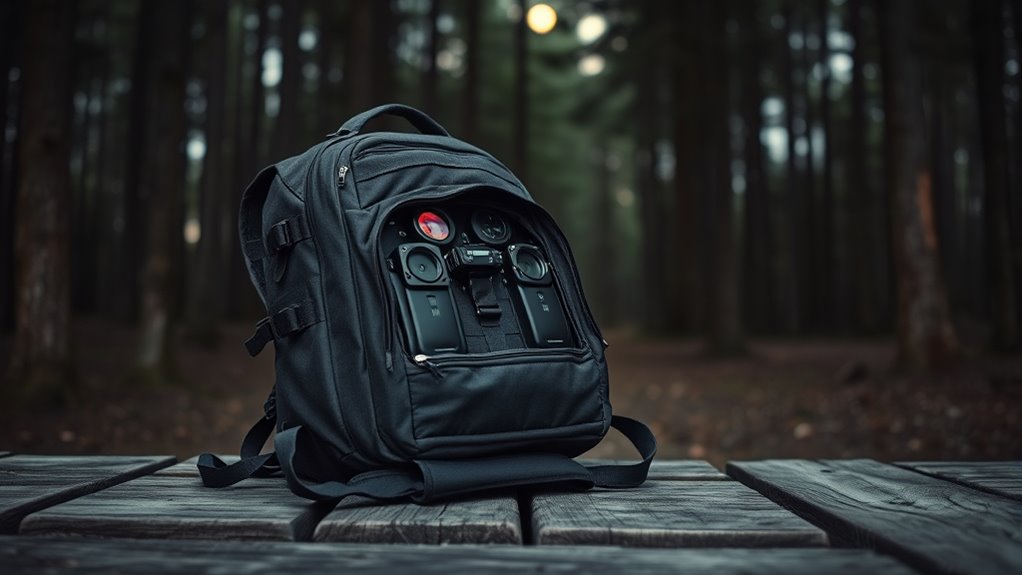

Equipment backpacks for paranormal investigators need to protect delicate meters, organize small accessories, and stay manageable during after-dark site visits. I name the USA Gear Ghost Hunting Equipment Case best overall for its customizable foam interior, with the Dunzy Ghost Hunting Kit Case standing out as another protective choice and the QT&QY 45L Tactical Backpack offering room for broader field kits. The main tradeoff is between padded, purpose-built protection and the carrying capacity or modular storage of tactical packs. Size, weather resistance, and how securely gear stays separated can matter more than a military-style look. Read on for the full comparison and help matching each pack to your equipment and investigation style.

Get movie nights delivered free with Prime
- Fast, free delivery on millions of items
- Prime Video, Amazon Music and more included
- Member-only deals all year
Key Takeaways
- Purpose-built foam cases lead for fragile instruments: USA Gear and Dunzy focus on customizable interior protection, unlike the open storage and external attachment points of tactical packs.
- The 45L class is the most adaptable capacity represented: QT&QY, Reebow Gear, and LHI offer room for a mixed kit, but a larger bag can encourage overpacking on short visits.
- Compact sling and small assault bags suit limited loads: BOMTURN, the Tactical Sling Bag, and Wotony favor quick access and a lighter carry, but leave less room for bulky equipment.
- Capacity is not the same as safe organization: A large pack such as the CVLIFE 60L can carry more, yet meters and cameras may need separate padding or cases inside it.
- There is no single best layout for every investigation: Foam protection suits fragile electronics, while MOLLE-style external attachment points better serve buyers carrying varied accessories and extra layers.


| equipment backpacks for paranormal investigator | Material | Water resistance | Weight | Dimensions |
|---|---|---|---|---|
| BOMTURN Tactical Backpack 1000 | Nylon and polyester | Listed as waterproof | 15.84 ounces | 8.27 x 5.31 x 10.23 inches |
| USA Gear Ghost Hunting Equipme | Ethylene vinyl acetate (EVA) | Water resistant | 12.8 ounces | — |
| Tactical Sling Bag | 900D polyester oxford fabric | Water resistant | 1.6 pounds | 13.7 x 9.1 x 7.1 inches |
| QT&QY 45L Military Tactical Ba | 900D polyester | Listed as waterproof | 3 pounds | 18 x 13.2 x 11.6 inches |
| Reebow Gear Military Tactical | 600 x 600 density polyester fabric | Water resistant | 2.8 pounds | 13 x 20 x 11 inches |
| Wotony Military Tactical Backp | 900D high-density nylon/polyester | Listed as waterproof | 1.8 lb | 9.5 × 13 × 20 in |
| Dunzy Ghost Hunting Kit Case w | EVA and Oxford fabric | Moisture resistant | 1.2 lb | — |
| QT&QY 25L/45L Military Tactica | 900D polyester | Water resistant | 1.9 lb | 15.7 × 9.8 × 9.8 in |
| CVLIFE Tactical Backpack | Polyester | Water repellent | 3.9 lb | 13 × 20 × 20.5 in |
| LHI Military Tactical Backpack | 900D Oxford nylon | Water repellent | 1.3 kg | 12 × 20 × 12 in |
| Hannibal Tactical MOLLE Assaul | 600×600-density polyester | Water-resistant | — | 12 x 20 x 13 inches (30 x 50 x 33 cm) |
More Details on Our Top Picks
BOMTURN Tactical Backpack 1000D Waterproof Military Sling Bag
The BOMTURN Tactical Sling Bag suits investigators who carry a few essentials rather than a full case of equipment. At 9 liters and 15.84 ounces, it is easier to manage on short walks between locations than the larger QT&QY 45L Military Tactical Backpack, while its seven pockets and MOLLE webbing give small tools and accessories separate places. The listed 10.23-inch maximum device size can accommodate a compact tablet-sized item, but this is not a substitute for a protective gear case. Compared with the USA Gear Ghost Hunting Equipment Case, BOMTURN offers wearable storage and external attachment points instead of customizable foam. Its compact capacity is the main tradeoff: full-size cameras, multiple meters, and spare layers can quickly exceed what it can carry. Strap adjustment may also take some attention to get a comfortable fit.
Pros:- Lightweight 9-liter format is easy to carry between nearby locations
- Seven pockets help separate small tools and accessories
- MOLLE webbing allows compatible gear to be attached externally
- Adjustable strap supports different carrying positions
Cons:- Limited room for larger devices, multiple meters, or spare clothing
- A sling format may be less comfortable than a two-strap pack under heavier loads
- Strap adjustment may require care to achieve a comfortable fit
Best for: Investigators on short site visits who carry a phone, one or two small meters, batteries, and a few personal essentials.
Not ideal for: Teams carrying several devices, a camera kit, or overnight supplies; its 9-liter capacity is too limited for larger loads.
- Dimensions:8.27 x 5.31 x 10.23 inches
- Volume:9 liters
- Weight:15.84 ounces
- Material:Nylon and polyester
- Water resistance:Listed as waterproof
- Pockets:7
- Compartments:2
- Maximum device size:10.23 inches
- Adjustable strap:Yes
Our verdict“Choose the BOMTURN for short investigations with a minimal kit, but pick a larger backpack if you need room for several devices or field supplies.”
USA Gear Ghost Hunting Equipment Case – Water Resistant Paranoramal Equipment Bag with Customizable Foam Interior
The USA Gear Ghost Hunting Equipment Case is the protection-first choice for investigators carrying a spirit box, EMF meter, or similarly sized device that should not rattle against other gear. Its customizable foam interior lets buyers shape a snug fit, a meaningful advantage over the open storage of the BOMTURN sling or the broad compartments of the QT&QY 45L pack. The tradeoff is its compact interior: at 8.2 x 6 x 2.5 inches, it is suited to small equipment, not a complete field kit. The water-resistant EVA case is portable and includes a wrist strap and accessory pouch, but it is a case rather than a backpack, so it will not distribute weight across the shoulders for a longer walk. Devices are not included, and foam customization takes planning around the gear being carried.
Pros:- Customizable foam helps keep small devices from shifting
- Water-resistant EVA exterior adds a layer of protection
- Lightweight at 12.8 ounces
- Wrist strap and accessory pouch support simple, organized carrying
Cons:- Interior dimensions limit it to small equipment
- Not a backpack and may be less convenient for extended walks
- Foam needs to be shaped around the gear and devices are not included
Best for: Investigators who want a fitted, cushioned case for one or two small meters or a compact spirit box.
Not ideal for: Buyers who need backpack-style carrying, room for bulky equipment, or one bag for clothing and a full investigation kit.
- Interior dimensions:8.2 x 6 x 2.5 inches
- Exterior dimensions:10.5 x 8.5 x 2.5 inches
- Weight:12.8 ounces
- Material:Ethylene vinyl acetate (EVA)
- Water resistance:Water resistant
- Closure:Zipper
- Compartments:2
- Handle:Web handle; wrist strap included
Our verdict“Pick the USA Gear case when device protection matters more than backpack capacity or hands-free carrying.”
Tactical Sling Bag, Waterproof Military Rover Shoulder Backpack, EDC Assault Range Bag
With 20 liters of capacity, this tactical sling fills the gap between the compact BOMTURN and full-size packs such as the Reebow Gear 40L. It gives investigators more room for several small devices, a tablet, cables, and personal supplies without committing to a three-day-pack footprint. Five pockets and four compartments help separate items, while MOLLE webbing adds options for compatible accessories. Its adjustable, breathable strap and convertible carry modes offer flexibility, though a one-shoulder design can feel less balanced when the bag is heavily loaded. At 1.6 pounds, it is also heavier than the BOMTURN before equipment is added. The listed fabric is water resistant, so I would not treat it as a substitute for a dry bag in sustained wet conditions. Hand washing is required, which makes cleaning less convenient after muddy fieldwork.
Pros:- 20-liter capacity suits a mid-size investigation kit
- Four compartments and five pockets help separate equipment
- MOLLE webbing supports compatible external attachments
- Adjustable strap and convertible carry options offer flexibility
Cons:- A single shoulder strap may be less balanced under a heavy load
- Heavier than the BOMTURN at 1.6 pounds
- Hand washing limits easy cleanup
Best for: Investigators who need more than a compact sling can carry but prefer a smaller, more maneuverable bag than a 40L or 45L pack.
Not ideal for: Anyone carrying a heavy camera setup or planning long walks with a full load; a larger two-strap backpack may distribute weight better.
- Dimensions:13.7 x 9.1 x 7.1 inches
- Capacity:20 liters
- Weight:1.6 pounds
- Material:900D polyester oxford fabric
- Water resistance:Water resistant
- Pockets:5
- Compartments:4
- Convertible carry:Yes; shoulder and hand carry
Our verdict“Choose this sling for a moderate equipment load and flexible carry, but step up to a two-strap pack for heavier gear or longer treks.”
QT&QY 45L Military Tactical Backpack Molle Army Assault Pack for Hiking and Outdoor Activities
The QT&QY 45L Tactical Backpack earns its place for investigators who need to bring a broad kit: cameras, lighting, spare layers, and field supplies alongside meters. Its flat-opening design and five compartments make packing and locating equipment easier than in the more compact BOMTURN or USA Gear case. MOLLE webbing also gives teams a way to attach compatible items outside the main storage area. This capacity comes with real costs: the pack weighs 3 pounds empty, and its 18 x 13.2 x 11.6-inch profile is much bulkier than the 20-liter Tactical Sling Bag. Padded shoulder straps and adjustable waist straps support carrying a heavier load, but they do not make it a light day bag. Its polyester construction is listed as waterproof, while cleaning is limited to hand washing.
Pros:- 45-liter capacity accommodates a substantial field kit
- Flat-opening design makes gear easier to pack and access
- Five compartments support separation of equipment and supplies
- MOLLE webbing and adjustable waist straps suit expandable, heavier loads
Cons:- Three-pound empty weight adds to an already heavy equipment load
- Large dimensions can be cumbersome for short visits or confined locations
- Hand-wash-only care is less convenient after dirty field use
Best for: Investigators packing multiple devices, camera or lighting equipment, spare clothing, and supplies for a long or remote site visit.
Not ideal for: People taking short trips with only a few meters or working in tight spaces where a large pack is cumbersome.
- Dimensions:18 x 13.2 x 11.6 inches
- Capacity:45 liters
- Weight:3 pounds
- Material:900D polyester
- Water resistance:Listed as waterproof
- Compartments:5
- Maximum device size:Up to 17 inches
- Color:Black
Our verdict“Choose this pack for a large, organized investigation load, but favor the Tactical Sling Bag or BOMTURN when portability matters more than capacity.”
Reebow Gear Military Tactical Backpack Large Army 3-Day Assault Pack Molle Bag
The Reebow Gear 40L Assault Pack is a practical pick for investigators who spend long stretches walking outdoors and want a hydration-compatible pack alongside their equipment. Its ventilated back and shoulder padding address sustained carrying more directly than the single-strap Tactical Sling Bag, and the 40-liter capacity holds a substantial kit without matching the QT&QY pack’s 45-liter volume. Three compartments and three pockets provide a simpler layout than QT&QY’s five compartments, so gear that needs fine-grained separation may take more careful packing. The fabric is listed as water resistant, not waterproof, and the hydration bladder is not included. Its 2.8-pound empty weight also becomes significant once meters, batteries, and supplies are loaded. This is a field-hauling choice, not a compact bag for quick checks.
Pros:- 40-liter capacity accommodates equipment and field supplies
- Hydration-compatible design supports longer outdoor sessions
- Ventilated padding on the back and shoulder straps aids extended carrying
- MOLLE webbing allows compatible gear attachments
Cons:- Hydration bladder is not included
- Three compartments offer less separation than the QT&QY 45L pack
- The 2.8-pound pack adds substantial weight when fully loaded
Best for: Outdoor investigators who walk between locations and want a large pack with hydration-bladder compatibility for extended field sessions.
Not ideal for: Buyers seeking a lightweight day bag, built-in hydration bladder, or more compartments for separating delicate devices.
- Dimensions:13 x 20 x 11 inches
- Capacity:40 liters
- Weight:2.8 pounds
- Material:600 x 600 density polyester fabric
- Water resistance:Water resistant
- Pockets:3
- Compartments:3
- Hydration compatibility:Yes; bladder not included
Our verdict“Pick the Reebow Gear for long outdoor sessions where hydration compatibility and a large load matter more than a lighter, more compartmentalized setup.”
Wotony Military Tactical Backpack – Black Small Assault Bag
The Wotony makes sense for investigators who want a 30L carry-on-sized pack with full MOLLE webbing for mounting small lights, pouches, or other frequently reached tools. Its seven pockets give it more built-in sorting than the foam-lined Dunzy case, while its padded mesh straps are better suited to walking between locations with gear on your back. At 1.8 pounds, it also starts lighter than the 60L CVLIFE, leaving more of the carry load available for equipment. The tradeoff is capacity: this compact pack is less suitable for overnight investigations or bulky camera rigs. Its fabric is described as waterproof, but I would still protect sensitive electronics in separate dry storage rather than rely on a backpack alone.
Pros:- Full MOLLE webbing supports modular pouches and accessory placement.
- Seven pockets help separate smaller tools from the main load.
- 900D high-density fabric is suited to regular outdoor use.
- Breathable padded shoulder straps and 1.8-pound weight suit mobile investigations.
Cons:- 30L capacity can run short for extended trips or bulky equipment.
- Only one listed size and color limits fit and appearance choices.
- Backpack organization does not offer the fitted equipment protection of a foam case.
Best for: Investigators who carry a modest field kit and want MOLLE attachment points for organizing frequently used accessories.
Not ideal for: Teams carrying overnight supplies, large camera rigs, or several bulky instruments that need more than 30L of space.
- Capacity:30 L
- Dimensions:9.5 × 13 × 20 in
- Weight:1.8 lb
- Material:900D high-density nylon/polyester
- Organization:7 pockets and 7 compartments
- Attachment system:Full MOLLE webbing
- Water resistance:Listed as waterproof
- Straps:Adjustable breathable mesh padded shoulder straps
Our verdict“Choose the Wotony for a compact, modular investigation kit; choose the CVLIFE when carrying capacity matters more than a lighter, smaller pack.”
Dunzy Ghost Hunting Kit Case with Customizable Foam Interior, Hard Protective Bag for EMF Meter, Ghost Box & Paranormal Equipment
For investigators carrying fragile meters, a spirit box, or compact cameras, the Dunzy prioritizes device separation and impact protection over backpack-style capacity. Its customizable foam lets you shape spaces around individual tools, reducing the chance that instruments knock together in transit. That makes it a different kind of pick from the Wotony, which offers more room and MOLLE attachment options but relies on pockets rather than fitted cushioning. The Dunzy is also light at 1.2 pounds and includes a shoulder strap, though its dimensions are closer to a compact equipment case than a full field pack. Its interior is only 10.31 × 7.28 × 3.15 inches, so larger cameras or several bulky devices may not fit. Moisture resistance is useful, but it is not described as waterproof.
Pros:- Customizable foam can hold compact instruments in individual fitted spaces.
- Impact-resistant construction adds protection beyond an ordinary fabric backpack.
- At 1.2 pounds, it is a light option for a small equipment set.
- Shoulder strap and top and wrap handles offer more than one carrying method.
Cons:- Small internal dimensions limit the size and number of devices it can hold.
- Moisture resistant, but not specified as waterproof.
- Case format provides less capacity and external gear attachment than the Wotony backpack.
Best for: Investigators who carry a few delicate, compact instruments and want separate foam-fitted spaces for transport.
Not ideal for: Investigators needing a full-size backpack for clothing, larger cameras, tripods, or a broad collection of equipment.
- External dimensions:11.34 × 8.07 × 4.02 in
- Internal dimensions:10.31 × 7.28 × 3.15 in
- Weight:1.2 lb
- Material:EVA and Oxford fabric
- Interior:Customizable foam inserts
- Water resistance:Moisture resistant
- Handles:Top handle and wrap handle
- Carrying option:Padded shoulder strap
Our verdict“Pick the Dunzy when protecting a small set of delicate tools matters more than carrying a complete investigation kit.”
QT&QY 25L/45L Military Tactical Backpack for Men Molle Daypack 3-Day Bug Out Bag Hiking Rucksack with Bottle Holder
The 25L QT&QY suits investigators who want a pack that can also carry a laptop and everyday items between outings. Its three main compartments, five pockets, and laptop sleeve for up to 15 inches provide a useful split between electronics and field gear, while MOLLE webbing leaves room to attach selected accessories. That layout is more daily-use oriented than the larger LHI 45L, which gives more room for extended outings but may feel excessive for a short session. At 1.9 pounds, the QT&QY is not the lightest option here, and its 25L capacity asks buyers to pack selectively. The water-resistant 900D polyester offers some protection outdoors, but it should not be treated as a sealed solution for rain-sensitive equipment.
Pros:- Laptop compartment fits devices up to 15 inches.
- Three main compartments and five pockets help separate daily and field gear.
- MOLLE webbing allows selected accessories to be attached externally.
- Water-resistant 900D polyester suits routine outdoor use.
Cons:- 25L capacity limits bulky equipment and overnight supplies.
- At 1.9 pounds, it weighs more than the Wotony despite having less capacity.
- Water resistance is not a substitute for waterproof protection for electronics.
Best for: Investigators who commute with a laptop and a compact set of paranormal equipment, then use the same pack for short field sessions.
Not ideal for: Buyers carrying overnight supplies or large equipment loads who need more capacity than 25L.
- Capacity:25 L
- Dimensions:15.7 × 9.8 × 9.8 in
- Weight:1.9 lb
- Material:900D polyester
- Organization:3 main compartments and 5 pockets
- Laptop compatibility:Up to 15 in
- Water resistance:Water resistant
- Color:Black; US flag patch included
Our verdict“Choose the QT&QY for a laptop-friendly daily pack with room for a compact investigation kit, not for a heavily loaded overnight setup.”
CVLIFE Tactical Backpack, 60L Large Rucksack for Men
When an investigation calls for spare clothing, support gear, and a broad equipment load, the CVLIFE stands apart with 60L of capacity and seven compartments. Its detachable pouch and MOLLE system also let investigators keep selected accessories accessible without unpacking the main bag. Compared with the 45L LHI, the CVLIFE offers more stated volume and a waist belt, but that extra room comes with a clear cost: it weighs 3.9 pounds before any equipment goes inside. That can be a poor fit for short walks between locations or routine daily use. The polyester is described as water repellent, not waterproof, and hand washing is the stated cleaning method. I would favor it for longer trips where carrying capacity matters more than compactness.
Pros:- 60L capacity accommodates a larger equipment and supplies load.
- Seven compartments provide space to separate different kit categories.
- Detachable pouch and MOLLE system support modular organization.
- Adjustable straps and included waist belt help manage a loaded pack.
Cons:- 3.9-pound empty weight adds substantially to the carried load.
- Large dimensions can be cumbersome for daily use and confined locations.
- Water-repellent material is not listed as waterproof, and cleaning is limited to hand washing.
Best for: Investigators on extended outings who need room for equipment, clothing, and support supplies in one pack.
Not ideal for: Urban investigators, minimalist crews, or anyone who wants a light pack for short sessions and frequent travel.
- Capacity:60 L
- Dimensions:13 × 20 × 20.5 in
- Weight:3.9 lb
- Material:Polyester
- Organization:7 compartments
- Included accessories:Detachable pouch and waist belt
- Attachment system:MOLLE system
- Water resistance:Water repellent
Our verdict“Choose the CVLIFE for multi-day investigations and bulky loads; skip it if a light, easy-to-carry field pack is your priority.”
LHI Military Tactical Backpack 45L Assault Pack with Molle System, Black and White
The LHI fills the middle ground between the compact 30L Wotony and the much larger 60L CVLIFE. Its 45L capacity, five compartments, and seven pockets give an investigator room to separate instruments and supplies without stepping up to the CVLIFE’s heavier, bulkier format. The 900D Oxford nylon and water-repellent finish suit outdoor use, while MOLLE webbing supports extra pouches and the bottle holder keeps hydration outside the main storage area. At 1.3 kg, it is not as light as the Wotony’s listed 1.8 pounds, despite offering more volume, so I would not call it a lightweight choice for every buyer. The black-and-white color is also less discreet than an all-black pack, and a full load will still feel heavy during long walks.
Pros:- 45L capacity offers a middle option between the Wotony and CVLIFE.
- Five compartments and seven pockets support equipment separation.
- MOLLE webbing and a bottle holder add practical field storage options.
- 900D Oxford nylon with a water-repellent finish suits outdoor outings.
Cons:- Listed weight of 1.3 kg may feel substantial on long walks, especially when loaded.
- Black-and-white color is less discreet and offers limited appearance choice.
- Water-repellent construction does not provide the protection of a waterproof equipment case.
Best for: Investigators who need more room than a compact daypack offers but do not want the CVLIFE’s 60L capacity and 3.9-pound weight.
Not ideal for: Buyers seeking a low-profile all-black pack, a very light carry, or fitted protection for fragile instruments.
- Capacity:45 L
- Dimensions:12 × 20 × 12 in
- Weight:1.3 kg
- Material:900D Oxford nylon
- Organization:5 compartments and 7 pockets
- Water resistance:Water repellent
- Attachment system:MOLLE system
- Additional storage:Bottle holder
- Color:Black and white
Our verdict“Choose the LHI for a roomy, organized field pack between 30L and 60L, provided its weight and conspicuous color suit your trips.”
Hannibal Tactical MOLLE Assault Backpack, Military Army Camping Rucksack
I’d choose the Hannibal Tactical for investigators who need room to carry a recorder, lighting, spare batteries, and general field supplies in one pack. Its 45L capacity and multiple compartments offer more built-in organization than a simple sling bag, while MOLLE webbing lets you attach compatible pouches for gear you want within reach. Compared with the USA Gear Ghost Hunting Equipment Case, this is better suited to carrying mixed supplies on walks between locations, but it lacks that case’s customizable foam protection for delicate instruments. The water-resistant 600×600-density polyester and ventilated back panel support outdoor use, though water resistance is not the same as a sealed dry bag. A hydration compartment accommodates a bladder up to 3L, but the bladder is not included; the pack’s hand-wash care and unspecified weight also make maintenance and load planning less convenient.
Pros:- 45L capacity and multiple compartments accommodate a mixed investigation kit.
- MOLLE webbing allows compatible pouches to be attached and arranged around the user’s workflow.
- Water-resistant 600×600-density polyester is suited to outdoor field use.
- Padded straps and a ventilated back panel support carrying a loaded pack.
Cons:- Hydration bladder is not included, despite the dedicated compartment.
- Hand-wash-only care is less convenient after muddy or dusty outings.
- Product data does not specify the pack’s weight, making load planning harder.
Best for: Paranormal investigators who carry a varied 45L load on outdoor walks and want to add MOLLE pouches for frequently used accessories.
Not ideal for: Investigators transporting fragile meters that need fitted foam protection, or anyone seeking a lightweight pack with a stated weight and machine-washable care.
- Capacity:45L
- Dimensions:12 x 20 x 13 inches (30 x 50 x 33 cm)
- Material:600×600-density polyester
- Hydration capacity:Up to 3L
- Water resistance:Water-resistant
- Organization:Multiple compartments
- Attachment system:MOLLE webbing
- Included detail:USA Flag Patch
Our verdict“Choose this pack for a customizable, general-purpose 45L field load; choose the USA Gear case instead when fitted protection for delicate equipment matters more than backpack versatility.”

How We Picked
I ranked these options by how well their design matches the actual demands of paranormal fieldwork: protecting electronics, separating small accessories, carrying a useful amount of gear, and remaining practical on foot. I gave purpose-built foam cases an advantage for sensitive meters and compact equipment, while judging tactical backpacks by their capacity, organization potential, and carry format rather than their military styling alone. A bag’s water-resistant or waterproof wording can help frame expectations, but it does not replace checking the maker’s care guidance or protecting electronics from sustained rain.
The order reflects tradeoffs, not a claim that one size fits every investigator. The USA Gear case ranks first for its direct focus on equipment protection; Dunzy is a close alternative with a similar hard-case approach. Larger packs earn their place for extended outings and mixed loads, while sling and compact options rank lower for all-purpose use because they offer less space. Where the product details do not establish a feature or exact fit, I avoid treating it as a proven advantage and recommend verifying dimensions against the buyer’s gear.
| equipment backpacks for paranormal investigator | Water resistance |
|---|---|
| BOMTURN Tactical Backpack 1000 | Listed as waterproof |
| USA Gear Ghost Hunting Equipme | Water resistant |
| Tactical Sling Bag | Water resistant |
| QT&QY 45L Military Tactical Ba | Listed as waterproof |
| Reebow Gear Military Tactical | Water resistant |
| Wotony Military Tactical Backp | Listed as waterproof |
| Dunzy Ghost Hunting Kit Case w | Moisture resistant |
| QT&QY 25L/45L Military Tactica | Water resistant |
| CVLIFE Tactical Backpack | Water repellent |
| LHI Military Tactical Backpack | Water repellent |
| Hannibal Tactical MOLLE Assaul | Water-resistant |
Factors to Consider When Choosing Equipment Backpacks For Paranormal Investigators
Choosing a field bag starts with the gear and the route, not the product’s tactical label. I would first decide what must remain padded, what needs fast access, and how much equipment I am willing to carry between locations. These broader checks can prevent both an overbuilt pack and a compact bag that forces sensitive devices together.
Match Protection to the Most Fragile Item
List the items most likely to be damaged by impact, pressure, or contact with loose accessories before choosing a bag. A foam-lined case can create individual pockets, but adjustable foam still needs to be shaped around actual devices rather than assumed to fit every meter or camera. In a soft tactical pack, use separate protective sleeves or a small padded insert for electronics instead of letting cables and tools share an open compartment. Avoid packing a device tightly against hard objects, even if the bag has thick fabric. When comparing dimensions, account for the item’s case, antenna, and charging accessories, not only its main body. Buyers with mostly delicate equipment may value interior protection more than external attachment points.
Choose Capacity From a Real Loadout
Build a sample loadout before selecting a capacity: meters, audio recorders, lights, batteries, notebooks, water, and any spare clothing all take space. A larger pack can carry a complete overnight kit, but unused volume often becomes an invitation to bring gear that will not be used. An overfilled pack can also make small items harder to find and put extra pressure on fragile devices. For a short indoor investigation, a compact sling may be easier to handle through tight doorways than a tall expedition-style load. For multi-location or outdoor work, spare layers and water can justify a larger pack even when the electronics kit is modest. Check the bag’s usable interior dimensions, since stated capacity alone does not show whether a long or unusually shaped item will fit.
Plan for Organization and Fast Access
Think through the sequence of a typical setup: what needs to be reached first, what can stay packed, and where used batteries or cables will go. MOLLE webbing and external pockets can support add-on pouches, but they also create more exposed places for items to snag or collect dirt. A foam layout offers clear separation, though a fixed or customized arrangement may be less convenient when the kit changes. Color-coded pouches or labeled inner sleeves can make a simple backpack easier to work from without adding much bulk. Keep frequently used tools near the opening and fragile equipment away from heavy objects at the bottom. A common mistake is buying for the number of compartments rather than whether those compartments fit the actual kit.
Treat Weather Protection as One Layer of Defense
Water-resistant fabric and waterproof construction are not interchangeable claims, and neither tells the whole story about seams, zippers, or closures. For outdoor investigations, a rain cover or sealed inner pouch can add a second barrier for electronics and paperwork. Keep batteries and chargers in a dry compartment even if the outer shell is described as water resistant. Mud, dust, and damp ground can also affect a bag, so consider whether it is easy to wipe clean and dry after a site visit. Do not assume a product’s wording means it can be submerged or left in heavy rain. Buyers who mostly work indoors may prefer easier access and organization over paying extra attention to weather-focused construction.
Check Carry Comfort Against the Route
A bag that feels manageable when empty can become tiring once it holds batteries, lights, and water. Shoulder-only sling designs allow quick access but concentrate weight on one side, which may be uncomfortable over a long walk. Two-strap backpacks distribute a load more evenly, though bulky packs can be awkward in narrow corridors or crowded interiors. Check whether the straps and back panel suit the clothing you expect to wear, including a coat in cold weather. For longer outdoor approaches, carry comfort deserves as much attention as storage volume. For short indoor sessions, a simpler compact bag may be the more convenient choice.
Pay for Features That Solve a Real Field Problem
A premium case makes sense when its protective layout replaces separate padded containers or reduces the chance of devices knocking together. Extra capacity is useful when you regularly carry clothing, water, or equipment for a team, but it adds bulk when your kit stays small. External webbing has value if you already use compatible pouches; otherwise, it may add little beyond visual style. Before spending more, compare the interior layout, closure design, carry comfort, and the manufacturer’s care instructions. Buyers new to investigating may be better served by a straightforward bag plus a few protective inserts than by a highly modular setup they do not yet need. Let the hardest-to-protect item and the longest typical walk set the spending priorities.
Frequently Asked Questions
Should I choose a foam case or a tactical backpack for EMF meters and recorders?
I would choose a foam case when preventing bumps and keeping small electronics separated matters more than carrying clothing or a large mixed load. A tactical backpack makes more sense when the kit includes varied accessories, water, or layers that benefit from flexible compartments. Neither format automatically protects every device: foam needs a suitable cutout, while a soft pack may need padded inserts. Consider whether you will change your equipment often, since a flexible interior can adapt more readily than a carefully arranged foam layout. If your kit includes both delicate meters and bulky supplies, a padded case carried inside a larger pack can combine protection with capacity.
Is a 45L backpack too large for a typical investigation?
It depends on whether the trip includes more than electronics. A 45L pack can suit investigators carrying water, spare layers, lights, and equipment for several locations, but it may feel oversized for a short indoor session with a few meters. Extra space also makes it easier to carry unnecessary items, adding weight without improving the investigation. Lay out your regular kit and check the pack’s interior dimensions rather than relying on capacity alone. If your load changes widely from trip to trip, a smaller organizer inside a larger bag can keep a light kit from shifting.
Can a tactical backpack protect delicate paranormal equipment without foam?
It can carry delicate equipment, but an open compartment by itself does not prevent devices from hitting each other or harder accessories. Use padded sleeves, a camera insert, or individual cases for meters and recorders, then secure them so they do not move during walking. Keep batteries, cables, and tools in separate pouches rather than loose beside electronics. Check that the combined setup still fits without forcing zippers closed against the equipment. If you want ready-made separation with less packing work, a purpose-built foam case may be a better starting point.
How should I choose between the USA Gear and Dunzy foam cases?
Both are designed around customizable foam protection, so compare their external and internal dimensions with your largest device and the full set of accessories you intend to carry. Check whether the foam arrangement can separate each item without leaving devices loose or compressed. Think about how often your equipment changes: a frequently changing kit may need a layout that is easy to adjust, while a stable kit can benefit from dedicated cutouts. Also compare the handle and carry format with the distance from your vehicle to the site. The better choice is the one that fits your actual loadout, not simply the one with more apparent storage space.
What should I do if a bag is described as water resistant or waterproof?
Treat those terms as a starting point, not a promise that every opening and seam can keep out water in every condition. Read the product’s care and use information, especially for zippers and closures, and avoid exposing electronics to prolonged rain without a second barrier. A dry pouch for meters, batteries, and paperwork can reduce the consequences of a leak or splash. After a damp outing, empty the bag and let it dry fully before storing equipment inside. If your investigations are mainly indoors, organization and comfort may matter more than the strongest weather claims.
Conclusion
For most investigators who prioritize protecting meters and compact electronics, I recommend the USA Gear Ghost Hunting Equipment Case as the best overall pick; the Dunzy Ghost Hunting Kit Case is the closest alternative for buyers comparing foam-lined layouts. For best value in flexible field capacity, I would start with the QT&QY 45L Tactical Backpack, while the larger CVLIFE 60L suits buyers who routinely carry bulky supplies and spare layers. Beginners with a small kit may prefer the Wotony Small Assault Bag or a compact sling, paired with protective sleeves for electronics. For specific needs, choose a foam case for fragile gear, a 45L tactical pack for mixed outdoor loads, or a sling for short, light investigations. Match the bag to the equipment and route you actually have, rather than buying capacity or modular features you are unlikely to use.