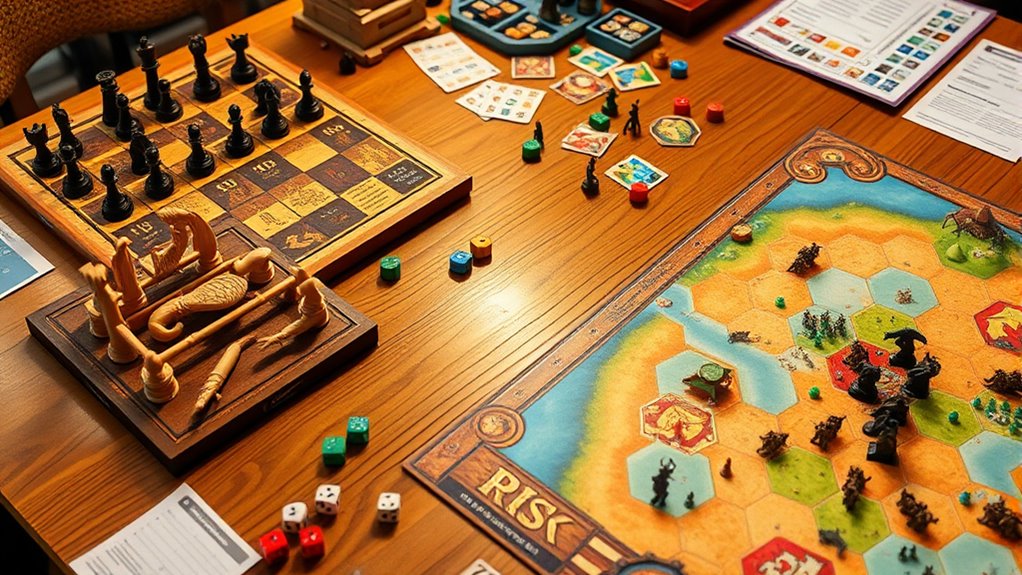

If you’re searching for board games for strategy lovers, you’re likely tired of luck-driven dice rollers and want something that rewards planning, foresight, and clever decisions. The Standard Edition Strategy Board Game takes the top spot here because it layers resource management, area control, and asymmetric powers into a tense 1-2 hour experience that never feels scripted. Two other standouts include CATAN for its unmatched trading and negotiation depth, and Azul for pure, elegant spatial planning that scales from casual to cutthroat. The main tradeoff you’ll face is between games that emphasize player interaction (trading, bluffing, area denial) versus those that focus on individual optimization (tile drafting, engine building). Some picks here are heavier and demand a dedicated group, while others shine at family game night. Keep reading for the full breakdown and to see which of these eight deserves your table.

Get movie nights delivered free with Prime
- Fast, free delivery on millions of items
- Prime Video, Amazon Music and more included
- Member-only deals all year
Key Takeaways
- The Standard Edition wins because it combines four distinct strategy pillars—resource management, area control, asymmetric powers, and a quirky nuclear farm animal theme—without overstaying its welcome at 1-2 hours.
- CATAN and Carcassonne remain the best entry points for new strategy players, but they differ sharply: CATAN rewards negotiation and luck mitigation, while Carcassonne rewards spatial foresight with zero player elimination.
- Azul and Qwirkle both excel at abstract spatial strategy, but Azul offers deeper tactical depth with its drafting and wall-building, while Qwirkle is faster and more approachable for mixed-age groups.
- Cytosis is the only science-accurate pick here, and its asymmetric enzyme and protein-building mechanics will appeal to players who want thematic depth, but it demands more rules overhead than any other game in this lineup.
- Spy Alley is the outlier: it’s a social deduction game that tests strategic bluffing rather than resource management, making it the best choice for groups that prioritize reading opponents over optimizing systems.
| Farms Race Standard Edition – Strategy Board Game for Adults and Family |  | Best for High-Interaction Groups | Players: 2–4 | Play Time: 1–2 hours | Ages: 14+ | VIEW ON AMAZON | See Our Full Breakdown |
| CATAN Board Game (6th Edition) |  | Best Classic Gateway | Players: 3–4 | Play Time: 60–90 minutes | Ages: 10+ | VIEW ON AMAZON | See Our Full Breakdown |
| Carcassonne Tile Placement Strategy Board Game |  | Best for Quick Sessions | Players: 2–5 | Play Time: 35 minutes | Ages: 7+ | VIEW ON AMAZON | See Our Full Breakdown |
| Azul: Tile Placement Strategy Board Game |  | Best for Tactical Depth | Players: 2–4 | Play Time: 30–45 minutes | Ages: 8+ | VIEW ON AMAZON | See Our Full Breakdown |
| Cytosis: A Cell Biology Board Game |  | Best Educational Strategy | Players: 2–4 (up to 10+ with expansions) | Play Time: 60–90 minutes | Ages: 10+ | VIEW ON AMAZON | See Our Full Breakdown |
| Asmodee Splendor Gem Trading Strategy Board Game, 2-4 Players |  | Best Entry Point to Engine Building | Age Range: 10 years and up | Number of Players: 2-4 | Included Components: 40 plastic tokens, 90 development cards, 10 noble tiles, 1 rulebook | VIEW ON AMAZON | See Our Full Breakdown |
| Spy Alley – Mensa Award-Winning Strategy Game – Social Deduction & Bluffing Board Game – Family Game Night Fun – Ages 8+ for 2-6 Players | 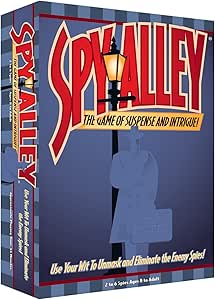 | Best for Social Deduction & Bluffing | Number of Players: 2-6 | Estimated Playing Time: 45 minutes | Age Range: 8 to adult | VIEW ON AMAZON | See Our Full Breakdown |
| MindWare Qwirkle with Trays Strategy Board Game, 108 Wooden Tiles |  | Best for Family-Friendly Tactics | Number of Players: 2-4 | Age Range: 6 years and up | Included Components: 4 storage trays | VIEW ON AMAZON | See Our Full Breakdown |
| board games for strategy lover | Players | Play Time | Ages | Mechanics |
|---|---|---|---|---|
| Farms Race Standard Edition | 2–4 | 1–2 hours | 14+ | Resource management, area control, asymmetric powers |
| CATAN Board Game | 3–4 | 60–90 minutes | 10+ | — |
| Carcassonne Tile Placement Str | 2–5 | 35 minutes | 7+ | Tile placement, area control |
| Azul: Tile Placement Strategy | 2–4 | 30–45 minutes | 8+ | Tile drafting, pattern building |
| Cytosis: A Cell Biology Board | 2–4 (up to 10+ with expansions) | 60–90 minutes | 10+ | Worker placement, resource management |
| Asmodee Splendor Gem Trading S | — | — | — | — |
| Spy Alley | — | — | — | — |
| MindWare Qwirkle with Trays St | — | — | — | — |
More Details on Our Top Picks
Farms Race Standard Edition – Strategy Board Game for Adults and Family
Farms Race is the loudest, most confrontational game in this lineup. It takes the resource-gathering and engine-building you’d expect from a Eurogame and layers on area control, asymmetric powers, and literal nuclear warfare between mutant farm animals. Where Catan rewards patient negotiation and Azul rewards quiet efficiency, this game thrives on bluffing, backstabbing, and trading only when it’s not your turn. The 11 mutation powers create wildly different strategies each session, so no two games play alike. The tradeoff is real: this is a 1–2 hour commitment with a satirical tone that won’t suit everyone. If your group prefers peaceful point-scoring over sabotage, this pick will feel chaotic rather than clever.
Pros:- Asymmetric powers across 11 mutations add substantial replay value and counterplay depth.
- Blends Euro resource management with 4X-style conquest for a unique hybrid experience.
- Highly interactive — trading, bluffing, and negotiation are core, not optional.
- Dark humor and nuclear farm animal theme stand out from typical fantasy or historical settings.
Cons:- The 1–2 hour playtime and aggressive mechanics can be exhausting for casual groups.
- Theme and satire may clash with players who want a more grounded or serious strategy game.
- Requires a group that embraces conflict — passive players will feel left behind.
Best for: Strategy groups who love negotiation, betrayal, and high player interaction and want a Euro-style game with a sharp, comedic edge.
Not ideal for: Players who dislike direct conflict or want a calm, low-tension experience — the nukes and area control make every turn a potential attack.
- Players:2–4
- Play Time:1–2 hours
- Ages:14+
- Mechanics:Resource management, area control, asymmetric powers
- Item Dimensions:11.61 x 9.45 inches
- Weight:3.3 pounds
- Materials:Cardboard, cardstock, plastic, wood
- Rulebook:Printed and included
Our verdict“Choose Farms Race if your table thrives on loud, interactive strategy with a healthy dose of sabotage.”
CATAN Board Game (6th Edition)
CATAN remains the benchmark for introducing players to modern strategy gaming, and this 6th Edition polishes the classic without breaking what works. The modular hexagonal board guarantees a new map every game, which keeps resource negotiation and settlement placement fresh even after dozens of plays. Compared with Farms Race, Catan is far more forgiving — the robber is the only real threat, and trading is open and transparent. That makes it the ideal bridge for players who are new to engine-building and area control. However, the base game only supports 3–4 players, so larger groups will need the 5–6 player expansion. Setup also takes a few minutes to assemble the hexes and number discs, which some groups may find tedious.
Pros:- Modular board creates high replayability and a unique layout each session.
- Trading and negotiation mechanics are intuitive and engaging for newcomers.
- The 6th Edition updates components and rules while preserving the classic feel.
- Broad appeal across ages and experience levels.
Cons:- Base game limited to 3–4 players — expansions are required for larger groups.
- Setup takes time due to the modular board assembly and number disc placement.
- Dice-based resource rolls can frustrate players who prefer deterministic strategy.
Best for: Families and mixed groups where some players are new to strategy games — Catan teaches resource management and negotiation in a welcoming way.
Not ideal for: Experienced strategy gamers seeking deep, crunchy mechanics — Catan’s randomness and limited player interaction may feel thin after heavier games.
- Players:3–4
- Play Time:60–90 minutes
- Ages:10+
- Edition:6th Edition
- Components:19 terrain hexes, 6 sea frame pieces, 18 number discs, 4 player aids, 2 bonus victory point tiles, 96 wooden pieces, 2 card trays, 2 dice, 120 cards
- Brand:CATAN / Asmodee
- Language:English
Our verdict“Get CATAN if you want a proven gateway strategy game that introduces resource management and negotiation without overwhelming newcomers.”
Carcassonne Tile Placement Strategy Board Game
Carcassonne proves that a strategy game doesn’t need a 90-minute commitment to feel satisfying. Each turn you draw a tile, place it, and decide whether to deploy a follower — a simple loop that hides surprising depth around shared features and farmer scoring. Compared with Azul, Carcassonne offers more spatial planning and direct competition over the same cities and roads, but with a lighter, more approachable tone. The included mini-expansions add variety without overcomplicating the base game. Its main weakness is that experienced players may exhaust its strategic ceiling quickly; once you master the placement patterns, the randomness of the tile draw can feel like the deciding factor. Still, for a 35-minute filler that scales from 2 to 5 players, it’s hard to beat.
Pros:- Randomized tile placement creates a unique landscape every game.
- Quick 35-minute playtime fits easily into a game night.
- Works well with 2 players, offering a solid head-to-head experience.
- Includes mini-expansions for added variety.
Cons:- Strategic depth is limited for advanced players — optimal play often comes down to tile luck.
- Mini-expansions may feel necessary to keep the game interesting after many plays.
- Max 5 players, so larger groups need a different option.
Best for: Families and casual groups who want a quick, accessible strategy game that still rewards careful placement and tactical thinking.
Not ideal for: Hardcore strategists who prefer deep, deterministic decision-making — Carcassonne’s tile draw randomness limits long-term planning.
- Players:2–5
- Play Time:35 minutes
- Ages:7+
- Edition:Classic Edition
- Mechanics:Tile placement, area control
- Brand:Z-Man Games / Asmodee
- Model Number:ZM7810
Our verdict“Pick Carcassonne when you need a fast, family-friendly strategy game that delivers meaningful decisions in under an hour.”
Azul: Tile Placement Strategy Board Game
Azul is the rare game that feels both elegant and brutal. You draft colorful resin tiles from factory displays and place them on your personal board, but every tile you don’t use becomes negative points. That simple tension — take what you need, but don’t leave your opponents easy picks — creates a knife-fight of tactical decisions. Compared with Carcassonne, Azul has less spatial sprawl but far more player-driven disruption; you’re constantly watching what others draft and planning your moves to block them. The 2018 Spiel des Jahres winner scales beautifully from 2 to 4 players, and the tactile quality of the tiles is genuinely satisfying. The downside is that the penalty system can feel punishing for beginners, and setup requires organizing multiple factory displays before each round.
Pros:- High-quality resin tiles with a premium, tactile feel.
- Easy to learn but offers deep tactical planning and player interaction.
- Scales excellently from 2 to 4 players with no downtime.
- High replayability due to shifting tile availability and drafting choices.
Cons:- Penalty points for leftover tiles can be harsh for new players, leading to frustrating early losses.
- Setup requires organizing multiple factory displays and the tile bag, which adds prep time.
- Limited thematic appeal — it’s abstract pattern-building with no narrative or world-building.
Best for: Players who enjoy head-to-head tactical puzzles and want a game that’s easy to teach but hard to master.
Not ideal for: Those who prefer long-term engine building or negotiation — Azul is purely about immediate drafting decisions with no diplomacy.
- Players:2–4
- Play Time:30–45 minutes
- Ages:8+
- Components:100 resin tiles, 4 player boards, 9 factory displays, 4 scoring markers, 1 starting player marker, 1 linen bag
- Awards:2018 Spiel des Jahres
- Mechanics:Tile drafting, pattern building
Our verdict“Choose Azul if you want a sharp, tactical drafting game that rewards careful planning and punishing your opponents’ mistakes.”
Cytosis: A Cell Biology Board Game
Cytosis takes worker placement and sets it inside a human cell, where players place flasks on organelles to collect resources and build proteins, hormones, and enzymes. It’s a genuinely strategic game — you’re juggling limited actions, competing for the same organelles, and planning multi-turn builds. What sets it apart from Catan or Azul is the educational layer: the included booklet, peer-reviewed by over 20 PhDs, explains the real biology behind each mechanic. That makes it a fantastic classroom tool or a way to introduce science concepts at home. But the theme is dense, and the game’s complexity sits in the medium-heavy range, so casual players may feel overwhelmed by the vocabulary and interconnected systems. It’s also best with 2–4 players, despite the box claiming up to 10+ with expansions.
Pros:- Worker placement mechanics are solid and offer meaningful strategic choices.
- Science-accurate content, peer-reviewed by experts, adds real educational value.
- High replayability with varied strategies for building different biomolecules.
- Includes a detailed fact-based booklet for deeper learning.
Cons:- Theme can be intimidating for casual players — the biology vocabulary is a barrier to entry.
- Playtime and complexity are on the heavier side for a family game night.
- Base game supports only 2–4 players; the 10+ claim requires additional components not included.
Best for: Teachers, science enthusiasts, and families who want a strategy game that doubles as a learning tool for cell biology.
Not ideal for: Players who prefer abstract or fantasy themes — the scientific terminology and real-world accuracy may feel like homework rather than fun.
- Players:2–4 (up to 10+ with expansions)
- Play Time:60–90 minutes
- Ages:10+
- Mechanics:Worker placement, resource management
- Item Dimensions:11.5 x 8.75 x 2.2 inches
- Weight:1 kg (approx. 2.2 lbs)
- Materials:Cardboard, paper, plastic
- Educational Focus:Cell biology, organelles, proteins, enzymes
Our verdict“Buy Cytosis if you want a strategy game that teaches real science while still offering genuine worker-placement depth.”
Asmodee Splendor Gem Trading Strategy Board Game, 2-4 Players
Splendor earns its spot as the ideal gateway into engine-building strategy. Each turn you either take gem tokens, buy a development card, or reserve a card — that’s the entire rulebook, yet the decisions compound beautifully. Compared with CATAN, which throws dice randomness and negotiation at you from the start, Splendor offers a cleaner, more calculable puzzle where every move is visible and every resource counts. The open information means you’re constantly tracking opponents’ gem piles and card stacks, turning the game into a tense race for the right card at the right moment. The 40 plastic tokens are satisfying to handle, and the 90 development cards ensure no two games unfold identically. However, the lack of direct player interaction beyond racing for shared cards might leave veterans of heavier games like Azul wanting more confrontation. For newcomers or families, this is a perfect bridge from casual play to deeper strategy.
Pros:- Extremely simple rules that still create meaningful strategic depth
- Quick 30-minute playtime makes it easy to run multiple rounds in a session
- High replayability from the shuffled card deck and shifting noble tiles
- Great component quality with chunky plastic gem tokens
Cons:- Limited player interaction — you can’t directly block or attack opponents
- Theme is thin; the Renaissance gem trading setting feels pasted on
- May feel too light for groups that prefer heavy, hour-long strategy games
Best for: Players new to engine-building who want a fast, elegant introduction to resource management without complex rules or player conflict
Not ideal for: Hardcore strategists who crave direct player interaction, negotiation, or deep asymmetric powers — Splendor’s competition is mostly indirect
- Age Range:10 years and up
- Number of Players:2-4
- Included Components:40 plastic tokens, 90 development cards, 10 noble tiles, 1 rulebook
- Model Year:2019
- Item Type:Board Game
- Edition:Splendor Global Trade
- Manufacturer:Asmodee
- Model Number:SPL01
Our verdict“If you want a clean, fast, and surprisingly deep engine-building experience that welcomes newcomers, Splendor is the pick.”
Spy Alley – Mensa Award-Winning Strategy Game – Social Deduction & Bluffing Board Game – Family Game Night Fun – Ages 8+ for 2-6 Players
Spy Alley brings a completely different flavor to the strategy table — instead of building an engine or claiming territory, you’re building a lie. Each player secretly picks a spy identity and then collects the items needed to complete their mission while throwing opponents off the scent. The deduction here is more about reading people than reading a board, which sets it apart from the pure positional logic of Splendor or the tile-laying of Carcassonne. The Mensa award is well earned: the bluffing mechanics are tight, and the 45-minute playtime keeps the tension high without dragging. With support for up to 6 players, it’s a rare strategy game that scales well for larger groups, and the hidden identity element means every game feels like a fresh psychological puzzle. That said, the luck of the die roll when moving around the board can frustrate players who prefer pure deterministic strategy, and the cardboard components feel a bit flimsy compared to the wooden tiles in Qwirkle.
Pros:- Supports up to 6 players, making it great for larger groups
- Deep bluffing and deduction mechanics that reward social intelligence
- Award-winning design with proven replayability across generations
- Variable strategy level — casual players can bluff lightly, experts can layer misdirection
Cons:- Die-roll movement introduces luck that can undermine careful planning
- Components are mostly cardboard and may wear out with heavy use
- Requires a group that enjoys confrontation and deception — not for everyone
Best for: Groups of 4-6 who love social deduction, bluffing, and reading opponents — perfect for parties or family gatherings
Not ideal for: Players who dislike hidden roles or player elimination, or who want a purely logical, luck-free strategy experience
- Number of Players:2-6
- Estimated Playing Time:45 minutes
- Age Range:8 to adult
- Game Mechanics:Collection/acquisition, hidden identity, social deduction
- Included Components:6 spy identification cards, 6 markers, game board, free gift cards, move cards, scorecards, pegs, die, play money
- Item Dimensions:9.25 x 2.5 x 13 inches
- Material Type:Cardboard
- Warranty:90-day limited manufacturer warranty
Our verdict“If your group thrives on outsmarting each other through bluffing and deduction, Spy Alley is the strategy game that puts your social skills to the test.”
MindWare Qwirkle with Trays Strategy Board Game, 108 Wooden Tiles
Qwirkle is the rare strategy game that a six-year-old and a seasoned gamer can enjoy at the same table. The rules are deceptively simple — match colors or shapes to create lines — but the tactical depth emerges from tile management and blocking opponents’ scoring opportunities. The included trays are a real upgrade over the base version, letting you organize your hand and plan several moves ahead without giving anything away. Compared to Splendor, which requires engine-building and resource accumulation, Qwirkle is more about spatial reasoning and immediate tactical choices. It also plays faster and with a lower barrier to entry, making it a better choice for mixed-age groups. However, the 2-4 player cap is limiting for larger gatherings, and the abstract theme means there’s no narrative or world-building to latch onto. The wooden tiles are durable, though they can chip if dropped on hard floors — a minor concern for a game that gets pulled out often.
Pros:- Incredibly accessible rules that appeal to a wide age range
- Storage trays improve hand organization and enable strategic planning
- Tactical depth from blocking, tile counting, and line-building
- High-quality wooden tiles with a satisfying tactile feel
Cons:- Limited to 4 players, which excludes larger groups
- Abstract theme may feel dry for those who want a story or setting
- Scoring can be confusing for younger players initially
Best for: Families with kids aged 6+ who want a strategy game that’s easy to learn but still rewards careful planning and spatial thinking
Not ideal for: Players who prefer deep thematic immersion or games with direct player conflict — Qwirkle is pure abstract tactics
- Number of Players:2-4
- Age Range:6 years and up
- Included Components:4 storage trays
- Number of Tiles:108
- Material:Wood
- Language:English
- Educational Objective:Color and shape recognition, basic math, strategic thinking, language, problem-solving
Our verdict“For a fast, family-friendly strategy game that sharpens spatial thinking and planning, Qwirkle with trays is the perfect choice.”

How We Picked
To rank these eight board games for strategy lovers, I evaluated each on five criteria: decision density (how many meaningful choices you make per turn), player interaction (whether you’re competing against people or just the system), replayability (variety across sessions), rules complexity (how quickly you can get to the fun), and strategic depth (whether skill overcomes luck). Games that offered multiple viable paths to victory and punished careless moves ranked higher. I also weighed how well each game scales from 2 to 4+ players, since that affects real-world usability. The ranking reflects a balance: the Standard Edition leads because it hits every criterion without requiring a weekend to learn, while CATAN and Carcassonne follow for their proven design and accessibility. Azul earns a high spot for its elegant depth, whereas Cytosis and Spy Alley rank lower because they serve narrower niches. Qwirkle and Splendor round out the list as lighter but still strategic options.
| board games for strategy lover | Mechanics |
|---|---|
| Farms Race Standard Edition | Resource management, area control, asymmetric powers |
| CATAN Board Game | — |
| Carcassonne Tile Placement Str | Tile placement, area control |
| Azul: Tile Placement Strategy | Tile drafting, pattern building |
| Cytosis: A Cell Biology Board | Worker placement, resource management |
| Asmodee Splendor Gem Trading S | — |
| Spy Alley | — |
| MindWare Qwirkle with Trays St | — |
Factors to Consider When Choosing Board Games For Strategy Lovers
Choosing the right strategy game goes beyond picking a name you recognize. The following factors will help you match a game to your group’s preferences, time constraints, and tolerance for complexity. These are the tradeoffs that separated the top picks from the rest in this roundup.
Player Interaction vs. Solitaire Optimization
Some strategy games force you to react to opponents every turn—trading, blocking, or bluffing—while others let you build your engine in relative isolation. CATAN and Spy Alley are highly interactive; your best move depends on what others do. Azul and Qwirkle are more about optimizing your own position, with interaction limited to tile stealing or blocking. If your group enjoys table talk and negotiation, prioritize interactive games. If you prefer a quieter, thinky experience, abstract optimization games will serve you better. The Standard Edition balances both: area control creates direct conflict, but resource management gives you private puzzles to solve.
Rules Complexity and Learning Curve
Strategy lovers often overestimate their appetite for rules. Cytosis requires learning a biology-themed rulebook with multiple interlocking systems, which can take 30+ minutes to explain. In contrast, Qwirkle and Splendor teach in under five minutes. The sweet spot for most groups is a game like Carcassonne or Azul: simple enough to start quickly but with enough tactical nuance to keep veterans engaged. Don’t assume heavier equals better. A game you can play three times in one evening offers more strategic practice than one you play once after a long teach. Match the rules weight to your group’s patience, not your ideal vision of a ‘serious’ game.
Player Count Flexibility
Check whether a game plays well at your usual player count. Spy Alley supports 2-6 but is best with 4-6 for meaningful bluffing. CATAN is designed for 3-4 (with expansions for 5-6) and can feel empty with only two. Carcassonne and Qwirkle scale gracefully from 2 to 5, making them safer for variable groups. The Standard Edition supports 2-4 and maintains tension at both ends. If you frequently play with just one other person, prioritize games that are specifically tuned for two players, like Azul or Splendor. Buying a game that doesn’t fit your typical group size leads to it sitting on the shelf.
Session Length and Pacing
Strategy games range from 30-minute sprints (Qwirkle, Splendor) to 2-hour marathons (Standard Edition, Cytosis). Longer games aren’t automatically more strategic; they just demand more sustained attention. If your game nights are limited to weeknights, shorter games allow multiple plays and more experimentation. If you have dedicated weekend sessions, the deeper resource management of CATAN or the Standard Edition will shine. Also consider downtime: in Cytosis, players take longer turns, which can cause others to lose focus. Games with simultaneous or quick turns, like Azul, keep everyone engaged even during other players’ moves.
Luck vs. Skill Balance
Every strategy game has some luck, but the ratio varies widely. CATAN uses dice rolls for resource production, which can swing outcomes despite good planning. Carcassonne uses tile draws, but skilled placement mitigates bad luck. Azul and Qwirkle have zero randomness—every decision is based on visible information. If you’re a purist who hates losing to a lucky roll, choose deterministic games. If you enjoy the tension of uncertainty and recovery, games with dice or hidden information (like Spy Alley) add excitement. The Standard Edition includes a bit of randomness through its asymmetric powers but gives players tools to manage it, making it a good middle ground.
Frequently Asked Questions
Which strategy game is best for a group that includes both beginners and hardcore gamers?
Carcassonne is the safest bridge between casual and serious players. Its tile-placement rules are simple enough for a newcomer to grasp in minutes, yet the strategic depth of field control and farmer placement keeps veterans engaged. The game scales from 2 to 5 players without losing tension, and a typical session lasts only 35 minutes, so beginners don’t feel overwhelmed. Compared to CATAN, which has more negotiation and randomness, Carcassonne offers a purer spatial puzzle that rewards careful planning without punishing inexperience. If your group wants a touch of theme, the Standard Edition also works, but it demands a bit more rules comfort.
I only play with two players. Which of these games work best?
Azul and Splendor are the strongest two-player choices in this lineup. Both use a shared drafting mechanic where you and your opponent fight over the same tiles or gems, creating direct competition without needing extra players. Azul’s wall-building and tile placement offer tight, tactical decisions that feel just as intense with two as with four. Splendor’s engine-building and token drafting scale elegantly, though it’s slightly less interactive at two. Carcassonne also works well with two, but you lose some of the blocking chaos that makes it fun with more people. Avoid Spy Alley and CATAN at two—they rely on multi-player dynamics and feel flat or unbalanced.
What’s the difference between area control and tile placement as strategy mechanics?
Area control games like the Standard Edition and CATAN focus on claiming and defending territory or resources, often through direct conflict or negotiation. Your strategic goal is to maximize control over a shared map, and your moves directly limit opponents’ options. Tile placement games like Carcassonne and Azul involve building a shared or personal board by placing tiles, which creates spatial patterns and scoring opportunities. The key difference is that tile placement often has less direct confrontation—you’re racing to build the best structure, not necessarily attacking each other. Area control tends to be more aggressive and interactive, while tile placement rewards foresight and pattern recognition. Both are strategic, but they exercise different mental muscles.
Is Cytosis too complicated for casual game nights?
Yes, Cytosis is the heaviest game in this roundup and will likely overwhelm a casual group. Its rulebook introduces multiple interlocking systems—building proteins, managing enzymes, collecting organelles, and scoring membrane bonuses—that require a full teach and several turns to internalize. If your group enjoys learning complex systems and wants a science-accurate theme, Cytosis delivers a rewarding experience. But for casual game nights, you’re better off starting with Qwirkle or Azul, which offer strategic depth without the rules overhead. If you do choose Cytosis, plan for a longer session and ensure everyone is willing to invest in the learning curve.
Which game offers the most replay value for strategy lovers?
The Standard Edition and CATAN offer the highest replay value because they include asymmetric powers (Standard Edition) and variable board setups (CATAN). Each session presents different starting conditions and strategic challenges, so no two games feel alike. CATAN’s trading dynamics shift based on player personalities, while the Standard Edition’s nuclear farm animals add unpredictable twists. Azul also has strong replayability through its randomized tile draws and multiple scoring strategies, though the abstract nature can feel similar over many plays. Spy Alley’s replay value depends on your group’s willingness to bluff and read others—it’s high if you enjoy social deduction, but low if you prefer mechanical variety. For pure variety, the Standard Edition is the standout.
Conclusion
After weighing decision density, interaction, and accessibility, the Standard Edition Strategy Board Game earns the best overall pick for strategy lovers who want a rich, multi-faceted challenge without a marathon session. For the best value, Carcassonne offers deep spatial strategy at a low price point and a short playtime, making it a must-own for any collection. If you’re willing to invest in a premium experience, Cytosis delivers unique science-themed depth, but only if your group embraces complex rules. For beginners, Azul is the ideal gateway—simple to learn, endlessly tactical, and rewarding for veterans too. And for those who crave social deduction and bluffing, Spy Alley fills a niche no other pick covers. Choose based on your group’s tolerance for complexity and interaction, and you’ll find a game that keeps strategy lovers coming back.
Halloween Picks
halloween
As an affiliate, we earn on qualifying purchases.