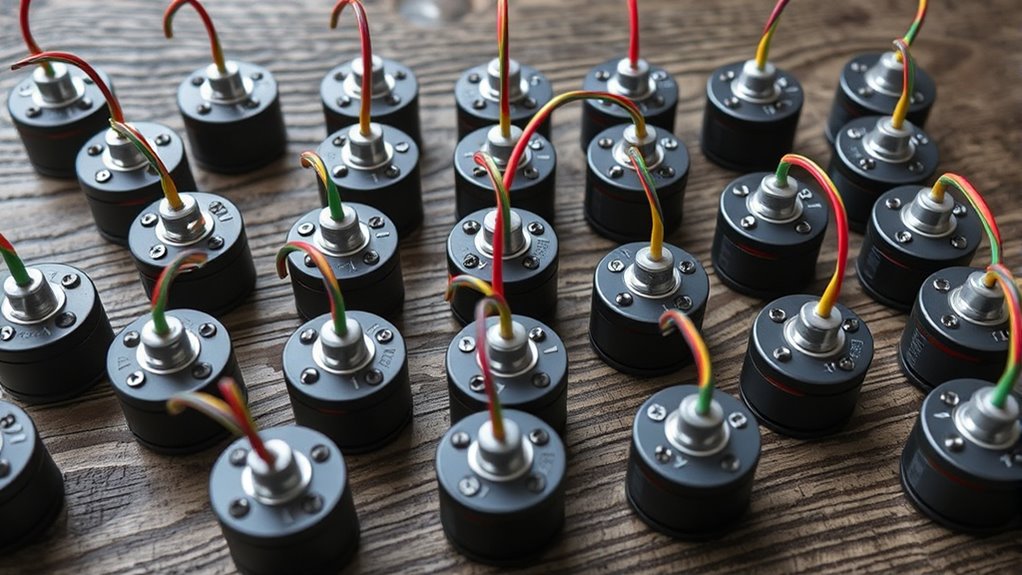

Finding reliable yet affordable geophones can be challenging, as many options balance cost with performance. The LGT-20D10 Seismic Geophone Sensor stands out as the overall best for its versatility and sensitivity. For those prioritizing simplicity and ease of use, the LGT-10H Basic Seismic Geophone Sensor offers a straightforward solution. The main tradeoffs in this category often involve balancing price with durability or frequency range. Continue reading for a detailed breakdown of each model’s strengths and weaknesses to help you make an informed choice.

Get movie nights delivered free with Prime
- Fast, free delivery on millions of items
- Prime Video, Amazon Music and more included
- Member-only deals all year
Key Takeaways
- The top-ranked geophones provide a good mix of sensitivity and durability at an accessible price point.
- Frequency range significantly influences suitability for different seismic detection needs; lower Hz models excel at detecting deep signals, while higher Hz models catch shallow vibrations.
- Build quality varies; more affordable models can sometimes compromise on ruggedness, so consider your environment.
- Sensor versatility, such as horizontal vs. vertical orientation, impacts ease of installation and specific application compatibility.
- Tradeoffs often involve choosing between cost, frequency response, and durability, making it crucial to prioritize your primary use case.
| LGT-20D10 Seismic Geophone Sensor, 10Hz Vertical or Horizontal |  | Best Overall for Versatile Ground Motion Detection | Detection Type: Vertical or Horizontal | Natural Frequency: 10Hz | Lateral Natural Frequency: ≥250Hz | VIEW ON AMAZON | See Our Full Breakdown |
| LGT-10H Basic Seismic Geophone Sensor, 10Hz Horizontal |  | Best for Beginner and General Ground Vibration Monitoring | Frequency: 10Hz | Detection Type: Horizontal seismic and structural vibration | Versions: Vertical and Horizontal | VIEW ON AMAZON | See Our Full Breakdown |
| LGT-20D4.5 Seismic Geophone Sensor, 4.5Hz Vertical |  | Best for Long-Period Seismic Exploration | Frequency: 4.5Hz | Application: Seismic exploration, geological surveys, vibration monitoring | Operating Temperature Range: -40°C to +90°C | VIEW ON AMAZON | See Our Full Breakdown |
| LGT-20D40 Seismic Geophone Sensor, 40Hz |  | Best for Machinery Vibration and Structural Analysis | Frequency: 40Hz | Sensitivity: 0.42V/cm/s | Natural Frequency: ≥400Hz | VIEW ON AMAZON | See Our Full Breakdown |
| LGT-SM24 Precision Geophone Sensor, 10Hz Vertical |  | Best for High-Accuracy Seismic Monitoring | Frequency: 10Hz | Configuration: Vertical & Horizontal | Distortion: ≤0.1% | VIEW ON AMAZON | See Our Full Breakdown |
| LGT-20D14 Seismic Geophone Sensor, 14Hz Vertical |  | Best for Professional-Grade Geological and Seismic Research | Frequency: 14Hz | Application: Geological exploration, seismic monitoring, scientific research | Sensor Options: Vertical & Horizontal | VIEW ON AMAZON | See Our Full Breakdown |
| affordable geophone | Operating Temperature Range | Frequency | Housing Material | Sensitivity |
|---|---|---|---|---|
| LGT-20D10 Seismic Geophone Sen | -40°C to +90°C | — | Metal | 28V/m/s open-circuit |
| LGT-10H Basic Seismic Geophone | -40°C to +90°C | 10Hz | Metal | — |
| LGT-20D4.5 Seismic Geophone Se | -40°C to +90°C | 4.5Hz | Metal | — |
| LGT-20D40 Seismic Geophone Sen | -40°C to +90°C | 40Hz | Metal | 0.42V/cm/s |
| LGT-SM24 Precision Geophone Se | — | 10Hz | — | — |
| LGT-20D14 Seismic Geophone Sen | -40°C to +90°C | 14Hz | — | Reliable sensitivity consistency |
More Details on Our Top Picks
LGT-20D10 Seismic Geophone Sensor, 10Hz Vertical or Horizontal
The LGT-20D10 series stands out for its reliable 10Hz natural frequency, making it a go-to choice for a broad range of seismic and structural monitoring tasks. Its durable metal housing allows it to perform well in harsh environments, and its compact design simplifies deployment. Compared to the LGT-10H, it offers more stability in vertical applications but lacks the flexibility of multi-directional detection. While it excels in stability and resilience, it doesn’t include integrated data logging or wireless features, which might limit its use in remote or automated setups. This model is well-suited for professionals needing dependable, multi-purpose seismic sensors without advanced connectivity features.
Pros:- Reliable 10Hz natural frequency for stable seismic detection
- Durable metal construction suited for outdoor environments
- Compact size facilitates easy deployment
- Suitable for geological, structural, and industrial applications
Cons:- Limited to specific detection directions (vertical or horizontal only)
- Requires specialized knowledge for optimal setup
- No integrated data logging or wireless features
Best for: Geologists and engineers seeking a robust, versatile seismic sensor for field and laboratory use.
Not ideal for: Casual hobbyists or users needing integrated data logging and wireless connectivity for remote monitoring.
- Detection Type:Vertical or Horizontal
- Natural Frequency:10Hz
- Lateral Natural Frequency:≥250Hz
- Sensitivity:28V/m/s open-circuit
- Housing Material:Metal
- Body Diameter:25.4mm
- Operating Temperature Range:-40°C to +90°C
Our verdict“This sensor is ideal for professionals who prioritize durability and versatility in seismic detection without needing integrated connectivity.”
LGT-10H Basic Seismic Geophone Sensor, 10Hz Horizontal
The LGT-10H provides a dependable 10Hz response for seismic and vibration studies, especially suited for those new to geophones. Its metal housing ensures durability across a wide temperature range, and availability in both vertical and horizontal formats increases its flexibility. Unlike the LGT-20D10, which offers more stable long-term performance, the LGT-10H is more accessible for newcomers but requires some technical skill for proper installation. It lacks advanced features like data logging or wireless transmission, making it more suitable for stationary, hands-on projects. This pick makes the most sense for users who need straightforward, reliable ground motion detection on a budget.
Pros:- Reliable and stable seismic detection at 10Hz
- Durable metal housing suitable for outdoor use
- Available in both vertical and horizontal configurations
- Compatible with various industrial and scientific applications
Cons:- Requires some technical knowledge for installation
- Limited to 10Hz frequency, not suitable for all seismic needs
- No integrated data logging or wireless features
Best for: Amateur seismologists, DIY enthusiasts, and small-scale industrial users starting with seismic monitoring.
Not ideal for: Experts seeking advanced features like data logging or remote wireless operation, or those needing multi-directional detection beyond horizontal/vertical options.
- Frequency:10Hz
- Detection Type:Horizontal seismic and structural vibration
- Versions:Vertical and Horizontal
- Operating Temperature Range:-40°C to +90°C
- Housing Material:Metal
- Application:Geological exploration, seismic experiments, vibration analysis
Our verdict“This geophone offers a solid entry point for beginners and small operations needing dependable ground motion detection without added complexity.”
LGT-20D4.5 Seismic Geophone Sensor, 4.5Hz Vertical
The LGT-20D4.5 specializes in detecting low-frequency seismic signals, making it ideal for geological surveys and seismic exploration where long-period data is critical. Its high sensitivity to weak signals provides detailed insights into deep or subtle ground motions, a step above the LGT-20D10 in low-frequency performance. However, its specialized design means it’s less suited for high-frequency industrial vibrations. It’s built with durable metal and can operate across a broad temperature range, but it requires specialized equipment for data collection. This geophone is best for professionals focused on long-term, low-frequency seismic studies rather than quick or high-frequency applications.
Pros:- High sensitivity to weak, long-period signals
- Stable performance across wide temperature ranges
- Durable metal housing suitable for outdoor environments
- Compact and easy to integrate into portable systems
Cons:- Limited to low-frequency seismic applications
- Requires specialized data acquisition equipment
- Not suitable for high-frequency vibration monitoring
Best for: Geophysicists and exploration specialists needing sensitive low-frequency seismic data in outdoor or remote settings.
Not ideal for: User groups focused on high-frequency vibration monitoring or casual hobbyists without specialized seismic equipment.
- Frequency:4.5Hz
- Application:Seismic exploration, geological surveys, vibration monitoring
- Operating Temperature Range:-40°C to +90°C
- Housing Material:Metal
- Damping Characteristics:Reliable and stable
- Signal Response:Low distortion, stable low-frequency response
Our verdict“This geophone excels in low-frequency seismic exploration, especially for professionals conducting detailed geological surveys.”
LGT-20D40 Seismic Geophone Sensor, 40Hz
The LGT-20D40 is tailored for detecting higher-frequency vibrations, making it suitable for machinery monitoring and structural assessments. Its 40Hz natural frequency allows it to pick up detailed signals from industrial equipment, outperforming lower-frequency geophones like the LGT-20D10 in high-frequency detection. Its durable metal housing withstands tough industrial environments, but this focus on high frequencies limits its use in low-frequency seismic surveys. It requires specialized equipment for data analysis and may be more costly than basic models. This geophone makes sense for professionals monitoring machinery or structural vibrations where high-frequency detail is vital.
Pros:- High-frequency response ideal for machinery vibration detection
- Robust metal construction for industrial environments
- Stable signal performance with low distortion
- Wide temperature range for versatile use
Cons:- Limited to high-frequency vibration detection
- Requires specialized data analysis tools
- Potentially higher cost compared to low-frequency geophones
Best for: Industrial engineers and maintenance teams needing precise high-frequency vibration detection in machinery or structures.
Not ideal for: Seismic researchers focused on low-frequency ground motion or casual hobbyists without industrial-grade equipment.
- Frequency:40Hz
- Sensitivity:0.42V/cm/s
- Natural Frequency:≥400Hz
- Operating Temperature Range:-40°C to +90°C
- Housing Material:Metal
- Body Diameter:27mm
Our verdict“This geophone targets industrial users who need detailed high-frequency vibration data for machinery and structural health monitoring.”
LGT-SM24 Precision Geophone Sensor, 10Hz Vertical
The LGT-SM24 offers high-precision seismic measurements, making it a prime choice for engineering surveys and detailed geological analysis. Its low distortion (≤0.1%) and consistent parameters within ±2.5% provide clarity that surpasses more general models like the LGT-20D10. Its availability in both vertical and horizontal configurations broadens its applicability for various field conditions. Since it’s designed for professional use, it may be complex for casual users or hobbyists. Despite the higher complexity, its focus on accuracy and reliable data makes it ideal for critical seismic assessments that demand high fidelity.
Pros:- High accuracy with low distortion (≤0.1%)
- Available in multiple configurations for versatility
- Excellent parameter consistency within ±2.5%
- Ideal for detailed seismic monitoring
Cons:- More complex setup and calibration required
- Designed primarily for professional use, less user-friendly for amateurs
- Higher cost compared to basic models
Best for: Seismic engineers and geologists requiring precise, low-distortion seismic data for professional projects.
Not ideal for: Casual users or those seeking simple, plug-and-play seismic sensors without the need for detailed calibration.
- Frequency:10Hz
- Configuration:Vertical & Horizontal
- Distortion:≤0.1%
- Parameter Consistency:within ±2.5%
Our verdict“This geophone is best suited for professionals needing dependable, high-fidelity seismic data for critical analysis.”
LGT-20D14 Seismic Geophone Sensor, 14Hz Vertical
The LGT-20D14 series stands out for its high sensitivity and stable performance, making it ideal for demanding geological exploration and seismic monitoring. Compared to the LGT-20D10 with its lower frequency response, the 14Hz model offers slightly better detection of low-frequency seismic signals, which is critical in scientific research. Its durable industrial-grade metal housing ensures reliable operation even in harsh environments, a key advantage over cheaper plastic-cased sensors. However, its focus on 14Hz limits its utility for high-frequency applications or detailed microseismic work. This geophone’s compatibility with various data acquisition systems makes it versatile for both field and laboratory use. The main tradeoff is that it is specialized for a narrower frequency range, so it’s less suitable if you need broader frequency coverage for diverse projects.
Pros:- High sensitivity and stable performance for precise seismic detection
- Durable metal housing suitable for tough field conditions
- Broad compatibility with various seismic data systems
- Suitable for both field and laboratory environments
Cons:- Limited to a 14Hz frequency response, restricting high-frequency applications
- Higher cost compared to lower-frequency or less specialized geophones
Best for: Geologists and seismic researchers who need reliable, high-sensitivity sensors for low-frequency seismic data collection in challenging environments
Not ideal for: Hobbyists or casual users seeking a multi-frequency geophone for general or hobbyist seismic experiments, as this model is more specialized and costly
- Frequency:14Hz
- Application:Geological exploration, seismic monitoring, scientific research
- Sensor Options:Vertical & Horizontal
- Operating Temperature Range:-40°C to +90°C
- Construction:Industrial-grade metal housing
- Sensitivity:Reliable sensitivity consistency
Our verdict“This model is well-suited for professionals needing dependable low-frequency seismic data in demanding settings.”

How We Picked
These geophones were selected based on their balance of affordability, performance, and build quality. We evaluated each model’s sensitivity, frequency range, and ease of installation, focusing on options that offer solid value without sacrificing essential features. The ranking reflects how well each sensor meets typical user needs, including robustness for field use and accuracy for seismic data collection. Cost-effectiveness was a key factor, but it was weighed against reliability and versatility to ensure buyers get the best bang for their buck.| affordable geophone | Application |
|---|---|
| LGT-20D10 Seismic Geophone Sen | — |
| LGT-10H Basic Seismic Geophone | Geological exploration, seismic experiments, vibration analysis |
| LGT-20D4.5 Seismic Geophone Se | Seismic exploration, geological surveys, vibration monitoring |
| LGT-20D40 Seismic Geophone Sen | — |
| LGT-SM24 Precision Geophone Se | — |
| LGT-20D14 Seismic Geophone Sen | Geological exploration, seismic monitoring, scientific research |
Factors to Consider When Choosing Affordable Geophones
Choosing the right affordable geophone involves understanding several key factors. Price is important, but so is the sensor’s frequency range, durability, and compatibility with your specific seismic needs. Considering these aspects carefully can help you avoid common pitfalls like overspending on unnecessary features or buying a model that underperforms in your environment. The following sections cover the main factors to consider, along with broader insights to help you make a confident purchase.Frequency Range and Sensitivity
Frequency range determines what kinds of seismic signals the geophone can detect. Lower Hz sensors excel at deep, long-wavelength vibrations, useful in geophysical surveys, while higher Hz models are better for shallow, high-frequency signals like local seismic activity. Matching the sensor’s range to your intended application ensures more accurate and meaningful data. Beware of choosing a model with too narrow a range for your needs, which could limit its usefulness or require costly upgrades later.
Build Quality and Durability
Since many affordable geophones are used in outdoor or rugged environments, durability is a key consideration. Cheaper models might cut costs on casing or internal components, leading to quicker wear or damage. Look for sensors with robust housings and water resistance if you plan to use them outdoors. Investing a bit more upfront in a sturdy model can save money over time by reducing maintenance and replacement costs.
Ease of Installation and Use
Ease of setup can make a big difference, especially for beginners or those needing quick deployment. Some geophones come with mounting brackets or simple connectors, while others require additional accessories or adjustments. Consider models that are straightforward to calibrate and connect without specialized tools. Compatibility with data loggers or software can also streamline your workflow and reduce setup errors.
Application and Orientation
The choice between vertical and horizontal geophones depends on your project. Vertical sensors are generally better for detecting ground motion directly beneath them, while horizontal models can pick up lateral vibrations more effectively. Some affordable models are only available in one orientation, so ensure that the sensor’s design aligns with your seismic survey or monitoring needs. Multi-orientation options might cost more but can offer greater flexibility.
Price vs. Performance Tradeoffs
While affordability is the goal, it’s important to recognize that lower-cost geophones may sacrifice certain features such as frequency response or ruggedness. Setting a realistic budget based on your intended use helps avoid overspending on unnecessary capabilities or ending up with a device that underperforms. Sometimes, investing slightly more in a well-made model can extend its lifespan and improve data quality, especially for critical applications.
Frequently Asked Questions
Can I use a cheap geophone for professional seismic surveys?
While some affordable geophones can handle basic seismic detection, they often lack the sensitivity and durability required for professional-grade surveys. For critical or long-term projects, investing in a higher-quality model may provide more reliable data and better withstand field conditions. However, for hobbyist or educational purposes, a budget-friendly sensor can be sufficient, provided expectations are aligned with its capabilities.
How do I know which frequency range is right for my needs?
The choice depends on what signals you want to detect. Lower frequency geophones (around 4.5Hz to 10Hz) are suited for deep earth vibrations, while higher frequency sensors (like 40Hz) excel at shallow, surface-level activity. Matching the sensor’s range to the seismic signals you aim to measure ensures more accurate results. If unsure, selecting a mid-range device offers versatility for various applications.
Are more expensive affordable geophones worth the extra cost?
In many cases, a slightly higher price can buy you better build quality, improved durability, and a broader frequency response. These factors contribute to more reliable data collection and longer service life, especially in demanding environments. If your application involves frequent outdoor use or critical measurements, investing in a more capable model can lead to better overall results and lower maintenance costs over time.
What maintenance do affordable geophones typically require?
Most geophones need minimal routine care, such as keeping the sensor clean and free of debris. Ensuring proper storage and avoiding exposure to extreme weather can extend their lifespan. Some models may require periodic calibration or checking connections, especially if used outdoors. Regular inspection helps maintain accuracy, but overall, these sensors are designed to be low-maintenance, making them suitable for ongoing use without significant upkeep.
Can I connect these geophones to standard data loggers or recording equipment?
Yes, most affordable geophones are compatible with common data loggers or seismic recording devices, often using standard connectors. However, it’s important to verify compatibility, especially regarding input impedance and voltage requirements, to ensure proper functioning. Using the right adapters or cables can simplify setup, but always double-check specifications to prevent damage or inaccurate readings.
Conclusion
For general fieldwork and hobbyist projects, the LGT-20D10 Seismic Geophone Sensor offers the best all-around performance at an accessible price, making it the ideal choice for most users. Budget-conscious beginners will appreciate the simplicity of the LGT-10H Basic Seismic Geophone Sensor, which provides straightforward operation without sacrificing essential features. Professionals or those conducting critical measurements should consider investing in more durable, higher-frequency models like the LGT-20D40. Ultimately, your choice depends on your specific needs—whether you prioritize cost, durability, ease of use, or specialized features.
Halloween Picks
halloween
As an affiliate, we earn on qualifying purchases.