Sound frequencies shape haunted feelings by triggering primal fear responses and manipulating perception. High-pitched noises signal urgency, while low frequencies evoke physical discomfort and dread. Dissonant or unexpected sounds increase unease, and echoes or distortion make environments feel otherworldly. Together, these frequencies influence your emotional and physical reactions, intensifying the eerie atmosphere. To understand how these sounds work together to create fear, continue exploring the fascinating science behind haunted soundscapes.
Key Takeaways
- High-pitched sounds (2,000–4,000 Hz) increase alertness and discomfort, heightening feelings of fear and unease.
- Low frequencies (20–80 Hz) induce physical sensations like resonance, amplifying dread and paranoia.
- Sudden shifts in sound frequency startle the brain, intensifying the perception of unpredictability and threat.
- Infrasound influences brain oscillations, fostering heightened fear and hypervigilance.
- Layered, dissonant frequencies create immersive disorientation, subconsciously triggering primal fears associated with haunted environments.
Top picks for "sound frequency influence"
Open Amazon search results for this keyword.
As an affiliate, we earn on qualifying purchases.
The Science Behind Sound Frequencies and Human Emotions
Sound frequencies have a powerful effect on human emotions because our brains process different pitches and tones in specific ways. When you hear high-pitched sounds, your brain often interprets them as alerting or urgent, triggering a heightened state of awareness. Low-frequency sounds, on the other hand, tend to evoke feelings of calm or unease, depending on context. These responses happen because different sound waves activate particular regions of your brain, influencing your mood and perception. For example, bass-heavy sounds can create a sense of heaviness or foreboding, while sharper tones might alert you to danger. Understanding this connection helps explain why certain sounds can evoke strong emotional reactions, shaping your feelings, especially in environments associated with mystery or fear. Additionally, brain processing plays a crucial role in how we perceive and respond to various sound frequencies, further impacting our emotional experiences.
Common Sound Frequencies Associated With Fear and Anxiety

Certain frequencies naturally evoke feelings of fear and anxiety because they can stimulate specific areas of your brain associated with stress and alertness. These sounds can trigger a primal response, heightening your sense of danger. Three common frequencies linked to these feelings include:
Certain frequencies can trigger primal fear responses by stimulating brain areas linked to stress and alertness.
- 2,000 to 4,000 Hz – Sharp, piercing sounds within this range often cause discomfort and alertness, mimicking alarm signals.
- 100 to 300 Hz – Lower-mid frequencies can create a sense of unease, especially when irregular or fluctuating.
- 1,000 to 1,500 Hz – Mid-range frequencies are often associated with distressing noises, like screams or sirens, intensifying fear responses.
Additionally, tuning adjustments in audio equipment can influence how these frequencies are perceived, thereby affecting emotional reactions.
How Low Frequencies Can Create a Sense of Dread
Low frequencies, like deep bass effects, can make you feel uneasy without realizing why. They trigger anxiety responses in your body, heightening your sense of fear. These sounds even alter your brain waves, intensifying feelings of dread and unease.
Deep Bass Effects
Deep bass effects have a powerful ability to evoke feelings of dread by immersing listeners in a sensation of weight and unease. These low frequencies create an almost physical presence, making you feel as if something unseen presses down on you. The deep rumble can distort your perception of space, intensifying fear and discomfort. To enhance this effect, consider these factors:
- Resonance – Low frequencies resonate within your body, heightening emotional responses.
- Dissonance – Unpredictable variations in bass tones can unsettle your senses.
- Amplitude – Louder bass sounds amplify the intensity, making the feeling of dread more visceral.
- Sound Design Techniques – Incorporating sound design elements such as modulation and layering can further manipulate perception and amplify the haunted feeling.
This combination manipulates your subconscious, tapping into primal fears through sound.
Induces Anxiety Responses
When sound frequencies dip into a specific low range, they can trigger immediate anxiety responses by subtly activating your body’s stress mechanisms. These deep sounds can make you feel uneasy or on edge, creating a sense of dread without your conscious awareness. Low frequencies can influence your nervous system, increasing heart rate and tension. Here’s a visual breakdown:
| Frequency Range | Emotional Effect | Physical Response |
|---|---|---|
| 20-40 Hz | Dread, unease | Elevated heart rate |
| 40-60 Hz | Panic, discomfort | Muscle tension |
| 60-80 Hz | Fear, paranoia | Breathing quickens |
| 80-100 Hz | Anxiety, agitation | Sweaty palms |
These effects intensify the haunted atmosphere, making you feel trapped or unsettled. Additionally, understanding sound frequencies can help explain how audio elements influence emotional responses in a haunted setting.
Alters Brain Waves
Since sound frequencies can influence brain activity, listening to certain low-range sounds can directly alter your brain waves, fostering feelings of dread and unease. Low frequencies, such as infrasound, can induce brain wave states associated with heightened alertness or fear. This manipulation occurs because your brain responds to these vibrations by shifting into specific oscillatory patterns. Additionally, understanding AI in Marketing: Strategies for Success can reveal how targeted stimuli, including sound, influence emotional responses and perception.
The Role of High Frequencies in Heightening Alertness
Have you ever noticed how certain high-pitched sounds can suddenly make you feel more alert or tense? High frequencies activate your nervous system, sharpening your senses and heightening awareness. These sounds often signal danger or urgency, prompting your body to prepare for action. For example, the shrill ring of a siren or a sharp whistle can trigger a quick response. To illustrate, consider this table:
| Sound Type | Effect on Alertness | Common Examples |
|---|---|---|
| High-pitched | Increases focus | Squeaking brakes, alarms |
| Ultrasonic | Heightens sensitivity | Dog whistles |
| Sharp tones | Induces tension | Feedback squeal |
Additionally, certain best anime movies utilize high-pitched sounds to create suspense or emotional impact, demonstrating how sound design influences mood and perception.
The Psychological Impact of Dissonant and Unsettling Sounds
Dissonant and unsettling sounds can evoke powerful psychological responses, often intensifying feelings of discomfort or fear. These sounds disrupt your brain’s expectations, creating a sense of chaos and unease. The unpredictability triggers your fight-or-flight response, heightening anxiety. Consider how these sounds: Pimple Patches trigger subconscious associations with danger, amplifying feelings of dread. They disrupt normal cognitive processing, making it harder to focus or reason. Eliciting visceral reactions, such as goosebumps or increased heart rate, due to their discordant nature. This psychological impact amplifies the haunted atmosphere, making environments feel more threatening and mysterious. The brain perceives these sounds as signals of potential threat, deepening your emotional response and intensifying the haunting experience.
Soundscapes in Haunted Environments: Real vs. Perceived
You might notice that haunted environments often seem filled with eerie sounds, but are they always real or just perceived? Your brain can interpret authentic noises differently based on psychoacoustic factors and environmental cues. Understanding how these acoustic elements interact helps clarify whether the sounds are genuine or illusions shaped by perception. Additionally, emotional support plays a role in how individuals process and experience these sounds, especially in settings designed to evoke fear or unease.
Authentic vs. Artificial Sounds
In haunted environments, the distinction between authentic and artificial sounds plays a crucial role in shaping your perception of the space. Authentic sounds, like creaking wood or distant footsteps, evoke genuine eeriness and deepen your sense of immersion. Artificial sounds, such as synthesized whispers or looped noises, can either enhance or undermine the atmosphere based on their quality and context. To effectively influence haunted feelings, consider these factors:
- Source credibility — natural sounds feel more convincing and immersive.
- Frequency accuracy — realistic pitch and tone heighten emotional response.
- Environmental integration — sounds that blend seamlessly with surroundings reinforce authenticity and intensify fear.
- Perceptual Factors — understanding how your brain interprets auditory cues can help explain why certain sounds evoke strong emotional reactions.
Understanding these elements helps you recognize how sound design manipulates your perceptions, whether through genuine or fabricated audio cues.
Psychoacoustic Perceptions Influence
Soundscapes in haunted environments don’t just rely on what’s actually present; they also shape perceptions through psychoacoustic effects. Your brain interprets sounds based on context, expectations, and previous experiences, often filling in gaps or amplifying certain noises. For example, a faint creak might seem like footsteps or a ghostly presence because your mind associates it with haunted settings. Sudden loud noises can trigger fear, even if they originate from harmless sources. Similarly, subtle background sounds can create an eerie atmosphere that feels more intense than reality. Your perception is influenced by how your brain processes frequencies, patterns, and volume, making you more susceptible to feelings of unease or supernatural presence. Additionally, sound perception is subject to how the brain interprets complex acoustic patterns, heightening the haunted experience and blurring the line between real and perceived threats.
Environmental Acoustic Factors
Environmental acoustic factors play a crucial role in shaping how haunted spaces are experienced, often blending real sounds with perceived ones to create an unsettling atmosphere. You might hear distant footsteps, whispering voices, or unexplainable noises that seem to originate from nowhere. These soundscapes can be manipulated intentionally or naturally, influencing your perception of the environment. Consider these key elements:
- Ambient Noise: Background sounds like creaking floors or wind, which set the mood and mask other noises.
- Sound Manipulation: Use of echoes, reverb, or distortion to make sounds seem otherworldly or distant.
- Perceived Sounds: Psychological factors can lead you to interpret ambiguous noises as supernatural, blurring the line between real and perceived.
Understanding these factors helps explain why haunted environments evoke such intense feelings.
The Use of Sound Frequencies in Horror and Haunted Attractions
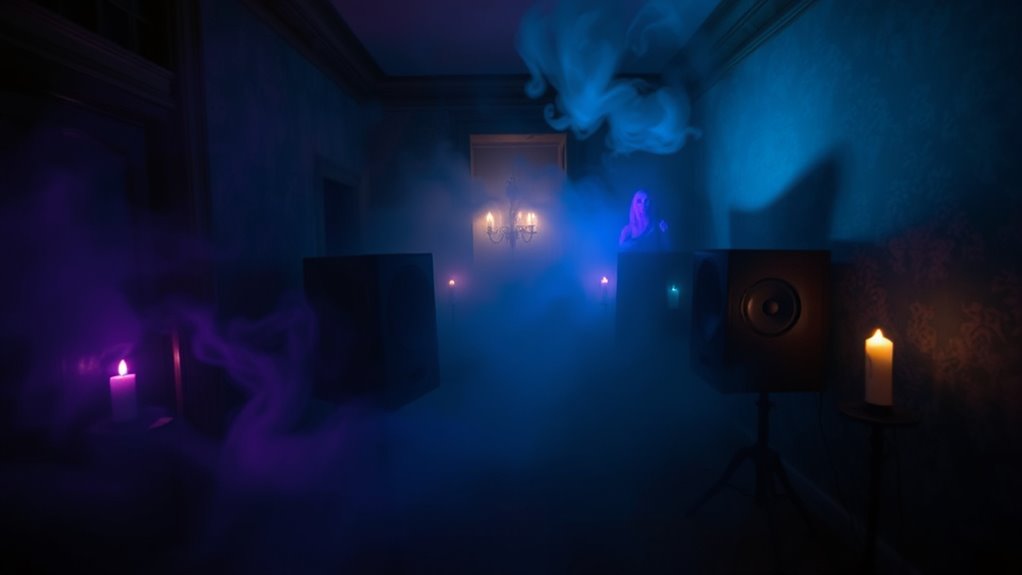
Sound frequencies are a powerful tool in creating unsettling atmospheres within horror and haunted attractions. By carefully selecting specific pitches, designers can trigger primal fears and heighten tension. Low-frequency sounds, like rumbling bass, evoke feelings of unease and simulate the presence of unseen threats. Conversely, high-pitched noises can induce discomfort and anxiety, making visitors feel on edge. Sudden shifts in sound frequencies catch your attention and startle you, reinforcing the sense of unpredictability. Many attractions use layered soundscapes, blending different frequencies to create an immersive, disorienting environment. These techniques manipulate your subconscious, amplifying feelings of dread and suspense. When used skillfully, sound frequencies become an essential element in immersing visitors in a truly haunting experience.
Future Research and Applications of Sound in Creating Haunted Atmospheres
As technology advances, the potential for innovative sound applications in haunted environments grows exponentially. You’ll see new ways to manipulate soundscapes that heighten psychological effects and deepen immersion. Future research will likely focus on:
- Developing personalized sound algorithms that adapt to visitors’ reactions in real-time, intensifying fear or curiosity precisely when desired.
- Exploring immersive 3D audio technologies to create spatially accurate haunted atmospheres, making sounds seem to emanate from specific locations.
- Integrating biofeedback sensors to tailor sound frequencies based on visitors’ physiological responses, optimizing emotional impact.
These advancements will enable haunted attractions to craft more convincing, emotionally charged experiences. As sound technology progresses, your interactions with haunted environments will become increasingly immersive and personalized.
Frequently Asked Questions
Can Specific Sound Frequencies Trigger Physical Responses Like Chills or Nausea?
Yes, specific sound frequencies can trigger physical responses like chills or nausea. When you hear certain high or low pitches, your body reacts through involuntary responses, such as shivering or discomfort. These responses are linked to how your brain processes sound and can be amplified by the emotional context or intensity of the frequencies. So, certain sounds might subconsciously cause you to feel uneasy or physically affected.
Are There Cultural Differences in How Sound Frequencies Influence Haunted Feelings?
You’ll find that cultural backgrounds shape how sound frequencies stir haunted feelings. In some traditions, eerie melodies and low hums evoke ghostly whispers, weaving a tapestry of fear. Others may see those same sounds as comforting or spiritual signals. Your cultural lens acts like a filter, coloring your emotional response—what sends shivers down one person’s spine might be a familiar, even welcoming, sound to another.
How Do Individual Sensitivities Affect Perception of Unsettling Sounds?
Your sensitivities shape how you perceive unsettling sounds. If you’re more sensitive, you might find certain frequencies more disturbing or eerie, amplifying feelings of unease. Conversely, if you’re less sensitive, those sounds may seem less impactful or even go unnoticed. Your personal experiences, emotional state, and even your body’s response to sound play a role in how strongly you react to eerie or unnatural noises, influencing your haunted feeling perception.
Can Sound Therapy Be Used to Reduce Fear in Haunted Environments?
Certainly, sound therapy can help reduce fear in haunted environments. Imagine tuning a ghostly echo into a calming melody, much like soothing a restless spirit. You might use gentle, low-frequency sounds to anchor your nerves, creating a sense of safety. Studies show that specific frequencies can decrease anxiety, so by applying targeted sound therapy, you actively transform an unsettling space into a more peaceful one, easing your fears effectively.
What Role Does Binaural Hearing Play in Experiencing Haunted Atmospheres?
Binaural hearing plays a significant role in experiencing haunted atmospheres by creating immersive and eerie soundscapes. When you listen to different frequencies with each ear, your brain combines them into a single, three-dimensional experience. This effect heightens your perception of spatial cues and can make sounds seem more distant or nearby, amplifying feelings of unease and mystery. It’s like your brain is actively shaping the haunting atmosphere around you.
Conclusion
You might think sound is just background noise, but it really shapes your feelings deeply. Many experts believe that specific frequencies can evoke fear or dread, making environments feel haunted even if nothing’s there. While some theories are still being tested, evidence shows sound’s power to influence your emotions and perception. So next time you feel uneasy in a spooky setting, remember — it’s not just in your head; sound plays a big part.