At night, you might see shadowy figures at doorframes because your brain misinterprets ambiguous stimuli, especially during sleep paralysis or when you’re sleep-deprived. These hallucinations occur as your senses become hyperactive and your mind fills in gaps with frightening shapes or figures. Stress and fatigue also heighten your sensitivity to shadows, making them seem more threatening. If you want to understand the science behind these eerie visuals, there’s more to uncover about how your mind plays tricks at night.
Key Takeaways
- Visual distortions and hallucinations during sleep paralysis often create shadowy figures near doorways or corners.
- Sleep deprivation heightens sensory sensitivity, making shadows appear more threatening or mysterious.
- The brain interprets ambiguous stimuli as threats, a survival instinct that explains seeing figures at night.
- These nighttime illusions are misfires of brain activity caused by fatigue, stress, or disrupted sleep cycles.
- Understanding these natural mechanisms can help reduce fear of shadowy figures at night.
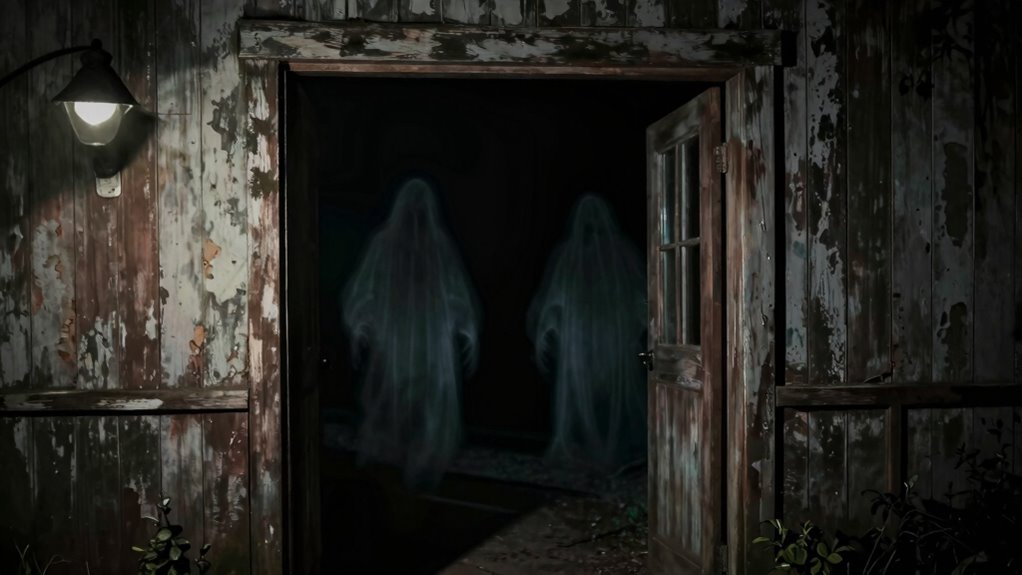
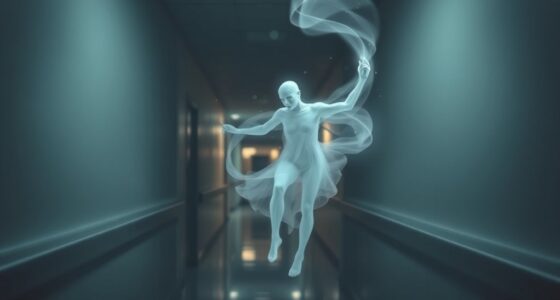
As night falls, figures emerge in the darkness, their shapes shifting and blending into the shadows. You might feel your eyes darting toward the doorframe, sensing something there even when no one is visible. These fleeting visions are common and often unsettling, especially when your mind plays tricks on you in the quiet hours. One explanation for these nighttime figures is sleep paralysis, a condition where your body temporarily locks you in a state between wakefulness and sleep. During these episodes, your senses can become hyperactive, and your mind may conjure terrifying or mysterious shapes, often appearing in doorways or corners of your room. Sleep paralysis is notorious for creating vivid hallucinations—figures that seem to stand just beyond your line of sight, sometimes described as shadowy or translucent. It’s as if your subconscious is trying to communicate or scare you, but in reality, it’s just your brain’s misfiring during this vulnerable state. Additionally, research suggests that visual perception can be significantly distorted during states of altered consciousness, which further explains these nighttime illusions. This misinterpretation of visual stimuli is rooted in the brain’s attempt to make sense of incomplete or ambiguous information. The brain’s response to fatigue can amplify these perceptual distortions, making the illusions feel even more real.
Another factor that contributes to seeing figures at night is sleep deprivation. When you don’t get enough rest, your brain struggles to process information properly, leading to hallucinations and distorted perceptions. You might find yourself waking up in the middle of the night, eyes wide open, convinced that someone or something is lurking just outside your view. Sleep deprivation heightens your sensitivity to visual stimuli and can cause shadows to seem like more than they are. The longer you go without proper sleep, the more your mind begins to fill in the gaps, turning dark patches into shadowy figures. These illusions are often fleeting, but they can leave you feeling anxious or fearful, especially if you’re already prone to imagining the worst. Recognizing the connection between sleep deprivation and hallucinations can help you understand these experiences better and take steps to improve your sleep habits. Moreover, understanding the brain’s response to fatigue can help you develop strategies to minimize these unsettling episodes.
Your brain’s tendency to interpret ambiguous stimuli as figures or shadows is rooted in an evolutionary survival instinct—seeing threats in the dark keeps you alert and cautious. When combined with sleep paralysis or exhaustion, this instinct can create vivid, frightening visions at night. You may feel a presence at the doorframe, a shadow lurking just out of sight, and wonder if there’s something more sinister behind it all. In truth, these sightings are less about supernatural entities and more about your brain battling fatigue, stress, and the natural glitches that occur when your sleep cycle is disrupted. Understanding that sleep paralysis and sleep deprivation are behind these nocturnal figures can help lessen your fear. Recognize that your mind is playing tricks on you, and with better sleep habits, these eerie visions are likely to fade away.

Cervical Pillow for Neck Pain Relief – Ergonomic Neck Pillow for Sleeping Contour Memory Foam Pillows for Neck Support, Orthopedic Bed Pillow for Side Back Stomach Sleepers
[Wake Up Refreshed – Ergonomic Design for Pain-free Sleep] ROPU memory foam pillow is scientifically contoured to cradle…
As an affiliate, we earn on qualifying purchases.
As an affiliate, we earn on qualifying purchases.
Frequently Asked Questions
Can Shadow Figures Be a Sign of Paranormal Activity?
Shadow figures can sometimes be a sign of paranormal activity, but they’re often linked to sleep paralysis or auditory hallucinations. When you’re sleep-deprived or anxious, your mind might create these figures to explain strange sensations. Auditory hallucinations can also make you hear noises or voices that aren’t real. So, while they might seem paranormal, these shadowy shapes are frequently rooted in your brain’s natural responses to stress or disrupted sleep.
What Psychological Factors Contribute to Seeing Shadowy Figures?
You might see shadowy figures due to psychological factors like visual hallucinations and sleep paralysis. Visual hallucinations occur when your brain misinterprets sensory information, creating the illusion of shadows. Sleep paralysis happens when you’re between sleep and wakefulness, often accompanied by vivid, frightening visions. These experiences are common and can make you perceive shadow figures, especially during stressful times or sleep deprivation.
Are There Cultural Differences in Interpreting Nighttime Shadow Figures?
Yes, cultural differences influence how you interpret nighttime shadow figures. In some cultures, folklore beliefs link shadowy shapes to spirits or ancestral ghosts, shaping your perception and fear. Others see them as omens or warnings rooted in cultural symbolism. Your cultural background guides your interpretation, making these shadow figures seem more threatening or benign based on traditional stories and beliefs, shaping your overall experience at night.
How Common Is It to See Figures at Night Across Different Age Groups?
Seeing figures at night is like catching glimpses of shadows dancing on the edge of your vision. It’s quite common across age groups, especially during sleep paralysis or night terrors when the mind is hyperactive. Children and teenagers might experience it more often, but adults aren’t immune. These visions often stem from the brain’s attempt to process fear or exhaustion, making nighttime encounters a universal, yet mysterious, phenomenon.
What Steps Can I Take to Prevent or Reduce These Sightings?
To prevent or reduce these sightings, focus on improving your sleep hygiene by maintaining a regular sleep schedule and creating a calming bedtime routine. Consider using light therapy in the mornings to regulate your circadian rhythm, which can lessen night-time hallucinations. Avoid watching screens before bed and keep your bedroom dark and quiet. These steps can help reset your perception and reduce the chances of seeing figures at night.

YUNLEX 2 Pack Plug in Amber Night Light, Auto Dusk to Dawn, Soft Glow, Dimmable, Diffused Light, LED Lights for Bedroom, Kids, Bathroom, Sleep, Baby Nursery, Toddler, Hallway, Kitchen, Home Decor
Adjustable 3-Level Brightness: Easily slide the top switch to choose from Low, Medium, or High settings. This dimmable…
As an affiliate, we earn on qualifying purchases.
As an affiliate, we earn on qualifying purchases.
Conclusion
So, next time you see a shadow at the doorframe, remember it’s like a fleeting whisper of your mind’s own shadow puppets, playing tricks in the dark. Just last night, I thought I saw a figure, but it was only my mind’s way of casting a familiar shape. Our brains are wired to seek patterns—even in shadows—making the unknown feel strangely real. Embrace the mystery; sometimes, the figures are just harmless illusions.

MyHalos® Sleep Mask – 3D Blackout Eye Mask for Women & Men, Side Sleepers, Zero Pressure Memory Foam Eyelash Friendly, Breathable,Award-Winning Sleep Aid for Travel (Black, 1 Count (Pack of 1))
Complete Blackout: Innovative contoured design blocks 100% light. Perfect blindfold sleeping eye mask for night shift workers, frequent…
As an affiliate, we earn on qualifying purchases.
As an affiliate, we earn on qualifying purchases.

OLLY Goodbye Stress Gummy, GABA, L-Theanine, Lemon Balm, Stress Relief Supplement, Berry – 42 Count
OLLY GOODBYE STRESS GUMMY: Calm your mind and counter bad vibes with the help of our strawberry and…
As an affiliate, we earn on qualifying purchases.
As an affiliate, we earn on qualifying purchases.