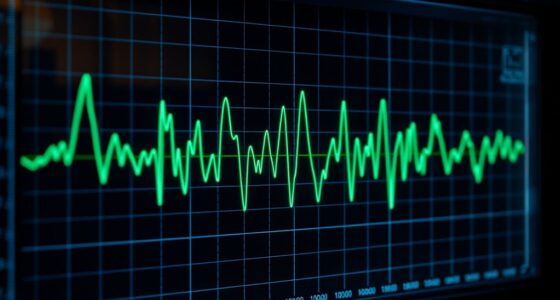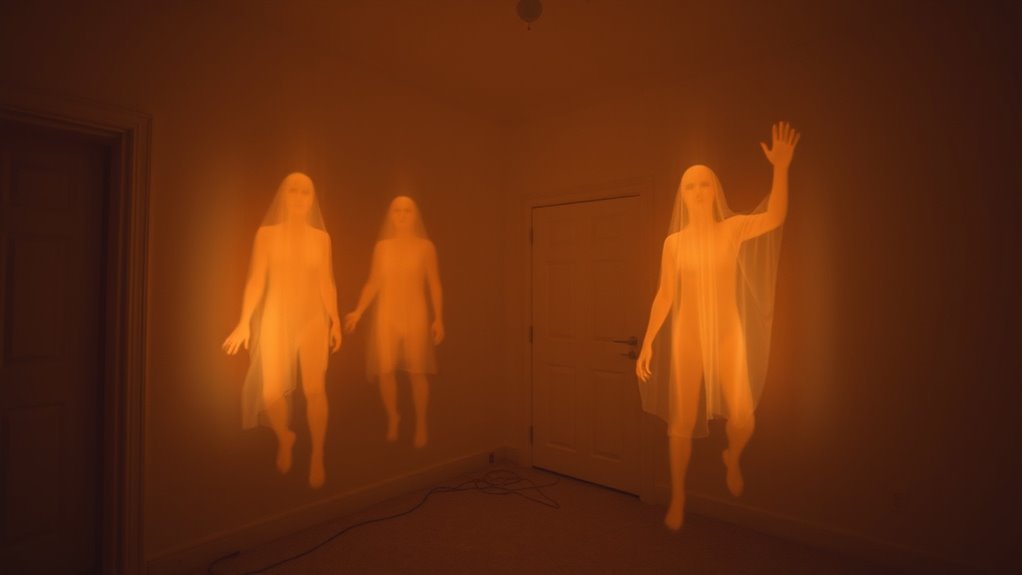

Infrared vision allows you to see heat signatures invisible to the naked eye, revealing details behind walls or in darkness. This technology detects thermal emissions from warm objects, which can include hidden people, animals, or even phenomena associated with ghost sightings. Often, what seems like a ghost could be just heat fluctuations or environmental illusions. By understanding how infrared works, you’ll gain insight into how these devices help distinguish real heat sources from tricks of the light—if you keep exploring, you’ll uncover even more fascinating details.
Key Takeaways
- Infrared vision detects heat signatures from warm objects, which some interpret as ghostly apparitions in low-light conditions.
- Optical illusions, environmental factors, and heat sources can create false impressions resembling spirits in infrared imagery.
- Scientific explanations attribute perceived ghost sightings to natural phenomena, brain pattern recognition, and perceptual biases.
- Infrared technology enhances night vision but cannot definitively prove paranormal entities due to limitations and potential false positives.
- Understanding environmental and psychological influences helps differentiate genuine heat signatures from illusions in paranormal investigations.

TOPDON TS004 Thermal Imaging Monocular, 320 x 240 TISR 256 x 192 IR Resolution, Supported Wireless Connection, 13mm 50Hz Thermal Night Vision with 11h Battery Life, IP67 Monocular for Hunting
UNMATCHED CLARITY: With a high IR resolution of 256×192 and a smooth 50Hz refresh rate, the thermal monocular…
As an affiliate, we earn on qualifying purchases.
As an affiliate, we earn on qualifying purchases.
Understanding Infrared Light and Its Properties
Infrared light is a form of electromagnetic radiation that lies just beyond the visible spectrum, meaning we can’t see it with our eyes. This type of light has longer wavelengths than visible light, which allows it to penetrate objects like smoke, fog, and even some materials. Infrared radiation is emitted by warm objects, so anything with heat gives off infrared signals. You can think of it as a heat signature that reveals what’s happening behind walls or in darkness. Because of its unique properties, infrared light is useful for various technologies, including night vision, thermal imaging, and remote controls. Its ability to detect heat makes infrared an essential tool in both scientific research and practical applications. Additionally, the wavelength range of infrared light determines its effectiveness in different devices and applications.

Digital Infrared Thermometer Gun for Cooking,BBQ,Pizza Oven, Infrared Thermometer Laser with Backlight,-58℉~712℉(-50℃~380℃) Handheld Non Contact Heat Laser Temperature Gun (Not for Human)
🎯𝐇𝐢𝐠𝐡𝐥𝐲 𝐀𝐜𝐜𝐮𝐫𝐚𝐭𝐞 𝐟𝐨𝐫 𝐀𝐧𝐲 𝐒𝐮𝐫𝐟𝐚𝐜𝐞: Designed with the latest thermopile sensor technology, this infrared laser thermometer gun is…
As an affiliate, we earn on qualifying purchases.
As an affiliate, we earn on qualifying purchases.
How Infrared Cameras Detect Hidden Details

Infrared cameras detect hidden details by capturing specific wavelengths of infrared light that are invisible to the naked eye. They interpret thermal emissions from objects, revealing temperature differences that expose what’s hidden. This process helps uncover objects and details that would otherwise stay out of sight. Additionally, the advanced thermal imaging technology used in these cameras enhances their ability to detect subtle temperature variations in various environments.
Infrared Wavelengths Explained
Because they can detect heat emitted by objects, infrared cameras reveal details that are invisible to the naked eye. These cameras operate within specific infrared wavelength ranges, primarily near-infrared (0.7 to 1.4 micrometers), short-wave infrared (1.4 to 3 micrometers), mid-wave infrared (3 to 8 micrometers), and long-wave infrared (8 to 15 micrometers). Each range captures different thermal signatures, allowing you to see objects based on their heat emission. The choice of wavelength depends on the application, whether it’s night vision, surveillance, or medical imaging. Shorter wavelengths tend to provide sharper images but are more affected by atmospheric interference, while longer wavelengths excel at detecting heat differences through obstacles. Understanding these wavelengths helps you interpret the images produced by infrared cameras accurately. High refresh rates in infrared imaging can improve real-time detection and tracking of heat sources, making the technology more effective for various applications.
Thermal Emission Detection
Thermal emission detection allows infrared cameras to uncover hidden details by capturing the heat radiated from objects, even when they are concealed or obscured. This technology senses the infrared energy emitted naturally by all warm objects, making it possible to see through darkness, fog, or walls. When you use these cameras, you can detect life signs, hidden structures, or concealed items based solely on their heat signatures. This capability plays a vital role in biodiversity conservation, helping to monitor elusive or endangered species in their habitats without disturbance. Imagine the rush of unveiling secrets hidden beneath layers, or the thrill of spotting a person in complete darkness. You might feel:
- A surge of discovery when unveiling concealed objects
- Awe at how heat tells a story unseen by the naked eye
- Excitement from unveiling hidden movement
- Confidence in identifying threats or clues
- Wonder at the unseen world made visible through warmth
Hidden Object Revelation
Hidden objects often remain concealed to the naked eye, but infrared cameras can reveal their presence by detecting subtle heat differences. When an object is hidden behind walls, inside boxes, or beneath surfaces, it still exchanges heat with its surroundings. Infrared sensors pick up these temperature variations, highlighting areas that don’t match the ambient temperature. For example, a person hiding behind a partition will emit body heat that stands out against cooler backgrounds. Similarly, concealed wiring or pipes may be visible due to their heat signatures. By translating these temperature differences into visual images, infrared cameras allow you to see what’s hidden. This capability makes infrared imaging invaluable for security, search-and-rescue, and inspection tasks. It uncovers details invisible to the naked eye, revealing secrets concealed beneath surfaces. Additionally, the ability to detect heat signatures enables these cameras to function effectively in complete darkness or challenging environments.

Mini Handheld Thermal Camera, Portable Infrared Thermal Imaging Camera, Paranormal Equipment Thermal Imager, Non-Contact Heat Detector with Type-C Interface PC Link Data Storage
Thermal camera utilizes infrared technology to accurately measure temperatures in the range of -40°C to 300°C, accurate to…
As an affiliate, we earn on qualifying purchases.
As an affiliate, we earn on qualifying purchases.
The Role of Infrared Vision in Modern Technology
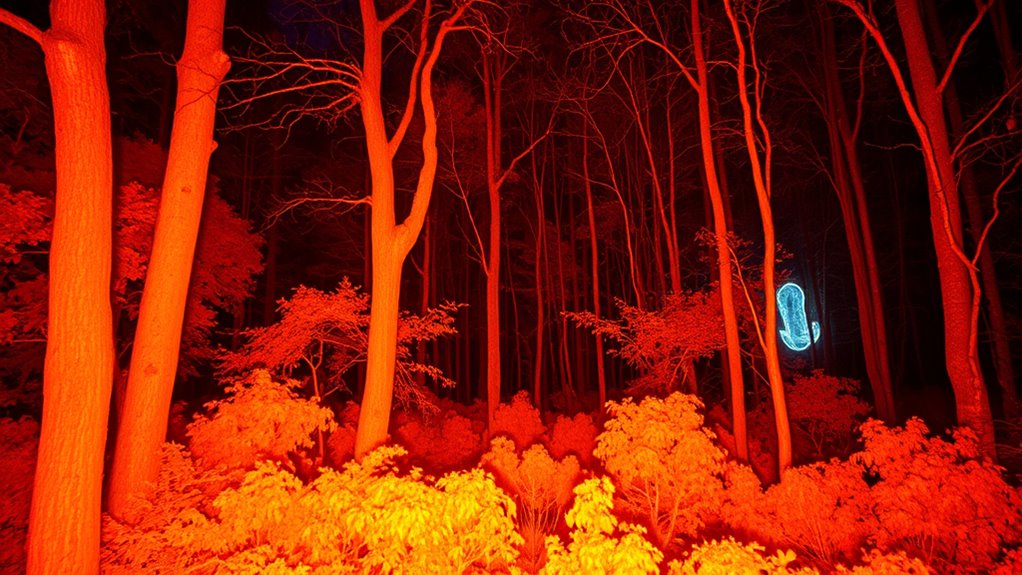
Infrared vision plays a crucial role in modern technology by enabling devices to detect heat signatures and see in low-light conditions. This capability transforms how we monitor safety, security, and even search and rescue missions. With infrared tech, you can spot a hidden threat lurking in the dark, locate missing persons in challenging environments, or keep watch over critical infrastructure. It’s the invisible eye that brings clarity where darkness reigns. By understanding the science behind infrared detection, we can better appreciate how these systems function and their potential applications in various fields. Infrared detection enhances our ability to interpret and utilize the unseen world, making it an invaluable tool across industries.
- Feel safer knowing threats are visible before they strike
- Witness the power of technology saving lives in emergencies
- Experience the reassurance of constant security surveillance
- Discover how industries improve safety standards
- Embrace innovations that bring unseen worlds into view

TOPDON TC004 Mini Thermal Imaging Camera, 240 x 240 TISR Resolution, 15-Hour Battery Life, 128 x 128 IR Resolution, 25Hz Handheld Infrared Camera with High/Low Temp Alerts, Auto Shutdown- Blue
【Enhanced Thermal Clarity】Start with 128×128 thermal imaging and enhance to 240×240 resolution with TISR technology for greater details….
As an affiliate, we earn on qualifying purchases.
As an affiliate, we earn on qualifying purchases.
Differentiating Between True Sightings and Optical Illusions
When you encounter a mysterious sighting, it’s important to look for environmental clues that can help you tell if it’s real or just an illusion. Pay attention to changes in lighting, movement, and surroundings, as these often reveal the true nature of what you’re seeing. By staying observant, you can better distinguish genuine phenomena from optical tricks. Additionally, understanding the privacy policy and how cookies are used can improve your overall browsing awareness.
Distinguishing Real vs. Illusions
Distinguishing between genuine sightings of ghosts and optical illusions can be challenging, especially in low-light or unfamiliar environments. Your eyes can be easily fooled by shadows, reflections, or atmospheric effects, making it hard to tell what’s real. To differentiate, focus on consistency and movement. Real apparitions tend to move naturally or remain steady, while illusions often flicker or shift unpredictably. Trust your instincts but verify with multiple angles or sources. Remember, emotional reactions can cloud judgment—stay calm and analytical.
- Shadows that dance or shift quickly may be illusions.
- Reflections in glass or water can mimic figures.
- Sudden brightness or flickering lights often cause optical effects.
- Unfamiliar surroundings trick your mind into seeing what isn’t there.
- Personal biases or fears can create hallucinations or misinterpretations.
Environmental Clues Matter
Environmental clues can often reveal whether a sighting is genuine or just an optical illusion. When you notice a figure moving in the infrared spectrum, consider the surroundings. Sharp shadows, reflections, or heat sources can create misleading shapes that mimic ghostly apparitions. If the environment has fluctuating temperatures or unstable lighting, illusions are more likely. Pay attention to inconsistencies: a supposed ghost might disappear when you change your angle or turn on additional lights. Genuine sightings usually remain steady despite environmental changes. Also, objects like animals or machinery can produce heat signatures mistaken for spirits. By analyzing these clues, you can better differentiate between actual infrared phenomena and optical illusions, helping you interpret what you’re truly witnessing. Additionally, understanding how climate change impacts heat signatures and environmental conditions can improve your ability to identify authentic infrared sightings.
Cultural Beliefs and Folklore Surrounding Ghost Sightings
Throughout history, cultures worldwide have woven stories and beliefs that interpret ghost sightings through a mystical lens. These stories often evoke deep emotions—fear, awe, or comfort—shaping how people perceive the unknown. You might hear that spirits are messengers from another domain, or that they guard loved ones long gone. Folklore often links ghost sightings to specific locations, times, or rituals, fueling feelings of mystery and wonder. Interestingly, some accounts of ghost sightings are associated with unexplained phenomena like electromagnetic disturbances or environmental factors, which can influence perceptions and experiences.
Cultures worldwide weave stories that link ghost sightings to mystery, emotion, and spiritual connection across time and place.
- Feel the chill of ancient legends whispering secrets from beyond the grave
- Sense the weight of unresolved stories that linger in haunted places
- Experience the fear of encountering something unseen yet profoundly felt
- Feel comfort in the belief that spirits can provide guidance or warnings
- Immerse yourself in tales that connect the living and the dead through belief
Scientific Explanations for Apparent Paranormal Encounters
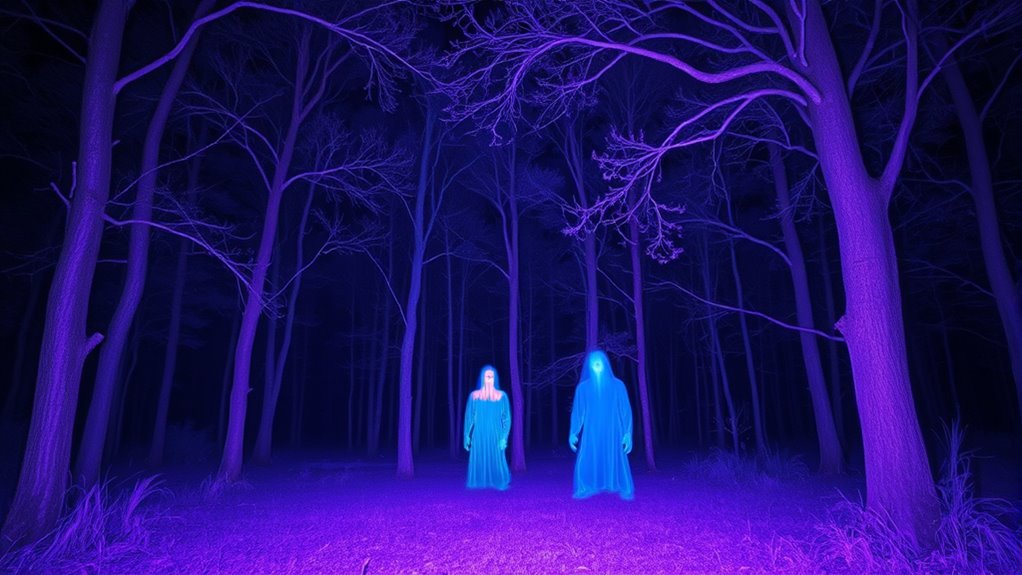
Many so-called ghost encounters can be explained by scientific factors rather than supernatural forces. Our brains are wired to recognize patterns, which can lead to misinterpretations of ordinary stimuli, like shadows or flickering lights. Sensory illusions, such as pareidolia, cause you to see faces or figures where none exist. Environmental conditions—cold drafts, creaky floorboards, or electrical interference—can create sounds or sensations that seem paranormal. Fatigue, stress, and fear also heighten your sensitivity to ambiguous stimuli, increasing the likelihood of perceiving ghosts. Additionally, chemicals in the brain, like serotonin or dopamine, can produce hallucinations under certain conditions. Understanding perceptual biases helps you approach ghost sightings with skepticism and critical thinking, rather than jumping to supernatural conclusions.
Limitations of Infrared Imaging in Paranormal Investigations
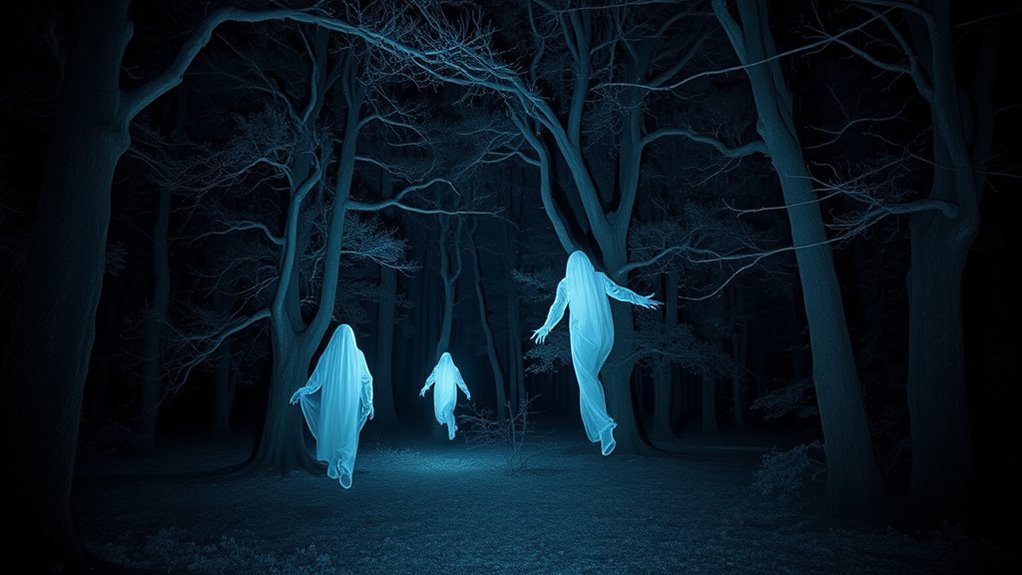
Infrared imaging has become a popular tool for paranormal investigations, offering a way to detect supposed ghostly anomalies invisible to the naked eye. However, it has significant limitations that can mislead or hinder your efforts. You might chase false signals caused by temperature fluctuations, shadows, or reflections. Infrared cameras also struggle with:
Infrared imaging often shows false positives, making it unreliable for definitive paranormal evidence.
- Poor resolution, missing vital details
- False positives from environmental factors
- Inability to distinguish between natural and paranormal sources
- Limited scope, only detecting heat differences
- Misinterpretation of thermal patterns as supernatural phenomena
These challenges can create false hope or lead you down dead-end paths. Relying solely on infrared imaging might give you a distorted view of what’s truly happening, making it harder to separate fact from fiction during your investigations.
Innovations in Infrared and Thermal Imaging Devices
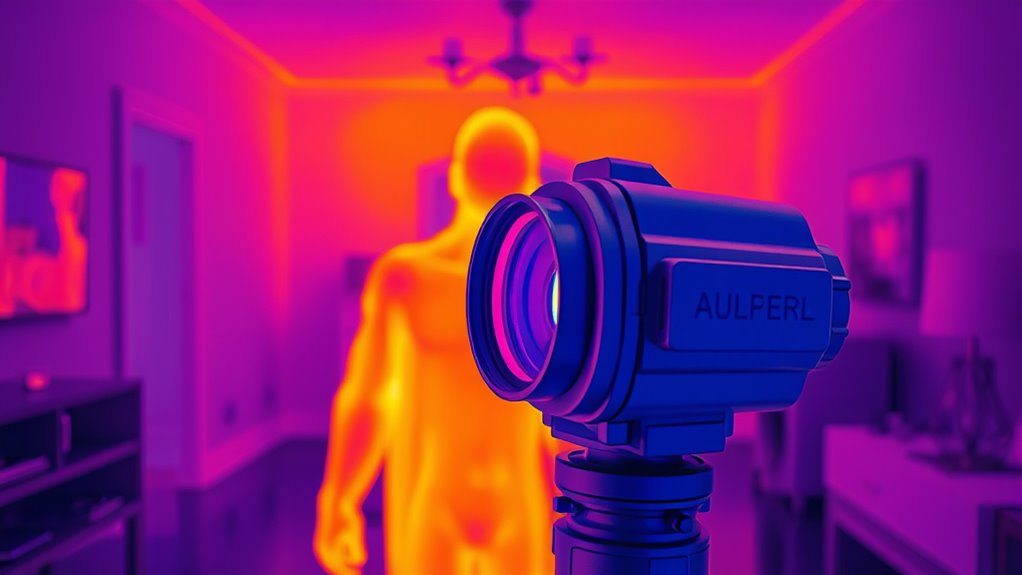
Recent advancements in infrared and thermal imaging technology have considerably enhanced the effectiveness of paranormal investigations. Modern devices now feature higher resolution sensors, allowing you to detect even subtle temperature variations that might indicate anomalous activity. Portable, lightweight designs make it easier for you to scan large areas quickly and efficiently. Some new models incorporate advanced image processing algorithms that sharpen thermal images, helping you distinguish between natural and paranormal sources of heat signatures. Additionally, dual-spectrum cameras combine infrared and visible light, providing clearer visual context. Enhanced night vision capabilities mean you can operate effectively in complete darkness. These innovations empower you to uncover potential spiritual phenomena more accurately, making your investigations more reliable and insightful than ever before.
The Future Potential of Infrared Technology in Unveiling the Unknown
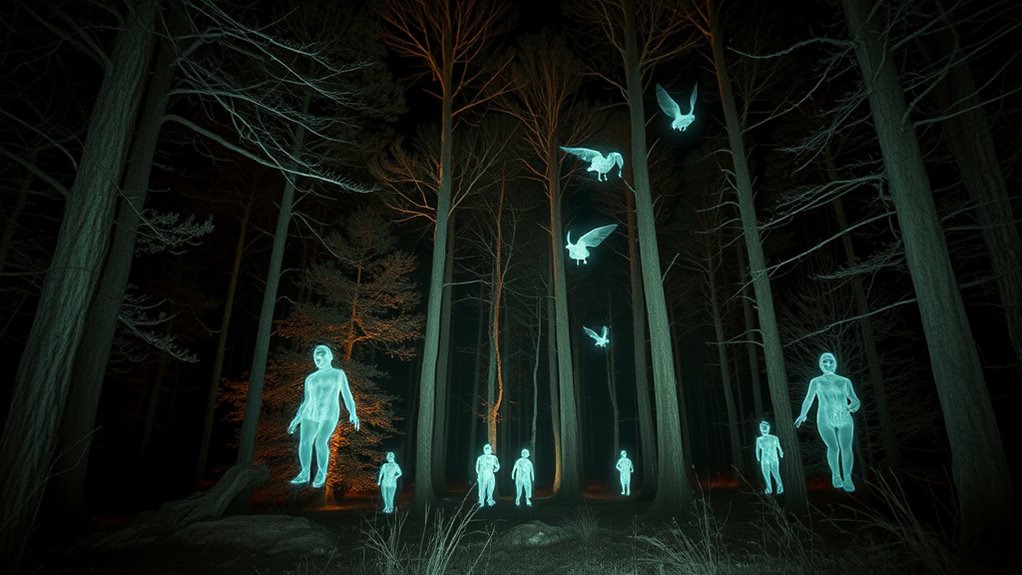
As infrared technology continues to evolve, its potential to reveal hidden aspects of the unknown grows exponentially. You could soon access insights beyond human perception, uncovering secrets lurking in shadows and darkness. Advancements may lead to detecting elusive phenomena, such as ghostly presences or unexplained energy sources. Imagine exploring abandoned sites or deepening your understanding of mysterious signals invisible to the naked eye. Infrared could help you:
- Uncover long-held mysteries and secrets
- Detect subtle energy patterns in environments
- Witness phenomena once thought impossible to observe
- Enhance security by revealing concealed threats
- Connect with the unseen world on a deeper level
These innovations promise to expand your perception, transforming how we explore and understand the unknown in ways we’ve only begun to imagine.
Frequently Asked Questions
Can Infrared Vision Be Used to See Through Walls?
No, infrared vision can’t see through walls. Infrared cameras detect heat emitted by objects, so they can see through transparent materials like glass or plastic, but walls block infrared radiation. If you’re trying to look behind a wall, infrared won’t help because the wall’s material absorbs or reflects the heat, preventing you from seeing what’s behind it. For seeing through walls, other technologies like radar are more effective.
Are There Any Animals That Naturally See in Infrared?
Yes, some animals naturally see in infrared. You’ll find certain snakes, like pit vipers, that have infrared-sensitive organs called loreal pits, allowing them to detect warm-blooded prey even in complete darkness. These specialized organs work like thermal cameras, helping these creatures hunt efficiently. You might not notice it, but these animals rely on infrared vision as a vital part of their survival strategy in their natural habitats.
How Accurate Are Infrared Devices in Detecting Spirits?
Infrared devices aren’t scientifically proven to detect spirits accurately. While they can pick up temperature differences and heat signatures, these readings don’t confirm paranormal activity. You might see anomalies or unusual objects, but they could result from environmental factors, equipment limitations, or natural causes. So, don’t rely solely on infrared devices for ghost detection; they’re better suited for practical applications like search-and-rescue or electrical inspections.
Do All Infrared Images Reveal Ghostly Figures?
Think of infrared images as windows fogged by your breath—they can show shapes but don’t always reveal ghosts. Not all infrared images display ghostly figures; they often capture ordinary heat patterns, reflections, or anomalies. You might see shapes that look spooky but are just natural thermal variations. So, unless something truly extraordinary appears, many images are just shadows of reality, not evidence of spirits lurking beyond your view.
Can Infrared Technology Be Affected by Weather Conditions?
Yes, infrared technology can be affected by weather conditions. Rain, fog, snow, and high humidity can scatter or absorb infrared signals, reducing image clarity and range. Cold temperatures may also impact sensor performance. You should be aware that adverse weather can diminish infrared effectiveness, so it’s best to use this technology in clear conditions or adjust your equipment accordingly to maintain peak performance.
Conclusion
As you explore infrared technology, remember it’s like a flashlight piercing through darkness, revealing hidden details unseen by the naked eye. While it’s a powerful tool for uncovering secrets and debunking paranormal claims, it’s not foolproof. Embrace the science behind it, but stay skeptical of ghostly tales that fade with better understanding. Infrared’s potential is vast, like an open door, inviting you to discover what’s really lurking in the shadows.