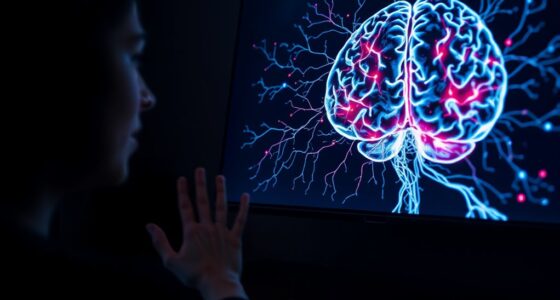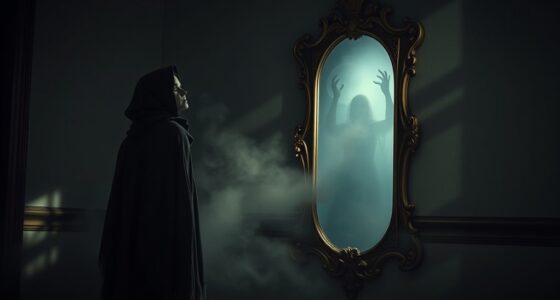

Paranormal investigations teach you that human perception can be easily misled by mental expectations, fears, and sensory overload. Your memories may distort what you saw or heard, making false claims seem real. Environmental factors like darkness and strange noises can cause hallucination-like experiences. Technology might deceive you as well, creating illusions of paranormal activity. By understanding these influences, you’ll see how our minds interpret reality in ways that aren’t always accurate. Keep exploring to uncover more about how perception shapes what you think you experience.

Get movie nights delivered free with Prime
- Fast, free delivery on millions of items
- Prime Video, Amazon Music and more included
- Member-only deals all year
Key Takeaways
- Human perception is heavily influenced by mental interpretation, leading to misidentification of paranormal phenomena.
- Memory distortions over time can create false recollections of supernatural encounters.
- Environmental factors like lighting and noises can induce hallucination-like experiences during investigations.
- Technological tools may produce artifacts that are mistaken for paranormal activity, highlighting the limits of equipment.
- Cognitive biases and emotional states shape perceptions, emphasizing the need for critical thinking in paranormal analysis.
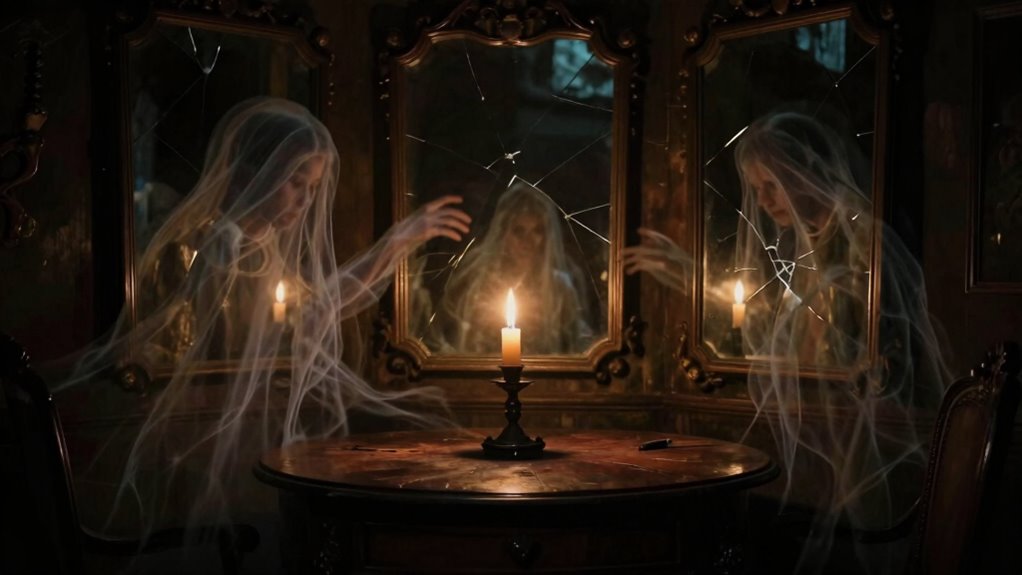
Paranormal investigation often hinges on understanding how human perception shapes our experiences of the unknown. When you step into a supposedly haunted location, what you perceive isn’t just about what’s really there; it’s deeply influenced by your mind’s interpretation. Memory distortion plays a significant role—you might recall a flickering shadow as a full-bodied apparition, even if it was just a trick of the light or a fleeting movement. Your brain tends to fill in gaps based on expectations or fears, leading you to remember events differently from how they actually occurred. This distortion can make it challenging to separate genuine phenomena from misinterpretations, pushing investigators to question their memories and remain skeptical.
Perception shapes our haunted experiences, with memory distortions and expectations blurring reality and misinterpretation.
Sensory overload is another critical factor that impacts perception during investigations. As you move through a dimly lit room, with strange noises echoing and unfamiliar smells lingering, your senses become overwhelmed. This overload can cause hallucination-like experiences or amplify feelings of unease. Your mind tries to make sense of conflicting stimuli, often leading to false positives—where you believe you’ve seen or heard something paranormal when it’s just your senses going into overdrive. Recognizing sensory overload helps you understand why many reports of paranormal activity are subjective and influenced by emotional states or environmental factors.
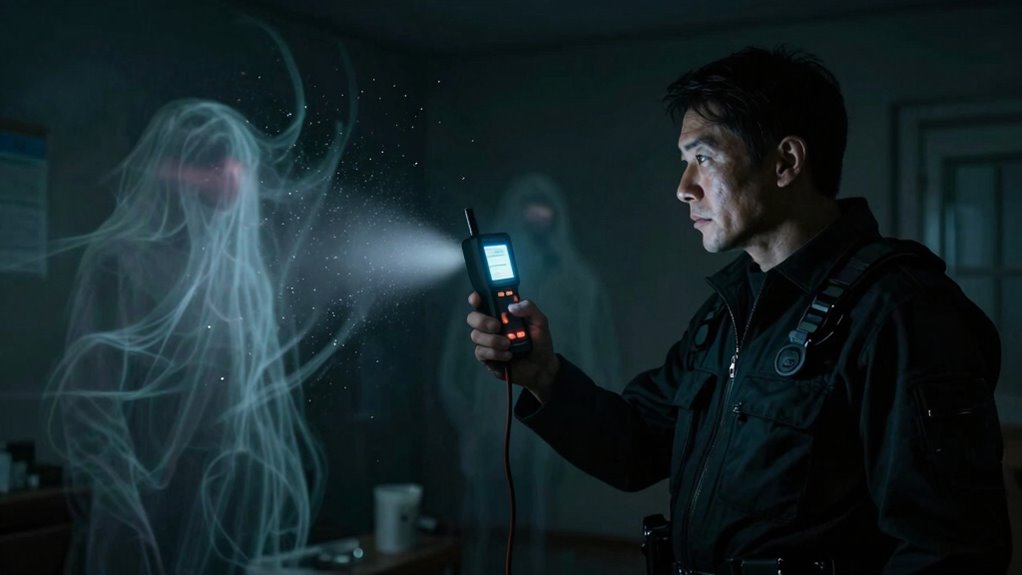
Additionally, the role of technology in investigations can sometimes influence perceptions, as devices like EMF meters or thermal cameras may produce results that are misinterpreted or exaggerated, further complicating the line between reality and illusion. These insights teach you that perception isn’t a straightforward window to reality; it’s a complex process susceptible to biases and external influences. Being aware of cognitive biases helps you avoid jumping to conclusions based on incomplete or distorted information. When you investigate, you learn that your senses and memories aren’t infallible. Instead, they’re tools that can deceive you, especially in environments designed to evoke fear or mystery. This awareness pushes you to adopt a more scientific approach, questioning each sighting or sound rather than accepting it at face value. It also encourages you to consider psychological factors—like suggestion, expectation, and emotional state—that shape how you interpret strange phenomena.
In essence, paranormal investigation reveals that human perception is both our greatest asset and our biggest obstacle. It can draw our attention to phenomena we might otherwise miss but can also lead us astray through memory distortion and sensory overload. By understanding these processes, you become a more discerning investigator, recognizing that the line between the real and the imagined is often blurred. The experience teaches you that the true challenge isn’t just capturing evidence but understanding how your mind influences what you perceive, shaping your entire experience of the paranormal.
EMF meter for paranormal investigation
As an affiliate, we earn on qualifying purchases.
As an affiliate, we earn on qualifying purchases.
Frequently Asked Questions
How Do Paranormal Investigators Differentiate Between Real and False Phenomena?
You differentiate real from false phenomena by carefully analyzing sensory illusions and hallucination triggers. Paranormal investigators look for consistent evidence across multiple sources, such as audio, video, and environmental factors. They question personal perceptions, understanding that hallucination triggers like fatigue, stress, or environmental conditions can create false positives. By cross-checking data and remaining skeptical, you can better distinguish genuine paranormal activity from illusions caused by human perception.
Can Human Perception Be Intentionally Manipulated During Investigations?
Yes, you can intentionally manipulate human perception during investigations. You might use sensory deception to mislead witnesses or influence their belief systems, shaping how they interpret phenomena. By controlling environmental cues or suggesting possibilities, you influence perceptions, beliefs, and memories. This manipulation underscores how easily perception can be influenced, highlighting the importance of critical thinking and awareness to distinguish genuine phenomena from illusions or psychological effects during investigations.
What Role Does Psychology Play in Interpreting Paranormal Encounters?
Psychology plays a vital role in how you interpret paranormal encounters, as perception illusions and cognitive distortions often influence your judgments. Your mind may fill in gaps with assumptions or misinterpret sensory information, leading you to see or hear things that aren’t really there. Recognizing these psychological effects helps you stay aware of biases, making you more critical and objective when evaluating paranormal experiences.
Are There Common Cognitive Biases Affecting Perception in Investigations?
You’re often chasing shadows because cognitive distortions and perception errors cloud your judgment during investigations. Common biases like confirmation bias and the placebo effect can distort what you see or hear, making you see what you want to find. It’s a classic case of “fighting an uphill battle,” where your mind tricks you into perceiving paranormal activity that might not be there. Recognizing these biases helps keep your investigation honest.
How Reliable Are Personal Testimonies in Paranormal Research?
Personal testimonies in paranormal research aren’t entirely reliable due to memory distortion and sensory limitations. You might remember events differently over time, influenced by emotions or expectations. Sensory limitations can also distort what you perceive, making it hard to distinguish genuine paranormal activity from natural causes. Recognizing these factors helps you stay cautious and objective, understanding that personal accounts are valuable but should be corroborated with other evidence.
thermal camera for ghost hunting
As an affiliate, we earn on qualifying purchases.
As an affiliate, we earn on qualifying purchases.
Conclusion
As you explore paranormal investigations, you realize they reveal more about human perception than supernatural truths. Your mind filters, interprets, and sometimes misreads the unknown, showcasing how perception shapes reality. Investigating these phenomena teaches you that what you perceive isn’t always the full story—it’s a reflection of your senses, biases, and expectations. Ultimately, understanding this helps you see that the mysteries of the paranormal mirror the complexities of your own mind.
night vision goggles for paranormal research
As an affiliate, we earn on qualifying purchases.
As an affiliate, we earn on qualifying purchases.
audio recorder for ghost hunting
As an affiliate, we earn on qualifying purchases.
As an affiliate, we earn on qualifying purchases.
Fall Picks
fall essentials
As an affiliate, we earn on qualifying purchases.