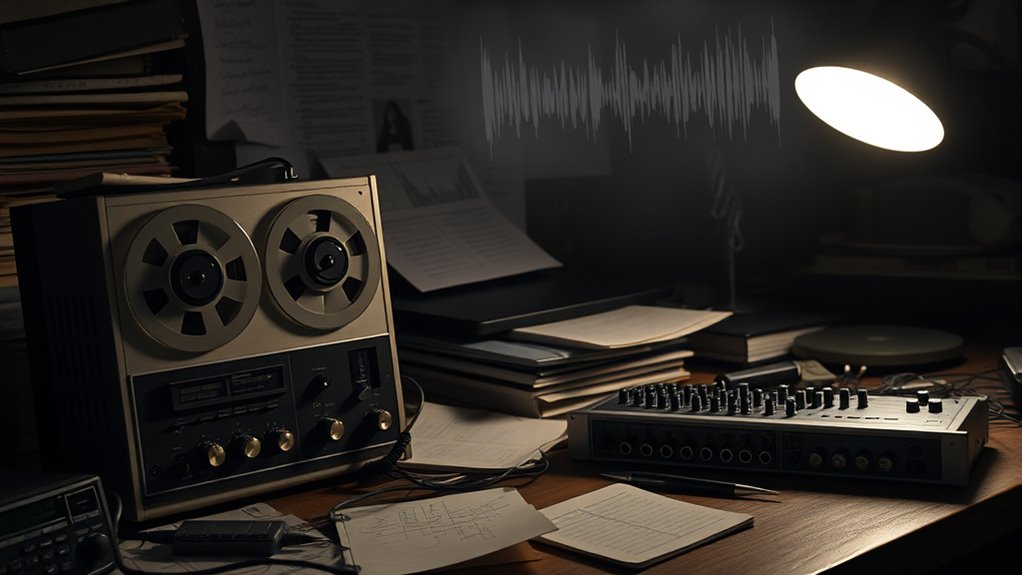
Scientific debates over EVP validity revolve around whether these sounds are genuine attempts at communication or just artifacts and psychological effects. Researchers face challenges like background noise, interference, and biases that can produce false positives. While some experiments claim to capture meaningful voices, skeptics argue these are explainable by natural sounds or perceptual tendencies. If you keep exploring, you’ll discover how ongoing experiments and technological advances continue to shape this intriguing debate.
Key Takeaways
- The scientific community remains divided due to inconsistent, non-replicable EVP findings and challenges distinguishing genuine voices from noise artifacts.
- Researchers employ rigorous methodologies, including double-blind protocols and spectral analysis, but skepticism persists over interpretive biases.
- Critics argue many EVP samples result from natural noise, electromagnetic interference, or psychological factors like pareidolia.
- Ongoing debates focus on whether EVP phenomena demonstrate reliable communication or are coincidental or technological artifacts.
- Advances in audio technology and standardized research practices aim to clarify EVP validity, but consensus has yet to be achieved.
Historical Perspectives on EVP Research
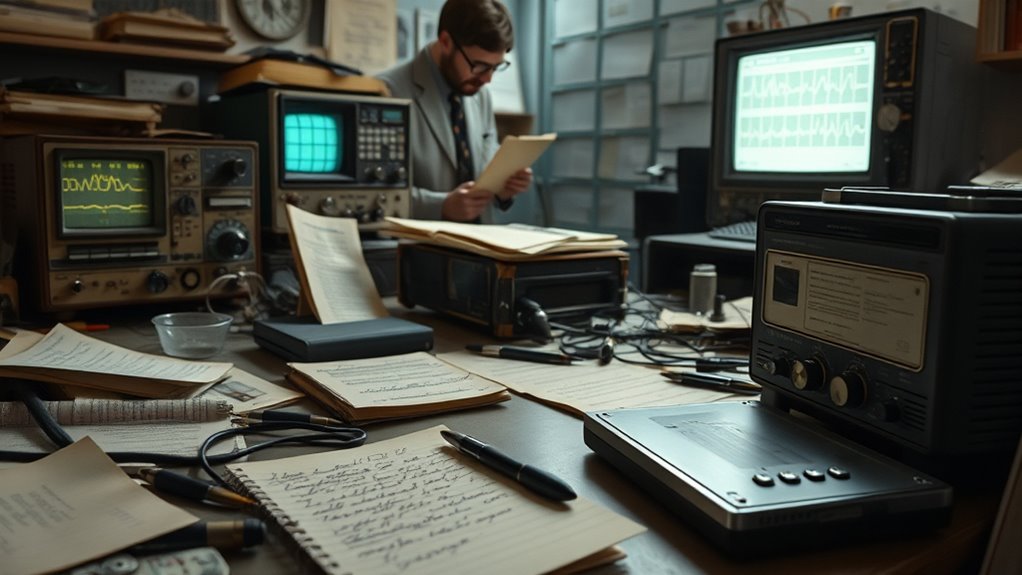
Understanding the historical roots of EVP research reveals a fascinating journey from early amateur experiments to scientific scrutiny. In the late 19th and early 20th centuries, enthusiasts recorded strange voices using simple equipment, often dismissing them as static or interference. As technology advanced, researchers began to take a closer look, with some claiming these voices hinted at communication beyond the physical domain. During the mid-20th century, EVP gained popularity in paranormal circles, leading to increased interest and skepticism. Despite many dismissals, a few scientists became intrigued by the phenomenon, prompting more systematic investigations. This era laid the foundation for modern EVP studies, highlighting its complex evolution from hobbyist curiosity to a subject of serious scientific debate. Notably, the scientific community remains divided on the phenomenon’s validity, underscoring ongoing debates about its nature.
Technical Challenges in EVP Recording and Analysis
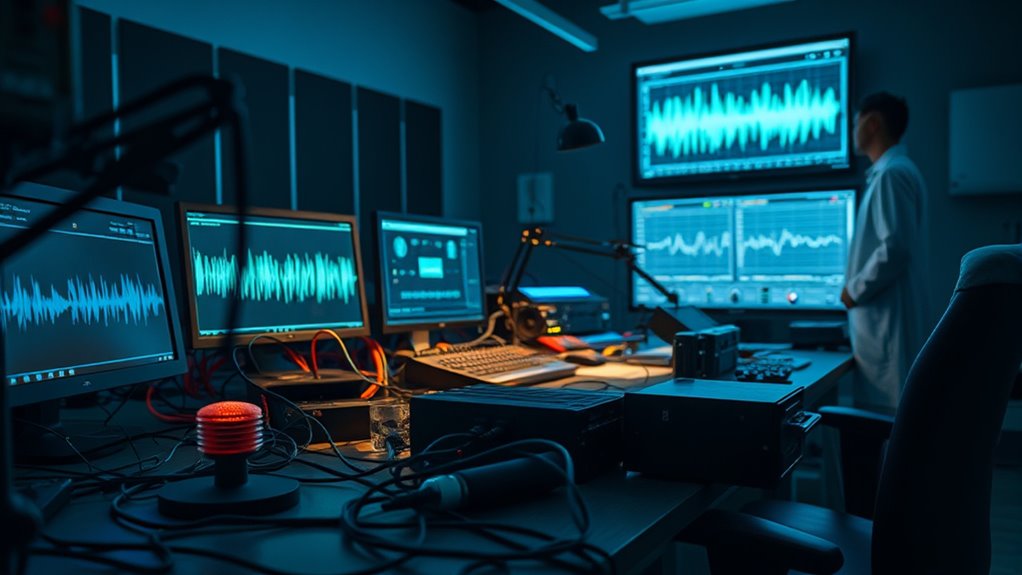
When recording EVP, signal interference from background noise often complicates the process, making it hard to isolate potential voices. Equipment sensitivity limits can prevent capturing faint or subtle sounds that might be significant. These technical challenges raise questions about the reliability of EVP recordings and their interpretations. Additionally, filter maintenance is crucial, as dirty or clogged filters can distort sound quality and affect the accuracy of recordings.
Signal Interference Issues
Signal interference poses a significant obstacle in EVP recording and analysis, often contaminating recordings with unwanted background noise or electromagnetic signals. These interferences can mask or distort the intended voices, making it difficult to identify genuine EVP phenomena. Common sources include nearby electronic devices, radio waves, power lines, and environmental noise. To improve clarity, you must understand and control these factors. Understanding electromagnetic phenomena is crucial for developing effective mitigation techniques.
- Electromagnetic noise from household electronics
- Radio frequency interference from communication devices
- Static from power lines or electrical equipment
- Environmental sounds like wind or traffic noise
Equipment Sensitivity Limits
The sensitivity limits of EVP recording equipment directly impact your ability to detect faint or subtle voices. If your device isn’t sensitive enough, weak or distant EVP signals may go unnoticed, leading to false negatives. Higher sensitivity equipment can pick up quieter sounds, but it also risks capturing background noise or electromagnetic interference, complicating analysis. Balancing sensitivity is vital; too low, and you miss potential EVPs. Too high, and you face noise contamination, making it hard to distinguish genuine voices. You must understand your equipment’s thresholds and calibrate accordingly. Upgrading to more advanced, high-sensitivity microphones and filters can improve detection, but they don’t eliminate the challenge of differentiating real EVP from artifacts. Proper understanding of your equipment’s limits is essential for credible EVP recording and analysis. Additionally, being aware of noise reduction techniques can help improve the clarity of recordings and reduce false positives.
Common Artifacts and Misinterpretations

You might mistake equipment interference or audio anomalies for genuine EVP voices, leading to false interpretations. These artifacts can easily occur from electrical noise, recording device issues, or environmental factors. Recognizing and understanding these common artifacts helps prevent misreading and strengthens the credibility of your analysis. Additionally, being aware of auditory hallucinations can aid in distinguishing between genuine EVP and psychological perceptions.
Equipment Interference Effects
Electromagnetic interference from nearby electronic devices or environmental factors often creates artifacts that can be mistaken for genuine EVP phenomena. These interferences can produce sounds or whispers that seem like voices but are actually caused by radio signals, static, or electrical noise. To avoid misinterpretation, consider these common interference effects:
- Radio or TV signals blending into audio recordings
- Static or hums from poorly shielded equipment
- Electrical interference from power lines or appliances
- Digital artifacts resulting from data transmission errors
Understanding these effects helps you distinguish between true EVP signals and equipment-related noise. Recognizing the source of artifacts is vital in ensuring accurate interpretation of audio recordings. Proper shielding, grounding, and equipment maintenance are key to minimizing interference and avoiding false positives in EVP analysis. Additionally, awareness of Kia Tuning modifications can help identify potential sources of electromagnetic noise that may affect sensitive audio equipment.
Misreading Audio Anomalies
Many audio anomalies that people interpret as EVP are actually common artifacts or misinterpretations arising from recording conditions or natural sounds. Background noise, radio interference, or equipment static can produce sounds that resemble voices, leading to false positives. Echoes, reverberations, or distorted speech patterns may also be mistaken for intelligent responses. Sometimes, psychological factors like pareidolia cause you to hear familiar words or phrases where none exist. These artifacts can be amplified by poor microphone quality or environmental disturbances. Recognizing these natural sources helps prevent misinterpretation. It’s essential to critically evaluate recordings, considering context and technical factors, before concluding that an anomalous sound is a genuine EVP. Awareness of these common artifacts reduces false positives and improves the accuracy of EVP analysis. Additionally, understanding the influence of recording equipment and environment can aid in distinguishing genuine anomalies from technical artifacts.
Scientific Methodologies Applied to EVP Studies
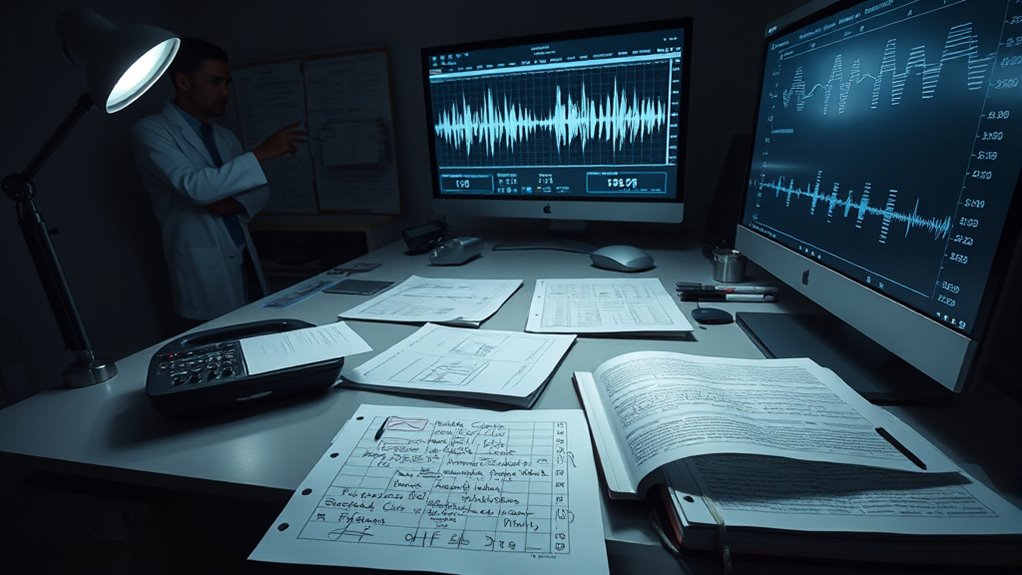
Scientists applying the scientific method to EVP (Electronic Voice Phenomena) studies design controlled experiments to systematically investigate the claims. They isolate variables, use blind testing, and employ rigorous data collection to guarantee that results are objective and replicable. You might encounter methodologies like double-blind protocols, where neither the experimenter nor the participant knows the expected outcome, reducing influence on the data. Researchers also utilize statistical analysis to determine if EVP recordings are statistically significant or just random noise. Additionally, they implement environmental controls to eliminate external interference. Color accuracy techniques are also used to ensure that the visual data presented is true to the original signals, providing a solid foundation for evaluating EVP claims scientifically.
Notable Experiments and Their Findings
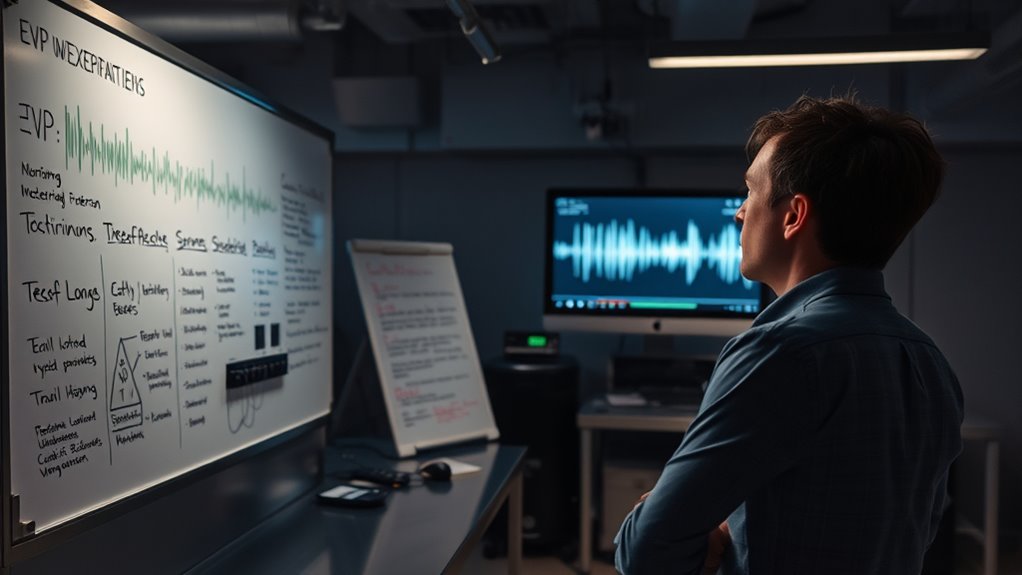
Several notable experiments have attempted to objectively assess the validity of EVP phenomena. In controlled environments, researchers like those at the Rhine Institute recorded audio from supposedly haunted locations, with some claiming to capture voices that respond to questions. Others, such as the work by Robert Morris, used blind testing to eliminate bias, but results often remained ambiguous or inconsistent. Some experiments reported EVP recordings that appeared to be contextually relevant, yet critics argue these could result from random noise or interference. Despite these efforts, no experiment has provided conclusive, reproducible evidence that definitively proves EVP as communication from the beyond. The findings remain controversial, with skeptics citing methodological flaws and the tendency for coincidental sounds to be misinterpreted as meaningful voices. Interestingly, cryptocurrency market shifts can sometimes exhibit unpredictable patterns similar to the ambiguous results seen in EVP research.
Psychological Factors Influencing EVP Perception
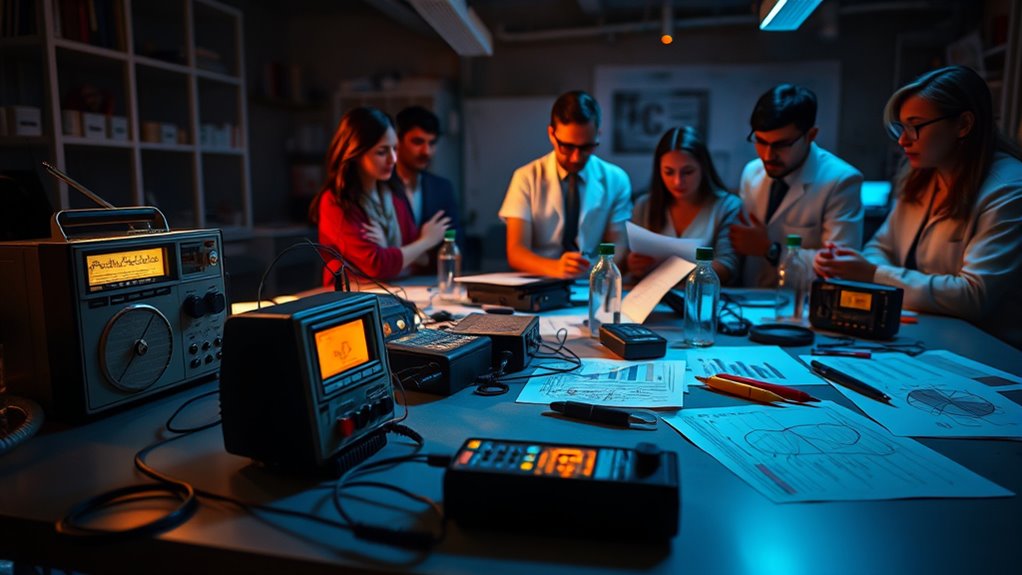
Psychological factors play a significant role in how people perceive EVP recordings, often shaping whether they interpret ambiguous sounds as meaningful voices. Your expectations, beliefs, and prior experiences can influence what you hear, making you more likely to interpret noises as spirits speaking. The power of suggestion can lead you to hear what you want to hear, especially in unclear recordings. Cognitive biases, like pareidolia, cause you to see familiar patterns or voices where none exist. Emotional states also impact perception; fear or hope can color your interpretation of ambiguous sounds. Additionally, relationships and personality traits may influence susceptibility to certain perceptual biases, affecting how you interpret EVP phenomena.
Advances in Recording Technology and Data Verification

Recent advancements in recording technology have substantially improved the ability to capture and analyze EVP signals, making it easier to distinguish genuine phenomena from background noise. High-quality microphones, noise reduction, and digital signal processing allow you to record clearer, more accurate data. Enhanced verification methods, like spectral analysis and timestamping, help confirm the authenticity of EVP recordings. These innovations reduce false positives and increase confidence in results.
| Technology/Method | Purpose |
|---|---|
| Digital Audio Recorders | Capture high-fidelity sound without interference |
| Spectral Analysis | Identify unique EVP frequency patterns |
| Timestamping | Verify recording time and sequence |
| Noise Reduction | Minimize background interference |
Criticisms and Skeptical Evaluations
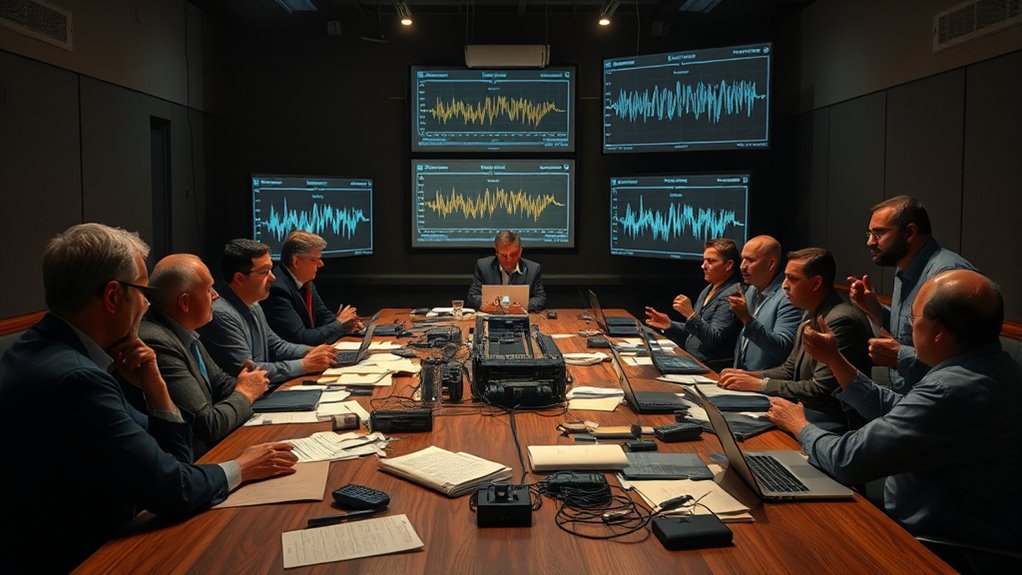
Critics often challenge the validity of EVP recordings, arguing that many signals can be explained by natural causes or technological artifacts. They suggest that background noise, radio interference, or equipment malfunctions create misleading sounds mistaken for spirits. Skeptics also point out that pareidolia, the tendency to perceive familiar patterns, can lead listeners to interpret random noise as voices. Additionally, some believe that recording devices may be unintentionally influenced by electromagnetic interference or cross-talk. These criticisms cast doubt on EVP’s authenticity, urging caution before accepting these recordings as evidence of spirits.
- Background noise mistaken for voices
- Radio interference producing false signals
- Equipment malfunctions mimicking EVP sounds
- Psychological biases influencing interpretation
Future Directions and Potential for Scientific Consensus

Achieving scientific consensus on EVP validity requires rigorous, standardized research methods and collaborative efforts across disciplines. You need well-designed experiments that minimize bias and incorporate double-blind protocols. As technology advances, employing high-quality audio analysis and machine learning can help differentiate genuine EVP recordings from noise or artifacts. Encouraging interdisciplinary collaboration between psychologists, physicists, and engineers will broaden understanding and refine criteria for EVP validation. Future research should focus on replicability and transparency, promoting open data sharing and peer review. Public engagement and education are also critical, helping to address skepticism and increase acceptance. While challenges remain, establishing clear standards and fostering collaborative efforts will be essential for reaching a scientific consensus on EVP phenomena.
Frequently Asked Questions
How Do Proponents Interpret the Emotional Content of EVP Recordings?
You believe that the emotional content in EVP recordings reflects genuine messages from spirits, often interpreting subtle tonal changes and voice inflections as emotional cues. Proponents feel these recordings reveal feelings like love, fear, or grief, which support the idea of communication beyond the physical domain. They trust that emotional nuances add authenticity, helping to distinguish meaningful spirit messages from random noise or pareidolia.
Are There Any Peer-Reviewed Studies Confirming EVP Authenticity?
You won’t find conclusive peer-reviewed studies that definitively confirm EVP authenticity. While some researchers remain open-minded and explore the phenomenon, the scientific community generally regards EVP as anecdotal or interpretative rather than validated evidence. If you’re curious, it’s worth examining individual studies critically, but remember that mainstream science still considers EVP as lacking the rigorous proof needed for broad acceptance.
What Role Does Cultural Belief Play in EVP Perception?
Cultural beliefs heavily influence how you perceive EVP recordings. If you come from a culture that accepts spirits or supernatural phenomena, you’re more likely to interpret mysterious sounds as meaningful messages. Your expectations and cultural background shape what you hear, often leading you to find connections where others see noise. This subjective perception highlights the importance of cultural context in EVP experiences, making them seem more or less credible depending on your beliefs.
Can Environmental Factors Consistently Influence EVP Recording Results?
Environmental factors can indeed influence EVP recording results, but not consistently. You might notice that electrical interference, background noise, or even weather conditions affect the recordings you capture. However, these influences aren’t reliable enough to produce consistent results across different sessions. So, while environmental factors can impact EVP recordings temporarily, they don’t serve as dependable tools for confirming or denying their authenticity.
How Do Different Scientific Disciplines Approach EVP Investigations?
You see, different scientific disciplines approach EVP investigations differently. Physicists often seek clear, measurable evidence, demanding rigorous controls and reproducibility. Psychologists might focus on perception and cognitive biases, while engineers look for technical flaws or environmental influences. It’s a mixed bag—some treat EVP as a puzzle to solve, others as a phenomenon to scrutinize closely. Regardless, each discipline’s perspective shapes how they interpret EVP recordings in their quest for truth.
Conclusion
As you explore the world of EVP research, remember that science is like a journey through uncharted waters—sometimes you hit storms, other times clear skies. While debates persist, advancements in technology and methodology bring new clarity. Keep an open mind, but also a skeptical eye, because the truth often lies beyond the horizon. Like a lighthouse guiding ships, rigorous research can illuminate the path toward understanding EVP validity in the future.