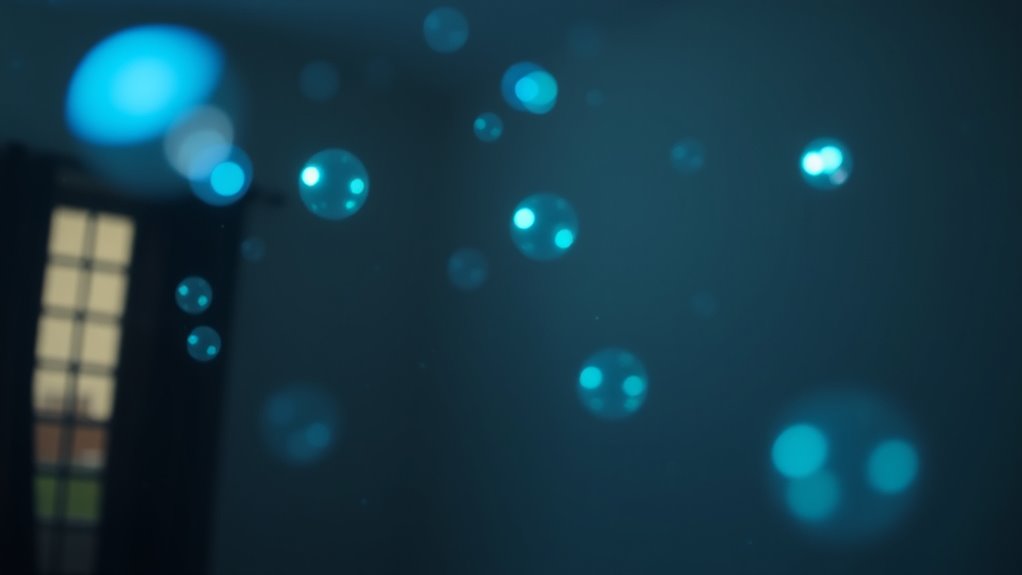

Orbs in photos are usually caused by dust, moisture, or insects reflecting light, not ghosts or supernatural entities. These particles near the lens can create bright, circular shapes, especially when using flash or in low-light conditions. Environmental factors like fog or rain also contribute to orb appearance. Often, changing your angle or cleaning your lens can prevent capturing these false signals. Keep exploring to discover how natural effects get mistaken for paranormal phenomena.

Get movie nights delivered free with Prime
- Fast, free delivery on millions of items
- Prime Video, Amazon Music and more included
- Member-only deals all year
Key Takeaways
- Orbs often result from dust, moisture, or insects reflecting light, not paranormal activity.
- Camera flash and environmental conditions increase the likelihood of capturing natural orbs.
- Inconsistent or blurry orbs typically indicate dust or moisture, not ghostly presence.
- Proper camera maintenance and controlled lighting can reduce false orb appearances.
- Understanding photographic artifacts helps distinguish between natural particles and potential paranormal evidence.
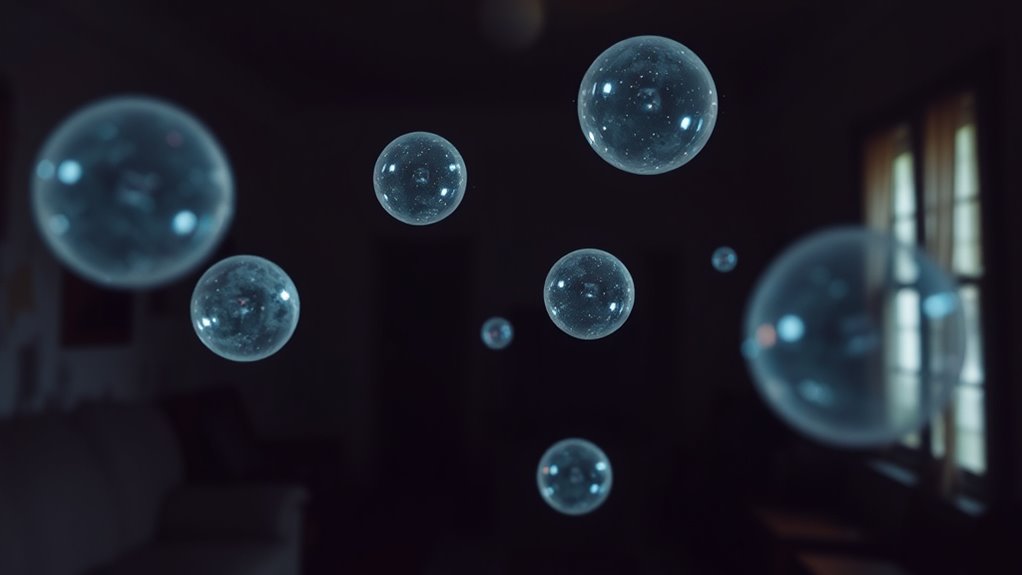
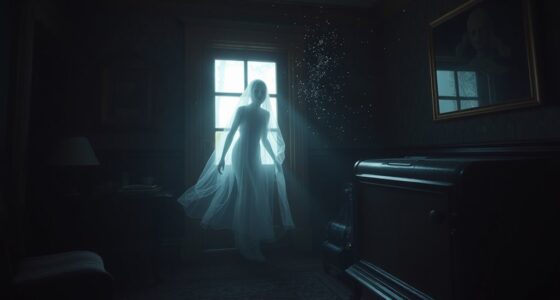
Many people have noticed mysterious orbs appearing in their photos, sparking curiosity and debate about their origins. When you see these glowing circles, it’s natural to wonder if they’re evidence of spirits or just harmless particles. To figure this out, you need to understand how photography techniques can influence what ends up in your images. Often, what looks like a paranormal phenomenon is simply a result of how your camera captures light and motion. For example, using a camera’s flash in low-light conditions can create reflections or lens flare that appear as orbs, especially if there’s dust, moisture, or insects close to the lens. These tiny particles reflect the flash directly back to the camera, forming the bright, circular shapes that many interpret as ghostly orbs.
It’s important to recognize that many paranormal misconceptions stem from a lack of understanding of these photographic effects. People tend to see what they want to see or interpret ambiguous images as supernatural. For instance, a quick snapshot taken in a dim room with a flash might produce an orb that looks otherworldly, but it’s just a common photographic artifact. When you examine these images closely, you often find that the orbs are not stable or consistent, which is a clear sign they’re caused by dust or moisture rather than spirits. Additionally, understanding photo artifacts helps you distinguish between genuine paranormal evidence and natural phenomena. Recognizing lighting conditions and environmental factors can further clarify the origin of these mysterious orbs. Being aware of sensor limitations can also help you understand why certain artifacts appear in your photos.
To avoid misinterpreting these orbs, you can pay attention to your photography techniques. Using a slower shutter speed or shooting without flash in dark environments can reduce the chance of capturing particles close to your lens. Also, keeping your camera lens clean and free of smudges minimizes reflections that can mimic orbs. If you notice orbs appearing frequently, consider whether environmental factors like fog, rain, or dust are contributing. Sometimes, simply changing your angle or lighting conditions will eliminate these unwanted artifacts altogether. Additionally, many professional photographers recommend practicing different lighting setups to better control unwanted reflections and improve image clarity. Furthermore, employing air purifiers in your environment can reduce airborne particles that contribute to these artifacts, making your photos clearer and less prone to misinterpretation.
Understanding these technical aspects helps you see beyond paranormal misconceptions. Instead of jumping to supernatural conclusions, you can analyze your photos with a clearer perspective. Many “ghostly” orbs turn out to be nothing more than natural photographic phenomena. By learning about photography techniques and how light interacts with particles, you gain the ability to differentiate between real paranormal evidence and everyday dust or moisture. This knowledge empowers you to take more accurate, meaningful photos and reduces the likelihood of misinterpreting ordinary effects as supernatural encounters.
As an affiliate, we earn on qualifying purchases.
Frequently Asked Questions
Can Orbs Be Scientifically Proven as Spirits?
You wonder if orbs can be scientifically proven as spirits, but scientific skepticism remains strong. Experts point out that orbs are often just photographic artifacts caused by dust, moisture, or insects reflecting light. Without concrete evidence, these orbs can’t be definitively linked to spirits. So, while they might look mysterious, the scientific community requires more rigorous proof before accepting orbs as spiritual phenomena.
What Camera Settings Maximize Orb Detection?
Think of your camera like a detective searching for clues. To maximize orb detection, set your camera focus to manual and keep it sharp. Use a higher ISO sensitivity to capture faint details in low light, but avoid overexposing. Adjust your shutter speed to balance motion blur and clarity. These settings help make orbs stand out, revealing their mysterious presence while keeping your photos crisp and clear.
Are Certain Environments More Prone to Orb Appearances?
You’ll notice certain environments are more prone to orb appearances because dust particles and moisture levels play significant roles. In areas with high dust, like old houses or dusty attics, or where moisture is abundant, such as near water sources or humid rooms, orbs are more likely to appear in photos. These conditions create ideal conditions for particles to reflect light, making them more visible in your images.
How Can I Differentiate Between Dust and Paranormal Orbs?
They say, “Look before you leap,” and that’s wise when spotting orbs. To tell dust from paranormal orbs, examine the photo closely. Dust often shows as random, irregular orbs that move with lighting artifacts or camera lens flare. Paranormal orbs tend to be more consistent, larger, and appear in specific spots. If you notice orbs only in certain lighting conditions or near a lens flare, dust is likely the culprit.
Do Orbs Appear in Professional Paranormal Investigations?
In professional paranormal investigations, orbs do appear in photos, often influenced by camera angles and lens distortions. You might notice them more when using wide-angle lenses or shooting in low light, where dust or moisture particles reflect light. Investigators analyze these images carefully, considering angles and distortions, to determine if orbs are genuine paranormal phenomena or caused by environmental factors. Your awareness of these factors helps you interpret orb images more accurately.
dust and moisture removal camera accessories
As an affiliate, we earn on qualifying purchases.
As an affiliate, we earn on qualifying purchases.
Conclusion
So, next time you see a suspicious orb in your photos, remember what Houdini might say—sometimes illusions are just tricks of the light and dust. Whether you believe it’s ghostly evidence or simply a speck of dirt, the truth remains elusive, like a whisper in the dark. Trust your instincts, but keep your camera ready. After all, every photo may hold a story—just like every shadow has a secret waiting to be uncovered.
camera lens filters for low light
As an affiliate, we earn on qualifying purchases.
As an affiliate, we earn on qualifying purchases.
As an affiliate, we earn on qualifying purchases.
Halloween Picks
halloween
As an affiliate, we earn on qualifying purchases.