
The rise of Victorian seance culture began around 1848, sparked by the Fox sisters claiming to contact spirits through rapping sounds. As interest in the afterlife grew, many turned to organized séances, mediums, and rituals involving symbols, gestures, and secret practices. This supernatural trend influenced society’s views on life and death, blending entertainment with spiritual exploration. If you continue exploring, you’ll discover how these traditions left a lasting impact on history and modern perceptions.
Key Takeaways
- Began in 1848 with the Fox sisters’ claims of spirit communication, sparking widespread interest.
- Prominent mediums like D.D. Home and Florence Cook popularized dramatic, emotionally charged séances.
- Rituals and symbols, such as candles and Ouija boards, were used to deepen spiritual connections.
- Seances became social entertainment, challenging religious beliefs and influencing Victorian culture.
- The practice left a lasting legacy, blending mysticism with scientific curiosity, shaping modern paranormal perceptions.
Top picks for "rise victorian seance"
Open Amazon search results for this keyword.
As an affiliate, we earn on qualifying purchases.
Origins and Early Developments of Spiritualism
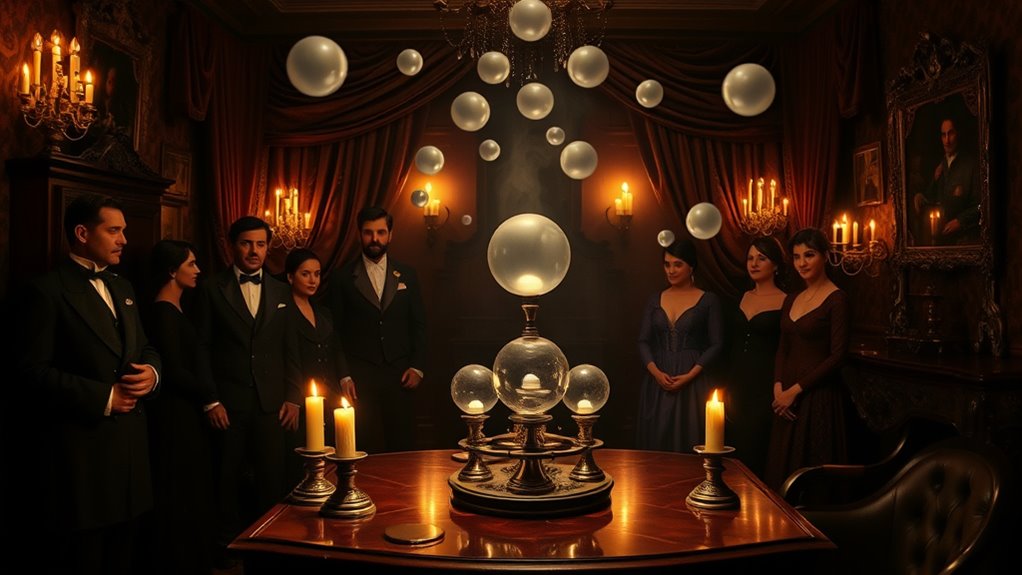
Spiritualism as a movement began in the mid-19th century, gaining momentum through a series of reported communications with spirits. You might not realize, but it started around 1848 when the Fox sisters claimed to communicate with spirits through rapping sounds in their New York home. Their sensational claims sparked widespread interest, inspiring others to seek contact with the afterlife. Early spiritualists believed that spirits could deliver messages, offering comfort and evidence of life after death. The movement quickly spread across America and Europe, often blending with religious and philosophical ideas. As it grew, spiritualism developed organized practices like séances and clairvoyance, making contact with spirits a central focus. These early developments laid the foundation for the Victorian seance culture that would follow. Additionally, the emergence of concepts like spirit communication and emotional expression played a significant role in shaping the theatrical and social aspects of Victorian spiritualism.
Key Figures and Mediums of the Era
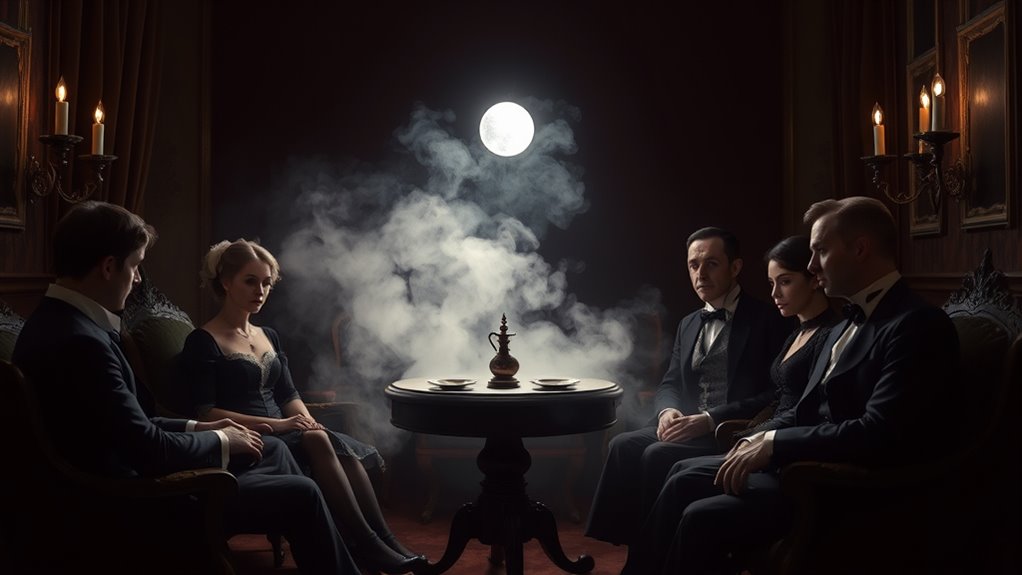
During the rise of spiritualism, certain individuals emerged as influential figures who shaped the movement’s practices and beliefs. These mediums captivated audiences with their claimed ability to communicate with spirits, often performing séances that blurred the line between reality and illusion. Some, like D.D. Home and Florence Cook, gained fame for their dramatic performances, inspiring both hope and skepticism. Their skills often evoked strong emotions—wonder, fear, and curiosity—leaving lasting impressions. The practice of creative practice was often integral to their performances, enhancing the mystical atmosphere.
Rituals, Symbols, and Secrets of Seances
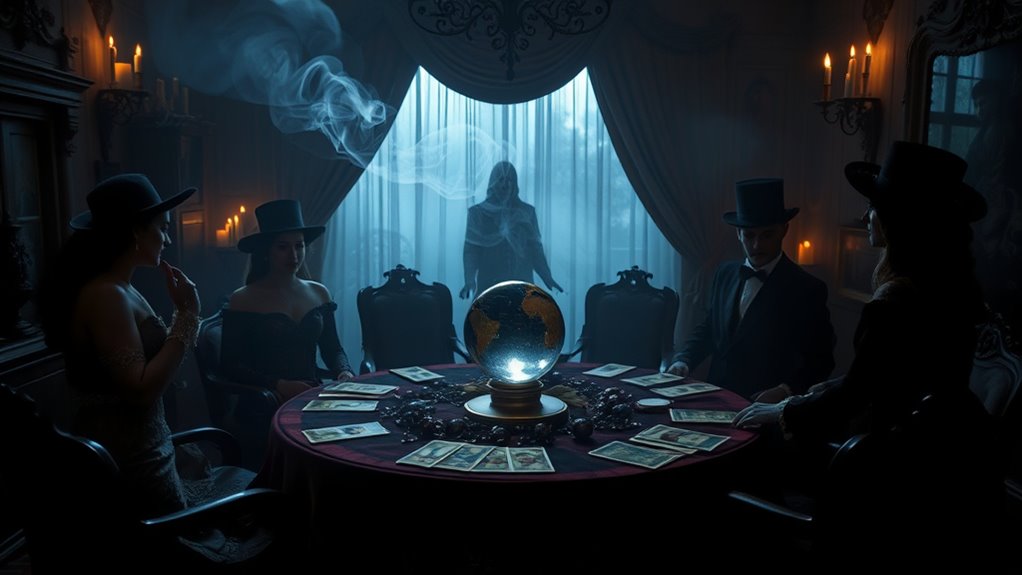
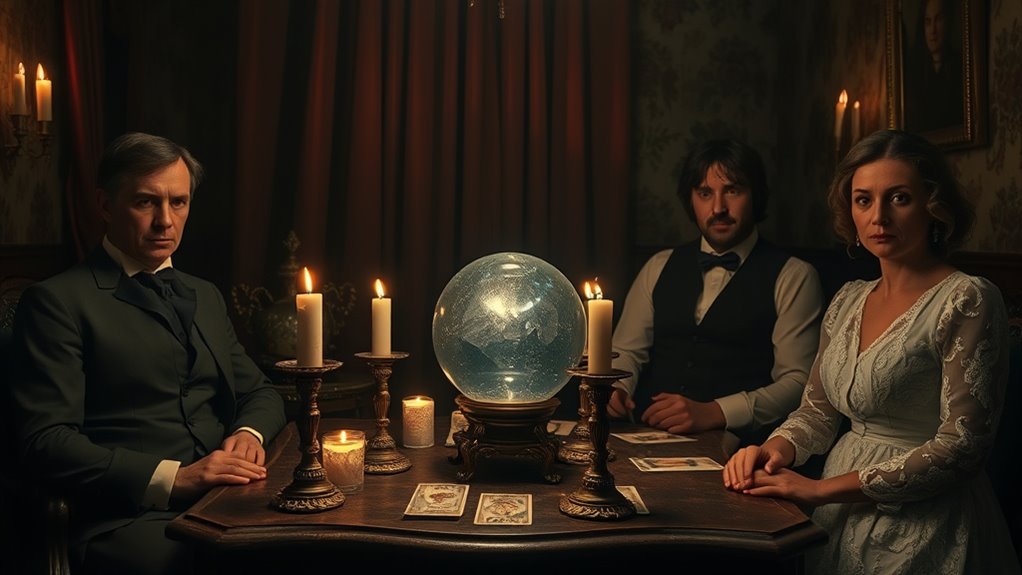
Seances often involved intricate rituals, symbolic gestures, and hidden secrets that heightened their mystique. You might find participants lighting candles or arranging objects in specific patterns to invite spirits. Seers used specific gestures or incantations to establish a connection, often performing in dimly lit rooms to create an eerie atmosphere. Symbols like the Ouija board or spirit trumpets served as tools for communication, adding a layer of mystery. Secrets were kept, with mediums sometimes revealing only fragments of messages to maintain an aura of intrigue. These rituals and symbols weren’t just for show—they aimed to deepen the connection with spirits and elevate the experience. Using candles was a common practice, as their flickering light helped create the dim, mysterious ambiance typical of Victorian seances.
Social Impact and Cultural Significance
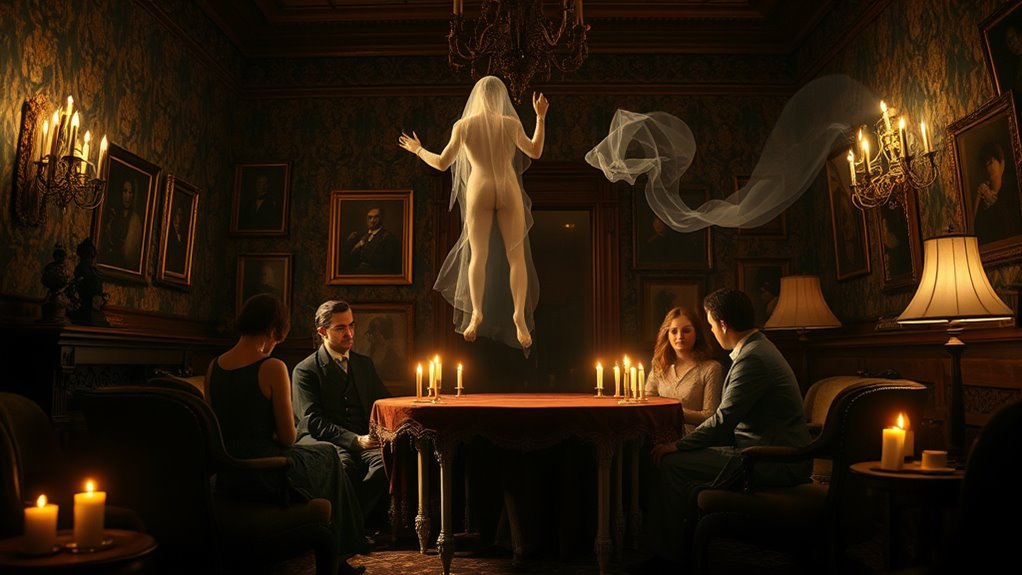
Have you ever wondered how seances shaped societal beliefs and cultural practices? During the Victorian era, seances influenced how people viewed life, death, and the supernatural. They fostered a sense of community among those seeking comfort in mourning or curiosity about the afterlife. Seances also challenged traditional religious views, prompting debates about spirituality and the existence of spirits. Public séances became social events, blurring the lines between entertainment and genuine belief. This culture encouraged a fascination with the unseen, shaping literature, art, and popular culture of the time. As a result, seance practices left a lasting mark on societal attitudes, inspiring both skepticism and faith, and contributing to a broader conversation about life beyond death. Cookies and privacy policies played a role in how audiences engaged with these cultural phenomena online.
Legacy and Modern Perceptions of Victorian Seance Practices
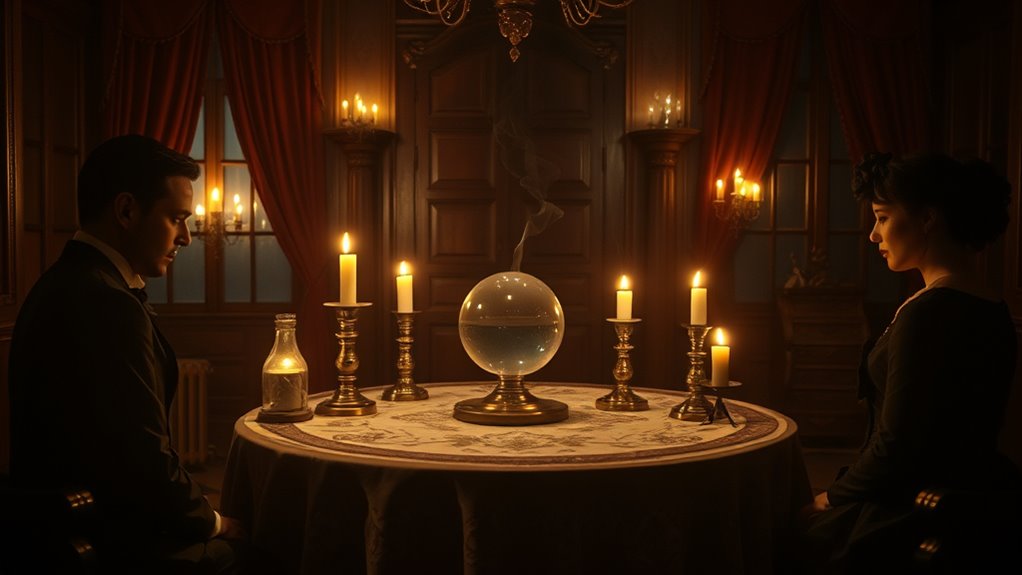
The legacy of Victorian seance practices continues to influence how you perceive spirituality and the supernatural today. Many see seances as a fascinating glimpse into history’s obsession with communicating with the dead, shaping modern paranormal interests. They also highlight the blend of scientific curiosity and mysticism that characterized the era. Today, seances are often viewed with skepticism, yet some see them as a way to explore spiritual connections beyond the physical world. The popularity of ghost-hunting shows and psychic fairs echoes Victorian fascination. You might also recognize modern séances in pop culture, from movies to literature, often romanticizing or dramatizing the mysterious. Overall, Victorian seance practices remain a symbol of curiosity, skepticism, and the enduring human desire to connect with what lies beyond. Additionally, contemporary interest is sometimes fueled by Prophetic Dreams, which continue to captivate those seeking messages from the spiritual realm.
Frequently Asked Questions
How Did Victorian Seance Practices Influence Contemporary Paranormal Beliefs?
Victorian seance practices shaped your modern paranormal beliefs by popularizing the idea that spirits can be contacted through specific rituals and tools like Ouija boards. They emphasized the possibility of communication beyond death, making such ideas mainstream. This era’s fascination with the supernatural led you to view paranormal phenomena as real and accessible, influencing contemporary practices, media, and skepticism about life after death.
Were There Any Notable Scandals Involving Fraudulent Mediums During the Era?
Yes, there were notable scandals involving fraudulent mediums during the era. You might recall the case of William Crowe, who was exposed for using hidden wires and tricks to fake spirit appearances. Such scandals tarnished the credibility of many mediums, making the public more skeptical. These incidents often made headlines, revealing the deception behind supposed spiritual communications and fueling ongoing debates about the authenticity of seance practices.
What Materials and Technologies Were Used to Create Seance Effects?
You’d be amazed at the astonishing tools mediums used! They employed everything from finely crafted crystal balls and luminous phosphorescent materials to hidden trapdoors and secret strings. Special effects like ghostly apparitions were created with cleverly concealed mirrors and smoke, making spirits seem to materialize out of thin air. These tricks, combined with theatrical props, turned ordinary rooms into otherworldly stages, fooling even the sharpest skeptics with their dazzling illusions.
How Did Gender Roles Shape Participation in Victorian Seance Circles?
You find that gender roles greatly influenced participation in Victorian seance circles. Women, often seen as more sensitive and intuitive, frequently led séances and served as mediums, aligning with societal expectations of femininity. Men, meanwhile, typically assumed skeptical or protective roles. This division reinforced Victorian ideals of gender, with women embodying spiritual receptivity and men maintaining rational authority, shaping the dynamics and rituals within seance gatherings.
Did Victorian Seance Culture Influence Other Artistic or Literary Movements?
Victorian seance culture deeply influenced artistic and literary movements by inspiring themes of mystery, spirituality, and the supernatural. You see this in Gothic novels and Symbolist art, where the unseen world becomes a canvas for exploring human fears and desires. Writers and artists embraced the idea of communication beyond the physical, shaping works that challenge perceptions, ignite imagination, and blur the lines between reality and the supernatural.
Conclusion
As you explore Victorian seance culture, you realize it’s more than just ghostly rituals—it’s a window into a world of mystery and fascination. Who truly communicated beyond the veil? The secrets of those séance rooms still linger, waiting to be uncovered. Perhaps, someday, you’ll find yourself questioning what’s real and what’s illusion. The past’s ghostly whispers remind us: some mysteries refuse to stay silent forever.