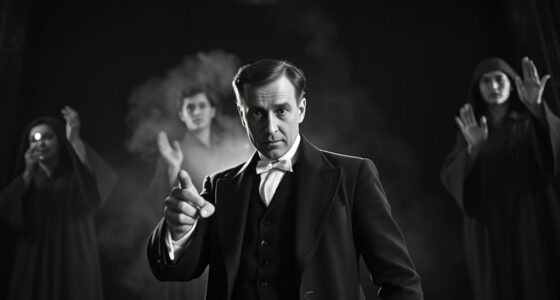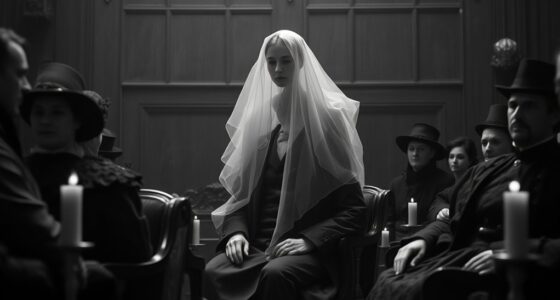
Victorian mourning photography and ghost symbolism offer a glimpse into how people used images and spiritual motifs to cope with loss. You’ll notice symbols like veils, crosses, and black clothes, which express grief, faith, and reverence. Techniques like soft focus or double exposure create ghostly, ethereal effects that hint at spirits or life beyond death. If you keep exploring, you’ll uncover the deeper meanings behind these haunting, meaningful images.
Key Takeaways
- Victorian mourning photography used symbols like veils, crosses, and black clothing to express grief, faith, and remembrance.
- Ghost symbolism in images employed techniques like soft focus and double exposure to evoke spiritual presence and otherworldly connections.
- Post-mortem portraits often featured ethereal effects and hidden symbols to suggest spirits and continued bonds with the deceased.
- Mourning imagery served as rituals of farewell, providing emotional closure and tangible remembrance within Victorian society.
- The ghostly motifs and symbolism in Victorian mourning photography continue to influence modern visual culture and expressions of grief.

Geetery 4 Pcs Vintage Picture Frames Set, Black Ornate Baroque Frames for Gallery Wall, Antique Victorian Decorative Photo Frame for Tabletop or Wall Display, Shabby Cottagecore Home Decor
Package Contents: you will get 4 pcs antique elegant black photo frames in different shapes and sizes, oval…
As an affiliate, we earn on qualifying purchases.
As an affiliate, we earn on qualifying purchases.
The Origins and Evolution of Mourning Photography in the Victorian Era
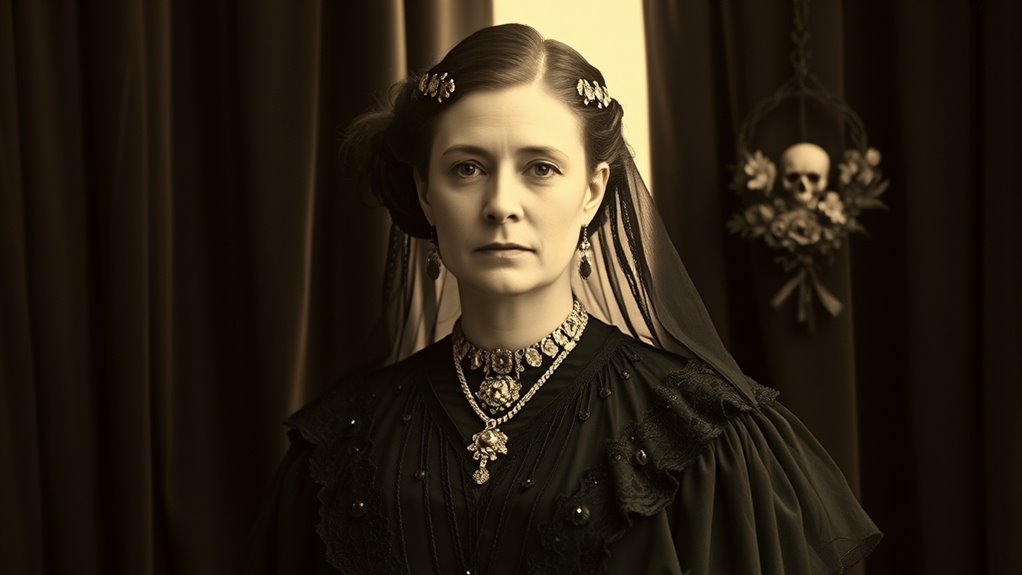
The origins of mourning photography in the Victorian era stem from a desire to memorialize loved ones in a tangible and lasting way. As photography became more accessible, families wanted to preserve the memory of those they lost, especially during a time when mortality rates were high. Early on, photographers offered post-mortem portraits, capturing deceased loved ones in life-like poses to create a sense of presence. Over time, this practice evolved into more respectful and serene memorial images, often featuring seated or reclining subjects. These photographs served as keepsakes and symbols of love and remembrance. The Victorian obsession with mourning customs fueled the popularity of these images, which became an essential part of mourning rituals and family heritage.

97 Decor Cute Ghost Pictures Wall Decor – 11×14 Vintage Ghost Wall Art, Halloween Prints Walls Art, Spooky Poster Haunted Forest Painting, Gothic Halloween Decorations For Home Bedroom (Unframed)
Cute Ghost Decor For Home: Add charm and spook to your space with ghost poster designed to bring…
As an affiliate, we earn on qualifying purchases.
As an affiliate, we earn on qualifying purchases.
Symbolic Elements in Mourning Portraits: Veils, Crosses, and Black Attire
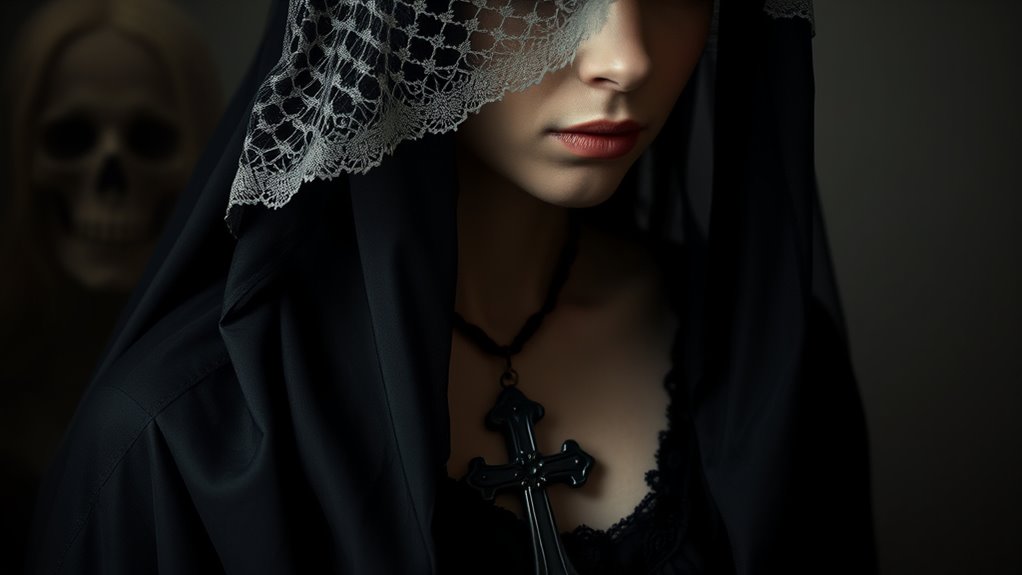
You’ll notice that mourning portraits often feature veils, crosses, and black clothing, each carrying deep symbolic meaning. Veils can represent grief and separation, while crosses symbolize faith and hope. Black attire emphasizes the somber tone and collective mourning, making these elements powerful visual cues. Additionally, the use of color symbolism in these portraits further accentuates the emotional and spiritual messages conveyed by the subjects.
Veil Significance and Meaning
Veils in Victorian mourning photography carried profound symbolic weight, representing both mourning and the wearer’s spiritual connection. They signified respect for the departed and a desire to maintain a spiritual barrier from the outside world. Wearing a veil indicated acceptance of death’s permanence and served as a visual reminder of the fragility of life. It also symbolized the wearer’s modesty and humility during a period when mourning customs emphasized restraint. The use of veils in imagery often reflected symbolic elements such as crosses and black attire, emphasizing the spiritual and somber tone of mourning portraits.
Crosses as Spiritual Symbols
Crosses in Victorian mourning photography serve as powerful spiritual symbols that convey faith, hope, and the soul’s journey beyond death. They represent the enduring connection between the living and the departed, emphasizing spiritual reassurance. When you see a cross in these portraits, it’s a visual reminder of religious devotion and the belief in eternal life. The following table highlights common meanings associated with crosses:
| Cross Type | Symbolic Meaning |
|---|---|
| Latin Cross | Sacrifice, salvation |
| Celtic Cross | Eternal life, unity of heaven and earth |
| Crucifix | Christ’s suffering and redemption |
| Simple Wooden Cross | Humility, faith |
These symbols serve to comfort mourners and reinforce spiritual hope amid sorrow.
Black Attire and Mourning
Black attire in Victorian mourning photography amplifies the somber tone and reflects deep respect for the departed. It signifies mourning, loss, and reverence, making the subject’s grief evident. Wearing black also serves as a universal visual cue, immediately conveying the mood without words. You’ll notice that subjects often dress in simple, unadorned black clothing to emphasize humility and sorrow. This uniformity helps viewers focus on the emotional state rather than material wealth or fashion. By choosing black, individuals connect with cultural expectations of mourning while also symbolizing the finality of death. The somber clothing acts as a visual language of grief, reinforcing the solemn atmosphere of these portraits. Additionally, the use of black attire aligns with the symbolic elements commonly found in mourning portraits, such as veils, crosses, and other symbols of spirituality and remembrance.

Ywlake Photo Album 4×6 500 Pockets Photo, Extra Large Capacity Family Wedding Picture Albums Holds 500 Horizontal and Vertical Photos Black
Large Capacity Photo Picture Album: holds 500 4×6 photos pictures, totally 50 sheets / 100 pages, each pages…
As an affiliate, we earn on qualifying purchases.
As an affiliate, we earn on qualifying purchases.
The Role of Post-Mortem Photography in Grieving Practices
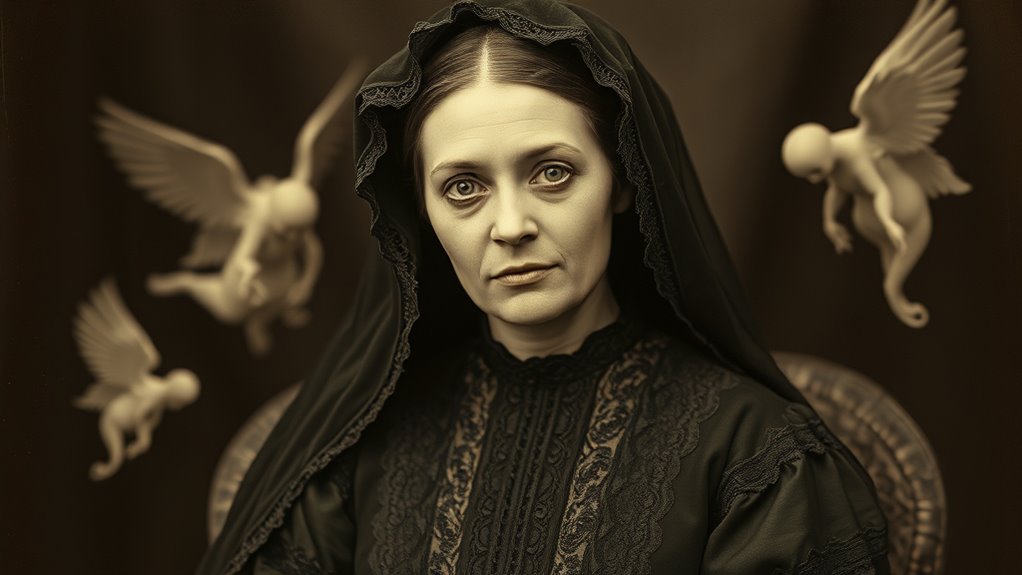
Post-mortem photography played a essential role in helping you preserve precious memories of loved ones. It often served as a ritual of farewell, allowing you to create a lasting image when saying goodbye was difficult. These photographs became cherished keepsakes, supporting the grieving process in a deeply personal way. Additionally, the symbolism in these images often reflected mourning traditions, providing comfort and a sense of connection during a challenging time.
Preserving Precious Memories
Victorian mourning photography served as a powerful way to preserve cherished memories of loved ones. It allowed you to keep a tangible connection to those who had passed away. These images often captured the deceased in lifelike poses, offering comfort during grief. By creating lasting mementos, families could remember loved ones beyond their funeral days. The photographs served as symbols of love, loss, and remembrance, helping you cope with mourning. They also reflected societal values about death and mourning rituals. To deepen your understanding, consider that mourning photos:
- Provided a sense of closeness when physical presence was impossible
- Were treasured keepsakes passed through generations
- Offered reassurance and closure during difficult times
- Featured glycolic acid products that help improve skin texture and radiance, much like how these photographs preserved the smooth, youthful appearance of loved ones.
Rituals of Farewell
Have you ever wondered how families used photography to say their final goodbyes? Post-mortem photography became a poignant ritual during the Victorian era, allowing loved ones to preserve a last image of the deceased. You might hold a family portrait where the departed appears peacefully alive, often posed to look natural or serene. These photographs served as tangible mementos, offering comfort amid grief and helping families cope with loss. They also played a vital role in memorializing the deceased, especially when other means of remembrance were limited. By capturing these moments, you participate in a cultural practice that transforms mourning into a visual tribute. Post-mortem images became both a farewell and a lasting symbol of love, bridging life and death in a deeply personal way. Understanding production quantity variance can shed light on how these practices were influenced by social and economic factors of the time.
Identifying Victorian Mourning Jewelry: The Collector's Guide to Authentic Symbols, Materials, and the Secret Language of 19th-Century Memorial Art
As an affiliate, we earn on qualifying purchases.
As an affiliate, we earn on qualifying purchases.
Incorporating Ghost Imagery: Visual Cues to the Spirit World
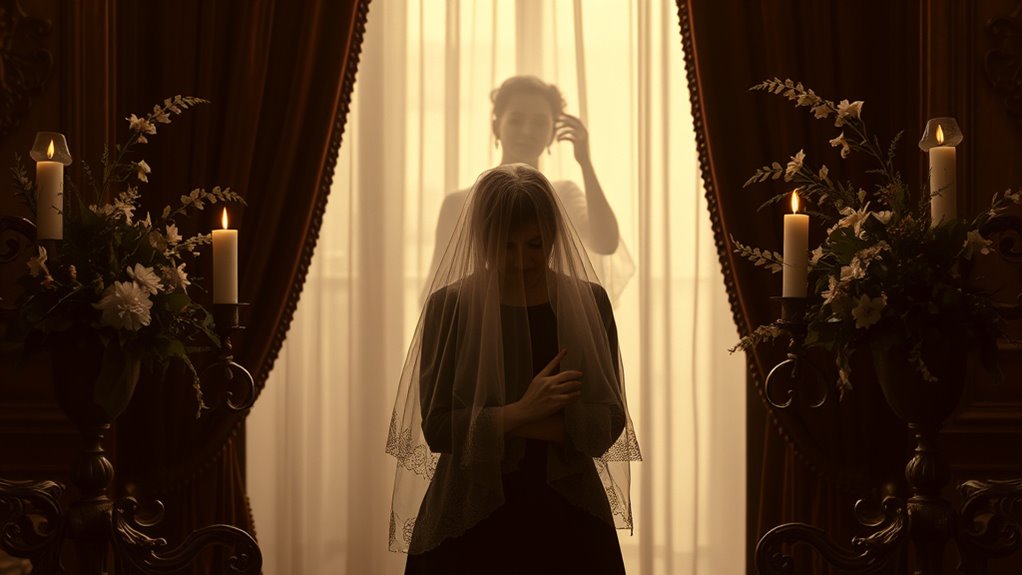
Ghost imagery in mourning photography often serves as a subtle invitation for viewers to sense the presence of spirits beyond the physical domain. You might notice faint outlines, blurry shapes, or double exposures that suggest the departed’s lingering presence. These visual cues act as silent messages, hinting at an unseen world intertwined with the living. Such imagery encourages viewers to interpret these symbols as spiritual signs or comforting reminders of the departed’s continued existence. It’s not about clear depictions but about evoking an emotional response.
- Faint or semi-transparent figures blending with the subject
- Double exposures creating ghostly overlays
- Light anomalies or unexplained shadows that hint at spirits
- Vacuums with gentle suction and soft bristles can be useful in delicately cleaning surfaces and preserving the subtlety of ghostly imagery.
Techniques Used to Create Ethereal and Ghostly Effects
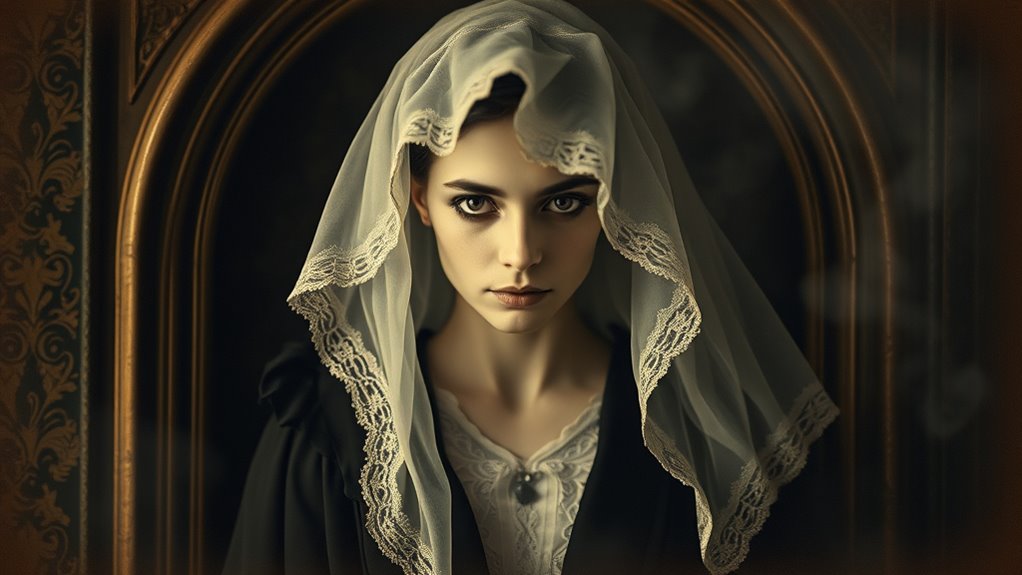
You can achieve ghostly effects in Victorian mourning photography through techniques like soft focus, which blurs the lines between subject and background. Double exposure adds layers, making figures appear ethereal or otherworldly. Additionally, using props to obscure parts of the image enhances the mysterious, spectral quality of the photograph. Employing headphone jacks such as 3.5mm or Bluetooth can facilitate the playback of ambient sounds that complement the haunting atmosphere.
Soft Focus Techniques
Soft focus techniques played a crucial role in Victorian mourning photography by blurring the image’s details to produce an ethereal, ghostly atmosphere. This approach softens facial features and backgrounds, creating a dreamlike quality that evokes mourning and mystery. You can achieve this effect through various methods, such as using special lenses, diffusing filters, or slightly defocusing the camera during exposure. These techniques help to conceal imperfections and emphasize the spiritual over the physical. By gently obscuring sharp details, you create a sense of depth and ambiguity, fostering a connection to the beyond. Additionally, the use of soft focus can evoke spiritual symbolism, reinforcing the themes of mortality and the afterlife present in mourning photography.
Double Exposure Effects
Double exposure effects in Victorian mourning photography build upon the soft focus techniques by layering images to create haunting, otherworldly visuals. You combine two photographs—often a portrait with a symbolic element—to evoke an ethereal presence or ghostly apparition. This technique emphasizes the connection between the living and the dead, heightening emotional impact. By carefully aligning images, you can produce ghostlike overlays that seem to float or fade, intensifying the mourning atmosphere. Additionally, these images often reflect cultural narratives that promote the remembrance of loved ones and symbolize the spiritual connection beyond physical death.
| Technique | Effect |
|---|---|
| Layering portraits | Creates a spectral, dreamlike quality |
| Superimposing symbols | Enhances symbolism and emotional depth |
| Blurring boundaries | Suggests the thin veil between life and afterlife |
| Varying opacity | Adds ghostly translucence |
| Combining with soft focus | Amplifies ethereal, haunting visuals |
Use of Obscuring Props
Obscuring props played a pivotal role in Victorian mourning photography by deliberately partially hiding subjects or elements within the frame to evoke mystery and ghostliness. These props create an ethereal atmosphere, suggesting unseen forces or spirits. You might see veils, draped fabrics, or sheer curtains used to obscure faces or bodies, adding an element of mystery. The use of these props emphasizes the idea that death and the afterlife remain elusive and unknowable. They also help focus attention on symbolic details, like mourning jewelry or religious icons. By obscuring parts of the scene, photographers evoke a sense of haunting presence and spiritual ambiguity. This technique effectively enhances the ghostly, otherworldly tone characteristic of mourning photographs.
- Creates a sense of mystery and intrigue
- Enhances spiritual and ghostly symbolism
- Draws focus to symbolic details
The Cultural Significance of Spirit Photography During the 19th Century
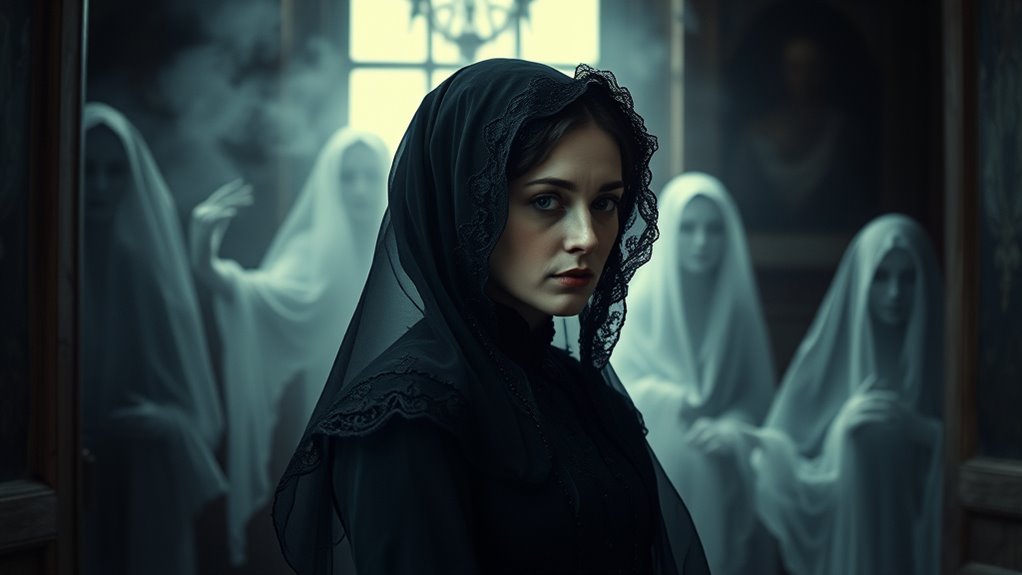
During the 19th century, spirit photography became a powerful cultural phenomenon that reflected society’s deep desire to connect with loved ones who had passed away. It offered a tangible link, capturing images said to show spirits or ghosts beside the living. This fascination symbolized a need for comfort and the belief in an ongoing spiritual existence. People believed these photographs validated life after death, providing solace amid grief. The images often featured blurred or transparent figures, evoking the ethereal presence of spirits.
| Spirit Photography | Cultural Impact | Public Reaction |
|---|---|---|
| Mystical images | Comfort for mourners | Skepticism and doubt |
| Ghostly apparitions | Reinforced spiritual beliefs | Scientific scrutiny |
| Emotional connection | Cultural acceptance | Media sensationalism |
Notable Examples of Mourning Images and Their Hidden Meanings
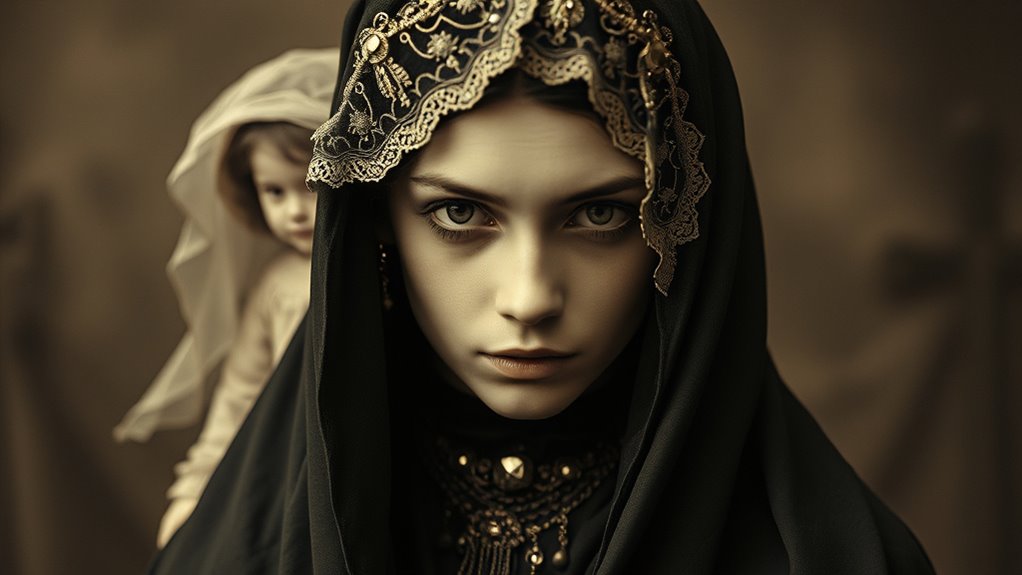
Have you ever wondered what hidden messages Victorian mourning images might carry? Many of these photographs contain subtle symbols conveying grief, hope, or spiritual connection. For example, a portrait might include a lone white flower signifying purity or innocence, or a blurred background suggesting the presence of a spirit. Some images feature objects like crutches or broken jewelry to symbolize loss or mourning. These symbols weren’t always obvious but carried deep emotional meaning for viewers. You can often find:
- Hidden symbols representing the departed’s virtues or status
- Use of light and shadow to evoke spiritual presence
- Incorporation of specific motifs, like angels or crosses, to emphasize divine protection
These elements reveal layers of meaning beyond the obvious, reflecting Victorian society’s complex attitudes toward death and the afterlife.
The Psychological Impact of Ghost Symbolism on Mourners
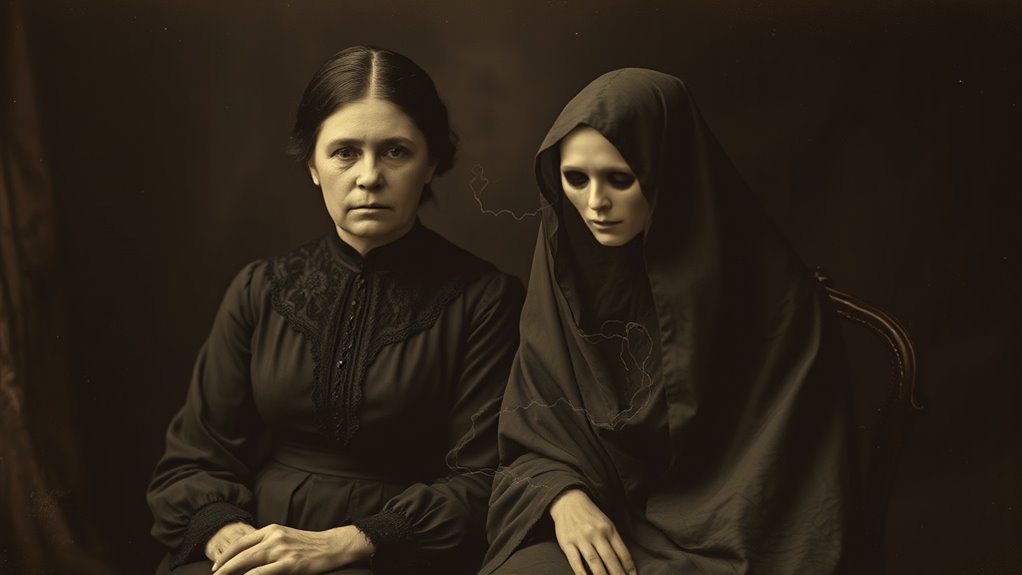
Victorian mourning photographs often incorporate ghost symbolism to comfort mourners and affirm the presence of loved ones beyond death. When you view these images, you might feel a sense of reassurance, as the ghostly elements serve as visual reminders that your loved ones are still with you in spirit. This symbolism helps reduce feelings of isolation and grief by creating a comforting connection to the deceased. It can also foster hope, encouraging you to believe in an ongoing existence beyond physical demise. The ghost motifs subtly suggest that death isn’t the end, easing your emotional pain and helping you cope with loss. By reinforcing the idea of continued presence, these images offer psychological solace during one of life’s most difficult times.
Preservation and Modern Interest in Victorian Mourning Photographs
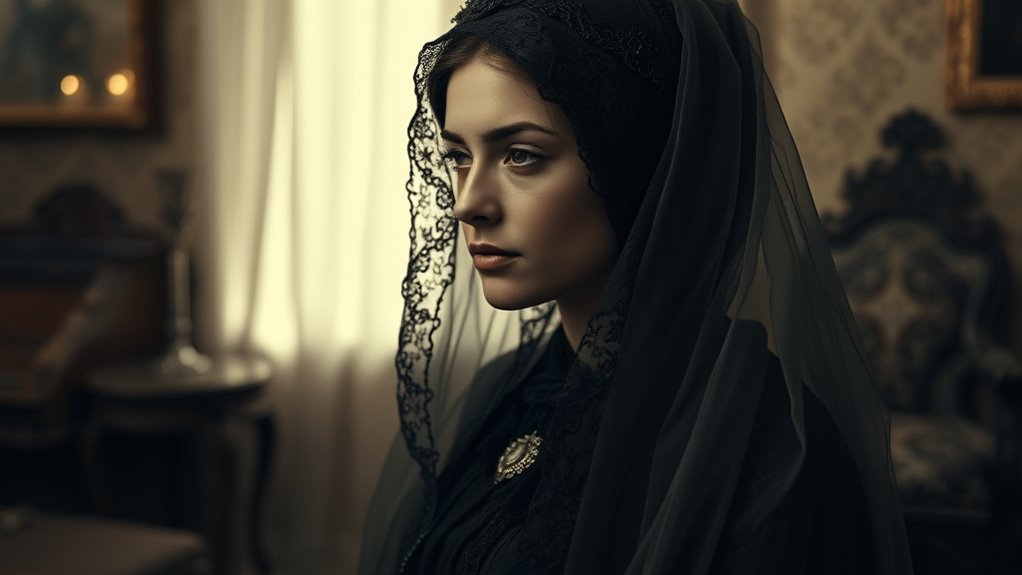
Today, preservation efforts and growing modern interest have revitalized appreciation for Victorian mourning photographs, ensuring these poignant images are not lost to time. Museums, archives, and collectors are actively conserving these photographs, recognizing their historical and emotional significance. The renewed curiosity is driven by a desire to understand Victorian mourning customs and the cultural importance of these images. You’ll find that digital archives and exhibitions make these photographs accessible to a broader audience, fostering appreciation and study. This interest also sparks conversations about the ethics and symbolism behind mourning photography. To deepen your understanding, consider these key points:
Revitalized interest in Victorian mourning photographs fosters preservation and broader appreciation of their emotional and historical significance.
- Preservation techniques protect fragile photographs from deterioration
- Modern audiences explore the cultural context behind mourning imagery
- Collectors and historians endeavor to balance respect with scholarly interest
The Legacy of Mourning Imagery in Contemporary Visual Culture
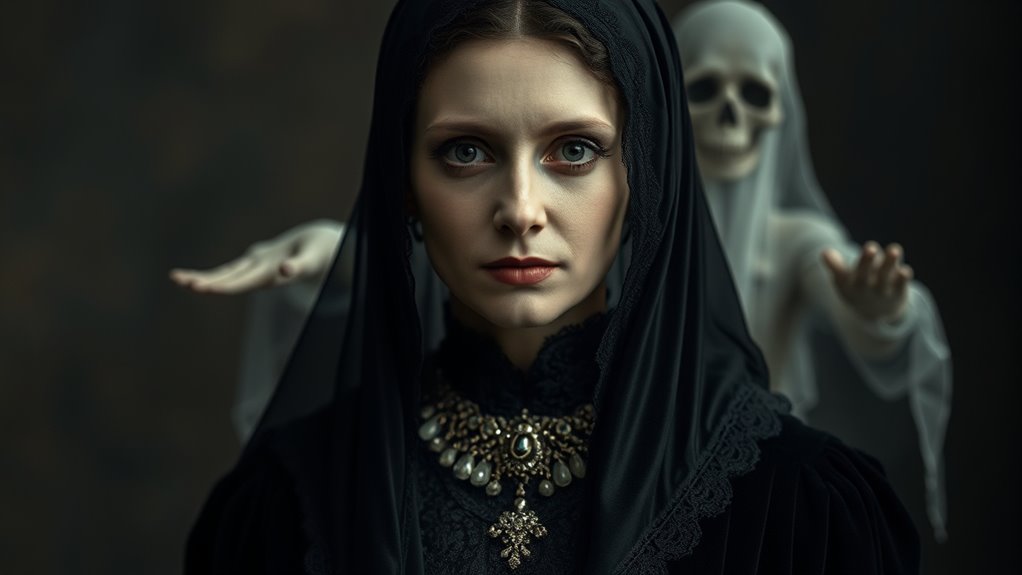
Mourning imagery from the Victorian era continues to influence contemporary visual culture, shaping how you process grief and remembrance. Modern memorials, photographs, and digital tributes often echo Victorian symbols like mourning attire, ghostly motifs, and somber tones. Artists and designers incorporate these elements to evoke a sense of reverence and emotional depth, connecting past and present mourning practices. You might notice ghostly imagery or symbolic objects in contemporary art that pay homage to Victorian themes, emphasizing the enduring power of mourning symbolism. This legacy helps you navigate loss by providing familiar visual cues that evoke collective memory and personal reflection. Ultimately, Victorian mourning imagery remains a essential part of today’s cultural landscape, reminding you of the enduring human need to remember and honor those we’ve lost.
Frequently Asked Questions
How Did Victorian Mourning Photography Influence Modern Mourning Rituals?
Victorian mourning photography influences your modern mourning rituals by encouraging you to preserve memories and honor loved ones creatively. It introduced the idea of capturing grief through images, making mourning more personal and visual. Today, you might still incorporate photographs, memorial art, or digital tributes to remember those who have passed. This legacy fosters a deeper emotional connection and helps you process loss in meaningful ways.
What Are the Common Symbols Used to Depict Spirits in Victorian Photographs?
You’ll notice common symbols like faint, translucent figures and blurred images that suggest spirits. Sometimes, photographers include orbs, halos, or glowing auras around the subject to imply a presence beyond the physical. Other times, they use veiled or shadowy shapes to evoke mystery and the supernatural. These symbols serve to hint at spirits’ existence, creating an eerie, spiritual connection that viewers interpret as ghostly or otherworldly.
Were There Any Legal or Ethical Concerns Surrounding Post-Mortem Photography?
You might wonder if post-mortem photography raised legal or ethical issues. For example, in 19th-century England, some viewed photographing the deceased without family consent as intrusive or disrespectful. Laws weren’t strict, but public opinion often frowned upon it, raising ethical questions about consent and dignity. Today, such practices are viewed more critically, emphasizing sensitivity and respect for the deceased and their loved ones.
How Did Class and Social Status Affect Mourning Portrait Styles?
Your social class greatly influenced mourning portrait styles. Wealthier individuals often commissioned elaborate photographs with luxurious clothing, jewelry, and elaborate settings to emphasize status and respectability. In contrast, lower classes typically had simpler portraits, reflecting limited resources. You’d notice that the more affluent used photography to showcase their social standing, while others focused on modest memorials. These differences highlight how class shaped mourning practices and how people visually expressed grief and remembrance.
Are There Contemporary Artists Who Incorporate Victorian Ghost Symbolism Today?
Yes, contemporary artists incorporate Victorian ghost symbolism to evoke mystery and nostalgia. You might notice this in surreal photography or mixed media artworks, where ethereal figures or ghostly apparitions appear amidst modern scenes. These artists blend the past and present, using ghost symbolism to explore memory, loss, and spirituality. Their work invites you to reflect on unseen connections, blending haunting beauty with contemporary expression, much like Victorian mourning images once did.
Conclusion
You now see how Victorian mourning photography masterfully merges memory and mystery, manifesting mourning’s somber symbolism through ghostly glances and ghostly gestures. By blending bereavement with beauty, these images invite introspection and inspire intrigue. Remember, this haunting heritage highlights humanity’s heartfelt hope to hold loved ones close, even beyond the veil. In embracing these eerie images, you uncover an enduring, ethereal echo of emotion etched into history’s haunting horizon.