In the 1800s, ghost photography emerged through innovative techniques like double exposures, long exposures, and chemical manipulations, fueled by society’s fascination with spiritualism. Photographers used new processes like albumen prints and collodion plates to create eerie images that seemed to capture spirits or apparitions. Public interest soared, but skepticism grew as many images were proven to be staged or altered. To uncover the secrets behind these haunting images, keep exploring this fascinating chapter in photographic history.
Key Takeaways
- Innovations like the calotype and collodion process enabled quick, detailed images, fostering the creation of ghost photographs.
- William H. Mumler popularized spirit photography by claiming to capture spirits alongside living subjects.
- Techniques such as double exposure, long exposure, and light artifacts contributed to eerie, ghostly images.
- The rise of spiritualist movements promoted the belief that photographs could reveal spirits of the deceased.
- Public fascination and media coverage fueled widespread interest and debates over the authenticity of ghost images.

4K UHD Digital Camera, 64MP Autofocus Camera with 32GB SD Card, Mini Vintage Digital Camera with 2.8" Large Screen and 18X Digital Zoom, Cameras for Photography, Suitable for Kids, Adults, Beginners
🎥Capture UHD Video & 64MP Photo: This compact digital camera features newest CMOS sensor, supports 4K UHD video…
As an affiliate, we earn on qualifying purchases.
As an affiliate, we earn on qualifying purchases.
Early Innovations in Photographic Techniques

In the early 19th century, inventors and scientists made groundbreaking advances that transformed the way people captured images. You see, they experimented with various chemical processes and equipment to improve image quality and reduce exposure times. The development of camera obscuras laid the groundwork, while innovations like the heliograph and calotype introduced new ways to create permanent images. These early techniques involved coating surfaces with light-sensitive chemicals, allowing images to form when exposed to light. As technology progressed, improvements in emulsions and chemical stability made capturing clearer, more detailed photographs possible. Enhancing color fidelity and image sharpness became possible through these chemical advancements, which set the stage for more sophisticated methods, enabling photographers to document moments more accurately and efficiently. This progress was vital in paving the way for the emergence of ghost photography later in the century.

ShowMaven Photography Lighting Kit, Softbox Lighting Kit with Photo Backdrop for Product Photography, Portrait photography, Video Shooting Photography
This photo shoot lights and background kit includes almost everything you need. Photo studio photography equipment includes: 1…
As an affiliate, we earn on qualifying purchases.
As an affiliate, we earn on qualifying purchases.
The Role of Albumen Prints and Collodion Processes
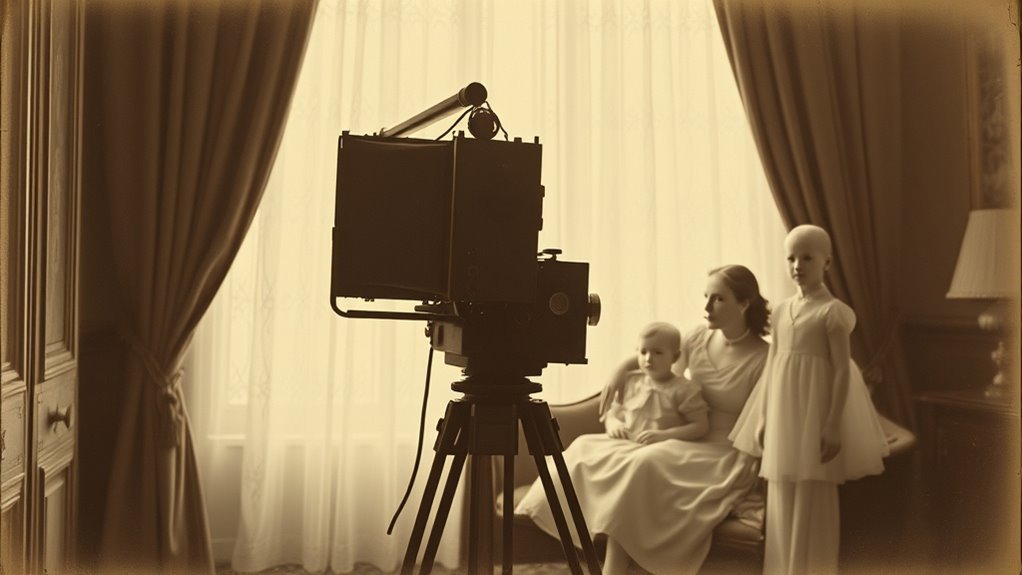
You notice how albumen prints give photographs a rich, glossy finish that enhances ghostly figures and mysterious scenes. The collodion process allows for quick image capture, making spontaneous shots of spirits or apparitions possible. Together, these techniques shape the eerie and mesmerizing look of 1800s ghost photography. Additionally, the use of low heat settings during the process helped prevent damage to the delicate materials, ensuring the longevity of these haunting images.
Albumen’s Visual Impact
Albumen prints and collodion processes revolutionized 19th-century photography by producing images with remarkable clarity and detail. Their glossy finish enhances the visual impact, making images appear vivid and lifelike. The albumen coating, derived from egg whites, creates a smooth, reflective surface that captures fine nuances in tone and texture. This quality allows ghostly figures and ethereal scenes to emerge with haunting clarity, heightening their mysterious effects. The sharpness and contrast achieved with these methods draw viewers into the image, emphasizing ghostly translucence and spectral presence. Because of their visual richness, albumen prints became the preferred medium for capturing ghost stories and supernatural phenomena, giving these images a haunting, almost surreal quality that leaves a lasting impression. Additionally, the use of vintage techniques like albumen and collodion contributed to the distinctive aesthetic that enhances the eerie and spectral qualities of early ghost photography.
Collodion’s Rapid Process
The advent of the collodion process transformed 19th-century photography by enabling much faster image creation compared to traditional albumen prints. Instead of lengthy exposures and complex procedures, you could prepare a glass plate, expose it in the camera, and develop it quickly—often within minutes. This rapid process allowed you to capture images with greater detail and clarity, making photography more practical and accessible. Collodion plates were sensitive enough to record ghostly figures and fleeting moments, fueling the fascination with capturing spirits. The speed and precision of this method revolutionized the craft, opening new possibilities for ghost photography and enabling photographers to experiment with supernatural themes. It marked a significant shift toward modern photographic techniques and the spooky allure of capturing the unseen.
albumen print photography supplies
As an affiliate, we earn on qualifying purchases.
As an affiliate, we earn on qualifying purchases.
Pioneering Photographers and Their Notable Works

You’ll want to explore the early photographers whose work shaped ghost photography, like William H. Mumler and his famous spirit images. Their photographs captured not only faces but also the imagination of the viewers, making them iconic in the genre. These pioneers set the stage for countless others to experiment with capturing the supernatural on film. The use of colorful presentation and innovative techniques helped to evoke mystery and intrigue, further fueling the fascination with ghostly apparitions.
Notable Early Photographers
Some of the earliest pioneers in ghost photography include figures like William H. Mumler. You’ll find that Mumler’s work gained fame for creating spirit photographs that appeared to show ghosts alongside living subjects. His most notable piece features a woman with a faint, ethereal figure behind her, capturing public fascination and skepticism. Another key figure is William H. Mumler’s contemporary, Frederick Hudson, who experimented with double exposure techniques to produce ghostly images. These photographers pushed the boundaries of early photographic technology, often claiming their images revealed spirits or supernatural presences. Their work sparked both intrigue and controversy, making them some of the most notable early photographers in the domain of ghost photography. Their innovations laid the groundwork for future explorations into the supernatural through images, including aesthetic wall organization and other stylistic elements that could enhance the presentation of such photographs.
Iconic Ghost Images
Among the most iconic ghost images of the 1800s are those created by pioneering photographers like William H. Mumler. His most famous work features a mysterious figure beside a woman’s portrait, believed to be her spirit. Mumler’s images captivated audiences and sparked debates about the supernatural. Another notable photographer, William H. Crowder, captured eerie, semi-transparent figures in his portraits, often believed to be spirits. These images weren’t just artistic experiments; they aimed to prove the existence of ghosts. Their work became iconic symbols of the era’s fascination with the afterlife. As you examine these photographs, you can’t help but wonder whether they depict genuine spirits or clever manipulations. Advances in early photographic techniques played a significant role in enabling such ghostly images. Regardless, their influence endures, shaping the visual language of ghostly apparitions.

Retro Photo: An Obsession: A Personal Selection of Vintage Cameras and the Photographs They Take
As an affiliate, we earn on qualifying purchases.
As an affiliate, we earn on qualifying purchases.
Techniques That Led to Apparitions and Ghostly Images
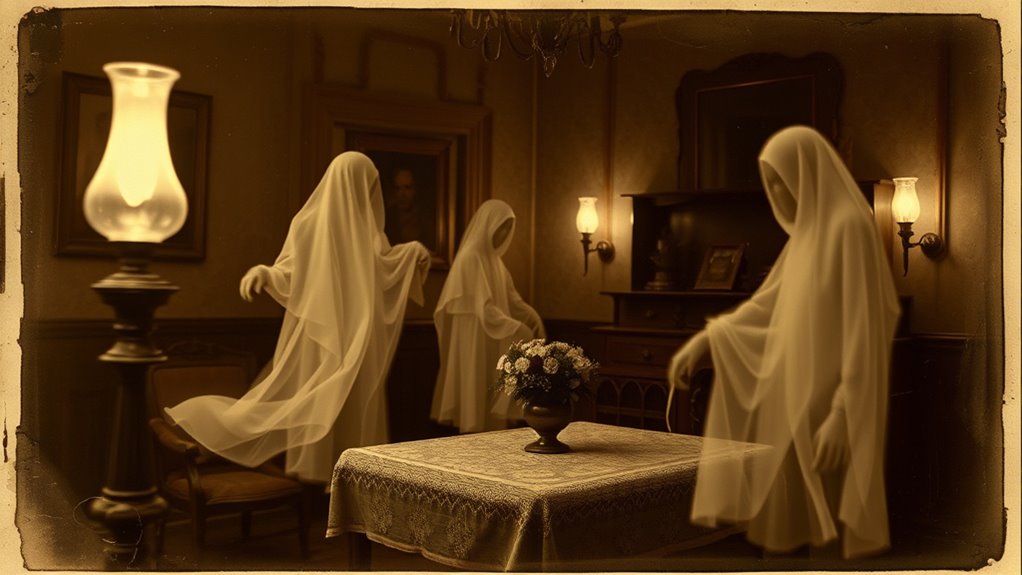
In the 1800s, photographers employed a range of techniques that inadvertently produced ghostly images, fueling the era’s fascination with the supernatural. Long exposure times often captured fleeting movements, creating semi-transparent figures. Double exposures layered multiple images, resulting in ghostly apparitions. Light leaks and lens flare added mysterious shapes, while chemical imperfections produced eerie anomalies. These methods combined to produce haunting visuals that seemed to show spirits or phantoms. To better understand, see the table below: Technique effects
The Cultural Fascination With Spirit Photography
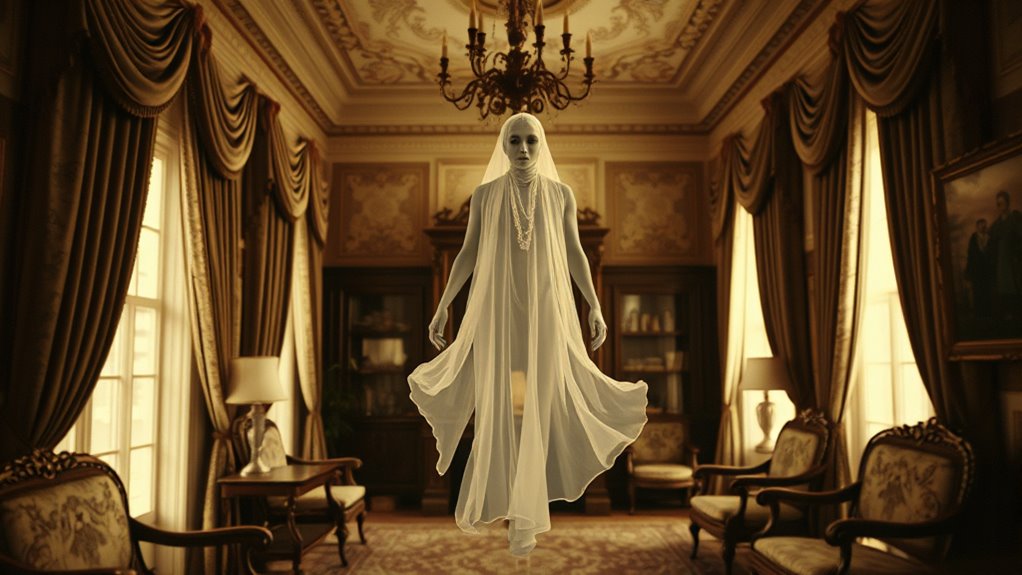
The 1800s saw a surge of public interest in spirit photography as people sought tangible evidence of the supernatural. This fascination stemmed from a desire to connect with loved ones who had passed and to validate spiritual beliefs. You might notice that this curiosity was driven by three main factors:
- A widespread belief in life after death.
- The rise of spiritualist movements promoting communication with spirits.
- The desire for reassurance amid societal upheaval and loss.
People flocked to studios, be enthusiastic to see ghosts captured on film, believing these images proved spirits’ existence. Spirit photography became a cultural phenomenon, blending skepticism and hope, fueling debates about reality and the unseen world.
Notable Cases and Controversies of the Era

During the height of spirit photography’s popularity, several notable cases and controversies challenged its credibility and sparked widespread debate. One famous incident involved William H. Mumler, who claimed to photograph spirits alongside the living. When skeptics exposed his methods, many questioned whether his images were staged or manipulated. Another controversy centered on the use of double exposure techniques, which some believed to be the secret behind the ghostly images. Critics argued that spirit photographs were mere tricks, exploiting people’s grief and belief in the supernatural. These cases fueled ongoing skepticism, prompting investigations and debates among scientists, photographers, and spiritualists alike. The controversies ultimately highlighted the thin line between genuine belief and deception in the era’s burgeoning fascination with spirits. Additionally, the advent of specialized photographic techniques in the 1800s played a significant role in both the creation and debunking of ghost images.
The Influence of Spiritualism on Photographic Practices
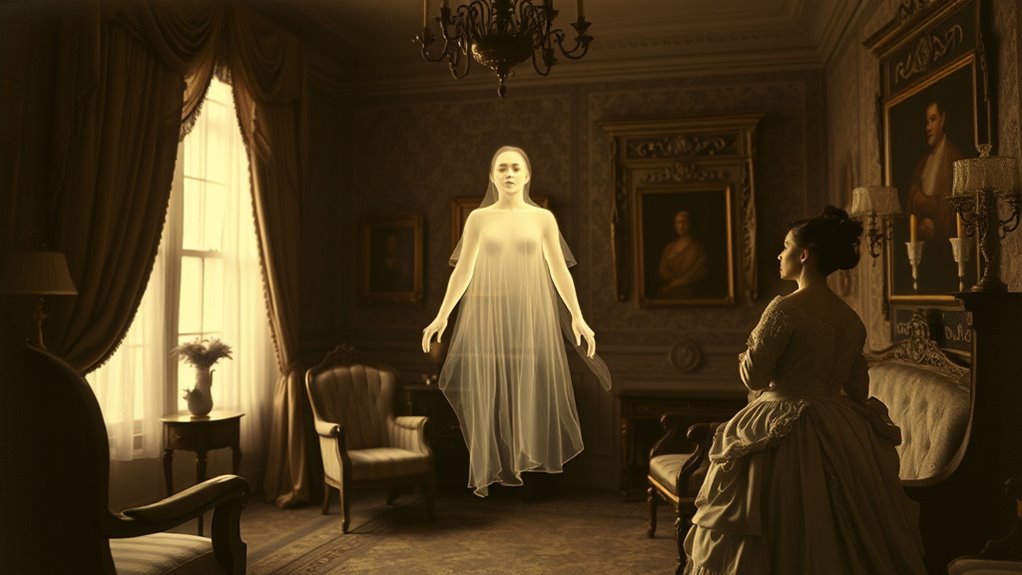
Spiritualism’s rise in the 1800s profoundly shaped photographic practices, encouraging both innovation and skepticism. You see, photographers experimented with new techniques to capture spirits, believing their images could serve as evidence. This influence led to three key developments:
- Techniques like double exposure and long exposure times to create ghostly apparitions.
- Portraits of supposed spirits, blending human features with ethereal effects.
- Debates about authenticity, pushing photographers to prove or disprove their methods.
These practices reflect a desire to connect with the spiritual sphere, fueling both creativity and controversy. As a result, spiritualism didn’t just inspire ghost images; it challenged the boundaries of photography and belief, shaping the era’s visual culture.
Public Reception and Media Portrayal of Spirit Photographs

Public fascination with spirit photographs grew rapidly as images claiming to show ghosts circulated widely in newspapers and magazines. Many viewers were captivated, believing these photographs offered proof of an afterlife. Media often portrayed spirit images as mysterious and convincing, fueling public curiosity and awe. Some outlets celebrated these photographs as scientific discoveries, while others sensationalized them as supernatural revelations. The widespread coverage made spirit photography a cultural phenomenon, sparking debates about life after death and the boundaries of science. People from all walks of life flocked to see these images, enthusiastic to glimpse proof of spirits. This media portrayal helped embed spirit photography into popular culture, shaping perceptions and fueling both belief and skepticism simultaneously.
Debunking and Skepticism Surrounding Ghost Images

Many ghost photographs from the 1800s have been questioned because of common photo artifacts, like double exposures or light reflections. Some images turned out to be hoaxes or fabrications, intentionally created to deceive viewers. Recognizing these tricks helps you see why skepticism around ghost images persists. Additionally, the limitations of early photographic technology often led to artifacts in images, which can be mistaken for supernatural phenomena.
Common Photo Artifacts
Ghost images in old photographs often result from common artifacts rather than paranormal activity. These artifacts can create eerie illusions that seem like ghostly figures. To understand these, consider these typical causes:
- Double Exposure: When two images overlap, creating ghostly duplicates of subjects.
- Lens Flare: Light reflections inside the camera cause bright spots or hazy shapes that resemble apparitions.
- Dust and Scratches: Debris on the lens or negatives produce spots or streaks mistaken for ghostly figures.
Hoaxes and Fabrications
Although some ghost images in old photographs appear convincing, many are actually deliberate hoaxes or simple fabrications. Photographers and enthusiasts often used tricks like double exposure, cutouts, or painted overlays to create spooky effects. Some images were staged, with people dressed as spirits or using props to mimic ghostly figures. Skeptics have long debunked many of these photos, exposing their false origins through analysis or comparison with other images. The desire to see spirits or the supernatural fueled these fabrications, making it easy to believe in their authenticity at the time. Today, modern technology allows us to identify many of these tricks, helping us separate genuine mystery from clever deception. The history of ghost photography is filled with both real intrigue and creative trickery, and understanding historical context enhances our appreciation of these images.
Legacy and Impact on Modern Paranormal Photography

The legacy of 1800s ghost photography continues to shape modern paranormal imagery by inspiring both enthusiasts and skeptics alike. Your fascination with ghost photos stems from the pioneering efforts of early photographers who popularized the idea of capturing spirits. Today, this influence manifests in various ways:
The roots of ghost photography still influence modern images, inspiring fascination and skepticism alike.
- Techniques: Modern images often mimic 19th-century styles, using double exposures or digital manipulation to evoke authenticity.
- Cultural Impact: Popular media, including movies and TV shows, draw on the visual language established by early ghost photos.
- Skepticism and Debate: The debate over authenticity persists, fueled by the historical context of hoaxes and the desire to prove or disprove paranormal claims.
This history continues to inspire curiosity and skepticism, shaping how we view ghostly phenomena today.
Frequently Asked Questions
How Did Ghost Photography Influence Spiritual Beliefs During the 1800S?
Ghost photography deepened people’s beliefs in spirits and the afterlife during the 1800s. You might have been more convinced that spirits could be captured on camera, reinforcing the idea that the supernatural exists. This new visual evidence made spiritual encounters feel more real and tangible, encouraging many to trust in the existence of ghosts. As a result, ghost photography fueled curiosity, fear, and fascination with life beyond death.
Were Any Legal Actions Taken Against Fraudulent Spirit Photographers?
You’ll find that some fraudulent spirit photographers faced legal action, but enforcement was inconsistent. Authorities often struggled to distinguish genuine phenomena from trickery, and many con artists escaped punishment, like shadows slipping through your fingers. While laws aimed to curb deception, the allure of ghost images kept many entranced, making it difficult to hold all fraudsters accountable. Still, these legal efforts marked the beginning of attempts to regulate such paranormal fakery.
Did Ghost Photography Impact Religious Institutions or Practices?
Ghost photography challenged traditional religious beliefs by suggesting spirits could be captured on film, which some viewed as unsettling or even heretical. You might notice that it sparked skepticism among clergy and believers alike, prompting debates about the soul and afterlife. While some saw it as proof of spirits, others dismissed it as trickery, leading to a shift in how people thought about spirituality and the supernatural in relation to their faith.
How Did Technological Limitations Contribute to Ghost Image Creation?
You notice that technological limitations, like slow exposure times and primitive camera equipment, made ghost images more likely to appear. These constraints meant that any movement or imperfections in the process could create faint, blurry figures on the photograph. You see how these technical challenges unintentionally fostered belief in spirits, as people interpreted the unclear, ghostly images as evidence of supernatural presence, fueling curiosity and skepticism alike.
Are There Surviving Original Ghost Photographs From That Era?
Yes, you can find surviving original ghost photographs from that era, serving as haunting relics of the past. These images act as windows into a mysterious world, symbolizing humanity’s desire to connect with the afterlife. When you view them, you’re peering through a foggy veil of history, where spirits linger in the shadows. Their existence reminds you of our enduring fascination with life beyond what’s visible.
Conclusion
As you explore the birth of ghost photography, remember it’s like peering through a foggy window—what you see may be real or just an illusion crafted by clever techniques. These early pioneers, driven by curiosity and belief, blurred the line between science and spirit. Their images, like fleeting shadows, continue to haunt our imagination, reminding you that sometimes, what’s unseen holds the most power—challenging you to question what’s real in every ghostly image.