Before they decorated lawns, gargoyle statues served as fierce guardians on medieval cathedrals, symbolizing protection and spiritual vigilance. You’d see them facing outward, embodying chaos and evil with grotesque features to scare away malicious forces. They represented the ongoing battle between good and evil and acted as visual barriers to spiritual harm. If you keep exploring, you’ll discover how their true purpose goes far beyond their haunting appearances.
Key Takeaways
- Served as spiritual guardians protecting sacred spaces from evil spirits and malicious forces.
- Embodied chaos and evil through grotesque features to ward off spiritual harm.
- Functioned as visual barriers, symbolizing the ongoing battle between good and evil.
- Reinforced the church’s role as a spiritual fortress and divine protector.
- Represented divine protection, acting as vigilant sentinels facing outward.
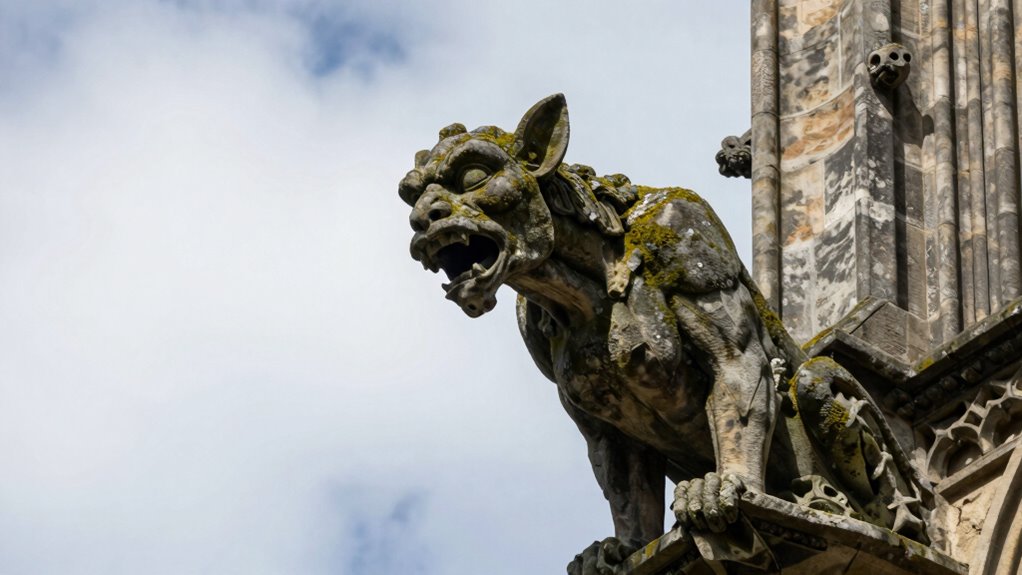
Gargoyle statues, often seen perched atop historic cathedrals and castles, carry a rich symbolism that far exceeds their spooky appearance. In medieval architecture, these carved stone figures served more than just decorative purposes; they were integral to the spiritual and practical design of religious structures. You might notice how the gargoyles seem to lurk in shadowy corners or grimly face outward, and that’s no accident. They were crafted to act as spiritual guardians, warding off evil spirits and protecting the sacred space within. Their intimidating forms served as a visual reminder of the ongoing battle between good and evil, reinforcing the church’s role as a spiritual fortress.
Long before they became lawn ornaments or garden decor, gargoyles had a serious purpose rooted in medieval belief systems. You can think of them as symbols of divine protection, designed to scare away malicious forces that might threaten the faith or the community. Their grotesque features, often exaggerated and fearsome, weren’t just meant to frighten—these figures embodied chaos and evil, serving as a visual barrier to spiritual harm. When you look up at a cathedral’s roofline, you see how these figures are strategically placed to serve as vigilant sentinels, watching over those inside. Their exaggerated expressions and monstrous shapes helped communicate the idea that evil was lurking beyond the sacred walls, and only divine protection could keep it at bay. Moreover, their symbolic significance persisted even as their roles evolved over time, blending spiritual symbolism with artistic expression. Understanding the historical context of these statues can deepen appreciation for their enduring cultural importance. Additionally, modern interpretations often overlook the original purpose that these figures once served within their architectural and spiritual contexts.
As an affiliate, we earn on qualifying purchases.
Frequently Asked Questions
Were Gargoyle Statues Used Solely for Spiritual Protection?
No, gargoyle statues weren’t used solely for spiritual protection. In medieval architectural symbolism, they also served as mythological creature representations, warding off evil spirits and guiding viewers’ focus downward from sacred spaces. These sculptures combined function and symbolism, blending artistic design with spiritual and cultural meanings. As a result, they protected buildings and conveyed stories, making them more than just decorative elements on rooftops.
How Did Ancient Cultures Originate the Concept of Gargoyle Figures?
Ancient cultures originated the concept of gargoyle figures as mythical creatures serving as architectural ornamentation. They believed these figures warded off evil spirits and protected sacred spaces. By combining mythical creatures with functional design, they created striking sculptures that both decorated buildings and symbolized spiritual guardianship. Over time, the role expanded from spiritual protection to also include water drainage, reinforcing their importance in architectural history.
Did Gargoyles Have Any Practical Functions Besides Symbolism?
Sure, gargoyles weren’t just creepy architectural ornamentation for style points. They served a practical purpose too—diverting water away from buildings’ walls and foundations, preventing erosion and damage. Think of them as the medieval rain gutters with attitude. Their artistic symbolism communicated protection and warded off evil spirits, making them both functional and intimidating guardians. So, behind their grotesque faces, they cleverly combined utility with symbolic storytelling.
Were Gargoyles Believed to Ward off Specific Evil Spirits?
Yes, in medieval architecture, people believed gargoyle statues warded off specific evil spirits. You see, these stone figures served as spiritual symbolism, acting as protectors for churches and towns. Their frightening appearances were intended to scare away malevolent forces, safeguarding the community’s spiritual well-being. By serving this purpose, gargoyles blended practicality with their symbolic role, making them both functional guardians and powerful symbols of spiritual defense.
How Did the Design of Gargoyles Evolve Over Different Historical Periods?
You see, the design of gargoyles evolved markedly over different periods, reflecting changes in architectural ornamentation and artistic craftsmanship. During medieval times, they became more intricate and grotesque, serving both functional and decorative purposes on cathedrals. Renaissance artists added more detailed, expressive features, emphasizing artistry. Over time, their designs shifted from purely functional water spouts to complex sculptures, showcasing evolving artistic styles and the growing importance of aesthetic detail in architecture.
As an affiliate, we earn on qualifying purchases.
Conclusion
Now you see, gargoyle statues were never just decorative—they held secrets, warnings, and protection within their stone forms. As you walk past them, remember they once guarded ancient souls and warned of unseen dangers lurking beyond. What if the silent watchmen around you still hold stories untold, waiting for someone brave enough to uncover their true meaning? The mystery lingers, and perhaps, the true power of these stone guardians is still hidden just beneath the surface.
spiritual guardian gargoyle sculpture
As an affiliate, we earn on qualifying purchases.
As an affiliate, we earn on qualifying purchases.
gothic gargoyle outdoor ornament
As an affiliate, we earn on qualifying purchases.
As an affiliate, we earn on qualifying purchases.