
The Fox Sisters’ eerie spirit rappings in the 1840s sparked modern spiritualism, transforming how people believe they can communicate with the dead. Growing up in modest circumstances in New York, they performed public séances with tricks like hidden mechanisms and vocal tricks. Their demonstrations captivated audiences but also faced skepticism and controversy. Their influence led to spiritualist societies and changed religious and scientific debates. To uncover the full story behind their impact, explore more about their fascinating history and ongoing legacy.
Key Takeaways
- The Fox Sisters, from Hydesville, NY, initiated spiritualism in 1848 with their spirit rapping demonstrations.
- They used tricks like hidden mechanisms and signals to simulate spirit communications during séances.
- Their performances gained widespread media attention, sparking public fascination and skepticism alike.
- Their success led to the rapid growth of spiritualist societies and influence across America and beyond.
- The Fox Sisters are credited with founding modern spiritualism, blending folklore, entertainment, and spiritual beliefs.
Early Life and Background of the Fox Sisters
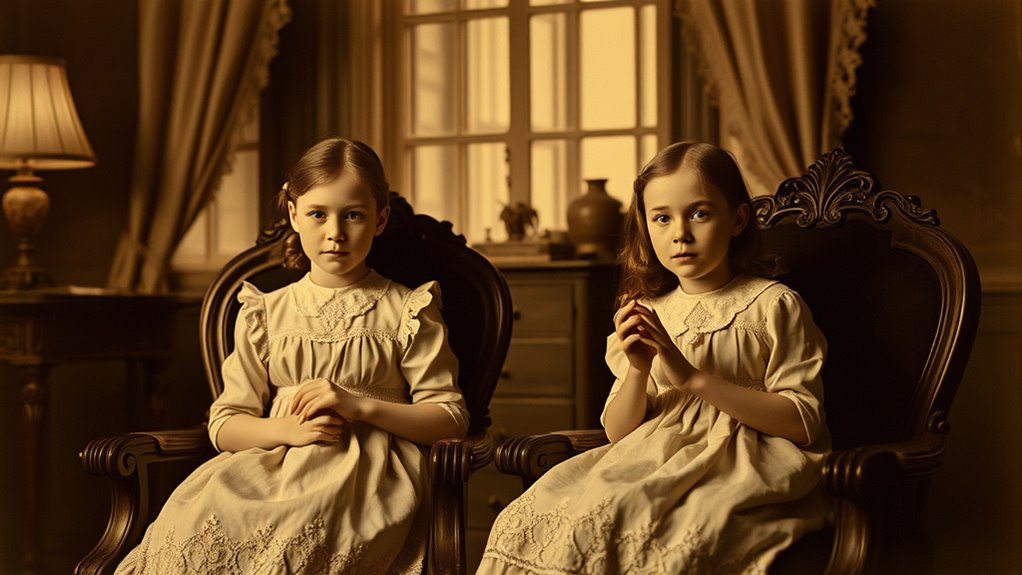
The Fox Sisters, Maggie and Kate, grew up in a modest household in Hydesville, New York, during the early 19th century. You can imagine their simple life, filled with everyday chores and family bonds. Their father worked as a laborer, and their mother struggled to make ends meet. Despite limited resources, the sisters were close and curious about the world around them. From a young age, they showed a keen interest in spirits and the supernatural, often listening to stories and legends. Their environment was humble but rich with local folklore. This background shaped their understanding of the world and set the stage for their later involvement in spiritualism. Growing up in such a setting, they became receptive to the idea that spirits could communicate with the living. Their early exposure to local legends and folklore likely influenced their fascination with the supernatural and their eventual discovery of spirit communication methods.
The First Noticed Rappings and Public Demonstrations
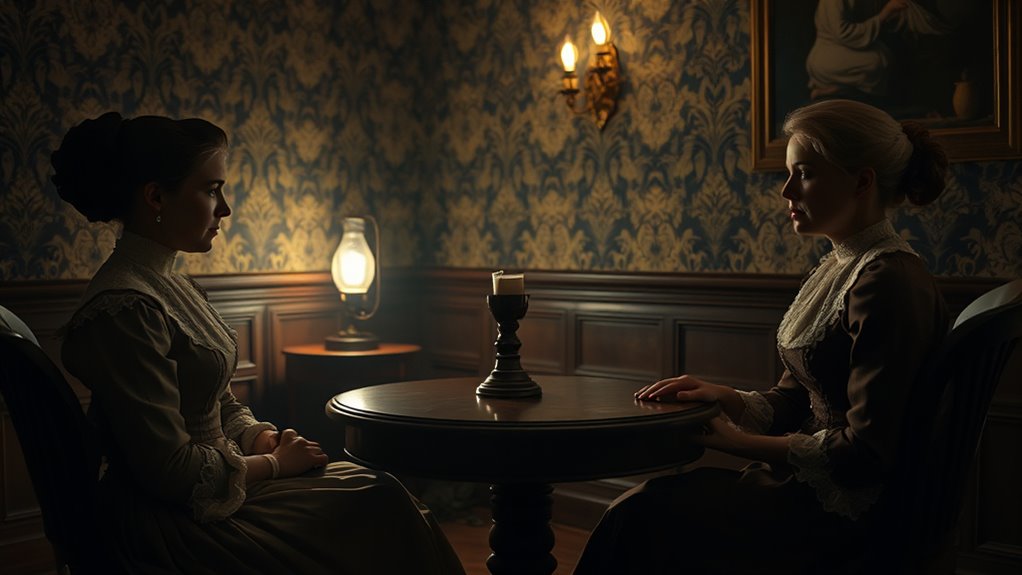
You might find it fascinating how the earliest rapping incidents by the Fox Sisters captured immediate attention. When they performed public demonstrations, the reactions ranged from awe to skepticism, shaping the movement’s future. These moments marked a turning point, making spiritual communication a widespread phenomenon. This surge in interest also opened the door for manipulation tactics to influence believers and skeptics alike.
Initial Rapping Incidents
Have you ever wondered when the mysterious rapping sounds first caught public attention? It all started in 1848, in Hydesville, New York, with the Fox sisters. They claimed to hear knocking noises coming from the walls during family séances. Initially, the sounds seemed unexplainable and intrigued local residents. The sisters demonstrated the raps to neighbors, who were amazed by their accuracy and consistency. These early incidents quickly gained attention, sparking curiosity across the community. Word spread, and soon, others wanted to witness these unusual phenomena firsthand. The sisters’ ability to produce and seemingly control the rapping sounds made headlines, laying the groundwork for what would become modern spiritualism. Their initial incidents marked the start of a nationwide fascination with communicating with spirits through these mysterious noises. The high accuracy and consistency of the raps played a crucial role in convincing skeptics and believers alike of their supposed supernatural origin.
Public Demonstration Impact
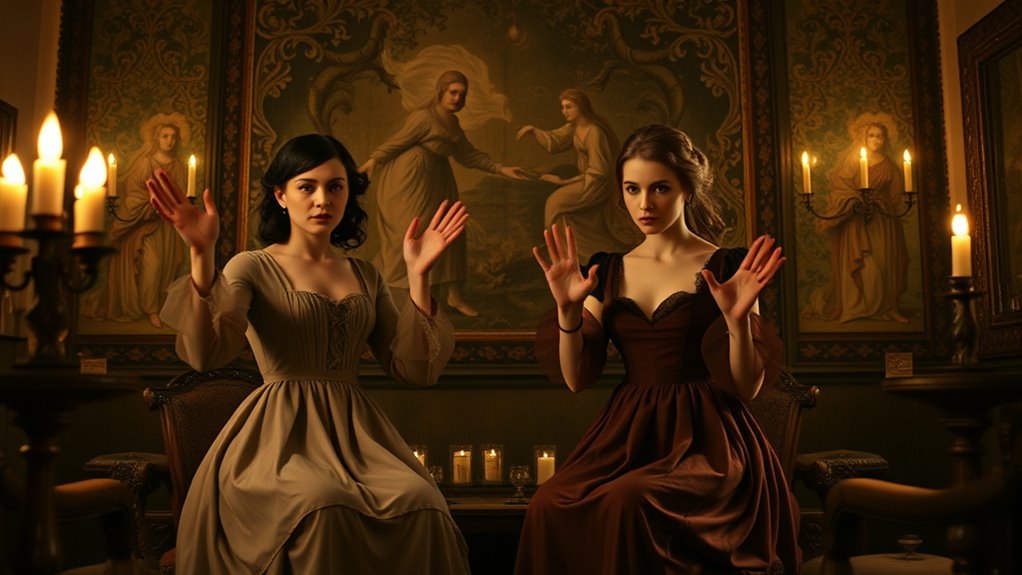
As word about the mysterious rapping sounds spread, the Fox sisters began performing public demonstrations that captivated audiences. You can imagine the buzz in the air as crowds gathered, enthusiastic to witness the phenomenon firsthand. When they performed, the sisters would sit quietly, then suddenly produce loud, deliberate raps that seemed to come from nowhere. The room would fall silent, eyes wide with curiosity and skepticism. The audience’s reactions ranged from awe to doubt, but the performances kept drawing larger crowds. You might see:
- Spectators leaning forward, eyes fixed on the sisters’ hands and surroundings
- Some reaching out to touch the table or chairs, searching for hidden mechanisms
- Others whispering theories about trickery or supernatural forces, adding to the suspense and intrigue.
Additionally, the sisters’ performances were sometimes scrutinized for possible deception, which fueled ongoing debates about the authenticity of their supernatural claims.
The Spread of Spiritualist Beliefs Across America
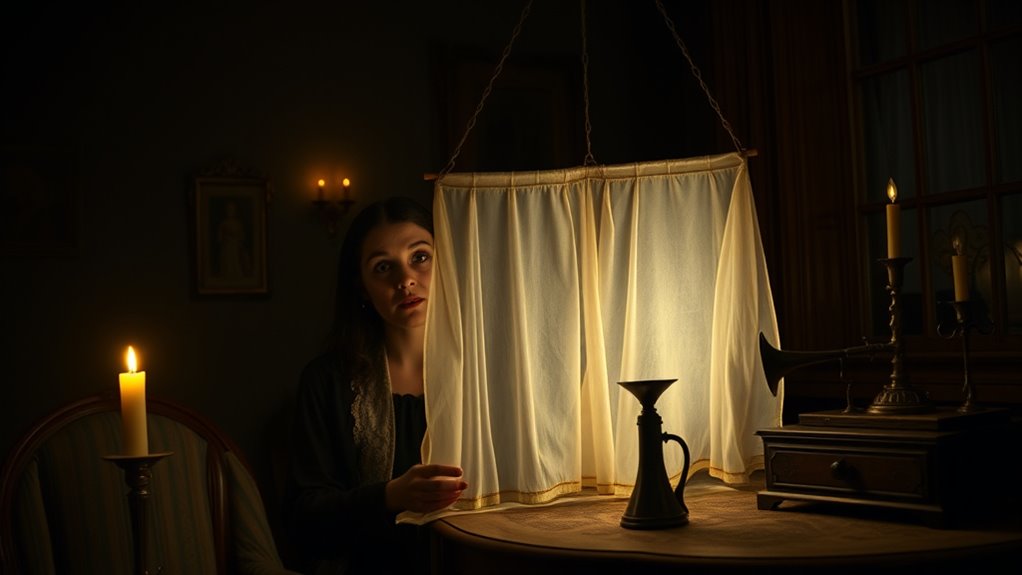
As spiritualist ideas gained popularity, you’ll notice how numerous societies formed across the country to practice and promote these beliefs. Their influence extends into popular culture, shaping entertainment, literature, and everyday conversations. Regional differences also emerged, reflecting local customs and attitudes toward spiritualism. Additionally, the dissemination of spiritualist practices often involved the use of various tools and techniques to communicate with spirits, which became a hallmark of the movement.
Growth of Spiritualist Societies
Following the initial excitement generated by the Fox Sisters’ demonstrations, spiritualist beliefs rapidly spread across the United States. People flocked to séances, enthusiastic to connect with spirits and experience the supernatural firsthand. As interest grew, local spiritualist societies formed, often meeting in dedicated halls or private homes. These groups organized lectures, demonstrations, and mediumship sessions, attracting diverse audiences from various backgrounds. The movement’s popularity fueled the creation of newspapers and journals focused on spiritualism, spreading ideas even further. Imagine crowded gatherings with flickering candlelight, hushed voices, and the thrill of unseen forces at work. Spiritualist societies became community hubs, nurturing the belief that communication with the dead was possible and opening the door to a new spiritual era. Additionally, the growth of spiritualist societies helped legitimize and organize the movement, ensuring its influence persisted across different regions.
Influence on Popular Culture
The rapid spread of spiritualist beliefs across America didn’t just transform private gatherings; it also permeated popular culture, shaping art, literature, and entertainment. Artists depicted spirits and supernatural themes, reflecting society’s fascination. Writers incorporated spiritualist ideas into novels and poetry, blending the mystical with everyday life. Stage shows and séances became entertainment staples, drawing crowds enthusiastic for contact with the beyond. Below is a visual overview of spiritualism’s cultural influence:
| Art & Visuals | Literature & Writing | Entertainment & Performances |
|---|---|---|
| Spirit paintings | Ghost stories in novels | Séance acts and plays |
| Photographs of spirits | Poems about the afterlife | Spirit photography shows |
| Artistic depictions | Mystical symbolism | Paranormal film themes |
Additionally, the rise of spirit photography helped popularize spiritualist themes through innovative photographic techniques that captured purported images of spirits.
Regional Variations Emerged
Spiritualist beliefs didn’t spread uniformly across America; instead, they took on diverse forms depending on regional cultures and social contexts. In the Northeast, they often intertwined with intellectual circles and reform movements, emphasizing scientific validation. In the South, spiritualism blended with religious traditions, creating more emotional and communal experiences. Meanwhile, in the Midwest, community gatherings and local parapsychology clubs fostered a pragmatic approach to contacting spirits. Visualize:
- A bustling city hall hosting séances amid Victorian decor
- Rural churches integrating spiritualist sermons during revival meetings
- Small-town fairs featuring spirit photography and psychic demonstrations
These regional differences reflect how local values, religious backgrounds, and social structures shaped the spiritualist movement, making it a uniquely American phenomenon that adapted to its environment. Additionally, the movement’s regional variations were often influenced by local cultural attitudes towards the supernatural and mysticism, further diversifying its manifestations across the country.
The Techniques Behind the Séances and Rappings

Many séances relied on carefully planned techniques to create the illusion of communication with spirits. You might notice that the Fox Sisters used simple tools and clever methods to produce sounds and movements. Rappings, for example, were often caused by hidden mechanisms or deliberate knocks. They sometimes used secret signals or prearranged cues to simulate spirits speaking or moving objects. Here’s a breakdown of common techniques:
| Technique | Explanation |
|---|---|
| Hidden mechanisms | Levers or strings operated to produce knocks or movements |
| Prearranged signals | Code-like cues to coordinate responses from the “spirits” |
| Use of mirrors or boxes | Reflective surfaces or hidden compartments to create effects |
| Manipulation of objects | Moving or tilting objects to generate sounds or visual cues |
| Vocal tricks | Altered voice pitches or deliberate mimicry to simulate spirits |
Many of these methods relied on stagecraft skills to convincingly imitate spirit communication.
Public Reactions and Media Sensations
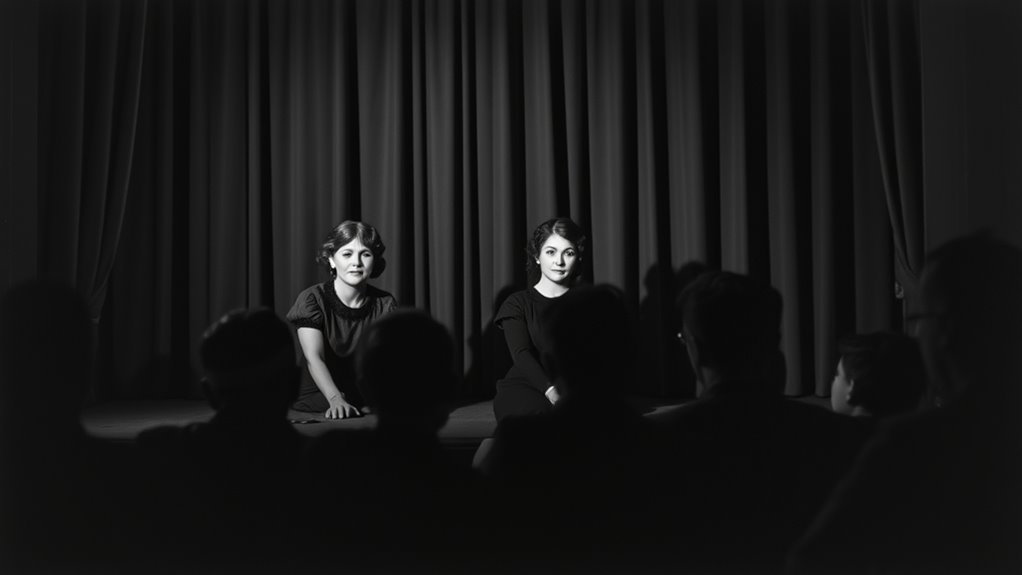
When the Fox Sisters’ séances gained widespread attention, public reactions ranged from awe and curiosity to skepticism and outrage. People flocked to see the spirit rappings firsthand, keen to believe or disprove the phenomenon. The media quickly sensationalized their performances, turning them into national sensations. News articles described ghostly voices echoing through the air, sparking debates in homes and towns alike. Some believed it was proof of an afterlife, while others accused the sisters of trickery. The excitement created a buzz that spread rapidly. Imagine crowds gathering in dimly lit rooms, eyes wide with wonder. Hear the crackle of the séance table, feel the charged anticipation, and see headlines splashed across newspapers, fueling both fascination and doubt. This wave of excitement also prompted many to scrutinize the sisters’ methods and question the authenticity of spiritualist claims, leading to widespread public debate about the legitimacy of spiritualism.
The Controversies and Skepticism Surrounding the Sisters
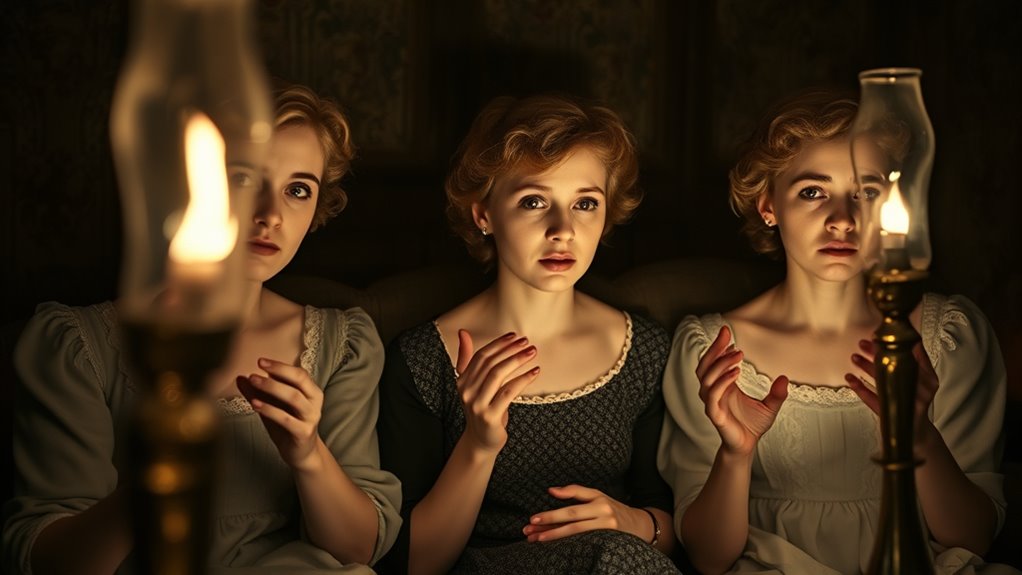
As the public flocked to witness the Fox Sisters’ séances, skeptics began to scrutinize their methods more closely. Many wondered if the sisters were fabricating the spirit raps or using clever tricks to create illusions. Investigators and skeptics challenged their claims, pointing out inconsistencies in their performances. Some accused the sisters of deception, revealing how they manipulated their vocal cords or used hidden tools to produce sounds. The sisters faced mounting suspicion, with critics questioning whether their mediumship was genuine or just elaborate hoaxes. Despite their popularity, these doubts cast a shadow over their reputation. The controversy fueled debates about spiritualism’s authenticity, prompting many to demand scientific proof and exposing the thin line between entertainment and deception.
The Impact on Religious and Scientific Communities

The rise of spiritualism with the Fox Sisters challenged both religious beliefs and scientific understanding, prompting widespread debate. Religious leaders questioned its implications for faith and divine authority, fearing it undermined spiritual doctrine. Meanwhile, scientists and skeptics dismissed it as mass deception or fraud, calling for rigorous proof. This controversy sparked intense discussions across communities, forcing institutions to confront new ideas about life after death and the supernatural. You can imagine clergy holding sermons against spiritualism, emphasizing divine truth, while scientists scrutinize séances for trickery. The media amplified these debates, portraying spiritualism as either a dangerous threat or a fascinating phenomenon. Overall, the Sisters’ influence pushed both religious and scientific circles to reevaluate long-held beliefs, igniting a collision of faith, skepticism, and curiosity.
The Legacy and Evolution of Spiritualism After the Sisters
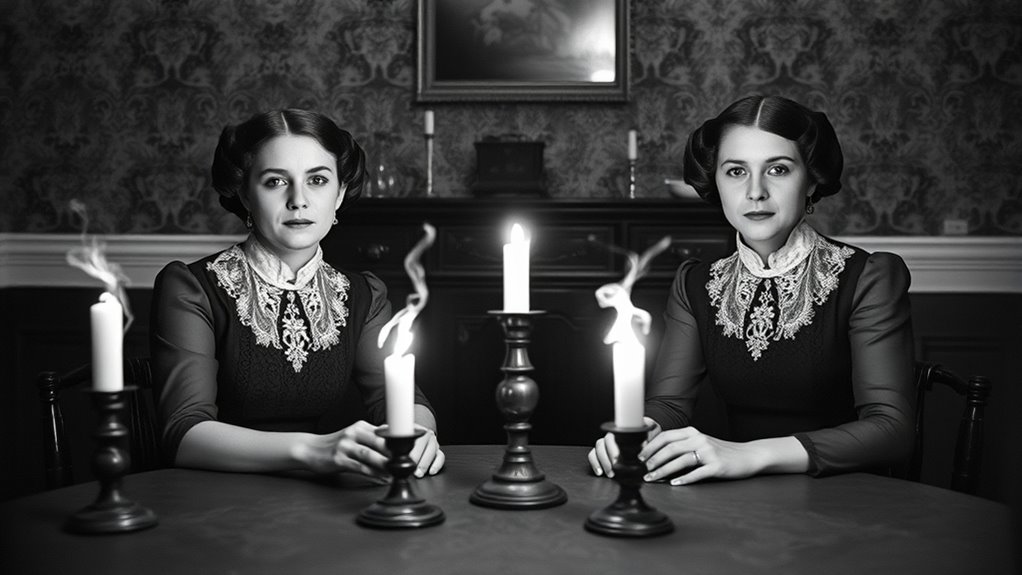
Following the Fox Sisters’ rise to fame, spiritualism continued to evolve and spread, shaping new practices and communities worldwide. You see, their influence sparked a global movement where mediums, séances, and spirit communication became mainstream. Over time, spiritualism diversified, blending with other religious and philosophical ideas, leading to various schools of thought. Today, you can find spiritualist churches, paranormal research groups, and personal practices rooted in those early beliefs. The movement also adapted to modern technology, with live séances online and digital mediums. While skepticism remains, the core idea that spirits can communicate with the living persists. The Fox Sisters’ legacy lives on, inspiring countless individuals to explore the mysteries of life, death, and the unseen world beyond.
Frequently Asked Questions
Did the Fox Sisters Ever Admit to Faking Their Spiritualist Phenomena?
Yes, the Fox Sisters eventually admitted to faking their spiritualist phenomena. They confessed that their initial rappings and movements were orchestrated using simple tricks and concealed methods. Over time, they revealed their deception, acknowledging they had misled their audiences. Their admission came years after their rise to fame, reflecting their regret and the recognition that their early demonstrations were not genuine spiritual communications.
How Did Spiritualism Influence Later Paranormal and Psychic Research Movements?
You might think spiritualism’s just a quaint ghost story, but it actually sparked a frenzy that shaped psychic research. It pushed skeptics and believers alike into exploring mediums, séances, and the paranormal. Today’s psychic fairs and ghost-hunting shows trace their roots back to that spirited, if sometimes questionable, beginning. So, whether you believe or not, spiritualism’s influence is lurking in every haunted corner of modern paranormal pursuits.
Yes, there were notable legal cases related to spiritualist séances. You might recall cases where fraud was alleged, such as séances exposing tricks or false mediums. Courts often prosecuted individuals for deception, especially when money was involved or when alleged spirits were used to deceive people. These cases helped shape legal boundaries for spiritual practices, emphasizing the importance of honesty and protecting the public from fraudulent claims.
What Role Did Women Play in the Early Development of Spiritualism?
You’d find that women played a vital role in early spiritualism, often leading séances and shaping its development. They challenged societal norms by asserting their spiritual authority and promoting communication with spirits. Many believed women’s intuitive abilities made them natural mediums, which helped popularize the movement. Their active participation pushed spiritualism into mainstream culture, empowering women and transforming perceptions of gender roles in the Victorian era.
How Did Spiritualist Practices Differ Internationally During the 19TH Century?
During the 19th century, spiritualist practices varied internationally by culture and religion. In the United States, you’d see séances and table-rapping phenomena, while in Europe, trance mediums and psychic healings gained popularity. In Japan, you might encounter spiritualist Buddhism, blending traditional beliefs with new practices. These differences reflect local customs, religious influences, and societal attitudes, shaping each region’s unique approach to communicating with spirits and exploring the afterlife.
Conclusion
As you reflect on the Fox Sisters’ story, it’s remarkable how a simple click in a parlor sparked a spiritual movement that changed countless lives. Sometimes, a single moment of curiosity or doubt can lead to profound shifts—just like their mysterious rapping. Their legacy reminds you that even the smallest coincidences can ignite extraordinary beliefs, shaping history in ways you’d never expect. The spirit of discovery truly begins with a single, unexpected sound.