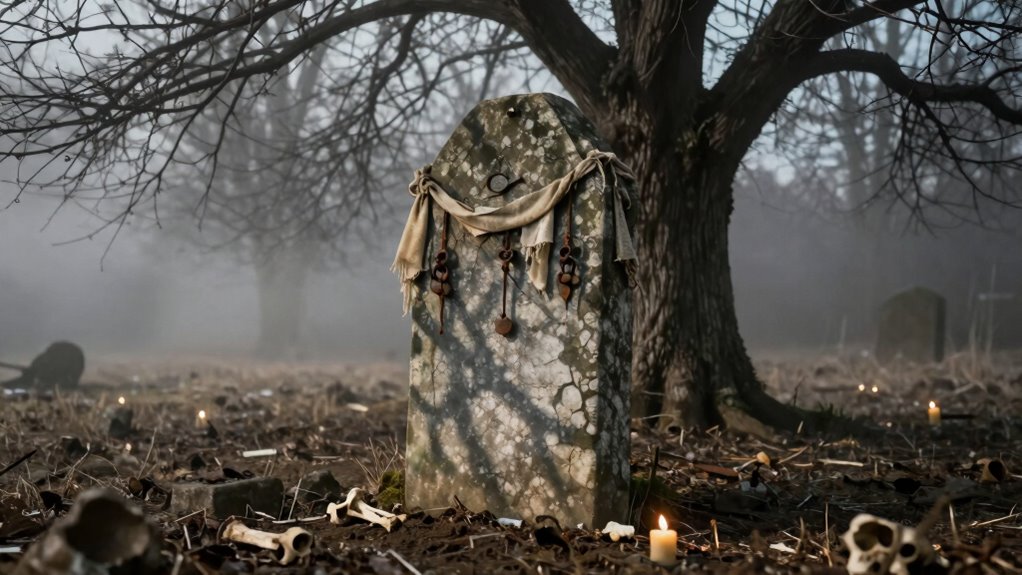

Many ancient burial traditions aimed to prevent spirits from returning and causing trouble. You might find that offerings of food, personal belongings, or protective objects were placed with the dead to keep spirits satisfied and at peace. Rituals like dismembering bodies or burying guardians also served to confuse or trap restless spirits. These customs reflect a deep fear of vengeful spirits and show how cultures worked to protect the living. If you look further, you’ll discover even more fascinating ways these traditions kept spirits at bay.

Get movie nights delivered free with Prime
- Fast, free delivery on millions of items
- Prime Video, Amazon Music and more included
- Member-only deals all year
Key Takeaways
- Proper rituals and offerings ensured spirits remained at peace and prevented them from returning in anger.
- Burial objects and charms were used to trap or confuse spirits, deterring reassembly or reentry.
- Dismembering bodies was practiced to prevent spirits from reuniting and returning as vengeful entities.
- Ritual purity and special ceremonies maintained harmony between the living and ancestors, avoiding restless spirits.
- Protective objects and destructive practices, like decapitation, served as spiritual safeguards against returning spirits.
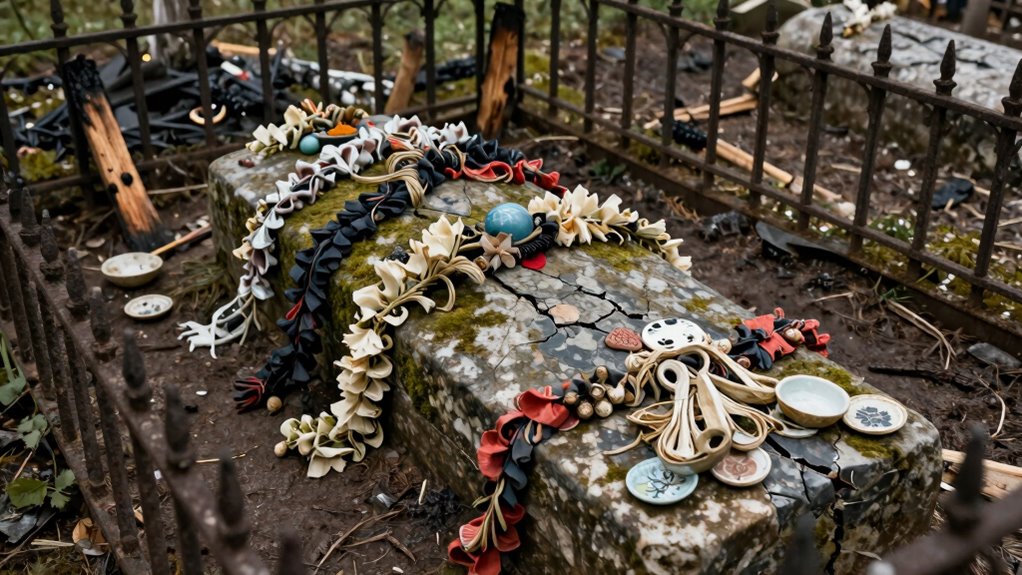
Have you ever wondered how ancient cultures honored their dead? It’s fascinating to see how they believed that proper funeral rituals and ancestral rites could prevent spirits from returning to trouble the living. Across different societies, people developed elaborate methods to secure the peace of the departed and protect their communities from restless spirits. These traditions weren’t just about showing respect; they were deeply rooted in the idea that neglect or improper rituals could awaken the dead’s anger or curiosity, causing chaos or misfortune. Many of these customs also involved symbolic objects, which were believed to hold spiritual significance and serve as protective talismans against vengeful spirits.
Ancient cultures believed proper rituals kept spirits at peace and prevented chaos from restless ancestors.
In many ancient societies, funeral rituals involved more than just burying a body. They often included offerings of food, drink, and personal belongings meant to accompany the deceased into the afterlife. These rites served a dual purpose: honoring the dead and warding off vengeful spirits. For instance, the Egyptians believed that the soul needed sustenance in the afterlife, so they placed items in tombs to appease and secure the spirit’s favor. Similarly, in parts of Africa, elaborate ceremonies and sacrifices were performed to guarantee the ancestors remained at peace, preventing them from returning as malevolent spirits. Additionally, some cultures employed spiritual safeguards like charms or amulets to reinforce these protective measures. These objects were often crafted with specific materials, believed to possess inherent protective powers.
Ancestors played an essential role in many cultures’ spiritual worldview, which is why ancestral rites were so integral to these traditions. These rites involved regular offerings, prayers, and rituals designed to maintain harmony between the living and the dead. If these customs were neglected, it was thought that the ancestors’ spirits might become restless or vengeful, returning in dreams or as apparitions to seek justice or attention. To prevent this, families and communities would perform specific ceremonies, often on special days, to keep the spirits satisfied. This act of maintaining a respectful relationship with ancestors was believed to safeguard the community’s well-being. Some cultures also believed that ritual purity was crucial in ensuring the spirits remained at peace, emphasizing the importance of proper conduct during funeral proceedings.
Many old burial traditions also employed symbolic objects, charms, or even destructive practices to deter spirits from returning. In some cultures, decapitating a body or dismembering it was believed to prevent the spirit from reassembling and returning. Others buried the deceased with objects meant to confuse or trap the spirit. These practices reflect a common fear: that spirits, if not properly managed, could become dangerous or disruptive. The customs around funeral rites and ancestral rites served as a spiritual safeguard—an attempt to control the supernatural forces that they believed lingered after death.
As an affiliate, we earn on qualifying purchases.
Frequently Asked Questions
Which Cultures Had the Most Elaborate Burial Avoidance Rituals?
You’ll find the most elaborate ritual avoidance practices in ancient Egyptian and Chinese cultures. Their ancient funerary customs involved complex rituals to prevent spirits from returning, including placing objects in tombs and performing ceremonies. These cultures believed spirits could be restless, so they created intricate methods, like offering sacrifices or using protective amulets, to guarantee the spirits remained at peace. Their elaborate customs highlight their deep concern with spiritual harmony and safety.
How Did Burial Traditions Evolve Over Different Historical Periods?
Burial traditions evolved considerably over time, reflecting changing beliefs and societal values. You see, during ancient periods, ancestor veneration became central, influencing rituals like ritual purification to honor the dead properly. Over centuries, practices shifted from simple burials to elaborate ceremonies, incorporating symbols and offerings. These changes aimed to guarantee peaceful resting places for spirits, preventing them from returning uninvited. This evolution highlights how cultures adapt rituals to their spiritual understanding and social needs.
Were There Any Specific Symbols Used to Ward off Spirits?
You see, symbols like protective amulets and specific funeral attire acted as shields against restless spirits. You might wear talismanic jewelry or drape clothing with sacred symbols, like crosses or ancestral signs, to guard your soul. These symbols served as spiritual armor, sealing the boundary between the living and the dead. Such traditions created a powerful barrier, ensuring spirits couldn’t cross back into the world of the living.
Did Burial Practices Vary Between Social Classes or Genders?
You’ll notice burial practices often varied based on class distinctions and gender roles. Wealthier individuals received elaborate rites, involving costly grave goods and specific rituals, while poorer burials were simpler. Gender roles influenced burial customs too, with men and women sometimes receiving different offerings or ceremonies reflecting societal expectations. These differences aimed to honor social status and gender identities, reinforcing cultural norms even in death.
Are Any of These Traditions Still Practiced Today?
You might be surprised, but some of these traditions still hold ghostly legends and ritual significance today. While many customs have faded, certain cultures continue to practice rituals to ward off spirits, keeping ancient fears alive. These practices serve as a powerful reminder of humanity’s enduring respect for the supernatural and the unknown, blending old beliefs with modern life—preserving a haunting connection to their ancestors and the spirits they once sought to appease.
As an affiliate, we earn on qualifying purchases.
Conclusion
As you explore these ancient burial customs, you realize they were more than just rituals—they were safeguards against restless spirits, like locking a haunted iPhone to keep ghosts out. Even centuries later, the echoes of these traditions remind us how deeply humans fear losing loved ones to the unknown. You might say, these practices were humanity’s early version of ghostbusters, trying to keep peace between the living and the spirits that linger beyond the grave.
As an affiliate, we earn on qualifying purchases.
As an affiliate, we earn on qualifying purchases.
Halloween Picks
halloween
As an affiliate, we earn on qualifying purchases.