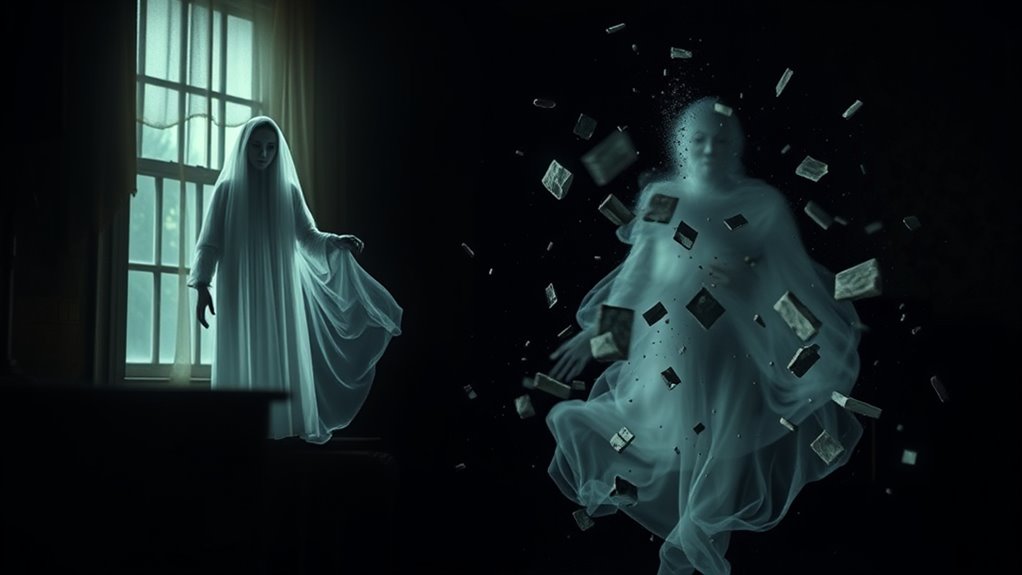

A ghost is usually seen as the spirit or apparition of a deceased person, often appearing as translucent figures or subtle shadows in specific locations, reflecting unresolved emotions or ties. In contrast, a poltergeist is a more active, disruptive force that causes physical disturbances like loud noises, flying objects, and shifting furniture, often linked to emotional stress or subconscious energy. To understand their behaviors, origins, and how to identify them, explore further into their unique traits and signatures.
Key Takeaways
- Ghosts are spirits of the deceased, often appearing as apparitions, while poltergeists are disruptive energy manifestations causing physical disturbances.
- Ghosts tend to be passive, lingering in specific locations, whereas poltergeists are active, generating loud noises and object movements.
- The manifestation style of ghosts includes visual or auditory phenomena; poltergeists produce tangible physical disturbances like banging or flying objects.
- Ghosts are linked to unresolved emotional or spiritual issues, whereas poltergeists are often associated with emotional stress or subconscious energy of living individuals.
- Evidence for ghosts includes apparitions and subtle phenomena; poltergeists are characterized by loud, chaotic activity and physical disruptions.
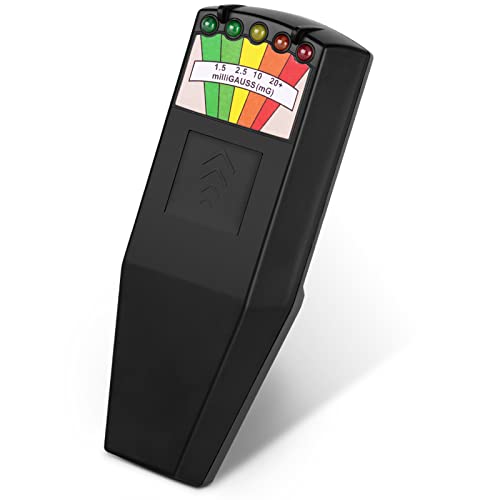
color tree Handheld LED EMF Magnetic Field Ghost Hunting Detector Electromagnetic Paranormal Equipment Tester 50Hz-20,000Hz Black
The EMF Meter Range for Ghost Hunting helps measure the electromagnetic fields to identify appliances that produce high-level…
As an affiliate, we earn on qualifying purchases.
As an affiliate, we earn on qualifying purchases.
Origins and Theories Behind Their Existence

The origins of ghosts and poltergeists remain a subject of fascination and debate, with various theories attempting to explain their existence. Some believe they are spirits of the deceased, lingering due to unfinished business or strong emotional ties. Others think they are manifestations of collective consciousness or residual energy left behind by traumatic events. Certain researchers suggest that poltergeists might be caused by subconscious physical or emotional stress, often attributed to living individuals rather than spirits. Skeptics argue that many supposed hauntings can be explained through natural causes like drafts, mold, or psychological factors. Additionally, interpretations rooted in spiritual symbolism suggest that these phenomena could be connected to unresolved emotional or spiritual energy. Despite numerous investigations, there’s no definitive proof of their origins, leaving the true nature of these phenomena open to interpretation and personal belief.

Our Lady of Akita Marian Apparitions Spiritual Art Case for iPhone 17
Celebrate the profound message of Our Lady of Akita with this stunning design inspired by Marian apparitions. Perfect…
As an affiliate, we earn on qualifying purchases.
As an affiliate, we earn on qualifying purchases.
Typical Behaviors and Manifestations
Ghosts and poltergeists often reveal themselves through distinctive behaviors and phenomena that can be observed and documented. Ghosts tend to manifest as apparitions, lingering in specific locations, often appearing as translucent figures or shadowy outlines. They may produce cold spots, strange noises, or objects moving subtly or suddenly. Poltergeists, on the other hand, are notorious for more active disturbances. They often cause loud banging, furniture shifting, or objects flying through the air, sometimes with no apparent physical cause. These phenomena are usually unpredictable and can escalate quickly. Both entities may produce unexplained sounds like whispering or knocking, but poltergeists are especially associated with physical chaos. Recognizing these behaviors helps differentiate between a passive ghost and an active poltergeist presence. Understanding these differences can aid in identifying the nature of a haunting and assessing its potential risks.

All My Paranormal Investigation Shit: Funny Ghost Hunting Journal Log Book & Spirit Investigator Logbook – Record All your Paranormal Experiences – … Ghost & Demon Hunters Men & Women
As an affiliate, we earn on qualifying purchases.
As an affiliate, we earn on qualifying purchases.
The Emotional and Psychological Impact
Experiencing a ghost or poltergeist can leave you feeling overwhelmed with fear and anxiety. The events often trigger trauma and stir up painful memories you’d rather forget. Over time, this can strain your mental health and make it hard to feel safe in your own space. Additionally, persistent paranormal activity can contribute to feelings of psychological distress, which may require professional support to manage effectively.
Fear and Anxiety
When faced with unexplained phenomena, fear and anxiety often take hold, intensifying your emotional response. You might feel your heartbeat quicken, palms sweating, or a sense of dread creeping in. These feelings stem from uncertainty and the unknown, making the experience even more terrifying. To illustrate, consider how fear manifests:
| Fear | Anxiety |
|---|---|
| Sudden panic or terror | Persistent worry |
| Shock from the unknown | Restless, uneasy feelings |
| Immediate threat | Overthinking, dread |
| Physical symptoms | Mental exhaustion |
This emotional turbulence can leave you feeling helpless, fueling a cycle of fear that’s hard to escape. Recognizing these reactions helps you understand the profound psychological impact of paranormal encounters. Additionally, awareness of supermarket hours can reduce stress during shopping trips, highlighting how knowledge of daily routines can help manage anxiety in everyday life.
Trauma and Memories
Trauma from a paranormal encounter can linger long after the event, shaping your memories and emotional well-being. You might find yourself revisiting the experience repeatedly, feeling anxious or unsettled even when you’re safe. These memories can become distorted, blending reality with fear, making it hard to differentiate between what truly happened and what your mind invents. Over time, this can lead to emotional scars that affect your daily life. To cope, you may:
- Rethink your safety and sense of control
- Experience flashbacks triggered by certain sights or sounds
- Feel persistent fear or sadness related to the event
- Struggle with trust issues or skepticism about your perceptions
- Understanding emotional intelligence can help in processing and managing these feelings effectively.
Mental Health Strain
Dealing with a paranormal encounter can considerably strain your mental health, often leading to feelings of anxiety, fear, and confusion. You might find yourself obsessing over what you experienced, questioning your sanity, and doubting your perceptions. This emotional turmoil can cause sleep disturbances, difficulty concentrating, and heightened stress levels. As you try to make sense of the situation, you may feel isolated or overwhelmed, especially if others dismiss your experiences. The constant fear or uncertainty can erode your confidence and increase feelings of vulnerability. It’s essential to recognize these emotional impacts and seek support, whether through trusted friends, mental health professionals, or spiritual guidance. Addressing your mental health is vital to processing the experience and regaining a sense of stability.

briidea Ghost Hunting Equipment, Paranormal Detection Kit with Simulated Spirit Candle, High-Precision Sensor, Flashing Yellow Light, USB Rechargeable for Haunted House Exploration and Séances
SPIRIT CANDLE: Ready for a real ghost-hunting adventure? Designed for fearless explorers and ghost hunters, it glows with…
As an affiliate, we earn on qualifying purchases.
As an affiliate, we earn on qualifying purchases.
Physical Evidence and Paranormal Activity

Physical evidence plays a crucial role in distinguishing between ghosts and poltergeists, though it remains a contentious aspect of paranormal investigation. You might encounter unexplained noises, temperature drops, or objects moving without explanation. Ghosts are often associated with visible apparitions or translucent figures, while poltergeists tend to produce physical disturbances. Tracking these phenomena helps investigators gather tangible proof, but interpretations vary. To better understand, consider these common signs:
- Unexplained banging or knocking sounds
- Objects shifting or flying across rooms
- Sudden drops in temperature
- Visible orbs or shadowy figures
Physical evidence can sometimes include poltergeist activity, which involves energetic disturbances causing physical phenomena. While intriguing, physical evidence alone isn’t conclusive, and skeptics often challenge its validity. Nonetheless, documenting such phenomena remains a key step in exploring paranormal activity and differentiating between spirits and poltergeists.
Cultural and Historical Perspectives

Cultural and historical beliefs shape how societies interpret and respond to paranormal phenomena like ghosts and poltergeists. In many cultures, ghosts are seen as spirits of the deceased, often linked to ancestors or unresolved issues, influencing rituals and taboos. Poltergeists, on the other hand, are frequently viewed as malevolent entities or manifestations of emotional turmoil, especially in Western folklore. Throughout history, perceptions of these phenomena have varied widely, from sacred omens to malicious spirits. Religious beliefs, societal norms, and local legends all influence how people understand and deal with such phenomena. These perspectives also shape the language used to describe them, creating diverse narratives that reflect each society’s values, fears, and understanding of the supernatural. Additionally, paranormal phenomena are often studied within the context of cultural symbolism and societal psychology, which help explain why such beliefs persist across generations.
Common Locations and Settings
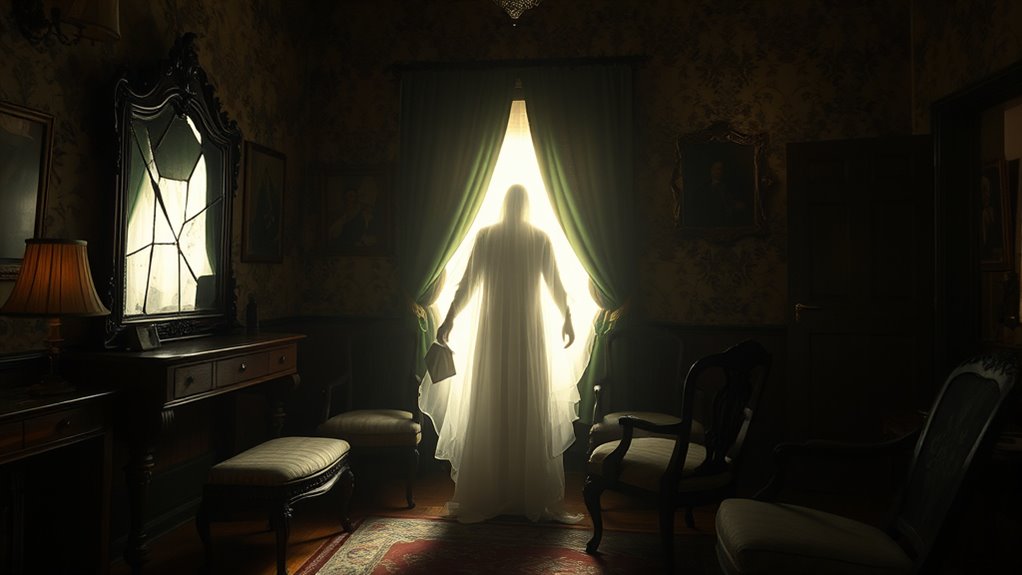
Ghosts are often reported in places with emotional or historical significance, such as abandoned buildings, old houses, and cemeteries. These locations seem to draw spirits because of their connection to past events or people. You might notice ghostly activity in homes where tragic events occurred or in locations with strong personal memories. Cemeteries are classic spots, as they’re directly linked to the afterlife, making them prime settings for ghost sightings. Haunted inns and historic landmarks also frequently report paranormal activity, attracting those curious about history and spirits. Additionally, regions with a high prevalence of resources and tools may have more documented encounters with paranormal phenomena.
How They Interact With Their Environment
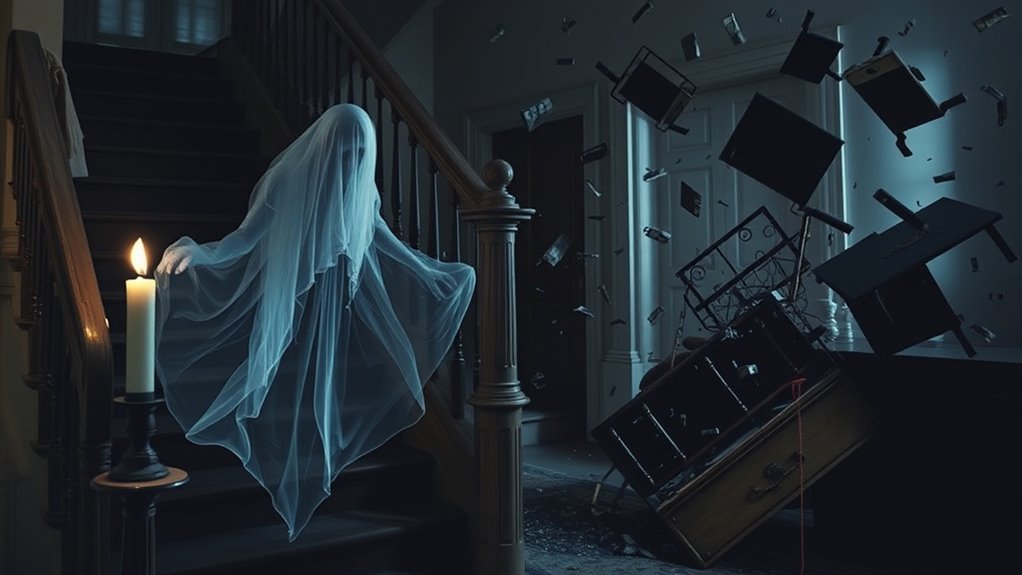
You might notice that ghosts often appear as transparent figures or faint apparitions, slowly manifesting in ways that seem almost gentle. In contrast, poltergeists tend to interact more aggressively, causing objects to move or noises to erupt suddenly. The way they influence their surroundings reflects their distinct styles of manifestation and the environments they prefer. Additionally, manifestation styles can provide clues about their origins and behaviors.
Manifestation Styles
Manifestation styles reveal how ghosts and poltergeists interact with their environment, shaping the nature of their disturbances. Ghosts often appear as transparent or semi-visible figures, manifesting through apparitions or sounds. Poltergeists, on the other hand, tend to produce physical disturbances like objects moving or loud noises, often without visible entities. You might notice a ghost gently flickering in and out of view or whispering softly, while a poltergeist causes items to fly across the room or bang loudly. These styles reflect their underlying nature—ghosts tend to hover within the realm of sight and sound, whereas poltergeists focus on physical chaos. Understanding these differences helps you recognize the type of activity you’re witnessing and prepares you for appropriate responses.
- Ghosts often appear visually or audibly, creating spectral phenomena
- Poltergeists produce tangible disturbances like moving objects
- Ghost manifestation can be subtle or fleeting, like whispers or shadows
- Poltergeist activity is typically loud and disruptive, involving physical force
- Recognizing these manifestation styles can aid in identifying the type of paranormal activity you are experiencing
Environmental Influence
Both ghosts and poltergeists interact with their environment in ways that reveal their underlying nature, but they do so differently. Ghosts tend to influence their surroundings subtly, such as cold spots, flickering lights, or objects moving slightly. These signs often appear in specific locations linked to their past or emotional ties. Poltergeists, on the other hand, create more disruptive disturbances, like loud noises, objects flying through the air, or physical damage. They seem to thrive on energy and chaos, often interacting with their environment more aggressively. You might notice a pattern—ghosts often stay confined to certain areas, while poltergeists move things around unpredictably. Their environmental influence reflects their core nature: one is more static and residual, the other more dynamic and energetic.
Methods of Detection and Differentiation

Detecting and differentiating between a ghost and a poltergeist often involves paying close attention to specific signs and employing various investigative methods. You should observe patterns of activity—ghosts tend to produce apparitions and voice phenomena, while poltergeists often cause physical disturbances like knocking or furniture moving. Use tools like EMF meters to detect electromagnetic fluctuations, which might suggest paranormal activity. Record audio and video to capture unexplained sounds or apparitions. Keep detailed logs of when and where activity occurs to identify recurring patterns.
- Use EMF detectors to spot electromagnetic anomalies
- Record audio for EVPs (Electronic Voice Phenomena)
- Take photographs or videos of unusual activity
- Track activity patterns over time for clarity
Frequently Asked Questions
Can Ghosts or Poltergeists Harm Living Beings Physically?
Yes, ghosts and poltergeists can harm living beings physically, but it’s rare and often depends on the entity’s nature. Ghosts are usually considered spirits that may cause emotional or minor physical disturbances, while poltergeists are believed to be more active, causing loud noises, objects moving, or even minor injuries. Always stay cautious around unexplained phenomena, as some cases suggest potential physical threats, though scientific evidence remains limited.
Are Poltergeists More Aggressive Than Ghosts?
Yes, poltergeists are generally more aggressive than ghosts. You might feel a sudden jolt or hear loud, disturbing noises that make your heart race. Unlike ghosts, which often appear as fleeting apparitions, poltergeists tend to cause physical disturbances—throwing objects, banging walls, or even pushing you. Their unpredictable, violent behavior creates an intense, unsettling atmosphere, making them seem far more threatening and active than most ghosts.
Do All Cultures Believe in Both Ghosts and Poltergeists?
Not all cultures believe in both ghosts and poltergeists. Some traditions focus solely on spirits or ancestral ghosts, while others, like Western folklore, include both entities. You might find beliefs about ghosts being benign and poltergeists being disruptive or malicious. Your cultural background influences whether you see these phenomena as real or symbolic. Overall, beliefs vary widely, reflecting diverse explanations for unexplained or supernatural occurrences around the world.
Can Technology Reliably Distinguish Between Ghosts and Poltergeists?
Technology can’t reliably distinguish between ghosts and poltergeists yet. Devices like EMF meters, cameras, and audio recorders can capture strange phenomena, but they lack the scientific basis to identify supernatural entities definitively. You should approach these tools as helpful aids, not proof, because many unexplained signals could have natural explanations. Ultimately, understanding the difference relies more on personal beliefs and experiences than on current technology.
Are Poltergeists Ever Considered Benevolent Entities?
Poltergeists are often seen as mischievous troublemakers, but they can be benevolent too, like a playful puppy that means no harm. Sometimes, they act to protect or communicate positively with the living. You might encounter a poltergeist that gently moves objects to get your attention or offers subtle signs of guidance. So yes, they can be benevolent, showing a caring side amidst their usually chaotic behavior.
Conclusion
So, whether you’re haunted by a polite ghost offering tea or a wild poltergeist throwing furniture, remember: one’s a spectral guest, the other’s a mischievous troublemaker. Think of ghosts as the shy neighbor peeking through curtains, while poltergeists are the party crashers knocking over lamps. Next time you hear a bump in the night, ask yourself—are you dealing with a polite visitor or a rowdy spirit throwing a midnight tantrum? Stay spooky, but maybe keep the furniture bolted down.