
When equipment malfunctions occur, paranormal crews quickly check connections, power sources, and settings, often swapping in backup devices to keep investigations on track. They follow troubleshooting checklists, document issues thoroughly, and rely on alternative methods like manual observations if needed. Clear communication with your team ensures everyone stays updated, and regular maintenance helps prevent future failures. If you want to know more about effective strategies and best practices, there’s plenty more to explore.
Key Takeaways
- Conduct thorough pre-investigation checks, calibration, and maintenance to minimize equipment failures.
- Use redundancy by deploying multiple devices and backup gear to ensure continuous data collection.
- Troubleshoot issues immediately by checking connections, swapping components, and following established protocols.
- Document all malfunctions with detailed notes for analysis and future prevention.
- Rely on manual observations and alternative methods when equipment failures occur to maintain investigation progress.
Common Causes of Equipment Failures in Paranormal Investigations
Equipment failures during paranormal investigations often stem from environmental factors that interfere with devices’ functioning. High humidity, extreme temperatures, and electromagnetic interference can disrupt sensitive equipment, causing false readings or complete failure. For example, metal objects or electronic devices nearby may generate electromagnetic noise, confusing EVP recorders or EMF meters. Additionally, fluctuating weather conditions like rain or snow can damage equipment or affect signal transmission. Poorly grounded or damaged power sources can lead to inconsistent operation or sudden shutdowns. Structural elements, such as metal beams or wiring, may also create interference. Understanding these environmental factors helps you anticipate potential issues, ensuring you’re prepared to troubleshoot or protect your gear during investigations. Recognizing these common causes is key to maintaining equipment reliability in challenging conditions.
Pre-Session Equipment Checks and Maintenance Protocols
Before starting a session, you should conduct thorough equipment inspections to catch potential issues early. Make sure to calibrate and test your gear regularly to guarantee accurate readings, and always have backup equipment ready in case of failure. This preparation helps prevent malfunctions and keeps your investigation running smoothly. Additionally, implementing a maintenance routine can prolong equipment lifespan and ensure consistent performance.
Regular Equipment Inspection
To guarantee your paranormal team operates smoothly during investigations, conducting regular equipment inspections is essential. You should check all gear before each session, ensuring batteries are charged and devices are functioning correctly. Look for signs of wear, loose connections, or corrosion that could cause malfunctions. Keep a detailed log of inspections, noting any issues found and actions taken. Regular maintenance includes cleaning sensors, inspecting cords, and updating firmware when necessary. By establishing a routine, you minimize the risk of equipment failure during critical moments. This proactive approach helps you identify potential problems early, saving time and avoiding disruptions. Staying vigilant with inspections ensures your tools are reliable, so you can focus on capturing the paranormal without equipment-related worries. Additionally, monitoring filtration systems and filters can help prevent dust and debris buildup that might impair device performance.
Calibration and Testing
Ensuring your gear is properly calibrated and tested is crucial for a successful investigation. Before heading out, perform calibration checks on all equipment, such as EMF meters, EVP recorders, and thermal cameras. Follow manufacturer guidelines carefully to confirm readings are accurate. Conduct functional tests by turning devices on and off, verifying responsiveness, and ensuring batteries are fresh or fully charged. Use test environments whenever possible to simulate real conditions, spotting potential issues early. Document calibration results and note any irregularities. Regular maintenance, like cleaning sensors and updating firmware, helps prevent malfunctions during the session. Additionally, understanding AI integration in devices can help in troubleshooting and optimizing equipment performance. Taking these steps ensures your equipment functions reliably under investigation conditions, reducing false readings and increasing your chances of capturing meaningful evidence.
Backup Gear Preparedness
Having backup gear ready can make the difference between a successful investigation and missed evidence. Before each session, you should perform thorough pre-session checks on all equipment, guaranteeing batteries are fresh, connections are secure, and devices function correctly. Regular maintenance is essential; clean sensors, test recording devices, and verify that all gear is in working order. Organize backups systematically, so you can quickly swap out malfunctioning items without losing time. Keep spare batteries, cables, and replacement units on hand, and double-check that all backup equipment is fully operational. Establishing a maintenance routine ensures that gear remains reliable and reduces the likelihood of unexpected failures during the investigation. By proactively preparing and maintaining your gear, you minimize the risk of unexpected failures during the investigation, allowing you to focus on capturing evidence without interruption. Proper backup readiness ensures smooth operations from start to finish.
The Importance of Redundancy: Backup Devices and Systems
Having backup devices and systems in place is vital when equipment malfunctions occur. You should use multiple devices during investigations and regularly test your equipment to guarantee everything works smoothly. This approach minimizes downtime and keeps your paranormal activities on track. Additionally, understanding the importance of redundancy ensures that even if one system fails, your investigation can continue seamlessly.
Multiple Device Usage
When equipment malfunctions during a paranormal investigation, relying on a single device can jeopardize the entire session. To prevent this, using multiple devices targeting the same purpose guarantees continuity. You should consider:
- Deploying different brands or models to reduce the risk of simultaneous failure.
- Synchronizing devices so they can cross-verify findings, increasing reliability.
- Keeping backup units on hand, ready to replace any malfunctioning equipment instantly.
- Incorporating redundancy into your setup ensures ongoing data collection despite unexpected issues.
This approach minimizes data loss and helps confirm paranormal activity through corroborating signals. Multiple device usage boosts your chances of capturing accurate evidence, even if one device fails unexpectedly. It also provides a safety net, allowing you to adapt quickly without losing valuable investigation time. Overall, redundancy through multiple devices enhances the robustness and credibility of your paranormal exploration.
Regular Equipment Testing
Regularly testing your equipment is essential to guarantee your backup devices and systems are ready when you need them. Consistent checks help you identify potential issues before an investigation begins, saving valuable time and avoiding surprises during critical moments. Make it a routine to power on all devices, verify connections, and run diagnostic tests. Confirm your backup systems, like secondary recorders or power supplies, function properly and seamlessly switch on if the primary fails. Document your testing results to track performance over time. This proactive approach minimizes the risk of equipment failure during investigations, giving you confidence that your tools will operate reliably when encountering unexplained phenomena. Remember, redundancy isn’t just about having spares—it’s about knowing they work when it counts most. Incorporating reliability and safety measures from the essential guide can help ensure your backup systems meet safety standards and operate smoothly under pressure.
Troubleshooting Techniques During Live Investigations

During live investigations, equipment malfunctions can disrupt the flow and hinder evidence collection, so it’s essential to troubleshoot rapidly and effectively. First, immediately assess the issue by checking connections, power sources, and settings. Second, isolate the problem by swapping out suspect components with backups or similar devices to confirm whether the malfunction stems from a faulty part or user error. Third, document each step you take, noting what was checked and the outcome, to streamline future troubleshooting and provide a clear record for team review. Staying calm and methodical helps you identify the root cause faster. Proper maintenance procedures can also prevent recurring issues. Quick, organized actions ensure minimal disruption and maximize your chances of capturing valuable evidence.
Establishing a Troubleshooting Checklist for Unexpected Malfunctions
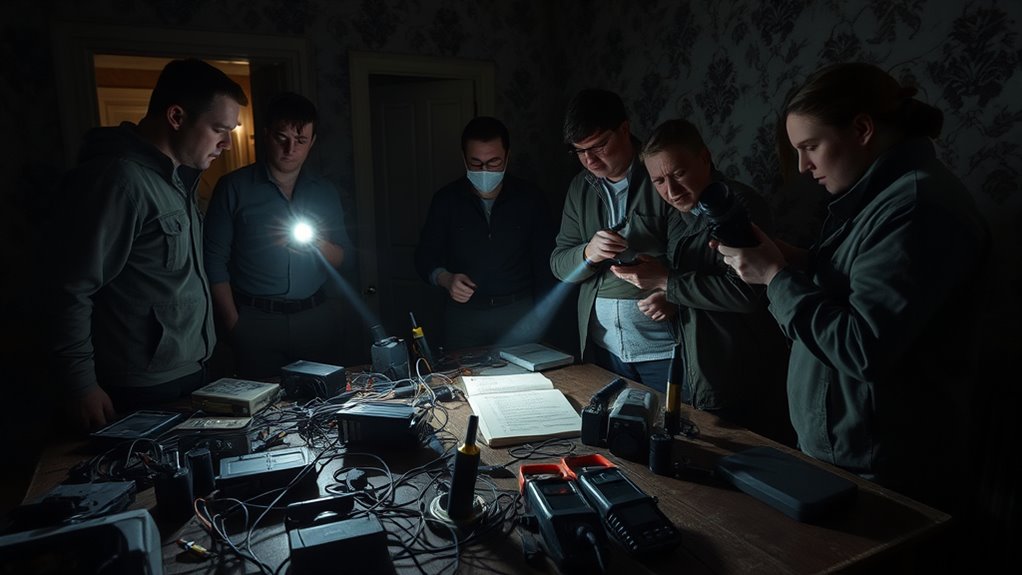
Creating a troubleshooting checklist tailored to unexpected equipment malfunctions helps your team respond quickly and efficiently. Start by listing common issues, such as power failures, connection problems, or sensor errors. Include clear, step-by-step solutions for each problem, guaranteeing everyone knows where to start troubleshooting. Prioritize quick checks like verifying power sources, inspecting cables, and resetting devices. Incorporate troubleshooting flowcharts to guide decision-making. Regularly review and update the checklist based on past experiences and new equipment. This proactive approach minimizes downtime during investigations and keeps your team focused on capturing evidence rather than getting stuck on technical issues. Having a well-organized checklist assures everyone reacts swiftly and knows exactly what to do when unexpected malfunctions occur. Additionally, understanding the steps in ethical hacking process can help your team anticipate potential security-related malfunctions that may affect equipment performance.
Training and Team Roles in Handling Technical Issues
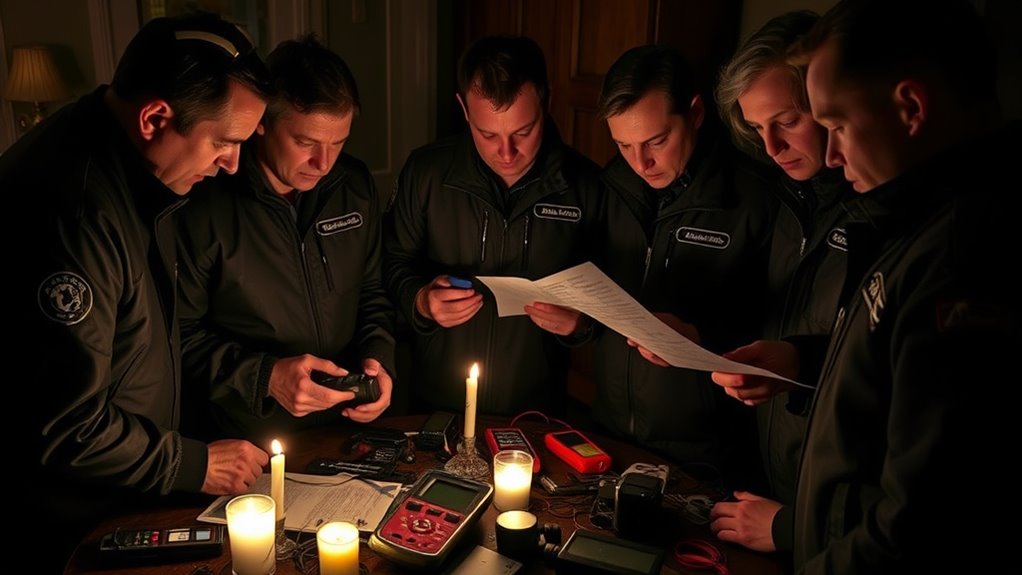
Effective handling of technical issues relies on thorough training and clear team roles, ensuring everyone knows their responsibilities when equipment malfunctions occur. Your team must understand each member’s specific duties during troubleshooting to respond swiftly and effectively. Proper training covers equipment operation, basic repairs, and safety protocols, empowering you to act confidently. Assign roles like lead technician, safety officer, and recorder, so everyone knows their tasks. Additionally, incorporating training best practices can further enhance team preparedness and response efficiency. You should also implement a system for quick communication, such as radios or hand signals, to coordinate efforts. Regular drills help reinforce procedures and build team cohesion. By clearly defining roles and providing exhaustive training, you minimize downtime and maximize your crew’s ability to handle unexpected technical issues efficiently.
Documenting Equipment Malfunctions for Analysis and Future Prevention
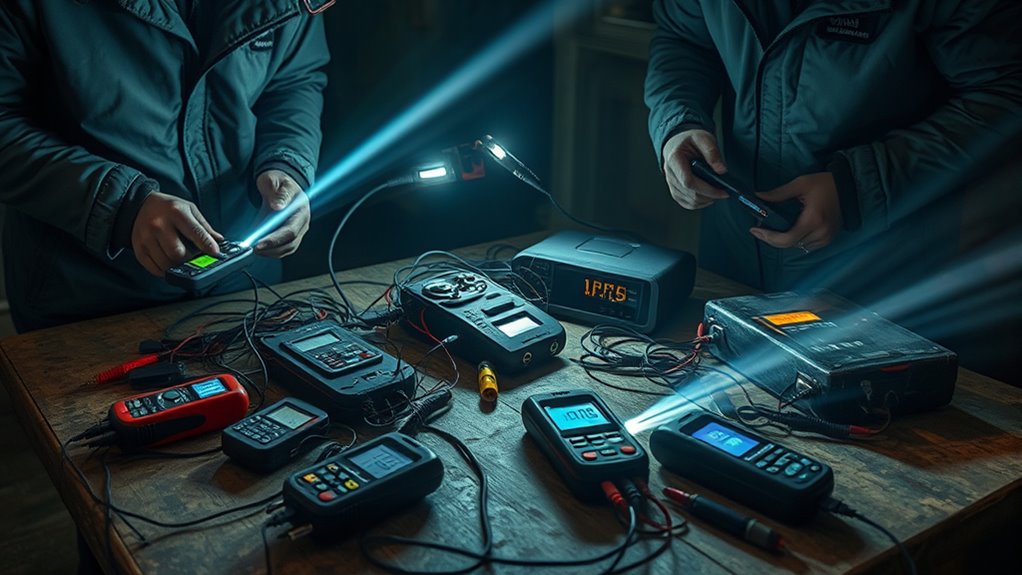
Keeping detailed records of equipment malfunctions is essential for analyzing recurring issues and preventing future failures. When you document what went wrong, include specific details like the time, location, equipment involved, and the symptoms observed. Note any patterns or anomalies that might indicate underlying problems. This information helps you and your team identify faulty components or environmental factors that contribute to malfunctions. Using a standardized log or digital record system guarantees consistency and easy access for future reference. Accurate documentation also supports troubleshooting efforts and guides maintenance schedules. Over time, analyzing these records can reveal trends, allowing you to implement targeted fixes and improve your overall equipment reliability. Clear, thorough records are your best tool for continuous improvement during paranormal investigations.
Utilizing Alternative Methods When Main Equipment Fails

When your primary equipment fails during a paranormal investigation, it’s crucial to have backup methods ready to maintain data collection and analysis. You can rely on alternative techniques to keep your investigation on track. First, switch to manual observations—document unusual sounds, movements, or temperature changes with notes. Second, use basic tools like flashlights or handheld EMF detectors to gather quick data without relying on advanced devices. Third, engage your team in eyewitness accounts, encouraging real-time reporting of phenomena. These methods ensure you don’t lose valuable insights when technology falters. Staying adaptable and resourceful helps you continue capturing important evidence and maintain the credibility of your investigation, even when your main equipment is temporarily out of commission.
Communicating Equipment Issues to Team Members and Stakeholders
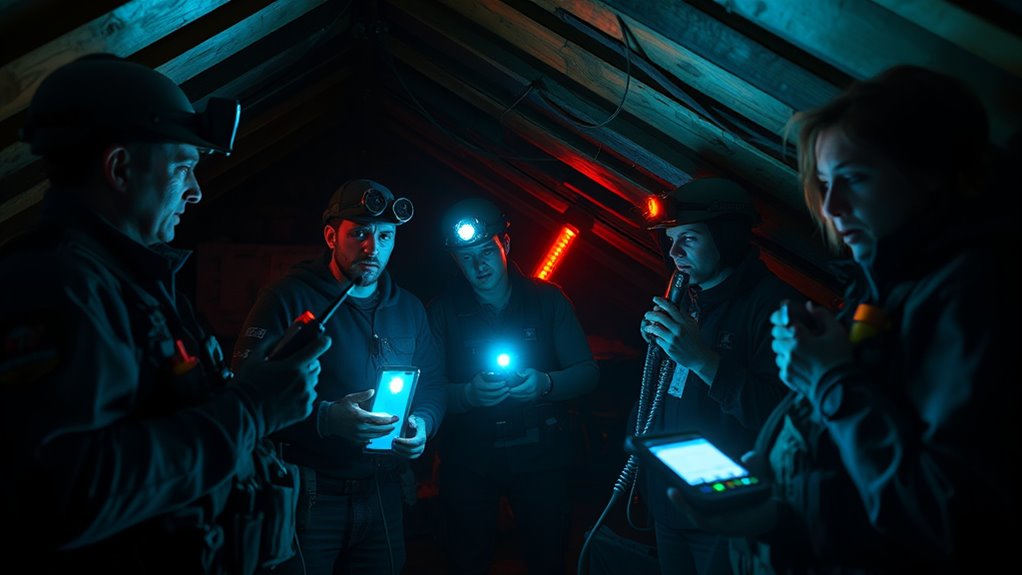
Clear communication about equipment issues is essential to guarantee everyone stays informed and can adapt quickly. When a malfunction occurs, promptly relay details to your team, explaining what happened and how it affects the investigation. Use concise language to prevent confusion and ensure everyone understands the severity and potential impact. Notify stakeholders as needed, especially if the malfunction might influence data accuracy or safety protocols. Maintain an open line of communication through radios, messaging apps, or face-to-face updates, depending on the situation. Confirm that all team members are aware of the issue and any adjustments they need to make. Effective communication minimizes downtime, prevents misunderstandings, and keeps the investigation running smoothly despite technical setbacks.
Learning From Malfunctions: Improving Future Investigation Strategies

Analyzing equipment malfunctions after each investigation is essential for refining your approach and preventing future issues. You should review what went wrong, identify patterns, and adjust your protocols accordingly. Learning from these experiences helps you develop more reliable methods and enhances team preparedness. To optimize your strategies, consider these steps:
- Document each malfunction thoroughly to track recurring problems and root causes.
- Test and calibrate equipment regularly, incorporating new techniques or tools that address previous failures.
- Conduct debriefings with your team to discuss what worked, what didn’t, and how to improve responses for next time.
Frequently Asked Questions
How Do Crews Differentiate Between Equipment Failure and Paranormal Activity?
You can tell if it’s paranormal activity or equipment failure by observing patterns. If your device malfunctions randomly, with no clear cause, it’s likely a technical issue. But if you notice consistent, unexplained interference coinciding with strange phenomena, it might be paranormal. Crews often use backup equipment and cross-check data to differentiate, ensuring they don’t mistake equipment glitches for supernatural events. Trust your instincts and keep detailed records.
What Legal Considerations Exist When Equipment Malfunctions During Investigations?
Think of legal considerations as the compass guiding your investigation. You must obtain proper permissions, respect property rights, and adhere to local laws to avoid legal pitfalls. Document all malfunctions meticulously, showing due diligence. If damages occur, be prepared to address liability issues. Staying transparent and following legal protocols guarantees your investigation remains ethical and legitimate, safeguarding both your team and the integrity of your work.
How Do Crews Handle Equipment Malfunctions in Remote or Inaccessible Locations?
When equipment malfunctions in remote or inaccessible locations, you quickly troubleshoot to identify the issue. You bring spare gear and backup batteries, ensuring you’re prepared. If repairs aren’t possible on-site, you document the problem and move forward with other tools. You stay adaptable, knowing that unpredictable conditions require quick thinking and flexibility. This approach keeps your investigation efficient, even when access is limited or technical hiccups occur.
Are There Specific Brands or Models More Resistant to Paranormal Investigation Conditions?
Think of your equipment as a brave knight, armor sturdy against chaos. Some brands like FLIR, Seek Thermal, and Spirit Box have built-in durability, making them more resistant to the unpredictable domain of paranormal investigations. You’ll find these tools can withstand sudden shocks and environmental challenges better, acting as loyal companions in your quest. Choosing reliable, rugged gear means you’re better prepared to face the unknown, no matter how ghostly the environment gets.
How Is Crew Safety Prioritized During Equipment Failures in Active Investigations?
During active investigations, your safety takes top priority if equipment fails. You should immediately step back from the equipment, alert the team, and secure the area to prevent accidents. Use backup devices if available, and avoid tampering with faulty gear. Always follow established safety protocols, communicate clearly with team members, and stay alert to potential hazards. Your quick response helps prevent injuries and keeps the investigation safe for everyone involved.
Conclusion
Think of equipment malfunctions as storms in your paranormal journey—they’re inevitable but manageable. By staying prepared with checks, backups, and clear communication, you navigate through these tempests smoothly. Each glitch offers a lesson, guiding you toward calmer waters and better strategies. Embrace these challenges as part of your adventure, knowing that with the right tools and mindset, you can steer your investigation back on course and uncover the unseen truths that await.