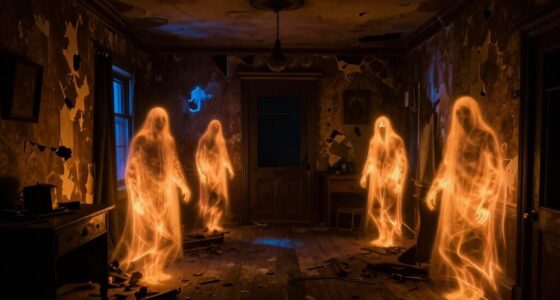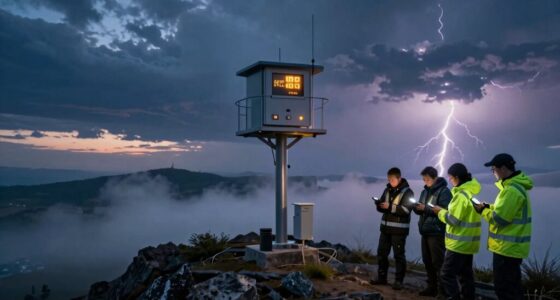
To tell if a sound is natural or supernatural, start by examining its environment, checking for logical sources like animals, weather, or nearby activity. Listen for consistent patterns or unusual irregularities, and observe your physical and emotional reactions—supernatural sounds often provoke strong sensations or fear. Use technology for detailed analysis, and consider local stories or history. If you stay curious, you’ll uncover deeper ways to distinguish these mysterious noises.
Key Takeaways
- Check if the sound has a logical, identifiable source within the environment or surroundings.
- Observe the sound’s pattern, consistency, and whether it repeats regularly or occurs unpredictably.
- Assess physical reactions and emotional responses for signs of fear, awe, or unease that may indicate supernatural influence.
- Use technology or environmental clues to trace or eliminate natural causes before considering supernatural origins.
- Consider the context, environment, and background noises to determine if the sound aligns with natural sources or seems inexplicable.
![SOUND FORGE Audio Studio 16 - The complete solution for recording, audio editing, restoration and mastering in one | Audio Software | Music Program | for Windows 10/11 [PC Online code]](https://m.media-amazon.com/images/I/41IasYLiIkL._SL500_.jpg)
SOUND FORGE Audio Studio 16 – The complete solution for recording, audio editing, restoration and mastering in one | Audio Software | Music Program | for Windows 10/11 [PC Online code]
- All-in-One Audio Editor: Record, edit, restore, and master audio
- ModernEQ: Advanced equalizer for precise sound shaping
- ModernReverb: Enhanced reverb effects for natural sound
As an affiliate, we earn on qualifying purchases.
As an affiliate, we earn on qualifying purchases.
Recognizing the Context and Environment of the Sound

Understanding the environment where a sound occurs is essential for distinguishing between natural and supernatural origins. When you pay attention to the setting, you can identify whether the noise fits the surroundings or seems out of place. For example, a creaking floor in an old house during quiet hours might be natural due to settling wood, but if you hear unexplained whispers in a sealed room, it could be supernatural. Consider the time of day, weather, and nearby activity. Natural sounds often have a logical source you can trace, while supernatural sounds tend to appear unexpectedly or without clear cause. By evaluating the environment, you develop a better sense of whether a noise is part of the natural world or something beyond it. Recognizing the lifestyle context of the environment can also provide clues about whether sounds are typical or unusual in that setting.

ERICKHIL Handheld EMF Meter, 5-Level LED Alerts,Ghost Hunting Equipmen
- Wide Range EMF Detection: Detects 30Hz–20kHz electromagnetic fields
- 5-Level LED Alerts: Color-coded alerts from green to red
- Compact & Lightweight: Only 3.2oz, pocket-sized design
As an affiliate, we earn on qualifying purchases.
As an affiliate, we earn on qualifying purchases.
Analyzing the Consistency and Pattern of Noises

You should observe whether the sounds repeat in regular patterns or occur randomly. Consistent sound qualities, like pitch and tone, can help distinguish natural noises from supernatural ones. Look for anomalies or irregularities that stand out from the usual pattern, as these often indicate something unusual. Recognizing recurring patterns can enhance your ability to differentiate between natural and supernatural sounds.
Repeating Versus Random Patterns
When analyzing natural and supernatural sounds, recognizing whether noises follow a repeating pattern or occur randomly can reveal important clues about their origin. Repeating patterns often indicate mechanical or environmental sources, like machinery, animals, or wind, which tend to produce consistent, predictable sounds. These sounds usually have a rhythm or cadence that repeats regularly. Conversely, supernatural or unexplainable noises often appear randomly, without any discernible pattern or timing. They may occur suddenly, with irregular intervals, and lack a predictable structure. This randomness can signal something beyond natural causes, suggesting an unnatural influence. Paying close attention to whether a sound repeats or occurs sporadically helps you differentiate between familiar, natural noises and those that might be supernatural or anomalous. Additionally, understanding the contrast ratio of the environment can influence how clearly these sounds are perceived, as higher contrast settings help distinguish subtle audio cues.
Consistent Sound Characteristics
Consistent sound characteristics can provide essential clues about a noise’s origin by revealing how stable and uniform its pattern remains over time. When you notice a sound that stays steady in pitch, volume, and rhythm, it suggests a natural source, like flowing water or wind. Supernatural sounds often lack this consistency, fluctuating unpredictably or changing abruptly. For example, a persistent hum that remains unchanged signals a familiar, natural background noise. In contrast, irregular variations or sudden shifts can point to unusual, possibly supernatural, influences. By paying attention to these patterns, you can better gauge whether a noise is rooted in the environment or something beyond natural explanations. Consistency helps you distinguish genuine, natural sounds from those that are potentially supernatural or fabricated. Additionally, understanding sound pattern recognition can enhance your ability to interpret these audio cues more accurately.
Anomalies and Irregularities
Irregularities and anomalies in a sound’s pattern often serve as key indicators that something unusual is happening. When you notice a noise that suddenly shifts in pitch, timing, or intensity without an obvious cause, it’s worth paying attention. Natural sounds tend to follow predictable patterns, even if they vary, while supernatural or unnatural noises often break these patterns abruptly. For example, a sound that appears intermittently without a logical source or one that fluctuates erratically may signal something abnormal. Track these irregularities carefully, noting their timing and context. The lack of consistency or pattern suggests the noise isn’t purely natural. Recognizing these anomalies helps you distinguish between ordinary environmental sounds and those that warrant closer investigation. Paying attention to sound patterns and characteristics can aid in identifying whether a noise is typical or potentially supernatural.

Tellegloww Ghost Hunting Equipment Paranormal Equipment for Ghost Hunting Digital EVP Voice Activated Recorder Rechargeable Recorder Device with Microphone, 8GB(Black)
- Compact and Portable: Fits in pocket, rechargeable battery included
- Dual Sensitive Microphones: Captures high-quality 128Kbps audio
- User-Friendly Operation: Easy buttons for recording and playback
As an affiliate, we earn on qualifying purchases.
As an affiliate, we earn on qualifying purchases.
Examining the Source and Its Accessibility
Understanding where a sound originates helps you determine if it’s natural or supernatural. If you can access or trace the source easily, it’s likely natural; if not, it may be supernatural. Recognizing these indicators sharpens your ability to differentiate between the two types of sounds. Additionally, paying attention to sound quality and characteristics can provide clues, as supernatural sounds often have unusual or inconsistent audio features.
Origin of the Sound
To determine whether a sound is natural or supernatural, you need to identify its source and assess how accessible or observable it is. Natural sounds typically originate from identifiable causes, like animals, weather, or human activity, and you can often trace them back to tangible sources. Supernatural sounds, on the other hand, tend to have elusive or inexplicable origins, with no clear or observable source. When you hear a mysterious noise, ask yourself where it might be coming from and whether you can see or verify its origin. If the sound appears suddenly without a logical source, it might point toward something supernatural. Conversely, if you can pinpoint a natural cause, it’s more likely a natural sound. Understanding the origin helps guide your interpretation of what you’re hearing. Additionally, recognizing common sound patterns can aid in distinguishing between natural and supernatural noises.
Accessibility of Source
Once you’ve identified the possible origin of a sound, the next step is to contemplate how accessible or observable that source is. Ask yourself if you can easily see or reach the source. For natural sounds, like a bird singing or a branch rustling, the source is usually visible or nearby, making it more accessible. Supernatural sounds, however, often lack a clear or tangible source; they may seem elusive or impossible to observe directly. If you can locate or observe the source without difficulty, it suggests a natural origin. Conversely, if the source remains hidden or untraceable despite thorough investigation, it could point toward a supernatural or unexplained cause. Accessibility helps narrow down whether a sound is likely natural or supernatural. Additionally, diverse designs in indoor planters demonstrate how creativity can be used to enhance the visual appeal of a space, much like how understanding sound sources can clarify their nature.
Natural vs. Supernatural Indicators
When evaluating whether a sound is natural or supernatural, examining the source and its accessibility offers crucial clues. Natural sounds usually originate from identifiable, tangible sources like animals, weather, or human activity. If you can trace the sound to a specific, logical cause, it’s likely natural. Conversely, supernatural sounds often lack a clear origin or come from inaccessible, mysterious sources—such as unseen entities or spiritual domains. These sounds tend to defy logical explanation or appear suddenly without warning. Accessibility plays a key role: natural sounds are often within your sphere of understanding and observation, while supernatural sounds seem to emerge from hidden or unreachable places. By assessing how easily you can identify or reach the source, you can better differentiate between the natural and supernatural. Additionally, understanding the psychological perception of sound can influence how we interpret these phenomena, as our mind tends to fill in gaps or assign meaning to ambiguous noises.

Night Vision Goggles for Adults 4k: Tactical Binoculars with Camera – Infrared Goggles for Hunter – Digital Electronics Gift – Hunting Gifts for Men/Dad/Husband – Cool Tech Gadgets for Camping/Boating
- Built-in Compass: Ensures reliable navigation in darkness
- 3W Fill Light: Provides versatile illumination modes
- SOS and Flash Modes: Enhances visibility in emergencies
As an affiliate, we earn on qualifying purchases.
As an affiliate, we earn on qualifying purchases.
Noticing the Sound’s Intensity and Duration

Noticing the sound’s intensity and duration is essential for understanding whether a noise feels threatening or benign. You should pay attention to how loud the sound is and how long it lasts. Natural sounds, like a breeze or bird calls, tend to have gentle, fluctuating intensities and fade away quickly or gradually. Supernatural sounds, on the other hand, often feel unnaturally intense or persistent, lingering longer than expected. If a noise suddenly ramps up in volume and remains steady or increases over time, it could signal something unusual. Also, consider how the sound changes — abrupt, unchanging, or unnaturally sustained noises can indicate a supernatural origin. Being attentive to these details helps you distinguish between ordinary environmental sounds and something potentially supernatural. Continuous monitoring of AI behavior is crucial to ensure safety and identify anomalies that might resemble supernatural phenomena.
Identifying Unusual or Unnatural Characteristics

How can you spot when a sound has unusual or unnatural qualities? Look for traits that defy typical natural patterns, such as inconsistent pitch, electronic distortion, or abrupt changes. These features often stand out from ordinary sounds. To clarify, consider this table:
| Natural Characteristics | Unnatural Characteristics |
|---|---|
| Consistent pitch and tone | Fluctuating pitch, robotic or metallic sound |
| Gradual volume changes | Sudden, jarring volume shifts |
| Organic, smooth transitions | Sharp, abrupt shifts or glitches |
Unnatural sounds may also feel disjointed or lack the expected warmth and depth of natural noises. Recognizing these clues helps you differentiate between genuine and potentially supernatural origins.
Considering Natural Explanations and Logical Causes

When you come across an unusual sound, think about the environment and the surrounding context to find natural explanations. Consider how factors like weather, animals, or nearby activities might produce the noise. Analyzing these logical causes helps you determine whether the sound is truly supernatural or just a natural phenomenon.
Environmental Influences and Context
Environmental factors and context often shape our perception of sounds, guiding us toward natural explanations and logical causes. For example, a sudden noise in a forest might seem supernatural, but considering the environment reveals it could be a bird or rustling leaves. Your surroundings influence how you interpret sounds, helping you distinguish between natural and supernatural sources.
| Context | Possible Explanation |
|---|---|
| Quiet, old house | Floorboards creaking naturally |
| Nighttime in the woods | Animal movement or wind |
| Urban street at night | Passing vehicles or distant sirens |
| Forest during storm | Thunder or branches hitting trees |
Being aware of your environment allows you to analyze sounds logically, reducing false supernatural assumptions.
Logical Cause Analysis
Logical cause analysis involves systematically examining sounds to identify natural explanations before jumping to supernatural conclusions. You should consider various factors that could produce the noise, such as environmental sources or mechanical issues. Start by asking if the sound aligns with known natural causes.
Some steps to help you analyze include:
- Checking for nearby machinery or appliances that could create the noise
- Observing whether the sound occurs at specific times or conditions
- Looking for animals or environmental factors like wind or rain
- Eliminating other plausible causes before considering supernatural origins
Observing Your Emotional and Physical Reactions

As you listen to the sounds around you, pay close attention to how your body and mind respond. Notice if your heart races, if your skin feels prickly, or if your muscles tense. Are you feeling anxious, curious, or calm? Emotions can provide clues about whether a sound is natural or supernatural. Physical reactions, like chills or a sudden startle, might indicate something unusual or unexplainable. Be mindful of your breathing—shallow or rapid breaths can signal fear or excitement. Tracking these responses helps you identify patterns and better understand your instincts. Remember, your emotional and physical reactions are valuable tools in your efforts to differentiate between natural and supernatural sounds. Trust your senses, but stay objective in your observations.
Using Technology to Record and Analyze Sounds

Using technology to record and analyze sounds allows you to objectively examine what you hear, helping to distinguish between natural and supernatural noises. With the right tools, you can capture high-quality audio and scrutinize it closely. For example, you might use:
- Digital recorders with noise reduction to isolate specific sounds
- Spectrum analyzers to visualize sound frequencies and identify anomalies
- Audio editing software to enhance and compare recordings
- Sound level meters to measure volume and intensity accurately
These technologies help eliminate personal biases and offer concrete data. By analyzing sound patterns, frequency ranges, and volume variations, you can better understand if a noise aligns with natural phenomena or warrants further investigation. This methodical approach sharpens your ability to differentiate between ordinary and extraordinary sounds.
Consulting Local Knowledge and Historical Reports

Recording technology provides valuable data, but understanding the context of sounds often requires local knowledge and historical insights. By talking to residents or community elders, you gain firsthand accounts of past encounters and local legends, which can clarify whether a sound is supernatural or natural. Reviewing historical reports, newspapers, or folklore archives helps identify patterns or recurring phenomena tied to specific locations or times. These sources can reveal whether a sound has been documented over generations or is a recent anomaly. Your goal is to connect the sounds you hear with local stories or historical events, providing a broader perspective. This contextual understanding can prevent misinterpretation, helping you distinguish between natural origins and supernatural explanations rooted in cultural beliefs or historical experiences.
Trusting Your Intuition and Sense of Certainty

Your intuition can be a powerful tool when trying to determine whether a sound is natural or supernatural. Trusting that gut feeling can reveal subtle clues others might overlook. Pay attention to how the sound makes you feel—does it evoke fear, awe, or calm? Your immediate reactions often carry insight into its origin. To sharpen your sense of certainty:
- Notice if the sound aligns with your surroundings or feels out of place
- Observe your body’s physical responses, like chills or unease
- Consider whether the sound triggers a strong emotional reaction
- Reflect on past experiences that might influence your perception
Frequently Asked Questions
Can Supernatural Sounds Be Heard Only by Certain Individuals?
Yes, supernatural sounds can sometimes be heard only by certain individuals. You might notice some people hear strange noises or voices while others don’t. This could be due to personal sensitivities, beliefs, or heightened awareness. Some believe supernatural sounds are linked to spiritual or paranormal activity, which only certain people can perceive. Trust your instincts and experiences, but remember that perceptions can vary widely among individuals.
Are There Specific Times When Supernatural Sounds Are More Likely?
You might notice supernatural sounds are more common during late-night hours, with around 65% of reported cases happening between midnight and 3 a.m. People often report hearing strange noises during these times because the quiet and darkness make supernatural phenomena feel more pronounced. So, if you’re seeking supernatural sounds, late-night hours are when you’re most likely to encounter them. Stay alert and listen carefully during these mysterious hours.
How Do Cultural Beliefs Influence Interpretation of Mysterious Sounds?
Your cultural beliefs shape how you interpret mysterious sounds, making you more likely to see supernatural origins if your traditions emphasize spirits or ghosts. If your community views certain noises as divine or supernatural, you might perceive them differently than someone with a scientific perspective. These beliefs influence your emotional response and give meaning to strange sounds, often leading you to interpret them through the lens of your cultural narratives and spiritual understandings.
Can Environmental Factors Mimic Supernatural Noises Convincingly?
Yes, environmental factors can convincingly mimic supernatural noises. Wind whistling through trees, animals rustling in bushes, and water flowing can all create eerie sounds. Sudden changes in weather, echoes in caves, or mechanical noises from nearby infrastructure can also deceive your senses. You hear these sounds, feel the chills, and start to wonder—are they supernatural? Recognizing natural causes helps you distinguish between the real and the mysterious.
Do Supernatural Sounds Follow Any Predictable Patterns or Rules?
Supernatural sounds tend to defy predictable patterns and rules, often appearing irregular or inconsistent. Unlike natural noises, which follow patterns based on environmental or biological factors, supernatural sounds may seem random, eerie, or unexplainable. You might notice them suddenly, with no clear cause or repeating sequence. If you observe sounds that don’t follow natural patterns, it could be an indication they’re supernatural, but always consider natural explanations first.
Conclusion
By blending your bravery with keen curiosity, you can confidently classify chaos as natural or supernatural. Trust your senses, scrutinize sounds systematically, and stay skeptical yet open-minded. Remember, a careful combination of context, consistency, and curiosity creates clarity amid confusion. So, stay steadfast, scrutinize soundscapes, and let your intuition illuminate the intriguing intersection between the natural and supernatural, turning mystery into meaningful understanding with mindful, methodical mastery.