
If you’re exploring the differences, a haunted place is believed to be inhabited by spirits often linked to tragedy or unresolved issues, causing ghostly sights or noises. A cursed location involves supernatural misfortune tied to rituals, objects, or history, with no active spirits involved. Spiritually active environments are more about ongoing unseen energy or connections, not necessarily tied to ghosts or curses. Keep exploring to uncover more about these intriguing phenomena.

Get movie-night favorites delivered free — and shop member deals
- Fast, free delivery on millions of items
- Access to Prime Big Deal Days deals on October 6–7
- Prime Video, Amazon Music and more included
Key Takeaways
- Haunted refers to locations inhabited by spirits, often linked to tragic events and ghostly phenomena.
- Cursed involves objects or places believed to bring misfortune through superstition or ritual, not necessarily inhabited by spirits.
- Spiritually active indicates ongoing unseen energy or communication, which may be benign, guiding, or connected to personal growth.
- Haunted spaces typically have ghostly apparitions and unexplained noises, while cursed sites are associated with bad luck or tragedy.
- Understanding cultural and historical context clarifies the nature and origins of each phenomenon.
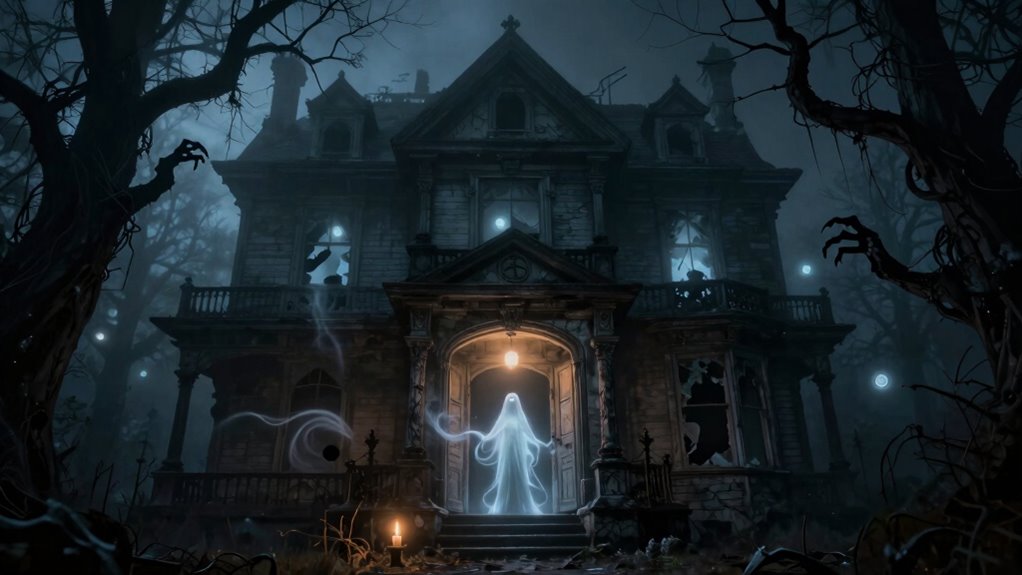
Many people confuse the terms haunted, cursed, and spiritually active, but understanding the differences can help you better interpret the experiences or stories you encounter. These labels aren’t just modern concepts; they have deep roots in history and culture. The term “haunted,” for example, often refers to locations or objects believed to be inhabited by spirits of the deceased. Historically, many cultures have stories of spirits lingering due to unresolved issues or strong emotional ties. For instance, in Western folklore, haunted houses are frequently linked to tragic events or restless souls who can’t find peace. Cultural interpretations vary widely—some see these spirits as malevolent entities, while others view them as guardians or lost loved ones trying to communicate. The idea of a place being haunted is often tied to the physical environment, with reports of ghostly apparitions, unexplained noises, or objects moving on their own. Additionally, the presence of spiritual activity can sometimes be mistaken for hauntings, but it often involves ongoing, benign interactions with unseen energies rather than restless spirits.
Cursed locations or objects, on the other hand, carry a different meaning. The historical origins of curses often stem from superstition, religious beliefs, or ancient rituals meant to invoke harm or misfortune upon someone or something. Cultures worldwide have stories of cursed artifacts or places where misfortune, illness, or death seem to occur suddenly and inexplicably. These curses are often believed to be intentionally placed by someone seeking revenge or protection, making them more about intent than spirits. Cultural interpretations of curses tend to focus on the power of words, symbols, or rituals to bring about real consequences, which can persist across generations. When you hear about a cursed object, it’s usually associated with a history of bad luck or tragedy that’s been passed down, rather than spirits actively inhabiting the space. Understanding the cultural significance behind curses can shed light on why certain stories persist and how they influence people’s perceptions of misfortune.
Additionally, modern projector technology can be used to create immersive experiences that simulate haunted or cursed environments, blurring the lines between reality and perception. Finally, being spiritually active refers to ongoing interactions with unseen energies or entities that aren’t necessarily malevolent or tied to a specific location. This can include personal experiences of intuition, guidance, or a sense of connection to something beyond the physical world. Many cultures see spiritual activity as a natural part of human existence, rooted in beliefs about the soul or universal energy. Unlike haunted places or cursed objects, spiritual activity isn’t always linked to fear or misfortune. It’s often viewed as a form of communication or awareness, opening you to insights or feelings that can be comforting or enlightening. When you understand these distinctions—backed by their historical origins and cultural interpretations—you’re better equipped to interpret what’s happening around you, whether it’s a mysterious presence, a lingering curse, or a spiritual awakening.
As an affiliate, we earn on qualifying purchases.
Frequently Asked Questions
Can a Location Be Both Haunted and Cursed Simultaneously?
Yes, a location can be both haunted and cursed simultaneously. You might find that the historical context and location history contribute to this duality. A site with a tragic past could be haunted by spirits, yet also cursed due to negative energies or curses placed in its history. These overlapping influences can make the place feel especially intense, blending supernatural activity with a sense of ongoing misfortune or bad luck.
How Can You Tell if a Spirit Is Benevolent or Malevolent?
You can often tell if a spirit is benevolent or malevolent by their actions and energy. Benevolent spirits tend to emit warm, calming feelings, like a gentle breeze, and avoid causing harm. Malevolent spirits, however, often project evil intentions, feeling cold and heavy, like a dark storm. Look for protective symbols or talismans—they can act as shields, helping you sense whether a spirit’s intentions are friendly or threatening.
Are There Scientific Methods to Prove Spiritual Activity?
No, there aren’t definitive scientific methods to prove spiritual activity yet. In paranormal investigation, enthusiasts rely on tools like EMF meters, thermometers, and audio recorders, but scientific skepticism questions their reliability. While some claim to detect anomalies indicating spirits, these readings often lack consistent, verifiable evidence. Ultimately, spiritual activity remains outside the scope of scientific proof, relying more on personal experiences and interpretations than empirical validation.
What Cultural Beliefs Influence Ideas of Curses and Hauntings?
Cultural beliefs deeply shape how you interpret curses and hauntings. Ironically, tales from cultural folklore and mythical traditions often turn ordinary spaces into haunted sites or cursed lands, driven by stories passed down through generations. These stories reflect societal fears and values, making supernatural ideas feel real. Whether in Western ghost stories or Eastern spiritual myths, your perception of curses and hauntings is molded by these rich mythic traditions, blending history with imagination.
Can Objects Be Haunted or Cursed Independently of Locations?
Objects can indeed be haunted or cursed independently of locations through object possession. You might encounter an item believed to hold spiritual energy or malevolent forces, leading to independent hauntings. These objects often carry a history or emotional attachment that amplifies their supernatural influence. If you suspect an object is haunted or cursed, it’s wise to handle it carefully, as its power can affect your environment and well-being.
As an affiliate, we earn on qualifying purchases.
Conclusion
So, next time you feel a strange presence, consider whether it’s haunted, cursed, or spiritually active. Some believe that curses are crafted through negative intent, while hauntings often involve lingering spirits. Remarkably, a theory suggests that what we perceive as curses could be our subconscious fears manifesting. Trust your instincts, but remember, understanding these differences can help you face the unknown with more clarity and confidence. Stay curious—there’s always more to uncover.
As an affiliate, we earn on qualifying purchases.
As an affiliate, we earn on qualifying purchases.
Halloween Picks
halloween
As an affiliate, we earn on qualifying purchases.