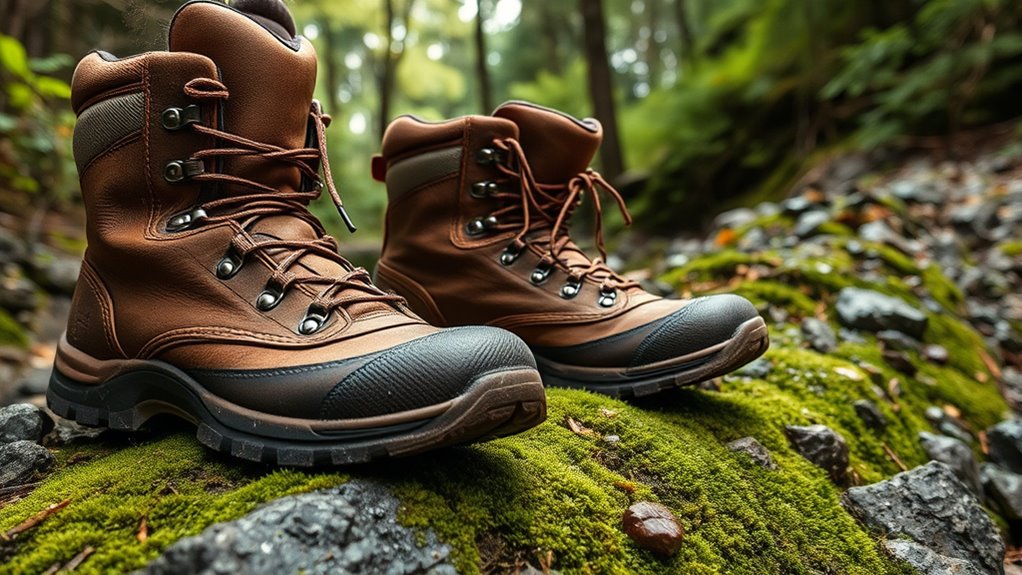

For premium hiking boots for rugged trails, I’d start with the Danner Mountain 600 EVO as the strongest all-around choice for its waterproof GORE-TEX build and Vibram Megagrip outsole. The Kenetrek Hardscrabble Hiker suits hikers who prioritize a more supportive, rugged build, while the Merrell Moab 3 Mid Waterproof offers a more approachable option for day hikes and mixed terrain. The main tradeoff is between substantial support and protection on rough ground versus lighter weight and easier movement. Waterproofing, fit, traction, and break-in needs also vary across these picks. Read on for the full comparison and help matching a boot to your terrain and hiking style.

Get movie nights delivered free with Prime
- Fast, free delivery on millions of items
- Prime Video, Amazon Music and more included
- Member-only deals all year
Key Takeaways
- Danner Mountain 600 EVO stands out as the all-around pick in this lineup, pairing a waterproof GORE-TEX build with Vibram Megagrip traction.
- Kenetrek Hardscrabble Hiker is the more specialized choice for hikers who put rugged support ahead of a lightweight feel.
- Merrell Moab 3 Mid Waterproof is a more approachable option than the heavier-duty choices, but buyers should still prioritize a secure fit for uneven trails.
- The two NORTIV 8 options present a lighter, more budget-minded alternative to the premium-oriented Danner and Kenetrek models; they are not like-for-like upgrades in rugged build.
- The lineup includes the Oboz Bridger Mid B-DRY twice, so the comparison covers nine distinct models rather than ten; check the exact version and fit before buying.
| Oboz Men’s Bridger Mid B-DRY Waterproof Hiking Boots |  | Best for Rugged, Wet Trails | Sole material: Rubber | Shaft height: Ankle | Outer material: Waterproof nubuck and textile | VIEW ON AMAZON | See Our Full Breakdown |
| Merrell Men’s Moab 3 Mid Waterproof Hiking Boots |  | Best for All-Round Trail Comfort | Sole material: Rubber | Shaft height: Ankle | Shaft circumference: 4 inches | VIEW ON AMAZON | See Our Full Breakdown |
| Danner Men’s Mountain 600 EVO 4.5″ Hiking Boot – Waterproof GORE-TEX Leather, Vibram Megagrip Traction, OrthoLite Footbed |  | Best Premium Recraftable Pick | Origin: Imported | Sole material: Rubber | Shaft height: 4.5 inches | VIEW ON AMAZON | See Our Full Breakdown |
| Oboz Men’s Bridger Mid B-DRY Waterproof Hiking Boots |  | Best Traditional Leather Build | Fabric type: 100% leather | Origin: Made in the USA or imported | Sole material: Rubber | VIEW ON AMAZON | See Our Full Breakdown |
| Danner Men’s Explorer 6-Inch Gore-Tex Hiking Boot |  | Best for Maximum Ankle Coverage | Fabric type: 100% full-grain leather | Origin: Made in USA | Sole material: Vibram | VIEW ON AMAZON | See Our Full Breakdown |
| NORTIV 8 Men’s Ankle High Waterproof Hiking Boots |  | Best for Lightweight Trail Days | Sole material: EVA and rubber | Shaft height: Ankle | Shaft circumference: 29.4 cm | VIEW ON AMAZON | See Our Full Breakdown |
| Timberland Men’s White Ledge Mid Waterproof Hiking Boots |  | Best for Durable Leather Support | Sole material: Rubber | Shaft height: Mid | Shaft circumference: 9.75 inches | VIEW ON AMAZON | See Our Full Breakdown |
| NORTIV 8 Men’s Waterproof Lightweight Hiking Boots |  | Best for Toe and Heel Protection | Sole material: EVA and rubber | Shaft height: Ankle | Shaft circumference: 30.8 cm | VIEW ON AMAZON | See Our Full Breakdown |
| Timberland Men’s Mt. Maddsen Hiking Waterproof Boots |  | Best for Long-Hike Footbed Comfort | Origin: Imported | Sole material: Rubber | Shaft height: Ankle | VIEW ON AMAZON | See Our Full Breakdown |
| Kenetrek Men’s Hardscrabble Hiker Hiking Boots |  | Best for Rugged Backcountry | Material: 100% leather | Lining: Synthetic | Sole: Rubber | VIEW ON AMAZON | See Our Full Breakdown |
| premium hiking boots for rugged trail | Sole material | Shaft height | Outer material | Waterproofing |
|---|---|---|---|---|
| Oboz Men’s Bridger Mid B-DRY W | Rubber | Ankle | Waterproof nubuck and textile | B-DRY waterproof/breathable membrane |
| Merrell Men’s Moab 3 Mid Water | Rubber | Ankle | — | Waterproof membrane |
| Danner Men’s Mountain 600 EVO | Rubber | 4.5 inches | Full-grain leather | GORE-TEX lining |
| Oboz Men’s Bridger Mid B-DRY W | Rubber | 4.5 inches | — | B-DRY waterproof-breathable membrane |
| Danner Men’s Explorer 6-Inch G | Vibram | — | Leather | — |
| NORTIV 8 Men’s Ankle High Wate | EVA and rubber | Ankle | Nylon and faux leather | — |
| Timberland Men’s White Ledge M | Rubber | Mid | — | — |
| NORTIV 8 Men’s Waterproof Ligh | EVA and rubber | Ankle | Suede and faux leather | Waterproof membrane |
| Timberland Men’s Mt. Maddsen H | Rubber | Ankle | — | — |
| Kenetrek Men’s Hardscrabble Hi | — | 7 inches | — | — |
More Details on Our Top Picks
Oboz Men’s Bridger Mid B-DRY Waterproof Hiking Boots
The Bridger Mid B-DRY is the strongest fit here for hikers who want a protective, supportive boot for rocky routes and changeable weather. Its waterproof-breathable membrane works with a reinforced nubuck-and-textile upper to help shield feet from trail debris and moisture, while the TPU chassis and nylon shank add structure underfoot. The cushioned triple-density EVA insole is geared toward longer days, and the rubber outsole is listed for traction on wet and rocky surfaces.
Compared with the Merrell Moab 3 Mid, this Oboz puts more emphasis on a structured, rugged build than on a mixed-use comfort pitch. That protection comes with a real cost: at 19 ounces per half pair, it may feel hefty for fast-moving hikers, and the mid-cut height will not suit everyone. Choose it for demanding terrain, not lightweight travel.
Pros:- B-DRY waterproof-breathable membrane is suited to changing trail weather
- Reinforced nubuck-and-textile upper adds protection on demanding paths
- TPU chassis and nylon shank provide underfoot structure
- Triple-density EVA insole adds cushioning for longer hikes
Cons:- At 19 ounces per half pair, it may feel heavy on long or fast hikes
- Mid-cut ankle height will not suit hikers who prefer a low shoe
- A structured build may feel less flexible than a lighter trail boot
Best for: Hikers tackling rocky, wet trails who want a structured mid-cut boot with a waterproof membrane and reinforced upper.
Not ideal for: Fast hikers and anyone prioritizing low weight or a low-cut feel; the listed 19-ounce half-pair weight and ankle-height design may feel cumbersome.
- Sole material:Rubber
- Shaft height:Ankle
- Outer material:Waterproof nubuck and textile
- Waterproofing:B-DRY waterproof/breathable membrane
- Weight:19.0 oz per half pair
- Insole:Triple-density EVA
- Midsole:Single-density EVA
- Chassis and shank:TPU chassis; nylon shank
- Upper reinforcement:Reinforced upper
Our verdict“Choose this Oboz for wet, rugged routes where structure and upper protection matter more than keeping pack weight low.”
Merrell Men’s Moab 3 Mid Waterproof Hiking Boots
The Moab 3 Mid Waterproof makes sense for hikers who want a capable boot that can move between hiking and other outdoor outings. Its waterproof membrane is paired with a pig suede and breathable mesh upper, while the Vibram TC5+ outsole is intended to deliver grip across varied surfaces. Merrell Air Cushion and the Super Rebound midsole help absorb impact, making this a comfort-oriented alternative to the more structured Oboz Bridger Mid B-DRY.
That broader-use character is the appeal, but it is not a no-compromise rugged-trail specialist. The supplied details do not specify the Moab’s weight or shank construction, so buyers seeking the explicitly listed underfoot support of the Oboz should compare carefully. It may also need a break-in period, and some hikers find the ankle-height cut restrictive. Pick it for cushioning and versatile traction rather than a light, immediately flexible feel.
Pros:- Waterproof membrane helps keep feet dry in wet conditions
- Vibram TC5+ outsole is designed for traction across varied outdoor surfaces
- Air Cushion and Super Rebound midsole help absorb impact
- Pig suede and breathable mesh combine durability with ventilation
Cons:- May need a break-in period before it feels comfortable
- Ankle-height design can feel restrictive to some hikers
- Provided specifications do not state weight or shank construction
Best for: Day hikers who want waterproofing, impact cushioning, and a boot that can serve for varied outdoor activities.
Not ideal for: Hikers who need a low-cut, immediately flexible boot or want clearly specified shank and chassis support for demanding loads.
- Sole material:Rubber
- Shaft height:Ankle
- Shaft circumference:4 inches
- Upper:Pig suede leather and breathable mesh
- Waterproofing:Waterproof membrane
- Outsole:Vibram TC5+
- Cushioning:Merrell Air Cushion and Super Rebound midsole
- Origin:Imported
Our verdict“Pick the Moab 3 Mid if cushioned comfort and multi-activity usefulness matter more to you than a highly specified, rigid support platform.”
Danner Men’s Mountain 600 EVO 4.5″ Hiking Boot – Waterproof GORE-TEX Leather, Vibram Megagrip Traction, OrthoLite Footbed
The Danner Mountain 600 EVO stands apart for buyers who want premium leather construction with a path to longer-term upkeep. Its full-grain leather upper, GORE-TEX waterproof lining, and Vibram Megagrip outsole suit wet, uneven trails where dependable grip and weather protection matter. A removable OrthoLite ECO footbed gives you the option to replace or adjust the footbed, while the recraftable design is a point of difference from the more conventional Merrell Moab 3 Mid.
This is the choice for someone willing to prioritize materials and serviceability over a light feel. Danner lists the boot as potentially heavy, and recrafting is a future maintenance step rather than a shortcut to a low-effort shoe. The supplied data also gives no weight or detailed shank specification, which leaves less to judge about underfoot structure than the Oboz Bridger. Its premium build makes the most sense for regular use, not occasional short walks.
Pros:- Full-grain leather upper is built for durable trail use
- GORE-TEX lining provides waterproof protection
- Vibram Megagrip outsole is designed for traction on challenging surfaces
- Recraftable construction and removable OrthoLite ECO footbed support longer-term upkeep
Cons:- May feel heavy compared with less substantial hiking boots
- Recrafting involves future maintenance rather than a simple replacement step
- Supplied specifications do not list weight or shank details
Best for: Frequent hikers who value full-grain leather, waterproof protection, strong wet-surface traction, and a recraftable boot.
Not ideal for: Occasional hikers or weight-conscious buyers who want a light boot and do not expect to maintain or recraft their footwear.
- Origin:Imported
- Sole material:Rubber
- Shaft height:4.5 inches
- Outer material:Full-grain leather
- Waterproofing:GORE-TEX lining
- Outsole:Vibram Megagrip
- Footbed:Removable OrthoLite ECO
- Construction:Recraftable
Our verdict“Choose the Mountain 600 EVO if you want a premium leather boot designed for hard use and upkeep, and can accept added weight and maintenance.”
Oboz Men’s Bridger Mid B-DRY Waterproof Hiking Boots
This Bridger Mid B-DRY listing suits hikers who want a leather-focused, waterproof mid boot for rough and wet ground. It shares its name and core trail purpose with the other Oboz Bridger Mid B-DRY in this roundup, but the supplied details here specify a 100% leather fabric and a 4.5-inch shaft rather than the other listing’s nubuck-and-textile upper and detailed chassis and insole data. The listed rubber sole, waterproof-breathable membrane, cushioned insole, and reinforced upper point toward protection and comfort for extended outings.
Against the Danner Explorer 6-Inch, this Oboz has a shorter shaft, which may feel less imposing around the ankle, though the Explorer’s six-inch height offers more coverage. The Oboz is still listed at 19 ounces per half pair, so it is no lightweight alternative. Since this listing gives fewer construction details than its Oboz counterpart, buyers comparing support systems should check which exact version and specification set applies before choosing.
Pros:- Waterproof-breathable membrane is suited to wet trail conditions
- 100% leather fabric listing appeals to buyers seeking a leather-focused upper
- Rubber sole and stated traction suit rocky and wet surfaces
- Cushioned insole and reinforced upper support longer, rougher outings
Cons:- Listed weight of 19 ounces per half pair may feel heavy
- Mid-cut design may not suit hikers who prefer a low shoe
- This listing provides fewer construction details than the other Bridger Mid entry
Best for: Hikers who prefer a leather-fabric mid boot with waterproofing and traction for extended outings on rough terrain.
Not ideal for: Weight-conscious hikers or buyers who need fully detailed specifications for the insole, chassis, and shank before choosing.
- Fabric type:100% leather
- Origin:Made in the USA or imported
- Sole material:Rubber
- Shaft height:4.5 inches
- Weight:19.0 oz per half pair
- Waterproofing:B-DRY waterproof-breathable membrane
- Insole:Cushioned insole
- Upper reinforcement:Reinforced upper
Our verdict“Choose this Bridger listing for leather-focused waterproof protection, but check the exact version if detailed support specifications affect your decision.”
Danner Men’s Explorer 6-Inch Gore-Tex Hiking Boot
The Danner Explorer 6-Inch is the most coverage-focused choice in this group. Its full-grain leather upper, GORE-TEX lining, fiberglass shank, and stitchdown construction make it a substantial option for rugged terrain, while the Vibram 148 Kletterlift outsole is specified for traction. The Airthotic heel cradle and arch support add shaping underfoot. Compared with the 4.5-inch Danner Mountain 600 EVO, the Explorer’s taller shaft offers more coverage, but the Mountain 600 EVO is the one here explicitly described as recraftable.
The Explorer makes sense for hikers who favor a traditional, durable build and want a supportive feel over a minimal one. Its full-grain leather and six-inch height also bring bulk, and the provided information flags weight as a concern without giving a figure. Buyers who want an agile boot for quick day hikes may find the Merrell Moab 3 Mid a more comfort-oriented alternative. The Explorer’s strength is sturdy construction, not lightness or a low-profile fit.
Pros:- Six-inch shaft provides more coverage than the 4.5-inch Danner Mountain 600 EVO
- Full-grain leather upper and stitchdown construction emphasize durability
- GORE-TEX lining provides waterproof, breathable protection
- Fiberglass shank and Airthotic heel cradle with arch support add structure
Cons:- May feel heavy compared with shorter, more agile hiking boots
- Six-inch shaft and leather build may feel bulky to hikers used to mid-cut footwear
- The supplied data does not state a specific weight
Best for: Hikers who prefer a tall, traditional leather boot with a fiberglass shank and defined heel and arch support for rugged routes.
Not ideal for: Fast day hikers and weight-conscious buyers who prefer a lighter, shorter boot with a less substantial feel.
- Fabric type:100% full-grain leather
- Origin:Made in USA
- Sole material:Vibram
- Outer material:Leather
- Waterproof lining:GORE-TEX
- Heel support:Danner Airthotic heel cradle and arch support
- Shank:Fiberglass
- Construction:Stitchdown
- Outsole:Vibram 148 Kletterlift
Our verdict“Pick the Explorer if you want a tall, supportive leather boot for rugged trails and are willing to carry extra bulk.”
NORTIV 8 Men’s Ankle High Waterproof Hiking Boots
For hikers who want ankle coverage without the more substantial feel of the Timberland White Ledge Mid, this NORTIV 8 is the lighter, more flexible choice. Its EVA midsole and cushioned insole are aimed at easing long hours on foot, while the rubber outsole adds grip on varied ground. The ankle-height cut suits day hikes and mixed outdoor use, though it offers less shaft coverage than the taller Kenetrek Hardscrabble Hiker. That makes it a less specialized pick for rough, brushy backcountry routes. The nylon and faux-leather upper also presents a durability tradeoff: it keeps the boot flexible, but may not hold up as well to repeated heavy use as full-grain leather. I’d choose it for comfort and versatility over maximum ruggedness.
Pros:- Cushioned insole and EVA midsole are suited to long days on foot
- Lightweight, flexible construction supports easy movement
- Rubber outsole provides traction on varied terrain
- Ankle-height design works for hiking, camping, and trekking
Cons:- Nylon and faux leather may wear sooner under frequent heavy use
- May need a break-in period before it feels comfortable
- Ankle shaft offers less coverage than taller rugged-trail boots
Best for: Day hikers and campers who want a cushioned, flexible waterproof boot for varied trails without a tall shaft.
Not ideal for: Hikers who regularly cross rough brush or demand a long-wearing full-grain leather upper for frequent backcountry use.
- Sole material:EVA and rubber
- Shaft height:Ankle
- Shaft circumference:29.4 cm
- Outer material:Nylon and faux leather
- Waterproof:Yes, described as waterproof
- Midsole:Lightweight EVA
- Outsole:Slip-resistant rubber
Our verdict“Choose this NORTIV 8 for cushioned, flexible day hikes, but pick the taller Kenetrek Hardscrabble Hiker for more demanding backcountry coverage.”
Timberland Men’s White Ledge Mid Waterproof Hiking Boots
The White Ledge Mid takes a more traditional leather-boot approach than the lighter-feeling NORTIV 8 ankle models. Its waterproof Timberland leather upper, gusseted tongue, and rustproof speed-lace hardware offer practical protection and secure lacing for wet trail days. A rubber sole and EVA footbed balance traction with underfoot cushioning, though the boot may feel heavy compared with more flexible options such as the NORTIV 8 Men’s Ankle High. The mid-height shaft adds coverage, but hikers who dislike a higher collar may find it restrictive. I’d place it ahead of the NORTIV 8 for buyers prioritizing a leather upper and durable hardware, but below the Kenetrek Hardscrabble Hiker for demanding routes where a taller shaft and full-grain construction are more appealing.
Pros:- Waterproof leather upper helps keep feet dry
- Rubber sole is suited to traction on outdoor trails
- EVA footbed provides cushioning underfoot
- Rustproof speed-lace hardware is built for repeated outdoor use
Cons:- May feel heavy compared with the NORTIV 8 ankle-height options
- Mid-height shaft may feel restrictive to hikers who prefer a low collar
- Leather construction is less flexible than lightweight trail-focused designs
Best for: Hikers seeking a waterproof leather mid boot with durable lacing hardware for regular wet-weather trail use.
Not ideal for: Fast-moving day hikers who prioritize low weight and a flexible ankle feel over leather coverage and structure.
- Sole material:Rubber
- Shaft height:Mid
- Shaft circumference:9.75 inches
- Upper material:Waterproof Timberland leather
- Lining:ReBOTL fabric
- Footbed:EVA
- Midsole:EVA
- Hardware:Rustproof speed-lace hardware with lace hooks
Our verdict“Pick the White Ledge Mid if you want waterproof leather and durable hardware, but choose a NORTIV 8 model for a lighter, more flexible feel.”
NORTIV 8 Men’s Waterproof Lightweight Hiking Boots
Compared with the NORTIV 8 Men’s Ankle High, this model puts more emphasis on impact protection: its rubber toe cap and reinforced heel add coverage where rocks and uneven trail edges can hit. A waterproof membrane and slip-resistant rubber outsole suit damp, mixed terrain, while the removable insole and shock-absorbent midsole let buyers adjust the underfoot feel. The suede and faux-leather upper gives it a different balance from the White Ledge Mid’s waterproof leather: it adds reinforced structure, but the product data does not establish the same leather construction. Despite the lightweight positioning, some hikers may find it heavy over extended wear. I’d favor it over the simpler NORTIV 8 ankle boot when toe and heel protection matter, but not for those seeking the taller support of the Kenetrek.
Pros:- Rubber toe cap and reinforced heel add protection on rocky trails
- Waterproof membrane is suited to wet conditions
- Slip-resistant rubber outsole offers traction across varied terrain
- Removable insole and shock-absorbent midsole support a cushioned fit
Cons:- Some users may find the boot heavy during extended wear
- Suede and faux-leather construction may not suit buyers seeking a premium full-grain leather upper
- Ankle-height shaft offers less coverage than the Kenetrek Hardscrabble Hiker
Best for: Hikers on rocky day trails who want a waterproof ankle boot with reinforced toe and heel protection.
Not ideal for: Backcountry hikers who need a taller shaft and the durability focus of a full-grain leather boot such as the Kenetrek Hardscrabble Hiker.
- Sole material:EVA and rubber
- Shaft height:Ankle
- Shaft circumference:30.8 cm
- Outer material:Suede and faux leather
- Waterproofing:Waterproof membrane
- Toe protection:Reinforced rubber toe cap
- Heel protection:Reinforced heel
- Insole:Removable
Our verdict“Choose this NORTIV 8 for added toe and heel protection on rocky day hikes, but go with the Kenetrek for taller coverage on rugged backcountry routes.”
Timberland Men’s Mt. Maddsen Hiking Waterproof Boots
The Mt. Maddsen is the Timberland option here that makes its strongest case for long-distance comfort: its removable anti-fatigue footbed is designed to ease the repeated impact of extended hikes. The waterproof premium leather upper, gusseted tongue, and rubber sole make it more trail-oriented than a casual boot, while the ReBOTL lining adds a recycled-material component. Against the White Ledge Mid, the Mt. Maddsen’s clearest distinction is that removable anti-fatigue footbed; the White Ledge instead lists rustproof lace hardware and a mid shaft. This model has an ankle-height shaft, so it provides less collar coverage than the White Ledge or Kenetrek Hardscrabble Hiker. Its robust construction may also feel heavy. I’d favor it for long hikes where footbed comfort matters more than a taller boot.
Pros:- Removable anti-fatigue footbed is suited to extended hikes
- Waterproof premium leather upper helps keep feet dry
- Rubber sole provides traction on wet terrain
- ReBOTL fabric lining adds recycled-material content
Cons:- Robust construction may feel heavy on long outings
- Ankle-height shaft gives less coverage than the White Ledge Mid
- Leather build is less geared toward a lightweight, flexible feel
Best for: Hikers planning long days on established trails who want waterproof leather and a removable anti-fatigue footbed.
Not ideal for: People who need a tall shaft for rough backcountry terrain or who prioritize the lightest possible boot for fast hiking.
- Origin:Imported
- Sole material:Rubber
- Shaft height:Ankle
- Shaft circumference:9.5 inches
- Upper material:Waterproof premium Timberland leather
- Lining:ReBOTL fabric
- Footbed:Removable anti-fatigue
- Closure:Lace-up with fully gusseted tongue
Our verdict“Choose the Mt. Maddsen for a waterproof leather boot with a removable comfort-focused footbed, but look to the White Ledge Mid for a taller shaft.”
Kenetrek Men’s Hardscrabble Hiker Hiking Boots
Among these five picks, the Hardscrabble Hiker is the most explicitly oriented toward demanding terrain. Its 7-inch shaft gives more coverage than the ankle-height Timberland Mt. Maddsen and both NORTIV 8 options, while the full-grain leather upper and Windtex waterproof membrane are suited to repeated exposure to rough conditions. The product description also highlights stability and traction on loose, uneven ground, making it a better match for backcountry hikes than casual outdoor use. That added structure comes with real costs: the listed weight is 3.5 pounds, and the leather may require a break-in period. Compared with the White Ledge Mid, this is the more ruggedly specified choice, but it is less compelling for hikers who want a light, immediately flexible boot for shorter outings.
Pros:- Full-grain leather is designed for durability and abrasion resistance
- Windtex waterproof membrane suits variable trail weather
- Seven-inch shaft offers more coverage than the ankle-height models
- Description highlights stability and traction on uneven surfaces
Cons:- Listed weight of 3.5 pounds may feel heavy on long hikes
- Full-grain leather may need a break-in period
- Taller, more structured build may feel excessive for casual day trails
Best for: Backcountry hikers tackling uneven, loose, or rough trails who want a waterproof full-grain leather boot with a taller shaft.
Not ideal for: Day hikers prioritizing low weight, minimal break-in, or a flexible ankle-height boot like the NORTIV 8 Men’s Ankle High.
- Material:100% leather
- Lining:Synthetic
- Sole:Rubber
- Shaft height:7 inches
- Weight:3.5 pounds
- Water resistance:Waterproof
- Color:Brown
- Toe style:Round toe
- Closure:Lace-up
Our verdict“Choose the Hardscrabble Hiker for rough backcountry routes and greater shaft coverage, but select a NORTIV 8 if you want a more flexible boot for day hikes.”

How We Picked
I ranked these boots for the demands of rugged trails, weighing traction, underfoot protection, ankle support, waterproof construction, and the likely tradeoff between support and weight. I also considered how clearly each boot serves a different hiker: from a relatively approachable day-hiking option to a more substantial boot for rougher terrain. Product details supplied for the Danner Mountain 600 EVO identify GORE-TEX waterproofing and Vibram Megagrip traction, which directly support its all-around placement. The Kenetrek Hardscrabble Hiker earns a distinct role for buyers seeking a more rugged build, while the Merrell Moab 3 Mid is positioned for hikers who want a less specialized entry point.
Ranking is not a claim that every boot suits every foot or trail. Fit, terrain, pack weight, weather, and personal tolerance for stiffness can change the right choice. The list also repeats the Oboz Bridger Mid B-DRY and includes less premium-positioned NORTIV 8 models, so I treat the lineup as a comparison of available options rather than ten unique premium contenders. Where detailed specifications were not provided, I avoid making unsupported performance claims and focus the recommendation on the buyer tradeoffs each model represents.
| premium hiking boots for rugged trail | Sole material | Outer material | Waterproofing | Origin |
|---|---|---|---|---|
| Oboz Men’s Bridger Mid B-DRY W | Rubber | Waterproof nubuck and textile | B-DRY waterproof/breathable membrane | — |
| Merrell Men’s Moab 3 Mid Water | Rubber | — | Waterproof membrane | Imported |
| Danner Men’s Mountain 600 EVO | Rubber | Full-grain leather | GORE-TEX lining | Imported |
| Oboz Men’s Bridger Mid B-DRY W | Rubber | — | B-DRY waterproof-breathable membrane | Made in the USA or imported |
| Danner Men’s Explorer 6-Inch G | Vibram | Leather | — | Made in USA |
| NORTIV 8 Men’s Ankle High Wate | EVA and rubber | Nylon and faux leather | — | — |
| Timberland Men’s White Ledge M | Rubber | — | — | — |
| NORTIV 8 Men’s Waterproof Ligh | EVA and rubber | Suede and faux leather | Waterproof membrane | — |
| Timberland Men’s Mt. Maddsen H | Rubber | — | — | Imported |
| Kenetrek Men’s Hardscrabble Hi | — | — | — | — |
Factors to Consider When Choosing Premium Hiking Boots For Rugged Trails
Choosing a rugged-trail boot is less about finding the most features and more about matching protection to your route, load, and feet. I’d use these factors to narrow the field before comparing individual models.
Match Support to Terrain and Pack Weight
Boot height alone does not tell you how much support a boot will provide; stiffness through the sole and the way the upper holds your foot matter too. Rocky traverses and heavier backpacks can make a supportive platform feel more reassuring, while smoother day hikes may not call for the added structure. A common mistake is buying the stiffest boot available for every outing, then finding it cumbersome on easier trails. Think about the roughest routes you regularly hike, not only an occasional ambitious trip. If your pack is light and your trails are moderate, a less substantial boot may be more comfortable without sacrificing the protection you actually need.
Choose Waterproofing for Your Climate, Not as a Default
A waterproof membrane can help in wet grass, shallow puddles, and cold-weather hikes, but it can also reduce airflow compared with a non-waterproof upper. That tradeoff matters on warm, dry trails, where dampness from sweat may be a bigger comfort problem than rain. Waterproof boots also need time to dry if water gets over the collar, so they are not a guarantee of dry feet in deep crossings. Consider how often your routes involve persistent wet conditions and whether you hike in temperatures where ventilation matters. For mixed seasons, gaiters and careful route choices can sometimes be more useful than choosing waterproofing without regard to climate.
Treat Fit as a Trail-Safety Decision
A boot that feels comfortable standing still can still let your toes hit the front on a descent or allow your heel to lift on climbs. Try boots with the socks you plan to hike in, and check toe room, heel hold, and pressure across the instep. Leave enough space for feet to swell over a long day, but avoid sizing up so far that the foot slides on uneven ground. Width and foot shape can matter as much as length, and a boot that suits one hiker may create hot spots for another. If possible, test the fit on an incline or stairs before committing to a long trail day.
Compare Traction for the Surface You Actually Hike
Outsole grip is not a single measure: lug pattern, rubber compound, and how the sole contacts rock, mud, or loose dirt all affect footing. A boot designed to grip wet rock may not shed sticky mud as readily, while widely spaced lugs can behave differently on packed paths. Do not assume a recognizable outsole name makes every boot suitable for every surface; tread geometry and the rest of the construction still matter. Think through your usual mix of slick stone, loose gravel, forest soil, and steep descents. For rugged routes, predictable footing and a stable platform are more useful than a dramatic tread pattern that does not match your terrain.
Balance Durability Against Weight and Break-In
More substantial materials and construction can offer a sense of protection and longevity, but they may also add weight and feel less flexible at first. Lighter boots can make long approaches feel easier, though they may not provide the same supportive character as a more rugged model. A frequent mistake is taking a stiff new boot on a long trip before learning where it presses or how it moves. Wear new boots on short walks first, then extend the distance as the fit proves comfortable. Pay attention to whether a boot’s build solves a real problem in your hiking routine rather than treating heft as proof of better performance.
Spend for Useful Construction, Not the Premium Label
Premium positioning matters only when the features match the work your boots will do. Waterproof membranes, named traction compounds, and reinforced construction can be worthwhile for frequent wet or rocky hikes, but they do not correct a poor fit. A lighter, simpler pair may serve occasional day hikers better than a more demanding boot built for rougher use. Compare the boot’s construction with your expected mileage, terrain, and maintenance habits before paying for features you may rarely use. Clean and dry boots after muddy outings, and follow the maker’s care guidance for the materials; neglect can shorten the life of even a well-built pair.
Frequently Asked Questions
Which boot in this roundup is the best starting point for rugged trails?
I’d begin with the Danner Mountain 600 EVO if you want one boot to cover varied rugged terrain, since the supplied details pair waterproof GORE-TEX construction with Vibram Megagrip traction. That combination makes it the clearest all-around choice in this lineup, but it does not make it right for every foot or climate. Compare its fit and weight with the Merrell Moab 3 Mid if you prefer a more approachable day-hiking option. If your routes demand a more substantial build, the Kenetrek Hardscrabble Hiker is the more specialized alternative. Try the fit before deciding, especially if you hike long descents where toe room and heel hold become obvious.
Do I need waterproof hiking boots if I mostly hike in dry weather?
Not necessarily. Waterproof construction is useful when you regularly encounter rain, wet vegetation, or cold conditions, but a membrane can limit ventilation on hot, dry outings. If your hikes are mostly warm and dry, comfort and breathability may matter more than keeping out occasional splashes. Also remember that water can enter over the boot collar, and a waterproof boot may take longer to dry once soaked inside. Choose waterproofing for recurring conditions rather than treating it as a universal upgrade.
Are the NORTIV 8 models comparable to the premium-oriented boots here?
They offer a different proposition in this roundup: the NORTIV 8 models are presented as lighter, more budget-minded alternatives, while the Danner and Kenetrek picks occupy more premium-oriented roles. The product details provided do not establish that the NORTIV 8 boots match those models in long-term durability, support, or traction on demanding terrain. For occasional hikes or less severe routes, a simpler option may be enough if it fits securely. For frequent rocky trails or heavier loads, compare construction and fit closely rather than assuming the lower-cost category provides equivalent protection. The best choice depends on how demanding your regular hikes are.
Why does this list show ten entries but only nine distinct boot models?
The Oboz Men’s Bridger Mid B-DRY Waterproof Hiking Boots appears twice in the supplied product list. I have not treated the duplicate as a separate boot or claimed a difference between the two entries. That leaves nine distinct models to compare, including options with different intended strengths and levels of ruggedness. If you are shopping from the source list, verify the product listing and version so you do not mistake a duplicate for a separate model. The repeated entry does not change the recommendation roles for the other boots.
How can I tell whether a boot is too stiff for the trails I hike?
A stiff boot can be useful when rough ground or a heavier pack calls for a stable platform, but it may feel restrictive on easy trails or during long walks on smoother surfaces. Notice whether your foot can move naturally without pressure points and whether the sole flexes enough for your stride. Test the boot on inclines and uneven ground, not only on a flat floor. Short outings can reveal hot spots before you commit to a full day hike. If your routes are mostly moderate and your pack is light, a less substantial option such as the Merrell Moab 3 Mid may be a better match than a more ruggedly built boot.
Conclusion
For most hikers comparing premium boots for rugged trails, I’d choose the Danner Mountain 600 EVO as best overall for its specified waterproof GORE-TEX build and Vibram Megagrip traction. The NORTIV 8 models are the best value-oriented options in this lineup for buyers who want a more budget-minded alternative, while accepting that the provided details do not establish premium-level rugged performance. For the most support-focused, rugged role, consider the Kenetrek Hardscrabble Hiker; for a more approachable choice for newer hikers and day trips, start with the Merrell Moab 3 Mid Waterproof. If you need a clearly specified traction-and-waterproofing combination, the Danner Mountain 600 EVO is the standout, but fit should decide between it and every alternative. The Oboz Bridger entry is duplicated in the source list, so compare the actual model and fit rather than treating the repeat as a separate recommendation.
Halloween Picks
halloween
As an affiliate, we earn on qualifying purchases.