The best gear for power outages combines dependable light, a way to receive weather updates, and backup power matched to the length of the outage. My best overall pick is the Jackery Explorer 300 for portable device and small-appliance power, while the APC BE600M1 is a better fit for keeping a router or computer running through short interruptions. For basic lighting, rechargeable and battery-powered lanterns offer simpler, lower-maintenance choices. The main tradeoffs are runtime, capacity, charging options, and how much equipment you want to store and maintain. Read on for the full breakdown of all 15 options and how to choose gear around your household’s needs.
Key Takeaways
The roundup separates into three jobs: lighting, information from emergency radios, and power delivery from UPS units and portable power stations; one product type cannot cover all three well.
The Jackery Explorer 300 is the practical overall power pick for portable charging, while the 1070Wh Jackery Solar Generator 1000 v2 is aimed at longer backup needs and heavier loads.
The APC BE600M1 serves a different purpose from either Jackery: it can bridge short outages for connected electronics, but it is not a substitute for a large power station.
Lighting choices reveal a tradeoff between reusable charging and simple battery operation; rechargeable lanterns reduce disposable-cell dependence, while battery models can be ready when stored with fresh cells.
The radio options add NOAA weather reception and backup charging, but hand-crank and solar features are best treated as backup methods rather than guaranteed replacements for charging ahead of a storm.
| MalloMe Camping Lights LED Lantern Flashlights, Battery Operated, 360° Brightness, Collapsible, Water-Resistant, for Camping, Emergency, Power Outages, Black |  | Best Compact Emergency Lantern | Light output: 300 lumens | Beam: 360 degrees | Light source: LED | VIEW ON AMAZON | See Our Full Breakdown |
| Jackery Explorer 300 Portable Power Station, 292Wh |  | Best for Charging Essential Devices | Capacity: 292Wh | Weight: 7.5 lbs | Maximum power: 300W | VIEW ON AMAZON | See Our Full Breakdown |
| Eoxsmile Emergency Radio with NOAA Weather Alert, Solar Hand Crank Portable |  | Best for Weather Updates Without Grid Power | Radio bands: FM, AM, shortwave, and NOAA weather band | Power sources: Solar, hand crank, USB, and AAA batteries | Built-in battery: 5000mAh rechargeable | VIEW ON AMAZON | See Our Full Breakdown |
| Lichamp 4-Pack Solar Camping Lanterns – USB Rechargeable LED Lanterns with Three Modes for Emergency and Outdoor Use |  | Best Multi-Room Lantern Set | Set includes: 4 lanterns and 4 USB cables | Maximum light output: 600 lumens | Light modes: 3 | VIEW ON AMAZON | See Our Full Breakdown |
| Consciot 1000LM Battery Powered LED Camping Lantern, 4 Light Modes, Dimmable | 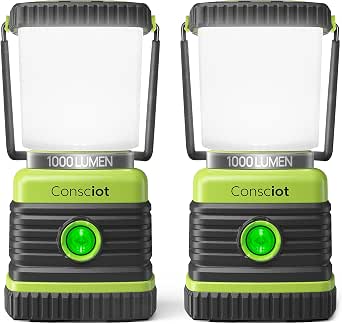 | Best for Bright, Adjustable Room Lighting | Light output: Up to 1000 lumens | Light modes: 4: cool white, warm white, combined white, and strobe | Dimming: Dimmable | VIEW ON AMAZON | See Our Full Breakdown |
| Emergency Glow Sticks – 12-Hour Industrial-Grade, Individually Wrapped for Survival, Camping, Power Outages & Military Use |  | Best for No-Battery Backup Lighting | Pack size: 12 light sticks | Color: Green | Illumination duration: Up to 12 hours | VIEW ON AMAZON | See Our Full Breakdown |
| APC BE600M1 UPS Battery Backup & Surge Protector for Computer, Router, NAS |  | Best for Keeping Internet and Computer Gear Running | Capacity: 600VA | Maximum output: 330W | Outlets: 7 | VIEW ON AMAZON | See Our Full Breakdown |
| Jackery Solar Generator 1000 v2 with 200W Solar Panel, 1070Wh, 1500W AC |  | Best for Extended, Multi-Device Backup | Battery capacity: 1,070Wh | AC output: 1,500W | Starting wattage: 3,000W | VIEW ON AMAZON | See Our Full Breakdown |
| Innofox LED Camping Lantern, 1500 Lumens, Battery Powered with 4 D Batteries Included, Weatherproof Tent Light with 4 Light Modes |  | Best for Bright, Ready-to-Use Room Lighting | Maximum brightness: 1,500 lumens | Power source: 4 D batteries, included | Battery life: Up to 36.5 hours, according to the product data | VIEW ON AMAZON | See Our Full Breakdown |
| Etekcity LED Camping Lanterns, 4 Pack |  | Best for Distributing Light Around the Home | Pack size: 4 lanterns | Maximum brightness: 154 lumens per lantern | Light source: 30 LEDs | VIEW ON AMAZON | See Our Full Breakdown |
| LED Camping Lantern, Solar, 5000mAh Rechargeable, 2000 Lumens, 5 Light Modes, IP65 Waterproof, USB Charging |  | Best Compact Rechargeable Lantern | Battery capacity: 5000mAh | Battery type: Lithium-ion polymer | Light output: Up to 2000 lumens | VIEW ON AMAZON | See Our Full Breakdown |
| FosPower NOAA Emergency Weather Radio A1 7400mWh Solar Hand Crank (Orange) |  | Best for Weather Updates | Power bank capacity: 7400mWh (2000mAh) | Power sources: Solar, hand crank, and 4 AAA batteries | Radio bands: AM, FM, and weather band | VIEW ON AMAZON | See Our Full Breakdown |
| Lichamp LED Camping Lantern 4 Pack – Battery Powered Collapsible Hanging Light for Emergency, Outdoor, Home Use |  | Best Battery-Backup Light Set | Pack size: 4 lanterns | Light output: Up to 350 lumens per lantern | Illumination: 360-degree beam | VIEW ON AMAZON | See Our Full Breakdown |
| Collapsible Portable LED Camping Lantern 4-Pack – Waterproof, Rechargeable, Solar & USB Powered, Survival Kit for Indoor & Outdoor Use |  | Best Rechargeable Multi-Room Set | Pack size: 4 lanterns | Power sources: USB and solar charging | Battery description: Nickel-metal hydride | VIEW ON AMAZON | See Our Full Breakdown |
| Leaton Hand Crank Emergency Radio with NOAA Weather, AM/FM, 10000mAh Battery |  | Best for Longer Device Backup | Battery capacity: 10000mAh | Charging modes: Solar, hand crank, and USB-C | Radio frequencies: AM 520–1710kHz, FM 87–108MHz, NOAA 162.400–162.550MHz | VIEW ON AMAZON | See Our Full Breakdown |
| gear for power outage | Dimensions | Weight | Water resistance |
|---|---|---|---|
| MalloMe Camping Lights LED Lan | — | — | Water resistant |
| Jackery Explorer 300 Portable | 9.1 x 5.2 x 7.8 inches | 7.5 lbs | — |
| Eoxsmile Emergency Radio with | 6.77 x 3.7 x 2.91 inches | 14.88 ounces | Water resistant |
| Lichamp 4-Pack Solar Camping L | 3.74 x 3.62 x 5.1 inches | 1.48 kg | Water resistant |
| Consciot 1000LM Battery Powere | 3.54 x 3.86 x 7.28 inches | 0.99 kg | IPX4 |
| Emergency Glow Sticks | — | — | Waterproof, according to the product description |
| APC BE600M1 UPS Battery Backup | 10.79 x 4.13 x 5.47 inches | 7.5 pounds | — |
| Jackery Solar Generator 1000 v | 12.87 x 8.82 x 9.72 inches | 23.8 pounds | — |
| Innofox LED Camping Lantern | 5.3 x 5.3 x 14.61 inches | 1.6 pounds | IPX4 |
| Etekcity LED Camping Lanterns | 3.46 x 3.46 x 4.86 inches | 0.67 lb (302 g) | — |
| LED Camping Lantern | 4.92 x 4.92 x 1.02 inches | 8.8 ounces | — |
| FosPower NOAA Emergency Weathe | 6.2 x 2.1 x 2.9 inches | 310 g | Water resistant |
| Lichamp LED Camping Lantern 4 | 3.38 x 3.38 x 9.56 inches | — | Water resistant |
| Collapsible Portable LED Campi | — | — | Waterproof |
| Leaton Hand Crank Emergency Ra | 6.3 x 3.5 x 3.1 inches | 1.1 lbs | IPX6 |
More Details on Our Top Picks
MalloMe Camping Lights LED Lantern Flashlights, Battery Operated, 360° Brightness, Collapsible, Water-Resistant, for Camping, Emergency, Power Outages, Black
The MalloMe is a straightforward choice for keeping a small area lit when the power goes out. Its 300-lumen, 360-degree beam spreads light around a room rather than aiming it in one direction, and the pull-up design avoids buttons that may be fiddly in the dark. It folds down for storage in a drawer or emergency kit, taking up less space than the taller Consciot 1000LM lantern. That compactness comes with less output, though, so it is better for a bedside, hallway, or small table than lighting a family room. It runs on three AAA batteries, which are not included, and the supplied details do not list a hanging hook or case. I’d choose it for simple, compact backup light, not as the only lantern for a large household.
Pros:- 360-degree illumination spreads light around a small space
- Collapsible design is easy to store in a drawer or emergency kit
- Pull-up operation is simple to use without searching for controls
- Water-resistant construction suits basic outdoor use
Cons:- Three AAA batteries are not included and may need replacement during prolonged outages
- 300 lumens is less suited to lighting a large room than the Consciot lantern’s 1000-lumen output
- No carrying case or hanging hook is listed
Best for: Apartment residents and emergency-kit builders who want a compact lantern for a bedside, hallway, or small room.
Not ideal for: Households needing strong light across a large room or extended runtime without replacing small AAA batteries.
- Light output:300 lumens
- Beam:360 degrees
- Light source:LED
- Power:3 AAA batteries required
- Design:Collapsible with foldaway handles
- Water resistance:Water resistant
- Material:Plastic
- Color:Black
Our verdict“Choose the MalloMe for compact, easy-to-store backup light in a small room, but pick a brighter lantern for whole-room coverage.”
Jackery Explorer 300 Portable Power Station, 292Wh
When an outage threatens phone, tablet, or small-device power, the Jackery Explorer 300 offers more utility than a lantern or radio alone. Its 292Wh capacity and mix of AC, USB-C, USB-A, and car outputs let one compact unit serve several device types, while its 7.5-pound weight makes it easier to move than a larger backup station. Compared with the Eoxsmile emergency radio, it is a stronger choice for charging multiple electronics, but it lacks that radio’s NOAA weather reception and built-in light. The 300W maximum output also limits what it can run: this is for compatible small electronics, not high-demand appliances or extended household backup. The listed specs describe LiFePO4 chemistry and over 4,000 charge cycles, but the solar panel is not included, so solar charging requires a separate purchase.
Pros:- 292Wh capacity supports charging compatible devices during an outage
- AC, USB-C, USB-A, and car outputs accommodate several device types
- 7.5-pound weight is manageable to carry between rooms or take on the road
- LiFePO4 battery chemistry is listed for over 4,000 charge cycles
Cons:- 300W maximum output rules out many high-demand appliances
- 292Wh may not last through extended outages with several devices in use
- Solar panel is not included
Best for: People who need portable power for phones, tablets, and other compatible small devices during short outages.
Not ideal for: Households seeking appliance backup or a ready-to-use solar setup, since capacity and output are limited and the solar panel is not included.
- Capacity:292Wh
- Weight:7.5 lbs
- Maximum power:300W
- Peak surge:600W
- Outlets:2 AC, 1 USB-C PD, 2 USB-A, 1 car port
- Battery chemistry:LiFePO4
- Charge time:4 hours
- Dimensions:9.1 x 5.2 x 7.8 inches
Our verdict“Pick the Explorer 300 when portable charging for small electronics matters more than lighting, weather alerts, or powering larger appliances.”
Eoxsmile Emergency Radio with NOAA Weather Alert, Solar Hand Crank Portable
During an outage, knowing what a storm is doing can matter as much as having another light source. The Eoxsmile combines NOAA weather-band reception with AM, FM, and shortwave, and can draw power from solar, a hand crank, USB, or AAA batteries. That range of options gives it a different job from the Jackery Explorer 300: the Jackery is better for charging several compatible devices, while this radio keeps weather information and basic illumination close at hand. Its built-in flashlight and reading lamp help, but using several functions together can shorten battery life. The 5000mAh rechargeable battery adds a built-in reserve, though this is not a substitute for a power station when phones or larger electronics need sustained charging. The compact, 14.88-ounce body suits a go-bag, but the controls may take some attention to learn.
Pros:- NOAA weather band provides access to emergency weather broadcasts
- Solar, hand-crank, USB, and AAA power options offer alternatives when one source is unavailable
- Built-in flashlight and reading lamp add basic illumination
- Compact 14.88-ounce design is suitable for a go-bag
Cons:- Using the radio, lights, and charging features together can limit battery life
- Three AAA batteries are required if using that power option and are not included
- Its 5-watt maximum output is not a replacement for the Jackery Explorer 300 when charging multiple devices
Best for: People in storm-prone areas who want NOAA alerts, radio broadcasts, and basic light in a portable emergency kit.
Not ideal for: Buyers who mainly need long-lasting power for several phones or appliances, or who want a very simple one-control device.
- Radio bands:FM, AM, shortwave, and NOAA weather band
- Power sources:Solar, hand crank, USB, and AAA batteries
- Built-in battery:5000mAh rechargeable
- Maximum output power:5 watts
- Additional features:LED flashlight, reading lamp, USB output, and compass
- Dimensions:6.77 x 3.7 x 2.91 inches
- Weight:14.88 ounces
- Water resistance:Water resistant
Our verdict“Choose the Eoxsmile if weather broadcasts and self-powered radio access are priorities, not if you need a high-capacity device charger.”
Lichamp 4-Pack Solar Camping Lanterns – USB Rechargeable LED Lanterns with Three Modes for Emergency and Outdoor Use
The Lichamp set is aimed at households that need light in several places at once. Four lanterns make it easier to cover a kitchen, hallway, and bedroom than relying on one bright unit, and each supports solar, USB, or AA power. That flexibility gives the set an advantage over the MalloMe compact lantern, which is simpler to stash but does not offer the same listed range of charging methods or a four-light bundle. Each Lichamp lantern reaches up to 600 lumens and offers three modes, while the foldable handle helps with carrying or hanging. The tradeoff is that the set weighs 1.48 kg, a substantial load if portability matters, and the product data does not state how long any charging method takes or how long the lights run. Treat the power-bank function as a bonus, not a substitute for a dedicated power station.
Pros:- Four lanterns can provide light in multiple rooms at the same time
- Solar, USB, and AA power options offer charging flexibility
- Up to 600 lumens per lantern gives more output than the MalloMe’s listed 300 lumens
- Three light modes and foldable handles support different uses
Cons:- The 1.48 kg set may be cumbersome for lightweight travel
- Three AA batteries are required, and batteries are not listed as included
- Runtime and charging duration are not provided in the supplied specs
Best for: Families preparing several rooms for outages who want multiple lanterns and flexible power options in one set.
Not ideal for: Solo campers or buyers prioritizing low carry weight, since the four-lantern set weighs 1.48 kg.
- Set includes:4 lanterns and 4 USB cables
- Maximum light output:600 lumens
- Light modes:3
- Power sources:Solar, USB rechargeable, and battery
- Battery requirement:3 AA batteries required
- Weight:1.48 kg
- Dimensions:3.74 x 3.62 x 5.1 inches
- Water resistance:Water resistant
- Warranty:1 year
Our verdict“Choose this set for spreading backup light across a household, but skip it if low weight or clearly specified runtime is more important.”
Consciot 1000LM Battery Powered LED Camping Lantern, 4 Light Modes, Dimmable
The Consciot is the strongest lighting-focused option here when a single lantern needs to illuminate more than a bedside or hallway. Its 1000-lumen output, dimming, and four modes give you room to turn brightness down when full power is unnecessary, while two hanging hooks and a removable cap make ceiling-style placement possible. Compared with the MalloMe’s 300 lumens, it is better suited to shared spaces; compared with the four-lantern Lichamp set, it concentrates light in one brighter unit instead of distributing several lights around the home. That concentration is also a limitation if multiple rooms need coverage. It uses three D batteries, which are not included, and its stated 12-hour battery life applies at full brightness. For a prolonged outage, battery supply and brightness settings will shape how useful it is.
Pros:- 1000-lumen output provides stronger single-lantern coverage than the MalloMe
- Dimming and four modes let users adjust the light for different tasks
- Two hanging hooks and removable cap allow overhead placement
- IPX4 water resistance supports use around splashes
Cons:- Three D batteries are not included and add ongoing replacement needs
- Listed battery life is 12 hours at full brightness
- One lantern cannot distribute light across several rooms like the Lichamp four-pack
Best for: Households that need one bright, dimmable lantern for a kitchen, living area, or central gathering space.
Not ideal for: People who want a rechargeable light or need separate lanterns for several rooms without buying multiple units.
- Light output:Up to 1000 lumens
- Light modes:4: cool white, warm white, combined white, and strobe
- Dimming:Dimmable
- Power source:3 D batteries, not included
- Battery life:12 hours at full brightness
- Water resistance:IPX4
- Dimensions:3.54 x 3.86 x 7.28 inches
- Weight:0.99 kg
- Beam angle:360 degrees
Our verdict“Pick the Consciot for bright, adjustable light in one main room, and choose a multi-lantern set if you need coverage throughout the home.”
Emergency Glow Sticks – 12-Hour Industrial-Grade, Individually Wrapped for Survival, Camping, Power Outages & Military Use
I’d keep these single-use glow sticks as a backup for situations where batteries, charging, or open flames are a concern. Each stick provides up to 12 hours of 360-degree light, and the individually wrapped, waterproof design makes it easier to store spares in an emergency kit. Unlike the Innofox LED Camping Lantern, these need no batteries and can be placed to mark a hallway or hazard while leaving your hands free. The tradeoff is that their glow is less useful for lighting a room or doing close-up tasks, and once activated, they cannot be switched off or reused. They’re a simple reserve rather than a substitute for a lantern: I’d pair them with a brighter light for household use, and skip them if reusable lighting is the priority.
Pros:- Runs without batteries, charging, or a power source
- Provides up to 12 hours of illumination per stick
- Waterproof, non-toxic, and non-flammable according to the product description
- Individual foil wrapping helps protect unused sticks in storage
Cons:- Single-use design creates waste and cannot be turned off after activation
- Green-only output offers no choice of light color
- Less practical than a lantern for sustained room lighting or close-up tasks
Best for: Households wanting a sealed, battery-independent backup light for marking routes or keeping in an emergency kit
Not ideal for: Buyers who need reusable light for reading, cooking, or illuminating a whole room
- Pack size:12 light sticks
- Color:Green
- Illumination duration:Up to 12 hours
- Light coverage:360 degrees
- Visibility:Up to 1 mile, according to the product description
- Water resistance:Waterproof, according to the product description
- Package dimensions:8.7 x 5.59 x 1.65 inches
- Package weight:0.32 kg
Our verdict“Choose these as compact, no-battery emergency markers, not as your main source of light during a long outage.”
APC BE600M1 UPS Battery Backup & Surge Protector for Computer, Router, NAS
For an outage that threatens work, communication, or network storage, I’d rank the APC BE600M1 UPS ahead of general-purpose lighting because it gives connected electronics time to stay powered or shut down safely. Its 600VA/330W capacity and seven outlets suit a modest setup such as a router, modem, and computer, while surge protection adds value when power returns. Compared with the Jackery Solar Generator 1000 v2, this is a desk-side backup for smaller electronics, not a portable source for household appliances. Its compact footprint and user-replaceable battery are practical, but runtime depends on the connected load and can be short; the product data lists about 23 minutes at a 100W load. I’d choose it for targeted electronics protection, not for keeping a whole room’s devices running for hours.
Pros:- Provides battery backup and surge protection across seven outlets
- 330W output suits a small computer and networking setup
- User-replaceable battery can extend the unit’s service life
- USB Type-A port offers an extra charging connection
Cons:- Runtime is limited and varies with the connected load
- Replacement battery must be purchased separately
- 330W capacity is too low for many larger appliances
Best for: Remote workers and home-network owners who need brief backup for a computer, router, or NAS during interruptions
Not ideal for: Households seeking extended power for appliances or several high-wattage devices
- Capacity:600VA
- Maximum output:330W
- Outlets:7
- USB port:USB Type-A
- Input and output voltage:120V
- Battery charge time:10 hours
- Runtime:About 23 minutes at a 100W load, according to the product data
- Dimensions:10.79 x 4.13 x 5.47 inches
- Weight:7.5 pounds
Our verdict“Pick the APC for short, targeted backup of a computer or network setup, and choose a power station for broader or longer-duration needs.”
Jackery Solar Generator 1000 v2 with 200W Solar Panel, 1070Wh, 1500W AC
This is the most capable power option in this group for running more than small electronics: the 1,070Wh battery and 1,500W AC output give it room for several devices or a compatible appliance. The included 200W solar panel offers a path to recharge away from the grid, unlike the APC BE600M1, which is designed for brief backup at a desk. At 23.8 pounds, the Jackery is portable enough to move around a home, though it is much more substantial than the Innofox lantern or Etekcity four-pack. Capacity does not mean unlimited runtime: the supplied data estimates about two hours at full load, and actual results depend on what is plugged in. I’d favor it for buyers who need flexible AC power and can plan around recharge time, rather than anyone seeking a small, ready-to-run light source.
Pros:- 1,070Wh capacity supports more than small electronics
- 1,500W AC output broadens the range of compatible devices
- Includes a 200W solar panel for off-grid recharging
- LiFePO4 battery is rated for over 4,000 charge cycles in the product description
Cons:- Runtime can fall to about two hours at full load
- Fastest stated charging requires enabling emergency charging mode
- Power station and solar panel may ship separately, delaying a complete setup
Best for: Households and campers who need portable AC power for multiple devices and can recharge from an outlet or the included solar panel
Not ideal for: Buyers who only need lighting or brief router backup and want a lighter, simpler device
- Battery capacity:1,070Wh
- AC output:1,500W
- Starting wattage:3,000W
- Included solar panel:200W
- Battery chemistry:LiFePO4
- AC outlets:3
- Runtime:About 2 hours at full load, according to the product data
- Dimensions:12.87 x 8.82 x 9.72 inches
- Weight:23.8 pounds
Our verdict“Choose the Jackery when flexible AC output and a larger battery matter more than low weight or minimal setup.”
Innofox LED Camping Lantern, 1500 Lumens, Battery Powered with 4 D Batteries Included, Weatherproof Tent Light with 4 Light Modes
For someone who wants a central light source without relying on a wall outlet, the Innofox has a clear advantage over the smaller Etekcity lanterns: its 1,500-lumen output is better suited to lighting a room or shared space. It arrives with four D batteries included, so it can be useful right away, and the handle and hanging hook make placement flexible during a blackout. Its IPX4 rating adds protection against splashes, though it is not a substitute for a waterproof light in heavy exposure. The cost of that brighter output is bulk: at 14.61 inches tall, it takes more storage space than the collapsible Etekcity four-pack. It also depends on disposable batteries rather than a rechargeable supply. I’d choose it for strong area light, but not for a compact emergency kit.
Pros:- Up to 1,500 lumens for broad area lighting
- Four D batteries are included for use without an initial recharge
- Four light modes allow adjustments for different tasks
- IPX4 water resistance and hanging options suit sheltered outdoor use
Cons:- Requires four D batteries and is not rechargeable
- Tall body is bulkier to store than collapsible lanterns
- IPX4 protection covers splashes, not full submersion or severe water exposure
Best for: Households needing a bright, battery-powered lantern for a kitchen, living area, or covered outdoor space
Not ideal for: People prioritizing compact storage, rechargeable operation, or lighting several rooms with separate fixtures
- Maximum brightness:1,500 lumens
- Power source:4 D batteries, included
- Battery life:Up to 36.5 hours, according to the product data
- Light modes:4
- Water resistance:IPX4
- Beam angle:360 degrees
- Dimensions:5.3 x 5.3 x 14.61 inches
- Weight:1.6 pounds
Our verdict“Choose this lantern when a bright, ready-to-use light matters more than compact storage or rechargeable convenience.”
Etekcity LED Camping Lanterns, 4 Pack
The Etekcity set solves a different outage problem from the brighter Innofox: instead of one powerful lantern, it gives you four separate lights to place in bedrooms, hallways, or a shared space. Each collapsible unit puts out 154 lumens of 360-degree light, enough for basic movement and nearby tasks, but not for illuminating a large room as strongly as the Innofox’s 1,500 lumens. Their small, lightweight form also makes them easier to stash in several locations, so a light is close at hand when the power goes out. The stated battery life of up to 50 hours helps limit battery changes, though all four lanterns rely on AA batteries and are not rechargeable. I’d pick this pack for distributed, low-intensity lighting, not for buyers who need one bright work light.
Pros:- Four lanterns let you distribute light across rooms
- Collapsible design packs down for storage
- Up to 50 hours of battery life, according to the product data
- Water-resistant, impact-resistant construction suits emergency storage and outdoor use
Cons:- 154-lumen output per lantern is modest compared with the Innofox
- Each lantern requires three AA batteries and cannot be recharged
- Manual operation may be less convenient than electronic controls
Best for: Families who want several compact lights stored in different rooms for basic outage lighting
Not ideal for: Buyers needing high-output illumination for a large room, detailed tasks, or a rechargeable lighting system
- Pack size:4 lanterns
- Maximum brightness:154 lumens per lantern
- Light source:30 LEDs
- Power source:3 AA batteries per lantern
- Battery life:Up to 50 hours
- Light coverage:360 degrees
- Dimensions:3.46 x 3.46 x 4.86 inches
- Weight:0.67 lb (302 g)
- Operating temperature:-10°C to 40°C
Our verdict“Choose the Etekcity four-pack for several easy-to-store backup lights, but choose the Innofox if brightness in one room is the priority.”
LED Camping Lantern, Solar, 5000mAh Rechargeable, 2000 Lumens, 5 Light Modes, IP65 Waterproof, USB Charging
For outage lighting that can move from room to room, this lantern pairs up to 2000 lumens with a compact, 8.8-ounce body. Its white, warm, natural, and red-flash options let you choose broad household light or a lower-key emergency signal, while the 5000mAh rechargeable battery avoids the disposable-cell supply that the Lichamp LED Camping Lantern 4 Pack depends on. USB charging is the practical way to refill it; the built-in 1W solar panel offers a backup route, but it charges slowly and is not a dependable quick turnaround during a short daylight window. IP65 protection suits damp, dusty outage conditions, though this is still a single lantern rather than a whole-room kit. Choose it for portable brightness, not for charging larger electronics or lighting several rooms at once.
Pros:- Up to 2000 lumens gives it more output than the 350-lumen Lichamp LED Camping Lantern 4 Pack.
- USB charging plus a built-in solar panel provides two ways to replenish the battery.
- Five modes, including red flash, cover everyday lighting and emergency signaling.
- IP65 water and dust resistance suits use in exposed or damp areas.
Cons:- The 1W solar panel charges slowly compared with USB.
- At maximum brightness, listed runtime is just over six hours.
- One lantern cannot light multiple rooms as effectively as a multi-light pack.
Best for: Households that want one bright, portable rechargeable light for moving between rooms during an outage.
Not ideal for: Buyers who need fast solar recharging, several room lights, or a power bank for higher-draw devices.
- Battery capacity:5000mAh
- Battery type:Lithium-ion polymer
- Light output:Up to 2000 lumens
- Light modes:5
- Charging:USB rechargeable and solar
- Solar panel:1W monocrystalline silicon
- Water and dust resistance:IP65
- Dimensions:4.92 x 4.92 x 1.02 inches
- Weight:8.8 ounces
Our verdict“Choose this compact lantern for bright, flexible room-to-room lighting, but rely on USB rather than its small solar panel for charging.”
FosPower NOAA Emergency Weather Radio A1 7400mWh Solar Hand Crank (Orange)
When an outage also disrupts phone service or internet access, the FosPower A1 gives emergency information its own place in the kit. Its AM/FM and NOAA weather bands pair with solar, hand-crank, or AAA-battery power, so the radio can remain useful when one charging route is unavailable. That makes it a better information hub than the Leaton Hand Crank Emergency Radio, whose NOAA tuning is manual and whose listed battery is larger, but the FosPower’s 2000mAh power bank is modest: it is for topping up small devices, not running demanding electronics. Built-in flashlight and reading lights add basic utility, while the small size is easier to store than a larger radio. The tradeoff is a limited 2W output and the need to keep four AAA batteries available for that backup method.
Pros:- Receives AM, FM, and NOAA weather broadcasts for updates when online access is unavailable.
- Solar, hand-crank, and AAA power options reduce reliance on a single charging source.
- Built-in flashlight and reading lights add useful outage lighting.
- USB output can provide a small-device charge.
Cons:- The 2000mAh power bank is limited for repeated phone charging.
- AAA backup requires four batteries to be kept on hand.
- Its 2W output is not suited to higher-power devices.
Best for: People who want a compact emergency radio with NOAA broadcasts and several ways to keep it powered.
Not ideal for: Households expecting to recharge phones repeatedly or power anything beyond small USB devices.
- Power bank capacity:7400mWh (2000mAh)
- Power sources:Solar, hand crank, and 4 AAA batteries
- Radio bands:AM, FM, and weather band
- Output power:2 watts
- USB charging:USB output for small devices
- Built-in lights:LED flashlight and reading lights
- Dimensions:6.2 x 2.1 x 2.9 inches
- Weight:310 g
- Water resistance:Water resistant
Our verdict“Pick the FosPower A1 when broadcast weather information and multiple backup power methods matter more than substantial device charging.”
Lichamp LED Camping Lantern 4 Pack – Battery Powered Collapsible Hanging Light for Emergency, Outdoor, Home Use
For a home that needs light in several spots at once, four independent lanterns can be more useful than one brighter unit. Each Lichamp lantern spreads 350 lumens across 360 degrees and collapses for storage, so one can sit in a hallway while others go to bedrooms or the kitchen. Unlike the rechargeable Collapsible Portable LED Camping Lantern 4-Pack, this set does not need charging time or sunlight before use; it does, however, depend on three AA batteries per lantern, which are not included. The listed 30-hour battery life helps stretch a stash, but modest output makes these better for nearby tasks than illuminating a large open room. Water resistance supports general emergency use, though the plastic construction and battery requirement favor practical household backup over a rechargeable, weather-focused setup.
Pros:- Four separate lanterns can cover multiple rooms at the same time.
- 360-degree illumination spreads light around each lantern rather than aiming a narrow beam.
- Collapsible design and handles make storage and hanging straightforward.
- Listed battery life reaches up to 30 hours.
Cons:- Each lantern requires three AA batteries, which are not included.
- The 350-lumen output may be too limited for large rooms.
- No built-in rechargeable option means ongoing reliance on disposable or separately rechargeable AA cells.
Best for: Households that want to place separate lights in multiple rooms and already keep AA batteries in their emergency supplies.
Not ideal for: Buyers seeking rechargeable lighting, high output for large spaces, or a kit ready to use without spare batteries.
- Pack size:4 lanterns
- Light output:Up to 350 lumens per lantern
- Illumination:360-degree beam
- Power source:3 AA batteries per lantern
- Battery life:Up to 30 hours
- Water resistance:Water resistant
- Dimensions:3.38 x 3.38 x 9.56 inches
- Material:Plastic
Our verdict“Choose this set for distributed, battery-powered room lighting if you can stock the required AA batteries in advance.”
Collapsible Portable LED Camping Lantern 4-Pack – Waterproof, Rechargeable, Solar & USB Powered, Survival Kit for Indoor & Outdoor Use
This four-lantern set suits outage plans where the goal is to distribute light around the home without relying on a drawer full of disposable batteries. Each light offers 360-degree illumination and can recharge by USB or solar, giving it a preparedness advantage over the AA-powered Lichamp LED Camping Lantern 4 Pack. The listed 25-hour battery life can cover an extended evening, though actual runtime varies with brightness and use, and the product data does not specify a lumen figure for judging room-filling brightness. Its collapsible, lightweight format is easy to store, while waterproof construction makes it more adaptable outdoors than a basic indoor lantern. Solar charging remains dependent on available sunlight, so USB is the more controlled way to prepare the set before a forecast outage.
Pros:- Four lanterns allow light to be placed in several rooms.
- USB and solar charging avoid the AA-battery dependence of the Lichamp LED Camping Lantern 4 Pack.
- 360-degree light spreads illumination broadly around each lantern.
- Waterproof construction and collapsible bodies suit indoor storage and outdoor use.
Cons:- No lumen rating is supplied, making brightness comparisons difficult.
- The listed 25-hour runtime can vary with brightness and use.
- Solar charging depends on usable daylight and may not replenish the set quickly.
Best for: Families who want rechargeable lanterns distributed around the house and value USB charging with solar as a backup.
Not ideal for: Buyers who need a verified high-lumen output, or who cannot charge the lanterns before an outage and have little sunlight.
- Pack size:4 lanterns
- Power sources:USB and solar charging
- Battery description:Nickel-metal hydride
- Battery life:Over 25 hours
- Beam angle:360 degrees
- Water resistance:Waterproof
- Light source wattage:4 watts
- Voltage:3.7 volts
- Material:ABS
Our verdict“Choose this pack for rechargeable, distributed outage lighting, provided you can charge it ahead of time and do not need a stated brightness target.”
Leaton Hand Crank Emergency Radio with NOAA Weather, AM/FM, 10000mAh Battery
The Leaton makes sense when an outage kit needs a radio and a larger reserve for small electronics in one portable unit. Its 10000mAh battery is substantially larger than the FosPower A1’s 2000mAh bank, while USB-C, solar, and hand-crank charging offer several ways to replenish it. The listed USB output is 5V/1A, so treat it as a modest emergency top-up rather than a substitute for a dedicated power station such as the Jackery Explorer 300. It also combines AM/FM and NOAA reception with a flashlight, reading lamp, and compass, giving it more camp-and-outage utility than a radio alone. The main compromise is that NOAA alerts require manual tuning, unlike a dedicated alert function, and IPX6 splash resistance does not mean it can be submerged.
Pros:- The 10000mAh battery is larger than the FosPower A1’s listed 2000mAh power bank.
- USB-C, solar, and hand-crank charging provide multiple replenishment options.
- NOAA, AM, and FM reception supports emergency updates and regular broadcasts.
- Built-in flashlight, reading lamp, and compass add practical outage and outdoor functions.
Cons:- NOAA stations must be tuned manually; automatic alerts are not listed.
- The 5V/1A output is limited to modest USB charging.
- IPX6 protection is for water exposure, not immersion, and there is no headphone jack.
Best for: Preparedness-minded users who want a portable radio with a larger battery for occasional phone top-ups and built-in lighting.
Not ideal for: People who need automatic NOAA alerts, private listening through headphones, or enough power for appliances and sustained device charging.
- Battery capacity:10000mAh
- Charging modes:Solar, hand crank, and USB-C
- Radio frequencies:AM 520–1710kHz, FM 87–108MHz, NOAA 162.400–162.550MHz
- USB output:5V/1A
- Water resistance:IPX6
- Dimensions:6.3 x 3.5 x 3.1 inches
- Weight:1.1 lbs
- Built-in features:LED flashlight, reading lamp, and compass
Our verdict“Choose the Leaton for a multi-function radio with a larger backup battery, but skip it if automatic weather alerts or substantial power delivery are priorities.”
How We Picked
I judged these products by the outage job they can realistically handle: lighting a room, keeping small electronics powered, preserving a brief connection to a router or computer, or receiving weather information. I compared the listed power capacity, charging methods, light modes, portability, weather resistance, and whether a product depends on replaceable batteries or built-in rechargeable storage. I also looked at how easily each item could fit into a household plan without requiring specialized setup.
The ranking favors products with a clear, useful role and capabilities that match that role. The Jackery Explorer 300 ranks as the overall power pick because it offers a portable middle ground; the larger Jackery serves buyers who need more capacity, while the APC is ranked for short-duration electronics backup rather than general household power. Lantern multipacks and basic lights are useful for distributed room lighting, but they do not replace radios or power stations. Since actual runtime varies with load, battery condition, and charging access, I treat listed capacity and charging features as planning inputs—not promises of a fixed outage duration.
| gear for power outage | Water resistance |
|---|---|
| MalloMe Camping Lights LED Lan | Water resistant |
| Jackery Explorer 300 Portable | — |
| Eoxsmile Emergency Radio with | Water resistant |
| Lichamp 4-Pack Solar Camping L | Water resistant |
| Consciot 1000LM Battery Powere | IPX4 |
| Emergency Glow Sticks | Waterproof, according to the product description |
| APC BE600M1 UPS Battery Backup | — |
| Jackery Solar Generator 1000 v | — |
| Innofox LED Camping Lantern | IPX4 |
| Etekcity LED Camping Lanterns | — |
| LED Camping Lantern | — |
| FosPower NOAA Emergency Weathe | Water resistant |
| Lichamp LED Camping Lantern 4 | Water resistant |
| Collapsible Portable LED Campi | Waterproof |
| Leaton Hand Crank Emergency Ra | IPX6 |
Factors to Consider When Choosing Gear For Power Outages
Choosing outage gear is less about buying the most features and more about covering the failure points your household cannot easily work around. I would plan for light, information, and power as separate needs, then decide how long each one must last.
Start With the Loads You Need to Keep Running
Write down the devices you actually expect to use during an outage, such as phones, a router, a laptop, or a medical device, and check their power requirements. A power station’s capacity describes stored energy, while its output limit determines what it can run at one time; both matter. Small USB devices may be easy to support, but appliances that draw more power can exhaust a compact unit quickly or exceed its output rating. Avoid assuming that a model can run a refrigerator or other high-demand appliance just because it has AC outlets. For safety-critical equipment, follow the device maker’s backup-power guidance and arrange a suitable, tested source. This exercise often points to a smaller, more useful setup than buying capacity without a defined job.
Plan for Runtime, Not Just Battery Capacity
A stated watt-hour figure is a starting point, not a direct promise of how many hours your devices will run. Power conversion losses, changing loads, battery age, and temperature can all affect usable energy. Make a rough estimate by adding the wattage of the equipment you will run and multiplying it by the hours you need, then leave a margin rather than planning to use every stored watt-hour. A UPS is usually intended to give electronics time to ride out a brief interruption or shut down safely, while a portable power station is better suited to longer portable use. Solar panels can replenish a station when conditions allow, but clouds, season, panel placement, and available daylight limit that option. For a prolonged outage, lower-power habits can extend runtime more than a larger display or extra outlet count.
Choose Lighting That Fits How Your Household Moves
One bright lantern can light a shared room, but it may leave hallways, bathrooms, and bedrooms dark when people need to move around. Multipacks make it easier to place lights where they are needed, though several small lights may not provide the same central illumination as a higher-output lantern. Decide whether you prefer lights that run on replaceable batteries, built-in rechargeable batteries, or both; each choice changes how you prepare and replenish them. Collapsible designs store compactly, while a fixed lantern may be simpler to handle and less dependent on a particular folding mechanism. Keep a light within reach of sleeping areas rather than storing every unit together. Do not rely on a phone flashlight as the main home-lighting plan, since prolonged use also drains a device you may need for calls and alerts.
Treat Weather Alerts and Charging as Separate Needs
A radio with NOAA reception can provide weather information when internet access or mobile service is unavailable, but reception depends on location and conditions. Check that you can tune and hear local broadcasts before an emergency, and learn how the controls work while the room is lit. Solar panels and hand cranks offer alternative charging paths, yet they may take time and effort and should not be counted on to quickly replenish a depleted battery. Charge the radio before severe weather and keep its charging cable or spare batteries with it if the model supports them. A radio’s built-in phone charging can be useful for an emergency call or short update, but it is rarely a replacement for a dedicated power station. Separating communication planning from household power planning prevents one small battery from being assigned too many jobs.
Match Backup Power to the Outage Duration
For brief interruptions, a UPS can keep selected electronics on long enough to avoid an abrupt shutdown or maintain a short connection, but its battery is not meant to power a home for hours. A portable power station is more flexible away from a wall outlet and can support compatible devices for longer, although capacity and output still set firm limits. A larger station may be worthwhile if you have a planned load that a smaller model cannot support, rather than simply because its capacity number is higher. Check whether the equipment you want to connect needs a particular output type or power level. Never run a fuel-powered generator indoors or in an enclosed space; portable battery equipment avoids exhaust but still requires correct use and charging. Pick the backup method for the expected duration and load, not for the most dramatic outage scenario alone.
Store, Maintain, and Rotate Supplies
Outage equipment only helps if it is charged, accessible, and in working condition when needed. Follow each maker’s storage and charging instructions, since rechargeable batteries can lose charge in storage and may need periodic checks. Keep spare disposable batteries in a dry place and track their condition rather than leaving them loose in a drawer. Store radios, lights, cables, and adapters together, but place at least one light where it can be reached without searching in the dark. Test the setup at intervals: confirm that lights turn on, radios receive a signal, and backup outlets power the intended devices. A simple household list of what is charged and what needs replenishing can prevent a collection of gear from becoming an unready collection of gear.
Frequently Asked Questions
Should I buy a UPS or a portable power station first?
Choose a UPS first if your main concern is protecting a desktop computer, router, or network storage device during brief interruptions and giving equipment time for a safe shutdown. Choose a portable power station if you need to recharge phones, run compatible devices away from an outlet, or support a broader set of small loads for longer. A UPS is not designed as a general-purpose, long-duration household battery, while a power station may not provide the same automatic handoff to connected electronics. Check the actual power draw of your devices before choosing either. If both short interruptions and extended outages are concerns, they can serve different roles rather than competing for the same job.
Can a solar or hand-crank emergency radio replace a power bank?
Not reliably for regular device charging. Solar and hand-crank charging can provide a backup route for a radio or a small amount of emergency power, but output and charging speed depend on sunlight, effort, and the model’s battery design. A dedicated power bank is generally the more straightforward choice for charging phones, while a radio’s primary value is receiving alerts and broadcasts when other communication channels are unavailable. Charge the radio before bad weather rather than waiting for its backup features to restore a depleted battery. For a household that needs both functions, plan for a radio and a separate phone-charging source.
How many lanterns should a household keep?
Count the areas people may need to use independently, not just the number of people in the home. A shared lantern can light a main room, but a separate light for a hallway, bathroom, or bedroom reduces the need to carry one fixture through the dark. Multipacks can make distribution easier, though brightness and runtime may differ between lights. Keep a handheld flashlight as well if you need a narrow beam for checking a breaker or walking outdoors. Test placement before an outage so each person knows where a light is stored.
Is a 1070Wh power station enough to run essential home equipment?
That capacity may support selected devices, but it does not guarantee that every household essential will run or last for a fixed period. The connected equipment’s wattage, how often it runs, conversion losses, and the station’s output limits all affect the result. List each intended device and estimate its energy use over the outage period before deciding. High-draw appliances can use stored energy quickly or exceed the station’s output rating, even when the capacity figure sounds substantial. For medical equipment or other safety-critical loads, verify compatibility and runtime requirements with the equipment maker and have a dependable backup plan.
What should I prepare before a storm if my gear has solar charging?
Charge the equipment from a reliable wall outlet ahead of the storm, then treat solar as a possible way to replenish it rather than the first charging step. Check that the panel and cables are compatible, and practice placing the panel where it can receive sun without blocking safe access or creating a trip hazard. Weather, daylight hours, and shade can sharply limit solar input. Keep devices and cables dry unless the maker specifies weather resistance for those parts. A charged battery plus a backup charging method gives you more flexibility than relying on sunlight after the grid has failed.
Conclusion
For most buyers who need portable power for small devices, I recommend the Jackery Explorer 300 as the best overall choice in this lineup. The best premium fit is the Jackery Solar Generator 1000 v2 for households with a defined need for more stored energy and compatible loads; it is not a blanket solution for every appliance. For best value in simple room lighting, the Etekcity or Lichamp multipacks offer a practical way to spread lights around the home, while the battery-powered Consciot or Innofox models suit buyers who prioritize a standalone lantern. Beginners can start with a lantern, an emergency radio, and a charged phone bank before adding a larger station. For router or computer continuity during short outages, choose the APC BE600M1; for weather information, select one of the NOAA radios. Match the gear to the load and duration you need to cover, and keep each item charged and ready.