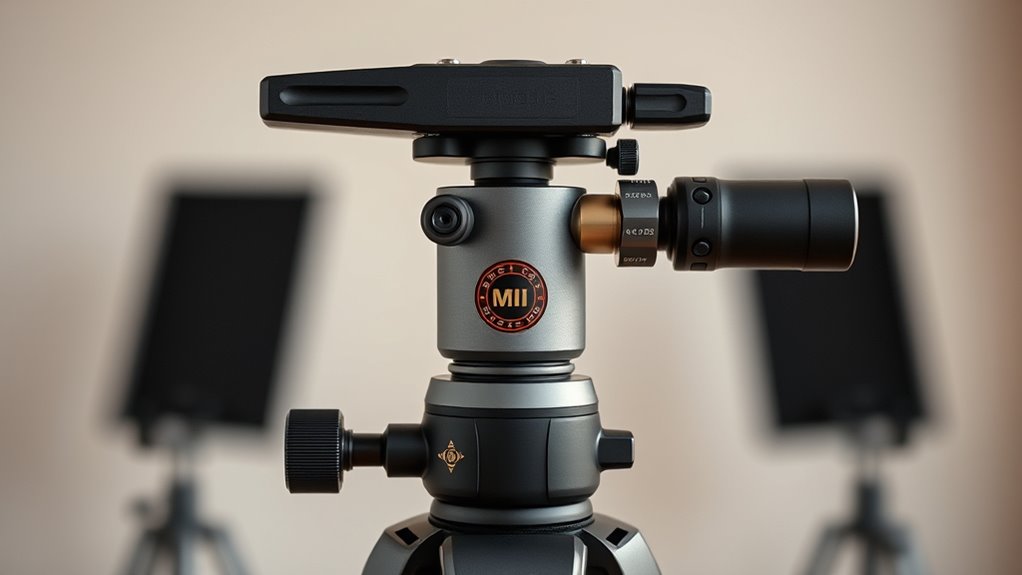
For fluid tripod heads for video work, my best overall pick is the SmallRig DH10, which suits heavier camera setups better than the compact heads in this lineup. The SmallRig CH3 is a more portable choice, while the K&F Concept FH-04 is a lightweight standalone head for simpler rigs. The main tradeoff is between smooth, controlled operation and the size, weight, and support capacity needed to get it. Complete tripods can be convenient, but a separate head gives you more freedom to pair it with suitable legs. Read on for the full comparison and guidance on choosing for your camera and shooting style.

Get movie nights delivered free with Prime
- Fast, free delivery on millions of items
- Prime Video, Amazon Music and more included
- Member-only deals all year
Key Takeaways
- The SmallRig DH10 is the lineup’s heavy-duty specialist: its flat-base design makes it the clearest fit for larger camera rigs, though it is less suited to travelers who prioritize a compact kit.
- The SmallRig CH3 and CH10 emphasize compactness: they suit lighter setups better than a large, support-focused head, but small size does not replace checking payload compatibility.
- Standalone heads and complete tripods solve different problems: models such as the K&F FH-04 and NEEWER GM24 let buyers choose their own legs, while the bundled systems trade that flexibility for a ready-matched setup.
- Quick-release systems are not interchangeable by default: the UTEBIT head’s Arca-Swiss plate can be useful for compatible camera supports, but buyers should check their existing plates and clamps before choosing.
- Height claims do not predict video control: the bundled 68-, 73-, 74-, 80-, and 90-inch tripod options vary in reach, but working height, rigidity, packed size, and head movement all affect a usable shot.
| K&F CONCEPT 73-Inch Camera Tripod with Fluid Head |  | Best All-in-One Travel Kit | Model: A305A3+FH-04 | Material: Aluminum | Weight: 2.9 lb (1420 g) | VIEW ON AMAZON | See Our Full Breakdown |
| K&F CONCEPT FH-04 Lightweight Fluid Head |  | Best Budget-Friendly Lightweight Head | Model: FH-04 | Material: Plastic | Weight: 305 g (item details also list 340 g) | VIEW ON AMAZON | See Our Full Breakdown |
| UTEBIT Tripod Fluid Head with Arca-Swiss Quick Release Plate |  | Best All-Metal Value | Material: Aluminum alloy, all-metal construction | Weight: 0.35 kg | Maximum load: 11 lb (5 kg) | VIEW ON AMAZON | See Our Full Breakdown |
| SMALLRIG CH3 Compact Fluid Video Head for Cameras |  | Best Compact Head | Model: CH3 (model number 4936) | Weight: 271 g | Maximum load: 3 kg | VIEW ON AMAZON | See Our Full Breakdown |
| Cayer H8 Tripod Fluid Head |  | Best for Heavier Camera Rigs | Base diameter: 60 mm | Material: Aluminum | Weight: Listed as 1.7 lb and 1.9 lb | VIEW ON AMAZON | See Our Full Breakdown |
| K&F Concept FH-03 Tripod Fluid Head |  | Best Lightweight Standalone Head | Weight: 484 g (1.06 lbs) | Maximum load: 5 kg (11 lbs) | Pan range: 360° | VIEW ON AMAZON | See Our Full Breakdown |
| CAMBOFOTO 68-Inch Aluminum Camera Tripod with Fluid Head |  | Best Beginner Tripod Kit | Maximum height: 68 inches | Minimum height: 18.5 inches | Weight: 2.89 lbs | VIEW ON AMAZON | See Our Full Breakdown |
| SmallRig DH10 Heavy-Duty Fluid Video Head with Flat Base |  | Best for Heavy Camera Rigs | Maximum load: 10 kg (22 lb) | Weight: 1200 g listed; 1268 g in description | Height: 140 mm (5.51 in) | VIEW ON AMAZON | See Our Full Breakdown |
| NEEWER Basics TP37 74-Inch Video Tripod with Fluid Head | 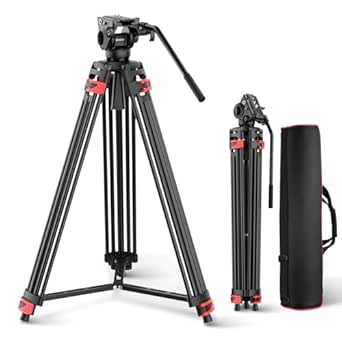 | Best Tall Tripod for Growing Camera Setups | Maximum height: 74 in (187 cm) | Minimum height: 33 in (84.5 cm) | Maximum load: 17.6 lb (8 kg) | VIEW ON AMAZON | See Our Full Breakdown |
| SmallRig CH10 Compact Fluid Video Head |  | Best for Ultralight Camera Kits | Weight: 279 g | Dimensions without handle: 80 × 50 × 72 mm | Maximum payload: 3 kg | VIEW ON AMAZON | See Our Full Breakdown |
| NEEWER GM24 Compact Fluid Tripod Head with Quick Release Plate and Detachable Handle |  | Best Compact Head | Material: All-metal | Weight: 10.93 oz (310 g) | Maximum load: 6.6 lb (3 kg) | VIEW ON AMAZON | See Our Full Breakdown |
| K&F Concept 80-Inch Video Tripod with Fluid Head |  | Best for Tall, Heavier Setups | Material: Aluminum alloy | Maximum height: 79.5 in | Minimum height: 34.6 in (listed; product information also gives 36.2 in) | VIEW ON AMAZON | See Our Full Breakdown |
| NEEWER TP74 74-Inch Aluminum Video Tripod with Fluid Head |  | Best for Gimbal and Plate Compatibility | Material: Aluminum alloy | Height range: 35–74 in | Folded size: 36 in | VIEW ON AMAZON | See Our Full Breakdown |
| K&F Concept 90-Inch Horizontal Fluid Head Camera Tripod |  | Best Compact Travel Tripod | Material: Aluminum | Maximum height: 90 in (230 cm) | Minimum height: 21.6 in | VIEW ON AMAZON | See Our Full Breakdown |
| NEEWER GM001 Video Tripod Fluid Head with Quick Release Plate |  | Best Lightweight Head for Midweight Rigs | Material: Aluminum alloy | Weight: 1.5 lb (0.69 kg) | Maximum load: 13.2 lb (6 kg) | VIEW ON AMAZON | See Our Full Breakdown |
| fluid tripod heads for video work | Weight | Maximum load | Material | Tilt range |
|---|---|---|---|---|
| K&F CONCEPT 73-Inch Camera Tri | 2.9 lb (1420 g) | 6.6 lb | Aluminum | — |
| K&F CONCEPT FH-04 Lightweight | 305 g (item details also list 340 g) | 3 kg (7.6 lb) | Plastic | +90° to -85° |
| UTEBIT Tripod Fluid Head with | 0.35 kg | 11 lb (5 kg) | Aluminum alloy, all-metal construction | -55° to 90° |
| SMALLRIG CH3 Compact Fluid Vid | 271 g | 3 kg | — | — |
| Cayer H8 Tripod Fluid Head | Listed as 1.7 lb and 1.9 lb | 13.2 lb | Aluminum | -50° to +90° |
| K&F Concept FH-03 Tripod Fluid | 484 g (1.06 lbs) | 5 kg (11 lbs) | — | +90° to -90° |
| CAMBOFOTO 68-Inch Aluminum Cam | 2.89 lbs | — | Aluminum, plastic, and rubber | +90°/-55° |
| SmallRig DH10 Heavy-Duty Fluid | 1200 g listed; 1268 g in description | 10 kg (22 lb) | — | +90°/-60° |
| NEEWER Basics TP37 74-Inch Vid | — | 17.6 lb (8 kg) | — | — |
| SmallRig CH10 Compact Fluid Vi | 279 g | — | — | +90°/-55° |
| NEEWER GM24 Compact Fluid Trip | 10.93 oz (310 g) | 6.6 lb (3 kg) | All-metal | -55° to 90° |
| K&F Concept 80-Inch Video Trip | 9.9 lb | 17.6 lb | Aluminum alloy | — |
| NEEWER TP74 74-Inch Aluminum V | 10.9 lb | 17.6 lb (8 kg) | Aluminum alloy | — |
| K&F Concept 90-Inch Horizontal | 4.9 lb | — | Aluminum | — |
| NEEWER GM001 Video Tripod Flui | 1.5 lb (0.69 kg) | 13.2 lb (6 kg) | Aluminum alloy | -70° to +90° |
More Details on Our Top Picks
K&F CONCEPT 73-Inch Camera Tripod with Fluid Head
This is the most complete choice here for someone who wants a tripod and fluid head in one travel-ready package. At 2.9 lb, it is easier to carry than the separate Cayer H8 head, and its height range reaches 73 inches while folding down for transport. The included phone/tablet holder, quick-release plate, and bag also reduce the extra pieces a solo creator needs to pack. Its 360° pan and broad tilt range suit general-purpose video framing, while the reversible center column adds low-angle options.
The tradeoff is capacity: its 6.6 lb limit leaves less room for a heavier camera, lens, and accessories than the H8. I would choose it for a light mirrorless or phone-based kit, not a rig expected to grow.
Pros:- Light 2.9 lb tripod folds for easier travel
- 73-inch maximum height and reversible center column support varied framing
- Includes a quick-release plate, phone/tablet holder, and storage bag
- 360° panning and a broad +90° to -85° tilt range
Cons:- 6.6 lb maximum load limits heavier camera and accessory combinations
- Five-section legs mean more adjustments than a simpler leg design
Best for: Traveling solo creators using a lightweight camera or phone who want one portable tripod package with useful included accessories.
Not ideal for: Filmmakers building heavier camera rigs with long lenses, monitors, or other accessories; the 6.6 lb capacity gives less headroom than the Cayer H8.
- Model:A305A3+FH-04
- Material:Aluminum
- Weight:2.9 lb (1420 g)
- Maximum load:6.6 lb
- Height range:19–73 in
- Leg sections:5
- Pan and tilt:360° pan; +90° to -85° tilt
- Mount:1/4-inch screw
- Warranty:One year
Our verdict“Choose this complete travel kit for lightweight video setups; choose the Cayer H8 if your priority is a standalone head with more load capacity.”
K&F CONCEPT FH-04 Lightweight Fluid Head
The FH-04 makes the most sense when carrying weight matters more than a metal build. At 305 g, it is lighter than the SMALLRIG CH3 and offers a 360° pan, a wide +90° to -85° tilt range, and an adjustable handle. Its built-in bubble level is useful when setting up quickly, and the included 1/4-inch adapter lets it fit tripods with either a 3/8-inch or 1/4-inch connection.
Its main compromise is the plastic construction. The CH3 is also compact but has an Arca-Swiss plate and a stated fixed-damping design, while this head uses a standard 1/4-inch camera screw. Avoid overtightening the locking knob: the product information notes that doing so can cause gritty movement and scraping sounds. I’d pair it with a light camera, not a demanding production rig.
Pros:- 305 g weight is easy to carry in a small kit
- 360° panning and +90° to -85° tilt provide broad framing movement
- Adjustable handle and built-in bubble level aid setup and operation
- 3/8-inch bottom thread includes a 1/4-inch adapter
Cons:- Plastic construction is a less reassuring choice for rough or intensive use
- Overtightening the locking knob can make movement gritty and noisy
Best for: Travel vloggers and lightweight mirrorless shooters who need a portable head for a compatible tripod and value low carrying weight.
Not ideal for: Operators seeking an all-metal head, Arca-Swiss mounting, or a head suited to frequent heavy-duty use.
- Model:FH-04
- Material:Plastic
- Weight:305 g (item details also list 340 g)
- Maximum load:3 kg (7.6 lb)
- Pan range:360°
- Tilt range:+90° to -85°
- Top plate screw:1/4″-20
- Bottom thread:3/8″-16 with included 1/4-inch adapter
- Warranty:1 year
Our verdict“Pick the FH-04 for a light, simple travel setup, but opt for the all-metal UTEBIT head when durability and higher payload matter more.”
UTEBIT Tripod Fluid Head with Arca-Swiss Quick Release Plate
The UTEBIT stands out for combining an all-metal body with a useful 11 lb payload in a compact 0.35 kg head. That gives it more load headroom than the K&F FH-04, whose plastic construction and stated 3 kg capacity suit lighter kits better. Its Arca-Swiss-compatible plate can simplify camera changes for buyers already using that system, and the detachable handle can be mounted on either side for different operating positions.
It is not the highest-capacity choice in this group: the Cayer H8 is rated for 13.2 lb. The UTEBIT also has a more restricted downward tilt, reaching -55° rather than the FH-04’s -85°. I’d favor this head for a compact, sturdier setup, while crews needing extra payload or a steep downward angle should compare those limits before choosing.
Pros:- All-metal construction in a 0.35 kg body
- 11 lb maximum load exceeds the stated capacity of the K&F FH-04
- Arca-Swiss-compatible quick-release plate includes non-slip padding and fall-prevention screws
- Detachable handle mounts on either side
Cons:- 11 lb capacity is lower than the Cayer H8’s 13.2 lb rating
- Tilt range stops at -55°, less downward movement than the K&F FH-04
Best for: Mirrorless and compact cinema-camera operators who want a portable metal head, Arca-Swiss plate compatibility, and more payload than lightweight plastic options offer.
Not ideal for: Users with rigs above 11 lb or those who often need a steep downward tilt beyond -55°.
- Material:Aluminum alloy, all-metal construction
- Weight:0.35 kg
- Maximum load:11 lb (5 kg)
- Pan range:360°
- Tilt range:-55° to 90°
- Base threads:3/8 in and 1/4 in
- Quick-release compatibility:Arca-Swiss
- Warranty:1 year
Our verdict“Choose the UTEBIT for a compact all-metal head and Arca-Swiss workflow; step up to the Cayer H8 when you need more rated payload.”
SMALLRIG CH3 Compact Fluid Video Head for Cameras
At just 271 g, the CH3 is the lightest head in this group, making it a strong fit for small camera kits where every item needs to pack down neatly. It combines an Arca-Swiss quick-release plate with a removable telescopic handle that can be mounted on either side. Compared with the K&F FH-04, it weighs less and offers Arca-Swiss compatibility, though its tilt stops at -70° instead of -85°.
The CH3’s fixed damping is a clear tradeoff: it keeps the design straightforward but gives the operator less ability to adjust resistance for different camera weights or shot styles. Its 3 kg payload also places it in the lightweight-kit category, not alongside the UTEBIT or Cayer H8 for heavier setups. I’d choose it for compact travel video work, provided its fixed movement feel suits the rig.
Pros:- 271 g weight keeps a compact video kit light
- Arca-Swiss quick-release plate supports a familiar mounting workflow
- Removable telescopic handle can be fitted to either side
- 360° pan and +90°/-70° tilt cover common framing needs
Cons:- Fixed damping offers less resistance adjustment than a more configurable head
- 3 kg maximum load is restrictive for larger camera rigs
- Not water resistant
Best for: Travel and run-and-gun shooters with a compact camera who want a very light head and use Arca-Swiss-compatible plates.
Not ideal for: Operators who need adjustable damping, weather protection, or support for a rig heavier than 3 kg.
- Model:CH3 (model number 4936)
- Weight:271 g
- Maximum load:3 kg
- Dimensions:240 × 55 × 85 mm
- Height:75 mm
- Base diameter:44 mm
- Pan and tilt:360° pan; +90°/-70° tilt
- Mounting:Arca-Swiss quick-release plate; 1/4″-20 top screw; 3/8″ bottom thread
- Warranty:2 years
Our verdict“Choose the CH3 when low weight and Arca-Swiss compatibility matter most, but select the UTEBIT or Cayer H8 for heavier or more adaptable setups.”
Cayer H8 Tripod Fluid Head
The H8 has the strongest stated payload in this five-product group: 13.2 lb, giving it more room for a camera body, lens, and accessories than the UTEBIT’s 11 lb limit or the lightweight heads’ 3 kg ratings. Its 60 mm flat base and 360° pan suit users who want a standalone head for compatible support gear, while the accessory mount can hold items such as a microphone, monitor, or LED light. The tilt range reaches -50° to +90°.
That capacity comes with a portability cost: the listed weight is inconsistent, appearing as both 1.7 lb and 1.9 lb. Either figure is substantially heavier than the SMALLRIG CH3 or FH-04. The H8 is the more sensible fit for a built-up rig, but not for a pack where minimum weight is the main goal.
Pros:- 13.2 lb maximum load is the highest stated capacity in this group
- 60 mm flat base suits compatible tripod and support setups
- 360° pan and -50° to +90° tilt provide broad movement
- Accessory mount can support a microphone, monitor, or LED light
Cons:- Product information gives conflicting weights of 1.7 lb and 1.9 lb
- Heavier than the compact SMALLRIG CH3 and K&F FH-04
- Tilt range reaches -50°, less downward angle than the FH-04 or CH3
Best for: Video operators with a heavier DSLR, mirrorless, or camcorder setup who want a flat-base head and an accessory mounting point.
Not ideal for: Travel shooters prioritizing the lightest possible kit, or buyers who need the most downward tilt; the CH3 and FH-04 tilt farther down.
- Base diameter:60 mm
- Material:Aluminum
- Weight:Listed as 1.7 lb and 1.9 lb
- Maximum load:13.2 lb
- Tilt range:-50° to +90°
- Pan rotation:360°
- Top screws:1/4 in and 3/8 in
- Compatibility:DSLR and mirrorless cameras, camcorders, telescopes; DJI RS 2, RS 3, RS 3 Pro, and 501PL quick-release plates
- Warranty:2 years
Our verdict“Choose the H8 for a heavier rig and accessory mounting, but favor the CH3 or FH-04 when compact carry weight and steeper downward tilt matter more.”
K&F Concept FH-03 Tripod Fluid Head
At 484 g, the FH-03 is a sensible way to add fluid movement to a travel tripod or monopod without carrying a full-size video head. Its 360° pan and +90°/-90° tilt give operators room for broad reframing, while the Arca-Swiss-compatible plate can suit camera setups already using that format. Compared with the SmallRig CH10, it supports a heavier 5 kg payload and offers wider downward tilt; the CH10 is lighter and smaller for minimal kits. The removable telescopic handle also makes storage and hand positioning easier. The tradeoff is that 5 kg remains a ceiling for modest camera rigs, and the head is not water resistant. I’d choose it for portability, not heavy cinema builds or wet-location work.
Pros:- 484 g weight keeps a travel support kit light
- 360° pan and ±90° tilt allow broad camera movement
- Arca-Swiss-compatible plate can fit into compatible plate systems
- Removable telescopic handle and 1/4-inch and 3/8-inch connections add setup flexibility
Cons:- 5 kg maximum load limits use with heavier camera builds
- Not water resistant for exposed outdoor shoots
Best for: Travel videographers adding a compact fluid head to an existing tripod or monopod, with a camera rig under 5 kg
Not ideal for: Operators using heavy cinema rigs or filming in rain, since the payload is capped at 5 kg and the head is not water resistant
- Weight:484 g (1.06 lbs)
- Maximum load:5 kg (11 lbs)
- Pan range:360°
- Tilt range:+90° to -90°
- Quick-release plate:Arca-Swiss compatible
- Threaded connections:3/8-inch and 1/4-inch
- Warranty:1 year
Our verdict“Choose the FH-03 if you want a lightweight standalone head with more payload capacity than the SmallRig CH10, but skip it for heavy or wet-weather setups.”
CAMBOFOTO 68-Inch Aluminum Camera Tripod with Fluid Head
The CAMBOFOTO is a ready-to-carry tripod-and-head kit for newer video shooters who need a complete support setup rather than a standalone head. It weighs 2.89 lbs, reaches 68 inches, and includes a travel bag, phone holder, and quick-release plate, so it covers basic camera and smartphone shooting without much extra gear. Its reversible center column also supports low-angle framing, a flexibility the standalone K&F Concept FH-03 does not provide on its own. That convenience comes with a modest 8.8 lb load limit and a mix of aluminum, plastic, and rubber construction. The +90°/-55° tilt range is less expansive than the FH-03’s, and plastic components are a tradeoff for the kit’s low carry weight. I’d keep it to lightweight cameras and simple setups.
Pros:- Complete portable kit includes a fluid head, travel bag, phone holder, and quick-release plate
- Extends from 18.5 to 68 inches for varied shooting heights
- Reversible center column supports low-angle shooting
- 360° panning and a 2.89 lb total weight suit mobile, lightweight setups
Cons:- 8.8 lb maximum load rules out many heavier camera builds
- Plastic and rubber components trade some robustness for light weight
- Tilt range stops at -55°
Best for: Beginning videographers and smartphone creators who want a lightweight tripod kit with a head, phone holder, and carrying bag
Not ideal for: Filmmakers building heavier camera rigs or needing extensive downward tilt, given its 8.8 lb capacity and -55° lower tilt limit
- Maximum height:68 inches
- Minimum height:18.5 inches
- Weight:2.89 lbs
- Maximum load capacity:8.8 lbs
- Pan range:360°
- Tilt range:+90°/-55°
- Material:Aluminum, plastic, and rubber
- Warranty:2 years
Our verdict“Pick the CAMBOFOTO as an accessible all-in-one kit for light cameras and phones, rather than a support system for heavier video rigs.”
SmallRig DH10 Heavy-Duty Fluid Video Head with Flat Base
The DH10 earns its place for operators who need a higher payload limit and control over movement resistance. Its 10 kg capacity accommodates substantially heavier builds than the 5 kg K&F Concept FH-03 or 3 kg SmallRig CH10, while step-less damping adjustment lets the operator tune the feel rather than work with a fixed setting. The snap-on mount is another practical distinction: compatibility with DJI RS 2, RS 3, RS 3 Pro, and MFT plates can make switching between tripod and stabilizer workflows less fiddly. The cost of that heavier-duty design is bulk: the listing gives a weight of 1200 g, while the description states 1268 g. Its plate compatibility also has a specific exception—the SmallRig MFT-Type 3912 plate is not supported. I’d favor it for substantial rigs, after checking the plate in your kit.
Pros:- 10 kg maximum load supports heavier builds than the FH-03 and CH10
- Step-less damping can be adjusted for different pan and tilt movement
- Snap-on mount supports specified DJI RS 2, RS 3, RS 3 Pro, and MFT plates
- Removable adjustable handle suits different operating positions
Cons:- Heavier than compact options, with listed weight figures differing between the item listing and description
- Not compatible with the SmallRig MFT-Type 3912 quick-release plate
- Tilt range is limited to +90°/-60°
Best for: Video operators with camera builds approaching 10 kg who want adjustable damping and a quick switch between tripod and compatible stabilizer plates
Not ideal for: Travel shooters prioritizing a very light head, or users whose setup depends on the SmallRig MFT-Type 3912 quick-release plate
- Maximum load:10 kg (22 lb)
- Weight:1200 g listed; 1268 g in description
- Height:140 mm (5.51 in)
- Base diameter:75 mm (2.95 in)
- Pan range:360°
- Tilt range:+90°/-60°
- Handle length:230–360 mm (9.05–14.17 in)
- Compatibility:DJI RS 2, RS 3, RS 3 Pro, and MFT quick-release plates
Our verdict“Choose the DH10 for heavier rigs and adjustable movement resistance, provided its plate compatibility and added weight fit your workflow.”
NEEWER Basics TP37 74-Inch Video Tripod with Fluid Head
The TP37 is the strongest choice here for buyers who want a taller, complete tripod and more load headroom than an entry-level travel kit. Its legs extend to 74 inches and the system supports up to 17.6 lb, roughly double the CAMBOFOTO kit’s stated capacity. The damped head provides 360° panning and a wide -70° to +90° tilt range, while a bubble level helps keep horizons aligned during movement. A Manfrotto 501-compatible quick-release plate and 1/4-inch and 3/8-inch mounting screws also make it more adaptable to common camera setups than the CAMBOFOTO’s supplied 1/4-inch plate. The tradeoffs are its 33-inch minimum height, plastic leg-adjustment buckles, and lack of phone or action-camera adapters. I’d choose it for a growing camera kit, not compact travel.
Pros:- 17.6 lb capacity exceeds the CAMBOFOTO kit’s 8.8 lb limit
- 74-inch maximum height and broad tilt range support varied framing
- Bubble level helps align the frame for controlled pans
- 501-compatible plate and 1/4-inch and 3/8-inch screws support common setups
Cons:- 33-inch minimum height limits low-position shooting compared with a reversible-column design
- Plastic leg-adjustment buckles may be less reassuring than all-metal hardware
- Phone holders and action-camera adapters are not included
Best for: Videographers who need a tall, full tripod with more capacity for a camera, lens, and accessories than lightweight starter kits provide
Not ideal for: Travel creators who need a compact folded support or buyers who want a phone holder or action-camera adapter included
- Maximum height:74 in (187 cm)
- Minimum height:33 in (84.5 cm)
- Maximum load:17.6 lb (8 kg)
- Head movement:360° pan; -70° to +90° tilt
- Leg sections:3
- Mounting screws:1/4 in and 3/8 in
- Quick-release plate:Compatible with Manfrotto 501
- Warranty:1 year
Our verdict“Choose the TP37 for a taller, higher-capacity tripod setup; opt for the CAMBOFOTO instead if a lighter kit and included phone holder matter more.”
SmallRig CH10 Compact Fluid Video Head
At just 279 g, the CH10 is the lightest standalone head in this group, making it a strong fit for mirrorless, DSLR, or pocket cinema cameras where every bit of carried weight matters. It offers 360° panning, +90°/-55° tilt, and an Arca-Swiss quick release in a compact body that mounts to most tripods and monopods with the supplied thread options. Compared with the K&F Concept FH-03, it is lighter and smaller, but its 3 kg payload is lower and its damping is fixed rather than adjustable. That fixed feel keeps operation simple, yet gives less room to tailor movement for different camera weights or shot styles. The CH10 is also not water resistant. I’d pick it for a small, light camera setup, not a rig likely to grow beyond 3 kg.
Pros:- 279 g weight is lighter than the K&F Concept FH-03
- Compact dimensions suit small travel kits and monopods
- Arca-Swiss quick release supports compatible camera plate workflows
- 3/8-inch and 1/4-inch mounting options fit many supports
Cons:- 3 kg payload is lower than the FH-03’s 5 kg limit
- Fixed damping cannot be adjusted to suit different movement preferences
- Not water resistant
Best for: Travel and run-and-gun videographers using lightweight mirrorless, DSLR, or pocket cinema cameras up to 3 kg
Not ideal for: Operators with heavier camera builds, a need for adjustable damping, or plans to work in wet conditions
- Weight:279 g
- Dimensions without handle:80 × 50 × 72 mm
- Maximum payload:3 kg
- Pan range:360°
- Tilt range:+90°/-55°
- Quick release:Arca-Swiss
- Mounting threads:3/8″-16 and 1/4″-20 with screw adapter
- Water resistance:Not water resistant
Our verdict“Choose the CH10 for a minimal, lightweight camera kit; the FH-03 is a better match if you need more payload capacity or adjustable handling options.”
NEEWER GM24 Compact Fluid Tripod Head with Quick Release Plate and Detachable Handle
The NEEWER GM24 is the space-saving pick for a light mirrorless or compact video setup. At 10.93 oz, it is much easier to pack than the complete NEEWER TP74 tripod, though its 6.6 lb load limit also leaves less room for a heavier camera rig. Its Arca-Swiss-compatible plate and safety screws help make camera swaps more secure, while the detachable handle can be positioned for left- or right-handed operation. The head pans through 360° and tilts from -55° to 90°, but its fixed damping offers less adjustment than a head with variable drag. Choose it when you already have a compatible support and want to keep your kit small; skip it for heavy builds or wet-weather shoots, since it is not water resistant.
Pros:- Compact all-metal body weighs 10.93 oz
- 360° pan and broad -55° to 90° tilt range
- Arca-Swiss-compatible plate includes a nonslip pad and safety screws
- Detachable handle fits left- or right-hand setups
Cons:- 6.6 lb load limit restricts larger camera builds
- Fixed damping gives less control over movement resistance
- Not water resistant
Best for: Mirrorless and compact-camera shooters who already own a tripod and want a lightweight head with an Arca-Swiss-compatible plate.
Not ideal for: Operators with heavy camera rigs above 6.6 lb or those who need adjustable damping or water resistance.
- Material:All-metal
- Weight:10.93 oz (310 g)
- Maximum load:6.6 lb (3 kg)
- Pan range:360°
- Tilt range:-55° to 90°
- Quick-release plate:Arca-Swiss compatible, 1/4 in screw
- Handle:Detachable; installs on left or right
- Height:2.91 in (74 mm)
Our verdict“Choose the GM24 for a compact, lightweight camera setup; pick the NEEWER TP74 instead if your rig needs more load capacity and a complete tripod.”
K&F Concept 80-Inch Video Tripod with Fluid Head
The K&F Concept 80-Inch Video Tripod suits operators who need height and a sturdier load rating more than a light carry. Its legs reach 79.5 inches, and the system supports up to 17.6 lb, giving it more headroom for a substantial camera setup than the compact NEEWER GM24. A 360° pan and -70° to +90° tilt range cover broad reframing, while the included quick-release plate accepts both 1/4-inch and 3/8-16 screws. The tradeoff is transport: at 9.9 lb and 36.2 inches folded, it is a more deliberate carry than the compact, monopod-converting K&F Concept 90-Inch tripod. The listed minimum height is also inconsistent, so I would not choose it for low-angle work without confirming that measurement.
Pros:- Reaches 79.5 inches for elevated framing
- 17.6 lb maximum load accommodates heavier camera setups
- 360° pan and -70° to +90° tilt range
- Includes a carrying bag and a plate with 1/4-inch and 3/8-16 screws
Cons:- 9.9 lb weight makes it a substantial carry
- 36.2-inch folded length takes more storage space than compact options
- Minimum-height information is inconsistent
Best for: Studio and event videographers using heavier cameras who need a tall tripod and broad pan-and-tilt movement.
Not ideal for: Travel shooters who prioritize a light, short-packing kit, or low-angle operators who need a clearly specified minimum height.
- Material:Aluminum alloy
- Maximum height:79.5 in
- Minimum height:34.6 in (listed; product information also gives 36.2 in)
- Folded length:36.2 in
- Weight:9.9 lb
- Maximum load:17.6 lb
- Pan and tilt:360° pan; -70° to +90° tilt
- Included accessories:Carrying bag, quick-release plate, 3 Allen wrenches, user manual
Our verdict“Pick this K&F model for tall, heavier shooting setups, but choose the K&F Concept 90-Inch tripod if compact folding and monopod use matter more.”
NEEWER TP74 74-Inch Aluminum Video Tripod with Fluid Head
The NEEWER TP74 makes the most sense when a shoot moves between a tripod head and compatible gimbal or plate systems. Its dual quick-release modes support DJI RS2/RS3/RS3 Pro gimbals and Manfrotto 501PL/504PL plates, a more specialized advantage than the straightforward plate setup on the K&F Concept 80-Inch tripod. The fluid-drag head pans 360° and tilts from -75° to +90°, with a 17.6 lb capacity for substantial camera builds. The cost of that flexibility is physical bulk: at 10.9 lb, it is heavier than both K&F tripods listed here, and its 36-inch folded length is not especially compact. Flip-lock tension also calls for hex keys, which is less convenient when making quick adjustments on location.
Pros:- 17.6 lb capacity supports heavier camera setups
- 360° pan and -75° to +90° tilt range
- Quick-release modes support specified DJI gimbals and Manfrotto plates
- Folds to 36 inches and includes a carrying bag
Cons:- 10.9 lb weight is cumbersome for frequent carrying
- Flip-lock tension adjustments require hex keys
- 36-inch folded length may be awkward for compact storage
Best for: Videographers who alternate between tripod shooting and compatible DJI gimbals or Manfrotto plate systems.
Not ideal for: Travel crews seeking a lightweight support or operators who want to adjust leg-lock tension without tools.
- Material:Aluminum alloy
- Height range:35–74 in
- Folded size:36 in
- Weight:10.9 lb
- Maximum load:17.6 lb (8 kg)
- Pan and tilt:360° pan; -75° to +90° tilt
- Quick-release compatibility:DJI RS2/RS3/RS3 Pro gimbals and Manfrotto 501PL/504PL plates
- Mounting threads:1/4 in and 3/8 in
Our verdict“Choose the TP74 if compatibility with supported gimbals and Manfrotto plates is a priority; for a lighter carry, the K&F Concept 90-Inch tripod is the better fit.”
K&F Concept 90-Inch Horizontal Fluid Head Camera Tripod
The K&F Concept 90-Inch Horizontal Fluid Head Tripod offers an unusual mix: generous reach, a 21.3-inch folded length, and a 4.9 lb weight. That makes it easier to carry than the heavier NEEWER TP74 or K&F 80-Inch tripod, while its 90-inch maximum height suits standing and elevated shots. The head pans 360° and has a 0–120° pitch adjustment, and the four-section legs can convert into a monopod for situations where a full tripod is cumbersome. Its 11 lb load limit is lower than the 17.6 lb ratings of both larger tripods, so I would reserve it for lighter camera packages. The product data does not specify a conventional tilt range, and the tripod is not water resistant; those limitations make it less suited to heavy rigs or rough outdoor work.
Pros:- 90-inch maximum height supports elevated framing
- Folds to 21.3 inches and weighs 4.9 lb
- Converts into a monopod for flexible field use
- 360° panning and 0–120° pitch adjustment
Cons:- 11 lb load capacity is lower than the 17.6 lb K&F 80-Inch and NEEWER TP74
- Not water resistant
- Conventional tilt range is not specified in the product data
Best for: Travel and outdoor videographers with lighter camera kits who want a tall support that packs small and can convert to a monopod.
Not ideal for: Operators with camera builds above 11 lb or crews who need a clearly stated conventional tilt range and weather protection.
- Material:Aluminum
- Maximum height:90 in (230 cm)
- Minimum height:21.6 in
- Folded length:21.3 in
- Weight:4.9 lb
- Load capacity:11 lb
- Pan and pitch:360° pan; 0–120° pitch adjustment
- Leg configuration:4 sections; converts to a monopod
Our verdict“Pick this K&F tripod for a lighter travel kit that needs reach and monopod flexibility, not for heavy rigs that favor the NEEWER TP74.”
NEEWER GM001 Video Tripod Fluid Head with Quick Release Plate
The NEEWER GM001 is a portable standalone head for camera builds that exceed the GM24’s capacity without requiring a full tripod system. At 1.5 lb, it supports up to 13.2 lb and offers a broad -70° to +90° tilt range, giving it a practical middle ground between the 6.6 lb GM24 and the heavier complete tripods such as the NEEWER TP74. Its quick-release plate has a safety pin, and the handle can mount on either side. The tradeoff is that compatibility depends on matching the head’s 3/8-inch bottom socket and the 1/4-inch or 3/8-inch top screws to your support and camera. Unlike the GM24, its product data does not specify an Arca-Swiss plate, so buyers relying on that plate system should check their setup before choosing it.
Pros:- Supports up to 13.2 lb while weighing 1.5 lb
- 360° pan and -70° to +90° tilt range
- Quick-release plate includes a safety pin
- Handle mounts on either side
Cons:- Mounting compatibility depends on matching the top and bottom threads
- Arca-Swiss compatibility is not specified
- Lower load capacity than the 17.6 lb NEEWER TP74
Best for: Independent videographers with midweight camera rigs who need a portable head for a compatible tripod, monopod, or slider.
Not ideal for: Shooters whose setup exceeds 13.2 lb or who need confirmed Arca-Swiss compatibility without changing plates.
- Material:Aluminum alloy
- Weight:1.5 lb (0.69 kg)
- Maximum load:13.2 lb (6 kg)
- Pan range:360°
- Tilt range:-70° to +90°
- Top mounting screws:1/4 in and 3/8 in
- Bottom socket:3/8 in
- Folded size:28.5 × 12 × 12 cm
Our verdict“Choose the GM001 for a portable head and midweight rig, but pick the GM24 if Arca-Swiss plate compatibility matters more than load capacity.”

How We Picked
I ranked these options around the parts of a video head that shape actual shooting choices: the control and feel implied by the head design, the camera support it is intended to handle, setup and plate convenience, and how easily the system fits different filming locations. I also separated standalone heads from complete tripod-and-head kits, since they solve different buyer problems and should not be judged as interchangeable.
The ranking favors clear role fit and practical flexibility over headline height or a long feature list. The SmallRig DH10 leads for buyers who need a heavier-duty head, while compact heads rank higher for portability rather than rig capacity. Bundled systems are judged as complete support choices, with a tradeoff: convenience can reduce the need to match components, but it limits the buyer’s choice of legs. Since camera weight, lens balance, and mounting hardware differ from setup to setup, I would verify compatibility with the manufacturer’s current specifications before purchase.
| fluid tripod heads for video work | Material |
|---|---|
| K&F CONCEPT 73-Inch Camera Tri | Aluminum |
| K&F CONCEPT FH-04 Lightweight | Plastic |
| UTEBIT Tripod Fluid Head with | Aluminum alloy, all-metal construction |
| SMALLRIG CH3 Compact Fluid Vid | — |
| Cayer H8 Tripod Fluid Head | Aluminum |
| K&F Concept FH-03 Tripod Fluid | — |
| CAMBOFOTO 68-Inch Aluminum Cam | Aluminum, plastic, and rubber |
| SmallRig DH10 Heavy-Duty Fluid | — |
| NEEWER Basics TP37 74-Inch Vid | — |
| SmallRig CH10 Compact Fluid Vi | — |
| NEEWER GM24 Compact Fluid Trip | All-metal |
| K&F Concept 80-Inch Video Trip | Aluminum alloy |
| NEEWER TP74 74-Inch Aluminum V | Aluminum alloy |
| K&F Concept 90-Inch Horizontal | Aluminum |
| NEEWER GM001 Video Tripod Flui | Aluminum alloy |
Factors to Consider When Choosing Fluid Tripod Heads For Video Work
Before choosing among these 15 options, decide what problem your current support setup needs to solve. A smoother head cannot compensate for legs that flex under your camera, and a tall tripod is not automatically the easiest one to pan with. These checks help separate a good fit from a head that only looks suitable on paper.
Match the Head to the Complete Camera Rig
Start with the camera, lens, plate, microphone, monitor, and any other accessories you normally leave mounted. The combined rig matters more than the camera body alone, and a long lens can make a setup feel front-heavy even when its total weight appears modest. Check the maker’s stated payload and any guidance about balance, then leave a margin rather than buying right at the limit. A head that is near its capacity may be harder to control smoothly, especially when tilting. A common mistake is treating a larger-looking head as proof of compatibility. If your rig changes often, choose for the heaviest configuration you expect to use.
Choose a Complete Tripod or a Separate Head
A bundled tripod and head is appealing when you want one coordinated purchase and do not already own suitable legs. It can simplify setup, but the included head and legs are a package: replacing one later may leave you with an awkward mismatch. A separate head makes sense if your current legs are sturdy and compatible, or if you want to select legs around travel, height, or terrain. Check the mounting connection before assuming a head will fit your tripod. Do not judge a bundle solely by its maximum height; column extension and leg stiffness affect how stable a camera feels during movement. Pay for a complete kit when convenience matters more than component choice.
Treat Fluid Movement and Balance as Separate Needs
Fluid control affects how pan and tilt movements start and stop; balance affects whether the camera stays where you leave it. Buyers often focus on the word “fluid” without checking whether the head can support and balance their particular rig. A camera that tips forward when tilted can spoil a shot even if the pan feels controlled. Look for manufacturer information on drag, counterbalance, and any adjustments, then compare it with the kind of movement you shoot. Lightweight cameras and long, front-heavy lenses place different demands on a head. For controlled motion, prioritize suitable support and balance before choosing based on appearance alone.
Check Plate Compatibility Before You Buy
A quick-release plate saves time between setup and handheld work, but only when it matches the gear you already use. The UTEBIT option specifically lists an Arca-Swiss plate, while other heads may use a different supplied plate or clamp system. Do not assume that two plates with similar shapes lock safely into the same clamp. Check whether you need to move between a tripod, a gimbal, or another support without changing plates. Also confirm that the plate can be positioned to balance your lens and that its screw fits your camera. Compatibility can matter more to a multi-support shooter than a small difference in head size.
Balance Portability Against Working Height
Compact heads are easier to pack and carry, but they are generally aimed at lighter setups than heavy-duty designs. A taller tripod can help with standing shots, yet its maximum height may depend on extending sections that are less rigid than the lower setup. Compare packed length and carry weight with the height you actually need, not just the largest listed number. For frequent travel, a manageable kit that gets used often may be more useful than a tall tripod left at home. For studio or event work, a larger system may be worth carrying if it supports your camera and framing needs. Think about the whole kit, since a separate head and tripod add up in a camera bag.
Decide When a More Capable Head Is Worth It
Pay more for capability when your camera rig is heavy, you need repeatable movement, or your work involves long lenses and controlled tilts. A premium or heavy-duty head will not improve footage if the tripod legs are too flexible or the camera is poorly balanced. For a light mirrorless setup, a compact head may offer a better match than carrying extra hardware you do not need. Check serviceability and the maker’s instructions for care, since grit and rough handling can affect moving parts over time. If you film in varied locations, prioritize a head and legs that you can set up consistently. Choose the simplest system that supports your heaviest routine rig and shooting style.
Frequently Asked Questions
Should I buy a standalone fluid head or a tripod-and-head kit?
Choose a kit if you need both parts and want a matched setup without researching separate connections. A standalone head makes more sense when you already own solid legs or need to choose legs for a particular travel or height requirement. Before ordering a head alone, verify the tripod’s mounting thread and the head’s base connection. Before choosing a kit, check whether its legs are suitable for your camera’s weight and the kind of movement you plan to make. The right choice depends on the support you already own, not simply on which package has more components.
Can a compact fluid head support a camera with a long lens?
Possibly, but the camera’s total weight is only part of the fit. A long lens shifts the center of gravity forward and can make tilts harder to control, so check the head’s stated capacity and any balance guidance. Confirm that the plate can slide far enough to position your rig properly. If the head is intended for compact cameras, do not assume a heavier lens is suitable just because the combined weight falls below a listed limit. For frequent long-lens work, a more supportive head and stable legs are usually a safer match.
Will an Arca-Swiss plate work with every quick-release head?
No. Quick-release plates and clamps can use different shapes and locking designs, so a plate that fits one support may not seat securely in another. The UTEBIT head explicitly includes an Arca-Swiss plate, but that does not make every other head in this roundup compatible with it. Check the clamp specification on both your head and any other support you plan to use. If you switch often between tripod and gimbal, confirm compatibility before buying so you can avoid changing plates on location. A secure fit matters more than the convenience of sharing a plate.
Is a taller video tripod always better for shooting?
No. A higher maximum working height can help with standing shots, but it does not tell you how rigid the tripod feels at that height or how long it is when packed. Fully extended legs or center columns may be less stable than a lower setup. If you often film outdoors, wind and uneven ground can make stiffness more useful than extra reach. Compare the usable height at your normal camera position and consider whether you need to carry the tripod between locations. Choose height for your framing needs, not as a proxy for video performance.
What should I check if my camera tilts forward even when the head is locked?
First check that the camera is mounted securely and that the plate is positioned to balance the camera and lens over the head. A front-heavy setup can pull forward even when the tilt lock is engaged, especially if the lens is long or accessories sit forward. Confirm that the rig is within the head’s stated capacity and that any balance adjustments are set as directed by the manufacturer. Do not try to solve an unbalanced rig by forcing the lock tighter than instructed. If the setup remains unstable, the head may not be suited to that camera configuration.
Conclusion
For a heavier camera rig, my best overall pick is the SmallRig DH10, while the best value direction is a simpler standalone head such as the K&F Concept FH-03 when you already own compatible, sturdy legs. Buyers seeking a more premium, support-focused option should look first at the DH10, then confirm its specifications against their rig rather than paying for capacity they will not use. For beginners, a complete kit such as the NEEWER Basics TP37 can make setup more straightforward than pairing separate components. If portability is the priority, compare the compact SmallRig CH3 and CH10; if you need a specific plate system, the UTEBIT Arca-Swiss head is the specialized choice. My final decision rule is simple: match the head to your heaviest camera setup, then choose legs and plate compatibility around where you shoot.
Halloween Picks
halloween
As an affiliate, we earn on qualifying purchases.