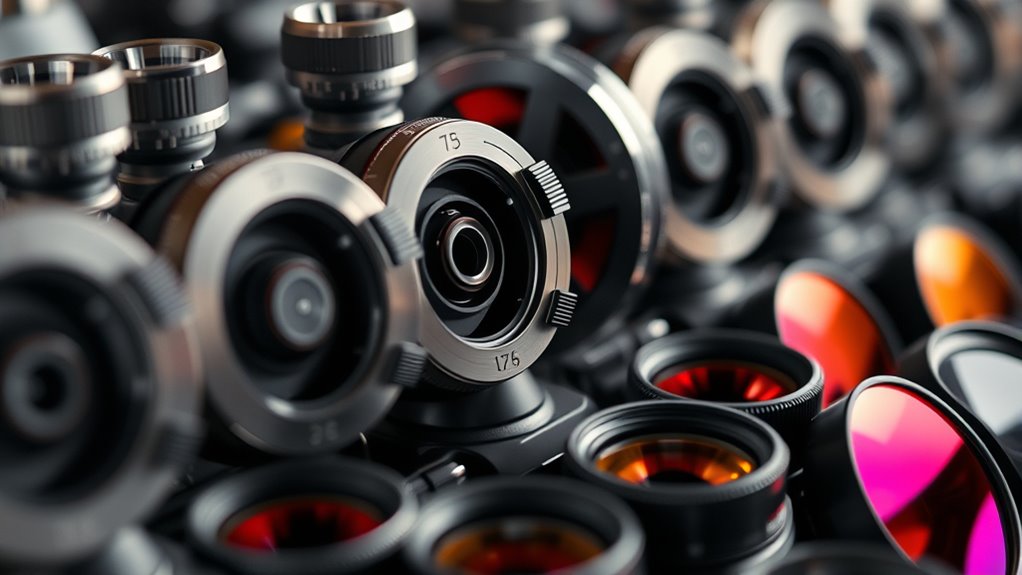

For mono-camera astrophotography, the right filter wheel keeps LRGB imaging practical: it lets me change channels without taking the camera out of the imaging train. My leading picks are the Astromania 1.25-inch 5-position wheel with LRGB filters for a ready-to-use starter setup, the 9-position LRGB wheel for users who need room for a broader filter collection, and the 2-inch five-position wheel for imaging trains built around larger filters. The tradeoff is straightforward: included filters and extra capacity can save assembly work, but they do not remove the need to check filter size, connection threads, and available inward focus travel.

Get movie nights delivered free with Prime
- Fast, free delivery on millions of items
- Prime Video, Amazon Music and more included
- Member-only deals all year
These four options share a practical purpose, yet they suit different rigs. I rank them by how directly they serve a mono-camera workflow, how much filter flexibility they provide, and how clearly their connections and focus requirements fit a typical setup. A filter wheel is only useful when it fits the camera train without creating a focus problem.
Key Takeaways
- The Astromania five-position 1.25-inch wheel with LRGB filters is the most straightforward way into a basic mono-camera color workflow, but it needs 20 mm of additional focus travel.
- The nine-position 1.25-inch wheel has the most room for future filters and includes LRGB, though its description calls for a light touch when rotating it.
- The five-position 2-inch wheel suits a larger-filter imaging train and has a short design, but its 22.5 mm inward-focus requirement and missing M48-to-T2 adapter need checking.
- The plain 1.25-inch five-position wheel includes several adapters, making it more connection-ready than the 2-inch model, but it does not include LRGB filters.
- Before choosing any of these wheels, match the filter diameter and thread path to the camera, telescope, and available back focus; five or nine positions cannot compensate for a fit mismatch.
| Astromania 1.25-Inch 5-Position Telescope Filter Wheel with LRGB Filters |  | Best Overall — the clearest ready-to-build mono-camera LRGB setup | Filter size: 1.25 inches | Wheel positions: 5 | Included filters: Red, green, blue, and luminance | VIEW ON AMAZON | See Our Full Breakdown |
| Astromania 1.25-Inch 9-Position Telescope Filter Wheel with LRGB Filter Set |  | Best for Expansion — room to build a larger 1.25-inch filter library | Filter size: 1.25 inches | Wheel positions: 9 | Included filters: Luminance (IR cutoff), red, green, and blue | VIEW ON AMAZON | See Our Full Breakdown |
| Astromania 2-Inch Five-Position Telescope Filter Wheel |  | Best for 2-Inch Filters — a short-bodied option for larger imaging trains | Filter positions: 5 | Filter size: 2 inches | Material: Aluminum | VIEW ON AMAZON | See Our Full Breakdown |
| Astromania 1.25-Inch Telescope Filter Wheel |  | Best Value in Flexibility — adapters included, filters left to your choice | Compatible filter size: 1.25 inches | Filter positions: 5 | Included adapters: 1.25-inch eyepiece adapter, nosepiece, and T2 camera adapter | VIEW ON AMAZON | See Our Full Breakdown |
| filter wheels and filter sets for mono camera | Filter size | Weight | Wheel positions | Included filters |
|---|---|---|---|---|
| Astromania 1.25-Inch 5-Positio | 1.25 inches | 14.8 ounces | 5 | Red, green, blue, and luminance |
| Astromania 1.25-Inch 9-Positio | 1.25 inches | 1.3 pounds | 9 | Luminance (IR cutoff), red, green, and blue |
| Astromania 2-Inch Five-Positio | 2 inches | 1.3 pounds | — | — |
| Astromania 1.25-Inch Telescope | — | — | — | — |
More Details on Our Top Picks
Astromania 1.25-Inch 5-Position Telescope Filter Wheel with LRGB Filters
This bundle earns my top spot because it combines a five-position wheel with the four filters most directly associated with a basic mono-camera color workflow: luminance, red, green, and blue. You can mount the camera once and rotate between channels, instead of repeatedly taking the imaging train apart. One position remains available for another filter, giving a new imager a modest path to expand without immediately moving to a larger wheel.
Compared with the plain Astromania 1.25-inch wheel, this one saves the work of sourcing an LRGB set separately. It is also a more modest starting point than the nine-position set: fewer places to populate means a simpler first configuration, while still covering the core channels. The aluminum construction is a practical fit for supporting camera-side hardware, and the wheel accepts either its included 1.25-inch nosepiece or a T-thread connection.
The main constraint is 20 mm of additional focus travel. That is less than the listed 23 mm requirement of the plain 1.25-inch five-position wheel, but it remains a real compatibility check, especially on telescopes with restricted inward focus. Filter size also sets a boundary: this bundle is for 1.25-inch filters, not a 2-inch system. I would choose it as a direct entry into LRGB capture, not as a universal wheel for every camera or telescope.
Pros:- Includes luminance, red, green, and blue filters for a basic LRGB workflow.
- Five positions leave one slot beyond the included four-filter set.
- Can attach with the included 1.25-inch nosepiece or a T-thread adapter.
- Aluminum construction supports a camera-side imaging train.
Cons:- Requires an additional 20 mm of focus travel.
- Limited to 1.25-inch filters.
- The description does not specify filter coatings or sensor coverage.
Best for: Mono-camera owners who want a 1.25-inch wheel and core LRGB filters in one package, with a telescope that can accommodate the added focus travel.
Not ideal for: Imagers who already own a full filter set, need 2-inch filters, or have a telescope with very limited inward focus.
- Filter size:1.25 inches
- Wheel positions:5
- Included filters:Red, green, blue, and luminance
- Construction:Aluminum
- Attachment:1.25-inch nosepiece or T-thread
- Additional focus travel:20 mm
- Weight:14.8 ounces
Our verdict“I rank this first for buyers who want the most direct path to mono-camera LRGB imaging without starting with a nine-slot wheel.”
Astromania 1.25-Inch 9-Position Telescope Filter Wheel with LRGB Filter Set
If a mono-camera setup will grow beyond basic LRGB, the main draw here is its nine filter positions. The wheel includes luminance, red, green, and blue filters, leaving five places for additional filters without swapping wheels. Numbered click-stop positions help the user return to a selected channel and keep filters aligned as the wheel turns. That extra capacity is the reason I place it ahead of the plain five-position holder for expandable imaging systems.
Compared with the five-position LRGB bundle, this model offers more room for a larger collection, but the extra slots matter most when you already know what filters you plan to add. For someone beginning with only LRGB, the smaller bundle is a simpler match and states its focus-travel requirement clearly. The nine-position description lists a 42 mm T-thread connection, which may appeal to users building around that thread path; I would still check every mating adapter and the camera’s back-focus spacing before ordering.
There are practical caveats. The wheel takes 1.25-inch filters, so it is not a substitute for the 2-inch Astromania option when the imaging train is designed for larger filters. Its description says it requires a light touch to rotate, a handling note that matters when changing channels in a closely assembled train. It also does not list an inward-focus requirement, so I would not assume that it fits a telescope that struggles with the other models. Verify focus position and connection compatibility first.
Pros:- Nine positions provide room for a broad 1.25-inch filter collection.
- Includes luminance, red, green, and blue filters.
- Numbered click-stop positions help identify and align filter selections.
- 42 mm T-thread connection is specified.
Cons:- The description advises a light touch when rotating the wheel.
- Uses 1.25-inch filters only.
- The listed details do not state an inward-focus requirement.
Best for: Mono imagers who use 1.25-inch filters and expect to add several specialized filters alongside LRGB.
Not ideal for: Buyers who only need the core LRGB channels, require 2-inch filters, or need a clearly stated focus-travel specification before choosing.
- Filter size:1.25 inches
- Wheel positions:9
- Included filters:Luminance (IR cutoff), red, green, and blue
- Material:Aluminum
- Connection:42 mm T-thread
- Weight:1.3 pounds
- Rotation note:Description recommends a light touch
Our verdict“I would choose this over the five-position bundles when added filter capacity matters more than a simpler, clearly documented starter configuration.”
Astromania 2-Inch Five-Position Telescope Filter Wheel
This is the distinct choice for a mono-camera system already built around standard 2-inch filters. Its five positions allow quick changes while the camera stays attached, and its light-tight aluminum housing is designed to limit stray light and internal reflections. The short design may help when the telescope has restricted back-focus room, though the stated focus requirement still needs to be checked against the specific optical train.
Compared with the three 1.25-inch choices, this wheel is not an upgrade in capacity; it is a different fit for a larger filter format. That can make sense for an imaging system that needs 2-inch filters, while a smaller-format setup may be better served by the included LRGB package in the five-position 1.25-inch bundle. The wheel includes a 2-inch telescope adapter and has M48x0.75 male accessory threads, giving buyers useful connection information before they plan the rest of the train.
Its main tradeoff is the specified 22.5 mm of inward focus travel. The compact body does not eliminate that requirement, so Newtonian users or anyone near the end of their focuser range should check actual spacing. An M48-to-T2 adapter is not included, which can add another part to the connection chain if the camera uses T2. I see this as a focused pick for larger-filter systems, rather than the easiest all-in-one route into LRGB imaging.
Pros:- Holds up to five standard 2-inch telescope filters.
- Light-tight interior is designed to reduce stray light and reflections.
- Aluminum housing supports camera-side equipment.
- Short design may suit some telescopes with limited back-focus room.
Cons:- Requires 22.5 mm of inward focus travel.
- M48-to-T2 adapter is not included.
- Does not include an LRGB filter set.
Best for: Mono-camera users with a 2-inch filter collection and an imaging train that can accommodate its focus travel and M48 connection.
Not ideal for: Buyers using 1.25-inch filters, those who want included LRGB filters, or anyone whose camera train depends on a supplied M48-to-T2 adapter.
- Filter positions:5
- Filter size:2 inches
- Material:Aluminum
- Telescope-side adapter:2-inch
- Accessory-side threads:M48x0.75 male
- Required inward focus travel:22.5 mm
- Weight:1.3 pounds
- Model number:SKU_AM_FW2M5
Our verdict“I recommend this model only when a 2-inch filter format is a deliberate part of the imaging train, not as a default choice for a 1.25-inch LRGB starter setup.”
Astromania 1.25-Inch Telescope Filter Wheel
This plain five-position wheel makes the most sense when the buyer values connection flexibility and already owns filters, or wants to select them individually. It includes a 1.25-inch eyepiece adapter, nosepiece, and T2 camera adapter, making its supplied fittings more clearly geared toward mixed visual and camera use than the 2-inch model. Numbered positions also make it easier to track which filter is selected during a session.
Compared with the five-position LRGB bundle, this version does not provide the filters that make mono-camera color imaging immediately possible. That keeps the configuration open, but it leaves the buyer responsible for sourcing a compatible set. It also requires 23 mm of inward focus travel, slightly more than the 20 mm listed for the LRGB bundle. On a telescope with limited inward focuser travel, that difference can make the bundled wheel a better fit if its other connections match.
The 1.25-inch format suits a compact filter setup, but it should not be chosen just because it has multiple adapters. I would confirm camera threading, nosepiece spacing, and focus position before attaching it to a Newtonian reflector or other telescope with tight focus limits. This is a flexible holder, not a ready-made LRGB solution; compared with the nine-position wheel, it offers less room to add filters, but its simpler capacity may be enough for a small collection.
Pros:- Five positions allow filter changes without removing the camera or eyepiece.
- Includes an eyepiece adapter, nosepiece, and T2 camera adapter.
- Numbered positions help identify the selected filter.
- Supports both visual observing and astrophotography workflows.
Cons:- No filters are included.
- Requires 23 mm of inward focus travel.
- Some Newtonian reflectors may not have enough inward focus range.
Best for: Buyers who already own 1.25-inch filters and want included adapters for both eyepiece-style and T2 camera connections.
Not ideal for: New mono-camera users seeking included LRGB filters, owners of 2-inch filters, or users whose telescope cannot provide 23 mm of inward focus travel.
- Compatible filter size:1.25 inches
- Filter positions:5
- Included adapters:1.25-inch eyepiece adapter, nosepiece, and T2 camera adapter
- Inward focus travel required:23 mm
- Item weight:13.37 ounces
- Model number:SKU_AM_FW1M5
Our verdict“I would pick this over the LRGB bundle only when existing filters or adapter flexibility matter more than having the core imaging filters supplied.”

How We Picked
I compared these four products as parts of a mono-camera imaging train, not as general-purpose accessories. A mono camera records one channel at a time, so a wheel’s value comes from keeping the camera attached while switching among filters. I gave weight to included LRGB filters, usable capacity, filter diameter, connection details, and the focus travel specified in the product information. These details determine whether a wheel can support a working color-imaging sequence, rather than merely whether it can hold filters.
That method puts the five-position 1.25-inch LRGB bundle first for an uncomplicated starter workflow: it includes the core four filters and leaves one position open. The nine-position model ranks next for people planning to add filters, while the five-position 2-inch wheel earns a distinct place for larger-format setups. The plain 1.25-inch wheel is a useful adaptable holder, but buyers assembling an LRGB rig must source filters separately. I also treated listed focus travel and adapters as meaningful tradeoffs, since they can determine compatibility before any imaging advantage matters.
I have not treated unlisted details as confirmed specifications. In particular, the product descriptions do not state sensor coverage, optical thickness, filter coatings, or parfocal behavior. Buyers should verify those points against their own camera and telescope before building a permanent train.
| filter wheels and filter sets for mono camera | Included filters | Model number |
|---|---|---|
| Astromania 1.25-Inch 5-Positio | Red, green, blue, and luminance | — |
| Astromania 1.25-Inch 9-Positio | Luminance (IR cutoff), red, green, and blue | — |
| Astromania 2-Inch Five-Positio | — | SKU_AM_FW2M5 |
| Astromania 1.25-Inch Telescope | — | SKU_AM_FW1M5 |
Factors to Consider When Choosing Filter Wheels And Filter Sets For Mono Cameras
I would start with the imaging train, not the number of filter slots. For a mono camera, the wheel has to accept the filters you plan to use, connect cleanly to the camera and telescope, and reach focus once installed. Only after those checks does it make sense to choose between a bundled LRGB set and extra capacity.
Match filter size to your existing system
The Astromania 2-inch wheel is the only option here for 2-inch filters; the other three are built around 1.25-inch filters. Treat those formats as different system choices, not interchangeable wheel sizes. Check the filters you already own, the camera sensor and nosepiece arrangement, and the telescope’s connection path. If your current filters are 1.25-inch, the 2-inch wheel adds no benefit by itself. If your imaging train is planned around 2-inch filters, the smaller models will not hold them.
Choose included LRGB filters or an open wheel
A mono camera captures individual color channels separately, so a basic color workflow commonly needs luminance, red, green, and blue filters. The two Astromania LRGB bundles supply those four filters, reducing the number of pieces a new setup needs. The five-position bundle leaves one slot free; the nine-position version leaves more room for additional filters. The plain five-position wheel includes no filters, but it can be a sensible choice if you already own a set or want to choose each filter yourself.
Check focus travel before buying
Each wheel adds distance to the optical train, and a telescope may need additional inward focuser movement to reach focus. The listed requirements are 20 mm for the five-position 1.25-inch LRGB bundle, 22.5 mm for the 2-inch wheel, and 23 mm for the plain 1.25-inch wheel. The nine-position description does not give a focus-travel figure, so do not treat that omission as proof of compatibility. Measure your available travel or confirm the spacing with your telescope and camera documentation, especially with a Newtonian reflector.
Map adapters and threads across the whole train
Included adapters can simplify assembly, but they only help if their threads match the rest of your equipment. The plain 1.25-inch model lists a T2 camera adapter, nosepiece, and eyepiece adapter. The 2-inch model lists an M48x0.75 male accessory thread and a 2-inch telescope adapter, but does not include an M48-to-T2 adapter. The nine-position wheel lists a 42 mm T-thread connection, while the five-position LRGB set can attach by nosepiece or T-thread. I would draw out each connection from telescope to camera before choosing a wheel.
Decide how much capacity you will actually use
Five slots are enough for the supplied LRGB set plus one additional filter, or for a small group of filters you already own. Nine slots provide more flexibility for a collection that may include extra imaging or observing filters, but empty positions do not improve a basic four-channel workflow. The bigger wheel is the more expandable option, while the smaller LRGB bundle is the more direct starting point. Choose capacity based on a realistic filter plan rather than treating the largest number of slots as automatically better.
Frequently Asked Questions
Why use a filter wheel with a mono camera?
A mono camera records light without separating it into color channels, so color imaging generally uses multiple filters and combines the resulting captures. A filter wheel lets the user change filters while leaving the camera attached, which can simplify repeated channel changes and reduce disruption to the imaging train. It does not replace capture software or remove the need to plan exposure sequences.
Is a five-position wheel enough for LRGB imaging?
For a basic LRGB set, five positions are sufficient: luminance, red, green, and blue occupy four positions, leaving one open. That makes the five-position Astromania LRGB bundle a straightforward fit for a small filter collection. The nine-position model is more appropriate when several additional filters are already part of the plan.
Should I choose 1.25-inch or 2-inch filters?
Choose the format that matches the filters and connection layout intended for your camera and telescope. These products do not make the formats interchangeable: the three smaller wheels accept 1.25-inch filters, while the five-position large wheel is for standard 2-inch filters. If you are building a new imaging train, check the camera sensor, adapters, and telescope connections before settling on a size.
How much focus travel should I allow for a filter wheel?
Use the figure listed for the exact model and verify that your telescope has enough inward focuser movement with the wheel, camera, and adapters installed. The supplied descriptions list 20 mm for the 1.25-inch LRGB five-position wheel, 22.5 mm for the 2-inch wheel, and 23 mm for the plain 1.25-inch wheel. The nine-position model has no stated figure here, so check with the product details or the equipment maker rather than guessing.
Do these filter wheels include everything needed for mono-camera color imaging?
The two LRGB versions include luminance, red, green, and blue filters, while the plain five-position wheels do not list any included filters. Even a bundled set may still need compatible camera adapters, spacers, or other parts to match a particular telescope and camera. Check filter format, threads, back-focus spacing, and any required adapters before treating a wheel and filter set as a complete imaging system.
Conclusion
For a first mono-camera LRGB system, I would choose the Astromania 1.25-inch five-position wheel with LRGB filters if the telescope has room for its 20 mm focus requirement. Buyers planning a wider filter collection should look at the nine-position 1.25-inch model, after checking its connection and focus fit. If the imaging train is already based on 2-inch filters, the 2-inch five-position wheel is the format-matched choice, with an M48-to-T2 adapter potentially needed. For existing 1.25-inch filter owners who want supplied adapters rather than a bundled filter set, the plain five-position wheel is the more flexible holder. My final check would always be fit: confirm filter diameter, threads, and available inward focus travel before choosing capacity or accessories.
Halloween Picks
halloween
As an affiliate, we earn on qualifying purchases.