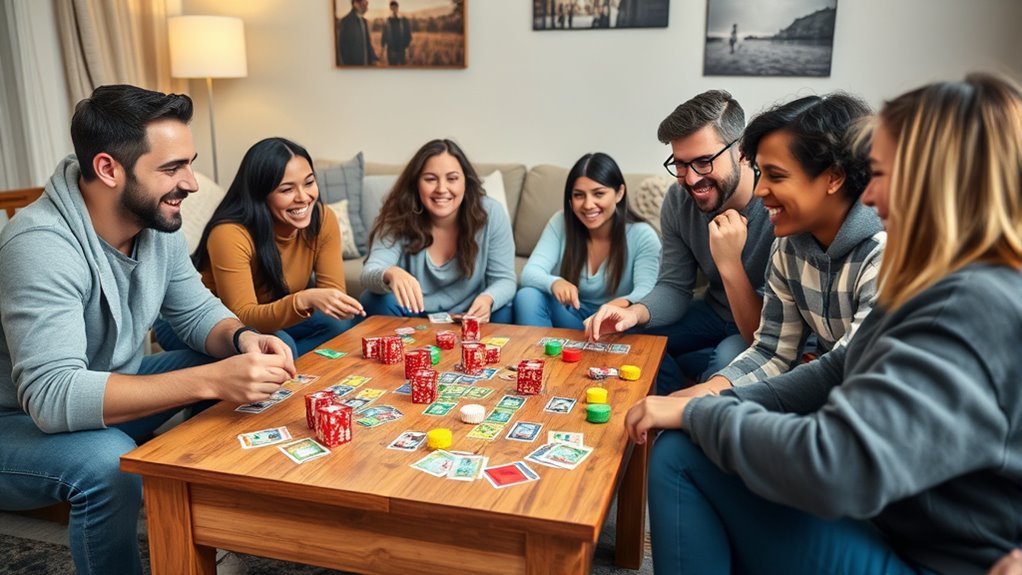

Looking for the perfect board games for family night? The right choice can transform an ordinary evening into a memorable fun-filled experience. The best overall pick, Monopoly Family Board Game, offers engaging gameplay for all ages, while options like Connect 4 and Jenga excel in quick, casual fun. However, tradeoffs exist—some games are better suited for younger kids, while others deliver deeper strategic play for older family members. Keep reading for a full breakdown of top contenders and what makes each unique.

Get movie nights delivered free with Prime
- Fast, free delivery on millions of items
- Prime Video, Amazon Music and more included
- Member-only deals all year
Key Takeaways
- Top picks vary based on age range, with some games ideal for younger children and others suited for teens and adults.
- Strategic games like Catan appeal to families seeking more complex gameplay, while classics like Connect 4 and Jenga favor quick, casual fun.
- Value and replayability are key; some games offer longer engagement, others are simple but versatile.
- Ease of setup and learning curve can significantly influence family enjoyment, especially with younger kids.
- Durability and quality matter, especially for games used regularly or by rowdy players.
| Candy Land Kingdom of Sweet Adventures Board Game for Kids |  | Best for Younger Children and Beginners | Ages: 3 and up | Players: 2 or more | Theme: Candy Land | VIEW ON AMAZON | See Our Full Breakdown |
| Monopoly Family Board Game for 2-6 Players, Ages 8 and Up |  | Best for Family Game Nights with Older Kids and Teens | Number of Players: 2 to 6 | Ages: 8 and up | Tokens: Top Hat, Rubber Ducky, Scotty, Hazel, Race Car, Penguin, Battleship, Thimble | VIEW ON AMAZON | See Our Full Breakdown |
| Catan Board Game (6th Edition) |  | Best for Strategic Families and Game Enthusiasts | Players: 3-4 | Ages: 10+ | Playtime: 60-90 minutes | VIEW ON AMAZON | See Our Full Breakdown |
| Official Hasbro Games Connect 4 Game (2025 Edition) |  | Best for Quick, Competitive Play and Portability | Ages: 6+ | Players: 2 | Includes: Storage case, score trackers | VIEW ON AMAZON | See Our Full Breakdown |
| Hasbro Gaming Scrabble Board Game, Classic Word Game for Kids Ages 8 and Up |  | Best for Word Enthusiasts and Family Brain Teasers | Number of Players: 2-4 | Ages: 8 and up | Includes: 100 wooden letter tiles, racks, gameboard | VIEW ON AMAZON | See Our Full Breakdown |
| USAOPOLY The Original TAPPLE Family Board Game |  | Best Overall for Fast-Paced Word Play | Number of Players: 2-8 | Ages: 8 and up | Play Time: 15-20 minutes | VIEW ON AMAZON | See Our Full Breakdown |
| Do You Really Know Your Family? Family Card & Board Game |  | Best for Family Bonding and Laughter | Recommended Age: 8+ | Game Type: Card & Board Game | Number of Players: Not specified | VIEW ON AMAZON | See Our Full Breakdown |
| USAOPOLY Blank Slate – Family-Friendly Word Association Board Game for 3-8 Players |  | Best for Creative Word Prediction and Group Fun | Players: 3-8 | Ages: 8+ | Play Time: 20-35 minutes | VIEW ON AMAZON | See Our Full Breakdown |
| Hasbro Gaming Trouble Board Game for Kids Ages 5 and Up |  | Best for Younger Kids and Simplicity | Ages: 5 and up | Players: 2-4 | Features: Pop-o-Matic bubble, Power Up Spaces | VIEW ON AMAZON | See Our Full Breakdown |
| The Game of Life Board Game, Family Game for Kids Ages 8 and Up |  | Best for Decision-Making and Life Simulation | Ages: 8 and up | Players: 2-4 | Includes: Pegs in 6 colors | VIEW ON AMAZON | See Our Full Breakdown |
| Mattel Games UNO Card Game for Kids, Adults & Families |  | Best for Versatility and Accessibility | Number of players: 2 to 10 | Ages: 7+ | Includes: Blank Wild Cards, Action Cards, Wild Cards | VIEW ON AMAZON | See Our Full Breakdown |
| Hasbro Gaming Yahtzee Game |  | Best for Strategy and Luck Balance | Age Range: 8+ | Included Components: Yahtzee shaker and 5 dice | Unit Count: 1 | VIEW ON AMAZON | See Our Full Breakdown |
| Official Hasbro Games Jenga Game with Digital Die – Wooden Block Tower |  | Best for Physical Play and Party Variations | Number of Blocks: 54 | Ages: 6+ | Includes: Digital die, stacking sleeve | VIEW ON AMAZON | See Our Full Breakdown |
| Sorry! Board Game for Kids Ages 6 and Up |  | Best for Classic Family Strategy and Fun | Number of Players: 2-4 | Ages: 6 and up | Includes: 4 pawns per player | VIEW ON AMAZON | See Our Full Breakdown |
| board games for family night | Ages | Includes |
|---|---|---|
| Candy Land Kingdom of Sweet Ad | 3 and up | Game board, colored cards, game pieces |
| Monopoly Family Board Game for | 8 and up | — |
| Catan Board Game | 10+ | — |
| Official Hasbro Games Connect | 6+ | Storage case, score trackers |
| Hasbro Gaming Scrabble Board G | 8 and up | 100 wooden letter tiles, racks, gameboard |
| USAOPOLY The Original TAPPLE F | 8 and up | 1 Tapple wheel with timer, 36 cards (144 categories), rules |
| Do You Really Know Your Family | — | — |
| USAOPOLY Blank Slate | 8+ | Scoreboard, 8 dry-erase slates, 250 double-sided cue cards, rules |
| Hasbro Gaming Trouble Board Ga | 5 and up | — |
| The Game of Life Board Game | 8 and up | Pegs in 6 colors |
| Mattel Games UNO Card Game for | 7+ | Blank Wild Cards, Action Cards, Wild Cards |
| Hasbro Gaming Yahtzee Game | — | — |
| Official Hasbro Games Jenga Ga | 6+ | Digital die, stacking sleeve |
| Sorry! Board Game for Kids Age | 6 and up | 4 pawns per player |
More Details on Our Top Picks
Candy Land Kingdom of Sweet Adventures Board Game for Kids
This classic game stands out for its simplicity and vibrant visuals, making it ideal for children as young as 3. Unlike Scrabble, which requires strategic wordplay, Candy Land offers a straightforward race to the castle, perfect for introducing very young players to board gaming. Its colorful landscape and no reading requirement foster engagement and ease of play, but the limited complexity means older kids may find it too simple. It also depends on multiple players for full enjoyment, which could be a drawback for smaller families. Nonetheless, this game excels at building foundational game skills in preschoolers and early elementary students.
Pros:- Suitable for very young children with no reading needed
- Bright, colorful illustrations that captivate early players
- Introduces kids to basic game mechanics and turn-taking
Cons:- Limited complexity may bore older children
- Requires multiple players for full engagement
Best for: Families with preschoolers or children new to board games who want an engaging, visual experience.
Not ideal for: Older children or families seeking more strategic or challenging gameplay than simple color-matching and racing.
- Ages:3 and up
- Players:2 or more
- Theme:Candy Land
- Includes:Game board, colored cards, game pieces
Our verdict“A perfect starter game for families with preschoolers, but less suitable for older kids seeking more challenge.”
Monopoly Family Board Game for 2-6 Players, Ages 8 and Up
Compared with simpler options like Candy Land, Monopoly offers a deeper, more strategic experience that can hold the attention of older children and adults. Its real estate buying, selling, and building mechanics foster strategic thinking and negotiation, making it a staple for family game nights. However, this depth comes with longer playtimes and potential for drawn-out rounds, especially with 6 players. While it may be less suitable for casual or quick sessions, its familiarity and engaging gameplay make it a go-to for families wanting a classic, competitive game that encourages planning and money management.
Pros:- Engages a broad age range with strategic gameplay
- Includes a variety of fun tokens to personalize play
- Familiar classic that encourages negotiation and planning
Cons:- Can take a long time to complete, especially with many players
- Requires multiple players for the full experience
Best for: Families with kids aged 8 and up who enjoy strategy and longer gameplay sessions.
Not ideal for: Families seeking quick, light games or for very young children who find the game rules complicated.
- Number of Players:2 to 6
- Ages:8 and up
- Tokens:Top Hat, Rubber Ducky, Scotty, Hazel, Race Car, Penguin, Battleship, Thimble
Our verdict“Ideal for families wanting a strategic and engaging game that lasts longer, best suited for kids over 8.”
Catan Board Game (6th Edition)
Compared to the simpler Candy Land and Connect 4, Catan offers a rich, strategic experience that challenges players to gather resources, build, and trade. Its modular hexagonal board ensures each game feels fresh, making it perfect for families wanting more depth and replayability. However, its complexity can be overwhelming for younger children under 10 or casual gamers who prefer quick, lighthearted fun. Its focus on resource management and strategic planning makes it ideal for families who enjoy longer, more involved game sessions and are ready to teach kids patience and negotiation skills.
Pros:- Highly replayable with a modular, changing board
- Encourages strategic thinking and resource management
- Suitable for family nights with older kids and game enthusiasts
Cons:- May be too complex for children under 10
- Longer setup and playtime compared to simpler games
Best for: Families with older children or adults who enjoy strategic, resource-based gameplay.
Not ideal for: Young children who may struggle with the rules or for quick game sessions that require less setup.
- Players:3-4
- Ages:10+
- Playtime:60-90 minutes
- Edition:6th
Our verdict“Best suited for families seeking a strategic, replayable game that rewards planning and resourcefulness.”
Official Hasbro Games Connect 4 Game (2025 Edition)
Unlike the longer, more involved games like Monopoly or Catan, the Connect 4 2025 Edition offers quick rounds that are perfect for spontaneous fun. Its modern design with a foldable grid and built-in score trackers simplifies setup and makes it highly portable, ideal for travel or quick breaks during family gatherings. However, it’s limited to two players, which could restrict group engagement, and rounds tend to be brief—requiring multiple games to satisfy players who enjoy longer sessions. Still, its straightforward gameplay makes it accessible for kids aged 6 and up, providing instant fun and competition.
Pros:- Easy to learn and quick to set up
- Portable design with all-in-one storage
- Built-in score trackers for competitive play
Cons:- Limited to only 2 players
- Rounds last only about 5 minutes, requiring multiple to extend play
Best for: Families seeking quick, portable, and competitive games suitable for two players or small groups.
Not ideal for: Larger groups or families looking for longer, more strategic gameplay experiences.
- Ages:6+
- Players:2
- Includes:Storage case, score trackers
- Design:Modern, foldable grid
Our verdict“An excellent choice for fast-paced, travel-friendly competition for two players or quick family fun.”
Hasbro Gaming Scrabble Board Game, Classic Word Game for Kids Ages 8 and Up
Compared with quick, straightforward games like Connect 4, Scrabble offers a more cerebral challenge that appeals to families wanting to foster vocabulary and strategic thinking. Its high-quality wooden tiles and textured gameboard add a premium feel, making it suitable for more serious wordplay. However, the game’s setup and cleanup can be time-consuming, and it requires multiple players to reach optimal gameplay. For younger children under 8, the rules might be a bit challenging, but for families who enjoy language puzzles, Scrabble provides a rewarding, educational experience that promotes family bonding through strategic word creation.
Pros:- Timeless, engaging word game for all ages
- High-quality wooden tiles and textured board
- Multiple ways to strategize and score points
Cons:- Time-consuming setup and cleanup
- Requires multiple players for the full experience
- Can be challenging for very young children
Best for: Families with older children or adults who love word games and strategic thinking.
Not ideal for: Young children under 8 or families seeking quick, light-hearted games.
- Number of Players:2-4
- Ages:8 and up
- Includes:100 wooden letter tiles, racks, gameboard
Our verdict“Perfect for families who enjoy language-based challenges and strategic wordplay, especially with older kids and adults.”
USAOPOLY The Original TAPPLE Family Board Game
For families seeking quick, energetic word games, The Original TAPPLE stands out with its rapid-fire gameplay and portability. Unlike Blank Slate, which encourages creative prediction, TAPPLE demands fast thinking within a limited timeframe, making it perfect for quick sessions but potentially frustrating for players who prefer a more relaxed pace. Its compact design and 15-20 minute playtime make it ideal for on-the-go fun or short family nights. Tradeoffs include a maximum of 8 players and the need for quick responses, which might alienate more deliberate players. Overall, this game shines for families wanting a lively, fast game that’s easy to store and suitable for a wide age range.
Pros:- Engages players with quick, energetic gameplay
- Highly portable and easy to store
- Suitable for a wide age range from 8 and up
Cons:- Limited to 8 players, which restricts larger family gatherings
- May be too fast-paced for some players who prefer more thinking time
Best for: Families who enjoy energetic, fast-paced word games and need a portable option.
Not ideal for: Families looking for longer, more strategic gameplay or larger groups over 8 players.
- Number of Players:2-8
- Ages:8 and up
- Play Time:15-20 minutes
- Includes:1 Tapple wheel with timer, 36 cards (144 categories), rules
Our verdict“This game is perfect for families wanting quick, lively word challenges on the go.”
Do You Really Know Your Family? Family Card & Board Game
This game excels at fostering conversation and laughter, making it ideal for families wanting more than just competitive play. Unlike The Game of Life, which involves strategic choices, this game emphasizes silly questions and challenges, perfect for breaking the ice or encouraging open dialogue. While its simplicity and ease of learning make it accessible for all ages, the lack of specific player limits and somewhat vague game duration could make planning tricky. However, if your family thrives on humor and conversation, this game offers a relaxed, fun experience that helps everyone learn more about each other.
Pros:- Easy to learn and quick to pick up
- Promotes family bonding through fun questions and challenges
- Suitable for a broad age range including kids, teens, and adults
Cons:- Player count is not specified, which could cause confusion
- May require adult supervision for younger children
- Limited game duration details may affect planning
Best for: Families with kids 8 and up who love humor, conversation, and light-hearted challenges.
Not ideal for: Families seeking a structured game with clear rules and specific player counts or longer gameplay.
- Recommended Age:8+
- Game Type:Card & Board Game
- Number of Players:Not specified
Our verdict“This game is ideal for families wanting relaxed, humorous interactions that spark conversation.”
USAOPOLY Blank Slate – Family-Friendly Word Association Board Game for 3-8 Players
Compared to TAPPLE’s speed, Blank Slate emphasizes creativity and prediction, making it better suited for families who enjoy collaborative wordplay and discussion. Its 20-35 minute playtime allows for more thoughtful responses, but it can be less appealing to those seeking quick, energetic rounds. Suitable for 3 to 8 players, it encourages group participation and sparks conversation, but the need for dry-erase slates and markers (not included) adds a minor setup hurdle. If your family loves word association games that promote creativity over speed, this option offers a fun, engaging experience for larger groups.
Pros:- Encourages creative thinking and prediction
- Suitable for larger groups, up to 8 players
- Engages players with collaborative word challenges
Cons:- Requires dry-erase slates and markers, not included
- Limited to word association gameplay, which may not appeal to everyone
Best for: Families who enjoy collaborative, creative word games with a flexible group size.
Not ideal for: Families who prefer fast-paced gameplay or dislike handling dry-erase markers and slates.
- Players:3-8
- Ages:8+
- Play Time:20-35 minutes
- Includes:Scoreboard, 8 dry-erase slates, 250 double-sided cue cards, rules
Our verdict“Best for families who appreciate creative, group-based word play over quick responses.”
Hasbro Gaming Trouble Board Game for Kids Ages 5 and Up
For families with younger children, Trouble offers simple, engaging gameplay centered around the iconic Pop-o-Matic bubble. Compared with The Game of Life, which involves longer decision-making, Trouble’s straightforward race to move pieces makes it accessible for kids as young as 5. The game’s limited player count (2-4) and repetitive nature might be less engaging for older children or adults, but its quick setup and fun bubble rolling make it a reliable choice for quick family sessions. Tradeoffs include less strategic depth and a potential for boredom among older players, but it remains a favorite for introducing young children to board games.
Pros:- Easy to learn and quick to set up
- Interactive and fun with Pop-o-Matic bubble
- Perfect for introducing young children to board games
Cons:- Limited to 2-4 players, restricting group size
- May feel repetitive or too simple for older kids or adults
- Less strategic depth for longer engagement
Best for: Families with young children aged 5 and up seeking simple, quick, and fun gameplay.
Not ideal for: Families with larger groups or older children and adults looking for more strategic or longer games.
- Ages:5 and up
- Players:2-4
- Features:Pop-o-Matic bubble, Power Up Spaces
Our verdict“Ideal for families with young kids wanting a simple, quick game that’s easy to enjoy.”
The Game of Life Board Game, Family Game for Kids Ages 8 and Up
This game appeals to families interested in storytelling and strategic choices, offering a simulated life experience where players navigate education, careers, and investments. Compared to Trouble, which is more luck-based, The Game of Life emphasizes decision-making and planning, though it can feel less dynamic due to its longer playtime and reliance on chance. Its colorful pegs and thematic gameplay make it visually appealing and engaging, but the game length can vary and may not suit families seeking quick entertainment. If your family enjoys strategic decision-making with a life theme, this game offers a richer, more involved experience.
Pros:- Engages players with decision-making and strategic investment
- Visually appealing with colorful pegs
- Suitable for multiple players, encouraging group play
Cons:- Game length can be unpredictable and lengthy
- Less appealing to older teens and adults craving more complexity
- Luck can overshadow strategy at times
Best for: Families with kids 8 and up who enjoy strategic, storytelling games and longer play sessions.
Not ideal for: Families seeking quick, casual games or those with limited patience for longer gameplay.
- Ages:8 and up
- Players:2-4
- Includes:Pegs in 6 colors
Our verdict“Best suited for families who enjoy strategic, thematic gameplay and longer sessions.”
Mattel Games UNO Card Game for Kids, Adults & Families
This version of UNO stands out for its accessibility features, making it a strong choice for families with color-blind players, unlike many traditional card games. Its inclusion of customizable blank wild cards encourages house rules, adding variety to gameplay. Compared with Sorry!, UNO offers faster-paced rounds and a broader age range, but it can become overly competitive quickly. The need to remember to call ‘UNO!’ can sometimes slow down the fun or cause frustration. Overall, this game is ideal for families seeking inclusive, adaptable entertainment that accommodates a wide range of players, though its quick tempo might challenge more relaxed players.
Pros:- Accessible for color-blind players with graphic symbols
- Includes customizable wild cards for house rules
- Suitable for a wide age range and large groups
Cons:- Requires players to remember to call ‘UNO!’, which can lead to disputes
- Game can be fast and competitive, possibly frustrating more relaxed players
Best for: Families with color-blind members or those who enjoy quick, social card games for diverse ages
Not ideal for: Players who prefer longer, strategic games or dislike fast-paced rounds
- Number of players:2 to 10
- Ages:7+
- Includes:Blank Wild Cards, Action Cards, Wild Cards
- Accessibility:Color blind accessible with graphic symbols
Our verdict“This UNO version is perfect for families needing an inclusive, quick, and adaptable card game for mixed ages.”
Hasbro Gaming Yahtzee Game
Compared to UNO, Yahtzee emphasizes a mix of luck and strategic decision-making with dice, making it more engaging for players who enjoy planning their moves. The included shaker and scorecards simplify setup and cleanup, which is a plus for busy families. However, unlike Jenga, which offers physical dexterity challenges, Yahtzee relies solely on dice rolls, which can feel repetitive for some. It’s best suited for families who want a straightforward, portable game that encourages quick rounds and strategic thinking, though it may become monotonous if played repeatedly without variation.
Pros:- Engaging blend of luck and strategy suitable for all ages
- Includes shaker and scorecards for convenience
- Portable and easy to set up for quick gameplay
Cons:- Requires multiple players for full enjoyment
- Can become repetitive over extended play sessions
Best for: Families who enjoy dice games that combine chance with strategy and quick rounds
Not ideal for: Those seeking a highly interactive physical game or long, strategic campaigns
- Age Range:8+
- Included Components:Yahtzee shaker and 5 dice
- Unit Count:1
- Model Year:2013
- Sub Brand:Hasbro Gaming
- Item Type:Yahtzee Classic
Our verdict“Yahtzee makes a great choice for families seeking fast-paced, strategic dice fun that’s easy to bring anywhere.”
Official Hasbro Games Jenga Game with Digital Die – Wooden Block Tower
Compared to traditional Jenga, this edition introduces a digital die that expands the game with six new challenges, making it more dynamic and suited for parties or solo play. The genuine wooden blocks offer durability and a satisfying tactile experience, unlike plastic or lightweight variants. However, the digital die’s functionality depends on a smartphone or web app, which could be a barrier or inconvenience for some families. Its diverse game modes, such as thumbs-only or timed races, cater well to active families wanting physical fun, though young children might struggle with digital interactions or solo play. This version is best for families seeking a lively, innovative twist on classic Jenga.
Pros:- Includes innovative digital die with multiple game modes
- Made from high-quality, genuine wooden blocks
- Suitable for both group play and solo challenges
Cons:- Requires a smartphone or web app, adding a digital dependency
- Young children may find digital features challenging without supervision
Best for: Families looking for a lively, physical game with digital enhancements for parties or solo fun
Not ideal for: Very young children who may find digital features confusing or for families preferring simple, traditional Jenga
- Number of Blocks:54
- Ages:6+
- Includes:Digital die, stacking sleeve
- Material:Wood
Our verdict“This Jenga set offers a fresh, active experience ideal for families wanting a modern twist on a classic game with digital flair.”
Sorry! Board Game for Kids Ages 6 and Up
Compared to UNO or Yahtzee, Sorry! emphasizes strategic movement and player interaction, making it more engaging for families who enjoy planning and competing directly. The game’s simple rules make it accessible for children as young as 6, but the repetitive nature of moving pawns and sending opponents back can lead to boredom after multiple rounds. Its limited player capacity (2-4) makes it less ideal for larger families or parties, but it shines in small, close-knit groups. If your family values strategic positioning and nostalgic gameplay, Sorry! offers a balanced mix of fun and challenge, despite its potential for predictability.
Pros:- Classic and nostalgic gameplay suitable for all ages
- Encourages strategic thinking and player interaction
- Ideal for small family gatherings or game nights
Cons:- Can become repetitive after extended play
- Limited to 2-4 players, restricting larger groups
Best for: Families seeking strategic, interactive gameplay with a nostalgic feel for small groups
Not ideal for: Large families or those wanting quick, light-hearted games without much strategy
- Number of Players:2-4
- Ages:6 and up
- Includes:4 pawns per player
Our verdict“Sorry! is a great pick for families who enjoy strategic, competitive games within a small group setting, though it may lack variety over time.”

How We Picked
Our evaluation focused on a mix of factors that impact family game nights. We looked at gameplay complexity to ensure options suit both casual players and those seeking deeper engagement. Usability and setup time were also critical—families want games that are easy to learn and quick to prepare. Durability and build quality were considered, as games should withstand frequent use. Finally, we prioritized value for money and replayability, aiming to recommend games that provide consistent fun across multiple sessions. The ranking reflects a balance of these elements, favoring versatile options that appeal to a broad age range.
Factors to Consider When Choosing Board Games For Family Night
Choosing the right board game for family night involves considering several key factors. It’s essential to match the game’s complexity with your family members’ ages and interests to ensure everyone stays engaged. Ease of setup can save time and frustration, especially with younger children. Additionally, think about game length—longer games can be great for special occasions, while shorter options keep the energy high. Durability and storage are also worth considering if you plan to frequently play or have limited space. Finally, consider whether the game encourages interaction, strategy, or simple luck, depending on your family’s preferred style of play.Age Range and Complexity
Matching a game’s difficulty with your family’s age and skill levels is crucial. Younger kids may prefer simple, colorful games like Candy Land or Jenga, while older players might enjoy strategic options like Catan or The Game of Life. Avoid overly complex games for very young children, as frustration can dampen the fun. Conversely, families with teens or adults might seek more challenging games that stimulate strategic thinking and negotiation. Finding a balance ensures everyone feels included and engaged throughout the night.
Game Length and Replayability
Consider how much time your family is willing to dedicate per session. Shorter games, such as Connect 4 or Trouble, are perfect for quick breaks or busy evenings. Longer games like Monopoly or Catan work well for special family nights when everyone has more time. Replayability also matters—games with multiple strategies or high variability tend to keep players interested over many sessions, making the purchase more worthwhile. Be mindful of how often you plan to play and choose accordingly.
Ease of Setup and Learning Curve
Games that are straightforward to set up and learn tend to get played more often. Complex rules can lead to frustration, especially with younger or less experienced players. Look for games with clear instructions and minimal components to assemble. Some games, like Jenga or Connect 4, require no setup at all, while others might need more time to explain. Prioritizing simplicity can boost ongoing family enjoyment and reduce the barrier to starting a game night.
Durability and Storage
Frequent use demands sturdy components—cheaply made games can fall apart quickly, diminishing the experience. Consider the quality of materials, especially for active games like Jenga or Trouble. Compact storage options are also a plus if you have limited space or plan to take games on the go. Well-made games tend to last longer and maintain their appeal, making them a smarter investment in the long run.
Type of Gameplay and Interaction
Decide if your family prefers games based on luck, strategy, or social interaction. Classic games like Scrabble and UNO focus on quick play and interaction, while strategy games like Catan encourage planning and negotiation. Some games foster teamwork, while others promote competitive play. Understanding your family’s preferred style helps in selecting a game that everyone will find fun and engaging, making game night a more memorable occasion.
Frequently Asked Questions
What is the best game for young kids on family night?
For young children, games like Candy Land, Jenga, and Trouble are excellent choices because they have simple rules, colorful components, and quick gameplay. These games are easy to learn and quickly engaging, making them ideal for shorter attention spans. They also promote basic skills like color recognition, counting, and hand-eye coordination. Choosing a game that’s age-appropriate helps ensure that young kids stay involved and have fun without feeling overwhelmed or frustrated.
How do I choose a strategy game that everyone in the family can enjoy?
Finding a strategy game suitable for the whole family involves balancing complexity with accessibility. Look for games with straightforward rules but enough depth to challenge older players, like The Game of Life or Catan. Consider the average age of your players and their familiarity with similar games. A good strategy game for mixed ages should have clear instructions, quick learning curves, and flexible play styles. This way, everyone can participate comfortably without long downtimes or confusion.
Are there any space-saving games that still offer good gameplay?
Yes, many games like Connect 4, Jenga, and UNO are compact and store easily while still delivering quality entertainment. These options are perfect if you have limited storage space or want to bring games along on trips. Look for versions with minimal components and sturdy design to withstand frequent use. While they might not have the depth of larger games, they excel at quick setup, portability, and versatile fun for all ages.
Should I prioritize more expensive games for better quality?
Not necessarily. While higher-priced games often feature better materials and more complex gameplay, many affordable options provide excellent fun and durability. Consider your family’s gaming habits, the types of games you enjoy, and how often you’ll play. Sometimes, a well-made, budget-friendly game like Jenga or UNO offers great value, especially for casual or occasional use. Investing in one or two higher-end games makes sense if you want more intricate gameplay or long-term durability.
What are some good games for mixed-age family groups?
Games like The Game of Life, UNO, and Sorry! are versatile choices that accommodate a wide age range. These games balance simplicity with enough strategic or luck elements to keep everyone involved. They also tend to have straightforward rules and quick setup, making them accessible for children and engaging enough for adults. Selecting games that don’t favor one age group over another helps create a more inclusive, enjoyable family game night.
Conclusion
For families seeking the best overall experience, Monopoly remains a classic, offering depth and familiarity. If you want the best value, Connect 4 and Jenga deliver quick, fun, and durable options without breaking the bank. Beginners or families with young kids should lean toward simple, colorful games like Candy Land or Trouble for easy learning and quick fun. For those prioritizing strategic depth, Catan or The Game of Life can provide hours of engaging gameplay. Ultimately, selecting the right game depends on your family’s age range, play style, and how much time you want to spend—use this guide to find the perfect fit for your next game night.
Halloween Picks
halloween
As an affiliate, we earn on qualifying purchases.