For most homes, I’d start with the First Alert Hardwired Combination Smoke & Carbon Monoxide Alarm with Voice and Location Alerts: spoken hazard and room information can make an alarm easier to act on. The Kidde Smart Smoke & CO Detector with Ring stands out for buyers who want connected alerts, while the Kidde 30CUA10-V offers a hardwired combination option with backup power. The main tradeoffs are hardwired installation versus battery convenience, smoke-only versus smoke-and-CO coverage, and smart connectivity versus a simpler local alarm. Voice alerts can identify the threat, but they do not replace interconnected alarms or a suitable placement plan. Read on for how the 15 options differ and which fit specific homes.

Get movie nights delivered free with Prime
- Fast, free delivery on millions of items
- Prime Video, Amazon Music and more included
- Member-only deals all year
Key Takeaways
- Room-specific voice alerts are a standout differentiator: First Alert’s voice-and-location model offers more context than alarms that announce a hazard without identifying where it was detected.
- Smart connectivity and spoken alerts solve different problems: Kidde’s Ring-connected models can suit buyers seeking remote notifications, while conventional voice alarms focus on telling people in the home what the alarm detects.
- Combination alarms trade fewer devices for broader hazard coverage: Smoke-and-CO models appear across both hardwired and battery-powered options; smoke-only models make more sense when CO detection is already covered.
- Power type shapes installation and backup planning: Hardwired models can suit existing alarm wiring, while battery models avoid wiring work; backup and sealed-battery details vary by model.
- Similar model names do not mean identical setups: The lineup includes single units and multipacks, hardwired models with different backup arrangements, and several distinct First Alert voice-alarm listings, so buyers should verify the exact configuration before choosing.
| Kidde Smart Smoke & CO Detector with Ring, AA Battery (RGCUDR-RW) |  | Best for Smart-Home Monitoring | Detection: Smoke and carbon monoxide | Power: Two AA alkaline batteries, included | Connectivity: Ring app notifications and Alexa integration | VIEW ON AMAZON | See Our Full Breakdown |
| First Alert Hardwire Combination Smoke & Carbon Monoxide Alarm with Voice |  | Best for Voice-and-Location Guidance | Alarm type: Combination smoke and carbon monoxide alarm | Power: Corded electric with battery backup | Sensor type: Photoelectric | VIEW ON AMAZON | See Our Full Breakdown |
| Kidde Smoke and Carbon Monoxide Detector, Hardwired with 10-Year Battery Backup, Voice Alerts, LED, 85 dB, 30CUA10-V, 1 Pack |  | Best for Long-Term Backup | Model: 30CUA10-V | Power: 120V AC with built-in 10-year battery backup | Detection: Combination smoke and carbon monoxide | VIEW ON AMAZON | See Our Full Breakdown |
| First Alert Hardwired Combination Smoke & Carbon Monoxide Alarm with Voice and Location Alerts |  | Best for Location-Specific Alerts | Model: SMCO100V-AC | Power: Corded electric with battery backup | Alarm type: Combination smoke and carbon monoxide | VIEW ON AMAZON | See Our Full Breakdown |
| First Alert SMCO100V-AC Hardwired Combination Smoke & Carbon Monoxide Alarm with Voice Alerts |  | Best for Easier Hardwired Replacement | Model: SMCO100V-AC | Power: Hardwired with AA battery backup | Detection: Smoke and carbon monoxide | VIEW ON AMAZON | See Our Full Breakdown |
| First Alert Hardwire Smoke Alarm |  | Best for Straightforward Hardwired Upgrades | Model: SMI100-AC | Power source: Corded electric | Battery backup: 9V | VIEW ON AMAZON | See Our Full Breakdown |
| Kidde 30CUAR-V Hardwired Smoke and Carbon Monoxide Detector with AA Battery Backup (1 Pack) |  | Best Hardwired Voice Alert for Smoke and CO | Model: 30CUAR-V | Alarm type: Smoke and carbon monoxide | Power: Hardwired with AA battery backup | VIEW ON AMAZON | See Our Full Breakdown |
| Kidde Smoke Detector, 10-Year Battery, Voice Alerts, 3 Pack |  | Best Multi-Room Battery-Powered Voice Set | Model: 20SD10-V | Pack contents: 3 smoke detectors, mounting base, wiring harness, user guide | Battery life: 10 years | VIEW ON AMAZON | See Our Full Breakdown |
| First Alert Hardwire Smoke Alarm with Voice Alerts |  | Best for Spoken Room-Location Alerts | Model: SM100V-AC | Power source: Corded electric | Sensor type: Ionization | VIEW ON AMAZON | See Our Full Breakdown |
| First Alert Hardwire Smoke Alarm with Voice Alerts |  | Best for Multi-Alarm First Alert Coverage | Model: SM100V-AC | Unit count: 3 | Power source: Corded electric | VIEW ON AMAZON | See Our Full Breakdown |
| Kidde Smoke & Carbon Monoxide Detector, 10-Year Battery, Model 30CUD10-V |  | Best for Long-Term Battery Simplicity | Detection: Smoke and carbon monoxide | Power: Built-in 10-year battery | Alarm volume: 85 dB | VIEW ON AMAZON | See Our Full Breakdown |
| Kidde Smoke & CO Detector, AA Battery-Powered, 30CUDR-V, 1 Pack |  | Best for Replaceable Batteries | Detection: Smoke and carbon monoxide | Power: Two AA alkaline batteries, included | Alarm volume: 85 dB | VIEW ON AMAZON | See Our Full Breakdown |
| Kidde 30CUA10-V Hardwired Smoke & CO Detector with 10-Year Battery Backup (3-Pack) |  | Best for Whole-Home Hardwired Coverage | Unit count: 3 | Model: 30CUA10-V | Detection: Smoke and carbon monoxide | VIEW ON AMAZON | See Our Full Breakdown |
| First Alert 10-Year Battery Combination Smoke & Carbon Monoxide Alarm |  | Best for Voice and Location Alerts | Model: SMCO210V | Detection: Smoke and carbon monoxide | Sensor type: Photoelectric | VIEW ON AMAZON | See Our Full Breakdown |
| Kidde Smart Smoke Detector with Ring, AA Battery (RGSDR-RW) | 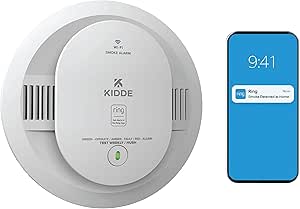 | Best for App and Alexa Alerts | Model: RGSDR-RW | Detection: Smoke | Power: Two AA alkaline batteries, included | VIEW ON AMAZON | See Our Full Breakdown |
| advanced smoke alarms with voice alert | Model | Power | Interconnect | Detection |
|---|---|---|---|---|
| Kidde Smart Smoke & CO Detecto | — | Two AA alkaline batteries, included | Wire-free interconnectivity across Kidde alarms | Smoke and carbon monoxide |
| First Alert Hardwire Combinati | — | Corded electric with battery backup | Yes; compatible alarms | — |
| Kidde Smoke and Carbon Monoxid | 30CUA10-V | 120V AC with built-in 10-year battery backup | Yes; compatible alarms | Combination smoke and carbon monoxide |
| First Alert Hardwired Combinat | SMCO100V-AC | Corded electric with battery backup | Yes; compatible alarms | — |
| First Alert SMCO100V-AC Hardwi | SMCO100V-AC | Hardwired with AA battery backup | — | Smoke and carbon monoxide |
| First Alert Hardwire Smoke Ala | SMI100-AC | — | Compatible | — |
| Kidde 30CUAR-V Hardwired Smoke | 30CUAR-V | Hardwired with AA battery backup | Compatible with other Kidde alarms | — |
| Kidde Smoke Detector | 20SD10-V | — | — | — |
| First Alert Hardwire Smoke Ala | SM100V-AC | — | — | — |
| First Alert Hardwire Smoke Ala | SM100V-AC | — | Compatible First Alert and BRK alarms | — |
| Kidde Smoke & Carbon Monoxide | 30CUD10-V | Built-in 10-year battery | — | Smoke and carbon monoxide |
| Kidde Smoke & CO Detector | — | Two AA alkaline batteries, included | — | Smoke and carbon monoxide |
| Kidde 30CUA10-V Hardwired Smok | 30CUA10-V | — | Interconnect capability | Smoke and carbon monoxide |
| First Alert 10-Year Battery Co | SMCO210V | Battery powered with sealed 10-year battery | — | Smoke and carbon monoxide |
| Kidde Smart Smoke Detector wit | RGSDR-RW | Two AA alkaline batteries, included | Wireless interconnectivity | Smoke |
More Details on Our Top Picks
Kidde Smart Smoke & CO Detector with Ring, AA Battery (RGCUDR-RW)
For buyers who want alerts beyond the alarm itself, this Kidde smart detector sends smoke and carbon monoxide notifications to the Ring app and compatible Alexa devices. Its wire-free interconnectivity can connect it with other Kidde alarms, while two AA batteries make placement simpler than the hardwired First Alert SMCO100V-AC. That convenience comes with a different kind of tradeoff: this model’s voice-alert details are not specified in the supplied product information, so buyers prioritizing spoken hazard and location cues may prefer the First Alert or the Kidde 30CUA10-V. Optional 24/7 monitoring adds another layer, but it requires a subscription. I’d choose this for connected-home users who value remote notifications; it is less suitable for someone seeking a fully specified voice-alert experience without ongoing service.
Pros:- Detects both smoke and carbon monoxide
- Sends real-time notifications through the Ring app and Alexa
- Battery power avoids hardwired installation
- Wire-free interconnectivity can link compatible Kidde alarms
Cons:- The 24/7 monitoring option requires a paid subscription
- AA batteries need periodic replacement
- Voice-alert behavior is not specified in the supplied product details
Best for: Ring and Alexa households that want battery-powered smoke and CO detection with phone notifications and optional professional monitoring
Not ideal for: Buyers who want confirmed spoken hazard and location alerts, or who do not want to replace batteries or pay for optional monitoring
- Detection:Smoke and carbon monoxide
- Power:Two AA alkaline batteries, included
- Connectivity:Ring app notifications and Alexa integration
- Interconnect:Wire-free interconnectivity across Kidde alarms
- Monitoring:Optional 24/7 smoke and CO monitoring; subscription required
- Certification:UL 217 and FCC
Our verdict“Choose this Kidde if app and Alexa notifications matter more than confirmed spoken alerts and subscription-free monitoring.”
First Alert Hardwire Combination Smoke & Carbon Monoxide Alarm with Voice
This First Alert is a strong fit for buyers who want a hardwired combination alarm that speaks both the hazard and its location. That extra guidance can help occupants identify where to respond, while battery backup keeps protection active through a power outage. Compared with the battery-powered Kidde Smart Smoke & CO Detector, this model trades easy placement and app notifications for a wired setup and voice-led alerts. It also supports interconnection, so compatible alarms can signal across the home. The main friction is installation: hardwiring may call for professional help, and the supplied product information notes concerns about false alarms without detailing their frequency. I’d favor it over a basic alarm when spoken location cues matter, but not for renters or anyone needing a simple battery-only replacement.
Pros:- Voice and location alerts help identify the hazard and its source
- Detects both smoke and carbon monoxide
- Interconnect capability supports whole-home alerting
- Battery backup maintains protection during power outages
Cons:- Hardwired installation may require professional help
- Some reported concerns about false alarms are noted in the supplied product information
- Interconnect capability is limited to compatible models and configurations
Best for: Homeowners replacing an existing hardwired combination alarm who want spoken hazard and location alerts plus backup power
Not ideal for: Renters, buyers without compatible wiring, or anyone who prioritizes app notifications and simple battery-powered placement
- Alarm type:Combination smoke and carbon monoxide alarm
- Power:Corded electric with battery backup
- Sensor type:Photoelectric
- Voice alerts:Voice and location alerts
- Interconnect:Yes; compatible alarms
- Color:White
- Weight:1.9 pounds
Our verdict“Pick this First Alert for a wired home where spoken location guidance and outage backup outweigh installation demands.”
Kidde Smoke and Carbon Monoxide Detector, Hardwired with 10-Year Battery Backup, Voice Alerts, LED, 85 dB, 30CUA10-V, 1 Pack
The Kidde 30CUA10-V pairs spoken smoke and CO warnings with a built-in 10-year battery backup, making it a practical choice for homeowners who want fewer battery-service interruptions. Its stated 85 dB alarm and interconnect support add useful layers: the voice identifies the hazard, while compatible linked alarms can spread the warning through the home. Compared with the First Alert SMCO100V-AC, this Kidde makes its backup duration and alarm volume explicit in the supplied details; the First Alert instead specifies location alerts. The tradeoff is a hardwired installation and a compatibility limit for interconnection. It is also a single-unit option, unlike the listed Kidde 3-pack. I’d pick it when backup longevity and clear hazard announcements matter more than flexible placement or location-specific voice prompts.
Pros:- Voice alerts announce the specific hazard
- Built-in 10-year battery backup reduces routine battery replacement
- 85 dB alarm and interconnect support whole-home warning
- Dual-sensor design is described as offering faster detection
Cons:- Hardwiring may require professional installation
- Interconnection is limited to compatible Kidde models
- Single-unit configuration may not suit buyers outfitting several rooms
Best for: Homeowners with compatible wiring who want a combination alarm with a long-duration backup and explicit smoke-versus-CO voice warnings
Not ideal for: Renters, buyers seeking app-connected alerts, or households needing location-specific voice messages or multiple alarms in one purchase
- Model:30CUA10-V
- Power:120V AC with built-in 10-year battery backup
- Detection:Combination smoke and carbon monoxide
- Alarm volume:85 dB
- Voice alerts:Announce the specific hazard
- Interconnect:Yes; compatible alarms
- Warranty:10-year limited warranty
- Item count:1
Our verdict“Choose the 30CUA10-V for a wired installation where long backup life and spoken hazard identification take priority.”
First Alert Hardwired Combination Smoke & Carbon Monoxide Alarm with Voice and Location Alerts
For buyers who want to know not just what the alarm detected but where the danger is, this First Alert pairs voice alerts with location alerts and interconnect capability. The combination of smoke and CO detection covers two hazards in one hardwired unit, while battery backup keeps it active during power loss. Compared with the Kidde 30CUA10-V, this model emphasizes location guidance; Kidde’s listed strengths include a specified 10-year backup and 85 dB alarm, neither of which is stated here. The First Alert’s supplied data also identify a photoelectric sensor, but do not specify backup duration or alarm volume. Hardwiring makes it a better replacement for an existing wired alarm than a flexible choice for renters. Buyers should also check interconnect compatibility before building a linked system.
Pros:- Voice and location alerts help pinpoint the reported danger
- Detects both smoke and carbon monoxide
- Interconnect allows compatible alarms to sound together
- Battery backup provides protection during power outages
Cons:- Hardwired installation may require professional help
- Interconnect works only with compatible alarms
- Supplied details do not state battery-backup duration or alarm volume
Best for: Homeowners with existing hardwiring who want spoken hazard and location alerts from a combination smoke and CO alarm
Not ideal for: Renters, people without compatible wiring, or buyers who need a stated backup duration or alarm-volume specification
- Model:SMCO100V-AC
- Power:Corded electric with battery backup
- Alarm type:Combination smoke and carbon monoxide
- Sensor type:Photoelectric
- Voice alerts:Yes
- Location alerts:Yes
- Interconnect:Yes; compatible alarms
- Weight:11.2 ounces
Our verdict“Choose this First Alert if locating the source of a spoken warning matters more than a stated backup duration or easy installation.”
First Alert SMCO100V-AC Hardwired Combination Smoke & Carbon Monoxide Alarm with Voice Alerts
This SMCO100V-AC is the most installation-conscious pick among the hardwired models here: its quick-connect plug can simplify replacement without rewiring, provided the existing setup is compatible. It also combines voice and location alerts with smoke and CO detection, so occupants get more information than a standard siren provides. Compared with the other listed First Alert SMCO100V-AC, the supplied details for this entry spell out AA battery backup, dimensions, and Precision Detection aimed at reducing cooking-related nuisance alarms. The tradeoff is that it still needs hardwired primary power; the quick-connect plug does not make it a battery-only option. I’d choose this version for a homeowner updating an existing compatible installation, while renters or buyers starting without wiring should look at battery-powered alternatives such as the Kidde Smart detector.
Pros:- Voice and location alerts identify the hazard and its source
- Precision Detection is designed to reduce cooking-related nuisance alarms
- Quick-connect plug can simplify compatible replacements without rewiring
- AA battery backup supports operation during power outages
Cons:- Hardwired primary power is still required
- Quick-connect installation depends on a compatible existing setup
- Interconnect is limited to compatible alarms
Best for: Homeowners replacing a compatible hardwired alarm who want voice and location alerts, cooking-nuisance reduction, and a quick-connect installation
Not ideal for: Renters or households without compatible hardwiring, and buyers who want app alerts or a fully battery-powered unit
- Model:SMCO100V-AC
- Power:Hardwired with AA battery backup
- Detection:Smoke and carbon monoxide
- Technology:Precision Detection
- Connectivity:Early Warning Interconnect
- Dimensions:5.1 × 5.1 × 2.4 inches
- Weight:11.2 ounces
- Color:White
Our verdict“Pick this First Alert for a compatible hardwired replacement when location guidance and a simpler connector matter.”
First Alert Hardwire Smoke Alarm
The First Alert SMI100-AC suits homeowners who want a hardwired smoke alarm with backup power but do not need voice announcements. Its advanced sensing technology is described as reducing nuisance alarms while providing early fire detection, and the quick connect plug can simplify replacement where compatible wiring is already in place. Compared with the First Alert SM100V-AC, this model gives up voice and location alerts, so it offers less guidance when an alarm sounds. In return, its appeal is a simpler smoke-only setup rather than a more communicative alert system. The 9V battery backup keeps protection active during an outage, but this is still a hardwired-only choice, and the product data does not specify smart-home features or a voice-alert function.
Pros:- Quick connect plug can simplify installation when existing wiring is compatible
- Advanced sensing is described as reducing nuisance alarms while providing early fire detection
- Interconnect compatibility can extend alerts across a home
- 9V battery backup provides protection during power outages
Cons:- Requires a hardwired installation, limiting placement flexibility
- No voice alerts or location announcements are specified
- No smart-home integration is listed
Best for: Homeowners replacing an existing hardwired smoke alarm who want backup power and nuisance-alarm-reducing sensing without voice features.
Not ideal for: Renters or buyers without compatible hardwiring, and households that want spoken hazard or room-location alerts.
- Model:SMI100-AC
- Power source:Corded electric
- Battery backup:9V
- Alarm style:Precision Detection
- Interconnect:Compatible
- Dimensions:21.63 × 3.81 × 15 in
- Weight:16 oz
Our verdict“Choose the SMI100-AC for a compatible hardwired replacement with backup power, but pick the SM100V-AC if spoken alerts matter.”
Kidde 30CUAR-V Hardwired Smoke and Carbon Monoxide Detector with AA Battery Backup (1 Pack)
The Kidde 30CUAR-V is the most direct fit here for buyers who want spoken alerts for both smoke and carbon monoxide in a hardwired unit. Its dual-hazard coverage gives it an advantage over the smoke-only First Alert SM100V-AC, while the stated faster smoke detection and 85 dB alarm add layers of warning. Voice alerts identify which hazard the alarm detects, helping occupants respond with more context than a tone alone. The AA battery backup and interconnect capability suit a home with existing compatible wiring and alarms. The tradeoff is installation: unlike a battery-powered detector, this model depends on hardwiring, which may call for professional help. It is also a single unit, so whole-home coverage requires additional compatible alarms.
Pros:- Voice alerts distinguish smoke and carbon monoxide hazards
- Detects smoke up to 25% faster, according to the product description
- AA battery backup supports operation during power outages
- Interconnect capability can share alerts with compatible alarms
Cons:- Hardwired installation may require professional assistance
- One detector alone does not provide whole-home coverage
- Product details do not specify room-location announcements
Best for: Homeowners with hardwired alarms who want one detector to announce smoke or CO and connect with compatible alarms.
Not ideal for: Renters, buyers without existing hardwiring, or anyone seeking a standalone battery-powered unit with flexible placement.
- Model:30CUAR-V
- Alarm type:Smoke and carbon monoxide
- Power:Hardwired with AA battery backup
- Smoke detection:Up to 25% faster, as described
- Alarm sound level:85 dB
- Indicator:Red LED
- Interconnect:Compatible with other Kidde alarms
- Warranty:10-year limited
Our verdict“Pick the 30CUAR-V if you want hardwired voice alerts for both smoke and CO; choose the First Alert SM100V-AC only if smoke detection is sufficient.”
Kidde Smoke Detector, 10-Year Battery, Voice Alerts, 3 Pack
This three-pack is the clearest choice in this group for buyers who need to add voice-alert smoke detection in several rooms without relying on hardwired power. Each alarm has a 10-year built-in battery, reducing the routine battery changes associated with the AA-backup Kidde 30CUAR-V. The product description also claims smoke detection over 25% faster than standard models and sensing designed to reduce false alarms, which may help in kitchens or near steamy areas when placement is suitable. Unlike the 30CUAR-V, these units do not detect carbon monoxide, so they cannot replace a combination alarm. The three-unit bundle also calls for a larger initial commitment, and the included information does not say these alarms interconnect. Buyers should check local code and placement guidance before installation.
Pros:- Three detectors provide a practical starting point for multi-room coverage
- Built-in 10-year battery avoids regular battery replacement
- Voice alerts and LED indicators add information beyond an alarm tone
- Sensing is described as reducing nuisance alarms and detecting smoke faster
Cons:- Smoke-only detection does not cover carbon monoxide
- Interconnection capability is not specified
- A sealed battery means the alarm must be replaced when its battery life ends
Best for: Apartment residents or homeowners adding smoke-only voice alerts to multiple rooms without installing hardwired alarms.
Not ideal for: Buyers who need carbon monoxide detection, alarm interconnection, or individual battery replacement rather than a sealed battery unit.
- Model:20SD10-V
- Pack contents:3 smoke detectors, mounting base, wiring harness, user guide
- Battery life:10 years
- Alarm sound level:85 dB
- Detection speed:29% faster than standard models, as listed
- Detection type:Smoke
- Standards:UL 217 10th Edition, FCC
- Warranty:10-year limited
Our verdict“Choose this Kidde set for multi-room, battery-powered smoke voice alerts, but use a separate CO alarm or choose the 30CUAR-V for dual-hazard coverage.”
First Alert Hardwire Smoke Alarm with Voice Alerts
The First Alert SM100V-AC makes the most sense for buyers who want a hardwired smoke alarm to say where an alert is coming from, not just sound an alarm. That location guidance gives it a distinct advantage over the First Alert SMI100-AC, which has no voice feature listed, and over the smoke-and-CO Kidde 30CUAR-V, whose supplied description does not specify room announcements. Battery backup maintains operation during a power outage, while the test/silence control and visual status indicator make routine checks and low-battery awareness more straightforward. The tradeoff is that this is a smoke-only, hardwired alarm; it does not add CO coverage, and installation may be difficult without existing wiring. The product information also notes reports of false alarms and a bulkier form that may not suit every ceiling.
Pros:- Voice and location alerts help identify where smoke is detected
- Battery backup supports operation during power outages
- Test and silence functions simplify routine checks and alarm response
- Visual indicator can communicate alarm or low-battery status
Cons:- Hardwired installation can require professional setup
- Smoke-only detection does not cover carbon monoxide
- Product information notes false-alarm reports and a bulky design for some ceilings
Best for: Homeowners with compatible wiring who value spoken room-location guidance from a smoke-only alarm.
Not ideal for: Renters, buyers needing carbon monoxide detection, or households that cannot accommodate hardwired installation and the unit’s listed form factor.
- Model:SM100V-AC
- Power source:Corded electric
- Sensor type:Ionization
- Alarm style:Precision Detection
- Voice function:Voice and location alerts
- Backup power:Battery backup
- Dimensions:5.1 × 5.1 × 2.4 in
Our verdict“Choose the SM100V-AC for hardwired smoke detection with spoken location guidance, but select the Kidde 30CUAR-V if you also need CO alerts.”
First Alert Hardwire Smoke Alarm with Voice Alerts
This three-unit First Alert set is aimed at households that want voice and location alerts across multiple rooms while keeping alarms on a hardwired system. Like the single-unit First Alert SM100V-AC, it offers spoken location notifications and battery backup; its three-count bundle makes it easier to plan coverage beyond one room. The listed photoelectric sensor also distinguishes it from the SM100V-AC’s listed ionization sensor, though the supplied details do not provide a direct performance comparison. Interconnection with compatible First Alert and BRK alarms can help alerts carry across the home, but that brand compatibility narrows expansion choices. This remains a smoke-only product, not a smoke-and-CO solution, and hardwiring can make installation more involved. Buyers should confirm compatibility with their existing alarm system before choosing the set.
Pros:- Three alarms support broader room coverage than a single-unit purchase
- Voice and location notifications provide more context than a tone alone
- Battery backup supports operation during power outages
- Interconnects with compatible First Alert and BRK alarms
Cons:- Hardwired installation may be complex and can require professional help
- Interconnection is limited to compatible First Alert and BRK alarms
- Smoke-only detection does not include carbon monoxide
Best for: Homeowners planning several hardwired smoke alarms who already use, or intend to use, compatible First Alert or BRK units.
Not ideal for: Renters, households without compatible wiring, or buyers who need carbon monoxide detection or broader brand compatibility.
- Model:SM100V-AC
- Unit count:3
- Power source:Corded electric
- Sensor type:Photoelectric
- Voice function:Voice and location notifications
- Backup power:Battery backup
- Interconnect:Compatible First Alert and BRK alarms
- Item weight:10.24 oz
Our verdict“Choose this three-pack for compatible First Alert or BRK hardwired systems needing voice and location alerts in multiple rooms; choose the Kidde 30CUAR-V for combined smoke and CO detection.”
Kidde Smoke & Carbon Monoxide Detector, 10-Year Battery, Model 30CUD10-V
I’d choose the Kidde 30CUD10-V when I want smoke and carbon monoxide coverage without routine battery changes. Its sealed 10-year battery and spoken hazard alerts make it easier to identify what the alarm detected, while the 85-decibel siren adds an audible warning. Compared with the AA-powered Kidde 30CUDR-V, this model trades replaceable batteries for less ongoing maintenance. Its sensing is also described as helping reduce nuisance alarms from cooking or steam, a practical benefit for kitchens near the detector. The tradeoff is at end of life: the battery cannot be replaced, so the whole alarm needs replacement after its service period. I’d also expect less flexibility than a model that lets me swap batteries.
Pros:- Detects both smoke and carbon monoxide in one alarm.
- Voice alerts identify the type of hazard.
- Built-in 10-year battery avoids routine battery changes.
- Sensing technology is designed to reduce cooking- and steam-related false alarms.
Cons:- The sealed battery cannot be replaced when depleted.
- The complete detector needs replacement at the end of its battery life.
Best for: Homeowners who want combined smoke and CO detection with voice alerts and no scheduled battery replacements.
Not ideal for: Buyers who want to replace batteries themselves or keep an alarm in service by changing its power source after the sealed battery expires.
- Detection:Smoke and carbon monoxide
- Power:Built-in 10-year battery
- Alarm volume:85 dB
- Voice alerts:Yes
- False-alarm reduction:Advanced sensing designed to reduce alarms from cooking or steam
- Warranty:10-year limited warranty
- Model:30CUD10-V
Our verdict“Choose this Kidde if long-term freedom from battery changes matters more than replaceable power.”
Kidde Smoke & CO Detector, AA Battery-Powered, 30CUDR-V, 1 Pack
The Kidde 30CUDR-V suits buyers who prefer standard replaceable batteries over a sealed power source. It combines smoke and CO detection with voice alerts and visual LED indicators, giving more than one way to recognize an alarm. Unlike the sealed-battery Kidde 30CUD10-V, this unit can be powered with two AA alkaline batteries, but that flexibility brings recurring upkeep: the product data calls for battery replacement every six months. The 85-decibel alarm and listed UL standards make it a straightforward choice for a battery-powered installation, though it has no hardwired option. I’d pick it for a home where easy battery access matters more than minimizing maintenance, and skip it if I want a set-and-forget alarm.
Pros:- Combines smoke and carbon monoxide detection.
- Voice alerts and visual LED indicators communicate alarm status.
- Uses two included AA alkaline batteries.
- Listed as meeting UL 217 10th Edition and UL 2034 5th Edition.
Cons:- Requires battery replacement every six months.
- Does not offer a hardwired power option.
Best for: Renters and homeowners who need a standalone smoke-and-CO alarm and prefer batteries they can replace.
Not ideal for: People seeking minimal upkeep or a hardwired detector with battery backup.
- Detection:Smoke and carbon monoxide
- Power:Two AA alkaline batteries, included
- Alarm volume:85 dB
- Voice alerts:Yes
- Visual indicator:LED
- Battery replacement interval:Every six months
- Standards:UL 217 10th Edition, UL 2034 5th Edition, FCC
- Warranty:10 years
Our verdict“Pick the 30CUDR-V if replaceable AA power matters more to you than avoiding regular battery changes.”
Kidde 30CUA10-V Hardwired Smoke & CO Detector with 10-Year Battery Backup (3-Pack)
For a home that needs several coordinated alarms, this three-pack of Kidde 30CUA10-V detectors is the most coverage-focused choice in this batch. Each unit uses 120V hardwired power with a 10-year battery backup, and the interconnect capability can make connected alarms sound when one detects a hazard. Voice alerts specify whether the warning concerns smoke or carbon monoxide, which helps occupants respond more clearly than with a siren alone. Compared with the single-unit First Alert SMCO210V, this Kidde pack is better suited to multi-location installation, but it demands compatible wiring and more involved setup. I’d verify interconnection requirements before buying; installation may call for a competent DIYer or an electrician.
Pros:- Three detectors support coverage across multiple locations.
- Hardwired 120V power includes a 10-year battery backup.
- Voice alerts distinguish smoke from carbon monoxide.
- Interconnect capability can alert occupants through connected alarms.
Cons:- Hardwiring can require professional installation or advanced DIY skills.
- Interconnection requirements vary and need verification for the specific setup.
Best for: Homeowners replacing multiple hardwired alarms who want voice hazard identification, backup power, and interconnection.
Not ideal for: Renters or buyers who need a simple battery-only installation without checking wiring and interconnect compatibility.
- Unit count:3
- Model:30CUA10-V
- Detection:Smoke and carbon monoxide
- Primary power:120V AC hardwired
- Backup power:Built-in 10-year battery
- Alarm volume:85 dB
- Interconnect:Interconnect capability
- Standards:UL 217 10th Edition, UL 2034 5th Edition, FCC
- Warranty:10-year limited warranty
Our verdict“Choose this three-pack when you are equipping a compatible hardwired home and want connected voice alerts in several rooms.”
First Alert 10-Year Battery Combination Smoke & Carbon Monoxide Alarm
The First Alert SMCO210V is the pick here when knowing where an alarm is sounding matters alongside knowing what it detected. Its voice and location alerts can help occupants identify both the hazard and its reported location, a useful distinction from the Kidde 30CUD10-V, whose supplied details emphasize hazard type and long battery life. This First Alert also pairs smoke and CO sensing with a sealed 10-year battery and a slim, one-inch profile. That low-profile design may suit rooms where a bulkier unit would stand out, though it can be less visually prominent. The listed specs do not state an alarm volume, so buyers prioritizing a specified siren level may prefer a model such as the Kidde units rated at 85 dB.
Pros:- Detects both smoke and carbon monoxide.
- Voice and location alerts help identify the reported hazard and area.
- Sealed 10-year battery avoids routine battery replacement.
- Slim one-inch profile is less obtrusive than a deeper alarm.
Cons:- The sealed battery is not replaceable, so the alarm has a finite service life.
- Product data does not provide an alarm-volume rating.
- Battery-powered design does not provide a hardwired option.
Best for: Households that want a slim battery-powered combination alarm with spoken hazard and location information.
Not ideal for: Buyers who need a stated alarm-volume rating, replaceable batteries, or hardwired power.
- Model:SMCO210V
- Detection:Smoke and carbon monoxide
- Sensor type:Photoelectric
- Power:Battery powered with sealed 10-year battery
- Alerts:Voice and location alerts
- Dimensions:5.67 × 5.67 × 1 in
- Weight:6.56 oz
- Unit count:1
Our verdict“Choose the SMCO210V if location alerts and a slim profile matter more than a published siren rating or replaceable power.”
Kidde Smart Smoke Detector with Ring, AA Battery (RGSDR-RW)
The Kidde RGSDR-RW takes voice alerts beyond the alarm itself: it sends smoke and low-battery notifications through the Ring app and works with Alexa for voice notifications. Its wireless interconnect feature can link compatible alarms without running new wires, giving it a different advantage from the hardwired Kidde 30CUA10-V three-pack. This is a smoke detector, not a combined smoke-and-CO model, so it should not be treated as a replacement for dual-hazard coverage. Two AA batteries keep installation wire-free but require battery upkeep. The product also lists optional 24/7 monitoring with a subscription; that service is not needed for the stated app alerts, but buyers should separate the included connectivity features from paid monitoring.
Pros:- Ring app sends real-time smoke and low-battery notifications.
- Alexa integration supports voice notifications.
- Wireless interconnectivity avoids running interconnect wiring.
- Uses two included AA alkaline batteries.
Cons:- Detects smoke only; it does not provide carbon monoxide detection.
- Battery-powered operation requires battery maintenance.
- Optional 24/7 monitoring requires a subscription.
Best for: Ring and Alexa households that want wireless smoke alerts on phones and compatible connected alarms.
Not ideal for: Buyers who need carbon monoxide detection in the same unit or want hardwired power and no battery maintenance.
- Model:RGSDR-RW
- Detection:Smoke
- Power:Two AA alkaline batteries, included
- Connectivity:Ring app and Alexa integration
- Interconnect:Wireless interconnectivity
- App notifications:Smoke and low-battery alerts
- Certification:UL 217, FCC
- Optional monitoring:24/7 monitoring available by subscription
Our verdict“Choose this Kidde if app-based smoke alerts and Alexa integration fit your home, but pair it with separate CO detection.”
How We Picked
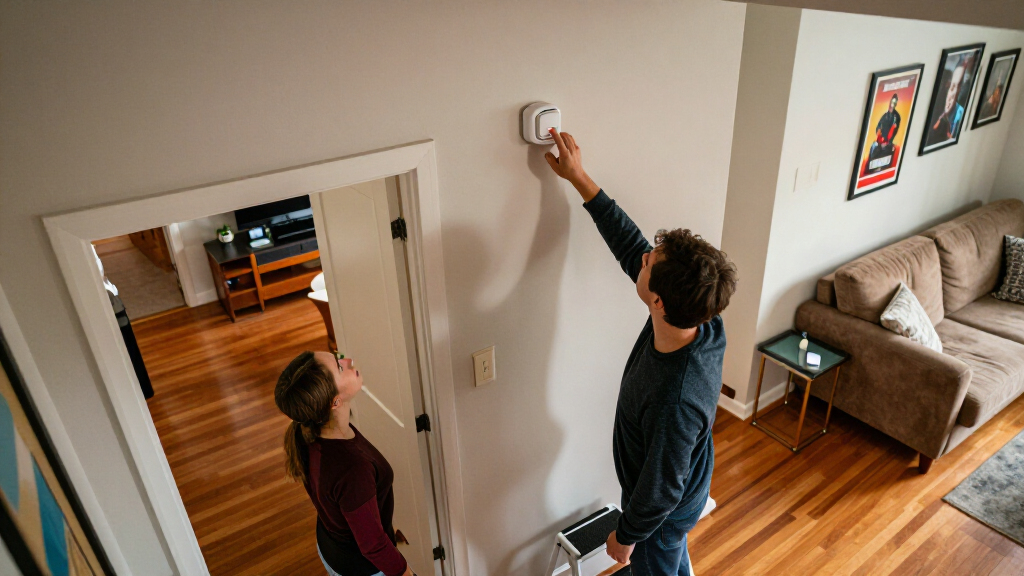
I ranked these advanced smoke alarms with voice alerts by how well their features help people respond to an alarm, not by feature count alone. I prioritized clear spoken hazard information, room-location announcements where offered, and whether the unit covers smoke only or both smoke and carbon monoxide. I also weighed power source, backup arrangement, smart connectivity, and the practical fit for replacing an existing hardwired unit or adding an alarm without wiring.
The highest-ranked options offer the strongest blend of useful voice information, coverage, and practical flexibility. I placed specialized picks—such as Ring-connected models, smoke-only alarms, and multipacks—according to the buyer they serve rather than treating them as universal upgrades. Similar-looking listings remain separate because their wiring, backup, voice, and pack details can differ; buyers should confirm the precise model and included hardware before purchase.
| advanced smoke alarms with voice alert | Detection |
|---|---|
| Kidde Smart Smoke & CO Detecto | Smoke and carbon monoxide |
| First Alert Hardwire Combinati | — |
| Kidde Smoke and Carbon Monoxid | Combination smoke and carbon monoxide |
| First Alert Hardwired Combinat | — |
| First Alert SMCO100V-AC Hardwi | Smoke and carbon monoxide |
| First Alert Hardwire Smoke Ala | — |
| Kidde 30CUAR-V Hardwired Smoke | — |
| Kidde Smoke Detector | — |
| First Alert Hardwire Smoke Ala | — |
| First Alert Hardwire Smoke Ala | — |
| Kidde Smoke & Carbon Monoxide | Smoke and carbon monoxide |
| Kidde Smoke & CO Detector | Smoke and carbon monoxide |
| Kidde 30CUA10-V Hardwired Smok | Smoke and carbon monoxide |
| First Alert 10-Year Battery Co | Smoke and carbon monoxide |
| Kidde Smart Smoke Detector wit | Smoke |
Factors to Consider When Choosing Advanced Smoke Alarms With Voice Alerts
Before choosing an alarm, I’d map the needs of the home rather than start with a model name. These broader decisions affect whether a voice alarm is useful day to day, easy to maintain, and compatible with the system already in place.
Choose the hazard coverage your home actually needs
A combination smoke-and-CO alarm can reduce the number of separate devices, but it is not automatically the right replacement for every existing alarm. Start by checking whether your home already has carbon monoxide alarms and whether local rules or the manufacturer’s placement guidance call for dedicated units in particular areas. A smoke-only alarm may be a sensible fit where CO protection is already handled; choosing one simply because it costs less can leave a coverage gap. Combination units also need placement that works for both hazards, so follow the instructions for the exact model. Avoid assuming that one combination alarm covers an entire home.
Match power and wiring to the installation
Hardwired alarms are most straightforward when replacing compatible units on existing wiring, especially if the home already has interconnected alarms. They can be a poor fit for a new location without wiring or for renters who cannot alter the installation. Battery-powered models avoid that wiring constraint, though you still need a plan for battery replacement or for monitoring a sealed battery’s service life. A backup battery in a hardwired alarm supports operation during an outage, but it does not make every model interchangeable with every wiring connector. Check the manual, mounting base, and wiring compatibility before removing an old alarm.
Decide how much information a voice alert should give
Voice alerts can distinguish a smoke event from a CO event, which may help people respond with more context than a siren alone. Some alarms also announce a room or location; that extra detail matters more in a multi-story home or when several alarms may sound together. A voice message is still an alert, not a diagnosis, so occupants should know the home’s emergency response plan. Check the product listing for the specific spoken messages rather than assuming every voice model names the hazard or room. If clarity for guests or children is a priority, compare the announcement details and controls before choosing.
Treat smart alerts as an add-on, not a substitute
A connected alarm can send information to a phone or work with a compatible smart-home setup, but those features depend on network access, account setup, and app support. They do not replace an audible alarm for people at home, and a phone notification may not arrive if connectivity or power fails. Before buying a Ring-connected model, check what equipment, app permissions, and account requirements apply to the exact setup. Buyers who mainly need an audible, local warning may be better served by a simpler voice alarm. Choose smart features for a specific remote-notification need, not just because they sound more advanced.
Plan coverage and replacement as a home-wide job
Buying one advanced alarm does not automatically update the home’s full warning system. Count existing devices, note their ages and power types, and check manufacturer guidance on service life and replacement intervals. A multipack can simplify a planned group replacement, but only if its alarms suit the locations and wiring in question. Interconnection can help warnings reach other rooms, though compatibility varies by model and system. Confirm whether a new unit will connect to the existing alarms before relying on a single-device upgrade to improve whole-home coverage.
Compare total upkeep, not just the feature list
Maintenance includes more than changing batteries: alarms need testing, cleaning as directed, and replacement when their service life ends. A sealed long-life battery can reduce routine battery changes, while a replaceable backup may offer a familiar maintenance routine; neither removes the need to test the alarm. Smart models can add app and connectivity upkeep, while hardwired units can involve more work at installation or replacement. Read the model’s manual for battery type, test procedure, end-of-life signals, and cleaning directions. The best fit is the one whose upkeep the household can realistically follow.
Frequently Asked Questions
Should I choose a hardwired voice alarm or a battery-powered one?
I’d choose hardwired when replacing a compatible alarm on existing wiring and battery-powered when wiring is absent or installation flexibility matters more. Hardwired units can work as part of an interconnected system, but connector and system compatibility need checking before purchase. Battery models avoid wiring changes, though battery replacement or sealed-battery service life becomes part of the maintenance plan. Neither power type alone tells you whether the alarm has backup during an outage, so confirm that detail in the exact model listing. For a rental or retrofit, get permission before changing a wired alarm.
Is a smoke-and-CO voice alarm better than a smoke-only model?
It is better only when its combined coverage fits the home’s existing protection plan. A combination unit can reduce the number of separate devices and announce which hazard it detects, but replacing a smoke-only alarm with one combination alarm may not provide enough coverage for the whole house. Check where CO alarms are needed and whether existing devices already cover those areas. Smoke-only options in this roundup can make sense where CO detection is handled separately. Follow the manufacturer’s placement instructions for either type.
Do voice alerts tell me which room the alarm is in?
Not always. Voice alerts may announce the hazard without naming a location, while the First Alert voice-and-location option in this roundup is specifically distinguished by location announcements. That distinction can matter when multiple alarms sound or when household members need to find the source quickly. Confirm the exact model’s spoken messages before buying, since similar product names do not guarantee the same voice features. Location announcements help identify an alarm’s reported area, but they do not replace checking the situation safely.
Are Ring-connected smoke alarms useful if I already have regular alarms?
They can be useful when remote notifications or a connected setup address a real need, such as wanting an alert while away. A connected feature does not make the local siren unnecessary, and phone notifications depend on the required network, app, and account setup. Compare the Ring-connected Kidde models with conventional voice alarms by asking whether remote access matters more than room announcements or simpler operation. Also check which compatible equipment and services the specific model requires. If the household only needs an audible warning at home, a non-connected option may be the more direct choice.
Can I replace just one alarm in an interconnected system?
Possibly, but I would verify compatibility before treating a new alarm as a drop-in replacement. Interconnected systems can depend on the manufacturer, wiring, connector, and alarm type, and a model that mounts in the same spot may still fail to communicate with the others. Check the manual or ask the manufacturer about the exact model and existing system. If compatibility is uncertain, replacing or upgrading the system as a planned group may be safer than mixing units without confirmation. Keep functioning alarms in place until the replacement setup is installed and tested according to its instructions.
Conclusion
For the best overall balance, I’d choose the First Alert Hardwired Combination Alarm with Voice and Location Alerts when compatible wiring is already in place and room announcements are a priority. The best value direction is a Kidde multipack such as the 30CUA10-V three-pack for buyers replacing several compatible hardwired combination alarms at once; check wiring and backup details first. For a premium connected setup, the Kidde Smart Smoke & CO Detector with Ring is the specialized pick for buyers who want remote notifications. Beginners who want to avoid wiring work should compare battery-powered voice models and confirm whether they cover smoke alone or smoke and CO. For a specific need, choose the location-alert First Alert for more room context, a smoke-only First Alert when CO coverage is already handled, or a battery-powered Kidde when wiring is not practical.
Columbus Day / Indigenous Peoples' Day Picks
long weekend sales
As an affiliate, we earn on qualifying purchases.