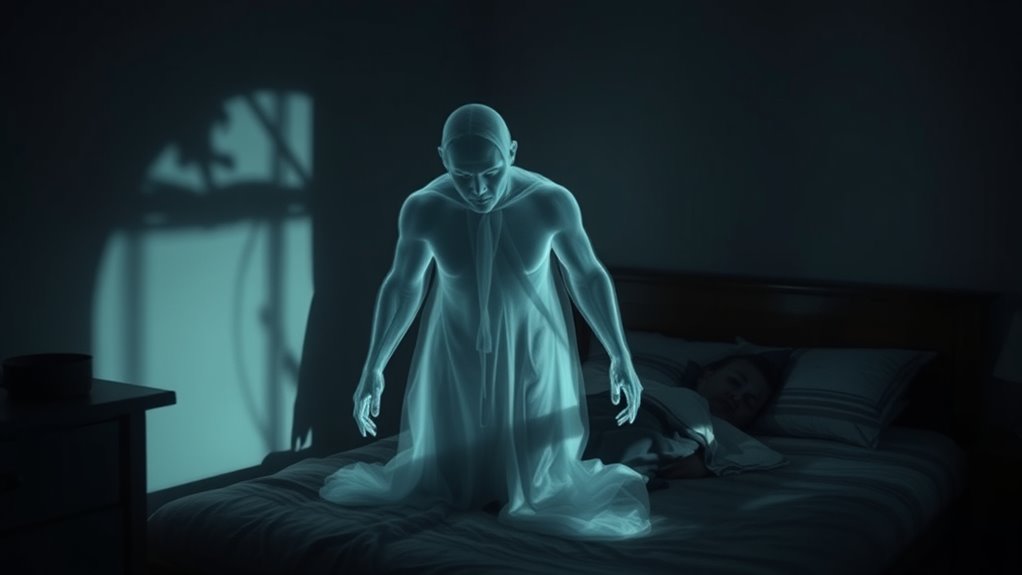

Sleep paralysis is often misunderstood as paranormal activity because of vivid hallucinations, shadowy figures, and sensations like pressure on your chest. These experiences happen when your brain awakens during REM sleep, but your body remains paralyzed, which can trigger fear and supernatural explanations rooted in cultural myths and history. Understanding the science behind these episodes can help you see they are natural brain functions. If you want to uncover more about separating fact from fiction, keep exploring these fascinating insights.
Key Takeaways
- Sleep paralysis involves temporary muscle paralysis during REM sleep, often accompanied by vivid hallucinations, leading to paranormal interpretations.
- Cultural myths link sleep paralysis to spirits, demons, or supernatural entities, fueling fear and traditional rituals.
- Historically, sleep paralysis was misunderstood as encounters with malevolent spirits or demonic figures across various cultures.
- Scientific explanations attribute sleep paralysis to brain mechanisms during sleep transitions, differentiating it from paranormal phenomena.
- Proper sleep hygiene and awareness can reduce episodes and dispel myths, promoting understanding of this common sleep experience.
Understanding Sleep Paralysis: The Basics

Sleep paralysis occurs when your mind wakes up before your body, leaving you unable to move or speak for a few seconds or minutes. This temporary state happens during changes between wakefulness and sleep, often during REM sleep when your muscles are naturally relaxed. During sleep paralysis, your brain is alert, but your body remains in a state of paralysis, which prevents acting out dreams. It can be frightening because you might experience vivid hallucinations or a sense of pressure on your chest. Although scary, sleep paralysis is harmless and common, affecting many people at some point. Understanding that it’s a normal part of sleep physiology helps reduce fear. Recognizing this condition allows you to manage episodes better and know they’re not signs of anything supernatural. Contrast ratio plays a significant role in how vivid and clear the hallucinations or visual disturbances can appear during episodes.
The Sleep Cycle and Its Disruptions
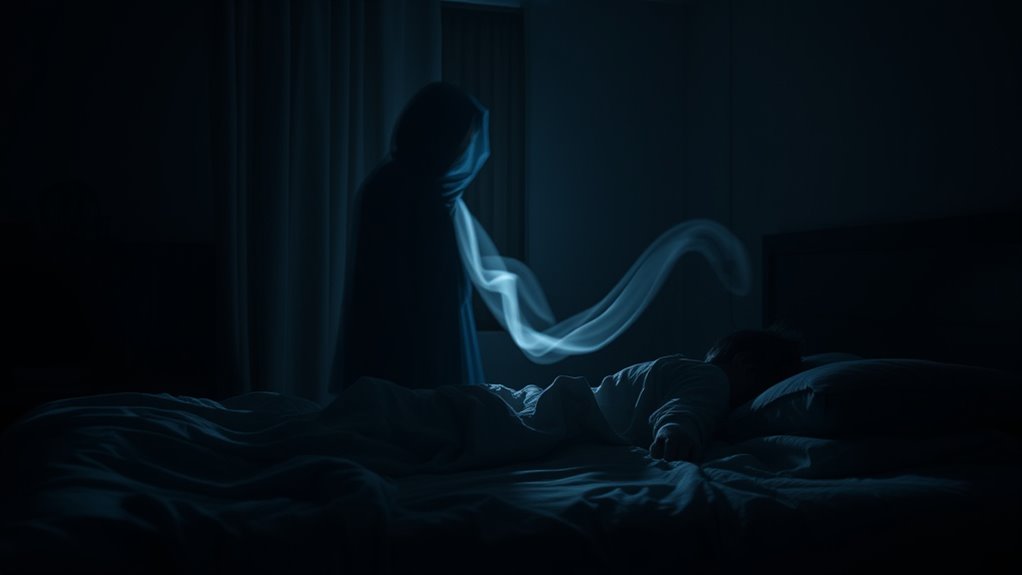
The sleep cycle is a series of stages your body naturally moves through each night, regulating your rest and recovery. It includes light sleep, deep sleep, and REM sleep, during which most dreaming occurs. Disruptions in this progression happen when sleep stages are shortened or fragmented, often caused by stress, irregular schedules, or health issues. These interruptions can lead to incomplete sleep, making you feel tired and less rested. Sleep disorders like insomnia or sleep apnea also disturb the sequence, increasing the chances of experiencing phenomena like sleep paralysis. When your sleep cycle is disrupted, your brain may misinterpret normal sleep transitions, fueling paranormal fears and misconceptions. Recognizing these disruptions helps you understand that many sleep-related experiences are natural, even if they seem unusual or frightening.
Common Symptoms and Experiences During Sleep Paralysis

During sleep paralysis, you might see frightening hallucinations or shadows that seem to move around you. You may also feel a heavy pressure on your chest and find it impossible to move your body. These intense sensations often leave people confused and scared, fueling their paranormal interpretations. Understanding that these experiences are common and rooted in cultural celebrations can help demystify the phenomenon.
Hallucinations and Shadows
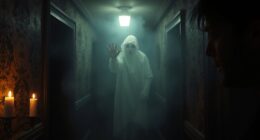
Many people experience vivid hallucinations and shadowy figures during sleep paralysis, which can feel incredibly real and often terrifying. You might see dark shapes lurking near your bed or notice strange figures standing silently in the room. These visions are triggered by your brain trying to make sense of the paralysis, blending dream imagery with reality. Shadows may appear to move or loom over you, heightening your fear. Despite how convincing they seem, these hallucinations are harmless, though their intensity can be overwhelming. Your mind creates these frightening images as part of the sleep paralysis experience, and understanding that they aren’t real can help reduce anxiety. Recognizing these hallucinations as normal symptoms can make future episodes less distressing. Additionally, awareness of AI-driven security systems can offer reassurance by highlighting advances in threat detection that protect us from digital vulnerabilities.
Feeling of Pressure
A common and unsettling sensation experienced during sleep paralysis is the feeling of intense pressure on your chest or body, as if something heavy is pressing down on you. This pressure can make breathing feel difficult, leaving you gasping for air or feeling like you’re being squeezed. It often occurs suddenly and can last for several seconds to minutes. You might sense a weight that’s hard to lift or shake off, intensifying feelings of fear or helplessness. This sensation isn’t caused by physical weight but by changes in your brain’s sleep-wake cycles, disrupting normal muscle control. Understanding that this pressure is a common symptom can help reduce anxiety, reminding you that it’s a natural part of sleep paralysis rather than an external threat.
Inability to Move
One of the most common and disturbing experiences in sleep paralysis is the inability to move your body despite being fully conscious. You might feel trapped, unable to shift your limbs or even speak. This paralysis can last seconds or minutes, heightening fear and confusion. During these moments, you may notice:
- A sense of helplessness, as your body refuses to respond
- Heightened awareness of surroundings, making hallucinations more intense
- Feelings of vulnerability, as you’re immobilized and exposed
This paralysis occurs because your brain remains in sleep mode while your consciousness is awake. Recognizing this sleep paralysis phenomenon can help reduce panic, understanding it’s a temporary, natural phenomenon rather than an external threat. Knowing the commonality of this experience can bring reassurance during episodes.
Cultural Interpretations and Myths Surrounding Sleep Paralysis
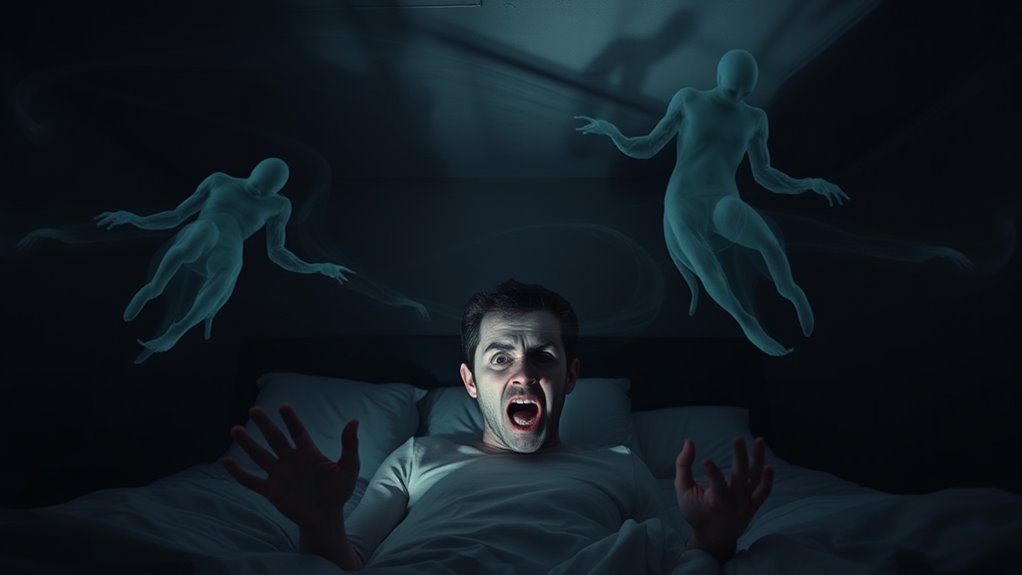
Across different cultures, sleep paralysis has often been woven into local myths and supernatural beliefs, leading people to interpret these frightening episodes as visits from spirits, demons, or otherworldly entities. In some traditions, it’s seen as an encounter with malevolent spirits or ancestral ghosts trying to communicate or cause harm. Others believe it’s the work of demons or evil forces that sit on your chest, making it hard to breathe. These interpretations are shaped by cultural stories and folklore that give meaning to the paralysis, often heightening fear during episodes. Such beliefs influence how individuals respond, sometimes resorting to rituals, prayers, or protective symbols to ward off these supernatural threats. These cultural narratives deepen the sense of terror associated with sleep paralysis, reinforcing its paranormal reputation.
Historical Accounts of Paranormal Encounters

Throughout history, people have reported encounters with sleep-related entities, from ancient stories of sleep demons to medieval tales of night terrors. In more recent times, spectral sightings during sleep paralysis have been documented and interpreted as ghostly visits. These accounts reveal how perceptions of paranormal encounters have evolved across different eras. Understanding the safety of sleep environments can help distinguish between genuine paranormal experiences and sleep disorders.
Ancient Sleep Demons
Ancient cultures often interpreted sleep paralysis as a direct encounter with malevolent spirits or demons, believing these entities deliberately targeted sleepers to torment or possess them. These fears led to stories of demonic invasions during the night, where restless spirits would sit on the chest or whisper threats. Such beliefs reflect deep-seated fears of losing control or being invaded by unseen forces. Recognizing these accounts helps you see how ancient societies tried to make sense of terrifying, real experiences. These stories serve as a reminder that:
- Fear of the unknown fueled supernatural explanations
- Cultural symbols shaped interpretations of sleep paralysis
- Humanity’s instinct was to assign meaning to inexplicable events
- Sound design techniques could be used to recreate these haunting auditory experiences to better understand their emotional impact.
Medieval Nightmares’ Tales
During the medieval period, stories of nightmarish encounters with supernatural entities persisted, often fueled by widespread beliefs in spirits and demons. People believed that visions of demonic figures or restless spirits haunted their dreams and waking hours. These tales were often recorded in chronicles, folklore, and religious texts, highlighting fears of evil forces infiltrating daily life. Such accounts frequently described shadowy figures pressing on chests or whispering sinister messages, which modern observers recognize as early descriptions of sleep paralysis. Medieval society interpreted these experiences as direct confrontations with malevolent beings, reinforcing superstitions and religious fears. These stories served as cautionary tales, warning against immoral behavior or challenging divine authority, and helped shape the era’s understanding of unexplained phenomena. Additionally, the psychological interpretation of sleep paralysis has since provided a scientific explanation, transforming how we understand these mysterious experiences today.
Modern Spectral Encounters
Modern accounts of spectral encounters often stem from personal stories, folklore, and historical reports that span centuries. These stories shape how people interpret unexplained experiences, often blending fear with cultural beliefs. Today’s encounters include ghost sightings, shadow figures, and mysterious voices that seem to defy scientific explanation. They reflect human curiosity and the desire to find meaning in the unknown. Cultural context heavily influences how these encounters are perceived and interpreted. They reveal how Cultural context influences perception. They highlight the enduring power of storytelling. They remind us that fear often fuels belief in the paranormal. While some encounters may have rational explanations, many remain elusive, fueling speculation and myths. These stories serve as a bridge between the past and present, illustrating our ongoing fascination with the supernatural and our quest to understand what lies beyond the physical world.
Scientific Explanations for Hallucinations and Fear Responses
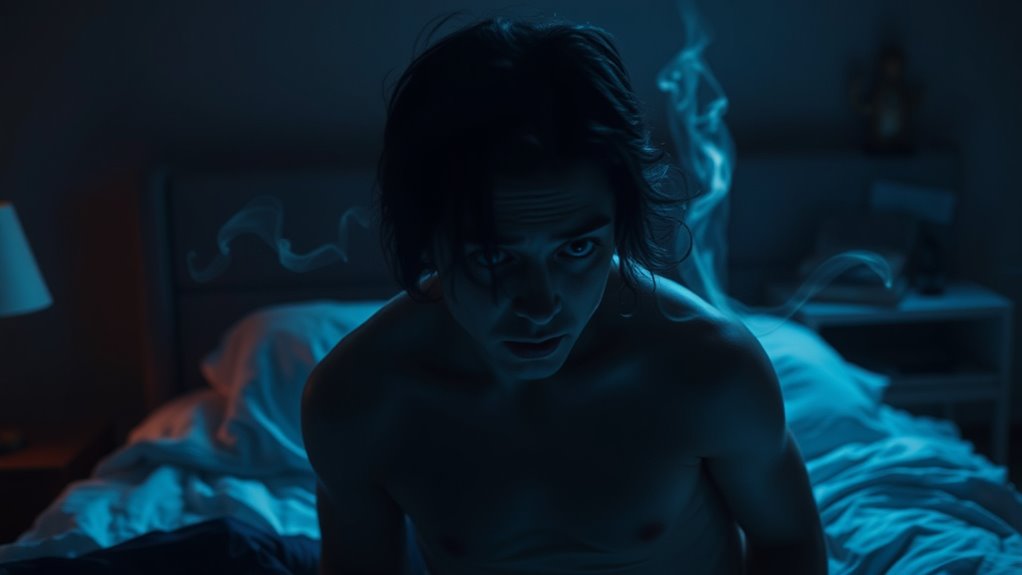
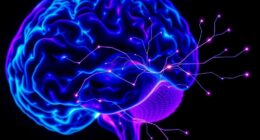
Scientists have identified several biological and neurological factors that explain the hallucinations and intense fear responses experienced during sleep paralysis. During REM sleep, your brain is highly active, and your muscles are naturally paralyzed to prevent acting out dreams. Sometimes, this paralysis persists as you wake, causing a disconnect between consciousness and motor control. This state can trigger vivid hallucinations, often involving shadowy figures or suffocating sensations, due to heightened activity in the brain’s visual and emotional centers. Your amygdala, responsible for fear, becomes hyperactive, intensifying feelings of terror. Additionally, disruptions in neurotransmitters like serotonin and norepinephrine can alter perception and emotional regulation. These physiological responses are natural parts of brain functioning, not supernatural phenomena, explaining why sleep paralysis can feel so frightening yet is rooted in biology. For example, ECU remapping can modify neural activity patterns in the brain, similar to how neurotransmitter fluctuations influence perception.
How to Differentiate Between Paranormal Beliefs and Scientific Facts

To effectively distinguish between paranormal beliefs and scientific facts, it’s important to evaluate the evidence supporting each explanation. Look for credible sources, peer-reviewed studies, and consistent data. Scientific explanations rely on testable hypotheses and reproducible results, whereas paranormal beliefs often lack empirical support. Be cautious of anecdotal stories or emotional appeals, which can be persuasive but are not scientifically reliable. To help differentiate, consider these points:
Evaluate evidence carefully; scientific facts are verified, while paranormal claims lack empirical support.
- Scientific facts are backed by research and verification.
- Paranormal beliefs often rely on personal experiences or traditions.
- Critical thinking and skepticism are essential tools for evaluating claims.
- Understanding the nature of dream symbols and their interpretation can aid in discerning psychological explanations from supernatural ones.
Tips for Managing and Preventing Sleep Paralysis Episodes

Managing and preventing sleep paralysis episodes can often be achieved by adopting simple lifestyle changes and sleep habits. First, stick to a consistent sleep schedule, going to bed and waking up at the same times daily. Reduce stress through relaxation techniques like meditation or deep breathing before bed. Avoid caffeine, alcohol, and heavy meals close to bedtime. Create a calming sleep environment—dark, cool, and quiet. Remember, sleep position matters; sleeping on your back may increase risk. Use the table below for quick tips:
| Tip | Benefit |
|---|---|
| Maintain regular sleep times | Stabilizes sleep cycle |
| Manage stress effectively | Reduces anxiety-triggered episodes |
| Avoid stimulants late evening | Promotes deeper sleep |
| Create a soothing environment | Enhances sleep quality |
| Sleep on your side or stomach | Lessens paralysis likelihood |
Frequently Asked Questions
Can Sleep Paralysis Be a Sign of a Serious Medical Condition?
Yes, sleep paralysis can sometimes signify a serious medical condition, especially if it occurs frequently or is accompanied by other symptoms like severe fatigue, hallucinations, or breathing issues. You should see a healthcare professional if it disrupts your sleep or daily life. While often benign, persistent episodes might be linked to sleep disorders or neurological problems, so getting a proper diagnosis guarantees you receive appropriate treatment.
Are There Specific Cultures Where Sleep Paralysis Is Considered a Spiritual Experience?
Did you know that around 40% of people worldwide report experiencing sleep paralysis? In many cultures, these episodes are seen as spiritual experiences. For example, in Japan, it’s called “Kanashibari,” believed to be spirits holding you down. Similarly, in Nigeria, some interpret sleep paralysis as encounters with ancestral spirits. If you experience these episodes, understanding their cultural significance can give you a different perspective on what your mind might be experiencing.
How Does Sleep Paralysis Affect Mental Health Over the Long Term?
You might find that long-term sleep paralysis can increase anxiety and fear, especially if episodes are frequent or intense. It may lead to sleep disturbances, affecting your overall mental health and daily functioning. Some people develop panic attacks or depression due to ongoing distress. To protect your mental well-being, it’s important to seek professional help, establish good sleep habits, and learn techniques to reduce episodes and manage fear.
Can Certain Diets or Supplements Reduce the Frequency of Sleep Paralysis?
Certain diets and supplements may help reduce sleep paralysis episodes. Eating foods rich in magnesium, like nuts and leafy greens, can promote better sleep. Supplements such as melatonin or magnesium might improve sleep quality and decrease frequency. Avoid caffeine and heavy meals before bed, as they can disrupt your sleep cycle. Incorporate a consistent sleep schedule and relaxation techniques to further minimize episodes. Consult a healthcare professional before making significant changes.
What Are Emerging Scientific Theories About the Causes of Sleep Paralysis?
Emerging scientific theories suggest that sleep paralysis results from disruptions in REM sleep regulation, especially when your brain awakens before muscle atonia ends. Researchers are exploring how genetics, stress, and irregular sleep patterns contribute to these episodes. Some studies highlight the role of neurotransmitters like serotonin and norepinephrine, while others examine how brain activity during REM might malfunction. These insights aim to better understand and potentially prevent sleep paralysis episodes.
Conclusion
Understanding sleep paralysis is like opening a hidden door between worlds—one where dreams and fears collide. By knowing the science behind these eerie nights, you can navigate the shadows with confidence, rather than superstition. Remember, you’re the captain of your own ship, steering through foggy waters of myths and reality. With awareness and care, you’ll find safe harbor, turning frightening encounters into mere whispers of sleep’s mysterious dance.