
Place memory explains hauntings by showing how emotional and traumatic events leave invisible yet persistent residues in physical environments. These residues, stored in the materials of a location, can influence how you perceive or feel in that space, often evoking sensations of presence or unease. Environmentally triggered memories may replay scenes or emotions from the past, making it seem as if the place itself is haunted. Exploring this connection offers deeper insights into what might be behind paranormal experiences.
Key Takeaways
- Place memory involves environmental recordings of past emotional and traumatic events that can be subconsciously reactivated.
- Intense emotions and trauma embed invisible residues in locations, influencing perceptions and creating haunt-like sensations.
- Physical materials in environments can absorb and sometimes replay these emotional imprints under certain conditions.
- Environmental cues such as sights, sounds, or scents can trigger these stored memories, leading to paranormal-like experiences.
- Place memory offers a natural explanation for hauntings without requiring conscious spirits or disembodied entities.
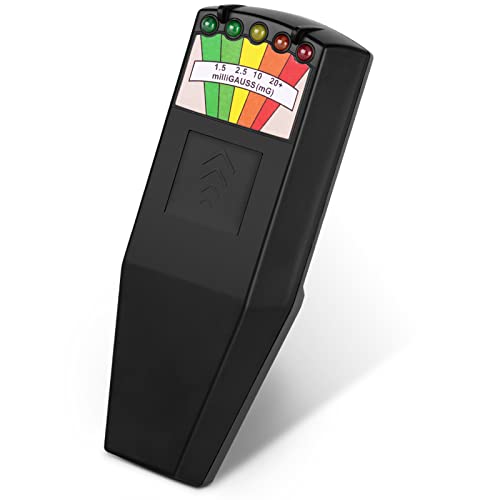
color tree Handheld LED EMF Magnetic Field Ghost Hunting Detector Electromagnetic Paranormal Equipment Tester 50Hz-20,000Hz Black
The EMF Meter Range for Ghost Hunting helps measure the electromagnetic fields to identify appliances that produce high-level…
As an affiliate, we earn on qualifying purchases.
As an affiliate, we earn on qualifying purchases.
Understanding Place Memory and Its Origins

Place memory refers to the collective or individual impressions and associations attached to a specific location, shaped by past events, experiences, and emotions. When you visit a familiar place, you might instantly recall feelings, conversations, or significant moments tied to that environment. These memories form through repeated exposure or intense experiences, embedding themselves into the space itself. Over time, the environment becomes more than just a backdrop; it carries the emotional residue of what happened there. This process isn’t solely personal—entire communities can develop shared memories that influence their perception of a place. Understanding where these memories originate helps you see how certain locations become charged with meaning, potentially setting the stage for feelings or phenomena that seem beyond the ordinary. Place attachment can strengthen this emotional connection, making certain sites feel haunted or imbued with history.

H128 Handheld Thermal Camera, 240 x 240 TISR Resolution, 24h Battery Life Thermal Imaging Camera, 25 Hz Infrared Camera with Temperature Alarm, -4℉~ 842℉ Temp Range, IP65 Protection Level
Enhanced Clarity with 240×240 TISR Resolution: Equipped with TISR technology, the H128 infrared camera elevates your thermal imaging…
As an affiliate, we earn on qualifying purchases.
As an affiliate, we earn on qualifying purchases.
How Emotional and Traumatic Events Leave Imprints
When intense emotions or trauma occur in a place, they can leave behind an invisible residue that lingers over time. These emotional imprints tend to accumulate, creating a persistent presence that’s hard to ignore. As a result, traumatic events can embed themselves deeply into a location’s memory, influencing how it’s experienced long after the event. For example, dog names often carry significant emotional associations, which can further reinforce these imprints.
Emotional Residue Accumulation
Emotional and traumatic events can leave behind subtle yet persistent imprints on a location’s energy. These residues, often referred to as emotional residues, accumulate over time, creating a kind of energetic buildup. Such residues can influence the atmosphere, making spaces feel charged or heavy long after the event. The table below illustrates common emotional residues and their potential effects:
| Emotional Residue | Typical Location | Effect |
|---|---|---|
| Grief | Hospitals, cemeteries | Heavy, sorrowful ambiance |
| Fear | Abandoned buildings | Anxiety, coldness |
| Anger | Conflict zones | Tension, hostility |
This accumulation can contribute to the sensation of hauntings, as these imprints persist and subtly influence the environment. Additionally, understanding the best dog training guides can help in managing the energetic environment of a space, especially if animals are present.
Traumatic Imprint Persistence
Have you ever wondered why certain places feel haunted long after the event? Traumatic experiences can leave a lasting imprint on a location’s energy, almost like a deep scar. When intense emotions, fear, or violence occur, they create a powerful resonance that embeds itself into the environment. These imprints persist because the emotional charge is so strong that it doesn’t simply fade away with time. Instead, it becomes part of the place’s energy signature. Over time, these echoes can be triggered by specific sights, sounds, or scents, making the space seem alive with the memory of the trauma. This persistence of traumatic imprints offers a compelling explanation for why some places remain haunted long after the original events have passed. Additionally, environmental energy can influence how these imprints are stored and perceived, further strengthening their presence.

Ghost Hunting Equipment, Paranormal Investigation Equipment Portable Ghost Hunting Kit, EMF & Temp Sensor Detector with 5 Sensitivity Levels and Auto-Calibration, Halloween Gifts
UNCOVER THE UNSEEN: Experience authentic paranormal investigations. Our professional-grade ghost detector monitors electromagnetic field (EMF) fluctuations in real-time….
As an affiliate, we earn on qualifying purchases.
As an affiliate, we earn on qualifying purchases.
The Science Behind Environmental Residue

Environmental residues are tangible traces left behind by past events, and science has made significant strides in understanding how these residues persist and influence our perception of place. Researchers have discovered that certain materials, like organic compounds and minerals, can absorb and retain energy from emotional or traumatic incidents, effectively storing a “record” of the event. These residues can linger in the environment long after the original event, subtly affecting the atmosphere and people’s perceptions. Techniques such as electromagnetic measurements, infrared imaging, and chemical analysis help detect these traces, revealing patterns that suggest environmental memory. Additionally, studies on environmental residue demonstrate how physical remnants in our surroundings could play a role in shaping our experiences and beliefs about haunted places. While the science is still evolving, it indicates that physical remnants in our surroundings could play a role in shaping our experiences and beliefs about haunted places.

Dunzy 8 Pcs Ghost Hunting Equipment Kit, Include 1 Emf Meter 1 EVP Voice Recorders 1 Spirit Ghost Hunting Research Case 1 Flashlight 1 Speaker 2 Motion Light up Cat Balls 1 Radio(Emf Meter 3, Radio 1)
Ghost Hunting Equipment Kit: our ghost hunting equipment kit includes an Emf Meter, a voice recorder, a UV…
As an affiliate, we earn on qualifying purchases.
As an affiliate, we earn on qualifying purchases.
Case Studies Linking Place Memory to Reported Hauntings

Numerous case studies reveal how places with a history of intense events often become associated with reported hauntings, suggesting a link between collective memory and perceived paranormal activity. For example, the haunted Browns Hotel in England has repeated reports of ghostly figures linked to historical tragedies. Similarly, the Queen Mary ship in California is renowned for its ghost sightings tied to its wartime past. These locations often share stories passed down through generations, embedding emotional and cultural significance into their environments. When visitors or residents experience unexplained phenomena, they may unconsciously interpret them through the lens of collective memory. Additionally, media portrayal of haunted places can reinforce the belief that these locations are haunted, influencing perceptions and experiences. Such case studies underscore how a place’s historical trauma and shared stories can shape modern hauntings, reinforcing the idea that memory, consciously or not, influences perceptions of paranormal activity.
Psychological Perspectives on Repeated Encounters

Your mind often responds to specific triggers that remind you of past events, sometimes putting you into a trance-like state. These emotional residues can intensify the feeling of repeated encounters, making the experience seem more vivid or real. Understanding how memory and emotion interact helps explain why certain places feel haunted even without any supernatural cause. Recent insights into AI-driven cognitive models suggest that our brains function in ways that can be simulated or influenced by technology, further shedding light on how memories can be reactivated or reconstructed.
Memory Triggers and Trance
When you encounter a familiar place or sound repeatedly, it can trigger powerful memories that seem to surface unexpectedly. This phenomenon often leads to a trance-like state where your mind becomes absorbed in past experiences. During these moments, your consciousness shifts, and you may feel detached from your surroundings. The psychological process involves:
- Sensory cues that activate deep-seated memories, pulling you into a mental space tied to past events.
- Altered awareness, where your focus narrows, and time seems to distort.
- Automatic responses, such as emotional reactions or vivid imagery, as your subconscious floods into consciousness.
- These triggers can also activate dream symbols, further intensifying the sense of reliving or encountering echoes of the past.
Emotional Residue Effects
Repeated encounters with a place or sound can leave behind emotional residues that linger long after the initial experience. These residual feelings, often intense or traumatic, become embedded in the environment, influencing your subconscious reactions over time. When you revisit the location, you may experience a sense of familiarity or unease without understanding why. This emotional residue can amplify perceptions of paranormal activity, making the environment seem haunted even if no physical cause exists. Psychologically, these lingering feelings can create a cycle where your mind associates specific places with strong emotions, reinforcing the idea of hauntings. As a result, your emotional responses become intertwined with the physical space, blurring the line between memory and reality. This process highlights how emotional residues shape our perceptions of place and the supernatural. Additionally, color accuracy in visual perception may influence how vividly these memories are visualized during encounters, further intensifying their impact.
Comparing Place Memory With Traditional Ghost Theories

Traditional ghost theories often depict spirits as energetic remnants or disembodied souls that linger in specific locations due to unresolved issues or traumatic events. In contrast, place memory suggests that the environment itself records emotional and sensory information, which can be “replayed” under certain conditions. Unlike ghosts, which are often seen as conscious entities, place memory is passive, a sort of environmental imprint. To clarify: 1. Ghosts are typically believed to possess consciousness and intent, while place memory is a non-sentient phenomenon. 2. Ghost sightings often involve apparitions or voices, whereas place memory manifests as subtle environmental cues. 3. Traditional theories focus on spirits returning to unfinished business, while place memory emphasizes environmental recordings without conscious agency. Additionally, sound design techniques such as capturing ambient sounds and manipulating environmental audio can help illustrate how physical environments retain and replay sensory information, shedding light on the passive nature of place memory. This comparison shifts the focus from supernatural entities to environmental influences shaping perceptions of hauntings.
Limitations and Challenges in Scientific Research
While the concept of place memory offers an intriguing alternative to traditional ghost theories, scientifically studying this phenomenon presents significant hurdles. You face the challenge of subjective experiences that are difficult to verify objectively, making consistent data collection complex. The lack of standardized methods hampers reproducibility across studies, and environmental variables can influence perceptions, confounding results. Additionally, place memory often relies on anecdotal reports, which are prone to bias and memory distortions. Ethical concerns may prevent invasive or long-term investigations in certain locations. Funding and institutional support for research into paranormal phenomena are limited, further restricting progress. All these factors combine to make rigorous scientific exploration of place memory challenging, leaving many questions unanswered and theories unconfirmed.
Future Directions in Studying Place Memory and Paranormal Phenomena

Advances in technology and interdisciplinary approaches hold promise for the future study of place memory and paranormal phenomena. You can expect breakthroughs through methods like brain imaging, which may reveal neural correlates of place-related memories. Additionally, the integration of cultural anthropology and psychology can offer deeper insights into how collective memories shape hauntings. To advance this field, focus on:
- Developing standardized protocols for documenting and analyzing claimed hauntings.
- Employing virtual reality to recreate environments, testing how context influences perceived place memories.
- Promoting collaborative research across neuroscience, history, and parapsychology to foster a holistic understanding.
These strategies will refine scientific inquiry, bridging subjective experiences with empirical evidence, and potentially unblocking new explanations for paranormal phenomena rooted in place memory.
Frequently Asked Questions
Can Place Memory Be Intentionally Manipulated or Altered?
Yes, you can intentionally manipulate or alter place memory through various means. By repeatedly revisiting a location, you reinforce certain memories, making them more prominent. Conversely, you can diminish memories by introducing new experiences or focused attention elsewhere. Techniques like suggestion, psychological conditioning, or even environmental changes can influence how a place’s memory forms or shifts, ultimately affecting what you recall or perceive about that space.
How Do Cultural Beliefs Influence Perceptions of Place Memory?
Imagine if your ancestors’ stories influence how you perceive a place—cultural beliefs shape your sense of its history and significance. Like how a modern ghost tour might feel more real because of shared folklore, your cultural background filters your experiences. These beliefs can make a place seem haunted or sacred, even if there’s no physical evidence. Your perception is deeply tied to cultural narratives, turning memories into collective experiences.
Is Place Memory Detectable With Current Scientific Technology?
Place memory isn’t directly detectable with current scientific technology. You might find some clues through advanced imaging like MRI or EEG, but they don’t conclusively prove the existence of memory traces in environments. Researchers are still exploring how environmental factors influence perception and behavior, but concrete scientific evidence of place memory remains elusive. So, while intriguing, you can’t reliably detect place memory with the tools available today.
Can Place Memory Explain All Types of Hauntings?
Place memory could potentially explain many hauntings, especially those linked to specific locations with strong emotional ties. You might find it plausible that certain environments retain residual energy that influences perceptions or behaviors. However, not all hauntings fit this explanation, as some involve active spirits or supernatural phenomena beyond what place memory alone can account for. So, while it’s a compelling theory, it may not explain every haunting completely.
What Role Do Personal Experiences Play in Interpreting Place Memory?
Did you know that 65% of people report personal experiences influence how they interpret place memory? Your personal experiences play a significant role in shaping your perception of hauntings. When you visit a location, your memories and emotions color what you perceive, making some places seem more haunted. These experiences can reinforce or challenge existing beliefs about place memory, deeply impacting how you understand and interpret potential hauntings around you.
Conclusion
So, next time you feel a chill in an empty room, maybe it’s not a ghost, but your own mind’s memory playing tricks. Despite all the scientific strides, we still chase after elusive spirits while your brain quietly holds onto the past. Ironically, what we dismiss as haunting might just be your brain’s way of whispering, “I remember.” Maybe the real ghost is our obsession with proving the unseen, not the unseen itself.