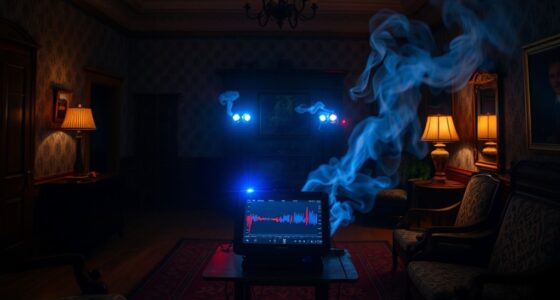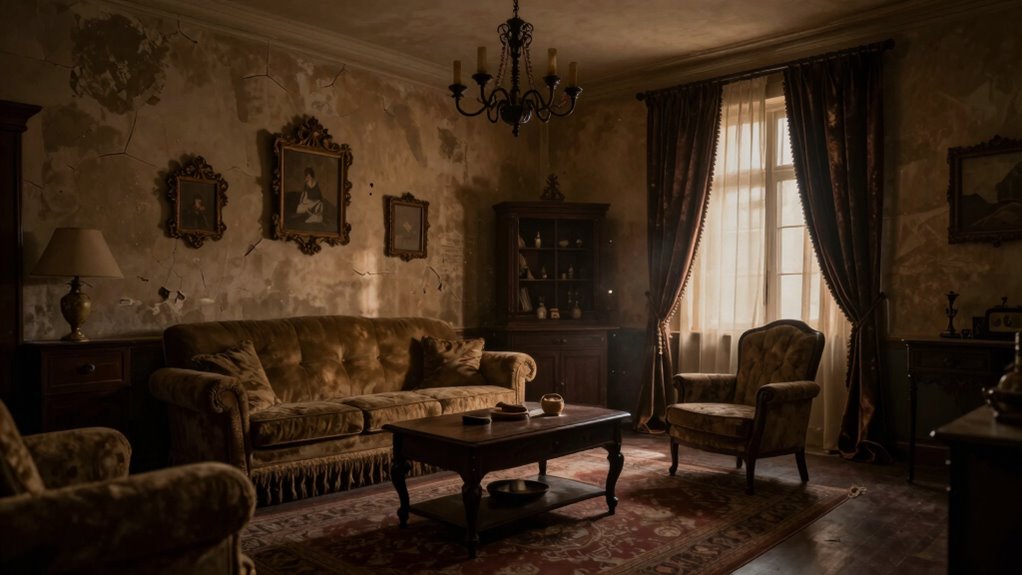

You might feel a room’s heaviness even before knowing its story because subtle environmental cues like lighting, decor, and layout send subconscious signals that influence your mood. Dim lighting, dark colors, or sparse furnishings can intensify feelings of gloom or oppression. Your mind interprets these cues effortlessly, connecting them to past experiences or emotions without your awareness. If you keep exploring, you’ll discover how these atmosphere clues shape your emotional response on a deeper level.

Get movie-night favorites delivered free — and shop member deals
- Fast, free delivery on millions of items
- Access to Prime Big Deal Days deals on October 6–7
- Prime Video, Amazon Music and more included
Key Takeaways
- Subtle environmental cues like dim lighting and dark colors can create an atmosphere of gloom or heaviness.
- Spaces with historical significance or past tragedies embed emotional weight that influences perception.
- Layout and furnishings contribute to feelings of emptiness, oppression, or solemnity without explicit awareness.
- The subconscious interpretation of space, influenced by memories and associations, heightens the sense of heaviness.
- Psychological atmosphere acts as a silent communicator, evoking emotional responses before conscious understanding.
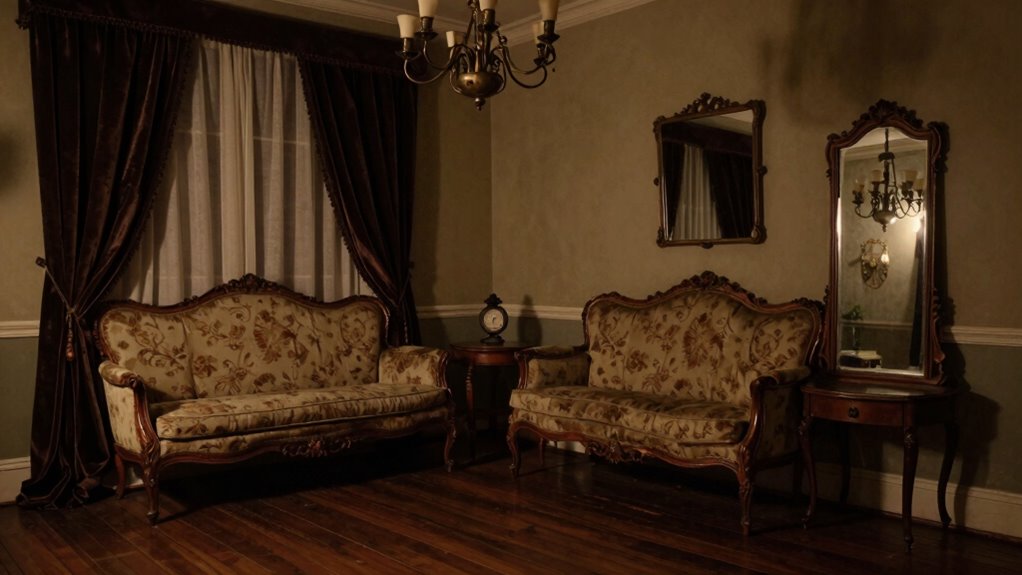
Have you ever walked into a room and immediately felt overwhelmed or weighed down? It’s that instinctive sense that something’s off, even if you don’t know why. This feeling often stems from the psychological atmosphere that the space projects, which can be shaped by subtle cues like lighting, decor, or layout. These elements influence your mood and perception without you realizing it, creating an unspoken weight that hangs in the air. The atmosphere can evoke feelings of unease, nostalgia, or even dread, all without any conscious understanding of what’s behind it. That’s because your mind picks up on environmental cues that trigger subconscious reactions, making the space feel heavier than it actually is.
Part of this sensation also ties into the historical significance of a room. Many spaces carry layers of stories and memories that aren’t always visible on the surface but still influence how you feel. For example, a grand, old mansion might seem imposing not just because of its size but because of the weight of its history—stories of past inhabitants, events that took place there, or even tragedies that unfolded within its walls. Your subconscious senses these echoes of the past, which amplifies the feeling of heaviness, even if you don’t know the specific history. This *historical significance* creates an environment that feels charged, almost alive, making you sensitive to the unseen narratives embedded in the space. Additionally, the environmental cues present in a room can subtly reinforce or diminish these feelings, shaping your overall perception.
Spaces layered with hidden stories and memories evoke a deep, almost alive sense of heaviness and silent history.
Your perception of heaviness isn’t just about the physical environment; it’s also about how your mind interprets it. The psychological atmosphere acts as a silent communicator, shaping your emotional response based on environmental cues and past experiences. When a room has a somber or oppressive vibe—perhaps due to dim lighting, sparse furnishings, or dark colors—it can intensify feelings of discomfort or gloom. If the space is historically significant, your mind might associate it with somber events or intense emotions, adding to that heaviness. Even without knowing the story, your intuition picks up on these signals, making the room feel burdened with unspoken weight. This emotional response can be heightened by color psychology, which suggests that certain hues can evoke specific emotional reactions and influence the atmosphere even further.
In the end, the heaviness you feel isn’t just about the room itself but about what your subconscious perceives—an interplay of psychological atmosphere and historical significance. Your senses and memories combine, creating an emotional environment that feels heavier than the physical space warrants. It’s a natural, instinctive response, one that reminds you that spaces are more than just their physical attributes; they are repositories of stories, emotions, and atmospheres that influence how you experience them.
As an affiliate, we earn on qualifying purchases.
Frequently Asked Questions
Can Lighting Influence a Room’s Perceived Heaviness?
Yes, lighting can influence a room’s perceived heaviness. Natural illumination and ambient brightness play vital roles; bright, well-lit spaces often feel airy and inviting, while dim or uneven lighting can make a room seem heavier or more oppressive. You can change how a room feels by adjusting the lighting—adding more natural light or increasing ambient brightness helps create an open, welcoming atmosphere, reducing any heaviness you might sense.
How Do Furniture Choices Affect Room Atmosphere?
Your furniture choices shape the room’s soul, like choosing characters in a story. Textural contrast adds depth, making space lively, while furniture scale influences energy—large pieces can feel overwhelming, tiny ones might seem lost. By balancing these elements, you craft an environment that feels inviting and harmonious, rather than heavy. Thoughtful selections guarantee your room’s atmosphere aligns with your mood, welcoming you with comfort and style.
Does Color Palette Impact Room Weightiness?
Yes, your color palette substantially impacts a room’s weightiness. Color psychology shows that darker, muted tones create a heavier, more grounded feel, while lighter shades evoke openness and lightness. Paint textures also matter—matte finishes add depth and weight, whereas glossy surfaces reflect light and make the space feel more airy. By choosing your colors and textures thoughtfully, you can influence the room’s mood before anyone even steps inside.
Can Scent Alter the Feeling of a Space?
Scent can dramatically alter how you feel in a space, like an invisible hand shaping your mood. Aromatherapy effects, such as lavender or citrus, can lift spirits or soothe worries, transforming the room’s energy. Scent memory anchors emotions to particular fragrances, making a space feel cozy or tense before you even step inside. So yes, the right scent can turn a heavy room into a welcoming haven or vice versa.
What Role Does Acoustics Play in Room Heaviness?
Acoustics considerably influence how heavy a room feels. When sound absorption is poor, echoes and noise amplify, creating a heavy, oppressive atmosphere. Proper acoustic treatment, like installing soft materials and diffusers, reduces unwanted sound reflections. This balance makes the space feel lighter and more inviting. By controlling sound quality, you can transform a room’s mood, making it feel more comfortable and less overwhelming.
As an affiliate, we earn on qualifying purchases.
Conclusion
You might be surprised to learn that nearly 60% of people report feeling an inexplicable heaviness in certain rooms, even without knowing their history. This suggests that subtle factors like lighting, layout, or emotional residue can influence your perception more than you realize. So next time a space feels oppressively heavy, remember, it’s not just in your head—it’s a complex interplay of unseen energies and environments that shape your experience. Trust your instincts; they often pick up what your eyes haven’t yet seen.
sparse furnishings for living room
As an affiliate, we earn on qualifying purchases.
As an affiliate, we earn on qualifying purchases.
As an affiliate, we earn on qualifying purchases.
Halloween Picks
halloween
As an affiliate, we earn on qualifying purchases.