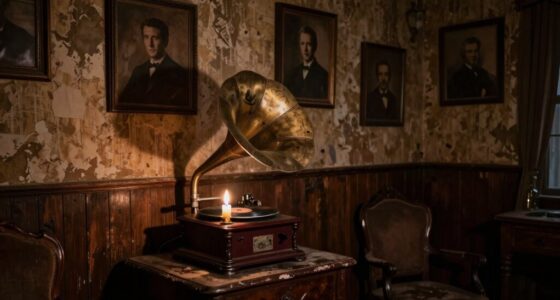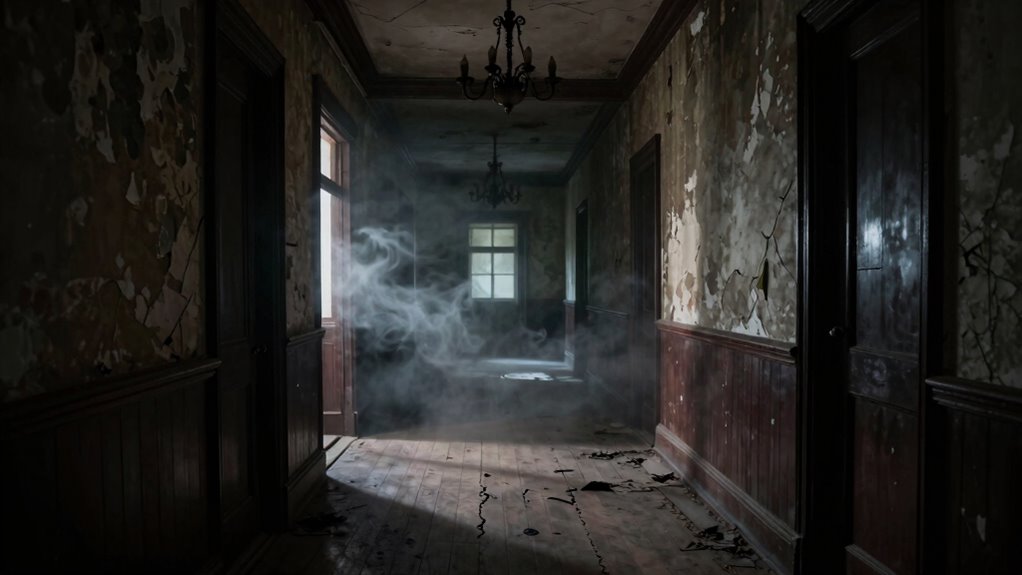

Your expectations in haunted spaces shape what you notice because your mind seeks patterns and interprets ambiguous stimuli based on prior experiences, fears, and cultural stories. If you believe a place is haunted, you’re more likely to interpret natural sounds or flickering lights as supernatural. Your focus is heightened by suggestions and environmental cues that reinforce those beliefs. By understanding how your mind filters sensory input, you’ll discover how perceptions become subjective and influenced by unseen factors.

Get movie-night favorites delivered free — and shop member deals
- Fast, free delivery on millions of items
- Access to Prime Big Deal Days deals on October 6–7
- Prime Video, Amazon Music and more included
Key Takeaways
- Prior experiences and cultural narratives influence what individuals expect to see or hear in haunted environments.
- The brain’s pattern recognition tendency causes ambiguous stimuli to be interpreted as supernatural phenomena.
- Expectations heighten sensory awareness, making natural sounds and sights seem ghostly or eerie.
- Suggestion and priming amplify perception, leading to more vivid and convincing haunted space experiences.
- Environmental cues reinforce pre-existing beliefs, biasing perception towards confirming supernatural presence.
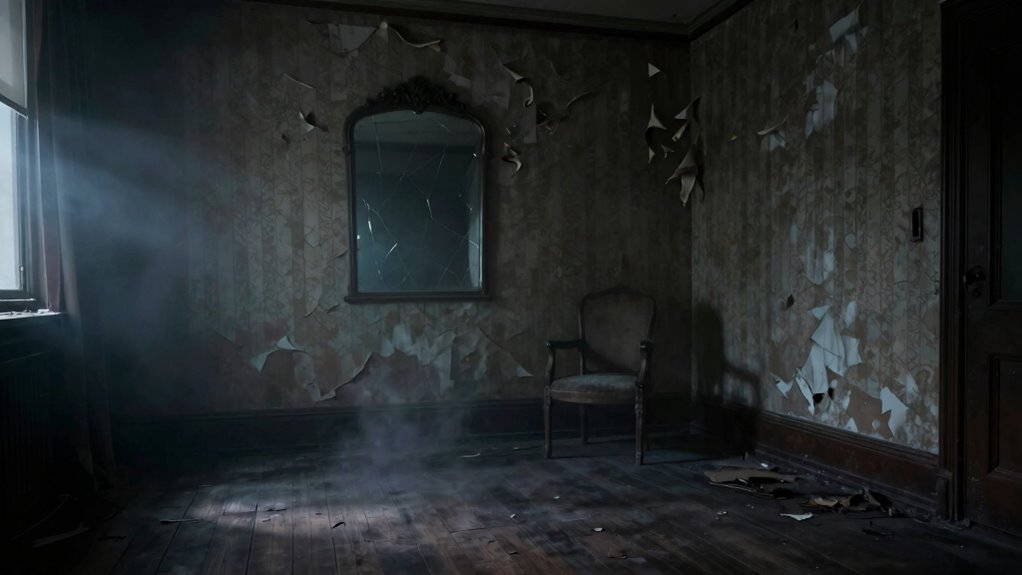
Haunted spaces have long captivated our imaginations, shaping our expectations of what might lurk beyond the ordinary. When you step into a supposedly haunted house or a forgotten graveyard, your mind instantly begins to scan for signs—real or imagined—that confirm your beliefs. These expectations are not random; they are deeply influenced by psychological factors and cultural perceptions. Your prior experiences, fears, and stories you’ve heard all blend together, creating a lens through which you interpret every shadow and sound. If you’ve grown up hearing tales of ghostly figures lurking in the dark, your brain is more likely to interpret creaks and whispers as evidence of supernatural presence. This psychological influence makes you more alert to signs that fit your mental picture of what a haunted space should be. Additionally, sensory perception can be heightened or dulled based on your expectations, further shaping what you notice or ignore.
Our expectations shape what we see and feel in haunted spaces, influenced by psychology and culture.
Furthermore, research in perception shows that our brains are wired to seek patterns, even in randomness, which can amplify the feeling of encounters with spirits or entities. This tendency to find meaning in chaos demonstrates how cognitive biases influence our interpretation of ambiguous stimuli. Cultural perceptions play an essential role too. Different societies have varied narratives about spirits, ghosts, and the afterlife, shaping what you expect to encounter. In Western cultures, you might imagine spirits as translucent, floating figures, while in other traditions, ancestors’ spirits may be seen as protective or even benevolent. These cultural stories inform what you anticipate seeing or feeling in haunted environments, often predisposing you to notice certain phenomena over others. If your cultural background emphasizes malevolent spirits, you might interpret a sudden cold breeze or an unexplained noise as proof of a vengeful ghost. Conversely, if your culture views spirits as benign, you might dismiss such signs altogether, or see them as natural occurrences.
Your expectations also influence your perception of atmosphere and environment. If you believe a certain space is haunted, you’re more likely to interpret flickering lights or unfamiliar sounds as supernatural, rather than natural causes. This heightened awareness is a product of your subconscious, which filters sensory input based on what you expect to find. When you’re primed to see ghosts, your mind becomes more attentive to details that confirm your beliefs, creating a self-reinforcing loop. Additionally, visual cues and environmental details can reinforce your expectations, making certain phenomena seem more convincing. The power of suggestion can further amplify these perceptions, making you more receptive to supernatural phenomena.
Ultimately, what you notice in haunted spaces isn’t just about the environment itself; it’s shaped by your psychological influence and cultural perceptions. Your expectations act as a filter, guiding your attention and interpretation. Recognizing this connection can help you understand why some encounters feel so convincing, even if they’re rooted more in your mind than in any supernatural reality. It’s your beliefs, shaped by culture and psychology, that carve out what you see and feel in these mysterious spaces.
As an affiliate, we earn on qualifying purchases.
Frequently Asked Questions
How Do Cultural Beliefs Influence Expectations in Haunted Spaces?
Your cultural beliefs and narratives shape your expectations in haunted spaces by influencing what you anticipate seeing or feeling. If your belief system emphasizes spirits or ghosts, you’re more likely to interpret unexplained sounds or shadows as supernatural. These cultural cues prime your mind to notice certain details, making you more sensitive to potential hauntings. Fundamentally, your cultural background filters your perception, guiding what you focus on in haunted environments.
Can Expectation-Induced Perceptions Be Scientifically Proven?
Expectation-induced perceptions can be scientifically proven through experiments that highlight perception bias. When you expect something to happen, your brain may interpret sensory input accordingly, demonstrating perception bias. Researchers also study sensory adaptation, where your senses become less responsive over time, influencing perception. By comparing these responses under different expectations, scientists can show how beliefs shape what you notice, confirming that perception is not purely objective but influenced by mental states.
Do Personal Fears Affect What We Notice in Haunted Environments?
Yes, your personal fears influence what you notice in haunted environments. Superstitious beliefs heighten your sensitivity, leading to sensory amplification, which makes you more likely to perceive unexplained sounds or movements. Your fears prime your mind to interpret ambiguous stimuli as spooky or threatening, so you’re more attuned to potential signs of haunting. This psychological effect demonstrates how deeply personal fears can shape your perceptions in eerie settings.
How Do Media Portrayals Shape Our Expectations of Haunted Spaces?
Media influence acts like a magnet, pulling your expectations toward supernatural stereotypes that fill haunted spaces with eerie, predictable traits. Movies, TV shows, and stories craft vivid images of ghosts and spirits, shaping what you anticipate encountering. As a result, your mind becomes primed to notice spooky details that align with these portrayals, making haunted spaces feel even more haunted because your expectations color your perception, amplifying the supernatural atmosphere.
Are There Psychological Techniques to Alter Perceptions of Haunted Locations?
Yes, you can use psychological techniques to alter your perceptions of haunted locations. By practicing sensory adaptation, you train your senses to become less sensitive to certain stimuli, reducing false alarms. Additionally, understanding cognitive bias helps you recognize how your expectations influence what you notice, allowing you to challenge irrational fears. Mindfulness and focused attention techniques can also help you reframe your perceptions, making haunted spaces feel less intimidating.
As an affiliate, we earn on qualifying purchases.
Conclusion
Think of your mind as a lighthouse, its beam guided by your expectations. When you enter a haunted space, your beliefs light the way, shaping what you see and feel. If you expect ghosts, your mind’ll spotlight shadows and whispers, turning darkness into a story. But if you walk in skeptical, the shadows fade into mere illusions. Your expectations are the lighthouse, steering your perception through the fog of the unknown.
As an affiliate, we earn on qualifying purchases.
ambient lighting for spooky atmosphere
As an affiliate, we earn on qualifying purchases.
As an affiliate, we earn on qualifying purchases.
Fall Picks
fall essentials
As an affiliate, we earn on qualifying purchases.