
Emotional Residue Theory in parapsychology suggests that intense emotional experiences, like trauma or strong feelings, can leave lasting impressions called residues, which may influence perceptions of paranormal phenomena. These imprints form through vivid, repeated emotional events and can manifest as apparitions, noises, or feelings of fear and sadness. Scientific support remains limited, with ongoing research exploring how emotional energy might contribute to haunting or otherworldly encounters. If you continue exploring, you’ll uncover more about how emotions shape these mysterious experiences.
Key Takeaways
- Emotional Residue Theory suggests intense emotional experiences leave lasting imprints that influence perceptions and behaviors, potentially causing paranormal phenomena.
- The theory originated from psychological research on emotional memory, trauma, and historical case studies of haunted locations.
- Residual energy manifestations include apparitions, noises, and emotional impressions linked to previous traumatic or significant events.
- Scientific challenges involve measuring emotional residues objectively, with ongoing efforts to develop reliable detection methods.
- Practical applications include analyzing emotional residues at historical sites or crime scenes to better understand unexplained phenomena.
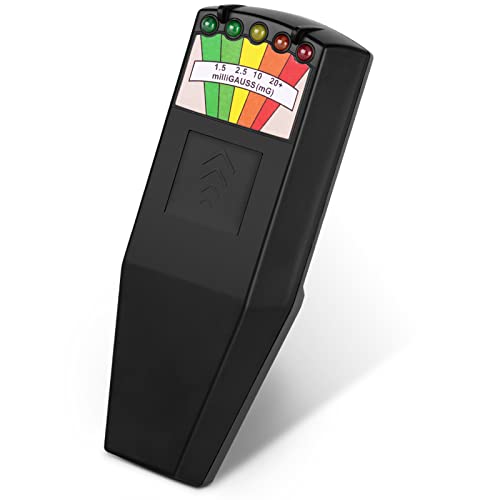
color tree Handheld LED EMF Magnetic Field Ghost Hunting Detector Electromagnetic Paranormal Equipment Tester 50Hz-20,000Hz Black
The EMF Meter Range for Ghost Hunting helps measure the electromagnetic fields to identify appliances that produce high-level…
As an affiliate, we earn on qualifying purchases.
As an affiliate, we earn on qualifying purchases.
Origins and Development of the Theory

The origins of the Emotional Residue Theory can be traced back to early psychological research on emotional memory and trauma. You might find that psychologists initially studied how intense emotions linger after traumatic events, noticing persistent mental impressions. These studies aimed to understand how unresolved feelings impact mental health. Over time, researchers began to contemplate whether similar residual emotional imprints could influence other areas, including unexplained perceptions or experiences. The theory evolved as a way to explain how emotional residues might persist beyond conscious awareness, potentially affecting behavior and perception. Its development was influenced by both clinical observations and experimental findings, laying a foundation for exploring how past emotional experiences leave lasting imprints that could later manifest in unusual ways. Additionally, the exploration of emotional memory has been central to understanding how these residues might influence subconscious processes.

Sam and Colby XPLR Spirit Box | Paranormal Detection Equipment; Haunted Survival; Ghost Hunter Scanner; EMF and EVP Detector; Comprehensive Tool for Spirit Communication
Designed by Viral Explorers Sam and Colby: Step up your ghost hunting game with the "Spirit Box," created…
As an affiliate, we earn on qualifying purchases.
As an affiliate, we earn on qualifying purchases.
How Emotional Imprints Form

Your emotional imprints develop through powerful experiences that leave a lasting mark. Repetition and reinforcement make these feelings even more ingrained in your memory. Understanding how these factors shape your emotional residue helps explain why certain feelings linger. Additionally, the emotional significance can be influenced by the dog names associated with those memories, further strengthening their impact.
Intense Emotional Experiences
When a person experiences an intensely emotional event, the brain rapidly encodes the memory, often leaving a powerful imprint. These strong feelings cause the brain to prioritize the event, making it more vivid and lasting. During this process, your mind focuses intensely on the details, amplifying the emotional significance. This leads to three key effects:
- Heightened sensory awareness during the event.
- Increased emotional arousal that solidifies the memory.
- A more durable imprint that’s difficult to forget.
Because of this, emotionally charged moments leave behind a lasting residue, embedding themselves deeply in your subconscious. The intensity of your feelings directly influences how strongly the memory inscribes itself, setting the stage for potential residual effects later on.
Repetition and Reinforcement
How do emotional imprints become so firmly established in your mind? When you repeatedly experience a strong emotion, your brain reinforces that memory. Each time the event occurs, neural pathways strengthen, making it easier for the emotion to surface later. Reinforcement solidifies these imprints, especially if the feelings are intense or meaningful. Repetition acts like a mental echo, embedding the emotion deeper into your subconscious. Over time, this process creates a lasting emotional residue that can influence your reactions and perceptions. The following table illustrates how reinforcement intensifies emotional imprints:
| Process Stage | Effect | |
|---|---|---|
| Repetition | Repeated exposure deepens the memory | |
| Strong emotions | Amplify imprint strength | |
| Neural pathways | Strengthen with each experience | |
| Frequency | Increases emotional residue | |
| Long-term impact | Shapes subconscious reactions | This emotional imprinting process is fundamental in understanding how past experiences shape our current behavior and perception. |

EMF Detector – 3-in-1 Electromagnetic Radiation Meter for AC Magnetic, AC Electric & Microwave Fields – Handheld EMF Reader for Home, Office & Smart Meters, Ideal for Non-Professional Users
Detect 3 Types of EMF: Detects three common types of EMF: AC magnetic, AC electric, and microwave fields….
As an affiliate, we earn on qualifying purchases.
As an affiliate, we earn on qualifying purchases.
Types of Residual Energy Phenomena

Residual energy phenomena manifest in various forms, each reflecting different ways emotional residues can linger in a space or environment. You might notice subtle signs that reveal this lingering energy. For example:
- Apparitions – fleeting visual impressions or shadows that seem to appear unexpectedly.
- Unexplained noises – sounds like footsteps, whispers, or knocking with no apparent source.
- Emotional impressions – strong feelings or moods that seem out of place, such as sudden sadness or fear.
These phenomena often occur without physical evidence, making them challenging to verify. They tend to be tied to intense emotional events or memories associated with specific locations. Recognizing these forms can help you understand how emotional energy leaves traces that persist beyond the moment.

Ghost Camera
Take photographs
As an affiliate, we earn on qualifying purchases.
As an affiliate, we earn on qualifying purchases.
Evidence Supporting Emotional Residue

You’ll find that historical case studies highlight consistent patterns of emotional residues affecting individuals long after events. Evidence from emotional imprints shows how specific memories leave lasting impressions on the psyche. Additionally, experimental replications confirm that similar residual effects occur under controlled conditions, supporting the theory’s validity. The use of targeted research methods in recent studies further strengthens the evidence for emotional residue’s influence.
Historical Case Studies
Historical case studies provide compelling evidence supporting the Emotional Residue Theory by illustrating how intense emotional experiences can leave lasting impressions on individuals and communities. These cases demonstrate that powerful emotions, whether grief, fear, or hope, can create residual effects observable long after the original event. For example:
- The haunting of the Borley Rectory, where reports of unexplained phenomena persisted for decades after tragic events.
- The emotional imprint left by the sinking of the Titanic, with many witnesses claiming residual feelings and visions years later.
- The influence of traumatic events like wars, which reportedly generate lingering emotional residues impacting local populations over generations.
These examples highlight how significant emotional moments can produce enduring impressions, supporting the core idea of emotional residue in parapsychology. Emotional imprint can be studied to better understand how such residues form and persist over time.
Emotional Imprints Evidence
Evidence for emotional imprints comes from a variety of scientific and anecdotal sources that demonstrate how intense emotional experiences can leave lasting marks on individuals and environments. For example, many reported encounters with supposed residual emotional energy include haunted locations where individuals feel persistent feelings of fear, sadness, or anger long after the event. Psychological studies also reveal that trauma and strong emotional events can create subconscious imprints affecting behavior and perception over time. Additionally, some cases of spontaneous emotional reactions, such as unexplained feelings or visions, are believed to stem from residual emotional residues. These pieces of evidence suggest that powerful emotional moments can leave enduring traces, supporting the idea that emotional residues are real phenomena capable of influencing both people and environments long after the original event. The persistence of these emotional imprints indicates that emotional residue may be a measurable and impactful aspect of human experience.
Experimental Replications
Can experimental studies truly support the existence of emotional residues? Some researchers believe they do, citing notable replications. First, repeated experiments have observed residual emotional responses in controlled settings, suggesting persistence over time. Second, variations in experimental designs, such as different stimuli and environments, still produce similar results, strengthening the case. Third, meta-analyses of multiple studies reveal consistent patterns that align with emotional residue predictions. These replications help address skepticism by demonstrating reliability across diverse conditions. Additionally, scientific methodology plays a crucial role in ensuring the validity of these findings. While controversy remains, such consistent findings provide compelling evidence that emotional residues can leave measurable imprints. Ultimately, ongoing replication efforts are vital to validate the theory and deepen our understanding of how emotional energy might persist beyond immediate experiences.
Criticisms and Skepticism

Despite the compelling aspects of Emotional Residue Theory, many critics remain skeptical about its validity. They argue that the theory relies heavily on anecdotal evidence and lacks rigorous scientific support. Skeptics point out that emotional residues are difficult to measure objectively and could be explained by psychological or environmental factors rather than paranormal processes. Some critics also contend that the theory may overestimate the influence of emotional energy, ignoring alternative explanations like coincidence or cognitive biases. Additionally, skeptics challenge the reproducibility of findings supporting the theory, emphasizing inconsistencies across studies. Overall, the lack of definitive empirical evidence makes many experts question whether emotional residues genuinely contribute to paranormal phenomena or if they are simply misinterpreted psychological effects. Furthermore, the lack of standardized measurement techniques hampers the ability to validate emotional residue claims scientifically.
Implications for Paranormal Investigations

The implications of Emotional Residue Theory for paranormal investigations are significant, as it suggests that emotional energy from past events may influence current experiences. This means that investigators should consider the emotional history of a location or individual when evaluating phenomena. To apply this understanding:
Emotional residues may shape paranormal experiences; consider emotional history when investigating phenomena.
- Examine historical records for strong emotional events that could have left residual energy.
- Use sensitive equipment to detect subtle emotional or energetic signatures linked to past trauma or intense moments.
- Interpret unexplained phenomena with awareness that emotional residues might be contributing factors, rather than assuming supernatural origins.
Future Directions in Research

Future research in Emotional Residue Theory should focus on developing more precise methods for detecting and measuring emotional energy in various environments. Advancements could include new sensors or analytical techniques that capture subtle emotional residues. To illustrate potential applications, consider this table:
| Environment | Measurement Technique | Expected Insight |
|---|---|---|
| Historical Sites | Emotional residue sampling | Uncover past emotional events |
| Crime Scenes | Real-time emotional energy detection | Identify lingering emotional trauma |
| Personal Spaces | Wearable emotion sensors | Track emotional fluctuations |
These tools could deepen understanding of how emotional residue persists and influences perceptions or behaviors. By refining measurement, you’ll access new possibilities for exploring emotional residues’ role across diverse settings, advancing both scientific understanding and practical applications. Additionally, integrating multidisciplinary approaches, such as psychological and physical sciences, will enhance the accuracy and scope of future investigations in emotional residue measurement.
Frequently Asked Questions
How Does Emotional Residue Differ From Other Paranormal Energy Phenomena?
Emotional residue differs from other paranormal energy phenomena because it specifically involves lingering emotional impressions left by intense feelings or events. You might notice these residues as repeated echoes of past emotions in a space. Unlike other energies that could be linked to spirits or psychic forces, emotional residue is rooted in human emotion, making it more about psychological imprinting than supernatural activity. This makes it more about emotional echoes rather than external paranormal energies.
Can Emotional Residue Be Consciously Recalled or Interacted With?
You can sometimes consciously recall emotional residue, especially if you focus or meditate on the location or event associated with it. People have reported sensing or interacting with these residual energies through intuition or heightened awareness. While it’s not always predictable or controllable, your intention and awareness might help you access or even influence these emotional echoes, making them more apparent or meaningful during specific moments.
Are There Specific Locations More Prone to Emotional Imprinting?
You might notice some places feel more charged, like historic sites or abandoned buildings, where emotional imprints are strongest. Unlike quiet parks, these locations often hold intense memories that linger. Your senses can pick up on this residual energy, making certain spots more prone to emotional imprinting. So, when you visit these areas, you could sense lingering feelings, almost as if the space remembers past emotions vividly and vividly.
What Psychological Effects Might Emotional Residue Have on Witnesses?
You might experience lingering feelings of fear, anxiety, or unease after witnessing a traumatic event, even if you understand it wasn’t real. These emotional residues can lead to intrusive thoughts, sleep disturbances, or heightened sensitivity to similar situations. Over time, they may also cause emotional numbness or difficulty trusting your perceptions. Recognizing these effects helps you process your experience and seek support if needed, promoting emotional healing.
How Can One Differentiate Between Emotional Residue and Natural Environmental Sounds?
You can differentiate emotional residue from natural sounds by paying attention to consistency and context. Emotional residue often persists in specific locations and seems to carry an emotional charge or pattern that doesn’t match typical environmental noises. Natural sounds usually vary with time and environment, lacking the emotional tone or recurring pattern. Trust your intuition, but also consider environmental factors, and document any unusual, persistent sounds for further analysis.
Conclusion
As you explore emotional residue theory, think of each haunting scene as a faded photograph, capturing moments of intense feeling etched into the fabric of space. Just like a river’s gentle flow leaves behind smooth stones, emotional imprints shape the landscape of paranormal encounters. Embrace these symbols, knowing they hint at stories etched in time—reminding you that behind every shadow lies a memory waiting to be uncovered, guiding your journey through the unseen currents of the mind.