When your cognitive load is high, your brain struggles to process ambiguous stimuli clearly, which increases your tendency to see patterns or signs of the paranormal. Fatigue, stress, or distraction can make you more suggestible, leading to false perceptions or supernatural explanations for ordinary sensations. As your mental effort reaches overload, you fill gaps with familiar stories and become more prone to misinterpretations. Keep exploring, and you’ll discover how managing mental effort can reshape your perceptions.
Key Takeaways
- Increased cognitive load impairs critical thinking, making individuals more susceptible to interpreting ambiguous stimuli as paranormal.
- Mental fatigue reduces filtering of environmental noise, heightening sensitivity to perceived supernatural signals.
- High cognitive load leads to pattern recognition biases, causing false positives in paranormal detection.
- Distraction and overload diminish discernment, making people more suggestible to supernatural explanations.
- Under cognitive strain, the brain fills gaps with familiar narratives, increasing paranormal perceptions during mental overload.
The Concept of Cognitive Load and Mental Effort
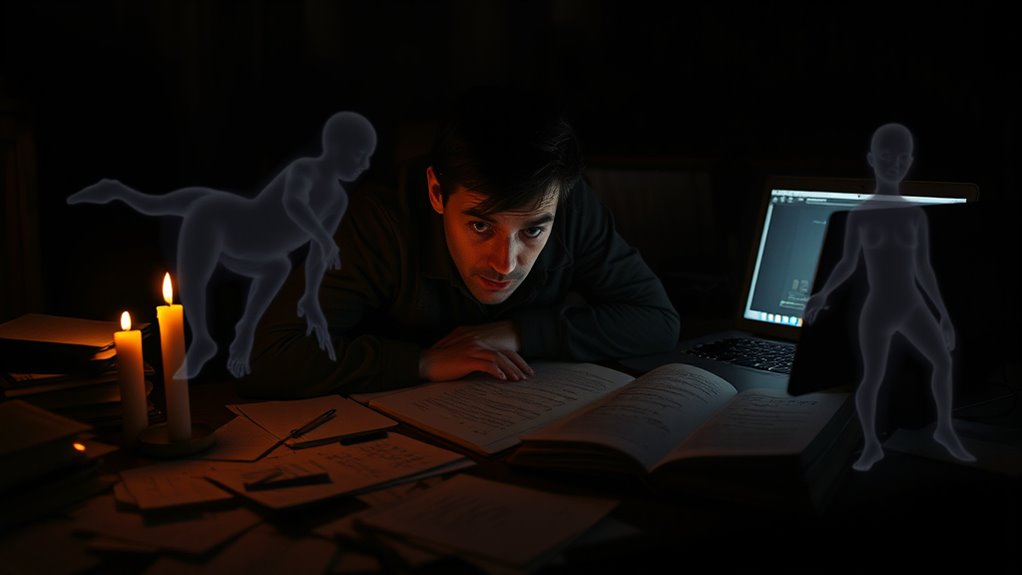
Understanding cognitive load and mental effort is essential because they directly influence how you process information. When your brain is handling a lot of information at once, it becomes overwhelmed, making it harder to focus or think clearly. Cognitive load refers to the amount of mental effort required to complete a task, whether it’s solving a problem or interpreting new data. If the load is too high, your ability to analyze and understand diminishes. Mental effort is the energy your brain invests to manage this load. Recognizing how these factors work helps you understand why some experiences, like perceiving paranormal phenomena, might seem more convincing when your mental resources are strained or overloaded. Managing cognitive load can improve your clarity and decision-making in complex or ambiguous situations.
How Our Brain Processes Uncertainty and Ambiguity
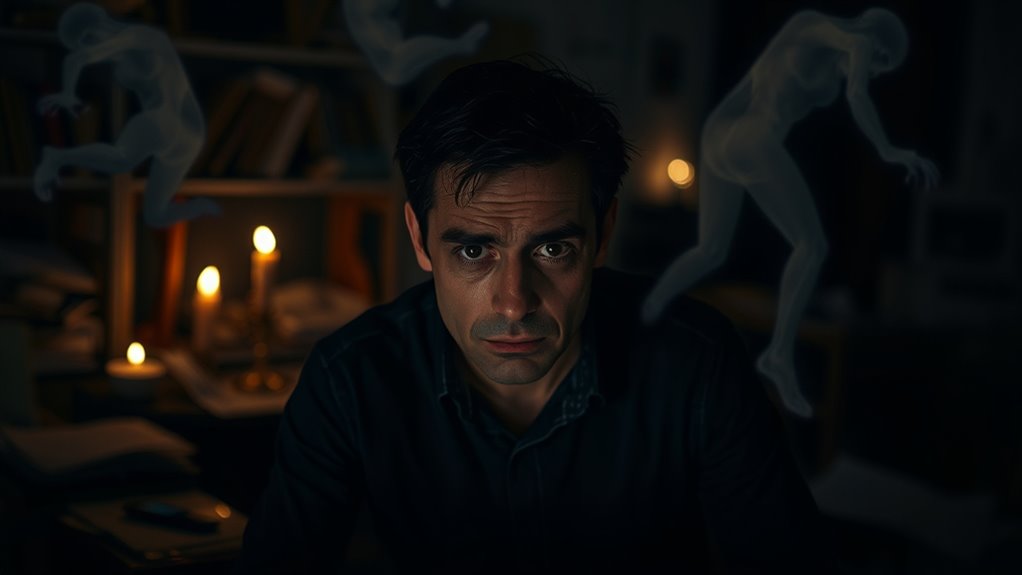
When your brain encounters uncertainty or ambiguous information, it actively works to interpret and make sense of what’s in front of you. It fills in gaps by relying on past experiences, biases, and expectations, often creating a coherent narrative from incomplete data. This process involves quick, automatic guesses that help you navigate unfamiliar or unclear situations. Sometimes, your brain defaults to familiar patterns, even if they’re not accurate, to reduce mental effort. When faced with uncertainty, your mind tends to seek certainty, leading to heightened perceptions of significance or meaning. This tendency can make ambiguous stimuli seem more profound or meaningful, especially when your cognitive resources are limited or taxed, setting the stage for potential paranormal perceptions. Additionally, the way your visual perception system processes contrast and color can influence how you interpret ambiguous images, sometimes amplifying perceived supernatural elements.
The Role of Distraction in Perceiving the Paranormal
When your attention is divided, you might become more sensitive to strange stimuli around you. Distractions can loosen your focus, making it easier to notice things that normally go unnoticed. Understanding how divided attention influences paranormal perception helps explain why some people are more prone to experiencing the unexplained. Additionally, engaging in relaxation techniques can further alter perception by reducing overall stress and mental clutter.
Divided Attention Effects
Divided attention plays a crucial role in how people perceive paranormal phenomena, often acting as a double-edged sword. When your focus is split between multiple tasks, your brain may become more prone to filling gaps with ambiguous or imagined details, increasing the likelihood of perceiving paranormal events. Distractions can diminish your ability to critically evaluate sensory input, leading you to interpret mundane stimuli as supernatural. Conversely, dividing attention can sometimes reduce skepticism, making you more open to noticing oddities. This effect depends on how your cognitive resources are allocated; too much distraction may cause you to miss real cues, while moderate distraction can amplify perception of the unexplained. Ultimately, your attentional state shapes whether you interpret ambiguous stimuli as paranormal or dismiss them as normal environmental factors. Additionally, understanding the influence of cognitive load can help explain why some individuals are more susceptible to perceiving paranormal activity under certain conditions.
Distraction and Sensitivity
Distractions can heighten your sensitivity to perceived paranormal phenomena by making your mind more receptive to ambiguous stimuli. When your attention is diverted, your brain struggles to filter out irrelevant information, increasing the chances of interpreting uncertain cues as paranormal. For example, a creak in the house or flickering lights might seem more significant when you’re distracted, as your focus isn’t fully on analyzing these signals logically. Distraction reduces cognitive resources available for critical thinking, allowing subconscious biases to influence your perception. This heightened sensitivity can lead you to notice and interpret minor, everyday stimuli as supernatural. While distraction might make you more aware of strange events, it also increases the risk of false positives, where normal stimuli are mistaken for paranormal activity. Additionally, increased cognitive load can impair your ability to differentiate between real and imagined phenomena, further complicating perception.
Cognitive Load and Pattern Recognition Biases
When your cognitive load is high, it becomes harder to accurately recognize patterns, leading to misperceptions. In stressful moments, you’re more suggestible, which can reinforce false pattern recognition. Fatigue also worsens these biases, making it easier to see connections that aren’t really there.
Overloading Hinders Pattern Detection
As cognitive load increases, your ability to accurately detect patterns diminishes because your brain becomes overwhelmed with information. When you’re overloaded, your mind struggles to filter relevant signals from noise, leading to false pattern recognition. This overload can cause you to see connections where none exist, especially in ambiguous or unpredictable stimuli. Instead of helping you identify genuine patterns, excessive mental effort makes your perception more prone to errors. You might interpret random events as meaningful, reinforcing superstitions or paranormal beliefs. Overloading hampers your cognitive resources, forcing you to rely on shortcuts or biases rather than careful analysis. This phenomenon demonstrates how attention is crucial for effective pattern recognition and perception. Ultimately, too much information at once prevents you from discerning true patterns, increasing the likelihood of perceiving the paranormal where there is none.
Heightened Suggestibility Under Stress
Under stress, your cognitive resources become strained, making you more suggestible and vulnerable to accepting ambiguous information as true. When your brain is overloaded, it relies more on heuristics and less on critical analysis, increasing the chance of pattern recognition biases. This heightened suggestibility can lead you to interpret vague stimuli as meaningful or paranormal. To understand this, consider:
- You may see faces or shapes in random patterns more readily.
- You might connect unrelated events as causally linked.
- You become more receptive to ambiguous messages or signs.
- Your judgment favors familiar or comforting explanations over skepticism.
This state reduces your ability to differentiate between genuine signals and noise, making you more prone to believing in paranormal phenomena during stressful moments.
Cognitive Fatigue Amplifies Bias
Cognitive fatigue, which occurs after prolonged mental effort, considerably heightens your tendency to rely on pattern recognition biases. When you’re mentally exhausted, your brain seeks shortcuts, making you more prone to see connections that aren’t really there. This bias leads you to interpret ambiguous stimuli as meaningful patterns or paranormal signs. Fatigue reduces your cognitive resources, impairing your ability to critically analyze information. As a result, you’re more likely to jump to conclusions based on incomplete or misleading data. This heightened reliance on pattern recognition can cause you to perceive ghosts, spirits, or other supernatural phenomena where none exist. Fundamentally, cognitive fatigue makes you more susceptible to false positives, increasing the likelihood that your perceptions are shaped by biases rather than objective reality. Understanding how your brain processes information can help you recognize when fatigue influences your perceptions and prevent misinterpretations.
When Overwhelmed: Tendency to Fill Gaps With Supernatural Explanations

When you’re overwhelmed by unclear or incomplete information, your mind often seeks to make sense of the chaos by filling in the gaps with familiar narratives. This tendency can lead you to interpret ambiguous situations as supernatural. You might:
- Attribute strange noises to ghosts or spirits.
- Explain fleeting shadows as apparitions.
- See patterns or faces where none exist.
- Assume unseen forces are at work.
- This cognitive process is similar to how ECU remapping optimizes performance in vehicles by adjusting engine maps to better interpret data and enhance output.
This process helps reduce uncertainty but also biases you toward supernatural explanations. When cognitive load is high, your brain prefers quick, familiar stories over complex reasoning. As a result, you’re more likely to see paranormal causes for ordinary phenomena, filling gaps with supernatural ideas that feel comforting or meaningful.
The Impact of Stress and Fatigue on Paranormal Sensitivity
Stress and fatigue can considerably heighten your sensitivity to paranormal stimuli, making you more likely to interpret ambiguous sensations or events as supernatural. When you’re stressed or exhausted, your brain’s ability to filter out normal environmental noise diminishes, increasing your perception of faint or unclear signals. Fatigue reduces your focus and critical thinking skills, leading you to jump to supernatural explanations more quickly. Stress also triggers adrenaline, heightening your alertness and amplifying subtle perceptions. As a result, minor sensations—like creaks or shadows—may seem more significant or ghostly. This heightened state can cause you to misinterpret ordinary stimuli as paranormal, especially when your mental resources are depleted. Additionally, essential oils for stress relief can help calm your mind and reduce the likelihood of misperceptions during such vulnerable states. In these conditions, your susceptibility to supernatural impressions naturally increases.
Differences in Perception Between High and Low Cognitive Load States

Your ability to perceive paranormal phenomena varies considerably depending on whether your mind is under a high or low cognitive load. When your cognitive load is low, you tend to notice subtle details and interpret ambiguous stimuli more readily. Conversely, high load narrows your focus, making you less sensitive to faint signals. This difference impacts perception in several ways:
Perception of paranormal phenomena depends on cognitive load, shaping awareness and interpretation of subtle signals and ambiguous stimuli.
- Attention allocation shifts, affecting what you notice.
- Sensory filtering becomes more selective under high load.
- Interpretation biases change, influencing belief in paranormal events.
- Pattern recognition diminishes when your mental resources are taxed.
- The use of tools like eye patches can influence visual perception and focus, indirectly affecting how you interpret sensory information.
Understanding these differences helps explain why some people report vivid paranormal experiences during relaxed states, while others dismiss similar phenomena when overwhelmed. Your mental state directly shapes what you perceive and interpret as paranormal.
Psychological Factors Amplified by Mental Overload
Mental overload can considerably amplify psychological factors that influence how you perceive paranormal phenomena. When your cognitive resources are stretched thin, biases like fear, suggestibility, and pattern recognition become stronger. You may interpret ambiguous stimuli as paranormal activity or feel more anxious, heightening your perception of strange events. To illustrate, consider how these factors interact:
| Psychological Factor | Effect Under Overload | Common Example |
|---|---|---|
| Fear | Heightened | Sensing shadows as ghosts |
| Suggestibility | Increased | Accepting false claims |
| Pattern Recognition | Amplified | Connecting unrelated events |
Under mental strain, these factors work together, making you more prone to perceiving the paranormal even when there’s no real evidence. Recognizing this helps you understand how mental overload shapes your beliefs. Additionally, decluttering your mind by reducing unnecessary mental clutter can improve focus and clarity, helping to mitigate the effects of overload.
Experimental Evidence Linking Cognitive Load and Paranormal Beliefs
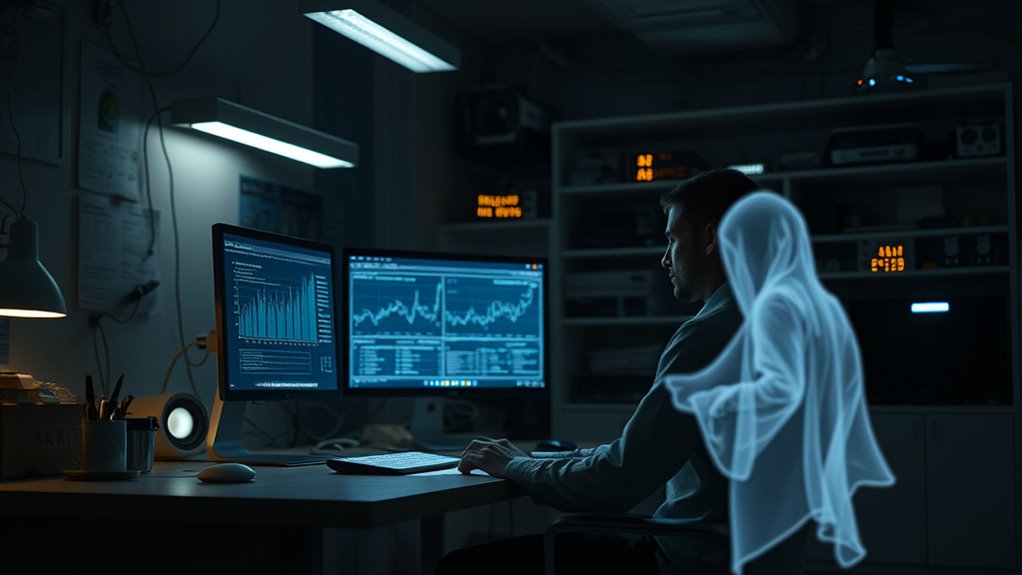
Research shows that cognitive load directly influences how people evaluate paranormal claims. Multiple studies demonstrate this link clearly.
- When under high cognitive load, individuals are more likely to accept paranormal explanations without critical analysis.
- Experiments reveal that multitasking or mental fatigue increases susceptibility to paranormal beliefs.
- Participants subjected to working memory tasks show a higher tendency to endorse supernatural phenomena.
- Cognitive overload impairs analytical thinking, making intuitive or emotional responses more dominant in belief formation.
These findings suggest that when your mental resources are strained, you’re more prone to accept paranormal ideas without scrutinizing evidence. The experimental data consistently supports the idea that cognitive load shapes how you perceive and interpret paranormal claims.
Strategies to Mitigate Misinterpretations Caused by Cognitive Overload
To reduce the risk of misinterpreting paranormal claims when cognitive load is high, you can adopt practical strategies that help manage mental resources effectively. First, simplify information by breaking it into smaller, manageable parts, making it easier to process. Practice mindfulness or brief meditation to calm your mind, reducing distractions and improving focus. Avoid multitasking during critical evaluations, so your mental resources aren’t stretched thin. Take regular breaks to prevent mental fatigue, which increases susceptibility to misinterpretation. Develop critical thinking skills by questioning initial impressions and seeking evidence. Keep a skeptical mindset, especially when feeling overwhelmed, and consult others to gain diverse perspectives. These strategies help you stay alert and improve your ability to differentiate between genuine phenomena and illusion.
Frequently Asked Questions
How Does Cognitive Load Affect Susceptibility to Paranormal Claims?
When your cognitive load is high, you’re more likely to accept paranormal claims because your brain has less capacity for critical thinking and skepticism. You might fall for illusions or misinterpret ambiguous stimuli, making you more susceptible to believing in supernatural explanations. Conversely, with lower cognitive load, you’re better at analyzing information and questioning such claims, reducing your chances of being influenced by paranormal ideas.
Can Reducing Mental Effort Decrease Belief in Supernatural Phenomena?
Yes, reducing mental effort can lower your belief in supernatural phenomena. Imagine you’re overwhelmed after a long day, and a spooky noise seems eerie. If you’re mentally drained, you might jump to supernatural explanations. But if you’re well-rested and focused, you’re more likely to analyze the situation logically. By easing your cognitive load, you give yourself space to question sensational claims and rely on rational thinking.
Are Certain Individuals More Prone to Paranormal Perceptions Under Stress?
Yes, certain individuals are more prone to paranormal perceptions under stress. When you’re stressed, your cognitive resources become limited, making it harder to critically analyze ambiguous stimuli. This heightened cognitive load can lead you to interpret normal events as supernatural or paranormal. Personal traits like anxiety or suggestibility also increase your likelihood of perceiving paranormal phenomena when under stress, as your mind seeks explanations amidst heightened emotional and mental strain.
How Do Cultural Factors Interact With Cognitive Load in Paranormal Experiences?
Imagine a tapestry woven with vibrant cultural threads and tangled strands of cognitive load. Your cultural background shapes how you interpret eerie sights and sounds, coloring your perceptions. When your mind is overwhelmed, this intricate fabric frays, making supernatural experiences seem more vivid or believable. Cultural beliefs act as a lens, amplifying or dulling these perceptions, especially under mental strain, guiding how you interpret the mysterious beyond.
What Neurological Mechanisms Link Cognitive Overload to Paranormal Interpretation?
When you’re under cognitive overload, your brain’s prefrontal cortex struggles to process information efficiently, causing it to rely more on the limbic system. This shift heightens emotional responses and pattern recognition, making you more prone to interpret ambiguous stimuli as paranormal. The increased activity in these areas fosters a tendency to fill gaps with supernatural explanations, especially when your cognitive resources are overwhelmed and less able to scrutinize sensory input critically.
Conclusion
Now that you understand how cognitive load can shape your perception of the paranormal, ask yourself—are you truly seeing what’s there, or just filling in the gaps when your mind’s overwhelmed? By being mindful of mental effort and reducing distractions, you can better distinguish between reality and illusion. Remember, your brain’s tendency to seek patterns can lead you astray; so, next time, pause and question what your perceptions are telling you.