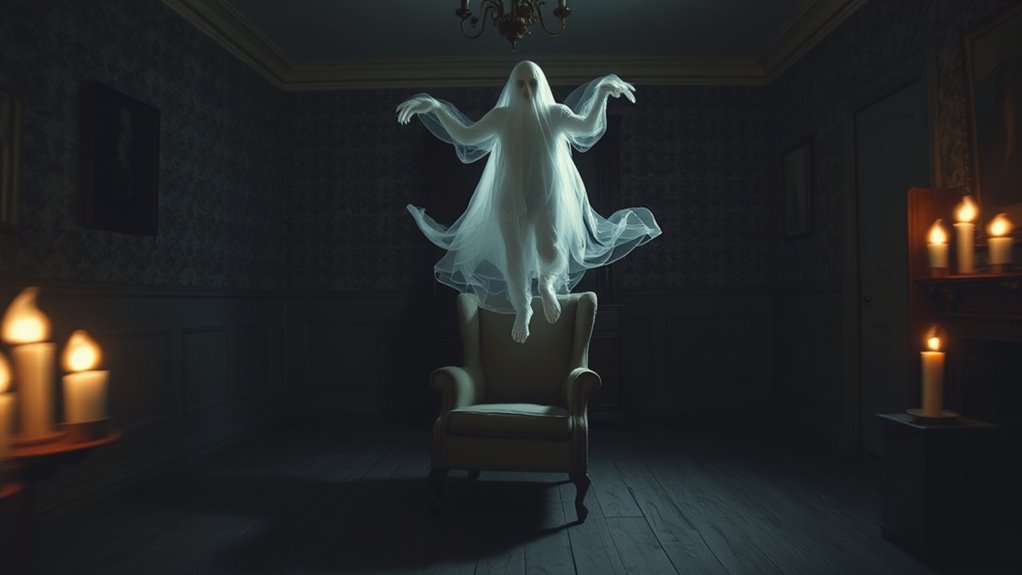

A poltergeist is a paranormal event marked by loud noises, sudden object movements, and disruptive physical activity caused by an unseen force. You might notice objects flying or levitating, strange knocks, or temperature drops that can happen suddenly or escalate quickly. Often linked to emotional or psychological factors, these phenomena have been reported across cultures and history. If you’re curious about the causes, history, or how experts interpret these events, there’s more to explore.
Key Takeaways
- A poltergeist is a paranormal phenomenon involving noisy, disruptive activity caused by an unseen force.
- Signs include objects moving unexpectedly, unexplained noises, cold spots, and temperature changes.
- Unlike ghosts, poltergeists are linked to energetic disturbances rather than spirits of the dead.
- They often occur suddenly, escalate quickly, and are associated with emotional or psychological factors.
- Scientific explanations suggest environmental, psychological, or hoax-related causes rather than supernatural origins.

ERICKHILL 3 in 1 EMF Detector, Electromagnetic Field Radiation Detector for EF, RF, MF, WiFi,5G Signal,Triple Alarm Modes, Type-C Charging, EMF Meter for Home, Office, and Paranormal Investigation
All-in-One Detection: RT-100S 3-in-1 EMF Reader measures Electric (EF), Magnetic (MF), and Radio Frequency (RF) fields to monitor…
As an affiliate, we earn on qualifying purchases.
As an affiliate, we earn on qualifying purchases.
Defining the Phenomenon: What Is a Poltergeist?

A poltergeist is a type of paranormal phenomenon characterized by noisy, disruptive activity that seems to originate from an unseen force. You might notice objects moving without explanation, loud bangs, or strange noises around your home. Unlike ghosts, which are often linked to spirits of the deceased, poltergeists are thought to involve energetic disturbances caused by unknown sources. These phenomena usually occur suddenly and can escalate quickly, creating chaos and fear. Often, poltergeist activity is associated with specific locations or individuals, sometimes linked to emotional stress or psychological factors. Though their exact nature remains unclear, what defines a poltergeist is its ability to produce tangible, often startling disruptions without any visible presence. Additionally, some explanations suggest that emotional or psychological factors may contribute to such disturbances, highlighting the complex interplay between mind and environment in these phenomena.

Kanayu 1 Pack Infrared Thermal Imager with 4 Ghost Hunting Cat Ball Portable Equipment Thermal Camera LED Motion Light up Cat Ball Activated Interactive Cat Toy Balls for Ghost Hunting
Ghost Hunting Equipment Kit: the package comes with 1 model MLX90640 2.8 inch LCD digital infrared thermal imager…
As an affiliate, we earn on qualifying purchases.
As an affiliate, we earn on qualifying purchases.
Historical Accounts and Cultural Depictions
Throughout history, reports of poltergeist activity have been documented across different cultures and time periods, reflecting humanity’s long-standing fascination with unexplained disturbances. In medieval Europe, stories of noisy, disruptive spirits appeared in folklore and court records, often linked to witchcraft or spiritual unrest. Asian cultures have similar tales, portraying mischievous or vengeful spirits causing chaos in homes or temples. Literature and art frequently depict poltergeist-like phenomena, from Victorian ghost stories to modern horror films. These cultural depictions often emphasize themes of revenge, unrest, or unresolved issues, reflecting societal fears and beliefs. Such stories have persisted across centuries, shaping how people interpret unexplained noises, movements, or disturbances and fueling curiosity and skepticism about these supernatural phenomena. Additionally, poltergeist phenomena are often associated with emotional turmoil or subconscious energy, which may explain their recurring presence in stories across diverse cultures.

Sam and Colby XPLR Spirit Box | Paranormal Detection Equipment; Haunted Survival; Ghost Hunter Scanner; EMF and EVP Detector; Comprehensive Tool for Spirit Communication
Designed by Viral Explorers Sam and Colby: Step up your ghost hunting game with the "Spirit Box," created…
As an affiliate, we earn on qualifying purchases.
As an affiliate, we earn on qualifying purchases.
Common Signs and Behaviors

You might notice strange noises or sudden movements around your home that you can’t explain. Objects could shift places or fall without any apparent cause, causing confusion and concern. These signs are common behaviors linked to poltergeist activity and warrant careful observation. Additionally, unexplained cold spots or sudden temperature changes may also be indicative of such activity, and understanding poltergeist behaviors can help in recognizing these phenomena.
Unexplained Noises and Movements
Unexplained noises and movements are often the most noticeable signs of poltergeist activity. You might hear banging, knocking, or tapping when no one is around, or notice objects moving suddenly without explanation. These sounds can occur at odd hours, sometimes loud enough to startle you. Movements may include objects falling, sliding, or shifting position unexpectedly. You may see items levitate briefly or be thrown across a room, seemingly on their own. These disturbances typically happen suddenly and without warning, creating a sense of unease. You might also notice a pattern of recurring noises or movements that seem to follow no logical explanation. Recognizing these signs can help you understand that something unusual is happening, possibly indicating poltergeist presence. Understanding poltergeist phenomena can provide insight into these mysterious occurrences.
Object Displacement and Disturbances
Object displacement and disturbances are some of the most striking signs of poltergeist activity. You might notice objects suddenly moving from their usual places without explanation, often with a loud bang or thud. Doors may slam shut or swing open on their own, even when no breeze is present. Items like utensils, books, or small furniture could be thrown or knocked over unexpectedly. You may find objects in unusual spots or broken without apparent cause. These disturbances tend to happen suddenly and unpredictably, leaving you feeling confused or scared. Such activity often occurs alongside other signs like unexplained noises or cold spots. Recognizing these patterns can help you understand that something unusual is happening beyond normal household mishaps. Additionally, some reports suggest that object displacement can be linked to energetic disturbances associated with poltergeist phenomena.
Sam and Colby XPLR Spirit Box | Paranormal Detection Equipment; Haunted Survival; Ghost Hunter Scanner; EMF and EVP Detector; Comprehensive Tool for Spirit Communication
Designed by Viral Explorers Sam and Colby: Step up your ghost hunting game with the "Spirit Box," created…
As an affiliate, we earn on qualifying purchases.
As an affiliate, we earn on qualifying purchases.
Theories and Explanations Behind Poltergeist Activity

You might consider how psychological factors, like stress or repressed emotions, could influence poltergeist activity. Environmental influences, such as nearby electrical or structural issues, are also explored as possible explanations. Understanding these theories helps you see how human perception and surroundings might create or interpret strange phenomena. Additionally, some researchers examine AI-driven analysis to better understand unusual occurrences.
Psychological Factors Involved
Many researchers believe that psychological factors play a significant role in poltergeist activity, often attributing the phenomena to the mental states of those involved. You might not realize it, but stress, repressed emotions, or subconscious desires can influence physical surroundings through psychokinetic means or perceived disturbances. In some cases, teenage adolescents undergoing emotional turmoil are associated with unexplained events, suggesting a link between psychological upheaval and activity. The mind’s power to influence perception can lead to the belief that spirits are present, even if no external entity exists. Additionally, the power of the mind to generate physical effects highlights how internal psychological struggles can manifest as external phenomena, shaping how you interpret strange or inexplicable events around you.
Environmental Influences Explored
Environmental factors have long been considered as potential influences on poltergeist activity, offering explanations beyond individual psychology. Some researchers believe natural phenomena, such as electromagnetic fields or seismic activity, could trigger unexplained disturbances. For example, fluctuations in electromagnetic energy might interfere with electronic devices or even human perception, creating the illusion of supernatural activity. Additionally, environmental stressors like droughts or weather changes could intensify emotional tension within a household, potentially manifesting as physical disturbances. Certain theories also suggest that underground water or geological shifts might cause objects to move or sounds to occur naturally. Recent studies on machine learning algorithms have demonstrated that environmental data analysis can help identify patterns related to unexplained phenomena. While these explanations lack definitive proof, they highlight how environmental conditions might contribute to or mimic poltergeist phenomena, urging a closer look at the physical surroundings when investigating such cases.
Notable Cases and Reports
Have there been truly compelling cases of poltergeist activity that stand out in the history of paranormal investigations? One famous case is the Enfield Poltergeist in England during the late 1970s. Reports describe furniture moving on its own, knocking sounds, and even levitations, witnessed by residents and investigators. Another notable case is the Bell Witch in Tennessee, where a spirit reportedly tormented the Bell family with unexplained noises and physical disturbances in the early 19th century. The Rosenheim Poltergeist in Germany involved furniture and objects moving unpredictably, caught on camera. These cases gained media attention and, in some instances, sparked official investigations. While skeptics question their validity, these reports remain some of the most talked-about and enduring examples of poltergeist activity.
Scientific Perspectives and Research Efforts

Scientists and researchers approach poltergeist phenomena with skepticism, seeking explanations rooted in psychology, physics, and environmental factors. They examine cases through controlled experiments, analyzing environmental conditions, electromagnetic fields, and psychological influences that might explain unusual activity. Some research suggests that mass hysteria or hallucinations could produce perceived poltergeist events, while others explore the role of subconscious physical actions. To illustrate the variety of perspectives, consider this table:
| Explanation Type | Focus Area | Common Examples |
|---|---|---|
| Psychological | Mental states, mass hysteria | Group hysteria, hallucinations |
| Physical/Environmental | Electromagnetic, vibrations | Faulty wiring, seismic activity |
| Paranormal (less supported) | Supernatural forces | Ghosts, spirits |
| Technological | Device interference, fraud | Hoaxes, electronic interference |
| Biological | Human physiology effects | Stress-induced movements |
Environmental electromagnetic fields are often investigated as potential influences on unexplained phenomena, highlighting the importance of scientific inquiry over supernatural explanations.
Myths, Misconceptions, and Debunking
Many common beliefs about poltergeists are based on myths and misconceptions that have persisted over time. You might think poltergeists are malevolent spirits causing chaos intentionally, but many sightings can be explained by natural causes or psychological factors. For example, some disturbances are simply the result of drafts, structural issues, or even pranks. Media portrayals often exaggerate or sensationalize these phenomena, making them seem more mysterious or dangerous than they are. Skeptics and researchers have debunked many claims through scientific investigation, showing that what appears paranormal often has logical explanations. Recognizing these myths helps you approach reports with a more critical eye, understanding that many so-called poltergeist activities are rooted in misunderstandings, natural causes, or psychological influences rather than supernatural forces.
Frequently Asked Questions
Can Poltergeists Affect People Physically or Harm Them Directly?
Poltergeists are believed to cause physical effects, but there’s no solid scientific proof they can harm you directly. You might experience objects moving, loud noises, or sudden chills, which can be unsettling. Some think they might influence your emotions or cause minor injuries if you’re nearby during activity. However, most experts see these phenomena as psychological or environmental rather than caused by a supernatural entity. Stay calm and investigate natural explanations first.
Are Children More Likely to Experience Poltergeist Activity Than Adults?
You’re more likely to experience poltergeist activity as a child, and the reason is mysterious. As a kid, your emotions and energy levels are more intense, which some believe can attract such phenomena. You might notice objects moving or strange noises when you’re upset or anxious. This heightened sensitivity makes children prime targets for poltergeist activity, creating an eerie connection between youthful energy and unseen forces lurking nearby.
How Do Different Cultures Interpret and Respond to Poltergeist Phenomena?
You’ll find that cultures interpret poltergeist phenomena in diverse ways. Some see them as spirits or ancestors trying to communicate, while others view them as curses or bad energies. In response, many cultures perform rituals, prayers, or offerings to appease these entities. You might also seek help from spiritual leaders or mediums, believing they can mediate between the living and spirits to resolve or calm the activity.
Is There Any Scientific Evidence Conclusively Proving Poltergeist Existence?
You won’t find concrete scientific proof that poltergeists exist; their existence remains a ghostly whisper in the domain of mystery. Researchers have yet to capture undeniable data or reproduce phenomena under controlled conditions. Like trying to catch lightning in a jar, the evidence is elusive, often explained away by psychological factors or environmental causes. Until science sheds more light, poltergeists stay a haunting puzzle, dancing just beyond the reach of proof.
What Methods Do Paranormal Investigators Use to Detect Poltergeist Activity?
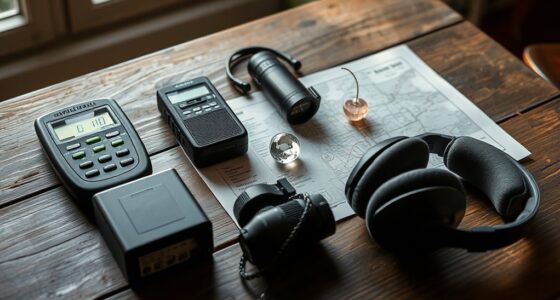
You’ll find that paranormal investigators use a mix of tools like EMF meters, which detect electromagnetic fluctuations, and digital voice recorders to capture unexplained sounds. They also set up cameras and video recorders to document activity over time. Investigators often observe and document physical disturbances, such as moving objects or cold spots, to gather evidence. Their goal is to identify patterns that suggest supernatural presence.
Conclusion
Think of a poltergeist as a mischievous shadow puppet, flickering with unseen energy and stirring chaos in quiet corners. While the truth remains elusive, understanding its signs helps you spot the tricks behind the curtain. Don’t let fear be the puppet master—explore the stories, challenge the myths, and seek the truth. In this dance of mystery, knowledge is your guiding light—illuminating shadows and revealing what’s really there.