

To effectively investigate paranormal activity, you should know key terms like orbs, residual hauntings, intelligent spirits, poltergeists, and EVP recordings. Understanding ghost hunting gear such as EMF meters and motion detectors, along with investigation techniques, helps you distinguish natural causes from genuine phenomena. Recognizing the differences between residual energy, active spirits, or physical disturbances builds your credibility. Staying familiar with this terminology ensures you communicate clearly and analyze evidence correctly—so if you’re enthusiastic to master these terms, there’s more to uncover.
Key Takeaways
- Understand common terms like orbs, residual hauntings, intelligent hauntings, and poltergeists to accurately describe phenomena.
- Familiarize with EVP recordings as a primary method of capturing spirit communication during investigations.
- Recognize equipment-related terminology, including EMF meters, motion detectors, and interference, to differentiate natural from paranormal activity.
- Differentiate between residual energy impressions and active spirits to interpret phenomena correctly.
- Use precise language to build credibility and clearly communicate findings within the paranormal community and to skeptics.
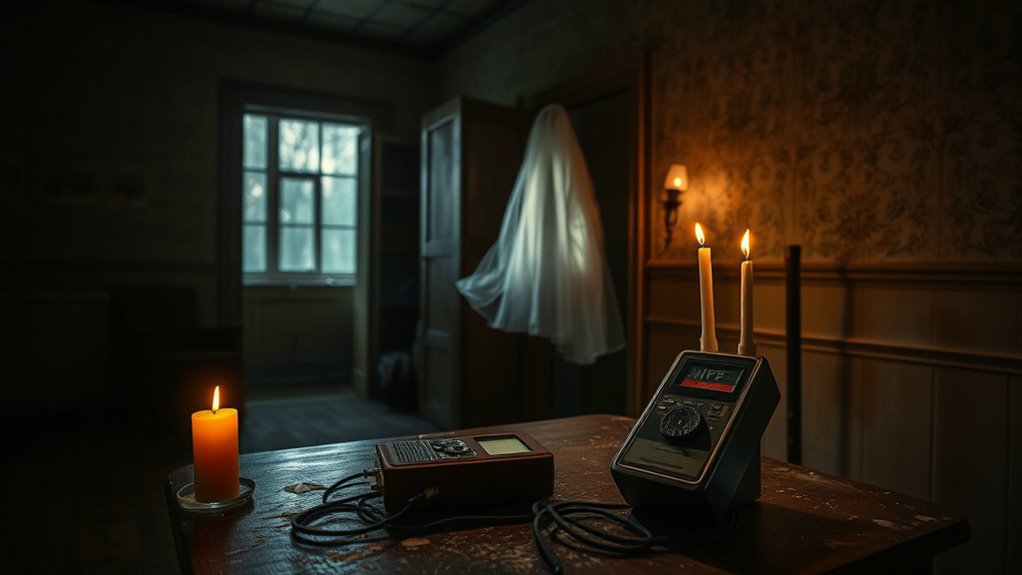
Ever wonder what all those mysterious terms like “orbs,” “poltergeists,” or “residual hauntings” really mean? When you’re venturing into the world of paranormal investigation, understanding the lingo is essential. It helps you communicate with other ghost hunters and makes your investigations more effective. One of the first things you’ll encounter are ghost hunting gear and haunted locations. These tools and places are central to every investigation, but knowing what they really signify can make all the difference. For example, “orbs” are often seen in photos or videos taken at haunted locations. They appear as circular, glowing shapes, but their true nature can be debated—they might be dust particles, moisture, or actual spirits. Recognizing this helps you interpret your evidence accurately rather than jumping to conclusions. Additionally, understanding paranormal terminology is key to building credibility during investigations, especially when presenting findings to skeptics or the public. Haunted locations are the sites where paranormal activity is most commonly reported. These can be old houses, abandoned hospitals, or historic sites. When exploring these places, you’ll encounter terms like “residual hauntings”—which describe energy impressions left behind by past events. These hauntings tend to replay scenes like a tape recorder, with no conscious entity present. Conversely, “intelligent hauntings” involve active spirits that respond to your presence, often communicating through EVP recordings or direct interactions. Understanding the distinction helps you set expectations and approach investigations more strategically. Additionally, knowing about the environmental factors that influence paranormal activity can deepen your understanding of what you might encounter during an investigation, such as temperature fluctuations or electromagnetic interference that may affect your equipment. Being aware of scientific explanations for phenomena can also help you differentiate between natural causes and genuine paranormal activity, which is crucial for credible investigations. Recognizing common paranormal phenomena and their typical manifestations enables you to better differentiate between genuine activity and natural occurrences. Poltergeists are another common term you’ll hear. Unlike residual hauntings, poltergeists are believed to be caused by energetic disturbances, sometimes linked to living individuals, especially adolescents. They often manifest as physical disturbances—objects flying, loud noises, or unexplained movements. Recognizing the difference between poltergeists and other phenomena can influence how you handle the situation and what kind of ghost hunting gear you might need, such as EMF meters or motion detectors. It’s also helpful to understand that some phenomena attributed to poltergeists could be misinterpreted natural causes, which underscores the importance of proper investigation techniques. Finally, you’ll come across terms like “EVP” (Electronic Voice Phenomena), which are recordings of supposed spirit voices. These are captured using audio equipment during investigations at haunted locations. Whether you believe in their authenticity or not, knowing how to interpret EVP recordings is part of understanding paranormal vocabulary. By familiarizing yourself with these terms, you’ll be better prepared to navigate investigations, communicate with fellow hunters, and analyze evidence more confidently. The language of the paranormal isn’t just jargon; it’s your key to revealing the mysteries lurking in haunted locations.
Top picks for "paranormal lingo term"
Open Amazon search results for this keyword.
As an affiliate, we earn on qualifying purchases.
Frequently Asked Questions
How Do I Identify Authentic Paranormal Activity From Natural Causes?
To identify authentic paranormal activity, you need to observe for spiritual signs that seem out of place or unexplainable. Pay close attention to environmental factors like sudden temperature drops, unexplained noises, or flickering lights, but also consider natural causes first. Keep a detailed log of occurrences, cross-check evidence, and rule out natural explanations before jumping to paranormal conclusions. Trust your instincts and stay objective in your investigations.
What Equipment Is Essential for a Beginner Ghost Hunter?
For a beginner ghost hunter, essential equipment includes basic ghost hunting gadgets like a digital voice recorder, EMF meter, and a flashlight. These paranormal investigation gear items help you detect and document activity. Start with these tools to gather evidence confidently. Remember, your focus should be on observation and recording, so choose gear that’s easy to use and reliable, building your skills as you explore the spooky world of ghost hunting.
Are There Legal Considerations When Investigating Haunted Locations?
Did you know over 50% of haunted site investigations face legal issues? When exploring haunted locations, you need to be aware of legal restrictions to avoid trouble. Always get liability waivers signed and respect private property rights. Check local laws beforehand, as trespassing or disturbing sites can lead to fines or arrest. Being informed and prepared helps you enjoy your ghost hunting adventures safely and legally.
How Can I Differentiate Between Genuine EVPS and Background Noise?
When trying to differentiate genuine EVPs from background noise, you should listen carefully for clarity and consistency. Look out for audio distortion or environmental interference that can mimic EVPs, making it tricky to identify real responses. Use multiple recordings and compare them to spot similarities. Trust your intuition, but also rely on technical analysis to verify the sounds are not just background noise or interference.
What Safety Precautions Should I Take During Paranormal Investigations?
During paranormal investigations, you should prioritize safety by practicing spiritual protection, like wearing protective charms or visualizing a protective light. Always obtain investigation permits if required, and let someone know your plans. Carry essential safety gear, stay aware of your surroundings, and avoid risky areas. Respect the environment and any spiritual entities you encounter. These precautions help guarantee your safety and create a respectful, successful investigation.
Conclusion
Now that you’re familiar with these 15 paranormal terms, you’re better equipped to navigate the ghost-hunting world. Remember, understanding the lingo is just the tip of the iceberg—trust your instincts and stay curious. With each new experience, you’ll find yourself diving deeper into the unknown. Keep your wits about you, and don’t be afraid to face the shadows; sometimes, the truth is hiding right behind them, waiting to be uncovered.