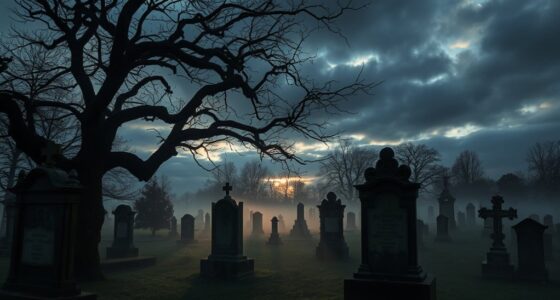
Demons and ghosts are often confused, but they have clear differences. Ghosts are spirits of the deceased linked to unresolved issues or emotional ties, usually passive and not inherently malicious. Demons, on the other hand, are malevolent entities from darker supernatural domains, actively seeking to influence or harm humans. Understanding their origins and behavior helps distinguish these entities. If you keep exploring, you’ll uncover even more fascinating insights into their roles in folklore and culture.
Key Takeaways
- Ghosts are spirits of deceased humans, often linked to unresolved issues, while demons are malevolent entities from spiritual or mythological origins.
- Ghosts tend to be passive or reactive, whereas demons are actively malicious and seek to harm or tempt humans.
- Ghosts symbolize spirits trapped due to emotional ties or unfinished business; demons represent chaos, evil, and temptation.
- Ghosts are generally not inherently malicious, unlike demons, which embody malevolence and opposition to moral or divine forces.
- Differentiating them enhances understanding of folklore, clarifies their roles, and helps distinguish between spirits of the dead and spiritual evil entities.
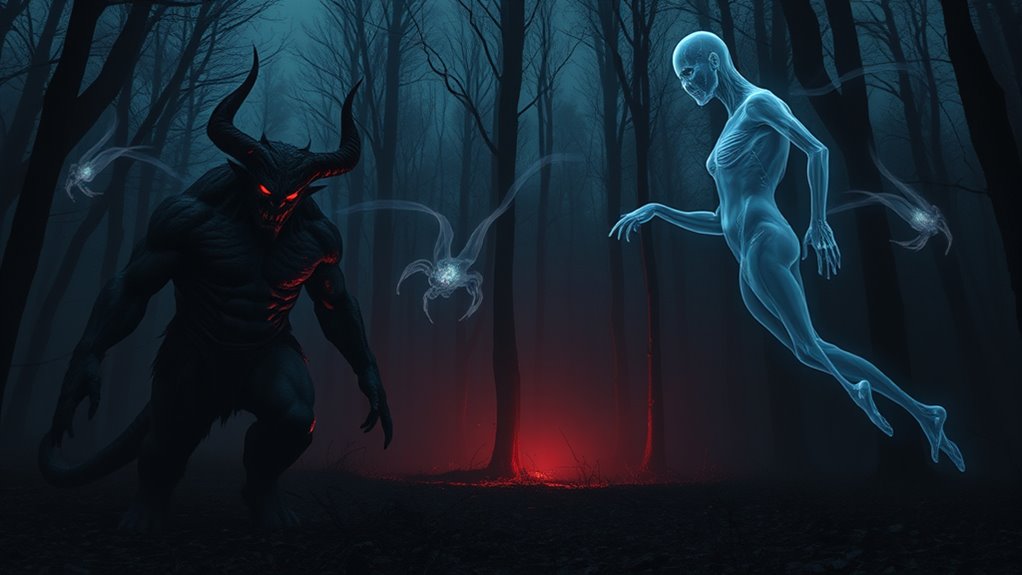
Have you ever wondered what truly sets demons apart from ghosts? In the sphere of supernatural folklore, these entities often get lumped together, but they actually have distinct origins and characteristics. Spiritual entities like demons and ghosts are both elements of supernatural folklore, yet they serve very different roles within that mythology. Ghosts are generally considered the spirits of deceased humans who haven’t moved on or are tied to specific locations or unresolved issues. They’re often seen as restless or lingering remnants of someone’s life, appearing to warn, comfort, or haunt. Demons, on the other hand, are typically depicted as malevolent spiritual entities that originate from darker supernatural sources. They’re often associated with evil, temptation, and chaos, acting as adversaries to humans and divine forces alike.
Demons are malevolent entities from darker supernatural sources, unlike ghosts, which are spirits of the deceased.
One of the key differences lies in their origins. Ghosts are usually believed to be souls trapped in the earthly domain, unable to find peace after death. These spirits are rooted in human history, and their appearances are often linked to emotional or physical attachments to the living world. Demons, however, come from a different narrative altogether—many stories trace their origins to mythologies, religious texts, and supernatural folklore that depict them as fallen angels, evil spirits, or entities born from chaos. Unlike ghosts, demons are not the spirits of the dead; they exist as spiritual entities with a purpose, often to tempt, corrupt, or oppose divine will. Spiritual entities are often characterized by their specific roles and origins within diverse folklore traditions. Their behavior and intent are also notably different, with ghosts typically passive or reactive, while demons actively seek to influence or harm humans through temptation, possession, or direct attack.
Another distinction is their intent and behavior. Ghosts tend to be passive or reactive, appearing to communicate or deliver messages, often driven by unresolved issues or unfinished business. They’re usually not inherently malicious, though some can be frightening or disruptive. Demons are actively malevolent, seeking to influence or harm humans through temptation, possession, or direct attack. They’re often depicted as cunning and manipulative, using fear and deception to achieve their goals. Their presence in supernatural folklore is frequently used to symbolize evil forces that challenge moral and spiritual boundaries. Supernatural folklore often emphasizes the contrast in how these entities interact with humans, highlighting their opposing roles.
Understanding these differences helps clear up the confusion surrounding supernatural folklore. Ghosts are more about human spirits caught in limbo, while demons are seen as powerful, often destructive entities from the spiritual domain. Recognizing these distinctions allows you to approach stories, beliefs, and cultural depictions with a more informed perspective, separating myth from reality. Whether you’re curious about haunted houses or demonology, knowing what sets demons apart from ghosts enriches your understanding of the supernatural landscape, making it less about fear and more about curiosity and respect for the rich tapestry of folklore that shapes these beliefs.
Top picks for "demon ghost understand"
Open Amazon search results for this keyword.
As an affiliate, we earn on qualifying purchases.
Frequently Asked Questions
Are Demons and Ghosts Depicted Differently Across Cultures?
You’ll notice that cultural portrayals of demons and ghosts vary widely, reflecting different mythological origins. In some cultures, demons are fierce, malevolent beings linked to evil, while ghosts are spirits of the dead lingering in the mortal world. Other traditions depict demons as mischievous or even protective, contrasting with ghostly apparitions seen as mourned ancestors. These differences highlight how cultural beliefs shape the way supernatural entities are portrayed across the world.
Can Demons or Ghosts Possess Living Humans?
You might wonder if demons or ghosts can possess living humans. In many cultures, exorcism rituals are performed to cast out such spirits from haunted locations or individuals believed to be possessed. While some see possession as a real phenomenon, others view it as psychological or cultural. Whether real or not, these stories often inspire exorcisms and cautionary tales about haunted locations.
Do Religious Beliefs Influence Perceptions of Demons and Ghosts?
You might notice that religious influence shapes how you perceive demons and ghosts, often coloring your cultural perceptions. Your beliefs can influence whether you see these entities as malevolent spirits or misunderstood forces, affecting how you interpret paranormal experiences. Different religions and cultures offer varied explanations, so your views are deeply rooted in your spiritual background. Recognizing this connection helps you understand why perceptions of demons and ghosts differ across societies.
Are There Scientific Explanations for Demon and Ghost Sightings?
When it rains, it pours, and the question of scientific explanations for demon and ghost sightings is no different. In paranormal research, many sightings are attributed to psychological factors like sleep paralysis, hallucinations, or heightened emotions. Scientific skepticism suggests these experiences often have natural causes, such as environmental influences or cognitive biases. While some believe in supernatural origins, current science leans toward rational explanations rooted in human perception and perception errors.
How Do Demons and Ghosts Differ in Popular Media Representations?
In popular media, demons often symbolize evil through demonic symbolism, appearing as malevolent entities with horns and dark auras. Ghosts, however, are depicted as ghostly apparitions, usually spirits of the deceased lingering in the mortal domain. You’ll see demons engaging in sinister acts, while ghosts tend to be more passive or tragic. These portrayals shape how you perceive supernatural threats, emphasizing evil versus unresolved spirits.
Conclusion
So, now that you know demons are the creepy, malevolent troublemakers and ghosts are the sad, wandering spirits, you’re practically an expert. Next time you hear a bump in the night, you can confidently blame a ghost or a demon—whichever suits your mood. Just remember, if you’re feeling brave, maybe leave the paranormal investigations to the professionals. After all, who needs the hassle of actually encountering the supernatural when you have all the facts?