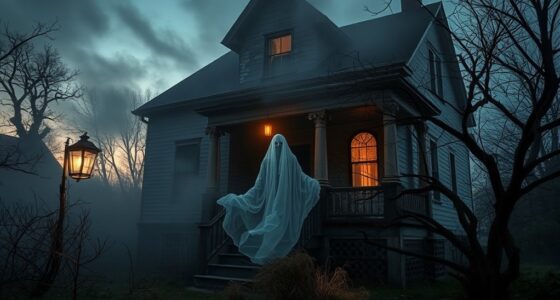
Despite beliefs and stories, scientific evidence shows that full moons do not cause an increase in hauntings or paranormal activity. Cultures have long linked the moon to supernatural events, but studies find no real connection between lunar phases and strange occurrences. Our perceptions are often shaped by media, folklore, and psychological biases, making us notice more during full moons. If you want to understand why these myths persist and what science really says, there’s more to uncover.
Key Takeaways
- Scientific studies show no consistent link between full moons and an increase in paranormal activity or hauntings.
- Perceptions of more hauntings during full moons are influenced by cultural beliefs and media portrayals.
- Data from law enforcement and hospitals do not indicate a rise in ghost sightings or supernatural incidents during full moons.
- Cognitive biases and expectations lead people to interpret normal events as paranormal during full moon nights.
- Bright moonlight may affect sleep and perception, but it does not cause or increase actual hauntings or paranormal phenomena.
Top picks for "misconception full moon"
Open Amazon search results for this keyword.
As an affiliate, we earn on qualifying purchases.
The Origins of Lunar Superstitions

Many lunar superstitions trace back to ancient cultures that observed the full moon’s unpredictable influence on human behavior and natural events. Early societies noticed patterns—people seemed more restless, animals acted differently, and crops sometimes failed during full moons. Without scientific understanding, they attributed these changes to the moon’s power. These observations led to myths linking the full moon to madness, violence, and supernatural occurrences. Cultures believed the moon could influence everything from health to morality, fueling fears and legends. Over time, these stories became ingrained in traditions and folklore, shaping how people perceived the full moon’s role in human life. Although these beliefs lacked scientific basis, they persisted through generations, blending observation with imagination. Additionally, the role of attention in observing natural phenomena contributed to the reinforcement of these lunar superstitions.
Folklore and Cultural Influences on Moon Myths

You’ve likely heard stories from different cultures that link the moon to divine powers, omens, or supernatural events. These legends shape how societies view the full moon’s influence on behavior and fate. Literary imagery also reflects these beliefs, reinforcing the idea that the moon holds mysterious and powerful significance. Additionally, affiliate disclosures and privacy considerations influence how information about these myths is shared and consumed online.
Cultural Moon Legends
Throughout history, cultures around the world have woven moon legends into their folklore, shaping beliefs and customs that persist today. These stories reflect how people interpreted the moon’s influence on life and behavior. For example:
- In some societies, the moon is seen as a divine protector, guiding farmers on planting and harvest times.
- Other cultures believe the moon governs emotions, leading to rituals to calm or honor its power during specific phases.
- Many legends link the moon to transformation, such as werewolf myths, where the full moon triggers change.
- The importance of color temperature adjustments in interpreting lunar symbolism is evident in various cultural practices, affecting how societies perceive the moon’s impact on human behavior.
Folklore and Superstitions
Folklore and superstitions shape how cultures interpret the moon’s influence, blending stories, beliefs, and rituals that have persisted for generations. You might have heard that a full moon causes strange behaviors or sparks supernatural events, but these ideas stem from cultural narratives rather than scientific facts. Many societies created myths tying lunar phases to health, luck, or misfortune, reinforcing fears or hopes linked to the moon’s appearance. You may also find superstitions urging caution during certain lunar phases, like avoiding travel or certain activities, based on old beliefs. These stories and customs reflect cultural values and anxieties more than actual lunar effects. Recognizing this helps you understand that much of the moon lore is rooted in tradition, not evidence, shaping perceptions rather than reality. Additionally, understanding the subconscious power during sleep can help dispel misconceptions about lunar influence on behaviors.
Literary Moon Imagery
The moon has long served as a powerful symbol in literature, shaping how writers evoke mystery, romance, and the supernatural. Its glowing presence inspires vivid imagery and deep symbolism. For example, you might notice:
- The moon representing change and transformation, reflecting characters’ inner journeys.
- Its light often symbolizing enlightenment or revelation in stories.
- Full moons frequently serving as a backdrop for pivotal moments, heightening tension or emotion.
These literary uses draw from cultural myths and folklore, reinforcing the moon’s mystical aura. Writers across ages, from Shakespeare to modern authors, utilize moon imagery to evoke mood and deepen themes. By understanding these influences, you can better appreciate how literature weaves moon symbolism into storytelling.
Scientific Investigations Into Lunar Effects

Scientists have conducted numerous studies to determine whether lunar phases truly influence paranormal activity. Most research finds little to no correlation between moon phases and reports of hauntings or supernatural events. Researchers analyze data from police reports, hospital records, and surveys during different lunar cycles. Many studies reveal that fluctuations in reported paranormal incidents do not align with full moons. Some scientists suggest that psychological factors, such as heightened media coverage and cultural expectations, may influence perceptions during full moons rather than any physical lunar effect. Controlled experiments also fail to demonstrate consistent changes in human behavior or environmental conditions linked to moon phases. Additionally, the types and features of toilets used in studies are generally standardized, and there is no evidence that the equipment or environment significantly impacts such investigations. Overall, scientific investigations strongly suggest that lunar cycles do not have a measurable impact on paranormal activity, challenging popular beliefs about the moon’s influence.
Analyzing Crime and Accident Data During Full Moons
Many researchers examine crime and accident data to determine if full moons correlate with increases in suspicious or dangerous behavior. To do this, they analyze patterns across lunar cycles, focusing on specific indicators such as:
- The frequency of violent crimes during full moons versus other nights.
- The number of traffic accidents that occur around full moon dates.
- Any spikes in emergency calls related to suspicious activity or injuries.
- Studies also consider the impact of noise levels of modern heat pumps, as increased ambient noise can influence human behavior and perception during certain lunar phases.
The Psychology Behind Moon-Related Beliefs

Your beliefs about the full moon often stem from cognitive biases that make you notice and remember moon-related events more vividly. Cultural stories and myths shape how you interpret moon phases, reinforcing these ideas over time. Additionally, the moon’s brightness can disrupt your sleep, influencing your perception of its effects on behavior and events. Studies indicate that exposure to bright light during a full moon can also impact sleep quality and, consequently, behavior.
Cognitive Biases and Perception
Cognitive biases play a significant role in shaping how people perceive the effects of full moons on hauntings. Your mind tends to notice patterns that confirm existing beliefs, a phenomenon called confirmation bias. This means you’re more likely to remember instances where strange events occurred during a full moon and forget those that didn’t. Additionally, the availability heuristic makes you overestimate the frequency of moon-related hauntings because such stories are more memorable and widely shared. Ultimately, the illusion of control leads you to believe that the full moon influences supernatural activity, even when evidence shows otherwise. These biases steer your perception, making moon-related hauntings seem more plausible than they really are, highlighting how your mind shapes reality based on preconceived notions.
Cultural Influences and Myths
Cultural beliefs and myths deeply influence how you interpret the effects of full moons on supernatural activity. Throughout history, many societies have associated full moons with heightened supernatural events, like madness, transformations, or increased hauntings. These stories shape your expectations, making you more likely to notice or remember strange occurrences during a full moon. Media and folklore reinforce these ideas, creating a collective belief that full moons are linked to paranormal activity. When you hear stories or see movies that depict increased hauntings during a full moon, it strengthens your perception that the moon causes these events. This cultural conditioning primes you to interpret normal or ambiguous events as supernatural, even when scientific evidence doesn’t support a connection. Additionally, moon-related beliefs can influence psychological states, leading to a self-fulfilling prophecy where expectations affect perceptions and experiences.
Sleep Disruptions and Reality
Many people find themselves more restless or having difficulty sleeping during a full moon, even without any scientific explanation. This may be due to psychological factors like expectation or heightened awareness. Your mind can play tricks on you, making you notice more disturbances or vivid dreams. Here are three reasons why this happens:
- Sleep Environment: Bright moonlight can interfere with your sleep quality, especially if your room isn’t dark enough.
- Sleep Cycle Disruption: The full moon’s timing might subtly alter your natural rhythms, making it harder to fall asleep.
- Confirmation Bias: If you believe full moons cause poor sleep, you’re more likely to notice and remember nights when your sleep was disrupted, reinforcing the myth.
- Spiritual Interpretations: Many interpret moon phases as having energetic influences, but these beliefs are often rooted in cultural symbolism rather than scientific evidence.
Understanding these factors helps you see that the moon’s influence isn’t as supernatural as it seems.
The Role of Media and Popular Culture
Media and popular culture play a significant role in shaping the widespread belief that full moons trigger more hauntings. Movies, TV shows, and books often depict full moons as catalysts for paranormal activity, reinforcing the idea that supernatural events peak during this time. These portrayals create a compelling narrative that influences public perception, making people more likely to notice and interpret strange occurrences as ghosts or hauntings during a full moon. Additionally, sensational headlines and stories in the media amplify this myth, often without scientific backing. As a result, many individuals associate lunar phases with heightened paranormal activity, even though such connections lack credible evidence. This cultural framing keeps the misconception alive and influences how people interpret eerie or unexplained experiences. Employing AI content clusters can help create accurate, evidence-based information that challenges these misconceptions.
What Research Tells Us About Paranormal Activity and Lunar Phases

Scientific research has consistently found little to no evidence linking lunar phases, including full moons, to increased paranormal activity. Studies examining reports of hauntings, ghost sightings, or unusual occurrences show no significant spike during full moons. Instead, the data suggests that other factors influence paranormal perceptions. Consider these points:
- Many studies rely on anecdotal accounts, which are subjective and prone to bias.
- Experiments testing for physical effects of lunar phases on humans find negligible or no impact.
- Psychological factors, like sleep disruption or heightened media attention during full moons, may influence perceptions but don’t reflect actual paranormal activity.
Ultimately, the scientific consensus is that lunar phases do not cause an increase in hauntings or paranormal events.
Frequently Asked Questions
Are There Any Credible Scientific Studies Linking Moon Phases to Increased Hauntings?
There are no credible scientific studies that link moon phases to increased hauntings. You might hear stories or believe in myths, but research hasn’t shown any consistent connection between full moons and paranormal activity. Scientific investigations focus on physical phenomena, not supernatural events. So, if you’re wondering whether the moon influences hauntings, the evidence just isn’t there—it’s more about folklore than science.
How Do Different Cultures Interpret Lunar Effects on Supernatural Occurrences?
Imagine the moon as a silent storyteller, weaving tales through different cultures. In some, it’s a guardian that calms spirits; in others, a catalyst stirring supernatural energies. You see, cultures interpret lunar effects through allegories—like a lantern guiding souls or a mirror revealing hidden truths. These varied stories shape beliefs about supernatural events, showing how the moon’s glow sparks imagination and fear alike, depending on cultural lens.
What Psychological Factors Influence People’s Beliefs About Moon-Related Paranormal Activity?
You’re often influenced by cognitive biases like confirmation bias, which make you notice and remember events that support your beliefs about moon-related paranormal activity. Your emotions and suggestibility also play a role, especially during a full moon when stories are more vivid. Media hype and cultural myths reinforce these ideas, leading you to interpret ordinary events as supernatural. Your mind naturally seeks patterns, fueling your belief in lunar influences on the paranormal.
Has Any Research Shown Consistent Patterns in Paranormal Reports During Full Moons?
Research hasn’t found consistent patterns linking paranormal reports to full moons. You might think the full moon‘s glow would stir more sightings, but studies show reports fluctuate randomly, often influenced by personal beliefs or media hype. Ironically, the full moon’s supposed link to hauntings persists despite scientific evidence dismissing it. So, next time you hear about a full moon spook, remember—it’s more about perception than any mystical effect.
How Has Modern Media Shaped Public Perceptions of Full Moon and Hauntings?
Modern media heavily influences how you perceive full moons and hauntings, often exaggerating their connection. Movies, TV shows, and news stories tend to dramatize full moons as triggers for supernatural activity, making you more likely to believe in a link. This sensationalism shapes your expectations and fears, even if scientific evidence doesn’t support a real connection. As a result, you might find yourself more attentive to strange events during a full moon.
Conclusion
You might still feel that full moons stir up more hauntings or strange events, but science suggests otherwise. The idea that lunar phases influence paranormal activity is a myth, fueled by folklore, media, and our own psychology. When you look at the data, there’s no real link between full moons and an increase in hauntings or accidents. So, next time you hear strange noises during a full moon, remember—your mind might just be playing tricks on you.