
TL;DR

Get movie nights delivered free with Prime
- Fast, free delivery on millions of items
- Prime Video, Amazon Music and more included
- Member-only deals all year
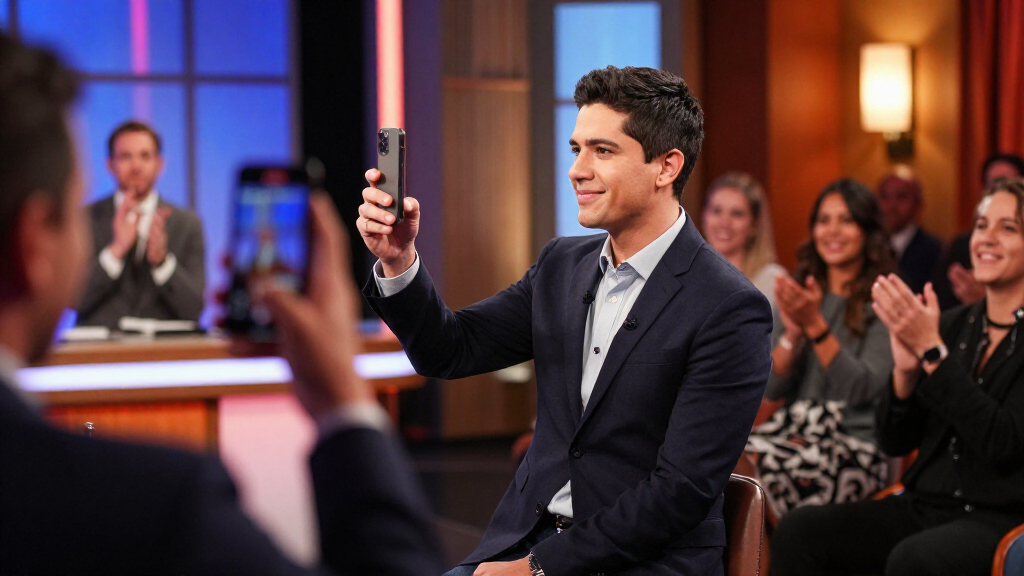
Guillermo Rodriguez and professional partner Witney Carson are continuing on Dancing With the Stars despite a low score for their recent samba, after viewers voted to keep them in the competition. Psychology Today says his appeal may reflect his perceived authenticity and the psychological effect known as basking in reflected glory, though the size and motives of the vote are not established.
Guillermo Rodriguez, the Jimmy Kimmel Live sidekick competing with professional dancer Witney Carson, advanced on Dancing With the Stars after receiving a low score for a recent samba, according to a Psychology Today analysis of his growing fan support. The article suggests his unexpected popularity may reflect both his underdog appeal and “basking in reflected glory,” a social-psychology concept describing the satisfaction people can feel when someone they support succeeds.
Rodriguez’s appeal predates the current competition. Psychology Today describes how he became a familiar television personality after moving from work as a security guard to appearing as a sidekick on Jimmy Kimmel’s show. The article says fans have responded to his lack of pretense, his willingness to be himself and his openness about not being an accomplished dancer.
That vulnerability may make his progress more compelling to viewers, the article argues. After a dance, Rodriguez pulled open his shirt to show the words “Dancing 4 The People,” a joke that credited audience enthusiasm rather than his own dancing ability for his success. The article also points to comments under a Deadline headline about Rodriguez finally getting his moment, including one reader’s view that “The world needs more Guillermos and especially now!” These comments illustrate fan sentiment; they do not establish how representative it is.
Psychology Today connects the voting response to basking in reflected glory, or BIRG. Social psychologist Robert Cialdini and co-authors introduced the term in a 1976 study of football fans. The idea is that people may feel a reflected sense of achievement when someone or a team they support wins, and may publicly identify with that success. The article reports that Rodriguez and Carson returned after their samba received 13 out of 30 from the judges and viewers voted. It does not provide vote totals or a comparison with other contestants.
Audience Psychology · Dancing With the Stars
Guillermo Rodriguez and the Appeal of Reflected Glory
After a low-scoring samba, Guillermo Rodriguez and professional partner Witney Carson stayed in the competition. Psychology Today sees a possible explanation in his underdog appeal, perceived authenticity, and the way fans share in the success of someone they support.
An underdog story with a familiar face
Psychology Today describes a television personality whose appeal was established well before this dance competition.
A long-running persona
Rodriguez became known as a sidekick on Jimmy Kimmel’s late-night show after earlier work as a security guard.
Comfortably himself
The article says fans respond to his lack of pretense, humor, and openness about not being an accomplished dancer.
Progress feels personal
When viewers identify with a contestant, each step forward may feel more meaningful than the performance alone.
“Just like everybody else, I’m obsessed with you.”Derek Hough · Judge
“I understand why you’re becoming a national obsession.”Bruno Tonioli · Judge
Judges score the dance. Viewers decide who stays.
The reported result shows audience voting can matter alongside judges’ assessments. It does not reveal how much each factor contributed.
Visualized as a share of the maximum possible score.
Despite the low mark for the samba, Rodriguez and Carson returned after viewers voted. The account gives no vote totals, contestant-by-contestant comparison, or detailed breakdown of the episode’s scoring and voting formula. The result shows survival; it cannot measure the strength or source of their support.
How reflected glory can work
Psychology Today applies a research concept to explain one possible reason fans may care about a contestant’s fortunes.
Identify
A viewer feels connected to a person or group they support.
Watch
The supported contestant faces a public test or competition.
Share success
An advance may bring reflected satisfaction to supporters.
Show support
Fans may vote or publicly associate themselves with the success.
Support can rise—or turn away
Research on group identity describes both sharing in success and distancing oneself after failure.
“We did it.”
People may publicly connect themselves to a successful person or team they support, and feel a reflected sense of achievement.
“That wasn’t us.”
People may distance themselves from a group or figure after failure. Strong identification can also make competition feel more personal.
“The world needs more Guillermos and especially now!”Reader comment under a Deadline headline, as reported by Psychology Today
“He needs to go home, that is not dancing!!!”Viewer comment on the show’s Instagram, as reported by Psychology Today
What the vote cannot explain
Reported reactions offer context, but they do not establish the motives or representativeness of the audience.
No vote totals. The size of Rodriguez and Carson’s support is not reported.
No audience study. BIRG is an interpretation, not a measured motive for individual votes.
No comparison. The account does not show the gap between contestants or how the factors combined.
Claims are not proof. Rigging accusations and online reactions are reported claims, not established facts.
A lens for fan behavior—not a forecast
The cited ideas help frame public identification with success and failure. They do not predict the outcome of a television competition.
From football stands to television screens
Robert Cialdini and co-authors introduced “basking in reflected glory” in a 1976 study of football fans and their public association with successful teams.
A 1986 paper by Snyder, Lassegard, and Ford examined both basking in reflected glory and distancing oneself after group failure. Psychology Today uses these ideas to interpret possible fan identification with Rodriguez.
The next result is still open
Another performance. Another vote.
The reported account confirms Rodriguez and Carson returned after the samba episode, but offers no later outcome. Their next step depends on subsequent performances and voting. Until then, their survival is observable; BIRG remains one possible explanation for why viewers are invested.
Key questions
Why is Guillermo Rodriguez attracting attention?
Psychology Today points to his underdog appeal, established television following, and the authenticity viewers perceive in his lack of pretense.
What does “basking in reflected glory” mean?
BIRG describes the satisfaction people may feel when someone or a group they support succeeds—and the public connection they may make to that success.
How Fan Support Shapes His Run
Rodriguez’s progress highlights the difference between judges’ assessments of performance and audience response. A 13 out of 30 is a low score for the samba described in the article, yet the pair stayed in the competition after viewers cast votes. That result shows that the audience vote can keep a contestant in the running even when judges are not awarding high marks, though the available details do not reveal how much each factor contributed.
The BIRG explanation also offers a way to understand why an audience might invest emotionally in a celebrity’s success. If viewers feel connected to Rodriguez, watching him advance may feel gratifying beyond the dance itself. Psychology Today presents that as a possible interpretation, not proof of why individual viewers voted. His established fan base, television persona and perceived authenticity may all contribute.
The dynamic has a less positive side. The article notes that people who identify with a successful figure may distance themselves when that figure fails, a response described in research as cutting off reflected failure, or CORFing. Strong identification can also make competition feel personal. Psychology Today reports that some fans of other contestants worried their favorites could be eliminated while Rodriguez remained, and that some viewers posted criticism on the show’s Instagram. The article does not establish the scale of those reactions.
Dancing With the Stars fan support merchandise
As an affiliate, we earn on qualifying purchases.
As an affiliate, we earn on qualifying purchases.
From Late-Night Sidekick to Contestant
Rodriguez entered the public eye through his appearances with Jimmy Kimmel, where his persona as a quirky, unpolished sidekick helped build recognition before his Dancing With the Stars run. Psychology Today says that history matters: viewers were not encountering an unknown performer but a familiar figure whose appeal included an apparent willingness to laugh at himself.
The article places his reception within research on group identity and self-presentation. Cialdini and colleagues’ 1976 paper, “Basking in Reflected Glory: Three (Football) Field Studies,” examined how people publicly associated themselves with successful teams. A later paper by Snyder, Lassegard and Ford, published in 1986, examined both basking in reflected glory and distancing oneself after group failure. Psychology Today uses those concepts to interpret the way fans may relate to a contestant’s fortunes.
The article also notes that judges joined the public enthusiasm in their comments. Derek Hough said, “Just like everybody else, I’m obsessed with you,” while Bruno Tonioli said, “I understand why you’re becoming a national obsession.” The show’s official Instagram account praised Rodriguez and Carson’s samba, posting that it could not be more “obsessed” with the pair. These remarks show enthusiasm, but do not amount to evidence that the judges’ evaluations or the voting process were altered.
““Just like everybody else, I’m obsessed with you.””
— Derek Hough, Dancing With the Stars judge
Guillermo Rodriguez Dancing With the Stars apparel
As an affiliate, we earn on qualifying purchases.
As an affiliate, we earn on qualifying purchases.
What the Vote Cannot Explain
The available account does not give vote totals, the gap between contestants, or a detailed breakdown of how viewer voting and judges’ scores combined in the episode. It is not possible from the reported information to measure how much Rodriguez’s fan base, his dance performance or other factors influenced the outcome.
Psychology Today offers BIRG as a possible explanation for support, not as a finding that explains every vote. No audience survey or study of Rodriguez’s voters is described. The article also mentions accusations that the show was rigged, but reports no evidence substantiating them. Those accusations should be treated as viewer claims, not as established facts about the competition.
It is also unclear how far Rodriguez would advance, whether his support would continue in later rounds, or how viewers would respond if he were eliminated. The research on BIRG and CORF provides background for interpreting fan behavior; it does not predict the result of a television competition.
As an affiliate, we earn on qualifying purchases.
The Next Competition Results
The immediate next development is whether Rodriguez and Carson continue to advance in Dancing With the Stars. Their future depends on the show’s subsequent performances and voting results; the Psychology Today account does not provide a confirmed outcome beyond their return after the samba episode.
Further information about vote totals, scoring rules and audience responses would help clarify what drove the result, but none is included in the reported account. Until then, continued audience support is observable in the pair’s survival for another episode, while BIRG remains one interpretation of why viewers may be invested in Rodriguez’s progress.
As an affiliate, we earn on qualifying purchases.
Key Questions
Why is Guillermo Rodriguez attracting attention on Dancing With the Stars?
Psychology Today points to his underdog appeal, his established television following and viewers’ appreciation of what they see as his authenticity and lack of pretense.
What does “basking in reflected glory” mean?
Basking in reflected glory, or BIRG, describes the satisfaction people may feel when someone or a group they support succeeds. Psychology Today applies the concept as a possible way to understand some fans’ connection to Rodriguez.
Did Rodriguez receive a high score for the samba?
No. The article reports that Rodriguez and Carson received 13 out of 30 from the judges for the samba, then returned after viewers voted. The vote totals are not provided.
Has the show been proven to be rigged?
No. Psychology Today mentions viewer accusations but reports no evidence that the competition was rigged. The accusations remain unsubstantiated claims.
How far will Rodriguez and Carson advance?
The reported information does not establish how far they will go. Their next result will depend on later performances and the show’s voting process.
Source: psychologytoday.com
Columbus Day / Indigenous Peoples' Day Picks
long weekend sales
As an affiliate, we earn on qualifying purchases.