The Jersey Devil is a legendary creature that blurs the line between myth, monster, and paranormal phenomenon. Sightings and stories suggest a winged, frightening entity lurking in New Jersey’s Pine Barrens, with some believing it’s a real creature while others see it as folklore or supernatural. Skeptics say it’s misidentification or mass hysteria, but the legend continues to fascinate and divide opinions. If you keep exploring, you’ll discover more about its mysterious origins and ongoing mysteries.
Key Takeaways
- The Jersey Devil originated in folklore as a cursed child, blending Native American, European, and local legends.
- Sightings describe a large, winged creature with glowing eyes, but scientific explanations attribute it to misidentifications.
- Investigations use modern technology like trail cameras and drones, yet no definitive proof of a supernatural or cryptid entity exists.
- The legend is deeply ingrained in local culture, inspiring festivals, art, and community pride, regardless of its factual status.
- The debate continues whether the Jersey Devil is a real monster, a mythological figure, or a paranormal phenomenon.
Top picks for "jersey devil myth"
Open Amazon search results for this keyword.
As an affiliate, we earn on qualifying purchases.
Origins and Folklore of the Jersey Devil
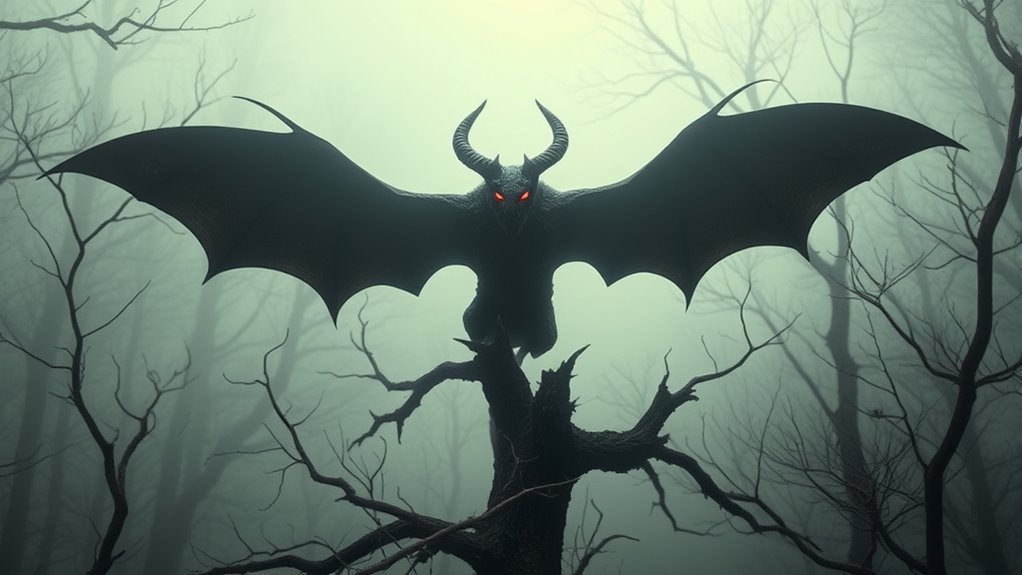
Have you ever wondered where the legend of the Jersey Devil began? It all traces back to the early 18th century in the Pine Barrens of New Jersey. According to folklore, Mother Leeds, a local woman, was pregnant with her 13th child. Legend says she cursed the baby, wishing it to be a devil, and soon after, the child was born in a horrific form. The creature then supposedly took to the skies, terrorizing the area. Over time, stories grew, blending Native American legends, European folklore, and local tales into a mysterious myth. The legend served as a cautionary tale and a way to explain strange occurrences in the wilderness, cementing the Jersey Devil as a fixture of local culture and folklore.
Descriptions and Sightings Through the Years
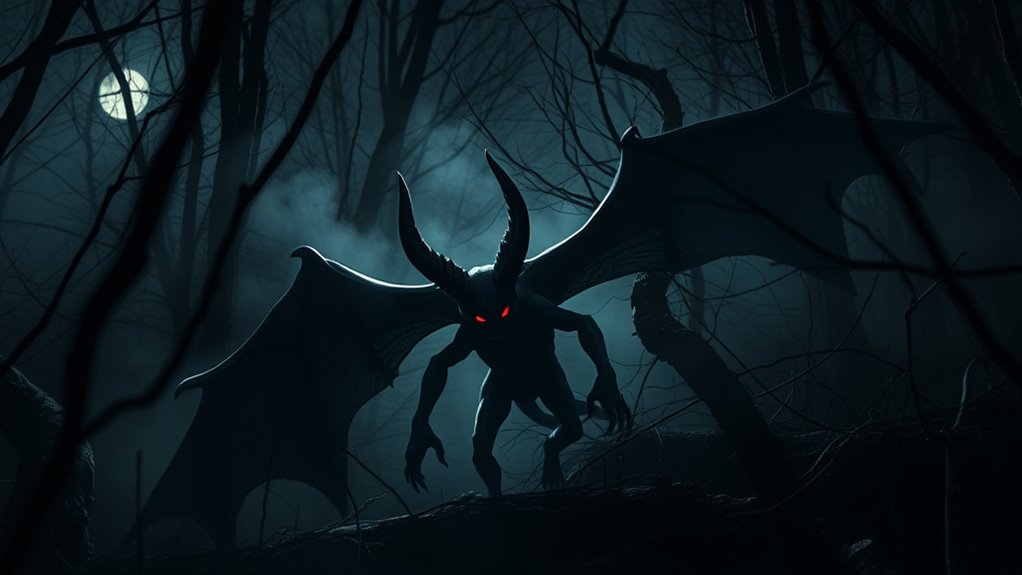
Over the years, numerous witnesses have reported encountering the Jersey Devil, describing it with a mix of startling detail and eerie consistency. Many say it has wings like a bat, a head resembling a horse or dog, and claws that scratch or tear. Sightings often occur in dense woods or rural areas, with witnesses recounting strange screams or flashes of movement. Some describe the creature as large—standing over ten feet tall—with glowing eyes that pierce the darkness. Others report hearing unexplainable noises or feeling an ominous presence. Despite the variety in descriptions, the creature’s most common features remain consistent: wings, a strange face, and an unsettling aura. These recurring reports keep the legend alive, fueling curiosity and fear across generations. In recent years, some researchers have suggested that paranormal phenomena might play a role in the Jersey Devil sightings, adding to the mystery surrounding its origins.
Scientific Explanations and Skepticism

Many skeptics argue that the numerous sightings of the Jersey Devil can be explained by misidentifications, exaggerations, or psychological factors. They suggest that people often mistake common animals, like large birds or bats, for the creature, especially in low-light conditions. Additionally, the power of suggestion and folklore can influence perceptions, causing individuals to interpret ambiguous shadows or sounds as encounters with the Devil. Psychological phenomena, such as mass hysteria or the human tendency to fill gaps in knowledge with sensational stories, also play a role. Skeptics emphasize that no concrete scientific evidence supports the existence of the Jersey Devil, arguing that most sightings lack verifiable proof. They view the legend as a product of folklore, imagination, and human perception rather than an actual creature. Furthermore, electric power generation with bike generators demonstrates how human efforts can be harnessed for practical and sustainable purposes, highlighting the importance of scientific understanding in explaining phenomena.
The Cultural Impact on New Jersey Communities
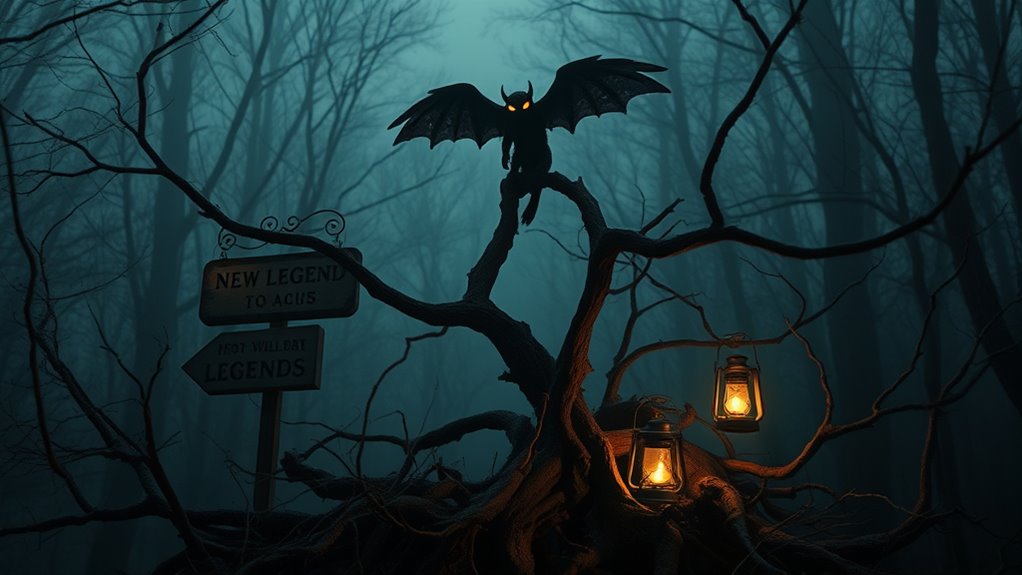
The legend of the Jersey Devil has profoundly shaped the identity and culture of New Jersey communities, fueling local pride and folklore. You’ll notice it in annual festivals, where residents celebrate the myth with parades, costumes, and storytelling, fostering a sense of unity. Local businesses often incorporate the myth into branding, boosting tourism and economic activity. Schools teach about the legend, passing it down to new generations. The Jersey Devil also becomes a symbol of resilience, representing the unique character of the region. Whether it’s in art, sports, or community events, the myth continues to inspire creativity and camaraderie. This cultural connection helps communities embrace their history while maintaining a playful, mysterious edge that keeps the legend alive. Additionally, the cultural significance of the legend encourages storytelling and preservation of local traditions across generations.
Notable Encounters and Eyewitness Accounts
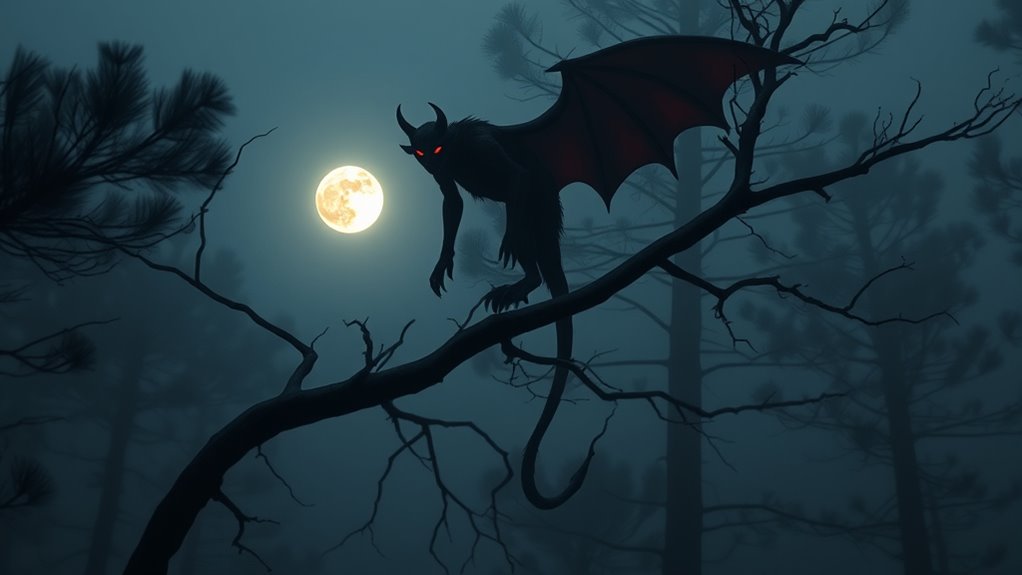
Numerous eyewitness accounts have shaped the legend of the Jersey Devil, turning folklore into a shared experience for residents and visitors alike. You may have heard stories of travelers seeing a winged creature swooping through the night sky or hearing strange, guttural sounds near the Pine Barrens. Many describe encounters where the creature appears suddenly, darting between trees or gliding silently over the landscape. Some witnesses claim to have seen its hooved feet or sharp claws, while others report feeling an overwhelming sense of fear during their encounters. Although few accounts are corroborated, these stories persist, fueling belief and curiosity. Your own experiences or stories from others keep the legend alive, blending folklore with the possibility that something unexplained still roams the dark woods. The ongoing fascination with paranormal phenomena keeps the legend relevant in modern culture.
The Role of Media and Popular Culture
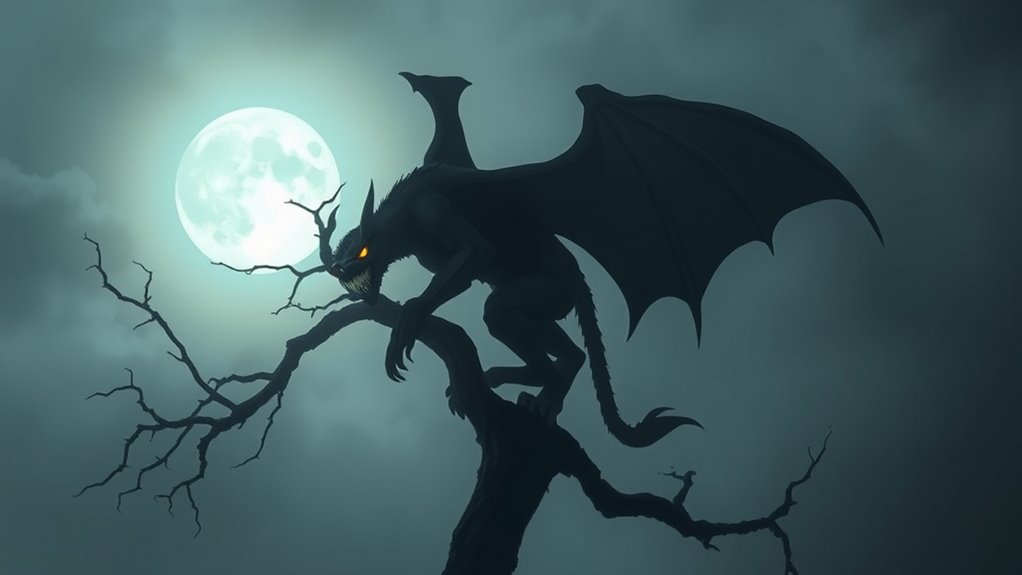
Media and popular culture have played a huge role in shaping the legend of the Jersey Devil. They often amplify stories, making the creature seem more mysterious and terrifying. As a result, the monster’s image evolves, influencing how people perceive and remember the legend. This amplification can be compared to how ethical hacking involves continuous monitoring and assessment to adapt defenses, just as legends are shaped by ongoing storytelling.
Media Amplification of Legends
Media and popular culture have played a crucial role in shaping and solidifying the legend of the Jersey Devil. They turn local stories into widespread myths, fueling curiosity and fear. Documentaries, movies, and books keep the legend alive, often exaggerating its features for entertainment. News reports, whether factual or sensationalized, add to the mystique and mystery surrounding the creature. Additionally, folklore festivals and tourist attractions celebrate the myth, drawing visitors from afar. By doing so, media and culture transform a regional legend into a national phenomenon, ensuring the Jersey Devil remains a fascinating figure in American folklore. This amplification sustains public interest and keeps the legend relevant across generations. It’s clear that media’s portrayal shapes perceptions and keeps the myth thriving. Furthermore, the visual imagery created by these portrayals enhances the myth’s allure and cultural significance.
Pop Culture’s Monster Portrayal
Popular culture has played a significant role in transforming the Jersey Devil from a local legend into a widely recognized monster. Movies, TV shows, and books depict it as a terrifying beast, fueling fear and curiosity. These portrayals often exaggerate features, making it more monstrous than in original stories. The media’s vivid imagery shapes how you imagine the creature:
| Visual Elements | Descriptions |
|---|---|
| Wings | Large, leathery, spreading wide |
| Claws | Sharp, deadly, grasping tightly |
| Head | Goat-like, with piercing eyes |
Through popular culture, the Jersey Devil becomes a symbol of fear, blending myth with entertainment, ensuring its place in modern folklore. Additionally, the color accuracy of media representations influences how vividly people picture the creature, further entrenching its mythic status.
Theories and Possible Identifications

Many researchers and enthusiasts have proposed various theories to explain the origins of the Jersey Devil, suggesting it might be a misidentified animal, a human anomaly, or even a supernatural entity. Some believe it could be a large bird or a known creature misunderstood by witnesses. Others think it might be a human who transformed into a monster due to a curse or mutation. There are also supernatural theories that see the creature as a guardian spirit or a demon. Additionally, some speculate it could be a cryptid still undiscovered by science.
Recent Developments and Investigations
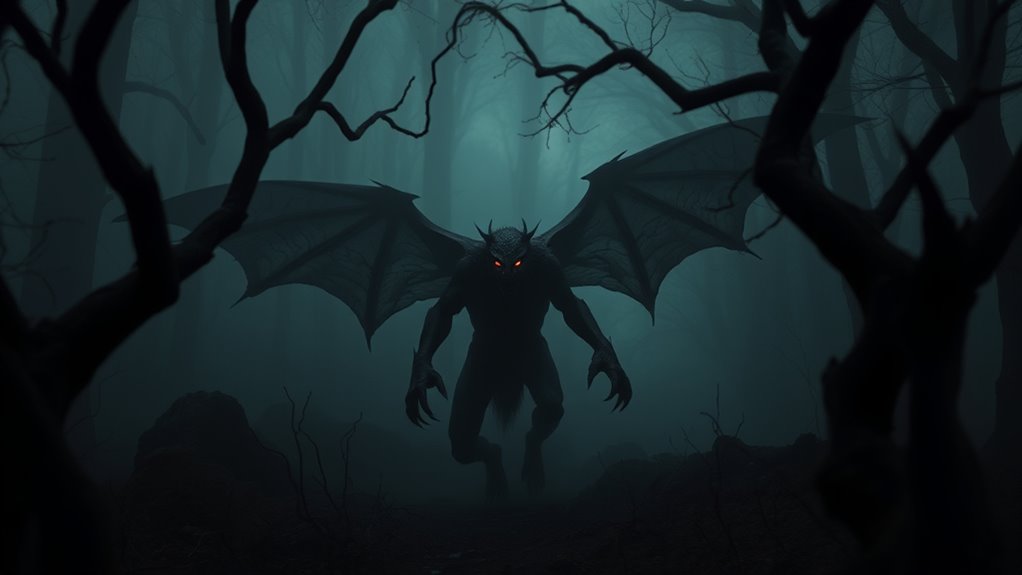
Recent investigations into the Jersey Devil have produced intriguing evidence and fresh perspectives that challenge long-standing theories. Modern technologies, like trail cameras and drone footage, have captured unexplained sightings near the Pine Barrens, fueling renewed interest. Researchers and enthusiasts have documented strange sounds, fleeting shadows, and unusual footprints, suggesting that something unusual persists in the area. Some investigations focus on environmental factors, such as rare animal behaviors or misidentifications, while others pursue more paranormal explanations. Local authorities and paranormal groups have increased efforts to gather data, but definitive proof remains elusive. These recent efforts highlight ongoing curiosity and the desire to understand whether the Jersey Devil is a real creature, a myth, or something else entirely. Additionally, advances in cryptozoology techniques are enabling more systematic investigations into the phenomenon.
Perspectives on the Legend: Myth, Monster, or Mystery
The legend of the Jersey Devil sparks diverse perspectives that shape how you interpret the mysterious creature. Some see it as a mythical symbol rooted in local folklore, while others believe it’s a real, terrifying monster lurking in the woods. Skeptics argue it’s a case of mass hysteria or misidentification, dismissing it as folklore. Meanwhile, paranormal enthusiasts consider it a mysterious phenomenon connected to unexplained events. Your view might depend on personal beliefs or experiences. To explore these perspectives, consider:
The Jersey Devil’s legend divides opinions—myth, monster, or mystery?
- Folklore and cultural traditions shaping the myth
- Sightings and eyewitness accounts fueling belief
- Scientific explanations dismissing supernatural claims
- Paranormal investigations seeking tangible evidence
- Wickless Candle Making techniques as an example of creative craft that involves alternative materials and methods.
These viewpoints reflect how the legend continues to captivate and divide opinions about what the Jersey Devil truly is.
Frequently Asked Questions
Has the Jersey Devil Ever Been Officially Documented by Authorities?
No, authorities have never officially documented the Jersey Devil. Despite numerous reports and sightings over the years, law enforcement and scientific agencies haven’t verified its existence. You might hear stories or see claimed evidence, but none have been confirmed through official channels. The legend persists mainly through folklore and eyewitness accounts, keeping the mystery alive, even though no credible documentation exists to prove the creature’s existence.
Are There Any Known Scientific Experiments Linked to the Legend?
No, there aren’t any scientific experiments directly linked to the Jersey Devil legend. While some researchers and enthusiasts have studied sightings and folklore, no formal scientific studies aim to prove or disprove its existence. You might find experiments focused on cryptozoology or environmental factors that could explain sightings, but these aren’t officially connected to the legend itself. Instead, most efforts remain in the domain of folklore and anecdotal evidence.
How Has Tourism Been Affected by the Jersey Devil Myth?
Tourism benefits greatly from the Jersey Devil myth, drawing curious visitors enthusiastic to explore its legend. You’ll find many attractions, like themed tours and local festivals, that boost the local economy. The myth creates a sense of intrigue and mystery, encouraging tourists to visit the area seeking encounters or stories. This folklore becomes a marketing tool, helping towns and businesses attract more visitors and keep the legend alive.
What Are Some Cultural Festivals Celebrating the Jersey Devil?
Like a modern-day Midsummer Night’s Dream, festivals celebrate the Jersey Devil’s legend through lively parades, costumes, and storytelling. You can join events in places like Pine Barrens or Atlantic City, where locals embrace the myth with themed activities, craft fairs, and haunted tours. These festivals deepen the cultural tapestry, inviting visitors and residents alike to partake in the folklore’s mystical allure and keep the legend alive through spirited festivities.
Are There Any Recent Credible Sightings or Investigations?
Recent credible sightings remain scarce, and investigations haven’t confirmed any definitive evidence of the Jersey Devil’s existence. You might come across reports from enthusiasts or local folklore, but experts consider these largely anecdotal. If you’re curious, stay tuned to local news and paranormal research groups, as they occasionally pursue new leads. However, until verified, the Jersey Devil continues to be more myth than proven creature.
Conclusion
As you explore the Jersey Devil’s legend, remember that over 90% of sightings remain unexplained, fueling curiosity and debate. Whether you see it as myth, monster, or mystery, one thing’s clear: the story has persisted for centuries, mesmerizing communities and inspiring countless investigations. It’s a haunting reminder that some mysteries are too intriguing to fully resolve, leaving you wondering if the truth is hiding just beyond the shadows of the Pine Barrens.