
Eastern State Penitentiary’s imposing walls echo with stories of infamous inmates, groundbreaking architecture, and ghostly legends. As you explore its historic cells and corridors, you’ll feel the weight of its past—where reform and punishment met. The prison’s haunting reputation grows from reports of apparitions and unexplained phenomena. If you keep exploring, you’ll uncover the secrets behind its eerie aura and the voices that still whisper behind those ancient walls.
Key Takeaways
- Eastern State Penitentiary, built in 1829, pioneered the radial design emphasizing solitary confinement and moral reform.
- Its iconic architecture includes stone cellblocks arranged in a wheel pattern, with a central rotunda for supervision.
- The prison housed notorious inmates like Al Capone and Willie Sutton, whose stories contributed to its legendary status.
- Declining populations and aging infrastructure led to preservation efforts, including tours, exhibits, and paranormal investigations.
- Haunted legends, paranormal phenomena, and media portrayals continue to draw visitors and reinforce its eerie reputation.
The Origins and Early Years of Eastern State Penitentiary
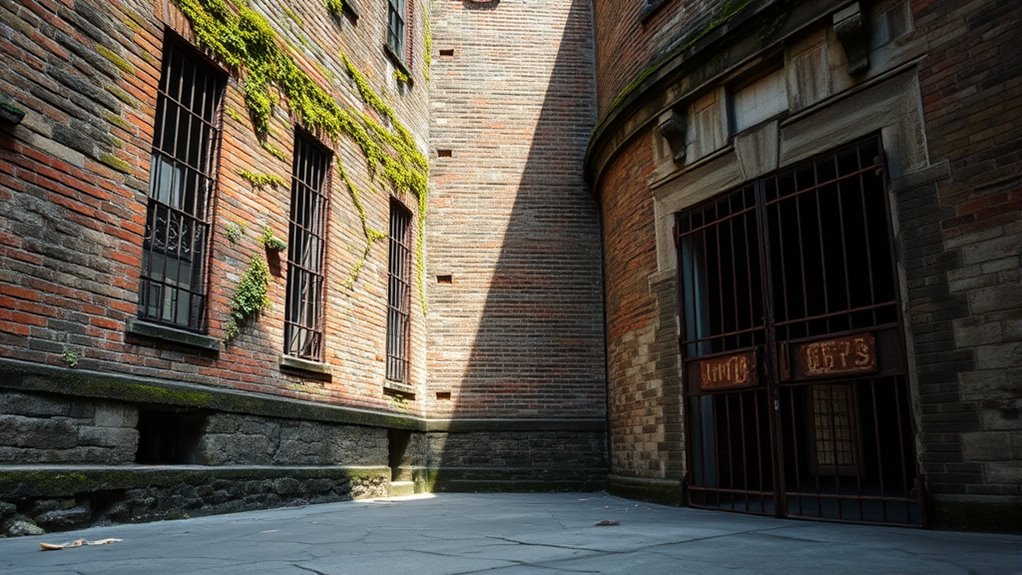
Eastern State Penitentiary, built in 1829 in Philadelphia, revolutionized the American prison system with its focus on solitary confinement. You’ll see that its design aimed to reform inmates through silence and reflection, rather than punishment. The prison’s groundbreaking radial layout allowed each cell to have its own yard, emphasizing isolation. This model reflected the belief that prisoners could rehabilitate if kept away from corrupting influences. As you explore its early years, you’ll notice how the institution attracted attention nationwide, inspiring similar prisons across the country. Its strict discipline and innovative architecture marked a shift from brutal confinement to a more humane, reform-oriented approach. The prison became a symbol of the evolving justice system, emphasizing moral reform over mere punishment. Resources available in multiple formats also helped spread awareness and understanding of its principles.
Architectural Innovations and Design Features
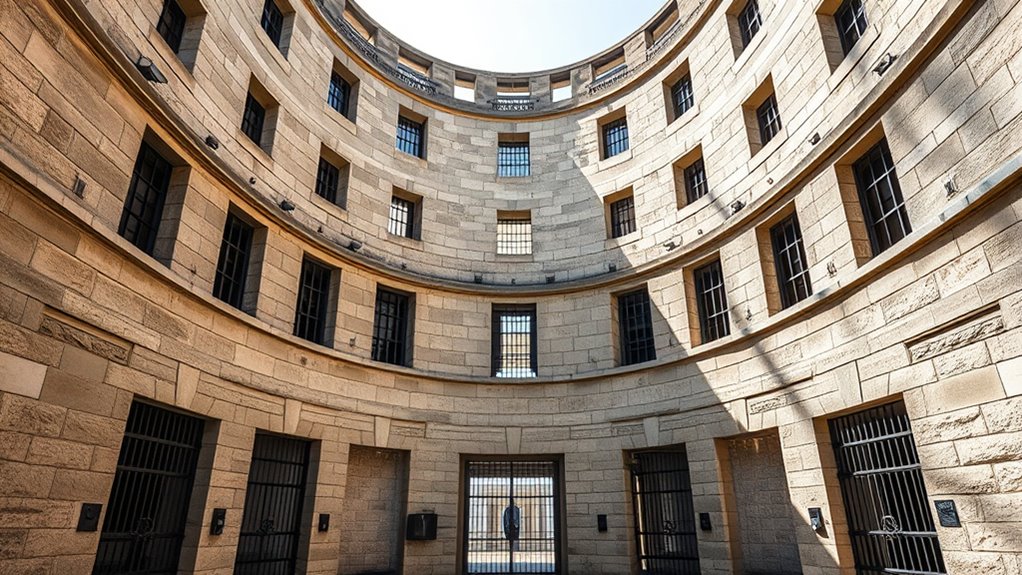
The design innovations of Eastern State Penitentiary set a new standard for correctional architecture. You can see this in its revolutionary radial design, which offers clear sightlines and enhances security. The structure features large, vaulted stone cellblocks arranged in a wheel-like pattern, minimizing contact between inmates and staff. Its central hub, the rotunda, serves as a control point, streamlining supervision. The building’s high walls and narrow windows prevent escape while maintaining natural light inside. You’ll notice the use of reinforced concrete and ironwork, emphasizing durability and safety. The architecture reflects a focus on solitary confinement and moral reform, with features like individual cells, exercise yards, and chapels. These innovations set precedents still influential in correctional design today, particularly in terms of security features that prioritize inmate separation and staff oversight.
Life Inside the Walls: Daily Routine and Conditions
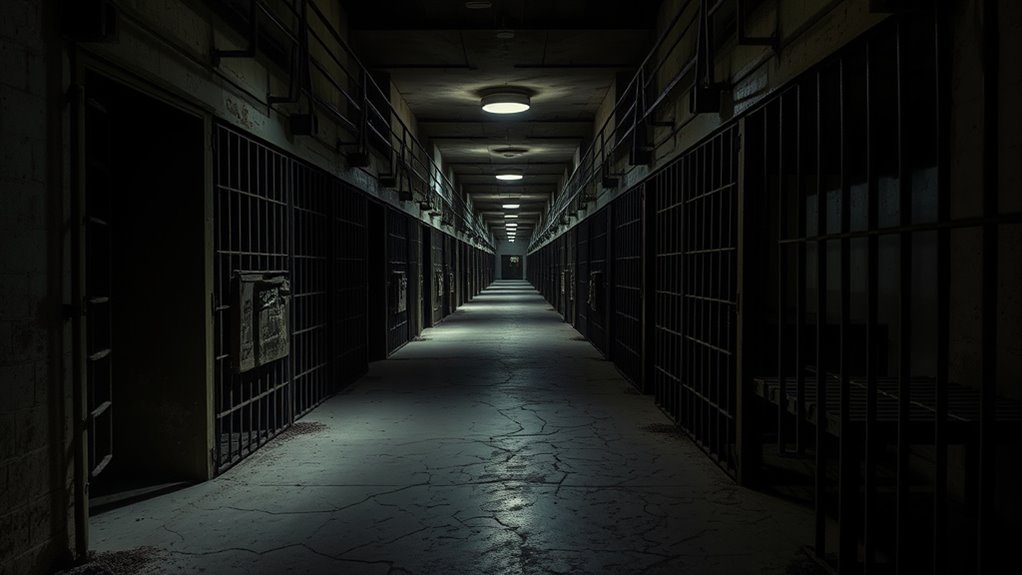
Life inside the walls follows a strict routine designed to control inmate behavior and promote reform. Your day begins early, often with individual work or reflection in your cell. Meals are scheduled precisely, usually in silence, fostering discipline and contemplation. Outside of personal time, you spend hours in solitary confinement, which is intended to encourage self-awareness and remorse. The conditions are austere—cold, sparse cells with little comfort, emphasizing discipline over comfort. Recreation is limited, often restricted to brief periods of exercise alone. The focus remains on penitence and reform, with little room for distraction or interaction. This regimented environment aims to shape your behavior through solitude, reflection, and strict adherence to the schedule, reflecting the prison’s belief in moral reform over punishment.
Notorious Inmates and Famous Prisoner Stories
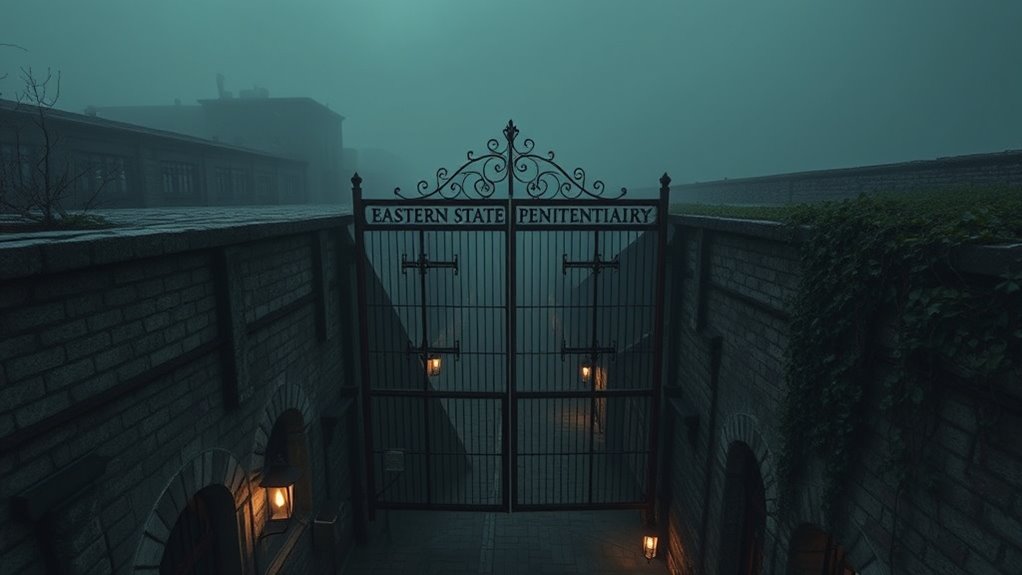
Have you ever wondered what makes certain prisoners infamous beyond their crimes? Some stories become legendary, capturing public fascination. At Eastern State Penitentiary, notorious inmates left lasting marks. For example:
- Al Capone, the infamous gangster, spent years behind these walls, his legend growing with each escape attempt.
- Willie Sutton, the bank robber known for his daring heists and witty escapes.
- “Slick Willie” Sutton’s cunning made him a symbol of criminal ingenuity.
- The escape of “Scarface” Al Capone, who was believed to be plotting his next move even while incarcerated.
- The stories of these prisoners are preserved not only through their crimes but also through the notorious reputation that continues to echo within the prison walls.
These stories of infamy reveal more than just criminal acts—they show how these prisoners became part of history, shaping the prison’s eerie reputation. Their tales continue to fascinate visitors and historians alike.
The Role of Solitary Confinement in Reform and Punishment

You might wonder how solitary confinement affects a prisoner’s mind and future behavior. While some see it as a way to deter crime, others argue it hampers emotional health and rehabilitation. Understanding its true role requires examining both its psychological impact and its effectiveness in reforming inmates. Additionally, cultural attitudes toward punishment vary widely and can influence how solitary confinement is perceived and applied in different contexts.
Isolation’s Psychological Impact
Although solitary confinement aims to reform or punish inmates, its psychological toll can be severe. You might feel your sense of time slipping away, losing track of days and hours. The silence around you becomes deafening, amplifying feelings of loneliness. Your thoughts can spiral into anxiety, depression, or hallucinations as mental health declines. You could experience:
- Heightened anxiety and panic attacks
- Disconnection from reality and emotional numbness
- Visual or auditory hallucinations
- A deep sense of hopelessness and despair
These effects aren’t just temporary; they can linger long after confinement ends, impacting your mental well-being for years. The intense isolation can erode your sense of self, making it harder to reintegrate into society or trust others again.
Deterrence and Rehabilitation
What purpose does solitary confinement truly serve in our justice system? At its core, it aims to deter future crimes by making the consequences of bad behavior clear. The idea is that removing inmates from society and isolating them will discourage others from committing offenses. Some believe that solitary offers a chance for reflection and reform, giving prisoners time to contemplate their actions. However, research questions its effectiveness, highlighting severe psychological harm and limited impact on reducing reoffending. You might wonder if punishment alone is enough or if rehabilitation should take priority. While deterrence may work for some, solitary confinement often hinders true reform, trapping inmates in a cycle of mental anguish rather than fostering positive change.
The Decline and Closure of the Prison
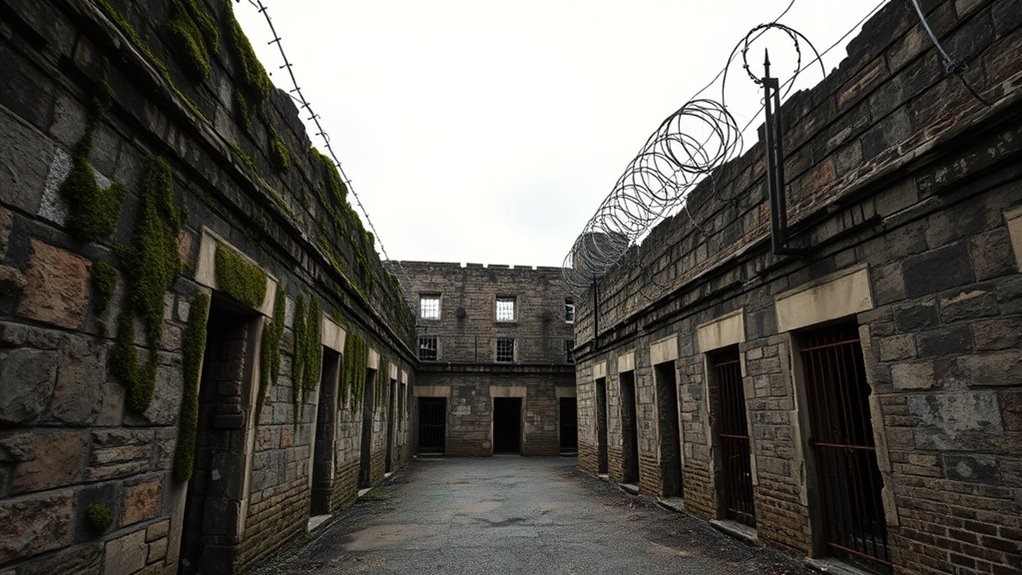
Over the past decade, the once-thriving prison has seen its population decline sharply, prompting officials to reconsider its future. As inmate numbers decreased, maintaining the facility became less sustainable. Budget constraints and shifting priorities led to reduced funding, and the prison’s aging infrastructure became harder to justify. You might notice:
- Fewer staff needed on-site, impacting security and operations
- Deteriorating buildings requiring costly repairs
- Limited inmate activity and program offerings
- Increasing safety concerns due to outdated facilities
These factors contributed to the decision to close Eastern State Penitentiary. The prison, once a symbol of justice and reform, faced the inevitable decline that comes with changing times and evolving correctional philosophies. Additionally, the shift towards security assessments and modernization in correctional facilities has further highlighted the need for upgrades that this aging structure can no longer support.
Preservation Efforts and Historical Restoration

Recognizing the historical significance of Eastern State Penitentiary, preservation efforts have gained momentum among community members, historians, and conservationists. You can see this in the ongoing restoration projects aimed at maintaining the prison’s iconic architecture and structural integrity. Volunteers and experts work tirelessly to stabilize crumbling walls, restore original cell blocks, and conserve the distinctive Gothic design. Funding from government grants, private donations, and nonprofit organizations supports these initiatives. You might also participate in guided tours that highlight restoration milestones or attend events focused on conservation. These efforts not only protect the site’s physical legacy but also ensure that future generations can learn from its history. Supporting restoration projects helps sustain the site’s cultural importance and allows visitors to experience its historical ambiance firsthand. Your involvement helps keep the echoes of its past alive, fostering appreciation for its cultural and architectural significance.
Ghosts and Haunting Legends Surrounding the Site
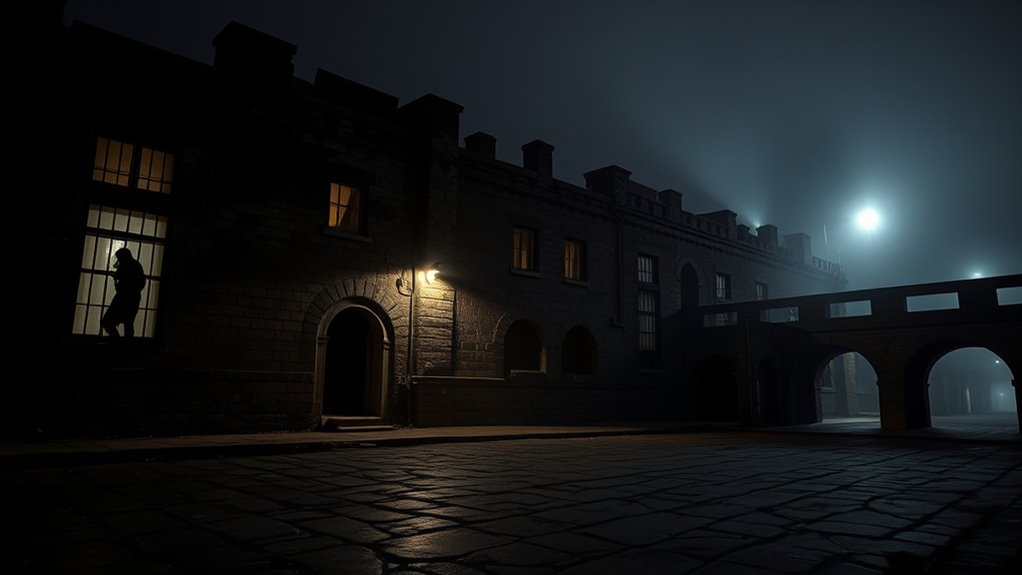
Many visitors have reported seeing strange apparitions around the prison grounds, fueling local legends. Paranormal investigators have conducted numerous investigations, capturing unexplained phenomena on camera and audio recordings. These eerie encounters continue to mystify those who explore the site, keeping its haunted reputation alive. Additionally, some believe that decoding slang can help uncover hidden messages from spirits, adding an intriguing layer to the supernatural experiences at the site.
Apparitions Sightings Reported
Have you ever wondered if the whispers and shadows reported around the prison are just stories or something more? Visitors and staff have claimed to see apparitions lurking in the dim corridors. You might catch a fleeting figure in a cell, a shadow passing by, or a translucent face peering from behind bars. These sightings often happen late at night or during quiet moments when the prison feels still. Ghostly activity has been documented through various reports, adding to the site’s haunted reputation.
- A ghostly inmate appearing in the guard tower
- Apparitions of former prisoners wandering the cell blocks
- Shadows moving swiftly through the corridors
- Eerie figures seen through barred windows at dusk
These sightings fuel the legends, leaving you questioning what’s real and what’s just imagination in the haunted halls of Eastern State Penitentiary.
Paranormal Investigations Conducted
Over the years, numerous paranormal investigations have sought to uncover the truth behind the haunting legends of Eastern State Penitentiary. Teams of investigators have used everything from EVP recorders to thermal cameras, aiming to capture evidence of spirits lurking within the prison walls. Many report hearing unexplained noises, such as distant footsteps and disembodied voices, during their sessions. Some have captured strange orbs and shadowy figures on camera, fueling speculation about ghostly presences. Guided tours sometimes include paranormal experts who lead investigations after hours, adding to the eerie atmosphere. These efforts continually reveal new phenomena, keeping the site’s haunted reputation alive. Recent advances in AI-powered ghost detection technology are increasingly used to analyze paranormal data, potentially offering more scientific insights into these phenomena. Whether you believe in spirits or not, the persistent reports make Eastern State Penitentiary a focal point for paranormal curiosity.
Eastern State Penitentiary in Popular Culture

Eastern State Penitentiary’s haunting reputation extends beyond its walls, cementing its place in popular culture. You’ve probably seen its ominous silhouette in movies, TV shows, and even video games. Its imposing architecture often symbolizes justice, punishment, and fear. The prison has appeared in various films like *The Shawshank Redemption* and *12 Monkeys*, lending an authentic eerie backdrop. Its reputation also fuels books and documentaries that explore its dark history. Visitors and filmmakers alike are drawn to its stark, crumbling corridors. The prison’s image evokes a sense of dread and intrigue, making it a powerful icon of American penal history. Its influence in pop culture keeps its haunting legend alive, enthralling audiences worldwide.
Visiting Today: Tours, Exhibits, and Experiencing the Past

When you visit today, guided tours highlight the prison’s most significant features and stories. Exhibits and artifacts let you see firsthand the tools, personal belongings, and historical items from the past. These experiences bring history to life, making your visit both educational and memorable. Additionally, engaging with interactive displays can deepen your understanding of the prison’s history and the lives of those who were incarcerated there.
Guided Tour Highlights
A guided tour of the prison offers an immersive experience that brings its history vividly to life. As you walk through the corridors, you’ll hear stories of inmate life and notable events that shaped the penitentiary’s legacy. The tour highlights include:
- Visiting the solitary confinement cells, where silence and isolation were intense
- Exploring the grand cellblocks, with rows of small, steel-barred rooms
- Hearing tales of infamous inmates and daring escapes
- Observing the architecture that pioneered the separate system of incarceration
These highlights give you a glimpse into the harsh realities and innovative design that defined Eastern State Penitentiary, making history feel immediate and real as you traverse its storied halls.
Exhibits and Artifacts
As you explore the prison’s many rooms, you’ll encounter a rich collection of exhibits and artifacts that bring its history into focus. These displays include original tools, inmate belongings, and historical photographs that vividly illustrate daily life behind bars. You might see artifacts like prison uniforms, handwritten notes, or old photographs capturing moments from the past. To help organize your visit, here’s a quick overview:
| Exhibit Type | Description | Significance |
|---|---|---|
| Inmate Artifacts | Personal items and belongings | Humanizes former prisoners |
| Historical Photos | Black-and-white images of the prison | Offers visual history |
| Interactive Displays | Touchscreen exhibits and videos | Engages visitors actively |
These exhibits make history tangible, connecting you directly to the stories behind the walls.
Frequently Asked Questions
How Did Eastern State Penitentiary Influence Modern Prison Design?
Eastern State Penitentiary influenced modern prison design by pioneering the separate system, emphasizing solitary confinement to encourage penance. You see, it introduced the idea of large, individual cells and a focus on rehabilitation over punishment. This model inspired future prisons to prioritize inmate segregation and mental health treatment, shaping contemporary correctional facilities’ emphasis on humane conditions and security, making Eastern State a vital milestone in correctional architecture.
What Security Measures Were Used to Prevent Escapes?
You’ll find that Eastern State used thick stone walls, iron bars, and a large, secure gate to prevent escapes. Guards patrolled constantly, and the prison’s design featured a central hub with radiating cell blocks, making it easier to monitor inmates. The prison also employed watchtowers and a system of locked doors and secure fences. These measures combined to create a highly secure environment to deter and prevent escapes effectively.
Were There Any Successful Rehabilitation Programs Implemented?
You’ll find that Eastern State Penitentiary prioritized rehabilitation, offering programs like vocational training and moral reform initiatives, even amid its reputation for harsh discipline. While the prison was known for strict security, it also aimed to reform inmates, creating a stark contrast. You can see how these efforts reflected a belief that rehabilitation was essential, working alongside security measures to prepare inmates for reintegration into society.
How Did Inmates’ Mental Health Fare Under Solitary Confinement?
You find that inmates’ mental health suffered considerably under solitary confinement. They often experienced heightened feelings of anxiety, depression, and hallucinations. Prolonged isolation can cause severe psychological distress, leading to lasting emotional scars. Many inmates struggled to maintain their sanity, and some even developed symptoms of mental illness. This environment was harsh, and its effects on mental health were deeply damaging, highlighting the need for alternative, humane correctional approaches.
What Are the Most Recent Efforts to Preserve the Site?
Imagine you’re stepping into a historic wonder, where recent efforts focus on preserving Eastern State Penitentiary’s haunting architecture and history. You’ll find ongoing restoration projects, including structural repairs and museum improvements, aimed at safeguarding its legacy. Volunteers and donors play a crucial role, helping to fund these initiatives. You can also participate in special tours and events that highlight its rich past, ensuring future generations experience this iconic site’s eerie beauty.
Conclusion
Walking through Eastern State Penitentiary feels like stepping into a haunted echo chamber of history. Imagine hearing whispers of inmates’ stories as the wind slips through the barred windows—each brick holding secrets of reform and regret. Like a time capsule sealed behind stone walls, it reminds you that behind every cell, there’s a story waiting to be uncovered. Visiting here isn’t just exploring a prison; it’s revealing a haunting piece of America’s past.