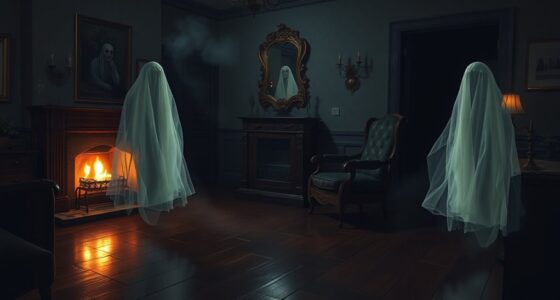

Haunted mirrors are mainly a mix of folklore, psychological effects, and personal stories rather than proven supernatural events. Throughout history, mirrors have been seen as gateways to spirits and the afterlife, but scientific explanations point to illusions, shadows, and perception biases. Most modern cases are influenced by belief, expectation, or environmental factors. If you’re curious, exploring the history and science behind these tales can reveal more about what’s real and what’s imagination.
Key Takeaways
- Scientific investigations have found no conclusive evidence that mirrors can harbor spirits or supernatural entities.
- Many eerie experiences are attributed to optical illusions, environmental factors, or psychological influences like suggestibility.
- Folklore and cultural stories often depict mirrors as portals or gateways, but these are rooted in myth and legend.
- Personal stories and sightings are frequently influenced by expectations, fear, and confirmation bias, making them subjective.
- Overall, haunted mirrors are considered a myth supported by folklore, with no verified scientific proof of supernatural activity.

Eaoundm 16.5 x 11.5inch Vintage Mirror Antique Mirror Shield Shape Plastic Frame (Vintage Gold)
This Vintage Hanging Mirror is made of high-quality plastic,High-quality glass mirror with no deformation, perfect for applying makeup.The…
As an affiliate, we earn on qualifying purchases.
As an affiliate, we earn on qualifying purchases.
Historical Accounts and Folklore of Haunted Mirrors
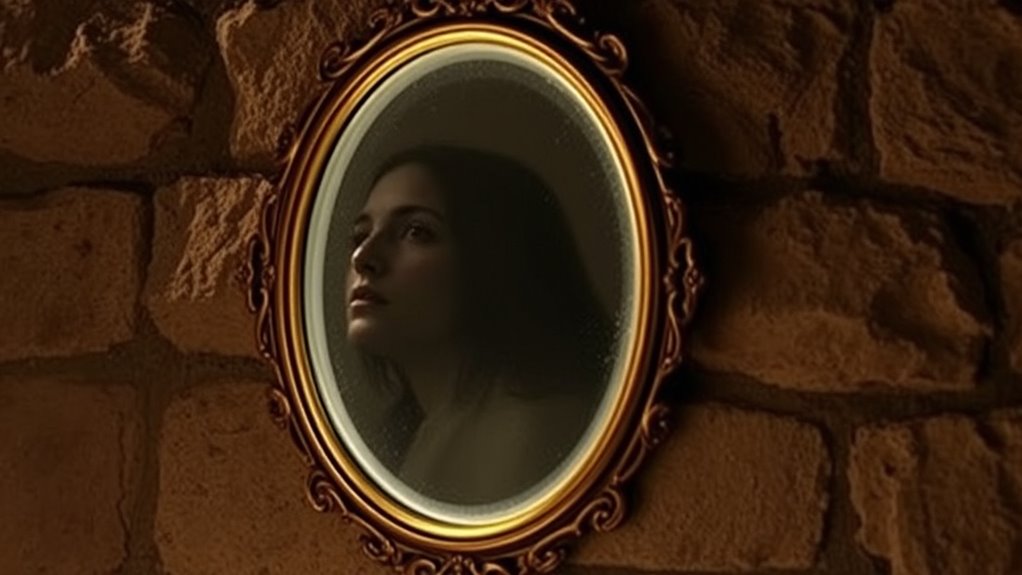
Throughout history, mirrors have been linked to supernatural phenomena and legends that stir the imagination. Many cultures believed mirrors could trap spirits or reveal hidden worlds. In medieval Europe, mirrors were thought to reflect souls and sometimes even trap malevolent spirits if improperly cared for. Folklore speaks of haunted mirrors that show disturbing images or ghostly figures, often tied to tragic deaths or curses. For example, some stories describe mirrors that reveal a person’s future or serve as portals to the afterlife. These accounts were passed down through generations, fueling fear and fascination. The supernatural significance of mirrors has persisted across cultures, reinforcing their role as mysterious objects with hidden powers. These legends echo a common belief: mirrors hold more than just their reflective surface—they are gateways to the unknown, shrouded in mystery and myth.

Kindre Natome Halloween Hologram Ghost Mirror, LED Spooky Haunted Mirror with Eerie Apparition, Indoor Wall Decor for Bedroom, Living Room, Kitchen,Fireplace, DIY Haunted House Props.(19.6''x9.4'')
Eerie Holographic Illusion–This ghost mirror uses 3D holographic technology to create a hyper-realistic floating apparition, as if a…
As an affiliate, we earn on qualifying purchases.
As an affiliate, we earn on qualifying purchases.
Scientific Explanations and Psychological Factors
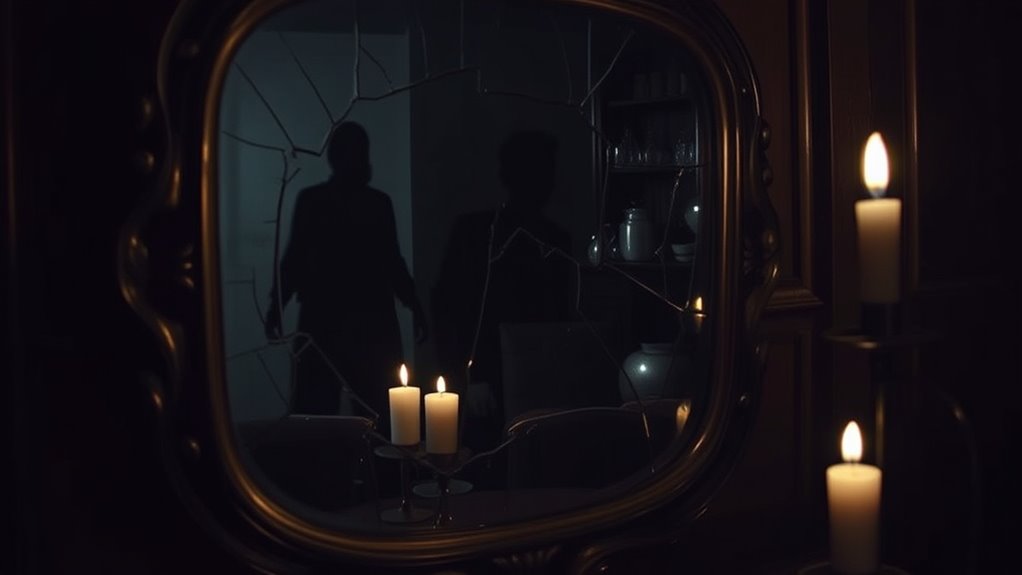
Many of the eerie experiences people associate with haunted mirrors can be explained through psychological and physiological factors. Your mind plays tricks on you, especially in dim lighting or when you’re tired, causing illusions or pareidolia—seeing faces where none exist. The phenomenon of the “self” in reflective surfaces can also create a sense of unfamiliarity, leading to fear or hallucinations. Sometimes, your brain interprets shadows or movements as supernatural. The table below highlights common factors:
| Factor | Explanation | Effect on Perception |
|---|---|---|
| Pareidolia | Seeing familiar images in randomness | Creates ghostly faces in mirrors |
| Expectation | Belief influences perception | Heightened sensitivity to oddities |
| Lighting Conditions | Dim or flickering illumination | Alters reflection clarity |
| Fatigue | Reduced cognitive function | Increased hallucination likelihood |
| Stress and Anxiety | Heightened emotional state | Amplifies fear of reflections |
| Perceptual Distortions | External factors like weather or reflections | Can cause misinterpretations of images |

Lzuso Black Oval Wooden Frame Vintage Wall Mirror Baroque Style Arendahl Traditional Carved Hanging Mirror for Wall Decorative Antique Mirror Aesthetic for Vanity Bedroom Living Room Kitchen Entryway
Nice Visual Enjoyment:Designed with an aesthetically hand carved wall mirror. Carved wooden mirror unique in form, perfect color,…
As an affiliate, we earn on qualifying purchases.
As an affiliate, we earn on qualifying purchases.
Iconic Cases and Modern Encounters

Some of the most well-known haunted mirror cases have captivated public imagination for decades, blending eerie experiences with compelling stories. One famous example is the Mirror of the Queen in a historic castle, where visitors reported seeing ghostly figures and hearing unexplained whispers. Another case involves a mirror in an abandoned mansion, where people claim to have seen reflections that aren’t their own, sometimes showing glimpses of past residents. Modern encounters continue to fuel speculation, with online reports describing mirrors that seem to change or reveal shadowy figures. These stories spread quickly, often through social media, and keep the mystery alive. Whether real or fabricated, these cases tap into deep-seated fears and curiosity about the supernatural, making haunted mirrors a perennial subject of fascination. Additionally, some psychological factors may influence how individuals perceive and interpret strange reflections, blurring the line between reality and imagination.

3 Pack Gothic Mirrors Wall Decor Vintage Cathedral Arch Frame Mirror Goth Room Decor 13.78 Inches Rustic Spooky Decorative Mirror Wall Hanging for Bedroom Bathroom Living Room (Silver)
What You Can Get: you will receive 3 pieces of decorative gothic mirrors for wall with black wooden…
As an affiliate, we earn on qualifying purchases.
As an affiliate, we earn on qualifying purchases.
Cultural Significance and Symbolism of Mirrors
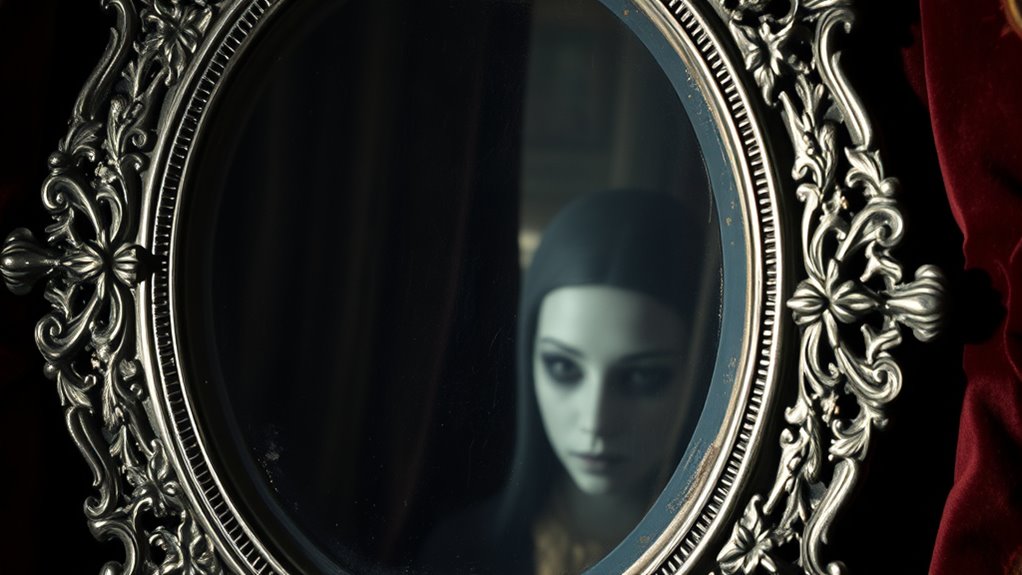
Mirrors have long held a special place in human culture, symbolizing more than just reflections. They represent self-awareness, truth, and the soul across various traditions. In many cultures, mirrors are believed to reveal hidden aspects of your identity or even the future. They’re often associated with spiritual cleansing or protection, warding off negative energies. In folklore, mirrors serve as gateways to other worlds or portals for spirits. In art and literature, they symbolize vanity, illusion, or introspection. You might find mirrors in rituals and ceremonies meant to connect with ancestors or spirits. Their powerful symbolism reflects our desire to understand ourselves and the mysteries beyond physical appearances. Understanding this cultural significance helps explain why mirrors often carry such weight in stories of the supernatural. Additionally, the use of mirrors in home decor often integrates symbolic elements, blending aesthetic appeal with cultural meanings.
Evaluating the Evidence: Reality or Imagination
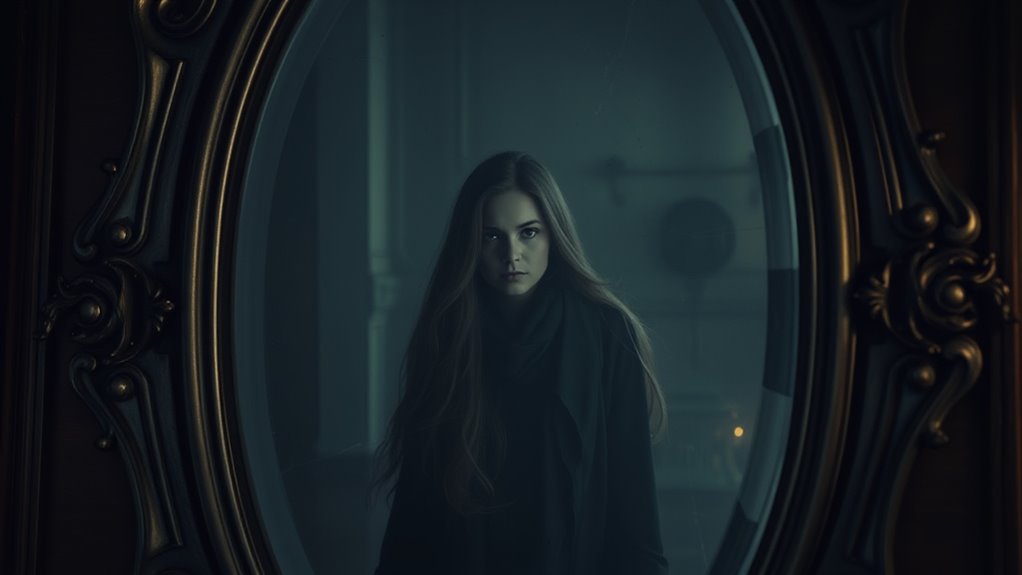
When it comes to haunted mirrors, the line between reality and imagination often blurs, making it challenging to determine what’s genuinely supernatural and what’s psychological or cultural suggestion. Many claims rely on personal stories, which can be influenced by expectations, fear, or suggestibility. Scientific investigations rarely find concrete evidence of supernatural activity in mirrors. Instead, optical illusions, lighting effects, or even fatigue can cause eerie reflections or distortions that seem paranormal. Cognitive biases, like confirmation bias, make you notice and remember only the experiences that support haunted mirror stories. To evaluate the evidence objectively, you need to question the environment, consider natural explanations, and recognize how cultural folklore can shape perceptions. Additionally, understanding the psychological effects of fear and expectation can help explain why people believe in haunted mirrors. Ultimately, skepticism and critical thinking are your best tools in separating fact from fiction.
Frequently Asked Questions
Can Haunted Mirrors Influence Physical Environments or Cause Harm?
Haunted mirrors can influence physical environments or cause harm if you believe they do. If you think a mirror is cursed or haunted, your fears may lead to anxiety, sleep disturbances, or even physical symptoms like headaches. Some say negative energy from a haunted mirror can affect the space around it, creating an unsettling atmosphere. However, scientific evidence remains limited, so it’s often your perception and belief that influence your experience.
Are There Specific Traits That Make Some Mirrors More Haunted Than Others?
Ever wonder what makes some mirrors more haunted than others? You notice that mirrors with old, tarnished, or cracked surfaces tend to be more haunted, as do those kept in dark or neglected spaces. These traits might amplify eerie feelings or strange occurrences. Could the history behind a mirror also play a role? Yes, emotional or tragic pasts attached to certain mirrors can make them more susceptible to hauntings.
How Do Different Cultures Interpret the Presence of Spirits in Mirrors?
Different cultures interpret spirits in mirrors uniquely. In Chinese tradition, mirrors can trap spirits or reveal hidden worlds, serving as gateways between domains. In Western folklore, mirrors often reflect spirits or the soul’s presence, especially during ghost sightings. Indigenous cultures may see mirrors as spiritual tools or portals for communication with ancestors. You might find that these diverse beliefs shape how people perceive and react to haunted mirrors around the world.
What Role Does Age or Material of a Mirror Play in Hauntings?
Age and material matter when it comes to haunted mirrors. Old, ornate, or fragile frames often harbor histories, heightening their haunted hue. Glasses made from certain materials, like mercury or lead, can influence reflection quality and energy flow, potentially amplifying supernatural sensations. You might notice that aged, antique mirrors seem eerier, possibly because their worn wood and warped surfaces amplify anomalous apparitions, adding an alluring allure to their haunted history.
Are There Technological Devices Capable of Detecting Supernatural Activity in Mirrors?
Yes, there are technological devices that claim to detect supernatural activity in mirrors. You might use electromagnetic field (EMF) meters, infrared cameras, or spirit boxes to monitor unusual energy or movements around a mirror. While some believe these tools can reveal paranormal presence, scientific backing remains limited. If you’re curious or concerned, trying these devices can add an extra layer of investigation, but always approach results with skepticism.
Conclusion
So, are haunted mirrors real or just a myth? You might think they’re harmless illusions, but some stories suggest they hold the power to pierce the veil between worlds. With legends stretching back centuries and eerie encounters still happening today, you can’t help but wonder if these reflective surfaces are gateways to the supernatural. Maybe, just maybe, those haunted mirrors are more than myths—they’re the universe’s way of teasing you with a glimpse into the unknown.